Treasure Trove of Sri Bhagavan’s Grace
In this chapter
Upanishad Stories
Sri Munagala Venkatramaiah, author of Talks with Sri Ramana Maharshi, was a chemistry professor. In addition, he was a prolific inventor with many patents to his name. Before coming to Sri Bhagavan, he had a traditional guru who initiated him into reading the 108 Upanishads in Sanskrit, as his daily sadhana.
After I got him to stay in the Ashram, whenever I went to his room to see if there was anything I could do for him, he would be engrossed in reading these volumes. Being quite naive and young, I could not understand why such a staunch and senior devotee of Sri Bhagavan should daily read the Upanishads every day.
His calm response to my asking Him was truly enlightening: “Ganesan! I too had the same doubt when I stood in front of Sri Bhagavan for the first time and He compassionately asked me what sadhana I was doing. When I told him about my previous guru’s instruction, He exhorted me with a warm smile, “Continue to do it — read the Upanishads daily!” Being also Sri Bhagavan’s commandment to me, I do it daily without fail! “
Not convinced, I persisted, “What is so great about the Upanishads? I fully accept the Vedas are of paramount interest to spiritual aspirants! What is there in the Upanishads?”
Recognising my immaturity, he condescended to come down to my level and narrated a few stories from the Upanishads that thrilled me and changed my viewpoint forever.
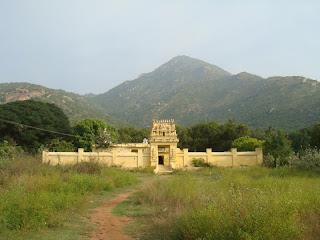
Arunachala – View from Draupadi Amman Temple
Satyakama: The Seeker of Truth
Chandogya Upanishad, 4.4 – 4.8
One day a young boy came to the ashrama of Sage Haridrumata Gautama and said, “Revered Sir, I desire to live under you as a Brahmacharin. Please accept me as your student.”
The sage asked, “Dear boy, of what gothra or lineage are you?”
When Satyakama, in obedience to Guru’s commandment, went home and asked his mother what their “Gothra” was. She narrated: After my giving birth to you, suddenly your father passed away. Even during marriage, I did not dare ask him of the “Gothra”. The very few relatives also dispersed and I could not get from any one what your “gothra” was. Please tell your Guru this fact “.
On hearing it, the Rishi Haridrumata Gautama smiled and said, “No one who is not a Brahmin can speak thus. Dear boy, bring the sacrificial fuel. I shall initiate you as a Brahmacharin, for you have not deviated from truth.” Thus was Satyakama Jabala initiated into the life of a Brahmacharin.
The Guru was immensely pleased that the mother said the truth. That the very truth has been uttered did purify Satyakama. Though the tradition permits the Guru his own “Gothra” to be given to such “Gothra-less” students, the Guru ignored it and honoured the mother by creating a new Gothra in her name “JABALI” (her name was Jabala). All Gothras originate from the names of a Rishi (Male). The first time a lady’s name was given to a Gothra! And, the Jabali Gothra even today is in prevalence !
After a few days, Rishi Haridrumata Gautama sorted out four hundred lean and weak cows and said to Satyakama, “Dear boy, take these cows to the forest and graze them.”
Satyakama bowed down with submission and while driving the cows said, “Sir, I shall not return till these cows multiply into a thousand.”
Satyakama lived in the forest and looked after the cows.
Years went by. The number of cows increased to a thousand.
One day towards evening a bull came to Satyakama and spoke to him, “Dear boy! Now we are a thousand in number. Take us to the house of the teacher”. Also, the bull said to Satyakama, ”I shall teach you one quarter of the Brahman or God. He is Prakashavan or the ‘Radiant’. He who meditates on Brahman as the ‘Radiant’, becomes Radiant in this World.” Thus having spoken the bull told Satyakama that Agni, the God of Fire, will teach him more later.
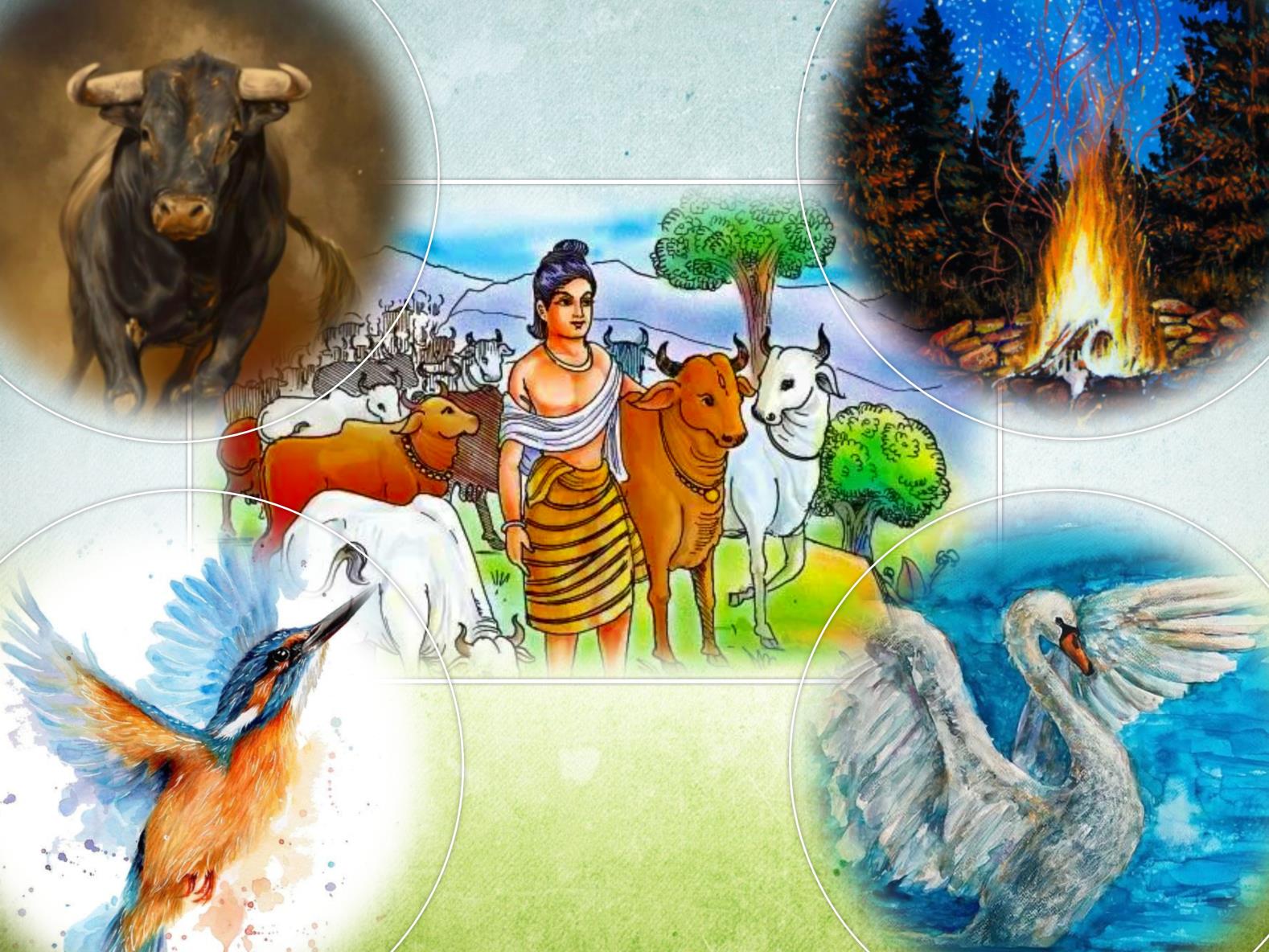
At dawn, Satyakama drove the cows towards his Guru’s ashrama.
In the evening when the cows came together, he kindled a fire there, added fuel to the fire, penned the cows and sat down near them behind the fire, facing east. Then the Fire addressed him and said: “Dear boy, I will teach you one quarter of the Brahman. He is Anantavan or the ‘Endless’. One who knows Him to be thus and meditates upon him as ‘Endless’, becomes endless in this World”. Then the fire told him that a swan was going to tell him about the third quarter of the Brahman.
At dawn, Satyakama continued to drive the cows towards the Guru’s ashrama. Towards evening when the cows came together, he kindled a fire there, added fuel to the fire, penned the cows and sat down near them behind the fire, facing east. All of a sudden a swan came flying and said, “Satyakama! I shall teach you the third quarter of Brahman. He is called Jyotishman or the ‘Effulgent’. One who knows him thus and meditates upon him as the ‘Effulgent’, becomes effulgent in this World.” Then, the swan told him that a waterfowl would teach him the last part of the Brahman.
On the following day, once again, Satyakama drove the cows in the direction of his Guru’s ashrama.
Towards evening when the cows came together, he kindled a fire there, added fuel to the fire, penned the cows and sat down near them behind the fire, facing east. Then, a waterfowl came before him and said, “Satyakama! I shall teach you the fourth and last part of Brahman. He is Ayatanavan or the ‘All-supporting’. One who knows him thus and meditates upon him as the ‘All-supporting’, becomes That in this World.”
When Satyakama reached the Guru’s ashram with the thousand cows, the Guru asked him, “Dear boy, your face shines with the Knowledge of Brahman. Who taught you that?”
Satyakama told him about his four teachers and said, “Sir, I now request you to expound it to me personally. Because I know that the Knowledge received directly from one’s own Guru becomes perfect.”
Then Rishi Haridrumata Gautama, the revered teacher of Satyakama, taught him the same thing again by adding more meaning to all that Satyakama had learnt. Thus, Satyakama got the full Knowledge of Brahman from his Guru and later, he himself became a great teacher.
* * *
A Dialogue with the God of Death
Kathopanishad
Vajashravas was a Sage. Once, he decided to perform a great sacrifice in which he wanted to give away all that he had. He had a son by the name Nachiketa who was still a boy but extremely intelligent and very pure in mind and Heart. He saw that his father was giving away the lean and weak cows that were unable to give milk. My father is not doing the right thing by giving the old cows in charity, said Nachiketa to himself so he went near his father and asked, “Father, I have heard that the kind of Yajna that you are performing, one has to give up all that one possesses. This being the case to whom will you give me?” Vajashravas did not give any reply. After some time Nachiketa asked again the same question, but in vain. He did not get any response from his father. Again for the third time, Nachiketa repeated the same question. Vajashravas could not control his temper; he burst out saying to his own son, “I will give you Yama, the God of Death.”
Nachiketa followed the words of his father and went to the Kingdom of Death. However, during that time Yama was not present. None dared to admit Nachiketa. So he waited near the gate for three days and three nights without taking even a drop of water. When Yama returned and found Nachiketa at his doorstep he felt sad for keeping a Brahmin waiting for three days and three nights. He ordered his attendants to fetch holy water to invite and welcome Nachiketa. After the hospitality offered to Nachiketa, Yama told Nachiketa, “Dear child, I have not done good by keeping you waiting for three days. So I request you to ask for three boons.”
Nachiketa answered to Yama by saying, “O Lord, let my father not be anxious about me, and let his anger against me vanish. When I go back to Earth, let him recognize me and receive me back gladly.”
“Granted son,” said Yama. “Ask your second boon.”
“Dear Sir, teach me the proper ritual for the fire sacrifice. This I ask for my second boon” said Nachiketa.
Yama agreed and taught Nachiketa the proper ritual for the fire sacrifice. Then he said, “Nachiketa, what is your third boon?”
Nachiketa said, “Is there indeed a Life beyond death? Some say there is; others say Life ends with this Life. What is the Truth?”
Yama said, “Boy, do not ask me about matters of Life and death. Even the Gods are not clear on all points. Ask me something else. I will grant all your wishes other than this.”
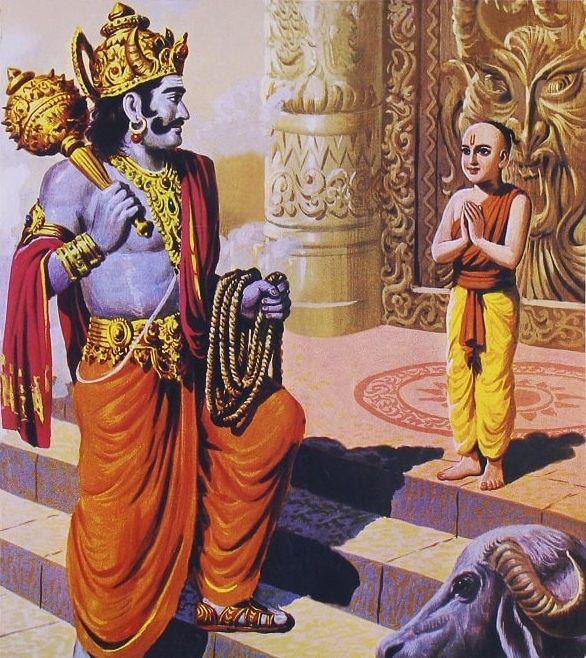
Nachiketa persisted and said, “O Yama, I only wish to know about the mysteries of Life and Death, and nothing else.”
Yama tries to offer Nachiketa worldly pleasures so that he may change the nature of his request for the third boon, but Nachiketa insists by stating that all the worldly pleasures are short-lived and do not render long lasting happiness. Nachiketa was bold enough saying that one can never reach the eternal through the worldly possessions. Therefore he has renounced all desires for worldly pleasures and have come here with the hope of wining the Eternal through the instructions of the God of Death.
It was too difficult for Yama to change the mind of young Nachiketa. So finally, he agreed to tell Nachiketa about the mysteries of Life and Death with the following words:
“The Self is Immortal. It was not born, nor does it die. It did not come out of anything, neither did anything came out of it. Even if this body is destroyed, the Soul is not destroyed.”
“The one who thinks that he is the slayer and the one who thinks that he is slain, both are ignorant. For the Self neither slays nor is it slain.”
“Smaller than the smallest and larger than the largest, the Self is living in all beings.”
“This Knowledge about it can neither be obtained by discussion, nor by brain power, nor even by much learning. It reveals itself to the deserving one.”
“This body is the chariot, intelligence the driver, the senses are the horses, conscience the rein and the Soul is the lord of the chariot. The Self is superior to body, mind and senses.
“Greater than the individual soul is the enveloping Super Consciousness, the seed of everything in the Universe, still greater is the Ultimate Person than whom there is nothing greater. He is the Goal of our aspiration. Once That (Supreme Self) is realized, Death loses all its terrors, and the one who has Realized becomes Immortal.
“The Path to Realization is long and difficult, like the razor’s edge, narrow and sharp. Therefore, there is no time to be lost.
“Awake, arise, bestir yourself, and do not stop until the Goal is reached.”
* * *
Shvetaketu
Chandogya Upanishad, Chapter 6
Shvetaketu was the only son of Rishi Uddalaka. When he turned twelve, he was asked by his father to go and get his education from a Gurukula. When Shvetaketu returned from the Gurukula after finishing his twelve years of rigorous training in all the branches of Knowledge, his father Uddalaka found arrogance in his expression.
Once Uddalaka called him by his side and asked him, “Shvetaketu, my boy, have you, ever sought out the Knowledge of that by which the unheard can be heard, the unseen can be seen, the unknowable can be known?” Shvetaketu was shocked. He had no idea about what his father had asked. So he requested his father to give him this knowledge.
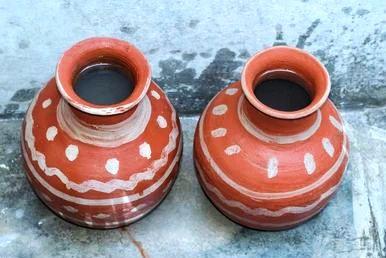
Uddalaka told Shvetaketu, “Son, by knowing one lump of clay you may learn about everything made of clay; the only difference between such things is the name, a result of speech. But the Truth is that all such things are of the same substance. Likewise, by knowing one chunk of gold, you may learn about everything made of gold; the only difference between such things is the name, a result of speech. But the truth is that all such things are of the same substance. And the same is true for even the simplest tools made of iron. This, my son, is the knowledge of which I speak.”
Uddalaka thus continued saying, “Dear child, in the beginning of things there was Pure Being, One without a second. It willed to become many. Then, it manifested itself in the form of fire and from fire came water and from there came food. This way this rich variety of things came into existence by permutation and combination of these forms. Then Life appeared, and among the living beings there came ‘man’ with his varied powers and functions.”
Shvetaketu stopped his father from going ahead and asked him to explain what a man would do during sleep.
“The man becomes one with the Spirit, the Eternal Being. Man’s mind is like a beast tied to a peg by a long rope. It turns round and round and can not get away. When a man dies his power of speech is merged into his ‘mind’, his ‘mind’ is absorbed in the ‘prana’, the ‘prana’ is merged into the Light, and the Light merges in the Power beyond. That Power is subtle. It pervades the Universe. That is the Truth. That is the Spirit. That Thou art, O Shvetaketu.”
Shvetaketu was not satisfied and wanted to know more about that all-pervading Power. Here Uddalaka explains to him beautifully about the One and the many by giving examples.
He says, “Dear child, bees bring droplets of honey from various flowers and store in the hive. Once in the hive, do the droplets know from which flower they came? Need they know it? So too all these beings when merge into the Ocean of Being, they know not whence they came. All become one when they have merged in the Ocean of Consciousness, of the One Being. That is subtle. That pervades everything. That is the Atman. That thou art, O Shvetaketu.”
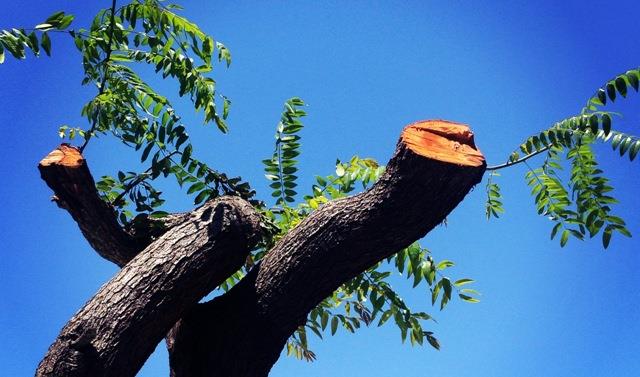
Then Uddalaka gives the example of all rivers merging into the Ocean and losing their individual identity. Then he gives another example in which he explains that by cutting a part of the tree the whole tree does not die. Only that part which is cut dies. Thus that which is deprived of its life dies but the life itself does not die. The power by which Life lives eternally is the Spirit. That thou art O Shvetaketu.”
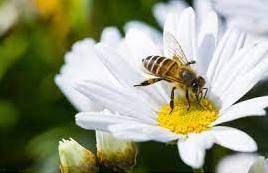

Shvetaketu listened to his father attentively and said: “My respected teachers must not have known this, for if they had, they surely would have told me. Won’t you please give me more of this Knowledge, Father?” And Uddalaka agreed to do so. And we see further dialogues between Uddalaka and Shvetaketu in the following manner.
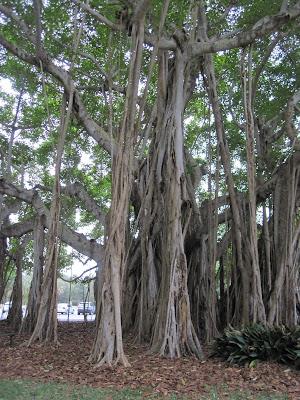

Uddalaka: “Bring me a fruit from the banyan tree.”
Shvetaketu: “Here is one, Father.”
Uddalaka: “Break it open.”
Shvetaketu: “It is broken, Father.”
Uddalaka: “What do you see there?”
Shvetaketu: “These tiny seeds.”
Uddalaka: “Now break one of them open.”
Shvetaketu: “It is broken, Father.”
Uddalaka: “What do you see there?”
Shvetaketu: “Nothing, Father.”
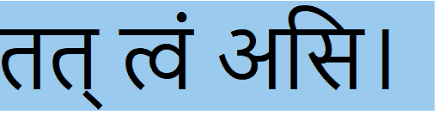
Uddalaka: “My son, you know there is a subtle essence which you do not perceive, but through that essence the truly immense banyan tree exists. Believe it, my son. Everything that exists has its Self in that subtle essence. It is Truth. It is the Self, and you, Shvetaketu, are That (tattvamasi).”
Shvetaketu further pleaded with his father to teach him more, and Uddalaka continued:
Uddalaka: “Bring a pinch of salt my son.”
Shvetaketu: “Here, I have brought the salt Father.”
Uddalaka: “Place this salt in water, and come back to me in the morning.”
The son did as he was told.

Uddalaka (in the morning): “Bring me the salt you put in the water last night.”
Shvetaketu (after looking): “Father, I cannot find it.”
Uddalaka: “Of course not; it has dissolved. Now taste the water from the surface. How does it taste?”
Shvetaketu: “It’s salty.”
Uddalaka: “Taste the water from the middle of the bowl. How does it taste?”
Shvetaketu: “It’s salty.”
Uddalaka: “Now taste the water from the bottom. How does it taste?”
Shvetaketu: “It’s salty.”
Uddalaka: “Go, throw it away and come back to me.”
Shvetaketu did so, and returned.
Shvetaketu: “But, father, although I have thrown it away, the salt remains.”
Uddalaka: “Likewise, though you cannot hear or perceive or know the Subtle Essence, it is here. Everything that exists has its Self in that Subtle Essence. It is Truth. It is the Self, and you, Shvetaketu, are That (tattvamasi).”
What is presented here is just a glimpse of the entire teachings of Uddalaka to Shvetaketu in which he gives a very comprehensive idea about the Brahman and how to realize That.
The Story of Indra and Virochana
Chandogya Upanishad, Chapter 8.7-12
Once Prajapati, the Creator of the Universe announced, “The Self is the sinless, ageless and deathless One; it has no sorrow nor hunger nor thirst. The goal of all its desire is the Truth, Truth is the one thing worthy of its resolve. It is this Self that has to be sought after, it alone one should seek to know. And one who seeks after the Self and knows it, gains possessions of all the Worlds, wins all that is desirable.”
Both the Gods and the demons heard this announcement and thought, “We must know this Atman or Self and seek this Knowledge that promises all worlds.” Hence, Indra, the King of the Gods and Virochana, the leader of the demons, approached Prajapati with all the humility of a disciple and requested him to impart this Knowledge to them. Prajapati accepted them as his disciples and asked them to stay with him for thirty-two years.
Both, Indra and Virochana, stayed on living the life of a Brahmachari. At the end of that period, Prajapati called both of them and said, “Dear ones, the person visible in the pupil of the eye is Atman. This Atman is the Brahman, the Immortal and Fearless. Go and see yourself in a pan of water and then tell me what you saw.”
Next day when Prajapati asked both of them to narrate their experience they both said, “Lord, we saw the Self entirely as we are, the very image even to the very hairs and nails.”
“Go and adorn yourself and then look into the pan of water and tell me about your experience” said Prajapati to both of them.
Happy, they went and adorned themselves, looked into the pan of water, came back and replied to Prajapati, “Revered Sir, we saw ourselves well dressed, well groomed and well adorned.”
“Very good, this is Atman, the Immortal and Fearless, the Brahman” thus confirmed Prajapati to them.
Both Indra and Virochana, went happy and very much satisfied in their Geart. Prajapati saw them going away and exclaimed to himself, “Whether they are Gods or demons they will inevitably perish if they are satisfied with the mere reflection of the Reality.”
Virochana went to the demons and taught them this knowledge by saying that this bodily self is all that we need to know and serve and glorify. This is the Supreme Knowledge by which one obtains the World here and hereafter.
Indra was different from Virochana. He realized that something is wrong with what he has just learnt about the Atman. He felt uneasy. He thought to himself that as the water reflects a well adorned body so does it reflects a blind man if he is blind, a defective man if he is defective. If a body is destroyed or dead, then there is no reflection of a living body. How then could the body or its reflection be said to be the deathless Atman?
He went back to Prajapati and said, “Lord, I see really nothing worthy in this body or in its reflection. Please give me the True Knowledge about the Atman.” Prajapati was happy with Indra and asked Indra to stay with him for another thirty-two years. At the end of that period Prajapati called him and said, “That which moves about in dreams is Atman.”
Indra seemed to be satisfied and made his way to the Abode of Gods. But as he went along, again doubt crept into his mind and he thought, “How can the dream self be Atman? In dreams one suffers, one is wounded, one weeps when afflicted. The fearless and sinless Atman cannot be subject to such happenings. This does not seem to be the Truth. Even this time also something again is wrong with what I have learnt.” He came back and prostrated himself before Prajapati requesting him to explain the Truth of Atman.
As usual, Prajapati told him to stay with him for another period of thirty-two years. Indra was all prepared. At the end of this period, Prajapati called Indra and said: “The self who is fully pleased and is in a happy mood in deep sleep is the Atman.”
Indra was satisfied and went home. But before he reached his place, again doubt overwhelmed him and he said to himself, “In a dreamless sleep, the self does not know itself. It is not conscious of its own existence. How then can the unconscious self be Atman when it is described as the Ever-Luminous One, ever Conscious One?” He came back again to Prajapati and reported to him about his difficulties. This time Prajapati was more pleased with Indra and told him to spend five more years with him.
After the period was over Prajapati called Indra beside him and said: “O Indra, you have deserved the knowledge of the Highest Truth by your persistent effort and intense inquisitiveness.” Saying this Prajapati revealed that part of the Highest Knowledge to Indra for which he was ready at that point of time.
“This body is subject to death yet it embodies the Deathless and Bodiless Atman. This embodied Self falls into the trap of all dualities like pleasure and pain, but the bodiless Atman is not touched by any duality. So long as the Atman resides in the body and attaches itself to them, he seems limited and restricted, but again when freed from the body, becomes one with the Infinite Spirit. When the Atman leaves the body, goes wandering freely in the Infinite Worlds. The eye, the ear, the senses, the mind are there only in order that the Atman may see and hear and think. It is on account of Atman and in the Atman that the things and beings exist. He is the Truth and the Final Repository of all Existence.”
This time when Indra went back to impart this Knowledge to the Gods, he had no doubt. The Gods received the True Knowledge and therefore live in the full Knowledge of their Self. And because Virochana was satisfied with the knowledge of body as self, the demons, even today live in the ignorance taking body as Self.
The Light of the Lights
Brihadaranyaka Upanishad, 4.3
There have been many occasions when Yajnavalkya and King Janaka have met with each other and discussed at length about things related to the Brahman and about the knowledge of the Self. King Janaka was very fond of Yajnavalkya and whenever he found a chance to meet him, he would keep asking him several questions for which he himself had no complete answer. And Yajnavalkya would not receive any gift from King Janaka until he has given him the Complete Knowledge.
King Janaka was an adept in Vaisvanara Vidya or the Knowledge of the Universal Self. On one occasion a discussion took place between Janaka, Yajnavalkya and other students on this subject of the worship of the Universal Self. Every question asked to Janaka was promptly answered then and there by him. Yajnavalkya was highly pleased with the Knowledge of Janaka, and said, “Ask for a boon.” Then Janaka said, “May I be permitted to ask questions whenever I please, whenever I want to ask.” That was all that he asked for.
On another occasion when Yajnavalkya met Janaka, he thought that he would not speak, that he would keep quiet. It seemed as if Yajnavalkya was in the fullness of his Soul. But Janaka, as usual did not want to miss the chance. It was then that he drew upon the boon that he had got from Yajnavalkya and there was no other way for the Sage but to answer the questions of King Janaka. When the Sage agreed to speak then King Janaka asked him a very relevant and important question related to the knowledge of Self ,
“O Revered Sage, what is the Light that illumines a person, the light that awakens and impels him to perform all that he does?”
Yajnavalkya gave a very straightforward answer by saying, “The Sun, O king, for it is the Sun alone that is the source of all light and it is for this light that man sits, moves about, does all his work and returns.”
“That’s right O Venerable Sage, but when the Sun has set, what is it that helps man as light?”
“The Moon; it is the Moon that is the light of the man when the Sun is not there”, was the reply of Yajnavalkya.
“All right, I agree, but when the Sun is not there, the Moon is also not there, then what is it that guides man as his light?” thus asked Janaka again.
Then Rishi Yajnavalkya replied, “When the Sun has set and the Moon is not there, ‘Fire’ is our light, for by that we sit, work, go out and come back.”
“I am all in agreement with you”, said Janaka and continued asking “but what then is the light when there is no Sun, no Moon and no Fire?”
“Speech, indeed, is the light when all these are absent. Even though we cannot see our hand in the dark we can hear the voice and move towards the sound.”
Janaka was happy but had still one more question. He asked, “O Revered Sage, when Sun sets, Moon is not there, Fire is absent and there is no ‘speech’, then what is the light?”
“The Self, indeed, is our Light O king, for by that we sit, move, work, go out and come back.”
Janaka was deeply touched by this but wanted to know from Yajnavalkya more about the Self that he referred to as the Light of all lights. Yajnavalkya continued to impart the Knowledge of the Self to king Janaka. He kept unraveling the mystery after mystery of the Self and the whole teaching is given in the Brihadaranyaka Upanishad at length, but the essence of all that Yajnavalkya spoke to King Janaka about the Self is like this:
“The Self is the Pure Awareness that shines as the Light within the Heart, surrounded by the senses. It is this Self that is one with the Sole Reality, the Brahman. This Self is free from desire, from evil and from fear. The man who is union with the Self sees without seeing, smells without smelling, tastes without tasting, speaking without speaking, hears without hearing, touches without touching, thinks without thinking, knows without knowing, for there is nothing separate from him. This state of not having another is the State of Unity, one without a second and that is the World of Brahman. This is the Supreme Goal of Life, the Supreme Treasure, the Supreme Joy.”
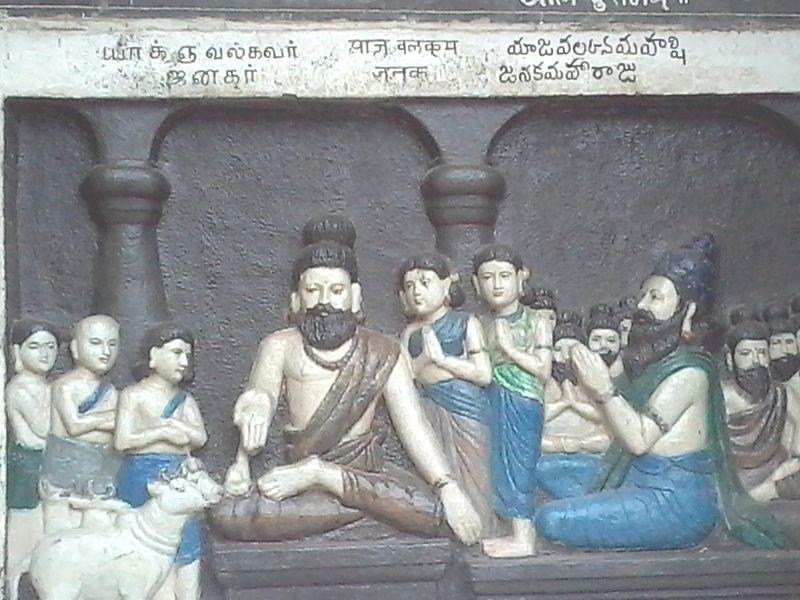
Yajnavalkya teaching King Janaka
Da! Da! Da!
Brihadaranyaka Upanishad 5.2
Once all the three descendants of Prajapati — the Gods, the men, and the Asuras, lived with him for some time as students.
One day, the Gods approached Prajapati and said, “Teach us, Sir!”
In reply, Prajapati uttered one syllable, ‘Da.’ Then he said, “Have you understood?”
They answered, “Yes, we have understood. You said to us, Damayata — Be self-controlled.”
“Yes,” agreed Prajapati, “you have understood.”
Then the men went to Prajapati and said, “Teach us, Sir.”
Prajapati uttered the same syllable, ‘Da.’ Then he asked the men, “Have you understood?”
They answered, “Yes, we have understood. You said to us, Datta — Be charitable.”
“Yes,” agreed Prajapati, “you have understood.”
Finally it was the turn of the Asuras. They went to Prajapati and said “Teach us, Sir.”
Prajapati uttered the same syllable, ‘Da.’ Then he said, “Have you understood?”
They said, “Yes, we have understood. You told us Dayathvam — Be compassionate.”
“Yes,” agreed Prajapati, “you have understood.”
Every time the storm cloud thunders it says ‘Da! Da! Da!’ And that reminds us to be self-controlled, to be charitable and to be compassionate.
For the Divine Part in each individual, the law given by Prajapati is to be self-controlled. Without self-control one gets caught up by the splendors and riches and becomes egoistic. For the human part in each individual the law given is to be charitable, be generous and self-giving. Without this one gets completely caught up by one’s limitedness. For the demoniac part in each individual the law given is to be compassionate. Without this one becomes the slayer of oneself.
Self-control, self-giving and compassion, indeed, are three essential disciplines of spiritual progress.
* * *
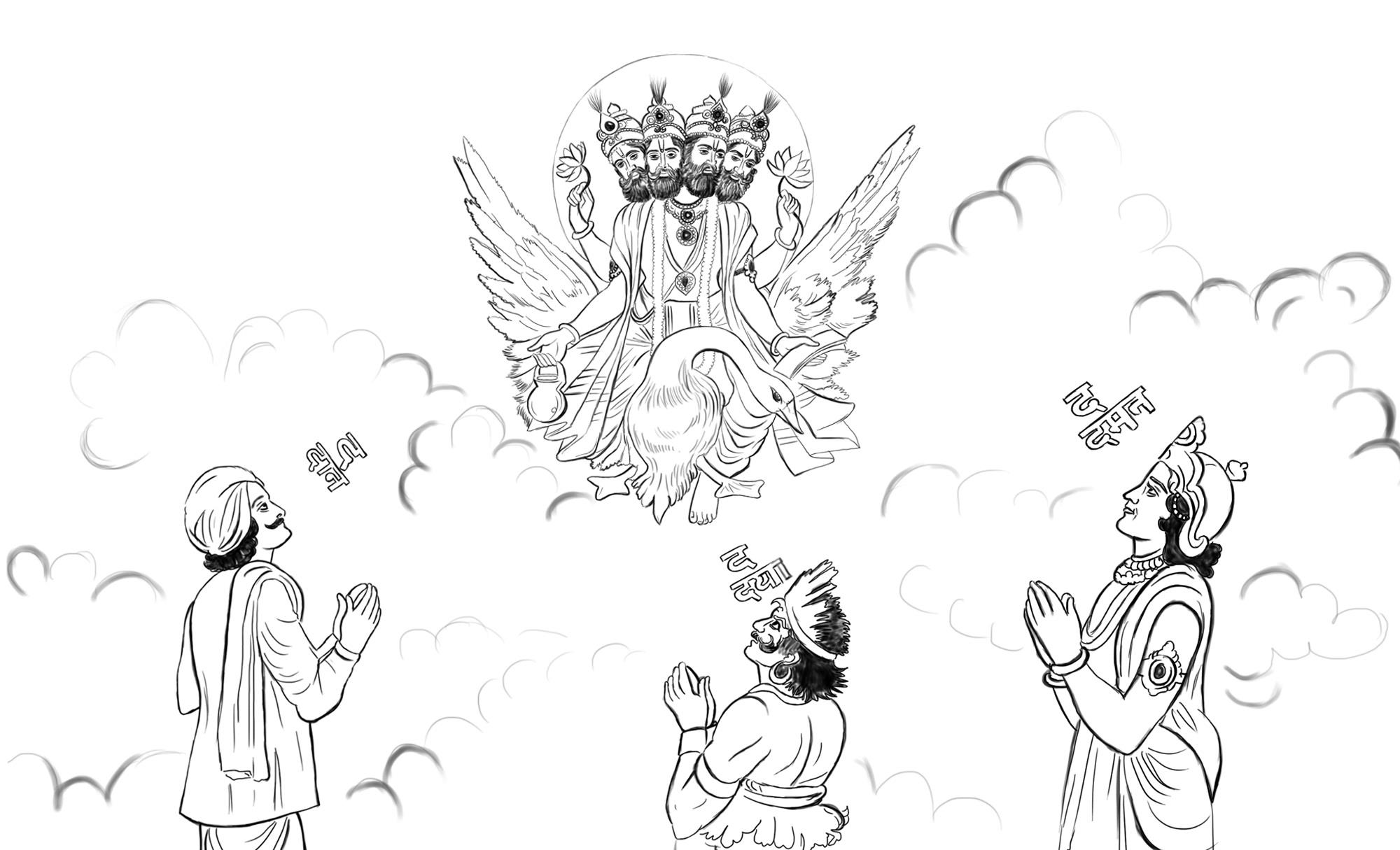
Lord Brahma teaching ‘Human being’,’Asura’ demon and ‘Deva’ Celestial being
Dialogue between Gargi and Yajnavalkya
Brihadaranyaka Upanishad 3:8
It was the court of King Janaka. Yajnavalkya received questions from all learned Sages and seers assembled there, and he kept offering answers to all of them. Among them was a female Sage Gargi, the daughter of Vachaknu. Addressing the assembly, she said, “Revered Brahmins, I shall ask Yajnavalkya two questions. If he is able to answer them, no one among you can ever defeat him. He will be the great expounder of the Truth of Brahman.”
Yajnavalkya said, “Ask, O Gargi.”
Gargi said, “Yajnavalkya, that which they say is above Heaven and below the earth, which is between Heaven and Earth as well, and which was, is, and shall be — tell me, in what is it woven, warp and woof?’
Yajnavalkya said, “That of which they say, O Gargi, that it is above Heaven and below the Earth, which is between Heaven and Earth as well, and which was, is, and shall be — that is woven, warp and woof, is the ether. “Ether (Akasha) is the subtlest element. So subtle that it is often indistinguishable from Consciousness. Without it nothing can exist. Yet there is more”.
Gargi said, “Thou hast answered my first question. I bow to thee, O Yajnavalkya. Be ready now to answer my second question.”
Yajnavalkya said, “Ask, O Gargi.”
Gargi said, “In whom is that ether woven, warp and woof?”
Yajnavalkya replied, “The seers, O Gargi, call him Akshara — the Immutable and Imperishable Reality. He is neither gross nor fine, neither short nor long, neither hot nor cold, neither light nor dark, neither of the nature of air, nor of the nature of ether. He is without relations. He is without taste or smell, without eyes, ears, speech, mind, vigor, breath, mouth. He is without measure; he is without inside or outside. He enjoys nothing; nothing enjoys him.’
“At the command of that Reality, O Gargi, the Sun and Moon hold their courses; Heaven and earth keep their positions; moments, hours, days and nights, fortnights and months, seasons and years–all follow their paths; rivers issuing from the snowy mountains flow on, some eastward, some westward, others in other directions.’
“He, O Gargi, who in this World, without knowing this Reality, offers oblations, performs sacrifices, practices austerities, even though for many thousands of years, gains little: his offerings and practices are perishable. He, O Gargi, who departs this life without knowing the Imperishable, is pitiable. But he, O Gargi, who departs this life knowing this, is Wise.”
“This Reality, O Gargi, is unseen but is the Seer, is unheard but is the Hearer, is unthinkable but is the ‘thinker’, is unknown but is the Knower. There is no seer but he, there is no hearer but he, there is no thinker but he, there is no knower but he. In Akshara, verily, O Gargi, the ether is woven, warp and woof.”
Hearing these words from Yajnavalkya, Gargi again looked at the assembled Brahmins and said, “Revered Brahmins, well may you feel blest if you get off with bowing before him! No one will defeat Yajnavalkya, expounder of the Truth of Brahman.”
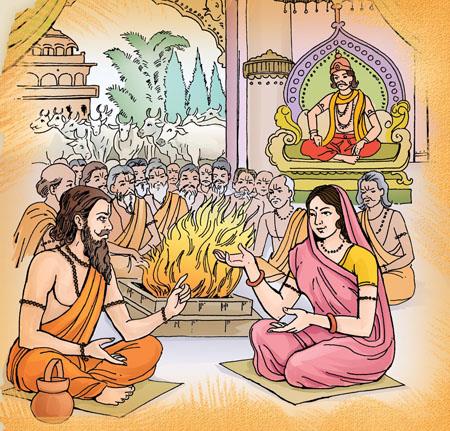
Yajnavalkya answering the questions of Gargi
The Story of Upakosala
Chandogya Upanishad, 4.10
Upakosala was the son of one Kamala. He dwelt as a brahmacharin with Satyakama Jabala, living with and studying from Satyakama for twelve years. At the end of his study, when he was about to leave the house of Satyakama he was not allowed to depart. He became very sad when he came to know that all his friends were allowed to go.
The wife of Satyakama was very kind towards Upakosala, and she pleaded with her husband to allow Upakosala to go home like the rest of his disciples, but Satyakama not only refused to do so but also went off on a journey. At this point Upakosala was so sad and sick at heart that he could not eat. The teacher’s wife treated him with tender affection, offered him food, but to no avail. She kept insisting that he must take food otherwise he would not survive. At last the boy cried out to her saying, “O mother, my heart is still so impure; I am too unhappy to eat!”
Satyakama knew that Upakosala had not yet learned all that was necessary for him and was not ready to lead the life of a householder as per dharma. Upakosala too was aware that his was not an academic failure, but rather one of interior disposition. He kept saying to the wife of Satyakama that in him there were many desires which tend towards many things and he was filled with those. Upakosala understood that the desires may not be negative or foolish, yet they pull one in many directions, whirling one around and confusing one’s mind and consuming all of one’s life energies. Only when the mind is fixed on the One can the many be safely attended to. Upakosala kept aspiring for attaining this oneness with the One.
One day he heard a voice from the sacred fire Brahman or Agni saying to him, “This life is Brahman, the sky is Brahman, Bliss is Brahman, know thou Brahman!”
To this Upakosala replied, “I know that life is Brahman, but that the sky is Brahman or that Bliss is Brahman I do not know.”
Again came the voice from out of the ‘Fire’, this time explaining that by ‘Sky’ was meant the ‘Lotus of the Heart’, wherein dwells Brahman, and that by “Bliss” was meant the “Bliss of Brahman”. “Both” said the voice, “refer to Brahman”, and continuing it taught Upakosala thus, “Earth, food, fire, Sun — all these that you worship — are forms of Brahman. He who is seen in the Sun — that One Am I. He who dwells in the east, in the north, in the west, and in the south, he who dwells in the Moon, in the stars, and in water–that One Am I. He who dwells in the sky and makes the lightning his home–that One alsoAm I. Know well the true nature of the World that it may never do you harm.”
Thereupon the fire, which had been only an earthly fire with which to prepare sacrifices, assumed a new aspect and became the Lord Himself. The earth was transformed; life was transformed; the Sun, the Moon, the stars, the lightning–everything was transformed, and deified. And thus it was that to Upakosala the true nature of all things was revealed.
In due time Satyakama returned home. When he saw Upakosala, he said, “My son, your face shines like one who knows Brahman. Who has taught you?” “Beings other than men” replied Upakosala. Then said Satyakama, “My son, what you have learned is true. True also is this that I teach you now. Lo, to him who knows it shall no evil cling, even as drops of water cling not to the leaf of the lotus. He who glows in the depths of your eyes — that is Brahman; that is the Self of yourself. He is the Beautiful One, he is the Luminous One. In all the Worlds, forever and ever, he shines!”
Thus saying, Satyakama explains to Upakosala more about the Brahman and finally declares him as a worthy disciple of his.
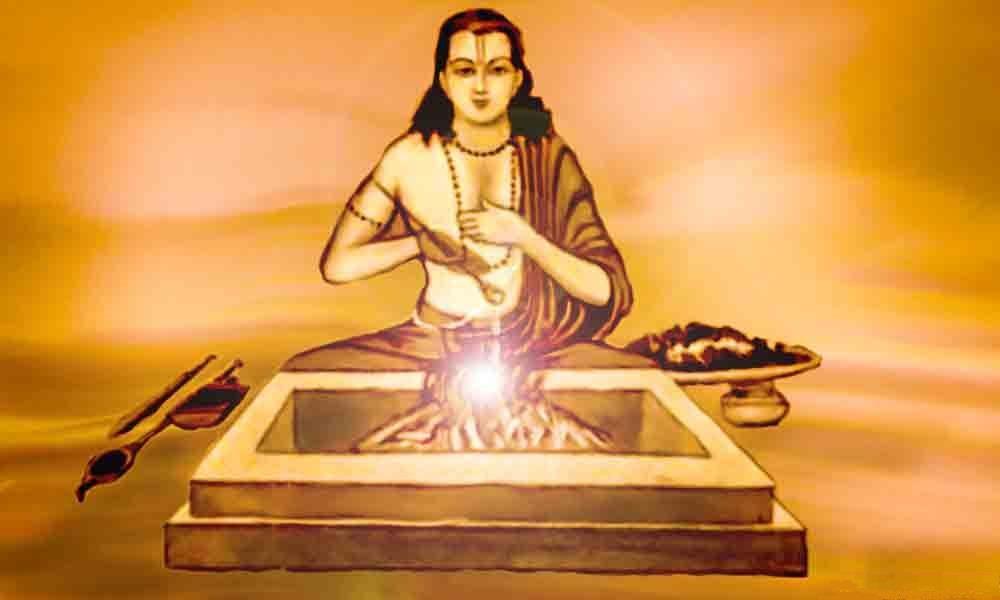
Again came the voice from out of the ‘Fire’, this time explaining that by ‘Sky’ was meant the ‘Lotus of the Heart’, wherein dwells Brahman, and that by “Bliss” was meant the “Bliss of Brahman”.
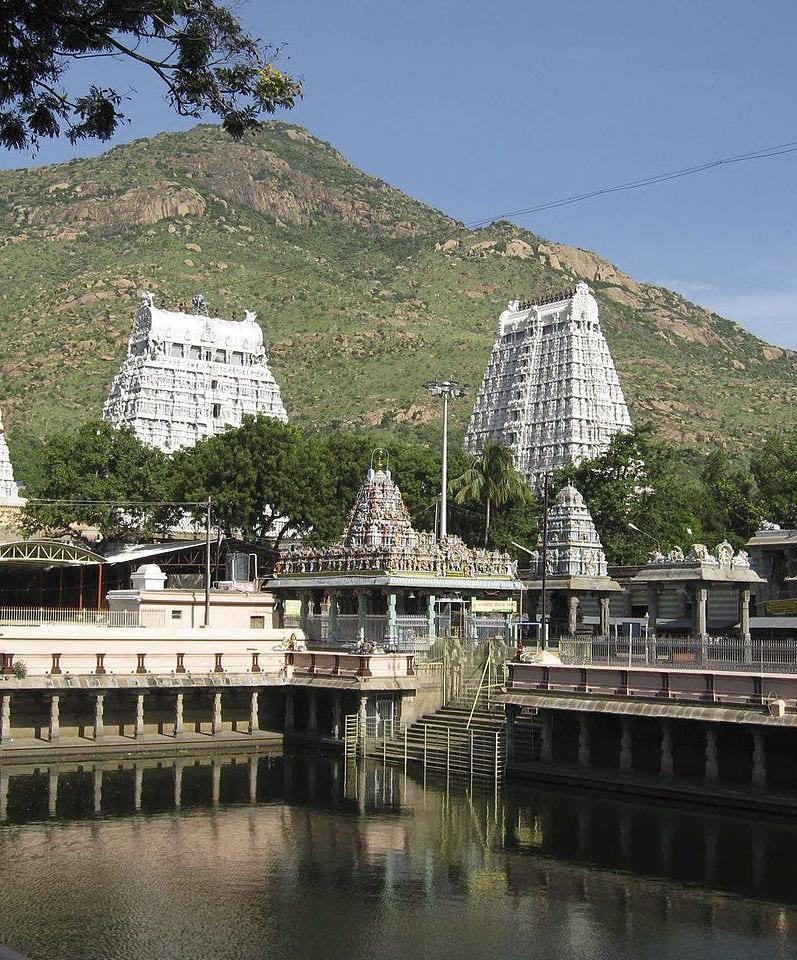
SRI ARUNACHALESWARA : The Holy Hill and the Divine Temple