Treasure Trove of Sri Bhagavan’s Grace
In this chapter
- Quotes From “TALKS”
- Talk 17.
- Talk 30.
- Talk 41.
- Talk 46.
- Talk 58.
- Talk 73.
- Talk 95.
- Talk 145.
- Talk 181.
- Talk 186.
- Talk 189.
- Talk 203.
- Talk 208.
- Talk 264.
- Talk 270.
- Talk 284.
- Talk 287.
- Talk 290.
- Talk 336.
- Talk 343.
- Talk 376.
- Talk 385.
- Talk 398.
- Talk 424.
- Talk 436.
- Talk 439.
- Talk 467.
- Talk 472.
- Talk 565.
- Talk 580.
- Talk 621.
- Talk 649.
- Talk 650.
- The Song Celestial
Sri Bhagavan And Srimad Bhagavad Gita
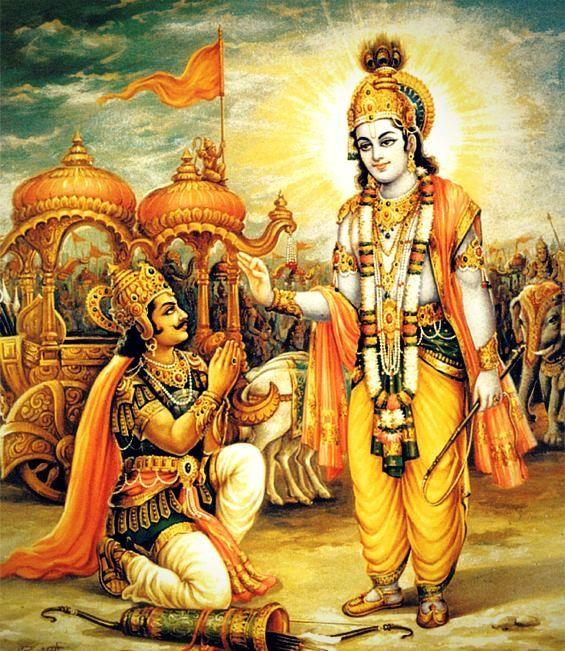
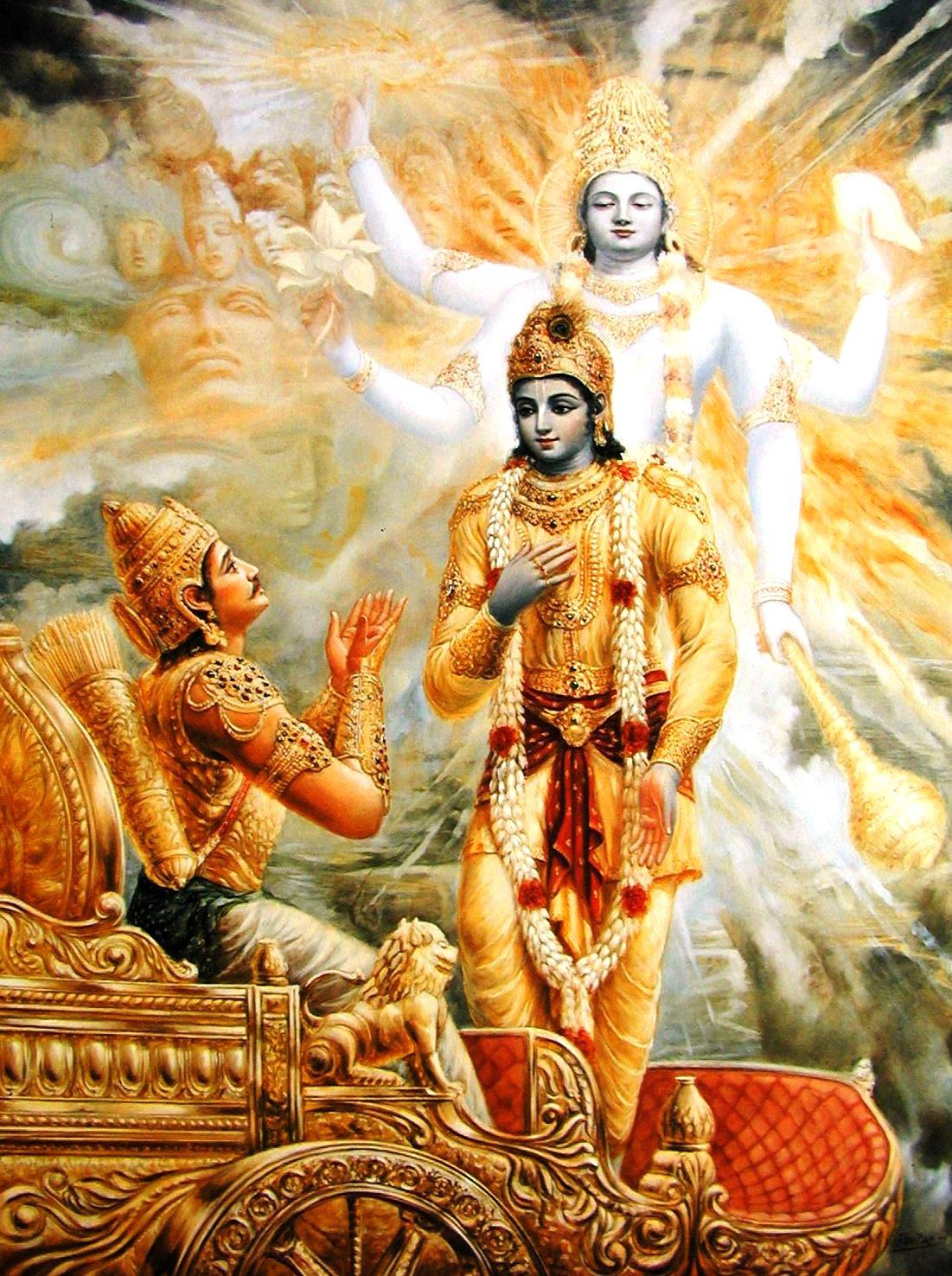
Lord Krishna teaching Arjuna in the battlefield
SRI BHAGAVAN AND SRIMAD BHAGAVAD GITA
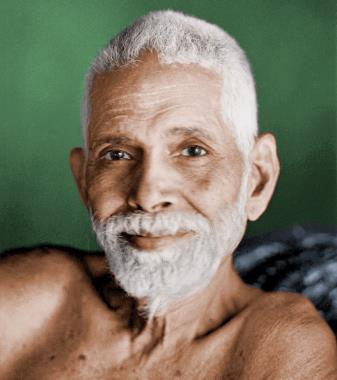
As stated elsewhere, in 1988-89, for one year, I was blessed to stay in the Lap of Mother Ganga at Holy Kashi. During this period, being immersed in sadhana and inner quietude, I was often in a state of ecstasy and altered consciousness. On Fridays, I would spend long hours in the Temples of Lord Viswanatha and Mother Annapoorni. Later, in the evenings, the Banks of Mother Ganga were my regular haunt. During these Bliss-filled hours, a few Bhairagis and Siddha Purushas used to sometimes come up to me and bless me, either silently or with a few words.
One day, a scantily dressed Bhairagi suddenly came up to me and asked in English, "Hey you! Have you read Srimad Bhagavad Gita?" On my replying in the negative, he ran away and vanished from my sight. After an hour or so, while I was still walking, he again appeared and said, "Read it from the standpoint of Lord Krishna. Don't read it from the standpoint of Arjuna." Then, he again ran away and disappeared, leaving me gazing at Mother Ganga and pondering over his words.
Yes, I told myself, it is true. Whoever reads the Bhagavad Gita — for the first time — invariably reads it from the standpoint of Arjuna. "This is my doubt which Arjuna is raising," they would tell themselves. Instead, if we take the position of Lord Krishna who dissolved all the doubts of Arjuna, we too would realise that we are ever the “Self” and never the ‘mind’! What a great Revelation it was when the significance of the Bhairagi's words hit me! I suddenly felt elevated and uplifted !
After all these years, my heart still brims over with gratitude towards that unknown Bhairagi who imparted this ‘Secret’ to me! The whole set of dialogues between Lord Krishna and Arjuna in the battlefield is truly taking place in each of us between the “Heart” and the ‘mind’. Lord Krishna is the “Heart” and the ‘mind’ is Arjuna.
That the Bhagavad Gita is very helpful for spiritual seekers in establishing them in “inner clarity” is underlined by the following incident: A devotee wanted to know when the Gita should be read. Sri Bhagavan's unequivocal, one word answer was, "Always!" Another time, Sri Bhagavan was conversing with a visiting Pundit about the unmatched merits of the Bhagavad Gita. A devotee who was listening to this, complained that it was difficult to keep all its 700 verses in mind. So, he requested Sri Bhagavan for one verse that could be remembered as the quintessence of the whole text. Sri Bhagavan thereupon quoted the following verse from Chapter 10, v. 20:
"I am the Self, oh Arjuna, dwelling in the Heart of every being. I am their beginning, the middle and also the end."
Further, at the request of Prof. G.V. Subbaramayya, Sri Bhagavan selected 42 verses from out of the Gita's 700 verses, and arranged them in an appropriate order to serve as guidance to spiritual aspirants and titled it “Bhagavad Gita Saram”. Later, He also translated these 42 Sanskrit verses into Tamil and Malayalam.
Srimad Bhagavad Gita is also the scripture that Sri Bhagavan very often referred to in support of his repeated and relentless emphasis on the “Truth” that there exists only “One Reality”, and that it resides within the Heart as one's own Self.
In Talks with Sri Ramana Maharshi, one finds umpteen quotations to prove this. Here are a few:
* * *
Sri Bhagavan: Be sunk in the Self. What does the Gita teach? Arjuna refused to fight. Lord Krishna said, "So long as you refuse to fight, you have the sense of doership.
“Who are you to refrain or to act? Give up the notion of doership. Until that sense disappears you are bound to act. You are being manipulated by a Higher Power. You are admitting it by your refusal to submit to IT. (Or, to put it differently, if you refuse, you will be forcibly drawn into it.)
“Instead of being an unwilling worker, be a willing one.
“Rather, be fixed in the Self and act according to nature without the thought of doership. Then, the results of action will not affect you. That is manliness and heroism.
“Thus, inherence in the Self is the sum and substance of the Gita's teaching.”
Finally, Sri Bhagavan added, "If a man be established in the Self, these doubts would not arise. They arise only, until he is established there."
D: Then of what use in such a reply to the enquirer?
Sri Bhagavan: The words still have force and will surely operate in due course.
(Talks No. 58)
* * *
D: When I sit down to think of God, ‘thoughts’ wander away to other objects. I want to control those thoughts.
Sri Bhagavan: In Srimad Bhagavad Gita, it is said that it is the nature of the ‘mind’ to wander. One must bring one's ‘thoughts’ to bear on God. By long practice, the ‘mind’ is controlled and made steady. The wavering of the mind is a weakness arising from the dissipation of its energy in the shape of ‘thoughts’. When one makes the ‘mind’ stick to ‘one thought’, the energy is conserved and the ‘mind’ becomes stronger.
(Talks No. 91)
* * *
D: How to make the ‘mind’ steady?
Sri Bhagavan: Gita says, "Sanaissanairuaramet." (The ‘mind’ must gradually be brought to a standstill); "Atma Samsthan Manah Kritva." (Make the ‘mind’ inhere in the Self ); "Abhyasa Vairagyabhyam." (By practice and dispassion).
Practice is necessary. The progress will be slow.
(Talks No. 565)
* * *
Sri Bhagavan: "Ishwaro Guruatmeti." (God, Guru and Self are identical). 'I' is only one. Egos are different. They are in the One Self. 'I' is the Truth. The whole significance is that one should hold on to the single 'I’, the single Self and not swerve therefrom. Our ‘thoughts’ must be obliterated. The Gita method is the only one for it: "Whenever the ‘mind’ strays away, bring it back to the Self."
(Talks No. 284 -- 87)
* * *
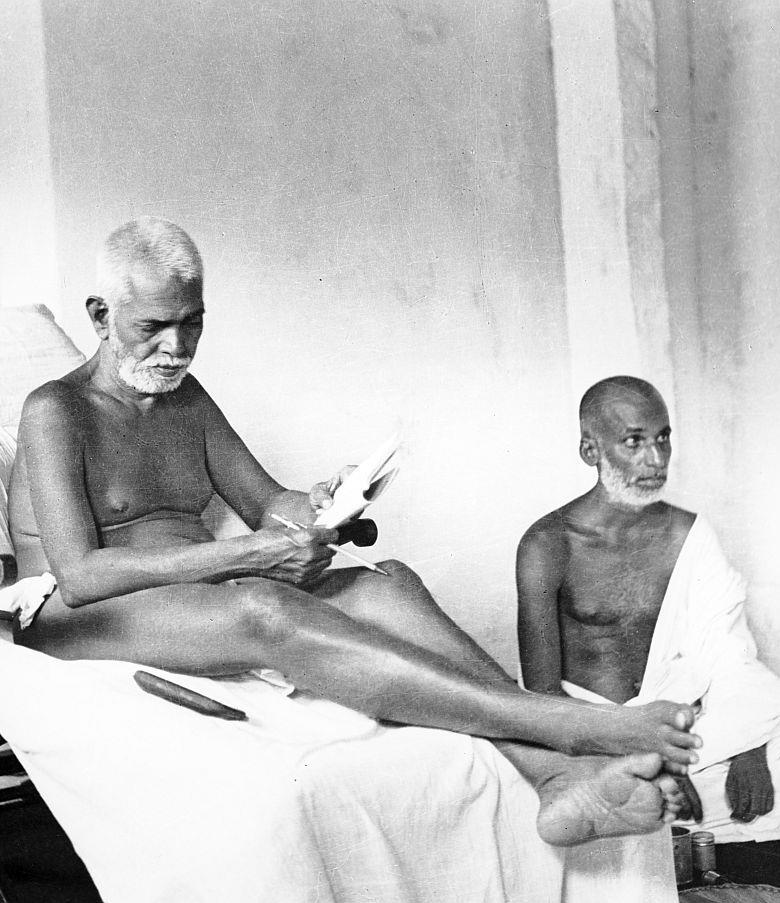
Sri Bhagavan with Yogi Ramiah
Sri Bhagavan And Srimad Bhagavad Gita
Prof. G.V. SUBBARAMAYYA
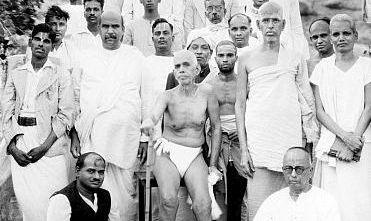
Right last is G.V. Subbaramayya
At this time, I was preparing a new edition of the “Bhagavad Gita” for a friend who had been annually distributing copies of the Gita free to local students and had exhausted the previous edition.
One day, I prayed to Sri Bhagavan to select some verses from the Bhagavad Gita to be printed in the first pages of the book for daily recitation and easy remembrance by students.
Sri Bhagavan at first hesitated saying that there were already so many Gita selections in the field. But finally heeding my repeated prayer, Sri Bhagavan selected forty-two verses and gave them a new sequence.
Sri Bhagavan followed it up by translating them Himself into Tamil and Malayalam verses; and, encouraged me to translate them into Telugu verse. All these versions with the original Sanskrit were published by the Ashram.
Sri Bhagavan added to them an Invocatory Verse in Tamil and Malayalam which was translated into Sanskrit sloka by Jagadiswara Sastri and into Telugu verse by myself.
“ ’Thought’ is the light of the ‘mind’. It is said: “He who, seated in Arjuna’s chariot spoke the Gospel to Arjuna and removed his distress, may that embodiment of Grace save us!”
I also wrote a Telugu verse of jubilation which stated: “The same Lord who then spoke the Gita has now taken shape as Ramana and is Himself giving us the nectareous essence of Gita to taste. What a fortune!” This was later translated into Sanskrit and other languages.
Incidentally Sri Bhagavan made some interesting observations on the “Bhagavad Gita”. Referring to ‘Viswarupa-Sandarshan’ (Vision of the Universal Form), Sri Bhagavan said: “The whole episode is really a wonder. Sri Krishna tells Arjuna ‘Now here within My Body you see the entire Universe movable and immovable, and also whatever besides you would like to see.’
If it were a form, however vast, how could Arjuna see in it whatever he (Arjuna) fancied? Again, the Lord says, ‘You see all Gods, Siddhas, Maharshis etc. within My Body.’
Arjuna admits that he sees them all, and in the same breath he says that they are all bowing to the Lord and singing hallelujahs!
Now, where do they stand in relation to the Lord’s Body, inside or outside? Where does Arjuna himself stand? These seeming inconsistencies will be obviated only when we realise that what Arjuna is being shown is not Viswa-rupa (Universal Form or shape) but Viswa-Atma (The Self as Universe).”
When Arjuna complains in the sixth canto that the ‘mind’ is fickle and overpowering, Krishna agrees but affirms that the mind can be controlled by ‘Abhyasa’ (practice) and ‘Vairagya’ (non-attachment).
A little earlier, the Lord tells Arjuna that wherever the fickle ‘mind’ wanders, it should be withdrawn from there and fixed in the Self.
“Now,” said Sri Bhagavan, “the withdrawal of the ‘mind’ from its regions of wandering is true ‘Vairagya’, and the fixing of the ‘mind’ in the Self is true ‘Abhyasa’.
“Referring to Lord Krishna’s description of His Gospel as the “Supreme Secret” which should be disclosed only to His true devotees and never to others, Sri Bhagavan explained the doctrine of ‘Adhikara’ (fitness). If the highest Truth is taught to the unworthy, it is bound to be perverted and abused.
“In fact, the Asuras (Demons) like Hiranyakasipu were also Brahmavadins (expounders of Brahman). They too declared “I am God”. Only, by the ‘I’ they meant their ego. So they recognised no higher authority than their ‘ego’, and felt free to commit any sin.
“Indiscriminate preaching of the highest Truth irrespective of the disciple’s fitness will therefore spell disaster and is forbidden by the Lord. “
Referring to the 46th verse in the Second canto, Sri Bhagavan said, “All Scriptures have validity only to those who recognise their own ignorance and seek Enlightenment. Persons who are immersed in ignorance never bother about scriptures of whose very existence they are quite oblivious.
“On the other hand, the Jnani who sees nothing other than the Self cannot be bound by any authority—even that of the Scriptures. All Scriptures only propound Brahman whereas the Jnani is Brahman Itself.”
When someone asked about the difference between ‘Prajnana’ and ‘Vijnana’, Sri Bhagavan replied, “’Swarupajnana’ (Self-awareness) is ‘Prajnana’. ‘Anubhava-jnana’ (Knowledge through experience) is ‘Vijnana’.”
Another time, I asked Sri Bhagavan to explain the distinction between ‘Aham Brahmasmi’ (I am Brahman) and ‘Brahmaivaham’ (Brahman is I) in ‘Sri Ramana Gita’ canto IV, verse I, Sri Bhagavan said, “By meditating on Brahmaivaham, the sense of ‘indirectness’ goes away. By meditating on ‘Aham Brahmasmi’ the sense of ‘separateness’ is removed. ‘Thought’ is the parent of the deed.”
It was Sri Krishna Jayanthi day. I was reciting Sri Bhagavan’s “Upadesa Saram”. Just as I sang the last words ‘Ramana Vagiyam’ (“This is the utterance of Ramana”), the postman put into my hand a book-packet which was Sri Bhagavan’s Tamil translation of ‘Bhagavad-Gita-Saram’.
At this coincidence, I felt thrilled and I realised how Sri Krishna was truly reborn for me that day and how the Gita of Bhagavan Krishna and the Gospel of Bhagavan Sri Ramana are one and the same.
As I was writing to the Ashram, I heard a street-beggar recite a Telugu song with the refrain “This is no lie but Truth, yes, Truth. After darshan of Sat-Guru there is no more trouble of rebirth.”
This coincidence also struck me as marvellous. Then and there I copied the song in that very letter and related the circumstances. When my Telugu rendering of the Gita selections reached the Ashram, B. Virabhadrayya, B. A., then Deputy Collector, Chittoor, who, it seems, was at that time In the Ashram in connection with his son’s ‘Upanayanam’, happened to read the poem and offered to get one thousand copies of it printed, and the devout offer was accepted by the Ashram. This was a further fruit of Sri Bhagavan’s Grace.
Another touching expression of Grace by Sri Bhagavan was His practice of transliterating His works, which He alone could do, for the benefit of His devotees, unmindful of the immense labour involved. Accordingly Sri Bhagavan sent me His Malayalam version of the Gita selections in Telugu script.
Likewise He transliterated my Telugu version in Malayalam script for His attendant Madhava Swami. So, when the next time I went to the Ashram, I was struck with surprise and wonder when at the bidding of Sri Bhagavan, Madhava Swami repeated from memory the entire Telugu poem without a single mistake!
- “Sri Ramana Reminiscences”
Quotes From “TALKS”
Talk 17.
Sri Bhagavan.: For a realised man, the one who remains ever in the Self, the loss of one or several or all lives either in this World or in all the three Worlds makes no difference. Even if he happens to destroy them all, no sin can touch such a pure soul. Maharshi quoted the Gita, Chapter 18, Verse 17 — “He who is free from the notion of ‘ego’, whose intellect is unattached, though he annihilates all the Worlds, he slayeth not, nor is he bound by the results of his actions.”
Talk 30.
D.: I have my professional work and yet I want to be in perpetual dhyana. Will they conflict with each other?
Sri Bhagavan.: There will be no conflict. As you practise both and develop your powers you will be able to attend to both. You will begin to look on business as a dream. Says the Bhagavad Gita: “That which is the night of all beings, for the disciplined man is the time of waking; when other beings are waking, then is it night for the Sage who seeth.” (11.69.)
Talk 41.
D.: The Gita says that if a man fixes his attention between the eyebrows and holds his breath he reaches the Supreme State. How is that done?
Sri Bhagavan.: You are always in the Self and there is no reaching it. The eyebrow is only a place where attention is to be fixed (Seat of Meditation — Upasanasthana).
Talk 46.
The scriptures say that the Self is nityasiddha, ever present, and yet speak of the removal of ajnana. If Self is (nitya) always and (siddha) present, how can there be ajnana? For whom is the ajnana? These are contradictory. But such statements are for guiding the earnest seeker in the right way. He does not readily understand the only Truth if mentioned in plain words as in natwam naham neme janadhipah (not thou, nor I, nor these kings ...). Sri Krishna declared the Truth, but Arjuna could not grasp it. Later, Sri Krishna plainly says that people confound Him with the body, whereas in reality He was not born nor will He die. Still Arjuna requires the whole Gita for the Truth to be made clear to him.
Talk 58.
Mr. Ranganathan, I. C. S: In Srimad Bhagavad Gita there is a passage: “One’s own dharma is the best; an alien dharma is full of risks.” What is the significance of one’s own dharma?
Sri Bhagavan.: It is usually interpreted to mean the duties of the orders and of the different castes. The physical environment must also be taken into consideration.
D.: If varnasrama dharma be meant, such dharma prevails only in India. On the other hand the Gita should be Universally applicable.
Sri Bhagavan.: There is varnasrama in some form or other in every land. The significance is that one should hold on to the single Atman and not swerve therefrom. That is the whole gist of it.
sva = one’s own, i.e., of the Self, of the Atman. para = the other’s, i.e., of the non-self, of the anatma.
Atma Dharma is inherence in the Self. There will be no distraction and no fear. Troubles arise only when there is a second to oneself.
If the Atman be realised to be only unitary, there is no second and therefore no cause for fear. The man, as he is now, confounds the anatma (non-Self) dharma with atma (the Self) dharma and suffers. Let him know the Self and abide in it; there is an end of fear, and there are no doubts.
Even if interpreted as varnasrama dharma the significance is only this much. Such dharma bears fruit only when done selflessly. That is, one must realise that he is not the ‘doer’, but that he is only a tool of some Higher Power. Let the Higher Power do what is inevitable and let me act only according to its dictates. The actions are not mine. Therefore the result of the actions cannot be mine. If one thinks and acts so, where is the trouble? Be it varnasrama dharma or loukika dharma (Worldly activities), it is immaterial. Finally, it amounts to this:
sva = atmanah (of the Self) para = anaatmanah (of the non-Self)
Such doubts are natural. The orthodox interpretation cannot be reconciled with the life of a modern man obliged to work for his livelihood in different capacities.
A man from Pondy interposed: Sarva dharmaan parityajya maamekam saranam vraja (leaving all duties surrender to Me only).
Sri Bhagavan: (All) Sarva is only anaatmanah (of the non-Self); the emphasis is on ekam (only). To the man who has strong hold of the eka (One) where are the dharmas? It means, “Be sunk in the Self.”
D.: The Gita was taught for action.
Talk 73.
Mr. Ekanatha Rao, the engineer, asked, “What about the despondency of not obtaining any encouragement from the Master — much less his Grace?”
Sri Bhagavan.: It is ignorance only. The quest must be made as to who is despondent and so on. It is the phantom of the ‘ego’ arising after sleep which falls a prey to such thoughts. In deep sleep the person was not afflicted. Who is afflicted now while awake? The sleep state is about the normal one. Let him search and find out.
D.: But there is no incentive for want of encouragement.
Sri Bhagavan.: Does not one find some kind of peace while in meditation? That is the sign of progress. That peace will be deeper and more prolonged with continued practice. It will also lead to the Goal. Bhagavad Gita — Chapter XIV — the final verses speak of gunatita (one who has transcended the gunas). That is the final stage.
The earlier stages are asuddha satva (impure Being), misra satva (mixed Being), and suddha satva (Pure Being).
Of these, the impure being is when overpowered by rajas and tamas; the mixed being is that state in which the Being — satva — asserts itself spasmodically; the suddha satva overpowers rajas and tamas. After these successive stages, there comes the state transcending gunas.
Talk 95.
D.: What are the obstacles to remaining steady in unbroken Bliss? How can they be overcome?
Sri Bhagavan.: The obstacles are:
(1) Ignorance which is forgetfulness of one’s Pure Being.
(2) Doubt which consists in wondering if even the experience was of the Real or of the unreal.
(3) Error which consists in the “I-am-the-body” idea, and thinking that the World is real. These are overcome by hearing the Truth, reflection on it and concentration.
The Master continued: Experience is said to be temporary or permanent. The first experience is temporary and by concentration it can become permanent. In the former the bondage is not completely destroyed; it remains subtle and reasserts itself in due course. But in the latter it is destroyed root and branch, never to appear again. The expression yogabhrashta (those who have fallen down from Yoga) in Srimad Bhagavad Gita refers to the former class of men.
Talk 145.
Mr. P. Brunton: Why do religions speak of Gods, Heaven, hell, etc.?
Sri Bhagavan.: Only to make the people realise that they are on a par with this World and that the Self alone is Real. The religions are according to the view-point of the seeker. Take the Bhagavad Gita for instance:
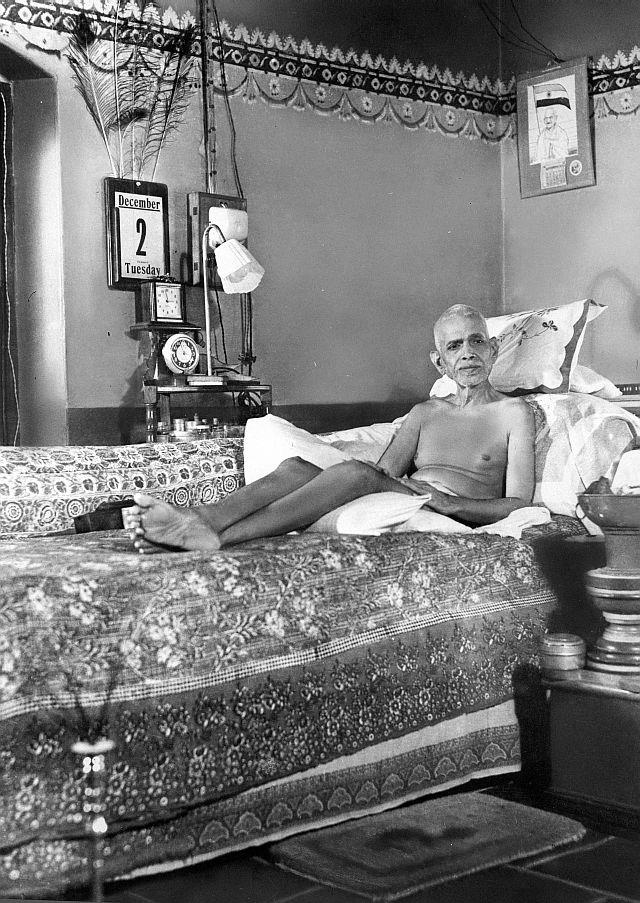
Sri Bhagavan in the Old Hall
When Arjuna said that he would not fight against his own relatives, his elders, etc., in order to kill them and gain the Kingdom, Sri Krishna said, “Not that these, you or I, were not before, are not now, nor will not be hereafter. Nothing was born, nothing was dead, nor will it not be so hereafter” and so on. Later as he developed the theme and declared that He had given the same instruction to the Sun, through him to Ikshvaku, etc. Arjuna raised the doubt, “How could it be? You were born a few years ago. They lived ages ago.” Then Sri Krishna understanding Arjuna’s standpoint, said: “Yes. There have been so many incarnations of Myself and yourself, I know them all but you do not know.”
Such statements appear contradictory, but still they are correct according to the viewpoint of the questioner. The Christ also declared that He was even before Abraham.
Talk 181.
D.: Yad gatva na nivartante tad dhama paramam mama. Which is that dhama? Is it not the Absolute State beyond Cosmic Consciousness?
Sri Bhagavan.: Yes.
D.: ‘Na Nivartante’ would mean not covered by ignorance again.
Sri Bhagavan.: Yes.
D.: Does it follow by inference that those who reach Cosmic Consciousness have not escaped from the clutches of ignorance?
Sri Bhagavan.: That is what is meant by saying that all lokas, even the Brahma Loka, do not release one from rebirth. vide. the Bhagavad Gita: “Reaching ME, there is no rebirth .... All others are in bondage.” Moreover, so long as you think that there is gati (movement) — as implied in the word gatva (having gone to) — there is punaravritti (return) also. Again gati implies your Purvagamanam (birth). What is birth? It is birth of ‘ego’.
Once born you reach something; if you reach it, you return also. Therefore, leave off all this verbiage! Be as you are. See who you are and remain as the Self, free from birth, going, coming and returning.
D.: True. However often this Truth is heard, still it eludes us and we forget it.
Sri Bhagavan.: Quite so. Reminders are often necessary.
Talk 186.
D.: What happens after birth in human form, what happens to the jiva?
Sri Bhagavan.: Let us know first what we are. We do not understand what we are, and until we know what we are there is no room for such a question. (Bhagavan obviously here refers to the confusion of body as Atman — dehatma buddhi — which is the cause for this confusion of ideas of death and birth, for Atman has no birth or death, it is untainted by the elements of Earth, Fire, Air and Water, etc.) (Gita II, 11) — Asochyam anvosochas tvam, prajnavadamscha bhashase, etc. — What is it that had birth? Whom do you call a man? If, instead of seeking explanation for birth, death and after-death matters, the question is raised as to who and how you are now, these questions will not arise. You are the same while asleep (deep sleep), in dream and in waking state. Is the ‘I’ thought jiva, or the body jiva? Is this thought or nature? Or is the experience that we live, etc., our nature? (Quotes the sloka from the Gita: Yada te . . . II, 52.)
Talk 189.
D.: How is work to be done ordinarily for an aspirant?
Sri Bhagavan.: Without self-identification with the actor. For instance, did you intend visiting this place while in Paris?
D.: No!
Talk 203.
The Bhagavad Gita says: “The unreal hath no being; the Real never ceaseth to be; the Truth about both hath been perceived by the seers of the essence of things.” “The Real is ever Real, the unreal is ever unreal.” Again: “He is not born, nor doth he die; nor, having been, ceaseth he anymore to be; unborn, perpetual, eternal ancient, he is not slain when the body is slaughtered.” Accordingly, there is neither birth nor death. Waking is birth and sleep is death.
Talk 208.
……..
Still more, they assume that the individual soul becomes Pure by being divested of the ‘ego’ and fit for being the ‘body’ of the Lord. Thus the Lord is the Spirit and the purified souls constitute His body and limbs! Can there be a soul for the souls? How many souls are there? The answer must be, “There are many individual souls and One Supreme Soul.” What is Soul in that case? It cannot be the body, etc. What remains over after all these are eliminated must be said to be the Soul. Thus, even after Realising the Soul as that which cannot be discarded, the Supreme Soul must be known to exist. In that case, how was the soul realised to be the Ultimate Reality after discarding all that was alien to it? Should this be right, the Soul which was described as that Inalienable Reality is not the true soul. All such confusion is due to the word ‘soul’ (atma). The same word atma is used to signify the ‘body’, the ‘senses’, the ‘mind’, the ‘vital principle’, the ‘individual soul’ and the Supreme Being. This wide application of the word has given rise to the idea that the individual soul (jivatma), goes to constitute the Body of the Supreme (Paramatma). “I, O Arjuna! am the Self, seated in the Heart of all beings; ...” (Bhagavad Gita, X-20). The stanza shows that the Lord is the Atma (Self) of all beings. Does it say, “the Self of the selves”? If, on the other hand, you merge in the Self there will be no individuality left. You will become the Source itself. In that case what is surrender? Who is to surrender what and to whom? This constitutes devotion, Wisdom, and investigation.
Talk 264.
D.: Does Sri Bhagavan believe in evolution?
Sri Bhagavan.: Evolution must be from one state to another. When no differences are admitted, how can evolution arise?
D.: Why does Sri Krishna say, “After several rebirths, the seeker gains Knowledge and thus knows Me.” There must be evolution from stage to stage.
Sri Bhagavan.: How does Bhagavad Gita begin?”
Neither I was not nor you nor these chiefs, etc.” “Neither it is born, nor does it die, etc.” So there is no birth, no death, no present as you look at it. Reality was, is, and will be. It is changeless. Later Arjuna asked Sri Krishna how he could have lived before Aditya. Then Krishna, seeing Arjuna was confounding Him with the gross body, spoke to him accordingly. The instruction is for the one who sees diversity. In reality there is no bondage nor Mukti for himself or for others from the Jnani’s standpoint.
Talk 270.
Mr. G. V. Subbaramayya, a lecturer in English in Nellore, asked:
Brahman is the one by whom all this is pervaded (yena sarvamidam thatham). But then how does Sri Krishna specify the vibhutis in Chapter X of Bhagavad Gita?
Sri Bhagavan.: The specifications are in reply to a definite question by Arjuna who required to know the Lord’s vibhutis for convenience of worship (upasana soukaryam). The fact is that God is ALL. There is nothing apart from Him.
D.: The individual is said to give up decayed bodies (jirnani sarirani) and to take up new ones (navani). Would the statement apply to infant deaths also?
Sri Bhagavan.: You do not know, in the first place, what is jirnani and what is navani. Secondly, jirna and nava are relative terms. What is old to a King may be new to a beggar. The truth is that the individuality signifies the state of embodiment till the time of Liberation!
Talk 284.
D.: It is said in Srimad Bhagavad Gita: “Realise the Self with pure intellect and also by service to Guru and by enquiry.” How are they to be reconciled?
Sri Bhagavan.: Iswaro Gururatmeti — Iswara, Guru and Self are identical. So long as the sense of duality persists in you, you seek a Guru considering that he stands apart. He however teaches you the Truth and you gain the insight.
D.: Kindly explain: ahameko name kaschit nahamanyasya kasyachit naham pasyami yasyaham tam na pasyami yo mama (I am alone; none is mine; of none else am I, I see none whose I am, none who is mine).
Sri Bhagavan.: This sloka occurs in different Scriptures, holy books, e.g., Bhagavata, Maha Bharata, etc. It also forms the motto of Chapter XI in Self-Realisation. Aham — ‘I’, is only One. ‘Egos’ are different. They are in the One Self. The Self is not affected by the ‘egos’. ‘I’ is one only. ‘I’ is the Truth. All that follows is meant to refute the sense of duality.
Talk 287.
Sri Bhagavan.: Peace is our Real Nature. It need not be attained. Our ‘thoughts’ must be obliterated.
D.: I have been trying to obliterate them but I am not successful.
Sri Bhagavan.: The Gita method is the only one for it. “Whenever ‘mind’ strays away bring it back to bear on meditation.”
Talk 290.
Mr. Sagarmull, a Marwari gentleman, a cotton merchant from Bombay, seems learned in Srimad Bhagavad Gita. He asked:
Srimad Bhagavad Gita says: mattah parataram nanyat kinchit and later on sutre manigana iva — “There is nothing different from Me” and later on “like beads strung on a thread.” If there is nothing but Sri Krishna, how can the World be said to be like “beads on a string?”
Sri Bhagavan.: It means that the sutra (string) and the mani (jewel beads) are not apart from ME. There are no maniganah (row of beads) apart from the string (sutra) and no string apart from Me. The sloka emphasizes unity and not multiplicity which is only on the surface.
…..
D.: But I am imperfect.
Sri Bhagavan.: Why bring in imperfection? Why are you not perfect? Did you feel imperfection in your sleep? Why do you not remain so even now? Bring sleep into the waking state (jagrat sushupti) and you will be all right. Ya nisa sarva bhootanam ... pasyato muneh ...(That which is night for the ignorant is day for the Wise).
…..
D.: Will Peace be gradual?
Sri Bhagavan.: Yes. Make the ‘mind’ gradually still (Sanaissanaih uparamet) says the Bhagavad Gita.
Talk 336.
A certain Vaisya who seems to have studied the Upanishads and Srimad Bhagavad Gita asked some questions:
D.: How to realise the Self?
Sri Bhagavan.: The Self is always directly perceived. There is no moment when it is not so. How then is it to be ascertained? Find out the Self. You are That.
D.: But it is said the Heart-knots are cut away and all doubts end when the Supreme is found. The word ‘drishti’ is used.
Sri Bhagavan.: ‘To be’ the Self is the same as ‘seeing’ the Self. There are no two selves for the one to see the other.
…..
D.: Can we not see the Glory as million-Sun-splendour?
Sri Bhagavan.: Can you see the single Sun? Why do you ask for millions of Suns?
D.: It must be possible to do so by Divine Sight. “Where the Sun shines not, etc. That is My Supreme Abode”. Therefore there is a state where this Sun is powerless. That state is that of God.
Sri Bhagavan.: All right. Find Sri Krishna and the problem is solved.
D.: Sri Krishna is not alive.
Sri Bhagavan.: Is that what you have learnt from the Gita? Does He not say that He is Eternal? Of what are you thinking, His body?
D.: He taught others while alive. Those around Him must have realised. I seek a similar living Guru.
Sri Bhagavan.: Is Gita then useless after He withdrew His body? Did He speak of His body as Krishna? Natwewaham jatu nasam ... (Never I was not....)
D.: But I want a living Guru who can say the Truth first hand.
Sri Bhagavan.: The fate of that Guru will be similar to the fate of Sri Krishna.
The questioner retired. Later, Sri Bhagavan said: Divine Sight means Self-luminosity. The word divya shows it. The full word means the Self. Who is to bestow a Divine Eye? And who is to see? Again, people read in the books, “hearing, reflection and one-pointedness are necessary”. They think that they must pass through savikalpa samadhi and nirvikalpa samadhi before attaining Realisation. Hence all these questions. Why should they wander in that maze? What do they gain at the end? It is only cessation of the trouble of seeking. They find that the Self is Eternal and self-evident. Why should they not get that repose even this moment? A simple man, not learned, is satisfied with japa or worship. A Jnani is of course satisfied. The whole trouble is for the book-worms. Well, well. They will also get on.
Talk 343.
D.: Even as the hand is cut off, one must remain unaware of it because Bhagavad Gita declares that the Self is different from the body.
Sri Bhagavan.: Does jnana consist in being unaware of the pain of injury?
D.: Should he not remain unaware of pain?
Sri Bhagavan.: Major operations are performed under anaesthetics, keeping the patient unaware of the pain. Does the patient gain “Jnana” too, at the same time? Insensibility to pain cannot be “Jnana”.
Talk 376.
D.: “Only one in a million pursues sadhanas to completion.” (Bh.Gita, VII, 3).
Sri Bhagavan.: “Whenever the turbulent ‘mind’ wavers, then and there pull it and bring it under control.” (Bh. Gita, VI, 26.) “Seeing the ‘mind’ with the ‘mind’ ” (manasa mana alokya), so proclaim the Upanishads.
Talk 385.
……….
D.: Is Vaikuntha in Paramapada, i.e., in the Transcendent Self?
Sri Bhagavan.: Where is Paramapada or Vaikuntha unless in you?
D.: Vaikuntha, etc., appear involuntarily.
Sri Bhagavan.: Does this World appear voluntarily?
The questioner returned no answer.
Sri Bhagavan.: The self-evident ‘I’, ignoring the Self, goes about seeking to know the non-Self. How absurd!
D.: This is Samkhya Yoga. Being the culmination of all kinds of other Yogas, how can it be understood to start with? Is not Bhakti antecedent to it?
Sri Bhagavan.: Has not Sri Krishna started the Gita with Sankhya?
D.: Yes. I understand it now.
Talk 398.
….
Silence is the most potent form of work. However vast and emphatic the Sastras may be, they fail in their effect. The Guru is quiet and Peace prevails in all. His Silence is more vast and more emphatic than all the Sastras put together. These questions arise because of the feeling, that having been here so long, heard so much, exerted so hard, one has not gained anything. The work proceeding within is not apparent. In fact, the Guru is always within you.
Saint Thayumanavar says: “Oh Lord! Coming with me all along the births, never abandoning me and finally rescuing me!” Such is the experience of Realisation.
Srimad Bhagavad Gita says the same in a different way, “We two are not only now but have ever been so.”
D.: Does not the Guru take a concrete form?
Sri Bhagavan.: What is meant by ‘concrete’? Because you identify your Being with your ‘body’, you raise this question. Find out if you are the ‘body’.
The Gita says: param bhavam ajanantah (Bh. Gita IX - II) – that those who cannot understand the Transcendental Nature (of Sri Krishna) are fools, deluded by ignorance.
The Master appears to dispel that ignorance. As Saint Thayumanavar puts it, he appears as a ‘man’ to dispel the ignorance of a ‘man’, just as a ‘deer’ is used as a decoy to capture the ‘wild deer’. He has to appear with a ‘body’ in order to eradicate our ignorant “I-am-the-body” idea.
Talk 424.
In the course of conversation with a learned man who asked about Purusha and Prakriti, Sri Bhagavan said:
Purusha and Prakriti are only the bifurcation of the one Supreme. They are surmised because the student has the sense of duality deep rooted. The same Gita also says that Purushottama lies beyond Purusha and Prakriti.
Talk 436.
D.: What is Visvarupa?
Sri Bhagavan.: It is to see the World as the Self of God. In the Bhagavad Gita God is said to be various things and beings, and also the whole Universe. How to realise it or see it so? Can one see one’s Self? Though not seen, can the Self be denied? What is the Truth?
D.: Is it then wrong to say that some have seen it?
Sri Bhagavan.: It is true in the same degree as you are. The Gita begins saying that no one was born; in the fourth chapter it says, “the numerous incarnations, yours and mine, have taken place; I know them but you do not.” Of these two statements, which is the Truth? The instruction is according to the listener’s understanding. If the second chapter contains the whole Truth, why should so many more chapters follow it?
In the Bible, God says “I AM before Abraham.” He does not say “I was” but “I AM.”
Talk 439.
D.: Sri Rama asks: “Brahman being Pure, how can maya arise from Him and veil Him also? “Saint Vasishta replies: “In pure ‘mind’ associated with strong dispassion, this question will not arise.” Of course, in Advaita (non-dualistic) philosophy there can be no place for jiva, Isvara and maya. Oneself sinking into the Self, the vasanas (tendencies) will entirely disappear, leaving no room for such a question.
Sri Bhagavan.: The answers will be according to the capacity of the seeker. It is said in the second chapter of Gita that no one is born or dies: but in the fourth chapter Sri Krishna says that numerous incarnations of His and of Arjuna had taken place, all known to Him but not to Arjuna. Which of these statements is true? Both statements are True, but from different standpoints. Now a question is raised: How can jiva rise up from the Self? I must answer. Only know Your Real Being, then you will not raise this question.
Why should a man consider himself separate? How was he before being born or how will he be after death? Why waste time in such discussions? What was your form in deep sleep? Why do you consider yourself as an ‘individual’?
Talk 467.
Yogi Ramiah: All actions take place owing to Sakti. How far does Sakti go? Can she effect anything without one’s own ‘effort’?
Sri Bhagavan.: The answer to the question depends on what the Purusha is understood to be. Is he the ‘ego’ or the Self?
D.: Purusha is Svarupa.
Sri Bhagavan.: But he cannot make any prayatna (effort).
D.: Jiva is the one who makes the prayatna.
Sri Bhagavan.: So long as egoity lasts prayatna is necessary. When egoity ceases to be, actions become spontaneous. The ‘ego’ acts in the Presence of the Self. He cannot exist without the Self.
The Self makes the Universe what it is by His Sakti, and yet He does not Himself act. Sri Krishna says in the Bhagavad Gita, “I am not the ‘doer’ and yet actions go on”. It is clear from the Mahabharata that very wonderful actions were effected by Him. Yet, He says that He is not the doer. It is like the Sun and the World actions.
Talk 472.
D.: The Sastras say that the ‘thoughts’, thus playing free, lead us astray, that is, to unreal and changeful things.
Sri Bhagavan.: So then, you want not to be led to unreal and changeful things. Your ‘thoughts’ are unreal and changeful. You want to hold the Reality. That is exactly what I say. The ‘thoughts’ are unreal. Get rid of them.
D.: I understand now. Yet there is a doubt. “Not a trice can you remain inactive.” How shall I be able to rid myself of ‘thoughts’?
Sri Bhagavan.: The same Gita says: “Although all ‘actions’ take place, I am not the doer.” It is like the Sun towards the World activities. The Self always remains actionless, whereas ‘thoughts’ arise and subside. The Self is Perfection; it is immutable; the ‘mind’ is limited and changeful. You need only to cast off your ‘limitations’. Your Perfection thus stands revealed.
D.: Grace is necessary for it.
Sri Bhagavan.: Grace is ever present. All that is necessary is that you surrender to It.
Talk 565.
A gentleman from Mysore asked: How is the ‘mind’ to be kept in the right way?
Sri Bhagavan.: By practice. Give it good ‘thoughts’. The ‘mind’ must be trained in good ways.
D.: But it is not steady.
Sri Bhagavan.: The Bhagavad Gita says: Sanaissanairuparamet (The ‘mind’ must gradually be brought to a standstill); Atma samstham manah krtva (making the ‘mind’ inhere in the Self); Abhyasa-vairagyabhyam (by practice and dispassion). Practice is necessary. Progress will be slow.
D.: What is the Self referred to in Atma samstham (fixing it in the Self)?
Sri Bhagavan.: Do you not know your Self? You certainly exist. Or do you deny your existence? The question may arise “Who is this Self”, only if you do not exist, but you cannot ask anything unless you exist at the same time. Your question shows that you exist. Find out who you are. That is all.
Talk 580.
D.: Is a Jnani different from a Yogi? What is the difference?
Sri Bhagavan.: Srimad Bhagavad Gita says that a Jnani is the True Yogi and also a True Bhakta. Yoga is only a sadhana and Jnana is the sIddhi.
Talk 621.
Mr. Raj Krishna found Sri Bhagavan alone on the Hill at about 5-30 p.m. and prayed: I have been desiring since my tenth year to have a glimpse of the Reality. I firmly believe that I can be helped in this only by a Sage like Sri Bhagavan. So I pray for Thy help.
Sri Bhagavan looked at him for a few minutes. The devotee interrupted, saying: “Even if I cannot realise in my life let me at least not forget it on my death bed: let me have a glimpse at least at the moment of death so that it may stand me in good stead in the future.”
Sri Bhagavan.: It is said in the Bhagavad Gita, Ch. VIII, that whatever may be the last thought at death, it determines the later birth of the person. It is necessary to experience the Reality now in life in order that it may be experienced at death. See if this moment be different from the last one, and try to be in that desired state.
Talk 649.
D.: How are we to understand this passage in the Gita: “This whole Cosmos forms a particle of Me.”
Sri Bhagavan.: It does not mean that a small particle of God separates from Him and forms the Universe. His Sakti is acting; as a result of one phase of such activity the Cosmos has become manifest. Similarly, the statement in Purusha Sukta, “All the beings form His one foot (Padosya viswa bhutani)” does not mean that Brahman is in four parts.
D.: I understand it. Brahman is certainly not divisible.
Sri Bhagavan.: So, the fact is that Brahman is all and remains indivisible. He is ever realised. The man does not however know it. He must know it. Knowledge means the overcoming of obstacles which obstruct the revelation of the Eternal Truth that the Self is the same as Brahman. The obstacles form altogether your idea of separateness as an ‘individual’. Therefore, the present attempt will result in the Truth being revealed that the Self is not separate from Brahman.
Talk 650.
An Andhra gentleman of middle age asked Sri Bhagavan how he should make his japa.
ri Bhagavan.: The japa contains the word ‘namah’. It means that state in which the ‘mind’ does not manifest apart from the Self. When the state is accomplished, there will be an end of the japa. For, the ‘doer’ disappears and so also the ‘action’. The Eternal Being is alone left. Japa should be made until that ‘state’ is reached. There is no escape from the Self. The doer will be automatically drawn into it. When once it is done, the man cannot do anything else but remain merged in the Self.
D.: Will bhakti lead to mukti?
Sri Bhagavan.: Bhakti is not different from Mukti. Bhakti is being as the Self (Swarupa). One is always that. He realises it by the means he adopts. What is bhakti? To think of God. That means: only ‘one thought’ prevails to the exclusion of all other ‘thoughts’. That ‘thought’ is of God which is the Self or it is the self surrendered unto God. When He has taken ‘you’ up, nothing will assail you. The absence of ‘thoughts’ is Bhakti. It is also Mukti. The Jnana method is said to be Vichara (enquiry). That is nothing but ‘Supreme Devotion’ (Parabhakti). The difference is in words only. You think that bhakti is meditation on the Supreme Being. So long as there is vibhakti (the sense of separateness), bhakti (reunion) is sought. The process will lead to the Ultimate Goal as is said in Srimad Bhagavad Gita:
arto jignasuh artharthi jnani cha Bharatarshabha tesham jnani nityayukta ekabhaktir visishyate
— Ch. VII (l6, 17).
— from “Talks with Sri Ramana Maharshi”
The Song Celestial
Sri Bhagavan was speaking once with a visiting pundit about the great merits of the Bhagavad Gita, when a devotee complained that it was difficult to keep all the seven hundred verses in ‘mind’ and asked if there was not ‘one verse’ that could be remembered as the Quintessence of the Gita. Sri Bhagavan thereupon mentioned Chapter X, verse 20: “I am the Self, Oh Gudakesa, dwelling in the Heart of every being; I am the beginning and the middle and also the end of all beings.”
Later He selected forty-two verses that here follow (of which that quoted above comes fourth) and arranged them in an appropriate order to serve as guidance.
Said Sanjaya:
1.Despondent, overwhelmed with compassion (as he sat), his troubled eyes filled with tears, Sri Krishna, the slayer of Madhu spoke to him.
ii: 1
Sri Krishna said:
2. This body, O Son of Kunti,1 is known as the ‘Field’; and he who is aware of it is called the ‘Knower of the Field’ by the wise.
xiii:1
3. And know that I am the Knower of the Field in all the fields, O Bharata. The knowledge of the ‘Field’ and the knower of that, in my opinion, is True Knowledge.
xiii:2
4. I am the Self, O Gudakesa, dwelling in the Hearts of all beings. I am the beginning and the middle and the end of all beings.
x:20
5. For to him who is born, death is indeed certain, and to him who dies, birth is certain. Therefore, you should not grieve for the inevitable.
ii:27
6. ‘That’ is not born, nor does ‘It’ ever die; nor, having been, does ‘It’ ever cease to be. That Unborn, Eternal, Abiding, Primeval Being is not slain when the body is slain.
ii:20
7. Invulnerable He is, not to be burnt, not to be drenched or dried. He is Eternal, All-pervading, Changeless, Motionless, Enduring.
ii:24
8. Know that which pervades all this to be Indestructible. That Immutable none can destroy.
ii:27
9. The unreal has no being, the Real no non-being. These two facts the Truth-seers perceive.
ii:16
10. Just as the all-pervading ether, being subtle, is not affected, (tainted or contaminated by anything), even so, the Self pervading the whole body is not tainted.
xiii:33
11. Neither Sun, nor Moon, nor Fire illumine this state on attaining which one does not return. And, this is My Supreme Abode.
xv:6
1 Arjuna.
12. This Supreme State is called the “Unmanifest Imperishable” (avyakto akshara). That is My highest Abode. For those who attain to It, there is no return.
viii:21
13. The undeluded, those who are free from pride and ignorance, who have overcome the evil of attachment, who are ever devoted to the Self, who have turned away from desires and are entirely beyond the dualities of pleasure and pain, attain that “Imperishable State. “
xv:5
14. He who abandons the injunctions of the Scriptures and behaves according to the impulses of his desires, attains neither Perfection, nor Happiness, nor the Highest State of Salvation.
xvi:23
15. He who sees the Supreme Lord, residing equally in all beings — the “Imperishable One” among the perishables — sees (truly).
xiii:27
16. Only by unswerving devotion can I be known and truly seen in this form, Arjuna, and even be entered into, O tormentor of the foe.
xi:54
17. The faith of everyone is according to his nature, O Bharata. Man is essentially endowed with ‘faith’. What his ‘faith’ is, that indeed is he.
xvii:3
18. One who has faith and concentration and has subdued his senses attains Knowledge. Having gained Knowledge he speedily attains Supreme Peace.
iv:39
19. To them ever steadfast in loving worship, I give the “Yoga of Understanding” by which they attain to Me.
x:10
20. Out of compassion for them, I, dwelling in their Heart, destroy the darkness born of ignorance with the “Effulgent Light of Knowledge”.
x:11
21. But, in those whose unwisdom is destroyed by Wisdom, that Wisdom like the Sun, reveals the Supreme (Param).
v:16
22. Mighty, they say, are the ‘senses’, mightier than these, the ‘mind’, mightier than that the ‘intellect’, but mightier still is “He”.
iii:42
23. Thus knowing Him who is beyond the ‘intellect’, O mighty in arms, control your self by the Self and slay the enemy in the form of ‘desire’, hard though it may be.
iii:43
24. As a well lit fire consumes its fuel, Arjuna, so does the “Fire of Knowledge” reduce all ‘activity’ to ashes.
iv:37
25. One whose undertakings are all free from ‘desire’ and whose activity has been purified in the “Flame of Wisdom” is termed a Sage by those who know.
iv: 19
26. Brahma Nirvana lies around those who have freed themselves from ‘anger’ and ‘desire’, who have subdued their ‘minds’ and have known the Self.
v:26
27. One should gradually, gradually attain quietude with the ‘intellect’ (buddhi) held steadfast and the ‘mind’ sunk in the Self, allowing no ‘thought’ to arise.
vi:25
28. To whatever side the restless, unsteady ‘mind’ wanders away, one should check it and bring it back controlled to the Self.
vi:26
29. With the senses, ‘mind’ and ‘intellect’ subdued, the Saint who devoutly seeks Liberation, without desire, fear or wrath — he is indeed ever Liberated.
v:28
30. One who is thus integrated in “Yoga” (yoga yuktatma) sees all with an equal eye, seeing himself in all beings and all beings in himself.
vi:29
31. To those, however, who dwell on “Me” in single-minded worship, I guarantee fulfilment of their needs and security.
ix:22
32. The foremost of these is the Wise One (Jnani) who is ever steadfast and devoted to the One. Very dear am I to the Wise Man and he to Me.
vii: 17
33. At the end of many births the man of Wisdom comes to Me, realising that Vasudeva is all. Such a great soul is very rare to find.
vii: 19
34. When a man casts out all ‘desires’ of the ‘mind’, O Son of Pritha, and is content in himself, he is said to be steadfast in Wisdom.
ii:35
35. He attains Peace who abandons all ‘desires’, acting without ‘attachment’, free from ‘I’ and ‘mine’.
ii:71
36. He by whom the World is not afflicted and who is not afflicted by the World, who is free from pleasure, ‘anger’, ‘fear’ and ‘anxiety’ — he is dear to Me.
xii: 15
37. The same in honour and dishonour, towards friends and foes; he who abandons the initiative in all undertakings, is called One beyond qualities.
xiv:25
38. For him, however, who rejoices only in the Self, is gratified with the Self and content with the Self, no action is incumbent.
iii: 17
39. He has nothing to gain by ‘actions’ done or to lose by those undone. He is not dependent on anyone for the achievement of any ‘object’.
iii:18
40. Satisfied with what comes to him by chance, beyond the ‘pairs of opposites’, free from ‘envy’, equal in success and failure, he is not bound by his actions.
iv:22
41. The Lord resides in the Hearts of all, O Arjuna, revolving all creatures by prakriti as if mounted on a machine.
xviii:61
42. Surrender unto Him with all your Heart, O Bharata. Through His Grace you will attain Supreme Peace and the Perennial Abode.
xviii:62
(Translated by Arthur Osborne and Prof. Kulkarni)
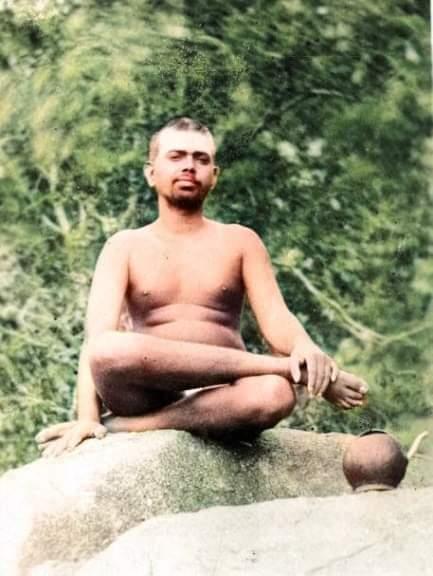
This is how pundit T.K. Sundaresa Iyer saw Sri Bhagavan at Virupaksha Cave, for the first time : “It was not a human body that I saw. It was a living statue of burnished Gold.”