Treasure Trove of Sri Bhagavan’s Grace
In this chapter
- Chapter 1
- General teachings of the Vedas and Agamas
- Chapter 2
- The extinction of the superior ones’ [attachment to the world] through the cessation of the veiling aspect of Sivam’s energy of grace27
- Chapter 3
- Transcending [the path of] yoga
- Chapter 4
- Transcending [the path of] kiriyai
- Chapter 5
- Transcending [the path of] cariyai
- Chapter 6
- In explanation of non-attachment48
- Chapter 7
- Renunciation
- Chapter 8
- The nature of the [pure] avastha62
- Chapter 9
- The nature of those in whom attachment [to the life of the householder] has died90
- Chapter 10
- The nature of being established [in the state of reality] 97
Ozhivil Odukkam
One of the rare Vedantic works, is the Tamil text Ozhivil Odukkam composed by Sri Kannudaiya Vallalar who was born in Sirkazhi, Tamil Nadu in the latter half of 14th century.
Sri Kannudaiya Vallalar decided to distil his Self-experience into words, the result was one of the most admired Vedantic texts in Tamil, namely Ozhivil Odukkam.
Sri Bhagavan used to quote from ‘Ozhivil Odukkam’ to Sri Muruganar.
Chapter 1
General teachings of the Vedas and Agamas
1. The raised hand1 of Him who pours forth his blissful compassion through the destruction of my personal self, is the baton of truth, flourished to call a halt to the dance of the Vedas and Agamas; it is the crown upon the head of the Mountain of the [six] chakras; it is the Sun, rising to dispel the darkness which obscures my consciousness.
2. What course of study might [the mature disciple] adopt to achieve the loss of his personal self, if the sadguru does not cast his glance [of grace upon him]? He is like an elephant in must2, who becomes quite still, without the slightest tremor, when in his dream the enduring great lion that is the sadguru appears before him on his path.
3. Do not associate with those gurus who are impostors, [trying to impress you with their] actions. They are like labourers who work for wages, or merchants who sell and barter goods. As for the true, supreme guru, he is unchanging like time, yet casting his gaze [upon his disciple] he establishes him [in the non-dual state beyond objective consciousness]. There are no words to praise him. He is beyond the reach of the mind.
4. The teachings of those who are steeped in the delirium of the three deadly impurities are like the incoherent ravings of a madman; they impart them to the foolish, passing them off as wisdom. We are reminded of the story of the shepherd who jumped into a river, clutching a bear with her litter of cubs3 who were being swept along by the flood, and was drowned along with them.
5. Will a blind sifter of gold be called ‘Kubera’?4 Can a ram discern and demonstrate the sweetness of sugarcane? Similarly, can we see any likeness between the guru who is the embodiment of grace and one who is incapable of establishing the disciple in mouna, beyond the thirty-six tattvas?
1 The raised hand of the child Jnanasambandhar, to point to Siva in the Sky
2 Elephant is the disciple, and his must is his intoxication with the world of mind and senses
3 Mistaking the bear and cubs to be his sheep
4 Kubera is the god of Wealth
6. Alas, will they (the false gurus) ever free themselves from the sin of prescribing to us how we may obtain the fruits of union [with Sivam]5, without the witness of their own consciousness? [Their disciples are like] strangers who do not know [where they are], wandering about, getting lost and suffering, after taking directions to a place from someone who has never been there himself.
7. Know that only he is the jnana guru who, with a glance, brings the disciple to absolute stillness, having perceived [in him] the state of maturity wherein he becomes harmonised [with the Self] as that which is false gradually disappears, so that he dissolves into the waves [of the ocean] of bliss of union [with the divine], in which he exists as Reality itself.
8. In divine silence, overflowing with the bliss of Sivam6, the guru speaks [without speaking], like a honey bee regurgitating the nectar it has consumed into the honeycomb. For those [disciples] who at that time wait in attendance without any thought in their minds, like the seasons which appear in due course, his words will constitute lofty tapas, or the import of the Vedas.
9. Like a lamp in the dark, like the shining of the moon and sun, the holy word of him whose form is supreme bliss, and who transcends even grace itself, resembles a rain of ambrosia, a voice from the heavens, or a good omen. Know that there is in it no trace of the ego.
10. The guru who, like the shadow person in the sky, materialises in the bliss [of the Self], is the enemy of maya7. His compassionate word in which the mind has died is like the utterance of a man possessed, a brave warrior, a king, a spurned lover riding the palymra branch, or a suicidal maniac.
11. This work was created for our salvation through the grace of the one known as Sambandhar of Sirkazhi8, he who is learned in the Vedas, the pure One, the King of Tamil, who, cutting away the contamination of my personal self through [the initiation known as] sadya-nirvana-diksha9, and establishing me [in the state of Sivam], reveals [through me] the path of liberation.
12. The Self exists free of all association in the absolute fullness that is free of all divisions. Many are the means pursued by those who desire to be released from the suffering caused by the defilements that obscure it. As one might tip a bag upside down to fully reveal its contents10, we shall now speak of the state of your subsiding through the destruction [of your personal self], in which you[r true Self] do[es] not die.
5 Four states of bliss – salokam - dwelling in the realm of god; samipam - nearness to god; sarupam-bearing the likeness of god; sayujyam - Identity with god
6 Sivam is the transcendental consciousness on which the whole creation is projected
7 Maya is the limiting principle which brings into being the finite by limiting the infinite
8 A small city near the east coast of Tamilnadu 20 kms from Chidambaram
9 A kind of diksha (initiation) which enables the disciple to attain salvation instantaneously
10 When one holds a bag upside-down the contents will not fail to fall out and be revealed. In the same way the author undertakes to reveal the truth without withholding anything
13. Hear the title of this work, which speaks in a clearly comprehensible manner of the consciousness in which the word of the guru, the holy scriptures and one’s personal experience are harmoniously combined, and of the limiting factors which veil it. It is ‘Ozhivil Odukkam’ 11, the seed of all works which elaborate upon these matters.
14. The other paths, of which cariyai is the first, treat of the disciplines of tantra and mantra12, and can only lead to further attachments. Know that this path is the teaching given only to those who, through merit previously earned, are extremely mature in the tapas of renunciation, in order to remove their [remaining] attachments.
15. This work is for those who would enter fire, or abandon themselves to a tiger or a snake, if the guru so commanded it. They are to him as life is to the body, as the eyelid is to the eye, or as thread is to the needle. It will be of no use to the spiritually immature, just as a banana tree will not be consumed even if burned in a hot fire, nor a clay pot transformed into gold by the alchemist’s stone.
16. This work is intended for those who experience it as would a sensualist, immersed in the thrilling waves of an ocean of bliss as he listens to a song about the fivefold pleasures of the lover’s embrace; like the lotus flower opening at dawn, its mouth like the tiny slit in a tinkling bell; or like those who succumb to delight on hearing a song from the lutes of celestial minstrels.
17. For a work that does not bow [to any god], there can be no obeisance [paid to any god]. What good would it do if, begging indulgence for its flaws, I solicited praise on its behalf? Whether I begged indulgence for it or not, it would not be pleasing to all. Yet there is no work that would be considered bad by all.
18. The sounds made by those who, forgetting themselves entirely, weep uncontrollably [at a funeral] will not chime with the rhythm of the drum, [the sounds of] the flute, and [the movements of] those who dance to them. Listen, for such is the nature of this work. If I am to explain it, [I would ask] who will be left to judge of the utility of a work which has no [objective] fruits? All one can do is dissolve away, so that one unites with it.
19. Words cannot grasp and express the loss of the ego consciousness. Will the people of the world be able to grasp it by going up to it on foot, by thinking about it, or by looking at it? Should you wish to understand it, it is like being shown the entire ocean reduced to an image in a peepshow, or like the subtle signs that women make to their lovers. This you should know.
20. Can divine silence, the undivided non-dual bliss, which is [onefold, yet twofold] like the trunk of an elephant13, be grasped by speech or mind? If you dwell upon it with the insight of jnana14, in the way one recognises a house by the crow perched upon it, or the moon by the finger pointing at it, you will become Sivam.
11 Subsiding [ in the Self ] through the elimination of[impediments]
12 These are the disciplines of Siva Agama
13 Just as the Trunk of an elephant is both an organ of touch and smell, but is not defined by either
21. Those who engage in reasoning and argument are ignorant fools, like ticks on the teat of cow, [unable to drink the milk], like a great buffalo who drinks the water [only after muddying it], or like those who would grind up sandalwood without using water. If you heed their words – a collection of falsehoods which are like the many streams of water flowing through a sieve or strainer – behold, hell will be your destiny.
22. Know that the search for the sadguru is the sign of extreme spiritual maturity. It is like that of a blind man seeking water after suffering from the heat of a forest fire in the mountains; or that of a calf at the times when it yearns for its mother, or like that of someone who is totally obsessed with the thought of possessing a certain object.
23. Without a single, unifying nature, a multitude of different forms, male, female and neuter, are created, evolve and disappear. In order for this to take place, there must be one Creator who is the cause of these phenomena. Those works which reveal Him are the Vedas and Agamas.
24. That Sivam is not known unto itself nor does it know anything that is other than itself. If it possessed thought then there would be for it the absence of thought, forgetfulness. [Therefore it does not possess thought]. There is for it no birth or death. The five divine operations unfold in its mere presence. The blissful voice of the Vedas and Agamas gives only the merest hint of its nature.
25. Beginningless, it exists for all eternity; it is unchanging and all-transcending; it is infinitely subtle; it neither waxes nor wanes; it is unmoving like the ether through which the air moves; know that it is the absolute fullness [of the Self].
26. Its eightfold form15; Its five divine operations16; the divine forms [in which it manifests according to its] will; the rewards [accorded to the worshippers of those forms];its absolute perfection, which is impossible to perceive with the mind17; the revealing of it [through the agency of the guru]; the meditation practices [which are prescribed on the spiritual path]; the non-dual state in which you subside, as bliss arises upon the loss of yourself; the duality [which precedes that state] – all these are due to Sivam’s grace.
27. When we speak of ‘you’, of the worldly bond, and of Him who is your support, [you should know that] you alone are the ground [for the other two]. Just as, when firewood is kindled into fire, the flame cannot be known separately from its heat, just so, you are That [Sivam].
14 The direct path in which the disciple seeks to attain direct intuitive awareness of their oneness with Sivam
15 The eight forms are the five elements, sun, moon and soul
16 The five divine operations are creation, maintenance, destruction, veiling and granting of grace
17 Impossible to show or point to
28. Ceaselessly the conscious soul, along with the body and the rest of the faculties, endures unbearable torment, veiled by the three avasthas18, waking, dream and deep sleep. It is as if it had taken poison. That is the way of the three impurities, which constitute the objects of your desires. Know that if [the avasthas], the mould [that shapes the individual consciousness], is removed, it will be seen that the way of divine grace is only yourself.
29. If, for those who know their true Self, there are no instruments of knowledge, no [embodied] self, and no fruits [of these to be experienced], can we say, ‘Know Sivam !’? Lord of consciousness, like the gold which shines ever brighter on being refined, we will eliminate your personal consciousness, so that, as it is worn away, you remain as Sivam only.
30. Is the Self, which is infinite bliss, exterior [to the individual consciousness]? Observe the nature of a life subjugated to the ego, which is like that of a fish swimming in the milk ocean19, [yet unable to drink the milk] ! The light of the Self endures without rising or setting, yet that [ego] transforms it into darkness, just as the action of fire can be suspended by mantras.
31. Sivam can be compared to the ocean; the soul, to its water; the impurity [which gives rise to the ego] to the salt in the water; karma, to the wind that stirs up the ocean, and the ego consciousness, to the waves upon it. Know that, in this way, that fundamental [ignorance], through the medium of the mental faculties and the five senses, whirls you ceaselessly about like a top.
32. Inwardly realise that you are the knowledge that knows the reality in which earth and the other elements, sound and the other subtle elements, the mouth and the other organs of action, the mind and the other organs of perception, the eye and the other organs of sense, and nada and the rest of the pure, and pure-impure tattvas are seen to be unreal and cease to exist. [Know also that you are the knowledge that knows] the support that makes you aware of yourself as a finite soul.
33. The five divine operations are nothing other than the five states of the soul. Clearly understand the wondrous dance in which they ceaselessly delude you, spinning you endlessly like a whirling firebrand through these five states. You are like a clear crystal in which the five colours are reflected.
34. The modifications of maya are endless, like the delusion caused by intoxicating liquor. They will not be eliminated by your own efforts unless you remain as you are, without
18 As long as the states of waking, dream and deep sleep dominate consciousness there is no opportunity for the consciousness to free itself and glimpse its higher nature
19 The milk ocean is compared to the bliss of the Self and the ego to a fish swimming in it, which is imagined to be aware only of other objects and unaware of the milk [bliss]
identifying with them, as one who is merely playing a part in a masquerade. This you should know.
35. Once the fear caused by mistaking a rope for a snake has gone, will it come back, however much we try to recreate the situation, weeping and trembling as before? Similarly, even if a Siva yogi, in whom the elimination of the five divine operations, (i.e. the five avasthas) is firmly established, should fix his thoughts on these and summon them, bidding them return one more time, they will not stir. What more is there to say?
36. The knowledge of the Siva jnani does not know itself. It is like the eye of someone who is stripping away the husk of an immature plantain. Although he may continue to speak [of ‘I’ and ‘you’], there remains nothing that is different from himself. The word ‘I’ is just a word to him, just as to the tongue the word ‘tongue’ is just a word.
37. Since it is said [in the Vedas and Agamas]20 that all that one knows is not oneself, is it not evident that simply remaining still is to dwell as That (i.e. the Self, Brahman or Sivam)? Although its mouth may open and close, does a severed head know anything? Ascertain the truth for yourself.
38. If the Self, which neither knows nor forgets, is regarded as an object by those who would know it, is this delusion, or is it knowledge? To know consciousness is simply to remain as consciousness. Therefore know that, in one sense, consciousness is like the thirty-six tattvas, each of which, respectively, is not aware of its own knowledge (i.e. does not possess self-consciousness).
39. Will Sivam, your unseen support, which is beyond even the nada tattva, ever be known objectively by you? It would be as if you could lift the earth itself using a lever. If it did appear to you, it would be like a finger touching its own tip, or a mouth eating its own face and laughing about it. Consider and know.
40. You are like a clear crystal that takes on the colour of its background. Why then, in order to be free of attachment, do you attempt to know objectively the [true] attachment, [which is Sivam]? Know that the ignorance which attempts to know Sivam as an object separate from itself is known as anavam.
41. To know oneself through grace, to experience the all-embracing reality in the state of parai21 as one becomes merged with that grace,[to become bliss itself] as the state of parai disappears, and finally to attain the transcendent state which is beyond even bliss, is the [state of] divine silence of the non-dual Siddhanta. Know that this is also the final goal of Vedanta.
20 Hindu Scriptures
21 A term in Siddhanta used to used for ‘The state of the individual soul in which it remains actionless enjoying grace from Siva
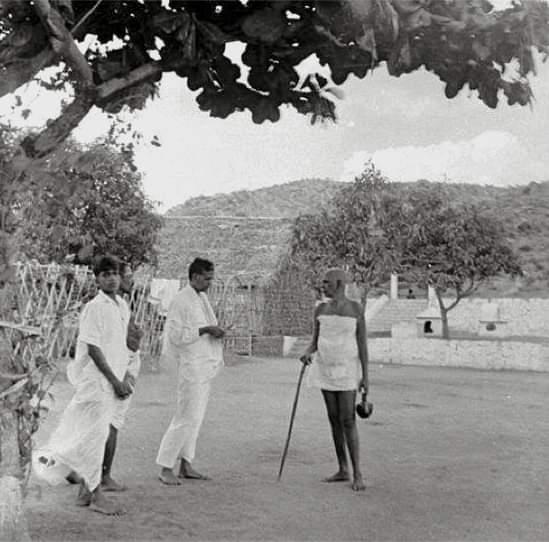
Strangers too had access to Sri Bhagavan
42. ‘The conclusion of the Vedanta, in which the first, second and third persons merge as oneself, one experiences the bliss that ensues upon the extinction of that self, and [finally] there is no one to say, “This is bliss”, is the deathless state of liberation.’ Thus spoke [Jnanasambandhar], he who, untaught, knew the Vedas.
43. Stripping away kala22 and all the rest (the adhvan – paths to liberation in Saivism), and revealing [to me my true nature], he annihilated my former vision so that it receded and vanished in the distance, just as, for those who climb a mountain, their new perspective replaces the one they experienced at ground level. Free of all vasanas, he shrouds me [in his infinite bliss] and never leaves me. Should I attempt to speak of his glorious might, only silence will result.
44. He said, ‘All that you refer to [objectively] as “this” is false.’ And now, for me, there remains no dwelling place other than the all-embracing expanse of the Self. ‘Know that we are that,’ he said. Shall we call it the sun that turns night into day, or shall we call it [the ocean of] supreme bliss? I know not.
45. Unless it is revealed to you, you cannot know [the Self],’ he said. Should you attempt to know that which endures as the cure for the forgetfulness [of your true identity], that would be like an arrow aimed at the sky as its target. Though we speak of knowledge, [the voice that communicated that knowledge] will be as a voice from the heavens.
46. [The three defilements], anava, kanma and maya 23, produce the illusion of veiling and multiplicity, but as these disappear, their foundation destroyed, can the state of nishta24 which then remains possess duality? Apart from consciousness there is nothing. You should remain just as the ether remains, untouched by the shadow of any object.
47. When consciousness is without movement, that is the all-embracing fullness of Reality. Inasmuch as there is movement in consciousness, that Reality appears false. This is like the opening and closing of the eye. As an illustration of this, observe the manner in which there is wind when the air moves, and when it is still, there is not.
48. For those who have transcended even the consciousness that is experienced as the nada tattvam, Siddhanta, which is itself the final conclusion of the Vedas, will not be different from Vedanta. Between the state in which the practice of saying ‘Not this, not this’ has been transcended, and personal consciousness and the attachment [which gives rise to it] have been destroyed, [and the final state, beyond bliss], consciousness-bliss will arise in you.
22 One of the paths to liberation
23 The three impurities- Anava – causes the soul to believe that it is limited, finite, kanma – makes the jiva believe that it is itself the author of its actions, not realising that Sivam, the Self, is their true author, maya - earlier mentioned as one of the universal constituents, the force which appears to restrict the infinite powers of Sivam and bring into existence the individual soul
24 The state of dwelling as the Self
49. In the pure state of the Self, there is no movement, either in terms of the jiva merging with the Self upon the subsidence of the ego, which lies even beyond the thirty-six tattvas, or of the Self coming [to manifest upon the subsidence of the ego]. If you describe that state as ‘oneness’, there will still remain some residual trace of ‘you’. Know, therefore, that nothing whatsoever can be said of it.
50. The unalloyed state of overflowing bliss is comparable to the state of total unconsciousness. Those who have transcended even that state will be like the rays of the silvery moon [of the Self], moving in the ambrosial essence which lies beyond the sphere of consciousness.
51. Rather than removing the states of remembering and forgetting, [showing you the means for] the destruction of your personal self, and thus destroying it, to babble on about using this method or that method to dissolve away that personal self is quite useless; it is akin to playing games with mantras or performing magic tricks; it is like throwing a gourd into the ocean25; it is the imprisonment of true knowledge.
52. Upon the elimination of sound and the rest of the tattvas, when ‘self’ and ‘other’ cease to be, the question of the merits of Siddhanta and Vedanta will be meaningless. My son, the state of liberation is indescribable; it is beyond bliss itself. To define it in dualistic terms is merely the play of the mind.
53. The great drum of the lofty Vedas beats, declaring that these eight paths are not for the Siva yogi: mental anxiety, fear, disgrace, piety, revulsion, rites performed for removing the sins of the ego, and the observances of caste and religion.
54. Those who have not become one with the supreme reality are [ever-changeful] like the moon reflected in water. Know that the austerities and other actions performed by those who have attained that supreme reality are like the actions of washing the heavens with rainwater, or setting fire to the wind.
55. To impute wrongdoing to a Siva yogi is like censuring death [for killing] or accusing the wind or the sun of impropriety [for associating with that which is unclean or improper]. It is caused by the bondage of the three defilements, that powerful bewilderment which, whirling along [those who make such accusations], ceaselessly drives them before it.
56. If it is only a dog that one is riding, what does it matter if one falls off, or succeeds in riding it? Similarly, what does it matter to the jnani if the world, which to him is a ghost-like appearance, blames him or praises him? He is not touched by it. For him there is neither honour nor disgrace, neither past nor future. Free of all limitation, he does what is required.
25 Like the gourd which floats and does not sink into the Ocean, the ego not sinking into Ocean of the Self
57. We may refer to our Lord Sambandhar, who gave to us the four paths, the first of which is ‘The Way of Truth’ [jnana], and the last of which is ‘The Way of the Servant’ [cariyai], as an ascetic, a king, a blissful one, a yogi, a hedonist, a virtuous one, or as Death itself.
58. The holy form of the jnani, he who has attained mastery over the conjuring trick of the tattvas, he who is free of the personal self, he who is without anything that is his, is the place where perpetual bliss burgeons forth. All the delight experienced by his divine body, which resembles the trunk of the elephant [in its twofold nature], is puja to the Lord, and it is through this puja that the world flourishes. Consider this.
59. Bodily unguents, chaplets of flowers, jewellery and garments embroidered with gold are suitable for royal consorts, greatly desired by their kings, but not for widows bereft of all gold and jewels. Enjoyments are for the jivan mukta only, and not for those who are like oxen [toiling on the paths of cariyai, kiriyai and yogam26].
60. The elephant is considered glorious in must, but when a dog goes mad, is that the same thing? Similarly when a jnani transgresses the accepted limits, it is considered to be decorous, but this is not the case when one bound by karma trangresses those limits.
61. For those of the highest spiritual attainment, the holy scriptures are not sufficient to bestow upon them the wonder of divine grace. It is a blessing which words cannot describe. It assumes countless forms, and those who come to receive it are of countless different types.
62. Those who dwell as knowledge upon the abolition of ignorance; who, upon the abolition of both [knowledge and ignorance], do not know even that knowledge, and hence are not separate [from the Self], have attained absorption in true knowledge (jnana samadhi) through the loss of their personal self, and in that very instant are liberated whilst in the body (jivan muktas).
63. To the unwitting onlooker the thousand eyes of Indra have a noble aspect, but to him, [knowing them as they once were] as vulvas, they possess the quality of unending shame. Of what use are the austerities of those who merely wear the bright ascetic’s garb, even if they endure for countless eons of time? They are like courtesans [who feel their own shame] even as the world honours them.
26 Cariyai – worship of deities and performance of various external religious duties, kiriyai – perform rituals including puja, yogam – performing yogic asanas and engage in meditation and contemplation
Chapter 2
The extinction of the superior ones’ [attachment to the world] through the cessation of the veiling aspect of Sivam’s energy of grace27
64. The benefactor and king of gurus [Jnanasambandhar] taught me the way in which the four states beginning with salokam28 correspond to the four paths beginning with cariyai. He also imparted to me the teachings [suitable for], and the qualities [characteristic of], the [corresponding] four degrees of spiritual maturity found amongst disciples.
65. The words of our master were not simple replies, made in the manner of a kinnari29 player, matching his accompaniment to the measure of what he hears. His words were like the pure notes that rise from the golden lutes in the hands of those who remain lost in bliss whilst beholding the divine dance of Lord Siva.
66. For the highest degree of seeker, the pure state [of the Self] may be attained through the mere silent glance of the guru. For [the second degree], those who have understood the nature of the personal self, a single word will be as the elixir of life. [For the third degree] a few words [will be enough], like the intermittent call of the owl. [For the lowest degree that state can only be obtained by constant instruction], like the constant humming of a honey bee, drunk on nectar.
67. A young girl, during adolescence, her sense of modesty grows, becomes reserved and covers herself up, no longer exposing her naked body except in the embrace of her husband. In a similar fashion, the reality of the Self will only be known upon the eradication of the personal consciousness, which alternates between suffering from the fruits of its actions, and experiencing bliss when it is brought to stillness.
68. One may learn about the five malams, the myriad individual souls, the Lord, the five divine operations, the avasthas and the defective individual consciousness; one may follow the path of cariyai and the rest. However, the understanding in which the affliction of the ego has not been annihilated will be [useless] like the tiny gold fragments embedded in the wax of the goldsmith.
69. Like poverty in an alchemist, like disease in a great physician, or like betel spit on a self-proclaimed war hero, what a degrading thing it is for people to go about saying, ‘I am that !’ when what they are really doing is totally eradicating in themselves the bliss that comes from true knowledge. Who could save them from such humiliation?
70. The joyful words of the jnani, spoken before those who are free of delusion, will be fitting instruction to others of lesser attainment also. Remain still and listen, like the herdsman, [who watches over his herd, asleep yet] not sleeping. The malady [of your karma in this life] will be expunged, like dirt in cloth. I have said all that needs to be said.
27 Saktinipata – Settling of the divine grace in the soul when it is ripe
28 The spiritual state of the disciple on each of the four spiritual paths
29 A musical instrument smaller than the Indian lute –(Vinai) with two steel strings
71. Those who devote themselves to spiritual practice will have endured birth by egg and the other three kinds of birth30 in countless different incarnations31; finally they will have been born in human births, and, once the effects of their good and evil deeds have been equalised, will embark upon the paths of cariyai and the rest in the service of god; these are the people who possess the four kinds of maturity that are hard to attain.
72. Feeling revulsion for worldly enjoyments, feeling no desire for the lower worldly pleasures or the higher states of bliss, rejecting them all as absolutely false, a mere conjuring trick, the disciple will begin to ask, ‘What is this body, who am I, and what is my source?’ and he will say, ‘We shall seek out the one who will reveal to us the truth of these matters !’ Thus arises the longing to make one what formerly appeared as two.
73. They will perspire; tears will course down their cheeks; their hearts will thump and their bodies will shake; speech will desert them, and their minds will become agitated and confused; their bodies will burn feverishly, churned up like the roiling clouds; and their hair will stand on end. Such are the eight symptoms which mark those who desire[to find the guru].
74. An air of distraction; thoughts [fixed on the guru]; sighs [on thinking of the guru]; fevers inexplicable to others [caused by those thoughts]; refusal of all sustenance; reluctance to speak; keeping silence; mental confusion; fainting and death – these ten are the states [of the disciple before he finds his guru].
75. Know that at the very instant that the guru reveals his holy form, and that which is inner manifests outwardly, as the physical manifestation of their quest, he will grant initiation of the six kinds32 – three inward and three outward, as prescribed [in the Vedas and Agamas] – to those of highest maturity, who have petitioned him, as [the river of devotion] overflows its banks.
76. Through his touch, thought and glance, the guru will drive out all the three malams, anavam, mayai and kanmam. Then, bestowing his wisdom through his word, he will remove the illusion of personal consciousness – which leads to involvement in cariyai and the other three paths – whereupon that personal consciousness will be no more.
77. To some disciples the secret of the master’s teaching will only be revealed at the appropriate time or in the appropriate situation; or it will require experience, like that of an expert in recognising a gemstone. Others will grasp the truth that is being transmitted like the swan, which drinks the milk, leaving the water with which it is mixed; like the oyster, which waits for raindrops to fall into it then closes up; like a heron, which remains motionless, waiting for a fish to pass; like water that vanishes instantly on falling onto red-hot iron, or in the manner of those who can correctly appraise a coin that is presented to them in the space of a flash of lightning.
30 Andaja – produced by egg; svedaja –engendered by heat and damp; udbhija – sprouting from seeds roots etc; jarayuja – born from the womb i.e. mammals and humans
31 The total number of species is given as 84 lakhs, that is to say 8400000.
32 Initiation- inner forms - by the holy glance, by thought, by yoga; the outer forms – by touch, by word, by holy scripture
78. The way in which the disciple is killed [by the word of the master], yet still lives, may be compared to a wife dying on merely hearing of the death of her husband; to milk [which boils over in an instant]; to a deeply devoted wife, immolating herself on her husband’s funeral pyre; to a loving widow [who remains faithful to her husband even after he dies], or to the generosity of Karna at the time of his death33.
79. Just as the gold which the goldsmith melts down in his crucible is of various degrees of purity, the results of the master’s teaching, though taken from the Siva Agamas and clearly conveyed, will vary, depending upon the degree of ripeness of the disciple. Know that all do not share the same degree of maturity.
80. The true reality of the life of the householder will become clear [to those of low spiritual maturity] only very slowly. It can be compared to carving a statue by gradually chipping away the stone, or to the process of purifying muddy water with clearing nut.34 In the end this ancient world will be as repulsive to him as rice vomited up. Like the stem of a plantain tree placed on the fire, [very slow to burn], true knowledge (jnana) will arise in him only very slowly.
81. For those whose nature can be moulded as one would forge an image in iron, true knowledge will be won [more swiftly], as fire will burn green firewood. Then, like a drop of rain sliding from the leaf of a lotus, their worldly life will fall away. Divorced from them, the entire world will appear like a mirage.
82. [For the next highest class], to remove the body’s inherited dispositions [and bestow jnana] will be like carving a wooden doll. [Jnana will arise in them swiftly], as fire consumes charcoal. They will be indifferent to the household they had previously cherished. It will be like a place of general assembly to them. Even the life of the gods will seem like an insubstantial dream.
83. For [those whose nature is easily moulded, like] dolls made out of butter, the acquisition of jnana will be swift, like squirrel fur or cotton falling into the flame of a lamp. For them there are no desires. Tears will pour down from their eyes; oblivious to time, sobbing and melting inwardly, they will laugh and cry by turns, and the hair of their bodies will stand on end.
33 Karna is a major character in Mahabharata known for his generosity, is the half-brother of the Pandavas
34 Clearing nut-Strychnos potatorum
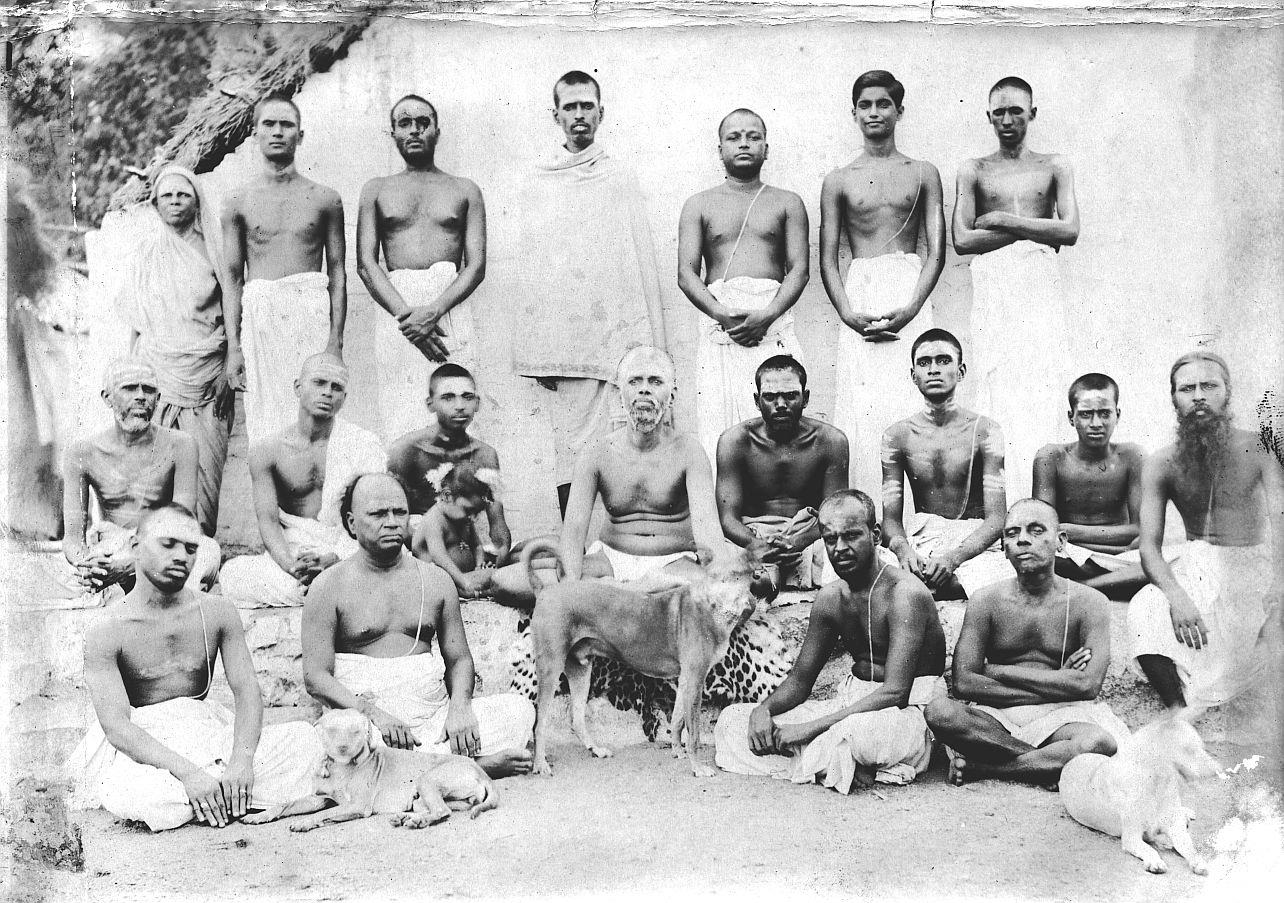
Very old photograph surprisingly sent by an Old Devotee
84. [In those of the highest degree of maturity] the in-dwelling anavam and the outer kanma and maya have become separated [from their true self], just as the fruit of the tamarind becomes separate from its shell when ripe, and the seeds of future karma have been thus annihilated, just as an eyeless needle cannot be threaded. For such as these this freedom from desire is the bliss of the Self.
85. [The attainment of jnana] will be like the rising of the sun; like the overwhelming desire of the lover for his beloved; like a ship sighting shore after surviving the perils of the ocean; it will be like being freed from prison or being cured of an incurable disease; it will be like witnessing a miracle.
86. As the body, senses, mental faculties, the three gunas (principles of nature), and the ten vital airs fall away one after the other, [mature disciples will attain] the liberation which lies beyond nada, the highest of the tattvas; then the personal self, which stands in the middle ground [between the world and the Self], will be eradicated, and they will enter the ocean of supreme bliss. Finally, becoming free of all divisions, how will they not be amazed, knowing now that which they have never known?
87. What obstacle remains for those who have realised the nature of knowledge, the knower, and ignorance? Will they be parted [from the Self]? It is impossible, just as it would be impossible for the heavens, fearing they might be robbed, to go and hide in the kitchen.
88. For those experiencing blissful union [with the Self], having come to know the true reality as surely as they had once known the false, there is no longer any connection with anything whatsoever. What a wonder is the destruction of oneself, like the spreading rays of the sun, rising in the vision of a clear-sighted eye [and blotting it out completely].
89. For those whose personal consciousness has been annihilated, what association with anything whatsoever remains? For them, the whole universe has been destroyed. Where might they go and hide? Like the tale of the man who once went in search of a tiger, [was mauled by it and devoured], the Self will hold them in its unblinking gaze, and bring them to complete stillness.
90. Having realised the Self, they abide as That; for them, having perceived the nature of ignorance, there is neither knowing nor absence of knowledge. If one were to attempt to describe the bliss which flourishes in the pure emptiness of the Self, where they live without living, it would be like trying to calculate the volume of the heavens with a pint pot.
91. The Agamas speak of Sivam as ‘the consciousness of consciousness’, whilst Vedanta speaks of ‘pure consciousness.’ Both statements are appropriate when referring to the state in which there in no separation [from Sivam or Brahman]. Those who claim ‘You are That’ or ‘I am Brahman’ will try the patience even of Hari and Brahma.
Chapter 3
Transcending [the path of] yoga
92. Dismissing cariyai and kiriyai as worthless, the yogis perform kriya yoga to ward off physical death. It is difficult indeed to dissuade them from it. They do not realise that what appears to them as real whilst they are experiencing it is actually false. Will they ever escape from this fixed mindset?
93. They may gain the eight siddhis35, and have the gods of the six paths manifest before them [in the six energy centres of the body], but in achieving that, a great sin will be committed, as they move up and down from one centre to another, going on and on, suffering and dying.
94. To attain the state of samadhi36, remaining motionless like a wooden post through control of the breath, which is not [naturally] under conscious control, is comparable to the fate of a dumb blind man who has consumed poison, and who, in walking to a certain place, stumbles into a deep pit in a desolate area.
95. With your spiritual jargon, yogic postures and staring gaze, you act out a ludicrous pantomime of spiritual practice. Give up these worthless habits and remain motionless, as the pure consciousness which is all-embracing like the heavens, and in which there is neither knowing nor absence of knowing.
96. The yogi practises samadhi, burying himself beneath the tattvas. Could we blame anyone for calling him an ego-obsessed fool? Devoid of all common sense he is like someone who proposes to strip the bark off a stone to tie up an elephant, which even a tethering post cannot restrain, or someone who runs about trying to grasp the ether.
97. To undergo modifications of consciousness in the false world, which is like seeing one’s reflection in ghee, or like seeing a person in the sky in the form of that reflection; to become one with pure light and sound and then to withdraw from those states – these are the activities of those who do not know their true Self.
98. The jnani rejects and eradicates the tattvas in order to merge into the absolute even in the waking state; the kriya yogi attempts to emulate him by enveloping himself in the tattvas, taking his perceptions to be real, just as the monkey who looks into a mirror sees his reflection as another real-life monkey. Since he has eliminated the tattvas and knows the true state, the jnani will reject the kriya yogi’s practices as worthless.
35 The ability to shrink oneself to the size of an Atom; the ability to increase one’s bulk without limit; the power to make oneself or other things light, overcoming gravity; the faculty of increasing weight, solidity; the power of attaining everything desired; the power to overcome natural obstacles and go anywhere; the power of enchanting, changing the course of nature or assuming any form
36 Become one with the object of meditation as all mental activity is repressed, the first state is manolaya – subsiding of the mind, the second state is manonasa – destruction of the mind
99. You so-called tapasvin! You are a fool whose thinking is like that of someone who seeks a cover to mask the heavens, rather than just closing his eyes! Is this madness due to the way you have been taught, to illustrations drawn from the shastras, to your own perversity of mind, to your habitual mode of thinking, or to something else altogether? What kind of yoga is this?
100. Like someone who mounts an elephant facing its tail in order to travel to his destination, will your ego consciousness ever be able to reach [the Self]? This (your attempt to know the Self as separate from yourself) is an occasion for much hilarity, like someone who attempts to seek out the demon which possesses and animates him, even though it is already clearly known to him.
101. Will sleep come to you if you summon it, rubbing your thighs, making snoring noises, and pretending to be unaware of your body? You complete good-for-nothings, if you try to mentally grasp the being-consciousness-bliss that manifests only after destroying your ego consciousness, will it not conceal itself from you?
102. Since oneself is not alone37 [as a primal entity in one’s own right], and since the Absolute is the all-embracing perfection, which is not different from oneself, then what good does it do to torment oneself in mind, word and deed, loudly proclaiming, ‘The Self is beyond all measure !’
103. Can it be reasonable that you, having controlled your breath, mind and sight, so that they are entirely still, and buried yourself in that state so that you are entirely submerged in it, should expect to be able to merge with That which exists both within and without your body as your very Self, as being and non-being, and that which is beyond both of these?
104. Should you propose to remain free [of all the mental faculties], you will find that it is not possible, and that a sleep-like state supervenes; and should you attempt to remain [aware but] without any objective perception, you will experience [such phenomena as] flashing lights. Your aim is to establish the vital breath along with the errant mind in the brahmarandhra38 chakra within the skull ! What kind of state is this?
105. The mind is like a caged monkey or the grotesque dance of a shadow puppet. Who could hope to subdue it, grasping it and bringing it under control? Even if one remains still, free of any objective perception, it will keep moving by itself, like a whirling rocket that moves under its own impulsion, the balls in a game of ammanai, or a spinning top.
106. It is the habitual nature of the mind to be active even when it is not directed towards any object. If you try to understand this nature, how will you not be confused? At the
37 The individual consciousness is not a primal entity possessing an inherent reality of its own
38 Brahmarandhra means fontanelle, aperture in the crown of the head associated with the Chakra sahasrara, the thousand-petalled lotus
slightest contact with it, there will be birth and death for you, but if it dies, you will become Sivam.
107. Abide simply as pure consciousness. Then delusion will not arise. If there is the slightest movement in consciousness, will not the world of diversity shoot forth like a sky rocket? This state of samadhi, can be compared to the perfect alignment of the pointers on a pair of scales. If that state arises, you will be a king of jnana. Who will be your equal?
108. Who taught water to be cool, fire to burn and the air to stir and be agitated? Whoever you are, the mind and the other faculties will not simply go away. To attempt to remove them is like trying to bury a shadow. You should see as the heavens39 see. Only then will they be eliminated.
109. When you think of it, is it feasible to measure and know the extent of the earth and the heavens, the weight of the mountains and the volume of the surging ocean? Similarly, when you say that you are the Real, these are only words, [since it cannot be measured or known] without encompassing the destruction of your own ego-self. If you try to know it [otherwise], it will remain quite alien from you.
110. The world of maya, arising and subsiding by turns, is unreal like the clouds in the sky. If we do not realise this, and attempt to suppress the world that rises up using the mind that rises with it, will this not be like a ball, bouncing back again each time we hit it to the ground? Therefore observe it as the witness only. It will be like a tree dug up by the root, yielding neither flowers nor fruits.
111. Should you succeed even for a split second in reaching the state of absorption in the Self (nishta), which, as the pure state in which the discriminating consciousness has fallen away, is free of all limitation, ah! I am at a loss to describe it ! Is the bliss that rises up then a thing of little account? It would be as if one accessed the [vast] ocean of milk through the tiny hole in a teat !
112. Being totally identified with the body, you torment yourself saying, ‘When will the time come that this body is no more, and divine grace will be mine?’ What is the use of this? Do not the myriad phenomena that appear in the ether eventually subside again? Similarly, in the absolute fullness of Reality, which is beyond duality, there is nothing other than yourself.
113. Know that habit is pernicious. A fowl will scratch even at a bare rock, and dig around even in a heap of paddy. The blind man who recovers his sight will feel threatened by the light, recoil from it and refuse to give up his walking stick. Similarly the jiva will persist in perceiving distinctions in the grace of the Self [even after realising its non-dual nature].
39 pure space has infinite capacity to contain and permeate all things and yet are not in contact with or affected by them.
114. Unless you slap it and drive it outside, a young calf will not leave its tethering post, even if you untie the rope. Likewise, even if you tell the jiva to abide as Sivam, so that it remains free of attachment like Sivam itself, thus removing its separate identity and bringing it to a state of oneness, it will revert to its dualistic mode of thought.
115. If someone tells you to abide as Sivam, you torment yourself thinking, ‘I am that Sivam’, thus falling from that very state. This is like the story of the man who, on being told not to think of a monkey, was unable to stop thinking about it. Is this not the work of the ego, anava malam?
116. Although the nature of the ego-consciousness has been pointed out to them, they still seek Sivam, just as the serpent with a jewel on its head continues to seek out darkness, even when it is already enveloped by it. Such behaviour is akin to someone digging a well in a lake to find water, or fighting with his own shadow to be free of it. Who are they that have the power to remove this ego-consciousness and abide as Sivam?
117. Abandoning formal worship, both inner and outer, yogic samadhis and those sleep-like states, in which the kriya yogis mimic the true jnanis who are free of the discriminating consciousness, the true jnanis abide in the Self, so that worldly bondage disappears, like the flame of a lighted lamp in daylight or the rays from a crystal at midday. Who can compare to them?
118. The Self now awakens the jiva from the darkness of absolute nescience, [unites it with the mind and senses], and [finally] abolishes the objective delusion of waking and sleep, gradually consuming the ego-consciousness as the flame consumes the wick of a lamp. Therefore the only recourse is to give oneself up as a prey to the Self. The very act of thinking about it will drive it away from you.
119. Even the Advaitins, who assert that all that they know objectively is false, cannot escape being trapped in an empty void. Like them you will be destined to repeated births and deaths. However, having experienced the loss of your ego-consciousness, and the bliss that arises thereafter, if you transcend even these, birth and death will end for you.
120. Sivam is the fullness of perfection which abides as the consciousness of consciousness itself; as that which is entirely without divisions. For those who presume to create and destroy Sivam in their minds, meditating on it sporadically, and in such a way that it is limited by their own imperfection, how can birth be avoided?
121. Even as I revelled ceaselessly in the alternating states of remembering (waking and dream) and forgetting (deep sleep), the mind’s delusion, the appearance of a world of diversity and the consequent desire and aversion, Jnanasambandhar transformed me through his gaze and through his touch into his own likeness, as the sun dispels the darkness, and the philosopher’s stone transforms base metal into gold.
Chapter 4
Transcending [the path of] kiriyai
122. Instead of remaining still, realising that the world of the tattvas is inert, and remaining free of all contact with it, [seeing nothing] like the eye of a dead ram40, they invoke [the presence of the gods], perform worship to them, call upon them as ‘The Absolute Perfection’, seek them out [in holy sthalas], and, [when they cannot themselves find them], roll on the ground [in despair] and weep. Their actions are akin to the grotesque dance of a band of demons.
123. In those who, wearied by ritual activities, come to him asking for instruction, the illustrious One41 fosters the bliss of the Self, so that they dwell in silence. He is the true guru. As for the rest, know that, in so far as they cause the slightest movement in the minds of their disciples, they will be like Brahma, the creator of worlds, and the Lord of Death42.
124. Imagine the devotees of the god of Fire, grinding up ginger to ease the god’s indigestion, covering him with straw [to keep him warm], and agonising [over their previous neglect] as if buried under a mountain of sorrow. To whom might we compare such people? To those who would try to wash water, bury their own shadow, or measure it [using their own foot]?
125. Those stupid teachers [of ritual worship]43 do not realise that when we have to cross a river in spate or make a long journey on foot, there is no suffering for the water, nor for the road, but only for those who swim that water and walk that road. They might as well tell you to stop up the mouth of a river in spate, raise a ladder to reach the heavens or grab the feet of the wind.
126. Will even those who travel the heavens at will require a support? Are the heavens like the deep ocean to them, that they need to navigate it like a helmsman on a ship? What work do time and space perform? Similarly, can there be deeds performed by a perfected Siva yogi?
127. In fire itself there is nothing of the firewood, and in ghee there is no longer any milk. Similarly, jnana abolishes delusion as surely as the sun dispels darkness. Therefore it is given the name ‘Destroyer of Actions’. This being so, can there be any performing of degrading actions by jnanis?
40 The eyes of the dead goat glitter but see nothing; the eyes of the jnani are compared to the eyes of a dead goat – the Jnani is free from discriminating consciousness and therefore is not aware of the world and objects that others see
41 The guru is meant, who possesses the greatest wealth, the knowledge of Sivam
42 When the mind arises the world arises, therefore the false teacher will be like Brahma the creator of worlds in so far as his instructions cause the slightest movement whatsoever in the minds of the disciples and like Death in that he condemns them to repeated death and rebirth
43 These are the teachers who purport to offer salvation by means of ritual worship
128. Even if jnana is attained through actions, it will not endure, just as all things that are born from a womb are destined for destruction. Your thoughts of grasping the Cause of all things [through your actions] is like trying to roll up ten million suns in a blanket of darkness.
129. If, desiring the state beyond even bliss, you say you will engage in actions to attain it, Will the true jnanis not ridicule you? Will anyone choose walking as a means of getting to Sleep? Your holy scriptures, pujas and samadhis are an aberration to true jnanis; they are no more than a collection of conditioned mental states, maya's cohorts.
130. If it be said that bliss is in the ending of all actions, then we shall hardly need to assert that suffering is in the arising of actions. Whatever actions we do perform, we should perform them according to the example of those whose only concern is to feed and clothe the body, taking no pleasure in them, like a barren woman [with no prospect of bearing children].
131. To proclaim amidst tears and sobs the holy scriptures, which are the means expressly designed to make us still; to perform religious rituals; to sit in meditation with the body stretched and contorted in postures designed by the mind – all these things are a comedy show designed for the entertainment of jnanis.
132. Who has attained liberation by studying and learning the holy texts, which themselves are insufficient to contain all the religious systems with their commentaries and interpretations? To do so is like going to the lengths of covering the sky with a canopy and the earth with leather when setting out on a journey, instead of simply wearing sandals and taking an umbrella.
133. The supreme reality is not known [objectively], since, when you become pure consciousness, and then become the One that makes this consciousness known, both of these come to an end. Wicked wretches! How then can you hope to experience that reality through the false understanding in which you grasp it for a while with the ego-consciousness, then let it go again?
134. Since the destruction of your ego-consciousness is His wish44, you should consider its loss to be your own goal also. Know that ajnana, ignorance, consists in not knowing how to achieve this loss. False one, hear then the means of the destruction of your ego-consciousness!
135. When a stick of firewood is burnt up completely there is no more smoke or flame, and when a disease is cured, the medicine that was taken to cure it disappears with it. Similarly your ever-ramifying actions are at the level of the mind [and will end when the mind ends]. Why then do you attempt to unite [with the Self by means of those actions]? Simply remain as pure subject, without a second, just as a smaller shadow is subsumed in a greater one.
44 Though Sivam, Self the Supreme reality cannot be said to possess any desire, it is the nature of the Self to manifest itself in the individual consciousness, overcoming all barriers, transcending it and annihilating it
136. You are the consciousness that perceives, and I, the Real, am the consciousness through which you perceive. Once you begin to investigate these, they will begin to loosen their hold. When they finally fall away, you should feel a degree of shame and not attempt to look back at me, thinking ‘I’. Rather should you remain still, like a pot sunk in the ocean.
137. [To think that the performance of rituals] will pass for the bliss of Sivam is very strange, like a new bride mistaking the wedding rites for consummation! Just as, unmoving, the oil in a lamp spreads [through the wick and is consumed] by the flame, the true state is to give yourself up to be consumed [by the Self].
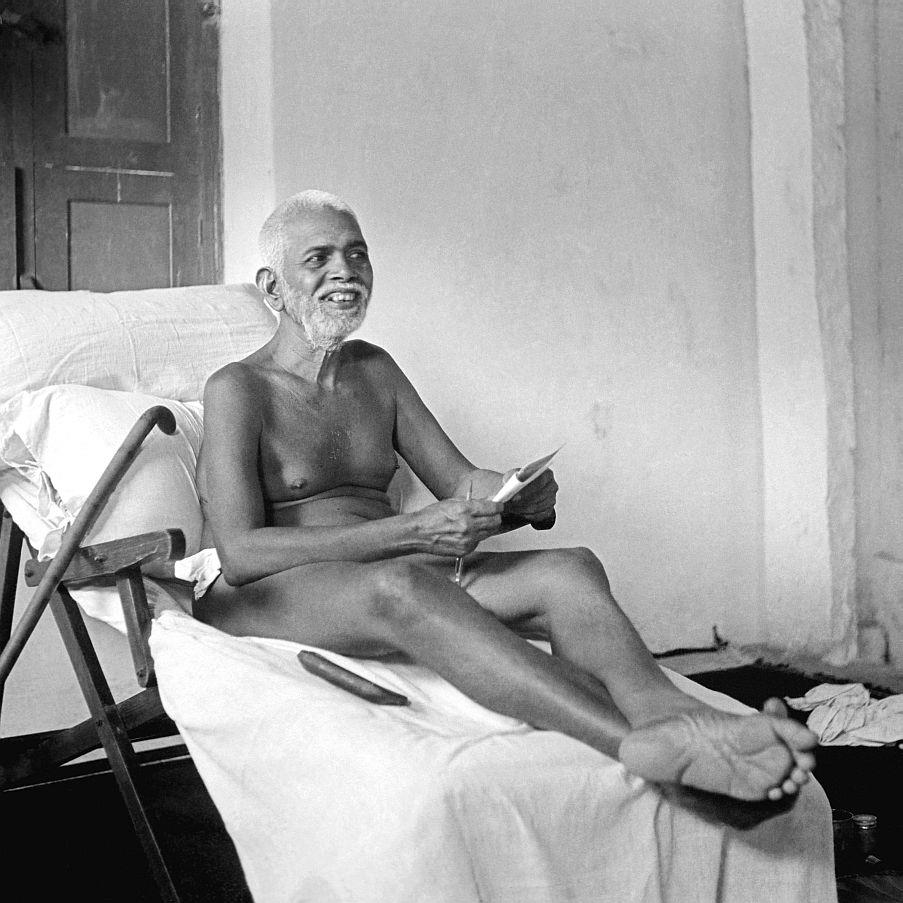
Sri Bhagavan enjoying reading a ‘Questionaire’ given to Him by a devotee!
Chapter 5
Transcending [the path of] cariyai
138. When will there be happiness for those who do not subside inwardly, but instead, thinking these activities to be the means of liberation, torment their bodies with pilgrimages, bathing in holy tanks and observing fasts on days which they deem auspicious? Their present lot is suffering only. When will their objective consciousness be lost and bliss arise in them?
139. You lost souls, it seems you never asked if, the personal consciousness having died, you should not go about in the world as if your body were a walking corpse! Where have you heard that the body can be got rid of through the efforts of the body itself?
140. If you ask us what place we have come from just now, and if we have forgotten what place it is, when you ask us the way to that place, all roads will seem the same, as if the seven worlds had merged into one.
141.Displays of ochre robes, long strings of rudraksha beads, white ash, and white teeth [from abstaining from chewing betel] constitute the counterfeiting of jnana. To those who know the nature of the all-pervading Sivam, the One who is free of all desire, the jiva, the one of limited, worldly knowledge, and the worldly bond, which is unreal, will there be such things as word or form?
142. They flash their white teeth, which are well suited to the dispensation of limited, worldly knowledge; they display their erudition, flourishing weighty tomes; they wear ochre robes and earrings; they wear a rudraksha bead in a golden locket around their necks; they sit in meditation with their eyeballs rolled upwards, as if they have transcended the thirty-six tattvas. Yet all this is but the work of great maya, that whirls [like a toy windmill].
143. For those who merely act the part of the realised sage what enjoyment will there be, other than that of the daily offerings of food they receive? Can they know the bliss which is not known even to those whose consciousness is pure, who have cut away desire, renouncing both inwardly and outwardly?
144. Bliss is indeed the dwelling place of true knowledge. You are like the acuna bird45, in that an atom of suffering in this world appears as great as a mountain, and through this virtuous quality a longing for supreme bliss has arisen in you. Listen now, and seeking supreme bliss [in the following manner], you shall obtain it.
45 A very small bird, believed to be so susceptible to harmony that when it is fascinated by notes of music, a sudden loud beat of drum causes its death
145. Supreme bliss is not separate from you. It is your true being. That which arises with the sense objects is bliss also, but it is not the pure consciousness in which bliss itself is annihilated. In that state both kinds of bliss are annihilated46.
146. The inferior bliss that arises with the objects of sense, lasts for some time, then disappears is of little worth; the superior bliss is that which is all-consuming and endures without intermission. Can it be gained by the discriminating mind? The bliss which appears and is subsequently lost is synonymous with the alternating states of pleasure and pain. Your true state is that of the bliss which neither appears nor subsides.
147. The scriptures declare that the all-embracing supreme reality is everywhere. When you say that it is to be found, not in one holy place, but in this or that other place, are you saying that it does not exist where you are? Witless fool, know that supreme bliss will only arise when you reach the firmament of true knowledge, upon the destruction of your defective, discriminating awareness.
148. As long as there is identification with the body, the objects of sense will not subside. If they do subside [through control of the mind and senses], unconsciousness will result. [Therefore you should cultivate the awareness that the world does not exist apart from the Self]. Is the space of the heavens disturbed when a bird flies through it? When one realises the true nature of the worldly bond, [it will lose its hold on you], just as the heat of fire is annulled by the power of the mantra.
149. What does it matter if the body remains or if it goes? Endless are the workings of those [divine beings] who dwell with form, without form and both with and without form. Is it necessary to break up a clay pot to prove that it is made of earth? Your course now is to abide in that state of pure maya, fully aware [of your nature as the Self].
150. The aim of Vedanta is to be free of the delusion of maya, [in which the world appears real], like the snake seen in the rope, and the thief seen in the wooden post47, whilst the aim of Siddhanta is to dwell effortlessly in the state of transcendent bliss, just as those bound by the ego[dwell in the state of bondage]. To those who are free of the individual consciousness these two are one and the same.
151. Tirujnanasambandhar, he of the land of Sirkazhi, he who rules us through his grace, he whose divine sport is jnana, spoke saying, ‘Not speaking of One or Two, just be. Thrice do I swear [that this is the truth] !’
46 The Bliss and the enjoyer of bliss are not separate
47 A wooden post mistaken for a thief in darkness
Chapter 6
In explanation of non-attachment48
152. The sage who drank the ambrosial milk of non-dual bliss by the blessings of Parvati [in a cup of gold], said, ‘In the state of true knowledge there is neither suffering nor happiness, and in the state in which that true knowledge is lost, suffering and happiness manifest, causing delusion. You are the knowledge which embraces both of these.’
153. All six religions49 agree that the final goal is the pure state which results from renunciation and the cutting away of desire. Know that this is the state of liberation, free of the thirty-six tattvas, in which there is no more birth. It is the final state in which all effort comes to an end upon the annihilation of karma.
154. This book is for those who are free of desire, [and could not even bear to be accused of it], just as a warrior who is willing to die for a cause cannot bear to be accused of cowardice. It is for those who are like the camel, which will eat anything with relish as if it were well-cooked food. To those who are full of desires, and are accustomed to good food which bloats the body, it will seem flawed and unacceptable.
155. If the worldly bond falls away, the jiva will automatically come to rest in the Lord, just as someone swinging on a swing will come to rest on the ground if the rope breaks. Verse [349 of the Tirukural]50, speaks of the ending of births upon the cutting-off of the attachments created by desire. Is this just your own understanding? Is it not also the understanding of all other religions everywhere?
156. The world appears to you as real, but annihilates you when it subsides. Even when you are told that it is inert, a mere consequence of actions, it still whirls you about in delusion, like someone who has taken poison. However, the real impediment to true knowledge is your own defective understanding, the failure to know your true Self.
157. In your state of limited, conditional awareness, your nature is veiled by the obscuration of the ego. However, like a bright, clear crystal, which holds the reflection of objects but is not affected by them, your essential nature is not affected. We have now explained to you your nature as the jiva, the form that the jiva takes, and your nature as the Self. Reflect carefully upon these matters.
158. It [your true Self] is free of the states of awareness and forgetting, abiding as all-embracing pure consciousness. Like the ether, it contains all things [yet is not touched by them]. Granting its grace to the jiva, it is like sugar, feeding it with the sweetness of its own bliss. To such a one do these three, (i.e. nature as the jiva, form as the jiva, and form as the Self, mentioned in the previous verse) belong.
48 Refers to Inner renunciation not to outer renunciation
49 Saivam (Siva), Vainavam (Vishnu), Saktam (Sakti), Sauram (Sun), Ganapatyam (Ganesha), Kaumaram (Murugan)
50 Tirukural – a great Tamil work written in couplets – by sage Tiruvalluvar
159. Having perceived and grasped [the world through the mind and senses], remaining entirely submerged in them, and having come to realise the nature of this defective, discriminating awareness, to then remain in [unattached] purity as pure consciousness, untouched by the five divine operations, the first of which is creation, just as Sivam remains untouched by these, is true renunciation.
160. Who [amongst jnanis] will be cognisant of the world in which jivas live like a swarm of fireflies in the darkness? Know that to them the dawn of true knowledge is like [the rising of] the sun. [The great ones] have taught the five pure avasthas so that your defilement may be destroyed, just as the sun annihilates your shadow as it reaches the zenith of the heavens.
161. The false appears to be real, but if one enquires into it, it will disappear, as when what appears to be a snake turns out to be just an image painted on a wall. Otherwise, Sir, if you perform rituals and austerities [to discover the real], it will be as if you mistook a post for a thief, and beat a drum to scare it away.
162. On being informed that the world and the body, which are of the nature of maya, are unreal like a mirage, you should try to comprehend their true nature. Rather than that, do you expect to be able to eliminate them, shaking them off and obliterating them completely? Similarly the way to escape from a fire that surrounds you in a dream, is simply to wake up.
163. You say that it is the incontravertible truth that the world is false. [If you fully realise the truth of your words], is it necessary still to go looking for ‘the real’? Why do you cast doubt upon this, repeatedly looking at the sun [of true knowledge] that banished the black darkness [of ignorance], then blinking and turning away?
164. [True jnanis and false jnanis alike] proclaim that birth is to be abhorred. However will you not recognise those who subside inwardly as their external attachments subside, knowing that the body is an unnecessary affliction, and that true penance is the absence of all attachment, by the simple fact that they demonstrate their lack of attachment to the body [and senses] in their actual conduct? This is the trait by which you will know them.
* * *
Chapter 7
Renunciation
165. Those who are caught up in delusion, thriftily hiding away their accumulated wealth, vainly waste the days of a life which cannot be extended by a single minute, even if they expend ten million gold coins in the attempt. Those who are free of delusion will renounce those things, knowing them to be unreal.
166. Having observed [the way in which the friendship of] a brood of sparrows and a litter of kittens, reared in the same house, [soon turns to enmity], it is a wonder that we remain so attached [to our wife, children, family, and so on]. What fools we are! Will those who reflect that even the lives of Vishnu, Brahma and Indra do not last forever, and question whether their own existence amounts to anything at all, fail [to renounce the world]?
167. Even though they praise Pattinattu Pillaiyar and Bhadragiri,51 those poor fools will not renounce [their family and possessions]. Need we cite the case of the dog who was gnawing on an old dry bone, and growled at the king on seeing him pass by?
168. For those who here and now contrive to be free of their entanglement with the nets and nooses which bind them – country, town, home, wife, mother, friends and relations, cattle, caste, wealth and the attachments of the body – what birth can there be henceforth?
169. If someone consumes poison whilst in an altered state of mind, the effects will take hold of him, run their course and eventually subside. But the mere thought of gold52 will not admit of any cure. It is a great evil which, [if one succumbs to it] cannot thereafter be dispelled by medicines or the recitation of mantras. It is a greater evil, even, than the desire for women.
170. What need is there to point out that wealth, youth, the body itself, are a mere mirage? It is plain for all to see [that they are impermanent]. Those who are swift to renounce the world, as their discriminating awareness falls away, will not return to the round of birth and death. Or if they do return, will [those attachments] affect [those who are as] Siva? Lo, they will not affect them.
171. Do we not know, from the way in which trifling pleasures arise and then just as quickly fade away, that supreme bliss is simply the eradication of desire? If we enquire into it and clearly understand that it is like the bamboo container into which insects enter, get stuck and die, desire for the pleasures of the five senses will end.
51 Pattinattu Pillaiyar – A famous Tamil saint and poet from Kaveri-pum-pattinam in Tamil Nadu who gave up great riches to renounce the world; – was once falsely accused of stealing a Necklace belonging to King Bhadragiri and sentenced to death; before the sentence was carried out the place burst into flames and the King regretting his mistake - became the saint’s devotee and eventually renounced the world also to follow him.
52 Desire for gold is much more dangerous poison
172. For those who perform worship to the rising sun, the sun’s light shines, effacing all that is within and all that is without. Similarly, is not renunciation to remain free of all association, as when one sees a devoted wife offer herself up on the funeral pyre?
173. [The most ripe devotees] are like a bell without a clapper, which makes no sound even when you shake it. It will be hard indeed [for those of lesser attainment] to remain in that state. [For them] it will be like measuring with a grain measure, and throwing out, so that they are destroyed, all those unreal movements of consciousness that have [in the past] manifested and grown up [within them].
174. Can there be any attachment to house and home if one remains at rest with no thoughts whatsoever arising, free of attachment to the body and all the rest (sensory pleasures, the external world, and the physical, sensory and mental faculties)? [This state] is [one of stillness], like an iron needle placed inside a magnetised pot, or a lighted lamp in a windless place. All the tattvas will be alien [to such a one].
175. To enjoy the body of woman is akin to a dog greedily licking ghee smeared on a sharp blade, or someone drinking sweet payasam53 mixed with poison. It is like trying to quench a thirst with the water of an entirely unreal mirage. Who would not renounce the world, having seen the evidence provided by the acuna bird, elephant, moth, fish and flying insect, [each being lured to its death by one or other of the senses]?54
176. The life of the family is a boat laden with misery, which as its reward transports its occupants, who are blinded by the defect of the ego, to the seven hells. Will the wise not tremble with fear at the sight of it? When the one source of the five senses performs the six kinds of labour55, reality itself is transformed into unreality.
177. Will the wise find family life acceptable? To them it will be like a bear coupling with its mate on a great heap of dirt, surrounded by a tribe of quarrelsome monkeys. Like the Lord of death [trapping him in its noose], like fire [surrounding him on all sides], like the ocean [to a shipwrecked sailor] or like a great mountain [heaped on his shoulders], it will consign him to the hell of future births.
178. The renunciant will leave [his home and family] without any warning, just as a cuckoo, which has been reared with crows, will suddenly fly off. Like Karna, [who was unaware of his true parentage], will he have any awareness of his social identity? Know that such a one will also be the teacher for others who strive to cut off birth.
179. Were someone to wake up in the night, find himself surrounded by fire, or under attack from a great army, and make a dash for the courtyard of his house, would he
53 Sweet porridge
54 The acuna bird by sound; the elephant by touch – lured by female elephant into the pit; the moth by sight – lured into a flame by its light; the fish by taste unable to resist the bait in the fisherman’s hook; the fly by smell – attracted by the scent of the flower and trapped inside
55 To satisfy the five senses - doing six kinds of labour – agriculture; manufacture; trade; literary work ; sculpture and dance
hesitate for a second, even if someone shouted ‘stop’. That would be the action of a madman. The nature of those who do not renounce household life is not other than this.
180. Those who renounce will leave swiftly, like a thief whom someone has released from his bonds and set free, like people who run away in fear from a ghost in the dark, or from a battlefield, or like those who escape with their lives from a pursuing army which is trying to kill them.
181. Will those who are not even aware of what they are wearing know the difference between the town and the forest? Possessed by the demon [of the Self], will they know anyone, whether relatives and friends, or complete strangers? For those who have let go of everything, just as people will immediately drop anything red-hot placed in their hands, is there any point in them continuing to live where they lived formerly?
182. For those who are free of the discriminating awareness, in which pain ever alternates with pleasure, is any place different from any other? Everywhere is the temple of Lord Siva. To appease their hunger, there are alms. [To provide shelter and quench their thirst], there are public places and water sources. It will not even occur to them to speak of such things. Their only desire is to dwell in total solitude.
183. The behaviour of worldly society is like the antics of an actor in a masquerade; they are like people who consume poison and find it tasty, or like prisoners who enjoy being in chains. Those who have renounced will have nothing do with this mentality, avoiding it like the plague. They have died whilst still in the body. Thus do they conduct themselves.
184. To invite those who have gone beyond the nada tattva56 to one’s house and so forth is to be like a hari (frog)57 who calls out to Hari (Vishnu), who dwells in the Ocean of Milk, saying, ‘Come and join me !’ To the jnani the ajnani will appear as do the people of the earth to those who traverse the heavens about the summit of golden Mount Meru.
185. Will the jnanis expect anything from the path of devotion, upon which they are worshipped, praised and ensnared in the net of endless bizarre ritual acts of homage? [If you were to suggest that they could at least accept food and other such essentials from devotees, we would reply that] their very greatness, in which they have cut off all desire for food and all the rest, which are only the source of troubles, will cause these things to come to them automatically, even though they don’t want them.
186. When the fetters of karma [anavam and maya] fall away through the threefold agency [of the guru]58, his body will seem like a snake, and he a frog gripped in its jaws, or like a firebrand, burning at both ends, and he an ant trapped upon it. It will be as death itself to him. This being so, what [will he think of] those who propose [to pay homage to that body], and [of] the places [that give it shelter]?
56 Transcended the Nada tattva
57 Hari is name of a Sea frog ; just as a frog assumes Vishnu is another frog like itself on account of his name an ajnani falsely assumes kinship with a jnani since both or men and ostensibly the same as each other
58 The guru’s look, touch and word
187. Having taken birth in so many forms, first non-human and later human, and then, having come to know the knowledge which transcends knowledge itself, through the enquiry, ‘Who is the “I” who knows everything?’,59 they have now taken birth in the manner of a young hawk hatching from the egg of a fish!60 Will such as these see the world [that others see]?
188. Just as for a king, greatness consists in the amassing of possessions without limit, for these [jnanis] greatness now consists in reducing to an atom and eliminating completely all attachment to any existence, even one which surpassed that enjoyed by Vishnu and Brahma.61
189. cariyai is to feel revulsion for the body; kiriyai is [the discipline of] knowing oneself; yoga is non-attachment [to the mind and senses]; divine jnana is that which cannot be conveyed in words; it is the state of being nothing other [than the Self], the state in which there is no enjoyment even of the lofty state in which supreme bliss neither arises nor departs.
59 Loss of the ego through the enquiry ‘Who Am I ?’ – as the pure consciousness cannot be known by other means as there is no ‘other’ to know it.
60 The fish’s egg hatching into a hawk is a metaphor for the jiva who spend aeons in the ocean of birth, until, transformed by realisation of the true reality, it takes one final birth in which it merges as one with the open skies itself.
61 The state bliss is exceeding than that enjoyed by the gods themselves.
Chapter 8
The nature of the [pure] avastha62
190. Taking on a body, they experience and exhaust the fruits of their former actions, and go on to seek another body. Starting in this world and going even beyond the realm of the gods, they go on experiencing through the five senses until they finally become disillusioned. It is only then that grace will arise in them,63 so that former pleasures are seen as suffering. What a wonder is this ! I am helpless to describe it !
191. Featured in the compositions [of the Sangam and other poets], which are spoken of as gems, and the kovai compositions [of Manikkavacagar64 and others], countless love situations are described. In these there are two kinds of love: the mutual and the one-sided. Of these, one-sided love is comparable to renunciation, is it not?
192. The renunciant, exhibiting the eight sattvic qualities65, [freedom from desire and so on], and the ten states [a one-pointed mind and so forth], discards the personal consciousness, remaining alone as himself, before becoming [immersed in] the love [of the Self]. However all these subtle experiences only serve to demonstrate the instability of those pure states. For those established in the non-dual state which is without defect, no such experiences whatsoever will arise.
193. When speech ends, the mind continues to operate; when that ceases, that is the experience of grace66; when that comes to an end, that is the motionless state in which the individual consciousness is lost (parai yogam)67, and when that ends, that is the state beyond bliss.68 For those who possess the merit of attaining that state, the unreal does not manifest. For the rest, it is manifold.
194. When the [physical, sensory and mental] faculties fall away, [the world will seem tiny and insignificant,] as if viewed from [the top of a high] mountain. And when the individual consciousness becomes detached from those faculties, the mere thought [of what he has suffered] will bring forth sighs of grief. As grace overtakes him, his body will grow feverish and will cause him fear, and as bliss arises and a divine madness takes hold within him, he will forsake speech and cease to care what others might think of him.
195. He will perspire; his eyes will overflow with tears; upon perceiving the unreality of the world, his body will grow feverish; he will cry out and then freeze as if paralysed. As grace arises, speech and thought will desert him, and as that grace becomes his whole reality, ecstasy will boil up within him like the roiling clouds, and the hairs of his body will stand up on end.
62 The state of the jiva which has passed through the preparatory stages before the Final union with Sivam
63 In whom the worldly pleasures have lost their savour
64 Minister turned Saint – who wrote ‘Thiruvachagam’
65 Freedom from desire, austerities ,patience, compassion, cheerfulness, truth, wisdom and humility
66 Since our true nature is only the Self, the irresistible power of the Self, in its dynamic aspect of revealing itself is called Grace (Arul)
67 The state of the individual soul in which it loses its self-consciousness expecting the grace from Siva
68 Describes the inalterable state of mukti – final liberation – even beyond the ‘attainment of bliss’
196. On the day that grace overwhelms him, his mind will die, and his delusion will be banished; womankind will seem like the very devil, gold will seem of less worth even than brass, and he will eat what food is given, knowing it to be an illusion. The very fear [of association with those things] will make him seem insane, his very sanity appearing as delusion to others.
197. Picture a mother who, having remained barren for many years, finally bears a son, who subsequently leaves home. Just as she will rejoice, hugging him to her bosom and weeping69 when she finally sees him return, so will the renunciant laugh and weep with joy at the thought of the limitless ages spent in futile births, and the absence70 of any sign of grace till now.
198. The ills of birth do not exist for those possessed by the madness [of divine grace]. In them there is no separation; they walk with a measured gait, unmindful of the body, and not caring about the opinion of others; they speak softly, and are frail of body, having no craving for food; [desiring only divine grace, they are like a spurned lover], mounting the palmyra branch;71 hearing and the other senses do not affect them, nor does the mind touch them.
199. Occasional snatches of song; the hint of a smile; a sharp, unblinking gaze; a distracted air of amazement even when objects of worthless pleasure are heaped upon them; a quiver of revulsion [at the sight of such objects], and a complete insensibility to them; total impassivity [in the face of danger]; a tendency to leap up [in transports of bliss], followed by a return to clear awareness – [such are the traits of those who have attained the state of bliss].
200. Who can comprehend their amazement at the blissful joy that overwhelms them? They will be like the lame who regain the use of their legs; or those who master a difficult skill after much effort; or those who sing out loud in the throes of lustful infatuation. The world will view their behaviour as pure madness.
201. Surrendering your consciousness [to the bliss of the Self], exchanging the ‘I am the body’ idea [for grace], so that it is no more, abide in true knowledge through the divine madness in which even the concepts of gain and loss [of the Self] do not arise. Does an unmanned ship on a perfectly still ocean pitch and roll, or remain perfectly still? [So let it be with you].
69 In her emotion the mother might think of her son as a young baby again as she embraces him
70 The mother represents the renunciant seeking realisation through divine grace and the Son is the grace itself
71 The story from the sangam era love poetry – as the last recourse the spurned lover would threaten to ride on a Palmyra branch [as horse ] holding a portrait of his beloved and proclaiming her cruelty towards him; the Jnani resembles him in that he cares only for the Self and not what people might think of his conduct
202. When people laugh at him, he laughs back at them; if they drive him away, saying, ‘Fie on you, you devil !’ he makes the cremation ground his home; as he wanders as a naked ascetic, he rejects nothing as ‘unclean’;72 celebrating the death of the ego in song, he dwells in the firmament of pure consciousness; he dances the devil dance, clapping his hands in accompaniment; his dance is the dance of bliss.
203. Only the Lord of Chidambaram could know the hearts of those who look bizarre with their excessive ornaments, [holy ash], and strange clothing; who affect true knowledge in their speech; who dance and prance about, performing rituals in the guise of austerites, and affecting a feigned air of wonder.
204. Observing the profound delusion in which even the gods, Vishnu, Brahma and Indra, flourish, [believing themselves immortal], then pass away, the jnanis shake their heads in disbelief; and seeing the frenzied contortions visited upon the people of the world by the same delusion, they cry out, ‘Alas for them !’ As for the jnanis, seeing themselves only as the Self, they dance to the rhythm ‘taam taam’.
205. For them, all that has its root in desire has gone; the idea ‘I am That’ is no more; infused with the divine love in which there is neither knowing nor absence of knowledge, they dance the silent dance of blissful joy; they move about with the playful innocence of children.
206. Do not view them simply as enjoying the bliss that is gained after transcending everything that gives rise to pain and pleasure. See them as people [who see both the suffering of the world and the bliss of liberation], like the eyes of the cat, which though despised, sees in both day and night; or a man standing on the bund of a lake or on the top of a mountain; or as the sun at the zenith.
207. Just as people who are mentally deranged or are suffering from a painful disease naturally assume that others see things exactly as they do, those whose perception is masked by primal ignorance will say to those who have known by divine grace, ‘What kind of behaviour is this?’
208. Are those who are insane and incapable of speech somehow able to accept good advice? Worldly people will remain convinced that the very darkness of delusion is the light of true knowledge. Will they not say that those who are possessed only by the power of grace are the very devil? Milk is anathema73 to the tongue of the bilious74, as is the sun to creatures that see only in the dark.
72 Since for him all is the Self, every place is like every other and nothing can defile him by its contact
73 Strong dislike
74 Affected by jaundice
`
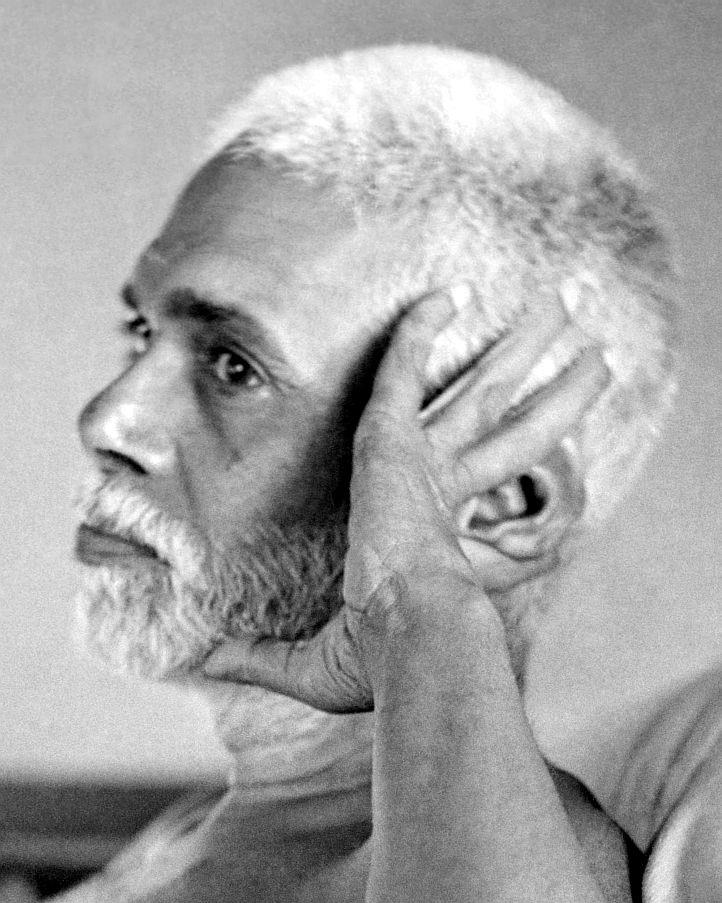
209. Clad only in the four directions they wander at large; they are like a bird sitting on her eggs, or like a tortoise when someone comes near. Who are their countrymen? Like walking corpses, or madmen bereft of speech they may be, yet even the hosts of the gods raise a cry to invoke their help, and Indras accompany them, wielding sceptres of protection.
210. Some liberated ones will leave the place they are in never to return, just as life never returns to a dead body; others will remain where they are, regarding all places as only one. All they know is that the body is but a temporary dwelling place for the soul, and the world, the stage upon which they act.
211. When the pleasures of the body [are seen to be unreal and] fall away, the enemy of the soul (the ego, anava malam) dies. Then, as bliss itself dies away, discriminating awareness, along with the idea of a personal self disappears. For those who are thus established in the all-embracing fullness of reality, moving about will be like measuring the ether.75 Will there be any place where they are not?
212. What does it matter if they live in a dense forest, or a place inhabited by men with royal palanquins, umbrellas and fans? What does it matter if their dwelling place is high, low or middling? They are like Lord Siva himself, having no contact with anything whatsoever, or like his grace, which does not [leave Him to perform the divine operations and then] return to Him again. For them, all places are one and the same.
213. To those who have known themselves through grace, and then transcended entirely even that knowledge, attaining thus to the greater life of realisation in this lifetime, the very destruction of that consciousness, in which they acted in and experienced [the world objectively], is their dwelling place. For them there is no saying, ‘this is a cremation ground,’ [or ‘this place is pure’].
214. To those who have abandoned lust and all the rest76, whose hands are their only eating utensils, who sleep on the bare ground with only their arms and legs as a cover, who are untouched by even the idea of name, reputation, caste or occupation, what religion might we ascribe?
215. If we compare the life of the jnani to that of the world in general, the former will be like a lamp [which is the source of illumination], and the latter, a pair of glasses [which require illumination to be of any use]77. To the rest of the world he will appear to have strayed from the path. But does that world affect him? He knows only that forgetfulness [in which one forgets the world]. He does not know [that forgetfulness in which one forgets the Self].
75 Since Ether is the same everywhere – to measure it or to cease to measure it has no effect on it whatsoever
76 The six inner enemies –lust, anger, avarice, sensuality, pride and envy
77 To look for an object in total darkness , a light is required
216. Some will say of the jnani that he is a fool, one who is improper in his conduct, or a complete ignoramus; others will call him a great scholar, the scion of a noble family, or the seed from which virtuous conduct springs. However, when we think about it, the clear understanding of the jnani cannot be comprehended, for he is the very measure of that which is set as a measure [by the holy scriptures], and even beyond all that. How wonderful is this!
217. When grace overwhelms him, the jnani will be like someone who has rubbed magic ointment into his eyes and is able to see hidden treasure; or like someone who now feels ashamed of what he did under the influence of poison or demonic possession; or like someone who has been released from a cruel curse. However, to those [whose vision is limited] like frogs in a well, his conduct will appear fraudulent.
218. The jnani who remains a householder will be like one who has renounced the world in terms of his spiritual knowledge, but will differ from him in his outward conduct. Conversely the householder who is not a jnani will resemble the householder who is a jnani in his conduct only but not in his spiritual knowledge.78 If we must draw a comparison, the jnani who is a householder is like a whore; like wealth; like the sun; like a vina; like the ether; like a fan, and like a someone who gives blessings [to people without judging them].79
219. Though they prosper as great kings, leading an army with its four divisions, possessing [the trappings of royalty such as] palanquins and royal parasols, and praised by a host of servants and retainers, do the pure ones feel any pleasure in experiencing those things? They are like the flame of a lamp [that transforms oil into radiant light], transmuting false pleasures into the welling-up of the Real, or like someone who is about to die accepting repayment of debt, [accepting the fruits of his karma without attachment].
220. Since it is the case that the body is the source of great ills, indulging in its pleasures will cause them (the non-jnanis) to experience the torments of the seven hells. Their karma will not bring them enjoyment unless the ego dies and they remain in the body simply as the Self. As for the karma of the devotees of the holy feet, it will be like a prison guard or a set of manacles to them.80
78 The general idea is that it is not possible to recognise a jnani based on his conduct, as he may appear outwardly to be totally involved in the affairs of the world whilst inwardly he is as much a renunciant
79 Though the whore appears to be fond of her client, but in reality desires only his wealth, a jnani appears to be attached to his householder life but in reality desires only the riches of the Self; Wealth – has no feelings towards the people who desire it – just like the householder jnani is has no attachment to the wife and family who lavish their affection on him; like the Sun fostering all activities but not taking part in any of them; like Vina the Indian lute – all musical instruments remain inert until played – likewise a jnani will respond appropriately but without attachment in his dealings with others and subside again in his former state when the interaction is over; like space containing all phenomena but remaining untouched by them; like the fan which performs a service to others but confers no benefit on itself; just as people blessing others do not consider the worth or lack of it – the jnani householder acts with total equanimity and freedom from bias is his dealings with the household.
80 Since the jnani has no karma past, present or future – however it seems like he has to wait for the now inoperative karma of current birth to be expended – like a prisoner in chains awaiting the expiry of his sentence in order to be free.
221. For those whose form is bliss there is no suffering. To them the cremation ground is as heaven itself. Within themselves also they have discerned heaven and hell. There is no body [and therefore no experiencing of the fruits of their karma] for those experiencing non-dual bliss. It is to those that practise devotion towards them that the fruits of actions will accrue.
222. If we are to speak of the bliss of that renunciant, it would be exact to say that it equals the bliss of Vishnu, Brahma, Indra and the rest of the gods, all combined; or that it equals the bliss of the supreme Lord Siva himself. To take it further, we might say that his bliss has no equal but itself. Even the Vedas cannot know the bliss of those who stand apart [from all things, including bliss].
223. The superior seeker is one who pays homage to an adept of Saiva Siddhanta, a teacher of the four paths beginning with ‘dwelling in the realm of god,’ 81 in order to learn from him the state of Oneness. Can there be any greatness which exceeds82 that of those who, with melting heart, dedicate their service to his divine essence?
224. Just as life leaves the body when the head is severed, when the personal self is no more, the jnani will be free of the constraints of [auspicious or inauspicious] times, places, directions, actions, bodily attire, religions and the knowledge of their peculiar characteristics, and considerations of proper conduct.83 Such a one is none other than Lord Siva.
225. The true jnanis dwell in the non-dual state, taking the death of the ego as the greatest of penances. If even the Vedas and Agamas are at a loss to say whether for them there can be chanting of Tevaram hymns84, observance of holy occasions, meditation practices, virtuous and sinful acts and proper and improper behaviour, who else then is qualified to say?
226. The love which he bestows upon silent ascetics as he looks upon them with his unblinking gaze; his divine form, which no artist could picture, and which resembles the white moon, shining with holy ash – these images come to me unbidden even in dream, like the sun arising before the eight eyes, set in glorious array, in the four heads of lotus-seated Brahma.
227. The joyous gaze which melts the heart in supreme bliss; the beatific countenance; the radiance of his gentle smile; the holy ashes – these are merely incidental marks of beauty which adorn a body in which the personal consciousness has died.
81 Refer Verse six
82 It is stated that there is no knowledge equal to the knowledge of Siddhanta, and that the greatness of those who worship those who have attained this knowledge is true greatness
83 Refers to the loss of the personal, ego-consciousness- once this is eliminated all concepts relating to exoteric worship, such as auspicious times and places, rituals and appropriate dress, proper forms of worship cease to exist – just as life leaves the body the moment the head is severed
84 hymns composed by Tamil saints Appar, Sundarar, Jnanasambandhar
228. Dwelling detached from a body weakened through its effortless rejection of worldly desires; the last residue of spent karma lingering about him like the scent of faded flowers; his gaze, that ever dwells in the joyous bliss which is not dependent upon the objects of sense; his divine countenance – these images shall never leave my heart.
229. You shall speak of the one who has cast off the cloak of the thirty-six tattvas, and is clothed in the four directions, by the names of ‘Non-Dual One,’ ‘Solitary One,’ ‘Pure One,’ ‘Blissful One,’ ‘One who dwells in the fourth state [beyond waking, dream and deep sleep],’ ‘Avadhuta’85, ‘Forswearer of the world,’ ‘Siva yogi,’ ‘Nirvani’86, and ‘Renunciant.’
230. Oho ! There are those who, feigning to be free of desire, have outwardly renounced all, [and those who have truly renounced all]. Yet can we not distinguish them [one from the other] by the signs of spiritual ripeness, [or the lack of it]? [The former] seek out maths87 where the best alms may be got; they whisper in corners like a [newly-wed] girl [in her mother in-law’s house]88; when people come [with offerings], they stretch out their own hands towards theirs in anticipation of gifts.
231. Just as the waves will rock a ship when it comes close to the shore, the false personal consciousness will reappear when you come into contact with the objects of sense. Like a warrior who has taken a vow [to defeat his enemy], or someone who accepts a challenge to jump [over a deep well89], you should stand firm in your determination to renounce. Otherwise that which you have renounced will return to grip you once more.
Sri Ramanasramam in 1926
85 One who has freed himself from the world – literally to shake off or cast off
86 Emancipated One
87 Hindu monastery
88 Just as a newly married girl might hesitate to voice her wishes openly in her mother-in-law’s house, but rather choose to speak of them to her husband in private, the false renunciant will target only certain devotees who are convinced of his spiritual purity, with his selfish requests, whilst maintaining the appearance of a selfless renunciant with others
89 If someone who sets out to jump across a sixty foot well jumps sixty one feet, that is victory; if he fails, victory is lost and he falls into the well. Similarly for someone who sets out to renounce the objects of sense, renunciation is to renounce those objects of sense along with his personal consciousness. If he does not do so, and those objects of sense grip him, he will lose the glory that comes from that renunciation, and fall back again into birth.
Chapter 9
The nature of those in whom attachment [to the life of the householder] has died90
232. Renunciation without true knowledge is worthless. What good does it do for jungle tribesmen, robbers and the chronically sick?91 What does it matter [to the jnani] what station in life he occupies, or what sense objects he comes into contact with? 92 The loss of his personal self is his true home, which itself is bliss.
233. What good does it do to give up the life of the householder, which all religions praise? Whatever they give up, what is the good of it? If they attain true understanding, so that worthless discriminating knowledge is removed, and become free of attachment even to Sivam itself, only then will there be an end to birth.
234. It is not renunciation simply to give up the life of the householder, when the mind [that is attached to it] has not changed. [Nor is it renunciation to control the mind, since the ego consciousness] that controlled it [still remains]. Even if the ego consciousness is eliminated, the experience of bliss upon uniting with Sivam still remains, and even if that goes, the [thought, ‘I am] the all-embracing fullness [of Sivam]’ will persist. Who are those who can know the state in which even that thought does not arise?
235. Only they have truly renounced who, even though they live like kings amongst worldly pleasures, are quite untouched by them, like a ruby [which imparts its colour to other objects but is not affected by them]. Should they become contaminated by those things, they will return to the body the moment they are freed from it, just as [a new shoot grows up where] a seed falls to the ground. This is karma, the one root of all births.
236. For those who dwell in the world under the authority of a single king93, will there be any village in that kingdom that seeks to do them harm? Similarly, if the consciousness of the jnani becomes involved with the mind and senses, what harm can that do? [Will his consciousness be usurped by them] as dust is absorbed by mud? Not at all. It will pass over and leave them, just as the shadow of a kite passes over the ground.
237. In his life as a householder the jnani can be compared to a dog which has eaten ghee, [and vomits it up, unable to digest it]94; he is like the reflection of trees, seen in water, [giving the appearance of being upside-down]95; he is like eyes decorated with eye-paint, [looking beautiful to others, but knowing themselves to be blackened] . [The jnani is not
90 Those who have attained Jnana even whilst living the life of a householder and are established in the state in which the inherited propensities (vasana) relating to the household has died
91 Someone who has renounced outwardly but not inwardly has not truly renounced, albeit his behaviour may appear so. Otherwise we should say that the harsh existence of jungle tribesmen, the rejection of worldly pleasures by the chronically sick and lack of regard for personal safety of a robber are also forms of renunciation
92 Whatever condition he dwells in
93 Literally – under the shade of one umbrella – being one of the twenty-one symbols of royalty, authority of kings
94 Just as a dog will vomit up food which is too rich for it , the householder jnani will not become attached to but will automatically reject all worldly pleasures
95 Will appear to be fully immersed in worldly activities but in reality he is united always with the Self
masked by the householder life, but shines more brightly because of it], just as darkness makes a precious, pure ruby appear brighter, unlike all other things [which fade into obscurity].
238. The single expedient of patting the thighs is equally useful both for putting a child to sleep and for waking it up.96 Will darkness affect a ruby as it affects a crystal [filling it with darkness]? Since the jnani is merely playing the role of the householder without any attachment to it, like a thief who joins in with the chase, following his own footprints, why should there be for him any birth henceforth?
239. As it grasps the objects of sense and then lets go of them, the consciousness of the jnani operates like a whirlwind, which draws up dust and later lets go of it. However, also like that whirlwind, which plays about [and finally subsides] without leaving the space of the sky, the consciousness of the one-pointed jnani, [having discarded the objects of sense] subsides [into the expanse of the Self without ever having left it]. What does it matter whether he is a householder or an ascetic?
240. Many are those who have achieved the state of desirelessness through knowledge; there is Sundaramurti Nayanar, there is the Cheran king, Cheraman Peruman Nayanar; there are the Chola kings, Chenkan Chola Nayanar and Pukal Chola Nayanar; there are petty chieftains like Meyporul Nayanar and Kazhal Singa Nayanar; there are those who have wounded their own body, like Kannappar Nayanar, and those who have afflicted that of their own son, like SiruTondar Nayanar; there is the eternally illustrious Adipatta Nayanar. Yet for all, [whether householders or ascetics] the achievement is the same, the elimination of discriminating awareness.

Drawing of Arunachala by Sri Bhagavan in Sivananda Swami’s notebook
96 Just as patting the things can be used to put a baby to sleep or wake it up, depending on the situation, the presence of a wife, family, children and relations will cause the jnani householder to turn inward, in rejection of those things, the effect will be opposite on an ajnani householder drawing him deeper into the world of sensual pleasures
Chapter 10
The nature of being established [in the state of reality] 97
241. People who do not know the way to a certain place will enquire of others and find it out. But later, as they walk along, they will forget that this knowledge originally came from someone else. [So it is with seekers and divine grace].98 They are like those who launch themselves into a heavy rainstorm, forgetting they are carrying an umbrella, jumping and leaping about [in a vain attempt to dodge the rain].
242. You should dwell in the pure consciousness of grace, so that the states of dark unconsciousness and discriminating consciousness that occupy your awareness are removed. Instead you wander about, dying and being reborn, all the time outwardly seeking, in your confused state, the means of avoiding death and rebirth.
243. ‘Will the disciple himself be able to ward off the onslaught of the states of unconsciousness and discriminating consciousness? It is we who will bring you to a fit condition, dispense to you your deeds and their fruits, and lull you to sleep, [so that your ego consciousness will disappear], like the flame of a lamp in full daylight, or like the colours in a prism when the sun is at the zenith. You should abandon any attempt at union with Ourself.’ Thus did [Jnanasambandhar] graciously decree.
244. Those who in the waking state transmute all the agitation of discriminating consciousness, treating it as a dream, will come to possess the pure consciousness of grace. They will become parai yogis, who transcend [even that grace]; pure ones; ones who are experiencing the bliss which is pure enjoyment; ones who have gone beyond even bliss to dwell in the fourth state [of union with Sivam].
245. Once the thirty-six tattvas and the state of unconsciousness [in which one remains unaware of them] have gone, the ego [which knows those states] subsides. When the grace [which arises thereafter] falls away, one remains in the pure state of readiness for Lord Siva’s grace (parai yogam). Then when [the last vestige of] individual consciousness99 has gone, and the work of Lord Siva’s grace (para sakti) has come to an end, one is annihilated in the One, other than which nothing is, (the non-dual reality).100 This is the [supreme] state beyond bliss.
246. As it rides in state through the avenues of the five senses, mounted upon the steed of the ego, consciousness is like a whirling rocket, [as it engages with the objects of sense]. But if the steed is consciousness and its rider grace101, supreme bliss will arise, in which nothing is gained or lost. Know this, my disciple!
97 Regaining the state of the real, should one have fallen from it [which is the subject of this work]
98 The seekers may at some point feel that the quest is somehow under their conscious control, and they can realise the Self through an effort of mind or will, rather than surrendering them to the Self
99 one’s independent awareness having gone
100 The One other than which nothing is
247. Disciple, [know that] true renunciation is the ending of all conflict upon the elimination of the activity of the discriminating consciousness, [in which you are deluded], as you investigate [the objects of sense], examining them inwardly and outwardly [through the mind and senses], knowing them, [grasping and] becoming immersed in them before forgetting them again, and mistaking them for yourself, so that you are wracked by pleasure and pain, as [by turns] you [gain and] lose them.
248. All that occurs [and is known through the physical, sensory and mental faculties] is yourself (your own consciousness) only. But if you think, therefore, that to remain in the state where all those faculties are eliminated is Sivam, [you should know that] when [those faculties] subside, the [defilement of anava] malam will delude and overwhelm you. The state of union with Sivam will only occur through grace, in which the maya [of the faculties] and the forgetfulness [of anavam] do not arise.
249. The state of grace and the actionless state beyond grace are like the sun and moon102. The place in which the day of the former and the night of the latter are no more, is the state of supreme bliss. The pure state which arises on the elimination of the experience of that bliss, which is of the nature of being-consciousness-bliss, is the state in which you are not.
250. Know this, O disciple! One should offer oneself up to be consumed by Sivam, just as food is consumed to support the body; then having transmuted one’s experience of the world through the medium of grace, one should become established in the state of parai, [in which grace is eclipsed]; then as one’s own self is annihilated, the aggregation of the five defilements will be destroyed. [If this is not possible, this state may be gained] if one pays homage to the devotees of Lord Siva, worshipping through the agency of the five holy syllables.
251. When your faculties were in operation, we revealed to you the nature of the states of cakalam (waking consciousness) and kevalam (unconsciousness). Then when grace arose [as a consequence of that], we placed you in the states [of grace and parai yogam], in the same way [that we had previously shown you the states of cakalam and kevalam]. And now it is our responsibility to establish you in the condition of purity, which is untouched by the day and night [of those aforementioned states, [just as it is your duty] not to bring into play [your personal consciousness].
101 Any attempt on the part of the consciousness to control the ego is doomed to failure, however if consciousness abandons itself to divine grace the ego will not arise and bliss of the Self will be gained.
102 The active state in which the jiva becomes aware of the power of grace and surrenders to it is compared to daylight and fiery sun, the passive state in which the jiva becomes established in grace, transcends it and awaits the final union with Sivam is compare do the night and cool moon.
252. [Grace] will establish [the ripe devotee in the state of liberation], like sugar appearing fortuitously in the mouths of those who go about biting the bare ground of a sugarcane field [in the hope of finding sweetness].103 If, like those of low intelligence [who think they can achieve anything they want without help], you claim that [the gaining of liberation] is due to your own excellence, you will be in the state where the greatness of your true Self is lost.
253. As I pay homage to him104, my unspoken words offer praises to the one who suddenly turned his gaze upon me, like a painted picture which had come to life revealing to me the truth, ‘You are reality itself, [which is merged with you] just as the radiance of the heavens is merged with the pupil of the eye !’
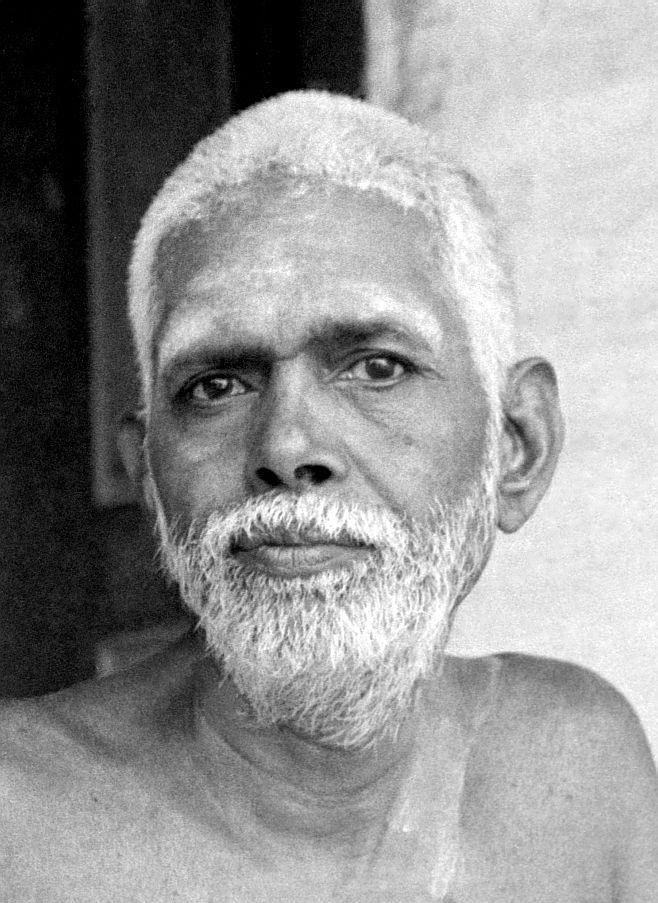
103 When you give up your futile efforts in seeking the Self [ without thinking of divine grace ]
104 The Guru Jnanasambandhar