Meetings with Sages and Saints
In this chapter
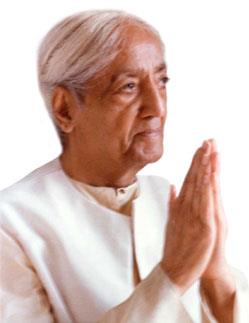
J. KRISHNAMURTI
Life
Jiddu Krishnamurti was born on 11 May 1895 in Madanapalle, a small town in South India. He and his brother, Nitya, were adopted in their youth by Dr. Annie Besant, the then President of Theosophical Society. Dr Besant and others proclaimed that Krishnamurti was to be a ‘World Teacher’ whose coming the Theosophists had predicted. To prepare the world for this coming, a world-wide organization called the ‘Order of the Star in the East’ was formed and the young Krishnamurti was made its head. In 1929, however, Krishnamurti renounced the role that he was expected to play, dissolved the ‘Order’ with its huge following, and returned all the money and property that had been donated for this work. From then on, for nearly sixty years until his death on 17 February 1986, he travelled throughout the world talking to large audiences and to individuals about the need for a radical change in mankind.
Krishnamurti is regarded globally as one of the greatest thinkers and religious teachers of our time. He did not expound any philosophy nor found a religion, but rather talked of the things that concern all of us in our everyday lives -- of the problems of living in modern society with its violence and corruption, of the individual's search for security and happiness, and the need for mankind to free itself from inner burdens of fear, anger, hurt, and sorrow. He explained with great precision the subtle workings of the human mind, and pointed to the need for bringing to our daily life a deeply meditative and spiritual quality.
Krishnamurti belonged to no religious organization, sect or country, nor did he subscribe to any school of political or ideological thought. On the contrary, he maintained that these are the very factors that divide human beings and bring about conflict and war. He reminded his listeners again and again that we are all human beings first and not Hindus, Muslims or Christians, that we are like the rest of humanity and are not different from one another. He asked that we tread lightly on this earth without destroying ourselves or the environment. He communicated to his listeners a deep sense of respect for nature. His teachings transcend man-made belief systems, nationalistic sentiment and sectarianism. At the same time, they give new meaning and direction to mankind's search for Truth. His teaching, besides being relevant to the modern age, is timeless and universal.
Krishnamurti spoke not as a Guru but as a friend, and his talks and discussions are based not on tradition-based knowledge but on his own insights into the human mind and his vision of the sacred, so he always communicated a sense of freshness and directness although the essence of his message remained unchanged over the years.
When he addressed large audiences, people felt that Krishnamurti was talking to each of them personally, addressing his or her particular problem. In his private interviews, he was a compassionate teacher, listening attentively to the man or woman who came to him in sorrow, and encouraging them to heal themselves through their own understanding. Religious scholars found that his words threw new light on traditional concepts. Krishnamurti took on the challenge of modern scientists and psychologists and went with them step by step, discussed their theories and sometimes enabled them to discern the limitations of those theories.
Krishnamurti left a large body of literature in the form of public talks, writings, discussions with teachers and students, with scientists and religious figures, conversations with individuals, television and radio interviews, and letters. Many of these have been published as books, and audio and video recordings.
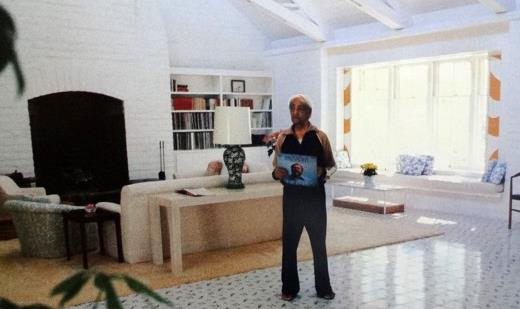
Krishnaji’s residence : ‘Pine Cottage’.
[ In 2006, Ganesan conducted a three-day Retreat on “Who Am I?” in this very Hall of ‘Pine Cottage’ ]
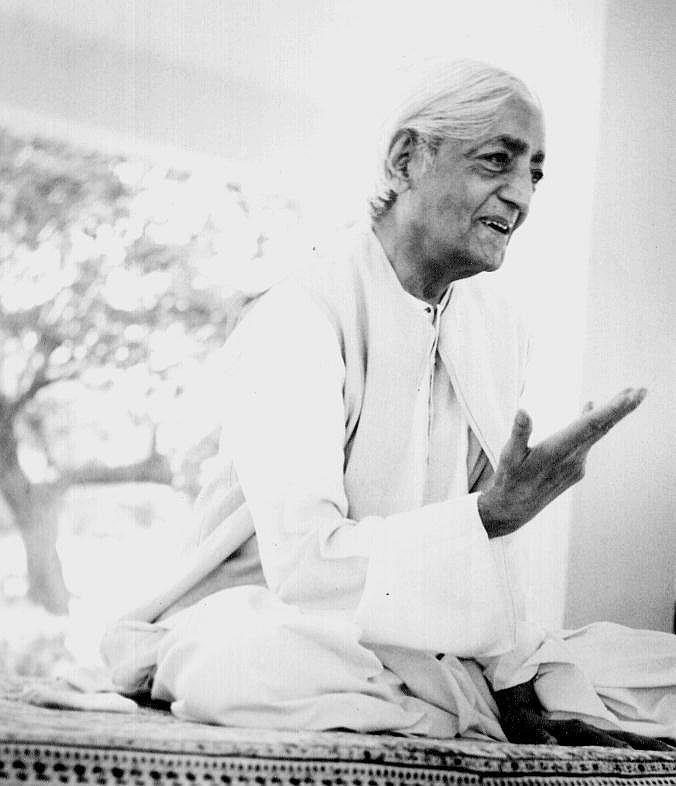
J.Krishnamurti
THE TEACHING
When asked in 1974 by his biographer, Mary Lutyens, to define his teachings Krishnamurti, wrote the following:
"The core of Krishnamurti's teaching is contained in the statement he made in 1929 when he said ' Truth is a pathless land'. Man cannot come to it through any organisation, through any creed, through any dogma, priest or ritual, not through any philosophical knowledge or psychological technique. He has to find it through the mirror of relationship, through the understanding of the contents of his own mind, through observation and not through intellectual analysis or introspective dissection. Man has built in himself images as a fence of security - religious, political, personal. These manifest as symbols, ideas, beliefs. The burden of these images dominates man's thinking, his relationships and his daily life. These images are the causes of our problems for they divide man from man. His perception of life is shaped by the concepts already established in his mind. The content of his consciousness is his entire existence. This content is common to all humanity. The individuality is the name, the form; and, superficial culture he acquires from tradition and environment. The uniqueness of man does not lie in the superficial but in complete freedom from the content of his consciousness, which is common to all mankind. So he is not an individual.”
“Freedom is not a reaction; freedom is not a choice. It is man's pretence, that because he has choice he is free. Freedom is pure observation without direction, without fear of punishment and reward.”
“Freedom is without motive; freedom is not at the end of the evolution of man, but lies in the first step of his existence. In observation, one begins to discover the lack of freedom. Freedom is found in the choiceless awareness of our daily existence.”
“Thought is time. Thought is born of experience, of knowledge, which are inseparable from time. Time is the psychological enemy of man. Our action is based on knowledge and therefore time; so, man is always a slave to the past.”
“When man becomes aware of the movement of his own consciousness, he will see the division between the thinker and the thought; the observer and the observed; the experiencer and the experience. He will discover that this division is an illusion. Then only is there pure observation which is insight without any shadow of the past. This timeless insight brings about a deep radical mutation in the mind.”
“Total negation is the essence of the positive. When there is negation of all those things which are not love - desire, pleasure - then love IS, with its compassion and intelligence.”
THE SAGE AND ME
I was steeped in Sri Ramana Maharshi’s teachings and had come for good to live in Sri Ramanasramam. The recorded conversations of the Maharshi with seekers had just been published. As I was associated with its production from the manuscript to the printed book, almost every answer of Sri Bhagavan was resounding in my ears. If I was not reading or contemplating the Talks with Sri Ramana Maharshi, I would be discussing its contents with fellow seekers. Sri Bhagavan’s name and form meant so much to me -- that it was like the breath of my life itself!
Then, in the early 60s, a friend spoke to me about a great spiritual Master whose teaching, he said, was similar to that of Sri Bhagavan’s. I listened, but nothing went in. I had not read J. Krishnamurti. Whatever little my friend told me about the man and his teachings fell on deaf ears.
When I was next in Madras, the same friend took me in his car one evening to a talk given by Krishnamurti. I must confess I went more to humour my friend than to listen to a spiritual talk. When we reached the gates of “Vasant Vihar”, the talk had already begun. After walking a few yards into the garden, I was charmed to hear a sweet voice talking over the microphone. Its very tone made me very happy. I was yet to see the speaker. “Sir, take it for certain. If there is no Truth within you, there is no Truth outside of you!” My whole body shook with ecstasy. If Sri Bhagavan had spoken in English, he would have said the very same words – this was the feeling that reverberated in me! Also, the very first darshan of his comely figure, mysteriously humbled me. I listened to the talk. Something churned inside and a tremendous admiration for him arose within me. I was silent for the rest of the evening.
Every year, thereafter, I regularly went to Krishnaji’s talks. I listened to him as attentively as possible. I made it a point to read his books. I honestly tried to understand his teaching, without bias or prejudice. I did not discuss Krishnamurti with anyone, since I wanted to learn his teaching myself, directly. My outward behaviour, movements, why, even the way I dressed, all changed by themselves, though imperceptibly. And, it happened in a most beautiful and natural way.
I understood that the crux of his teaching was centred around each individual as the Truth. “You are the Truth. You alone can know it. No one else can make you realise it.”1 This absolute stress on the ‘you’ helped me to take the plunge within ‘me’. Yes, the ‘I’ in every ‘you’ and ‘me’ is the clue to the living Truth. This vital message, though couched in the most unconventional terms, made me pursue it relentlessly.
The message of the Maharshi, “The ‘I’ is the Reality, the only Reality that ever exists,”2 became vibrantly evident in Krishnamurti’s central teaching. However, one question again and again reared its head: while Bhagavan Ramana’s words had a soothing effect, why did Krishnamurti’s create such turbulence in my mind?
I chanced to read the following lines from M.P. Pandit: “One teacher does not repeat what another has done already... To compare Ramana Maharshi to some modern teacher is to see him in a wrong perspective. Sri Ramana, like every other world teacher, has come to reveal a new approach to the Eternal Truth. The Truth always stands Eternal, but the approaches vary depending upon the changing conditions through which humanity is passing.”3
I remembered Sri Bhagavan’s proclamation, “There are no jnanis (Realised Persons). There is only jnana (Realisation).”4 Since we view the Masters as bodies through our body-mind complex, we see them as different entities and their utterances too as separate, differing, and in opposition. When we look at them as persons (like Jesus Christ, the Buddha, Lord Krishna, Sri Ramakrishna Paramahamsa, Bhagavan Ramana, J. Krishnamurti) we miss the unifying aspect of their singular ‘Wholeness’.
The scriptures say, Ekam sat vipra bahudha vadanti - “Truth is One. Sages call it by different names.” How true! Could it be that the society and environment in which the Sage takes birth moulds the mode of expression of the Sage?
Ramana Maharshi was born into an orthodox, Brahmin family. He was schooled like any other lad and had had no good or bad influences, spiritual or otherwise. He did not even know about meditation, sadhana, Brahman, atman, bondage and Liberation - subjects which he was to expound upon later. In fact, Maharshi categorically stated: “This is called philosophy and the learners are struggling to learn all this! Is it not sheer waste of time? Ah! Fortunate is the man who does not involve himself in this maze! I was indeed fortunate that I never took to it. Had I taken to it, I would probably be nowhere - always in confusion.”5
His “Death Experience” at the age of sixteen, made a Sage out of an average school boy. That final experience, which he preferred to call “Self-Realisation”, continued without any change, modulation, addition or subtraction. Bhagavan Ramana was fortunate that he had no outer influences except his own introspective, inner quest.
Krishnamurti, perhaps, was less fortunate! Also born into a Brahmin family, he was ‘discovered’ on the beach at Adyar by Bishop Leadbeater and it was ‘decided’ by the Theosophical Society and Dr. Annie Besant, to bring up Krishnamurti and groom him into a ‘World Teacher’. The boy’s training included his being taken abroad and given the best of education. Everything was ‘told’ to him. The one saving grace was that Nitya, his younger brother whom he loved intensely, accompanied him wherever he was taken.
In 1922, Krishnamurti underwent a series of inexplicable experiences of his own at Ojai, which was later termed “the Process”. For three days Krishnamurti’s body was racked with pain. Nitya wrote to Mrs. Besant the details: “He was unconscious a great deal of the time, cried out, could not bear to be touched, complained of pain in his head and neck, fainted, did not eat, shivered and yet complained of heat, was in agony most of the time and strangely quiet for some time, and then on the third day he sat under a young pepper tree and started chanting... The Buddha, Lord Maitreya, and other celestial beings seem to have appeared before Krishnamurti, and he went into a deep trance.”6 Krishnamurti too gave his own account of this experience which ended with the words, “I am God-intoxicated.”6
He was then twenty-seven years old. However, this vitally important yet mysterious “Process” did not change his outward life. His travels and talks continued as usual. So did the efforts to announce him as the World Teacher. In 1925, his brother Nitya died. It brought about a great change in Krishnaji’s life.
Then, dramatically, at the age of thirty-four, he renounced his position as leader of ‘The Star of the East’. The message he gave on that day in August 1929 to thousands of his admirers including Mrs. Besant, is of the greatest importance to the spiritual community. He declared:
“I maintain that Truth is a pathless land, and you cannot approach it by any path whatsoever... I am concerning myself with only one essential thing: to set man free.”7
From then until his passing in 1986, his talks were aimed at shaking off his listeners’ religious slumber and awakening them to Reality.
Krishnamurti’s language was modern. For example, instead of Brahman he used ‘Energy’, ‘Choiceless Awareness’ or ‘Insight’; instead of sunya, ‘silence’, ‘space’; instead of manas, ahankara, ‘the brain’, and so on. In fact, he made this logic explicit when he advised Dr. Adikaram who wanted to give talks on Krishnamurti and his teachings in Sri Lanka: “Don’t use a Sanskrit word. To use it is to bring to mind the ancient tradition and to sanction past comprehensions. A Sanskrit word will attach what you are saying to the remembered texts. Tell it in your own way, in your own language, what you are seeing. Use modern Sinhalese words.”8
A beginner in Krishnamurti’s teaching is initially faced with two apparent hurdles. The first is his usage of unconventional terms and the second, his denial of spiritual techniques, the Guru, and God.
Puzzled by these, I voiced my concern to the mystic-saint, Yogi Ramsuratkumar, also a great admirer of J. Krishnamurti. He listened attentively, and with a beatific smile replied, “Krishnaji is for the non-believers. Believers have any number of Masters to follow. But for a genuine non-believer, what is the recourse? Hence, Krishnaji chose totally different terms - terms acceptable to non-believers.” After a pause, Yogiji added, “I assure you, Krishnaji gives us the same essence as any of the great Masters, but couched in different terminology.”
Having received this inspiring clarification from an incomparable Siddha Purusha, I plunged myself again into the reading of both Krishnamurti and the Maharshi. It was not surprising that I stumbled across a plethora of striking similarities and it gladdened my heart.
* * * * *
Krishnamurti: “Things happen in their own course. Stop fretting.”9
Maharshi: “Whatever is destined to happen will happen, do what you may to stop it. This is certain. The best course, therefore, Is for one to be resigned.”10
Krishnamurti: “The mind is cause and effect, it is caught in time, it has a beginning and an end. Mind can never experience that which is without cause, the timeless, that which has no beginning and no end.’’11
Maharshi: “How is it possible for the mind to know the Lord who imparts His light to the mind and shines within the mind except by turning the mind inward and fixing it in the Lord?”12
Krishnamurti: “Thought cannot, do what it will, free itself from the opposites; thought itself has created the ugly and the beautiful, the good and the bad. So it cannot free itself from its own activities. All that it can do is to be still, not choose. Choice is conflict... The stillness of the mind is freedom from duality.”13
Maharshi: “If a man is free from the pairs of opposites and lives in solitude, perfect wisdom shines in him even in the present body.”14
Krishnamurti: “I was born in India into the Brahmanical fold. That root — it might be thousands of years old — was his conditioning, but so long as the mind was so conditioned, it was not free. It was the past as thought that essentially divided [the] man.”15
Maharshi: “Break away from all relationship of country, status, caste and its duties and think always of your own natural state.”16
Krishnamurti: “When the mind is in that state of loneliness, without any escape, then there is freedom from it. Separation exists because of the desire to fulfill; frustration is separation.”17
Maharshi: “A yogi should not be swayed by desires or yield to gratifying the senses. He should find ecstasy in the Self alone, free from desire and fear. ”18
Krishnamurti: “When I step out of that stream, I am not fragmented, not contradictory. I am Whole. The Whole has no root.”19
Maharshi: “He enjoys bliss who realizes the Supreme, beatific, formless One, not alloyed with perceptions but is in pure all-covering Awareness.”20
Krishnamurti: “The body does not divide. It never says, ‘I am’. It is thought that separates.”21
Maharshi: “This body does not say ‘I’. Nobody says ‘I did not exist during sleep’. Once the ‘I’ arises everything arises. Inquire with a keen mind whence this ‘I’ arises.”22
Krishnamurti: “This feeling of the ‘me’1 and ‘mine’ is the very core of the mind, it is the mind itself.”23
Maharshi: “That which arises in the physical body as ‘I’ is the mind.”24
Krishnamurti: (speaking of the sign of the Cross): “The straight line is the ‘I’ and the horizontal bar, the negation of the ‘I’.”25
Maharshi: “Christ is the ego. The Cross is the body. When the ego is crucified, and it perishes, what survives is the Absolute Being.”26
Krishnamurti: “In the Hebraic tradition it is only Jehovah ‘the Nameless One’ who can say ‘I AM’, that is the Tat Tvam Asi in Sanskrit.”27
Maharshi: “ ‘I AM’ is the name of God. Of all the definitions of God, none is indeed so well put as the Biblical statement : I AM THAT I AM’ in Exodus (ch. 3). There are other statements, such as brahmaivaham, aham brahmasmi and soham. But none is as correct as the name JEHOVAH — “I AM”. The Absolute Being Is what is — it is the Self. It is God. ”28
* * * * *
From 1965 until his last talk in 1986, almost every year without fail, I attended Krishnamurti’s four annual talks at “Vasant Vihar” in Chennai. I was drawn only to his teachings and not to his personality. I had more than one opportunity to have private audience with him, but I did not do so. My conviction was that if Sri Bhagavan was one side of the ‘coin’ of Truth, J. Krishnamurti was the obverse side of the same ‘coin’. While both gave the same Truth, they used different expressions of emphasis.
During my long stay at KFI, Varanasi in 1988-89, I had the great good fortune and opportunity of transcribing more than 70 audio cassettes containing the talks given by Krishnamurti all over the world, never transcribed before ! That enabled me to have direct access to Krishnamurti’s core teaching, which were not available in any of his published works of that time. It made me even more deeply interested to go deeper into his inimitable teaching.
But, though I never had private meetings with Krishnaji, I feel blessed and privileged to have many one-to-one meetings with some of his very close associates. Their sharing with me of their experiences with Krishnamurti -- the person -- confirmed that a Sage can never be pigeonholed. For the simple reason that a Sage’s ‘inner reality’ can never be grasped by our minds, even though it is always at once fascinating, enlightening and utterly easy to behold within one’s Heart !
R. R. UPASANI
R.R.Upasani
Later, in 1988, as I shared before, I stayed for a year at the Krishnamurti Foundation in Varanasi. My very first day was filled with ecstatic experiences. That evening Sudhakar Tiwari, the Hindi teacher in the Krishnamurti School there, came to my cottage and offered to take me to river Ganga. I sat on a spot from where I could safely put my feet into the running water. When I was intently looking at the Mother Ganga, I felt Ganga Ma was initiating me with a mantra. Elated, I went on chanting the mantra for a full three and half hours in a state of spiritual fervour. So much so, it was dark when some people from the Foundation came searching for me in that darkness with flash-lights. They took me back to my cottage. The mantra kept on repeating within for days, no matter what I was doing outside.
The very same night, while I was deep in slumber, I was woken by another deeper and stranger happening! Though I was awake, I could not open my eyes. I heard many pooja bells ringing in frenzy. The fragrance of flowers, burning incense sticks and camphor filled my room. Suddenly, I heard tens of hundreds of people shouting fervently, “Har, Har Mahadev !” Then, there was a total silence. I opened my eyes. My whole body quivered with joy and ecstasy. I tried to understand what all had happened. But, my weak mind could not ascertain whether or not all these actually happened.
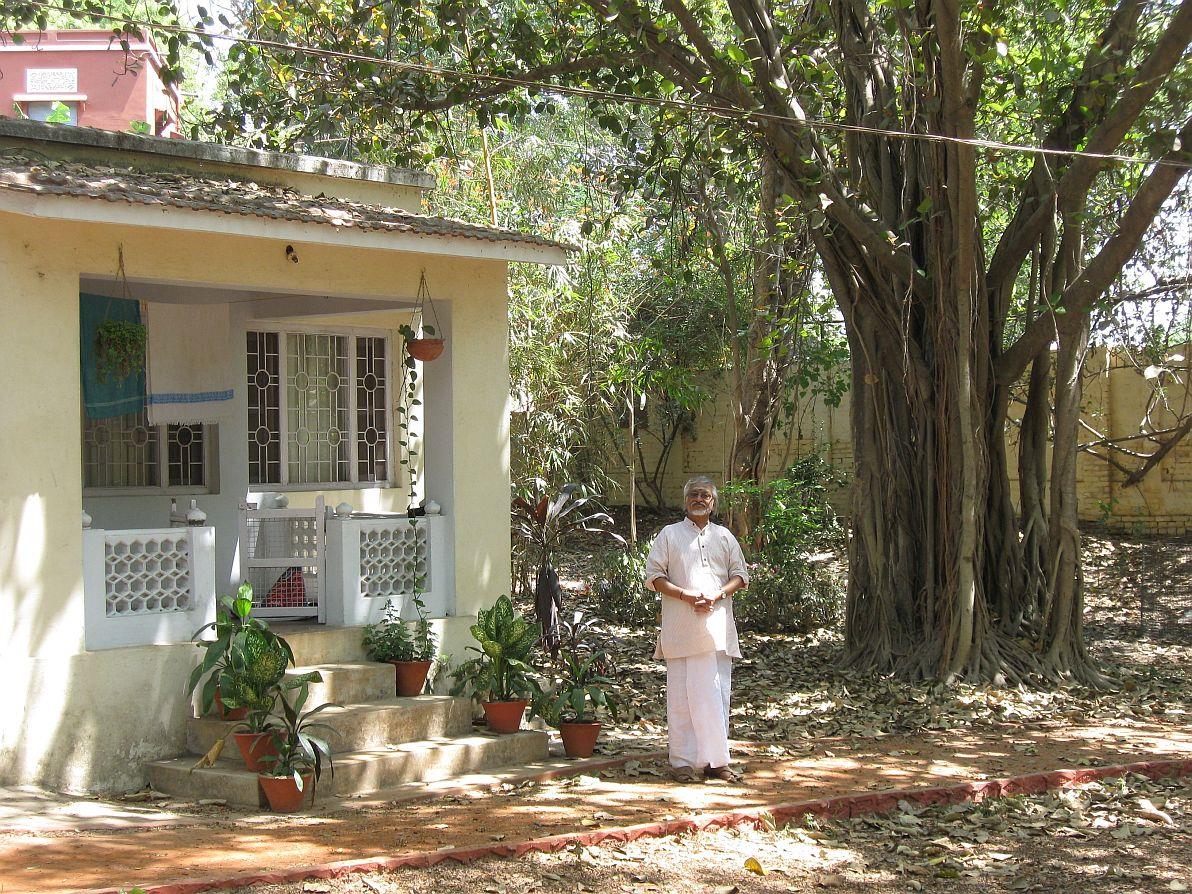
“…..the sacred Banyan tree next to the cottage where I stayed for one year….”
A couple of months later, R.R.Upasani, the secretary of KFI, came to my cottage. We sat outside in the verandah. He had earlier informed me that he would come one day to listen to me talk about the Maharshi and his teachings. However, instead of asking me to tell him about the Maharshi’s teaching, he showed me the ‘banyan tree’ that stood silently next to my cottage and asked me,” Do you know about its significance?” I replied in the negative.
The following is the extraordinary story he told me: “Krishnaji was a mighty spiritual personality! Yet in the beginning of our relationship itself, I had boldly told him that I could not understand his teaching and hence had no pretension of putting them into practice. I loved him deeply and sincerely and would do anything for him. Every day, in the evening, he would request me to accompany him during his long walks. My daily evening routine was to be with him during dinner and see him off at the first floor room of his. I would wait till he bade me good night and closed the doors behind him.”
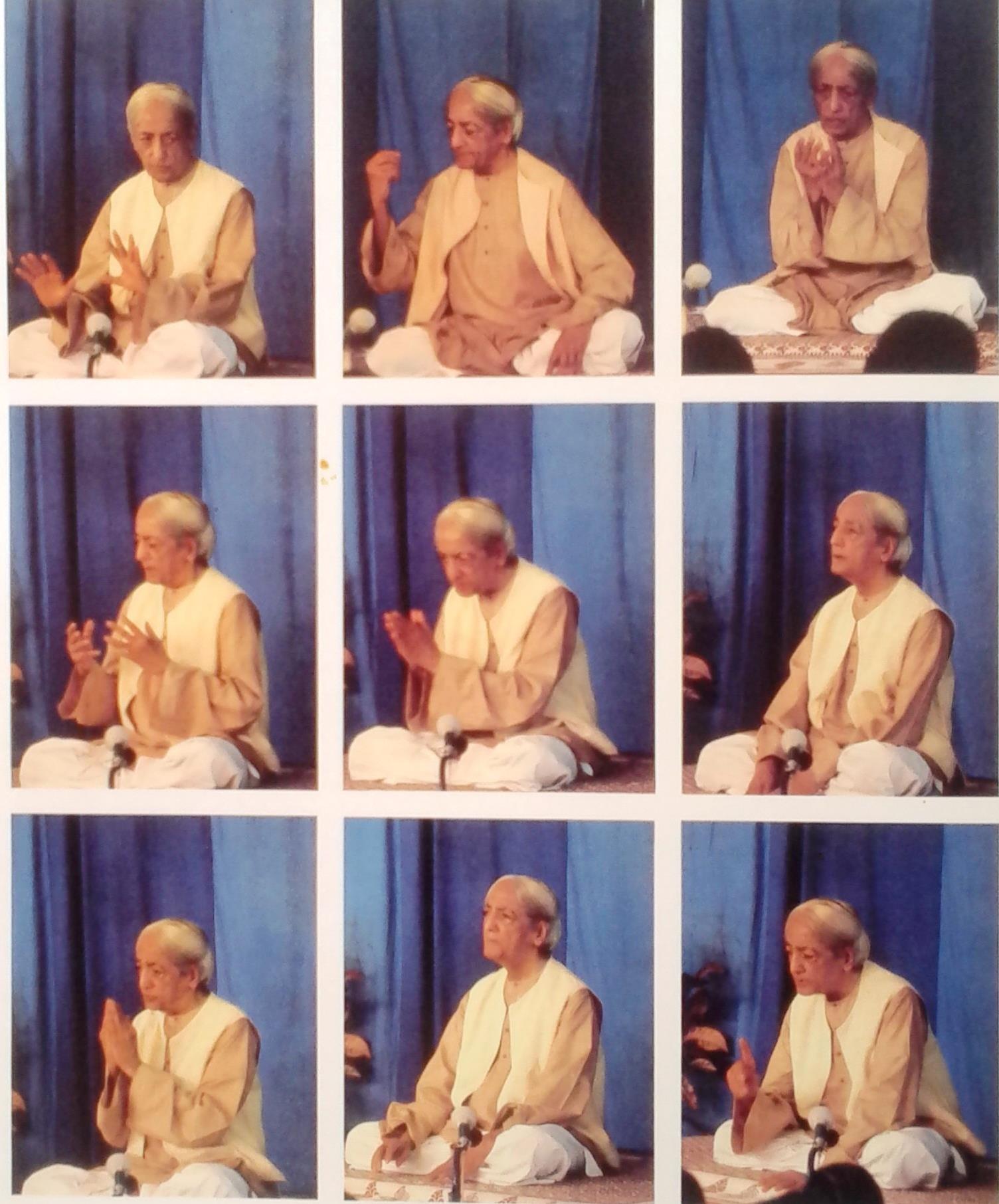
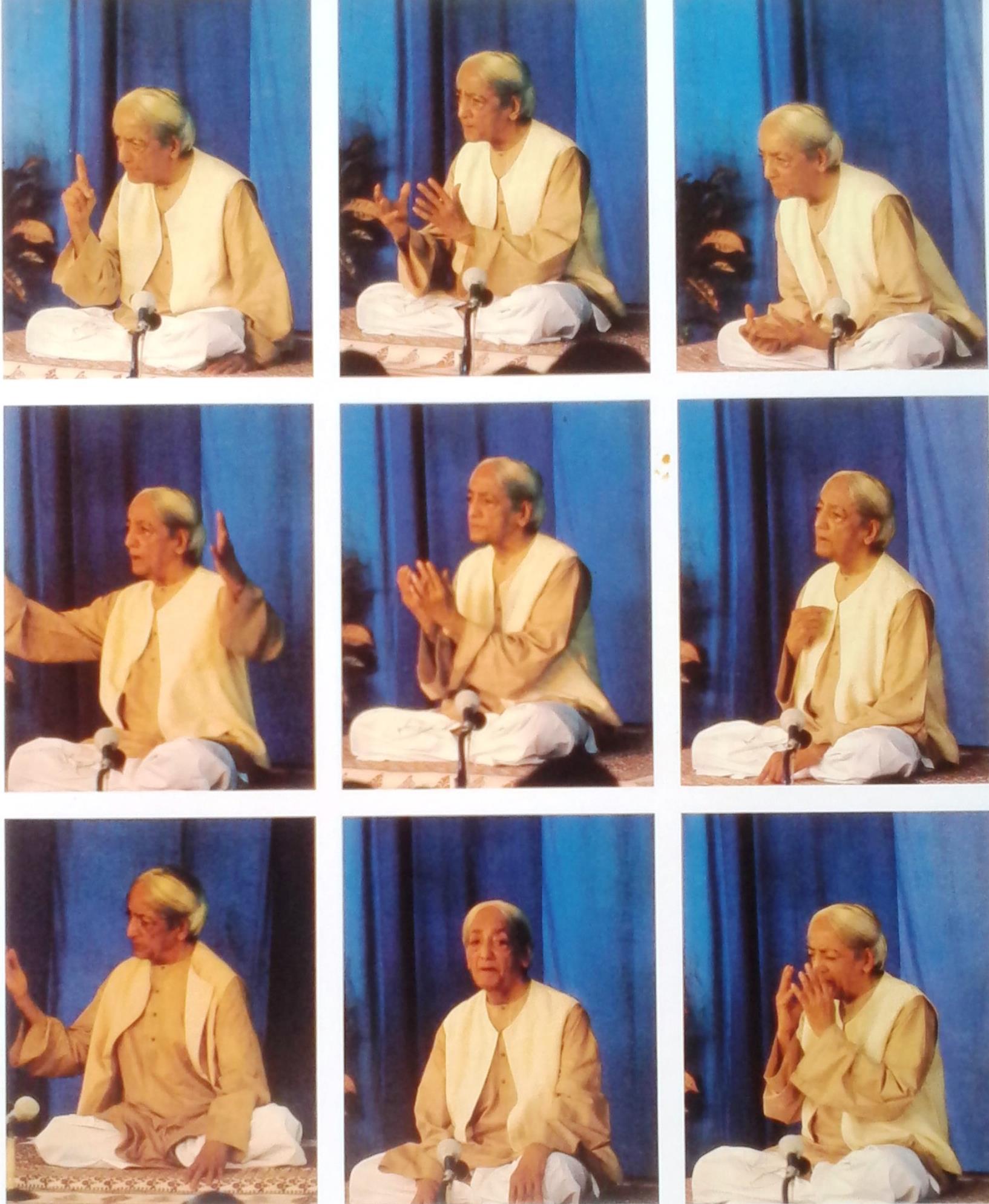
“One night, he suddenly reopened the closed door, called me back up the stairs and said, ‘Upasaniji! When you come tomorrow, bring a sapling of a banyan plant, a spade, and a bucket of water’. The next day, I brought them and waited. Krishnaji came down and asked me to take him to this piece of land next to which your cottage now stands. Then, it was a rough piece of neglected land overgrown by cacti and other wild bushes. Krishnaji walked up and down there in a state of frenzy. I was worried as there were blood stains on his pyjamas, caused by the thorns and cacti. After sometime, he stood still exactly on the spot where the ‘banyan tree’ stands now. Everything he did was very unusual, strange and illogical. He stood with closed eyes for several minutes in deep meditation. Opening his eyes, he called me and said, ‘Upasaniji, Will you please clear this place up and dig a hole to plant the sapling?’ I did as he asked. When I looked up after digging the hole, he asked me, ‘Don’t you have a mantra that you chant before planting a banyan sapling in your villages?’ Having studied in an Agricultural College and obtained a master’s degree in it, I affirmed, ‘Yes sir, I know the mantra !’ Krishnaji said, ‘Then, chant it and plant the banyan sapling in that place.’ On my plea, he too held the sapling in his hands, and we both planted it with the mantra chanted by me. We poured the water around the plant. Krishnaji stood up and remained in a deeply prayerful attitude with closed eyes for a fairly long time. And then, moving away, started walking back in measured steps.
While walking back to his house, I could not control my curiosity. I asked him, ‘Krishnaji, what is the significance of all that happened today? Why was that neglected place chosen for planting the banyan sapling?’
He replied, ‘You want to know why? Because, the original Viswanatha Temple is buried right under the place where the sapling is planted! The Viswanatha Temple that people worship now, is its third location. More than two thousand years ago, the original Viswanatha Temple was here. Though it is buried, it is still active and energetic.’
Upasaniji did not claim to have fully understood this last sentence of Krisnaji’s. But, while listening to Upasaniji, an electric sensation, went through my system. I not only connected it to my experience of bells ringing, puja being done, the remarkable aroma of fragrance and a sense of divinity on the first night I stayed in the cottage next to the banyan tree, but it also instantly brought to my mind what Sri Bhagavan had said once about an underground tunnel connecting the Adi Annamalai and Arunachaleswara temples. This tunnel, which went right through the Arunachala Hill, was used by celestial and other higher beings to do puja in both the shrines every day! When I shared my own experience and the mystical statement of Sri Ramana, Upasaniji was thrilled, “All these days, Krishnaji’s revelation remained a puzzle to me and now it is getting cleared. Ganesanji! This frank sharing of yours encourages me to unravel one more mysterious declaration Krishnaji made to me!”
Upasaniji continued, “One day, while taking a walk, Krishnaji turned to me and asked, ‘Upasaniji, do you know why ‘Kashi’ is regarded as the most sacred city by the Hindus?’ I answered, ‘Because of Viswanatha Temple.’ He disagreed and gave me one more chance. ‘Because of Holy River Mother Ganga?’ Krishnaji shook his head and said with a smile, ‘It is because of the Sages and Saints who are always here. Right now, there are nearly forty Sages and Saints in Kashi. Many of them cannot be seen because they stay in hidden underground caves. They will always be here and so, ‘Kashi’ will always be sacred.’
Upasaniji added: “Later on, I did some research and came to know that these Yogis meditate in caves along the banks of the Ganges, and when the river got flooded during the monsoon and sand blocked the passages to these caves, the Yogis remained inside continuing their tapas!’ Ganesanji! Sages alone know about Sages! Krishnaji is a True Sage!”
Upasaniji added, “Once I asked Krishnaji, ‘Why did you select this particular piece of land for the Foundation?’ Pat came his reply, ‘Because, this is the land that the Buddha’s feet first touched when he arrived in Kashi by boat, after his Enlightenment at Bodh Gaya!’ He did not stop there. He held me by my hand and took me to the exact spot where the Buddha had placed his feet, bent down, touched it and remained silent for some time!’
I requested Upasaniji to show me the spot which remains unmarked and largely unknown to this day. I felt blessed and prostrated. Since then, every time I visit and stay at KFI, Rajghat, without fail I go at least once to that spot and prostrate in total veneration !
* * * * *
Upasaniji became very enthusiastic as he found out that I was not only a very keen listener but also truly deeply involved in preserving the great masters’ sacred words narrated by their senior and mature disciples. The following months, I had many opportunities to share the reminiscences of the the Old Devotees of Sri Ramana Maharshi with Upasaniji. He listened attentively and with great joy.
On one such occasion he said, “Ganesan! I too want to share with you an amazing fact. One day, Krishnaji called me and said, ‘Upasaniji! I want to listen to all the four Vedas properly chanted. Gather the best pundits and great experts on each of the Vedas, bring them to Rajghat and make them recite. We should also honour them with all reverence, by giving them the best of traditional clothes, shawls and money.’ This was arranged and on the specified day, at the auditorium of the school, Krishnaji came and sat along with the audience. He refused to be given a place of honour on the dais and chose to sit on the ground along with others. I told him that I had gathered the presents as described by him and that I would honour each of the Vedic pundits with the respect and reverence they deserved, after the chanting was over. His face beamed with joyous approval.
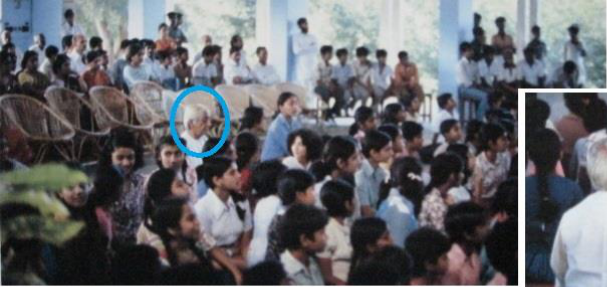
Krishnaji seated on the floor, listening to the ‘Vedic chanting’
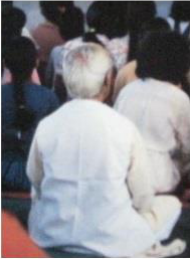
“Then, he sat on the ground facing the dais and the pundits. He, as was his wont, sat in silence in the meditative posture and heard with rapt attention. I sat next to him. Ganesan! everyone knows that Krishnaji was an absorbingly charming speaker. But, on that day, I observed what a keen listener Krishnaji was! He was totally absorbed in listening to the chanting from the beginning until the end without any movement of his body. “At the time of honouring the Vedic Pundits, as already arranged, the valueable presents were kept in individual plates, and I got up with them to give them away to the pundits. I had put 10,000 rupees in an envelope on each plate (the maximum amount one gifted to such pundits in those days was only Rs.500 or 1000).
“Krishnaji stood in front of each Vedic Pundit and offered his respects with folded hands. Krishnaji surprised me by moving forwards to the dais in front of me. When I offered him the plate, he took the shawl and put it around the pundits. When he came to know that I was giving each one of them 10,000 rupees, he exhibited true joy in his face!
“Ganesan! The sight of this ‘modern’ Sage, Krishnaji, honouring the four Vedas will forever remain a divine one for me!”
Listening to Upasaniji’s absorbing and unusual narration, I was simply thrilled!
* * * * *
MAHESH SAXENA
I had the good fortune of having the dignified looking, retired Inspector General of Police, Mahesh Saxena, living in the cottage next to mine. When he was the I.G. of Police in Delhi, he happened to be taken to a meeting where Krishnaji was giving a talk. After the talk, Krishnaji called him and asked him to resign his job and join the Foundation.
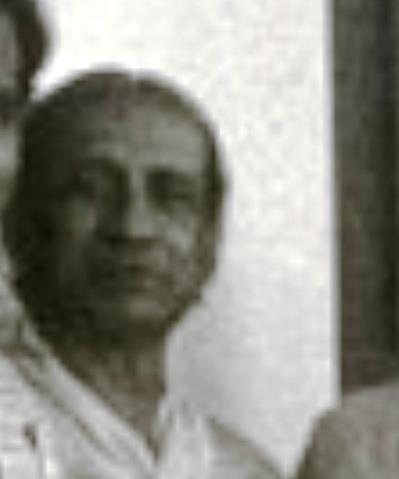
Mahesh Saxena
Maheshji bluntly told Krishnaji that he followed the traditional method of revering, respecting and worshipping Gurus. That his Guru was ‘Madhav Ashish’, whose Guru was ‘Krishna Prem’, whose Guru in turn was ‘Yashoda Ma’. He told Krishnaji that he did a simple, daily puja to all the three of them. And so, if Krishnaji, despite his apparent aversion to Guru worship did not object, he would gladly give up his job as an IG of Police and join his Foundation. Krishnamurti did not object and Maheshji joined the Foundation. An able administrator, he was, in due course, made the Secretary of the Foundation. It is said that under his guidance, the institution grew very well.
Some years later, Krishnaji was giving his annual talk at the KFI in Varanasi. On that day, Krishnaji was scathing in his criticism of those who worship their Gurus. Maheshji felt very hurt. He waited until the talk was over and then went up to Krishnaji with apparent sadness and disappointment on his face. He told Krishnaji, “Sir, I told you at the very beginning itself that I have three Gurus and that I do worship them daily, privately. You accepted it and said that it was alright. Today, you launched a public scathing attack on such a practice. I am deeply hurt. Sir, if this is how you feel, I am ready to tender my resignation”.
Krishnaji, with a warm smile, gave a pat on Maheshji’s back and replied, “Did I mention you when I made that statement ? Did I condemn you ? Have I not already accepted your Guru worship ? So, why feel hurt ? Search Sir, your mind and find out the reason, for yourself. Something within is hurting you. Can it be the ego which has anyhow to be given up finally, Sir ? The Guru is the dispeller of the ego ! Be strong ! Follow your own Heart ! Ever do what is best for you, Sir ! Stay still, within.” Maheshji happily continued in the Foundation until Krishnaji passed away !
G. NARAYAN
G. Narayan was the nephew of Krishnamurti. He was exceptionally gentle and cheerful and like many others around Krishnaji, unreservedly gave his whole time and energy to the study of the teaching and service to the Foundation. He was a very able teacher. He was the Director of Krishnamurti School in Rishi Valley. Narayan regarded Krishnaji to be a ‘World Teacher’ – one who pointed the world towards ‘freedom from all illusions’. As a person who had himself spent over thirty years teaching school children, Narayan recognized Krishnaji as a rare and exceptional teacher who shared his insights about exploring different paths to right education with those who gathered around him, with the same urgent concern.
I had the privilege of receiving Narayan at Sri Ramanasramam and spending fairly long periods discussing and sharing the teachings of both Krishnamurti and the Maharshi, since Narayan had clarity in upholding the ancient principle : “The ‘Teaching’ is the ‘Teacher’ ”.
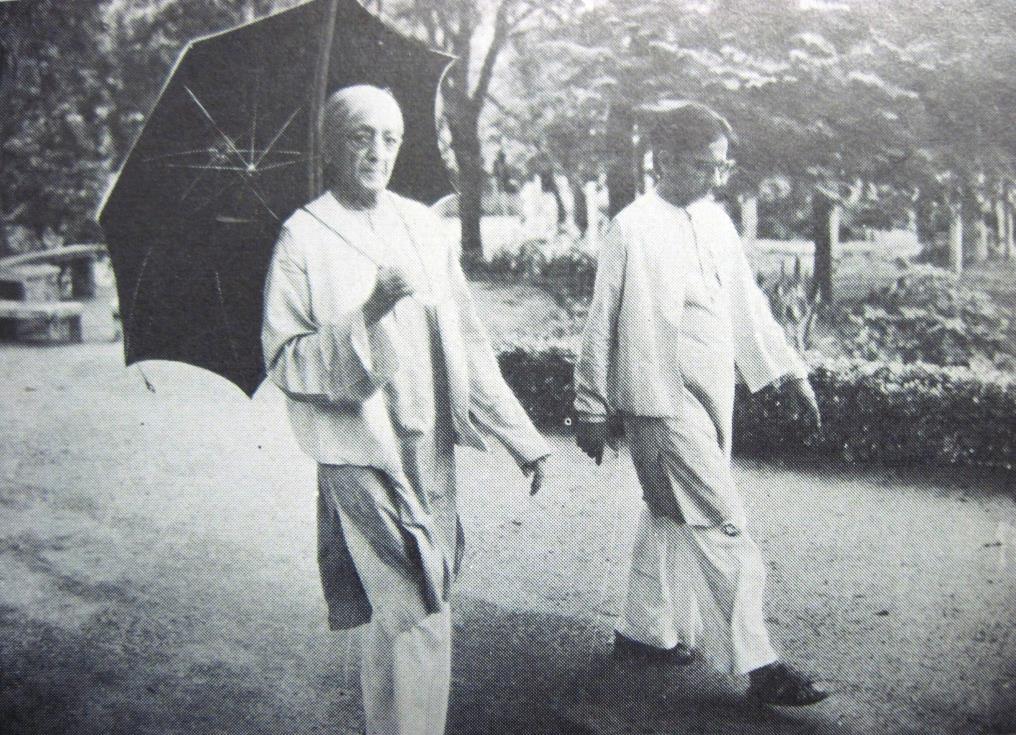
Krishnaji with G.Narayan -- the Principal of Rishi Valley School
It was the time I was engaged deeply with the problem concerning the printing press, which I had mentioned in an earlier talk on Yogi Ramsuratkumar. Since Yogiji had directed me to spend one year on the banks of Mother Ganga, I was wondering where to stay in Kashi for such a long time. Narayan came to my help at the right moment and said, “You can stay in our Krishnamurti Foundation, Rajghat. Professor Krishna is the Rector of the institution. Write to him and he will help you.” Thanks to the initial yet vital push given by Narayan, I could stay happily for one full year at the Krishnamurti Foundation, Rajghat. For that, I am deeply indebted to both Narayan and Prof. Krishna.
During my close association with Narayan, I was keen to know from him about any power of spiritual healing that Krishnaji had revealed. Narayan was kind enough to narrate the following incident. He also pointed out the possibility of what the Sages expose to us being only a tiny portion of the vast infinite mystical side of the Truth. He said :
“A gentleman once came to see Krishnaji. His wife had broken her knee and it was not possible to set it right as something fleshy was between the broken edges. As a result, it was decomposing. The man was very concerned and came to see if Krishnaji could heal her and restore the leg. Otherwise, the doctors would have to amputate it. Krishnaji agreed to see her, though he was not sure of the outcome. But the man was keen and brought his wife the next day. She had to be carried in, on a stretcher. She was brought up the steps in “Vasant Vihar” and Krishnaji came out of his room. They met on the verandah, and from the stretcher the lady caught a glimpse of Krishnaji’s eyes. Their eyes met just for an instant. But, that was enough – the woman got up on her feet and walked. The husband was grateful that his wife could walk again. Krishnaji turned to me and said, ‘Old boy, I think they were pulling my leg.’ ”
But, the next day, the daughter of the woman came to see him and told Krishnamurti, “Do you know what you have done, Sir ? It is a miracle !” She put a flower garland round his neck, a traditional gesture of regard and expressed gratitude for the help rendered to her mother.
Narayan said, “I asked Krishnaji as we walked along, if it was ‘faith healing ?’. He replied in the negative. I persisted, “Then, how did it happen ?” “Somewhere something clicks,” answered Krishnaji. We reached the beach and Krishnaji walked very fast and I followed him. I asked him what it was that clicked ? Krishnaji said, “Energy passes. Don’t ask me anymore.”
* * * * *
PROF. PADMANABHAN KRISHNA
In 1988, I met Professor P. Krishna [ Rector of KFI, Rajghat ] who narrated to me some interesting anecdotes about Krishnamurti :
“Krishnaji was at times unpredictable. He would walk into the children’s dining hall and start eating with them. Once, when he did so here in Rajghat, Upasaniji and others followed him. The dhall had been served and Krishnaji was eating it in the normal way. But, Upasaniji and others found it too salty. On enquiry, it was confirmed that the cook had mistakenly added salt twice ! Concerned, Upasaniji asked Krishnaji, “Sir, how are you eating it ? It has too much salt.” Krishnaji lifted his head up and smilingly concurred, “Yes, Sir ! It is salty.” Prof. Krishna said that Krishnaji never complained about anything personal, though he was very firm and vocal in taking a contrary stand when needed about matters concerning the Foundation. To illustrate this further, the Professor narrated the following.
“ Sunandaji [Sunanda Patwardhan] was hosting Krishnaji in Madras. One evening when Radhaji [Radha Burnier] President of the Theosophical Society came to see Krishnaji, she noticed there were a lot of mosquitoes in his room. Right in their midst sat Krishnaji unmindful of it all. She asked Krishnaji, ‘Sir ! There are so many mosquitoes. How do you tolerate them ?’ Krishnaji smiled in a nonchalant way and replied, “Yes. There are mosquitoes !” There was not a trace of irritation or complaint in his voice !
I asked Professor whether he felt any fear while approaching Krishnamurti, anytime. He answered, “No. I used to hesitate only, because I did not want to disturb him. But, fear ? Never ! And, Ganesan, this was not just me. Almost everyone close to Krishnaji had the same feeling. There used to be awe, wonder, respect and admiration; but, fear ? Never !” Then, I asked him whether Krishnaji had a special attachment to anyone in particular. He said, “Krishnaji had deep affection, but never any form of attachment. In fact, there was a time when Krishnaji could not stay at “Vasant Vihar” and Jayalakshmi was putting him up in her house and was looking after his comfort with care, affection and attention. While leaving the house, Krishnaji said, ‘Sir! I hope she will understand me. When I walk out of the house, there is no more ‘her’ in my memory !”
In answer to his question, Krishnaji once told the Professor that there was no trace of any memory of his brother Nitya – he could not even recollect Nitya’s face. Then, Krishnaji of his own accord added, “Amma, of course, I can recall the outline of her face. But only outline !” After some moments, Krishnaji told him, “Of course, Sir ! If I want to, I can bring them back and see ! They are all stored up, somewhere.” Then, pointing to his own head, he concluded, “But not in here. I can beckon them though, at any time !”
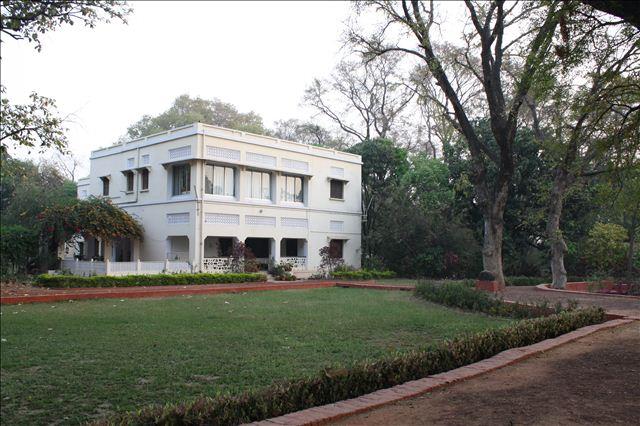
Krishnaji’s residence at Rajghat, Varanasi
Prof. P. Krishna and Smt. Minakshi Krishna came to visit Sri Ramanasramam on the invitation of the President of our Ashram (my father). Anuradha and I were delighted to receive them and take them around. On being requested by them, we took the delightful couple to Yogi Ramsuratkumar at the site where his ashram was fast coming up. That day, there was a good gathering of devotees and Yogiji was seated on the raised dais.
I sat next to Prof. Krishna and Minakshi Ma in the front row. After some time, I took the couple to Yogiji and introduced them. Yogiji drew me closer and asked me in a whisper, “Will you please get permission from the Professor for this ‘Beggar’ to hold his wife Minakshi’s hands?” “Of course, yes!” was Professor’s immediate response. Yogiji held Minakshi Ma’s hands -- put them on his eyes and on his head; and said, “Thank you Professor! Thank you Minakshi Ma! This ‘Beggar’ is deeply blessed to hold the hands that were touched and blessed by Sri Krishnaji!”
The significance of this glorious encounter will be clear only when one reads the following quotation from the book KRISHNAMURTI: A LIFE; ‘THE OPEN DOOR’ by Mary Lutyens. (Ch.10, p.671-2).
* * * * *
(The following conversation took place in Krishnaji's room at Rajghat, Varanasi, on November 7, 1985. Prof. Krishna was then the Head of the Department of Physics, in the Banaras Hindu University, Varanasi. )
Krishnamurti: Sir, I am not going to be around for long. I happen to know when I am going to go, but I will not tell anybody. Before I go, I want to put my house in order, and I want you to take charge of this place. It is a sacred place, it was handed over to me by Mrs. Besant and I want to hand it over to you. Will you take it?
P. Krishna: Sir, I feel overwhelmed by your offer, but I don't know what all it implies. I don't know anything about this place and what they do here. Nor do I know what exactly you want me to do.
Krishnamurti: I will tell you. I want you to come and live here, make this your home for life. You understand, I mean for life. It is yours to build, to do what you like with it. It is being offered to you like a jewel on a silver platter and I am asking you, will you take it?
P.K.(baffled): Sir, I am not sure you should trust me so much, you hardly know me.
Krishnamurti: Don't say that. I know you enough and I trust you completely.
P. Krishna: But Sir I am a very ordinary man. I don't know if I can do what you want.
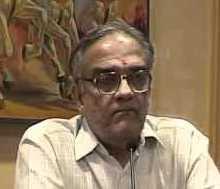
Prof.P. Krishna
Krishnamurti: (interrupting): Sir, sir, I am also a very ordinary man. Don't say all this. The son does not say all this to his father when he is dying and wants to leave him something. He doesn't say ‘no’, he accepts it. It comes to you like that, take it like that.
P.K. (in tears): Sir, I am not saying no, I am saying I would like to do it for you, but I am not sure if I can, if I am the right person for it. I am so young and inexperienced. Sir, give me time to consider it. Let me see what all there is here, what needs to be done, whether I can do it. I don't want to accept something I cannot do well; I would be letting you down.
Krishnamurti: No sir, I want you to tell me 'Yes', from here (pointing to the heart). Then if it is all right with you we will sort out all the other problems together. I want you to say ‘yes’ before you go today, but I am not persuading you Sir, if you understand what I mean.
P. Krishna: Yes sir, I understand. You are not persuading me and I have told you that I would very much like to do it but I want some time to consider all the implications of it, for my family, for myself and above all whether I can make a success of it. I am not looking at it as a job offer and I am not trying to bargain with you. But I have never taken decisions in life this way. I have always considered things carefully and planned my life, so I want to have some time to consider all aspects of it and then give you my final acceptance.
Krishnamurti: Wait sir, let me ask your wife (takes her hands into his and looks at her intently). My dear, darling, will you do this for me? Will you come and live here, make this your home?
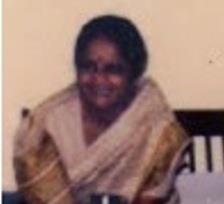
Minakshi Ma
Minakshi (in tears): Yes sir, we will do anything for you. We will come and live here.
Krishnamurti: (Looking at P. Krishna): See, it is finished! You are still arguing.
P. Krishna: No sir, I am not arguing but I am diffident. I know what you want done and I do not think I can do it. I will be letting you down.
Krishnarmurti: Sir, if we think that is the right thing to do, that is what we should be doing. Whether it succeeds or not is not our concern.
P. Krishna: I agree that children should be brought up and educated the way you have pointed out.
Krishnarmurti: Right, its done! That’s all!
* * * * *
Dr. S. BALASUNDARAM
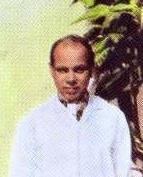
Dr.S.Balasundaram
Dr.S. Balasundaram was the Principal of the Krishnamurti School at Rishi Valley. His wife, Visalakshi, was a devotee of Sri Bhagavan even before she got married. Dr. Balasundaram had also had darshan of Sri Bhagavan. Consequently, both of them were very fond of me. Their affection for me was also because of my deep interest in Krishnaji and his teaching.
Dr. Balasundaram used to share many interesting anecdotes involving him and Krishnaji. They are all absorbingly interesting. One incident though, got deeply imprinted in my heart.
He said that he was intrigued about the state that Krishnaji was always rooted in. He knew Krishnaji to be an extraordinary human being. Thus, he was praying within his heart to Krishnaji to reveal his true state of being. One day, Krishnaji was coming down the stairs to get into the car. Dr. Balasundaram rushed to put his right hand on the car door’s handle. It so happened that Krishnaji too tried to open the door at that very moment. As a result, Krishnaji’s hand gripped Dr. Balasundaram’s hand – just for a few moments. Dr.Balasundaram lost his body consciousness and was in a state of inner ecstasy. Krishnaji too, did not take away his hand and willingly allowed the ‘flow of energy’ to pass through Balasundaram’s hand. When the moment passed, Krishnamurti looked deeply at Balasundaram and remarked, “Are you happy, now ?”
MARK LEE and ASHA LEE
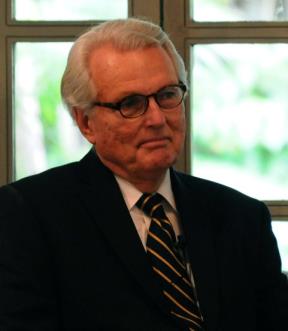
Mark Lee
Krishnaji, had his initial spiritual breakthrough experience at the Adyar beach in Chennai even at a tender age. He had his final spiritual experience when he was at Ojai, America, under a ‘pepper tree’. (Have you not noticed how “trees” play a significant role in spiritual attainment? Lord Dakshinamurti sat under a “Banyan tree” and the Buddha got enlightenment under the “Bodhi Tree”?). Ojai became his permanent residence. On reading about this glorious turn of events in Krishnaji’s life, I was very eager to go to Ojai and meditate under the ‘sacred tree’.
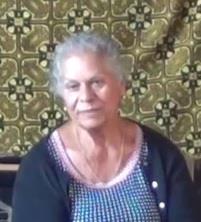
Asha Lee
In 1990, when I took my first pilgrimage abroad under the insistence of Yogi Ramsuratkumar, Joan and Mathew Greenblatt helped me fulfill this deep Inner urge. They contacted Mark Lee and got a small but comfortable house next to the compound of Krishnamurti Foundation of America reserved for my stay. When I was introduced to Asha Lee and Mark Lee I felt like I was in the presence Sri Bhagavan’s Old Devotees – both were that exceptionally kind and affectionate. The next morning, I went to where the ‘pepper tree’ still stands. Sitting under it, I lost myself in meditation. I was rudely woken up by an American who announced that he was the gardener. He told me in no uncertain terms that he would not allow anyone to sit under the tree, as the property belonged to a private person [Mary Zimbalist]. I politely told him that I was coming from far off India and for years I had dreamt of meditating under the ‘pepper tree’. He continued to be rude and even threatened to call the police. I closed my eyes and went back to meditation after firmly, but politely, telling him to do whatever he wanted.
Suddenly, I felt someone touch me softly on my shoulders. It was Mark Lee! He affectionately told me, “Ganesan! Your body was leaning so much to one side that it was about to fall. That is why I woke you up. Please pardon me.”
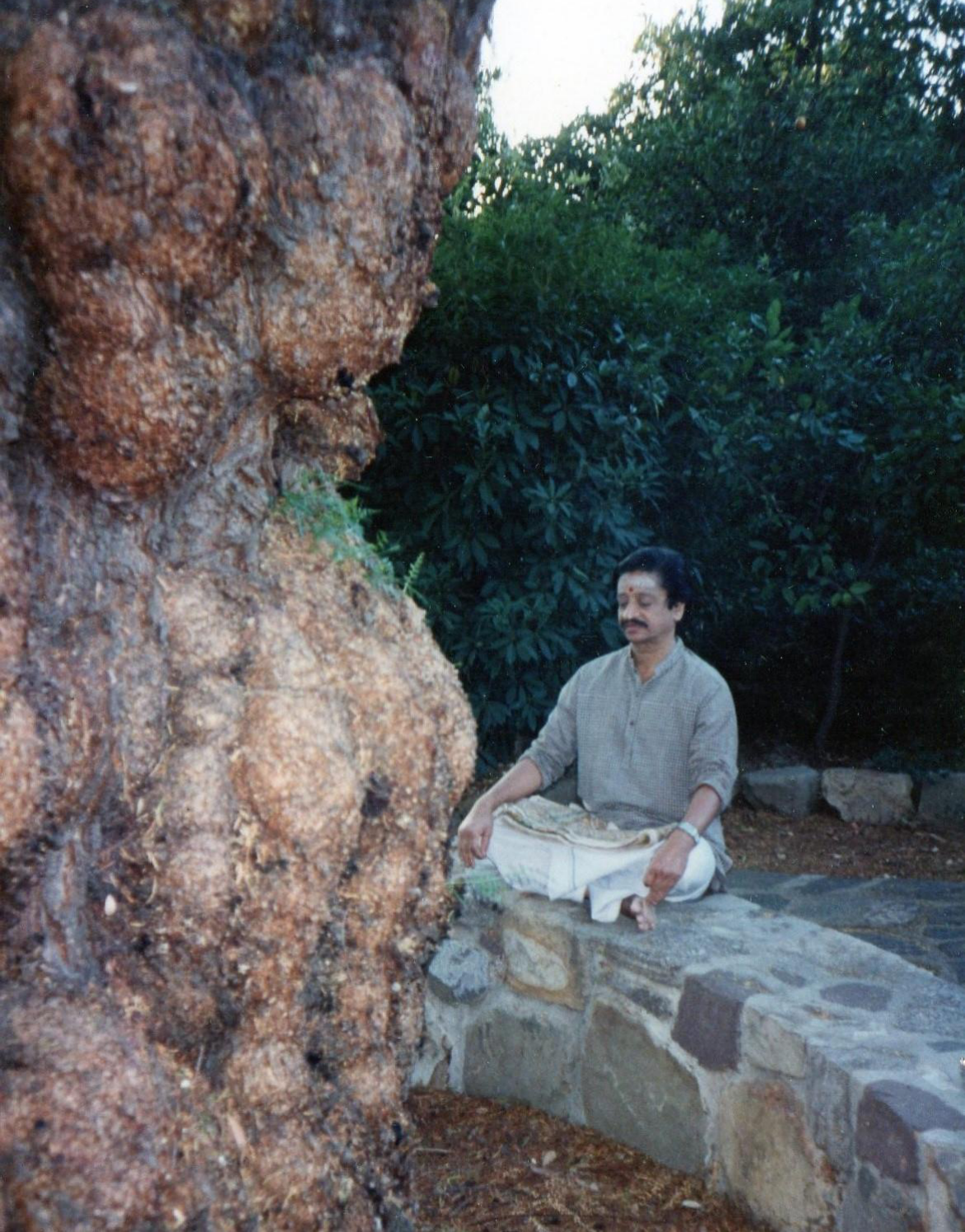
“…..lost in meditation under the ‘Pepper Tree’…..”
During my meditation under the sacred tree, I felt an inner explosion taking place, confirming that there was only one Truth and that there was nothing other than the Truth ! Meanwhile, Mark Lee had spoken to the concerned people. He assured me that I could meditate there, any time.
Almost every time I toured USA since then, I made it a point to make Ojai a part of my itinerary and spend hours in deep meditation under that out-of-this-world tree.
Later, Mark Lee fulfilled another deep and secret urge of mine. I always felt (and still feel) Krishnaji’s true teaching and Sri Bhagavan’s direct teaching are similar. So, I wanted to give talks on Sri Bhagavan’s direct teaching of Self-Enquiry in that Krishnamurti Centre Soon afterwards, Mark told me that there was financial crunch in the KFA and they had decided to hold retreats and collect a fee for the boarding and lodging. I felt Krishnaji himself was urging me to hold a retreat on “Who Am I?”
When I expressed this to Mark Lee, he gave me a pleasant surprise by informing me that I could hold my ‘Retreat’ at the very “Pine Cottage” itself ! It was Krishnaji’s residence; and, the venue where he met with and spoke to advanced spiritual souls. In great elation I told Mark that I would conduct a retreat on ‘Who Am I?’ there, for three days. He readily agreed; and, I successfully completed the Retreat, in June, 2006. The hall at the “Pine Cottage” was small and could hold only fifteen participants. I felt both Sri Bhagavan and Krishnaji together were blessing me and every one of the participants ! Two sessions were held, every day – in the morning and evening. It was a remarkable revelation for every one who participated, as how easy Self-Enquiry is and how effective it is to pursue the inner journey.
PUPUL JAYAKAR
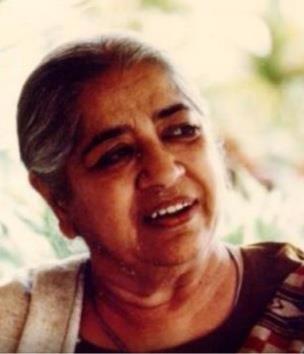
Pupul Jayakar
The renowned Pupul Jayakar – the reputed author of the biography on J. Krishnamurti – came to KFI, during the period I was staying there. Prof. Krishna was keen that I meet with her and talk to her. Pupulji was very kind and courteous to me. I expressed to her my deep gratitude for having brought out in her book the important aspect of Krishnamurti exuding an India fragrance even while being universal in his outlook and appeal. Other biographers had presented him, I told her, as one who was influenced only by the European culture.
She wanted me tell her about the Maharshi and his life. After listening, she bluntly put a question: “Can you put the Maharshi’s teaching in one sentence?” Without any hesitation I answered, “Chittham Sirithasaia Samsaaram. Chittham Nilai Nirkka Mukti Siddhamidhu”, meaning, “When the mind (chitta) oscillates it is samsara (worldly bondage). When the mind stands still that is mukthi (liberation, freedom). This is certain.”
Pupulji was visibly moved on hearing it and clapped her hands in appreciation. She wanted me to not only repeat it but also give it to her in writing, as she said, she had never heard anything as crisp, as profound and as simple, a definition of Truth as Sri Bhagavan’s! I felt very happy!
MARY LUTYENS
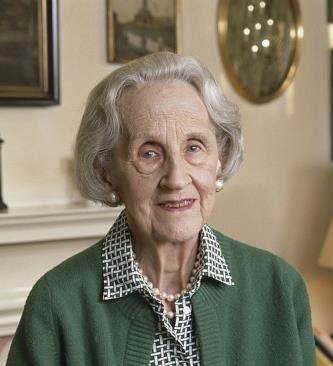
Mary Lutyens
Mary Lutyens, the author of many books on Krishnamurti, was staying at the Brockwood Park School of Krishnamurti in England. Thanks to Alan Jacobs (the then Chairman, Ramana Maharshi Centre, London), I too happened to go over there. When I suddenly met her face to face in an open corridor, my emotions surged up and I spontaneously prostrated to her. She was embarrassed! Yet, I not only had the great satisfaction of having prostrated to a staunch, lifelong follower and close associate of Krishnamurti but also felt profusely blessed.
MARY ZIMBALIST
Years later when I was meditating under the ‘Pepper Tree’ in Ojai, California, I was informed that Mary Zimbalist was living there in Krishnamurti’s home. This noble lady had been of paramount help and assistance to Krishnamurti. So much so that whenever Krishnamurti toured abroad, he would daily write a letter to her about what had happened on that day.
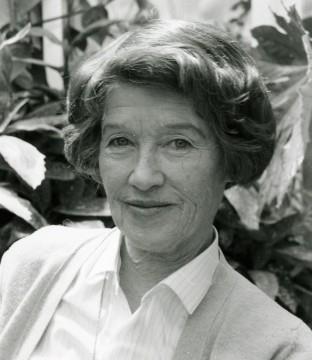
Mary Zimbalist
When I rang the bell, a beautiful lady came out with the help of a crutch. As I saw her, I could not control my joy, gratitude and reverence on having the darshan of this irreplaceable aide of Krishnamurti. I fell flat in full prostration to her. She was taken aback. When I sought her blessings, she demurred. But then, she gave me the most glorious smile ! Krishnamurti called her Maria, as there were ‘ too many Marys’ in the close K community of associates.
The seekers who were drawn to Ramana Maharshi and Krishnamurti were -- broadly speaking -- quite different: faithful believers in age-old traditions, in the former case, and thoroughly skeptical modern minds, in the latter. Their common purpose, though, is to “Be” the “Truth”!
Perhaps I have over-simplified matters. Yet, the fact that both the Masters addressed the ‘individual’ is undeniable. The ‘individual’ alone is the Truth. This, for me, is the essence of the teachings of Sri Ramana Maharshi and J. Krishnamurti:
“Who am I?” of Sri Ramana Maharshi ; and,
“You are the world.” of J. Krishnamurti
References :
1, 6, 7 -- Years of Awakening by Mary Lutyens
3 -- ‘The Mountain Path’ , January, 1988
2,5,26,28 – Talks with Sri Ramana Maharshi
8 -- Truth is a Pathless Land by Ingram Smith
10 -- Self Realisation by B.V. Narasimha Swami
11,14,16,18,20,22,24 -- The Collected Works of Ramana Maharshi
23 -- Penguin Krishnamurti Reader edited by Mary Lutyens
9,11,13,15,17,19,21,25,27 -- J. Krishnamurti : A Biography by Pupul Jayakar