Sri Ramana MaharshiSacred life
Chapter 3 of 10
The death experience

“Nin eri erithennai neer aakidumun nin arul mazhai pozhi, Arunachala.”
~ Aksharamanamalai, v. 55
The great, transforming event in His life is best described in Sri Bhagavan’s own words:
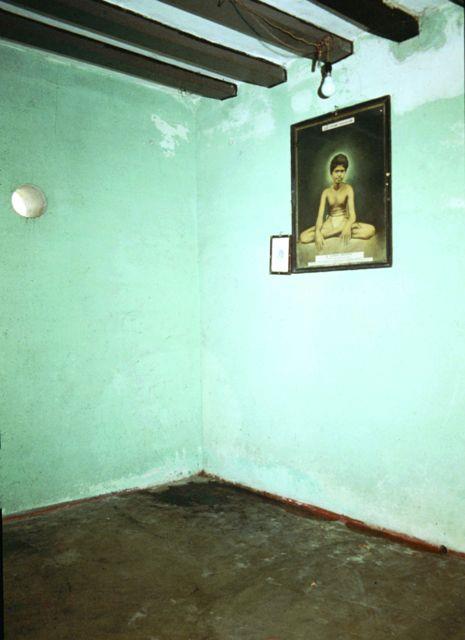
“It was about six weeks before I left Madurai for good that the great change in my life took place. It was quite sudden. I was sitting alone in a room on the first floor of my uncle’s house. I seldom had any sickness and on that day there was nothing wrong with my health, but a sudden and unmistakable fear of death overtook me. There was nothing in my state of health to account for it, and I did not try to account for it or to find out whether there was any reason for the fear. I just felt ‘I am going to die,’ and began thinking what to do about it. It did not occur to me to consult a doctor or elders or friends; I felt that I had to solve the problem myself, there and then.
“The shock of the fear of death drove my mind inwards and I said to myself mentally, without actually framing the words. ‘ Now death has come; what does it mean? What is it that is Dying? This body dies’. And I at once dramatized the occurrence of death. I have with my limbs stretched out stiff as though Rigor-Mortis had set in and imitated a corpse so as to give greater reality to the enquiry. I held my breath and kept my lips tightly closed so that no sound could escape so that neither the word ‘I’ nor any other word could be uttered. ‘Well then,’ I said to myself, ‘this body is dead. It will be carried stiff to the burning ground, and there burnt and reduced to ashes. But with the death of this body am ‘I’ dead? Is the body ‘I’ ? It is silent and inert, but I feel the full force of my personality and even the voice of the ‘I’ within me, apart from it. So ‘I’ am a Spirit, a thing transcending the body. The material body dies, but the Spirit transcending it cannot be touched by death. I am therefore the deathless ‘Spirit’ ”. All this was not dull thought; it flashed through me vividly as living Truth which I perceived directly, almost without thought process. ‘I’ was something very Real, the only Real thing about my present state, and all the conscious activity connected with my body was centered on that ‘I’. From that moment onwards the ‘I’ or my ‘Self’ focused attention on Itself by a powerful fascination. Fear of death had vanished once and for all.
“Absorption in the Self continued unbroken from that time on! Other thoughts might come and go like the various notes of music, but the ‘I’ continued like the fundamental sruti-note that underlies and blends with all the other notes. Whether the body is engaged in talking, reading or anything else, I am still centered on ‘I’. Previous to this crisis I had no clear perception of my ‘Self’ and was not consciously attracted to it. I felt no perceptible or direct interest in it, much less any inclination to dwell permanently in it.”
~ Sri Bhagavan in “Self Realization” by B.V. Narasimha Swami
There is perhaps no doubt that Venkataraman’s body would have become a corpse. And in that timeless moment of intense tapas, it may have even self combusted. But, the downpour of Arunachala’s Grace ensured that this did not happen. Instead, only His ego-sense was burnt to ashes, transforming the boy to a fully enlightened “JNANI”.
Venkataraman’s trial by fire had unforeseen consequences. As He recounted years later, “In the first place, I lost what little interest I had in my outer relationship with friends and relatives, and went through my studies mechanically. I would hold an open book in front of me to satisfy my relatives that I was reading, when in reality my attention was far away from any such superficial matters. In my dealings with people I became meek and humble.
“Going to school, book in hand, I would be eagerly desiring and expecting that God would suddenly appear before me in the sky. What sort of progress could such a one make in his studies at school !”
The change was not just in his studies or in relating with His friends and family. “One of the features of my new state was my changed attitude to the Mother Meenakshi Temple. Formerly I used to go there very occasionally with friends to look at the images and put the sacred ash and vermilion on my forehead, and would return home almost unmoved. But after the “Awakening” I went there almost every evening.
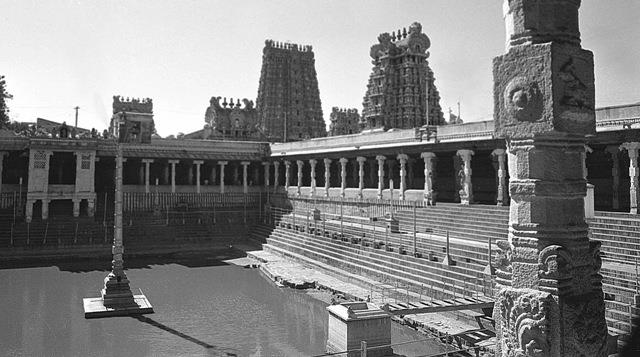
“I used to go alone and stand motionless for a long time before an image of Siva or Meenakshi or Nataraja and the Sixty-three Saints, and as I stood there, waves of emotion overwhelmed me.”
Sri Bhagavan has told with characteristic simplicity how this “Awareness” began to awaken in him during his visits to the Mother Meenakshi Temple. He said: “At first, I thought it was some kind of force (avesam) but I decided it is a pleasant force, so let it stay.”
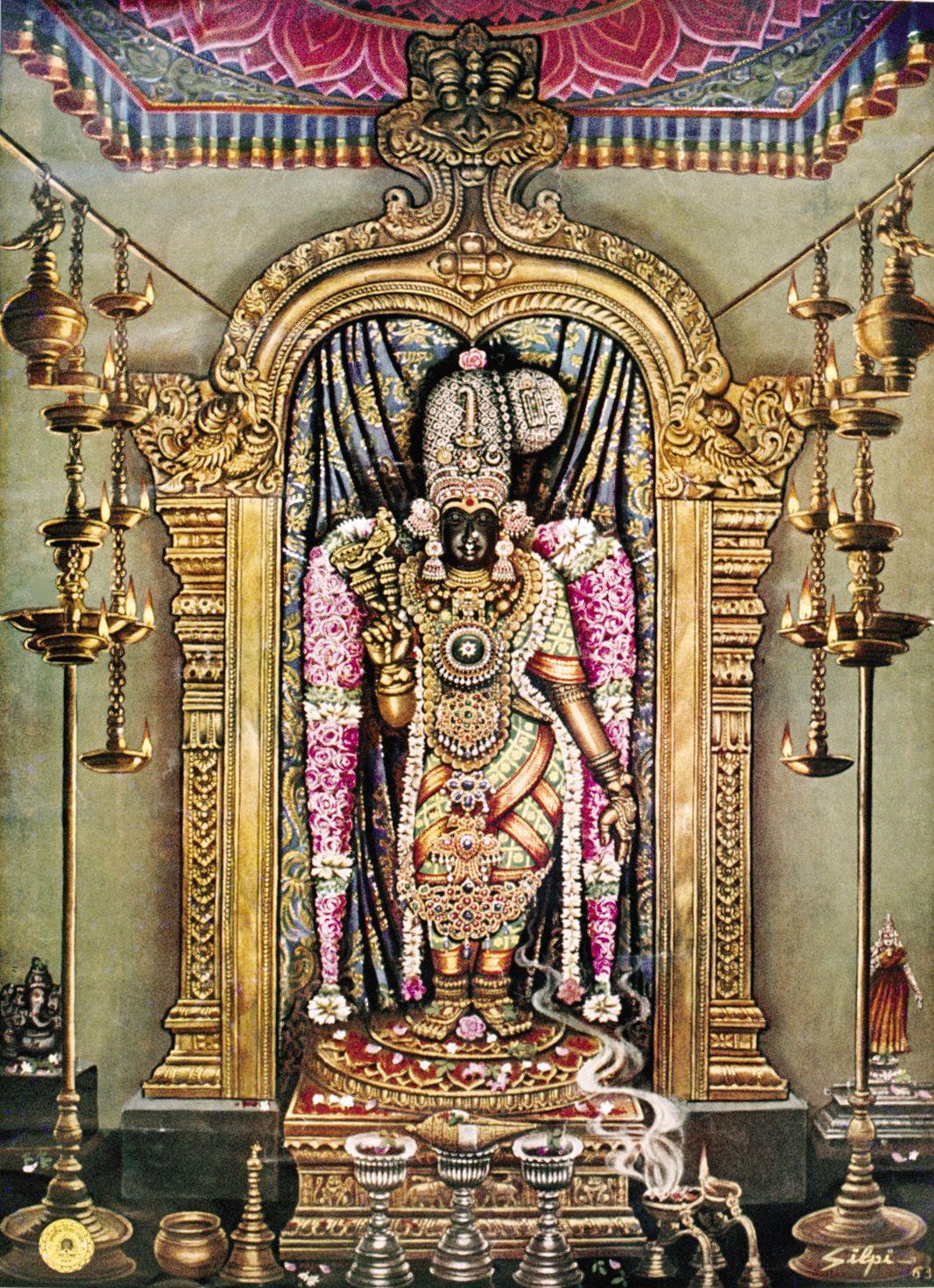
“The Spirit had given up its hold on the body when it renounced the ‘I-am-the-body’ idea and it was seeking some fresh anchorage; hence the frequent visits to the temple and the outpouring of the soul in tears. This was God’s play with the Spirit. I would stand before Iswara, the Controller of the Universe and of the destinies of all, the Omniscient and Omnipresent, and pray for the descent of His Grace upon me so that my devotion might increase and become perpetual like that of the Sixty-Three Saints. More often I would not pray at all, but silently allow the deep within to flow on and into the deep beyond.”
Speaking to his aunt who had looked after him in Madurai, Sri Bhagavan said: “It was the month before I left Madurai. It was not a headache but an inexpressible anguish which I suppressed at the time; there were, however, outward symptoms which I said were due to headache. I remember how anxious you grew on account of my headache. You used to rub some ointment on my forehead every day. My anguish continued until I left Madurai and reached this (Arunachala) place.”
Was this caused by the Embers of the Fire that had burnt his individuality to ashes? Embers that longed to return to Arunachala, its Source? Indeed, Bhagavan himself said how the burning sensation in Him was quenched only when He ran away from Madurai and embraced the Agni Lingam in Arunachaleswara Temple.
“Nee naan arapuli nidam kali mayama nindridu nilaiy arul Arunachala.”
~ Aksharamanamalai, v. 56
(“So that this idea of separation between ‘You’ and ‘me’ is totally erased, embrace me firmly and forever in the Bliss of the Self, Oh! Arunachala.”)