Sri Ramana MaharshiSacred life
Chapter 4 of 10
The journey to Arunachala

“Of what use is all this to such a one,” scoffed his elder brother after six weeks of seeing Venkataraman sit often with eyes closed in front of his school books. Sri Bhagavan later recalled, “I had even stopped going out with friends to play games and preferred solitude. I would often sit alone and become absorbed in the Self, the Spirit, the Force or Current which constituted me.”
The implication of His brother’s words was therefore not lost on Venkataraman. It was obvious to Him that the time had come to leave His house and go to his Father’s Home. And for Him, that meant the Holy Hill, “Arunachala”.
As he got up with the resolve to run away from Madurai on the pretext of going to school, His brother added, “Take five rupees from the box downstairs and pay my college fees on the way.” Thus, providing Venkataraman the funds needed for His journey. (And the proof for us of Lord Krishna’s assurance to every spiritual aspirant: “Ananyaaschintayanto maam, ye janaah paryupaasate, teshaam nityabhiyuktanaam, yogakshemam vahaamyaham” ~ Bhagavad Gita v. 22, Ch.9 (“Those who meditate on Me and worship Me and no other, and who are ever dedicated to Me, their welfare rests on Me.”)
After consulting an old Atlas and surmising He would need only three rupees, the boy wrote and left a letter for His unsuspecting brother:
“I have, in search of my Father, and in obedience to His Command, started from here. This is only embarking on a virtuous enterprise. Therefore, none need grieve over this affair. To trace this out, no money need be spent.
Your college fee has not yet been paid, Rupees two are enclosed herewith.
Thus _______________________”
The letter that began with the personal “I” soon passed into the impersonal “this” — and finally, it was left unsigned. For, there was no entity left there to sign.
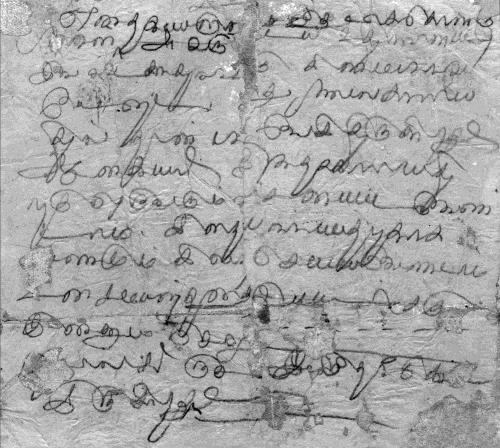
About not signing His name as is customary, Sri Bhagavan later remarked, “There was nothing deliberate or conscious about it. Simply that the ego did not rise up to sign it.”
Ranga Iyer, a school friend, while visiting Sri Bhagavan years later in Virupaksha Cave, asked: “Why did you not tell at least me that you were leaving home?” Sri Bhagavan replied: “How could I? I myself did not know. When I left home, I was like a speck swept on by a tremendous flood. I knew not my body or the World, whether it was day or night.”
It is rightly said that when we take one step towards the Lord, He takes nine steps towards us. In Venkataraman’s case, his complete ‘obedience’ of his Father’s Command meant that it was now the Father’s responsibility to bring His son “Home”. Consequently, Divine help continued to flow on His way to Arunachala. His journey into the great “unknown” took Him three days. And many were the strangers who helped Him:
The Moulvi
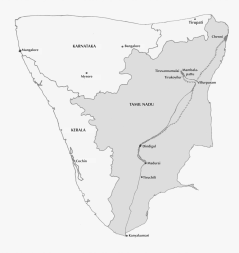
Though Venkataraman arrived late at the station, the train was also late. He bought a ticket to Tindivanam thinking it was the nearest station to Tiruvannamalai.
After finding a seat, Venkataraman sank once more deep into the Bliss of Samadhi. But not before an aged Moulvi in his compartment informed him, by chance, of a newly opened Railway line to Tiruvannamalai via Villupuram Junction. A development that the young lad was unaware of. Was this not the Hand of God directing a man of God to guide His son on his way back to Him?
The hotel owner
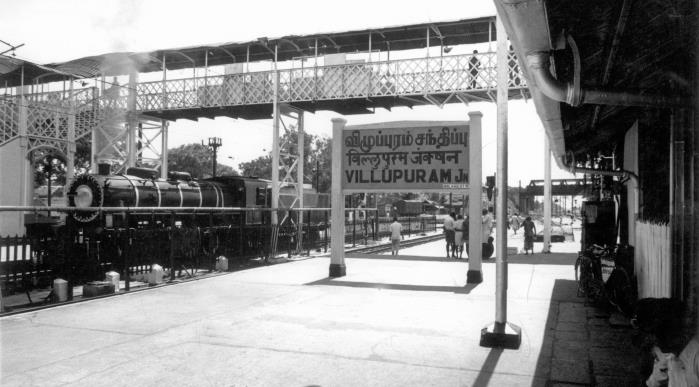
On reaching Villupuram at three in the morning, Venkataraman felt hungry. He went to a hotel where he was asked to wait until midday for His meal. Once again, the boy sank into samadhi. When after the meal, He offered two annas, from the little money He had, the hotel’s proprietor, who had been watching the young lad with His fair complexion, long, jet black locks, golden earrings, a face beaming with intelligence, and with no luggage or possessions, sitting unruffled through the long hours from morning to midday absorbed in samadhi, refused to accept the payment. Perhaps, he felt that this was not a mere boy he had fed, but a Saint, or the “Child of God”.
Venkataraman started at once for the Railway Station where He bought a ticket to Mambalapattu, which was as far as His meagre funds permitted. Reaching the Station in the afternoon, got down and set out to walk the distance of about thirty miles to Tiruvannamalai.
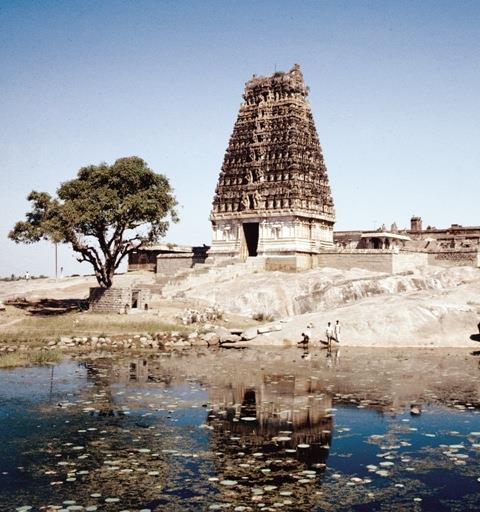
After a long eleven-mile walk under a hot sun, he saw the temple of Arayaninallur on a large rock ahead of him. Weary, almost exhausted, he sat down to rest outside the temple. In a little while the priest arrived to open the temple for the evening puja. Venkataraman entered and sat down in the cool and dark pillared hall.
The Darshan of Light
Soodhu seidennai chodiyaad ini un jyothi uru kaat Arunachala.
~ Aksharamanamalai, v. 32
(“Do not test me anymore with your wiles, instead reveal Your Real Form as the Supreme Light.”)
Almost immediately, he beheld a brilliant light pervading the whole temple. Was it emanating from the image of God in the sanctum sanctorum? He went there to check but found that it was not from there. Neither was it any physical light. It disappeared, and he sat down again in meditation. He did not realize at the time that He was seated by the side of the statue of Saint Jnana Sambandha, one of the Sixty-three Saivite Saints who centuries ago had sat at the very same place and got a similar Jyothi Darshan of Arunachala.
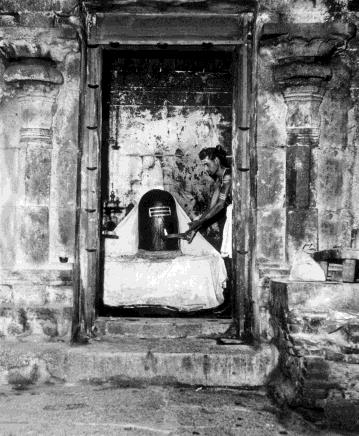
Sri Bhagavan Himself said of this later: “Sambandha worshipped Atulyanatheswara in Arayaninallur. While he was seated there on a mantapam, God Arunachaleswara appeared to him first in the shape of a Jyoti and then in the shape of an old brahmin.”
The drummer
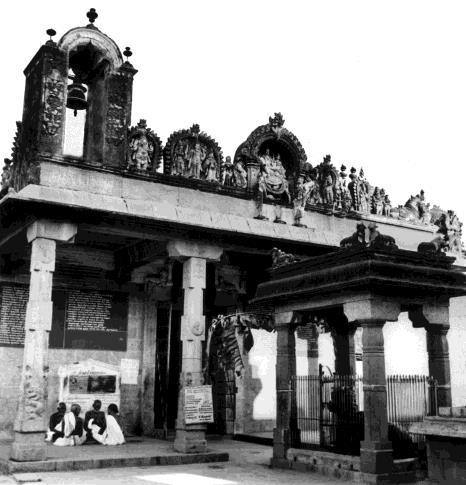
His meditation was soon disturbed by the temple priest calling out that it was time to lock up the temple as the puja was finished. Being hungry, He requested the priest for some food and was told there was nothing there but that He might get food in the temple in Kilur where they were going. Along with the priest and others, Venkataraman crossed the South Pennaiyar River which separates the two temples.
Late in the evening when the puja ended at the temple in Kilur, Venkataraman asked again for food. It seemed at first that there would be nothing for Him. But the temple drummer who had been impressed by His appearance and devout manner, gave Him his share without a second thought. Venkataraman walked out of the temple into the lane outside, but fainted after just a few paces from sheer exhaustion. The food He carried lay scattered on the dirt road. Soon, a crowd gathered around him and began discussing the matter. While they were talking, Venkataraman awoke at the hubbub. Not wanting to waste a grain of rice, especially since it was temple prasad, He picked up the each scattered grain and ate it. With relish and reverence.
The Bhagavathar and his wife
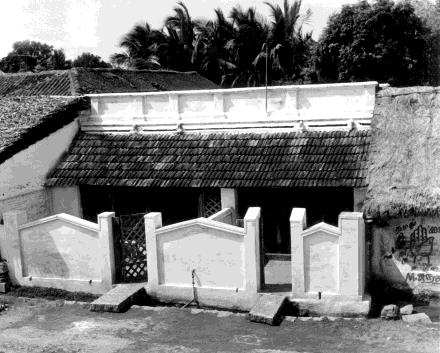
Standing a little away the crowd and watching all this keenly, was a pious man, Muthukrishna Bhagavathar. He was deeply impressed by the extraordinary countenance of this young Brahmin lad. Brimming with compassion for his plight, he led the boy to his house located a few paces away, Venkataraman spent the night there. Next morning, August 31st, a Monday, was Gokulashtami, the birth anniversary of Lord Krishna. The good couple persuaded Venkataraman to stay until noon and fed Him a hearty meal. Emboldened, perhaps, by their compassion, He asked his hosts for a loan of four rupees in exchange for of His gold earrings set with rubies. Not only did they give Him this, He was also given a packet of sweetmeats that had been prepared for that day’s special puja to Lord Krishna.
Sri Bhagavan later recalled, “That good lady not only gave me a hearty meal, but also, with a loving heart, gave me a parcel of sweetmeats prepared as naivedya to the household God saying: My dear boy, keep this with you carefully and eat the sweetmeats on the way.”
Finding that there was no train to Tiruvannamalai till next morning, he slept the night at the Station. It was the morning of the first of September — three days after leaving home — when Venkataraman arrived at Tiruvannamalai Railway Station and at Sacred Arunachala.
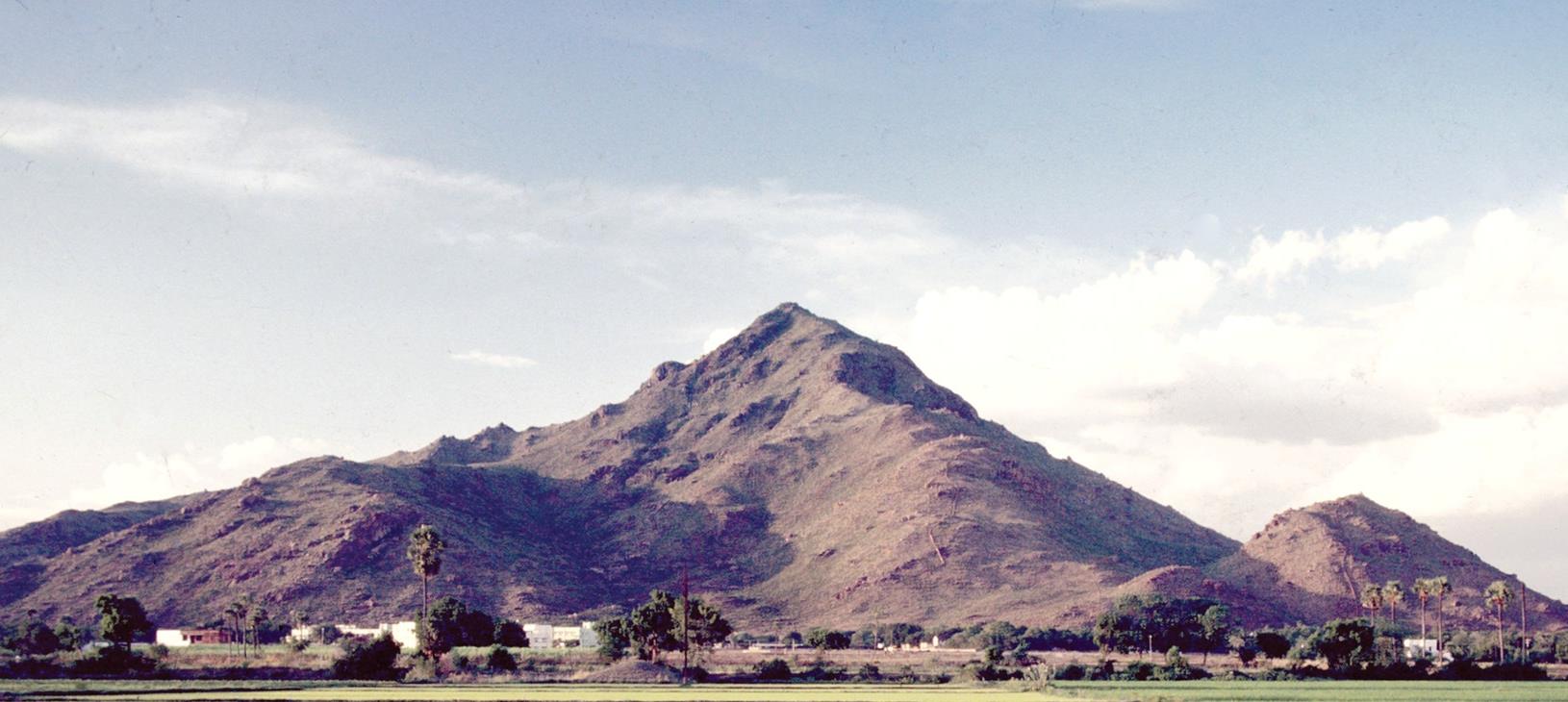
Varumbadi sollilayi vanden padiyala varundhidun thalaividhi, Arunachala.”
~ Aksharamanamalai. v.96
(“Did you not ask me to come? From now on, the burden of my sustenance and Union with You is Your burden, Oh! Arunachala.”)
With His heart throbbing with joy, Venkataraman hastened straight to the Arunachaleswara temple. In a silent sign of welcome, the gates of the three high compound walls and all the other doors — even that of the inner shrine — were miraculously open for Him. He entered the inner shrine alone and stood overcome before His Father. As He embraced the lingam in utter ecstasy — the burning sensation which had begun at Madurai vanished and merged with Arunachaleswara’s Lingam of Light. The spark had become one from the Fire it came from. And in the Bliss of Union, Venkataraman’s journey ended.
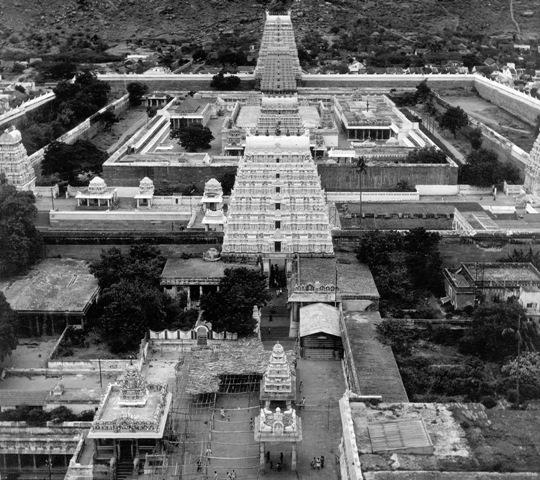
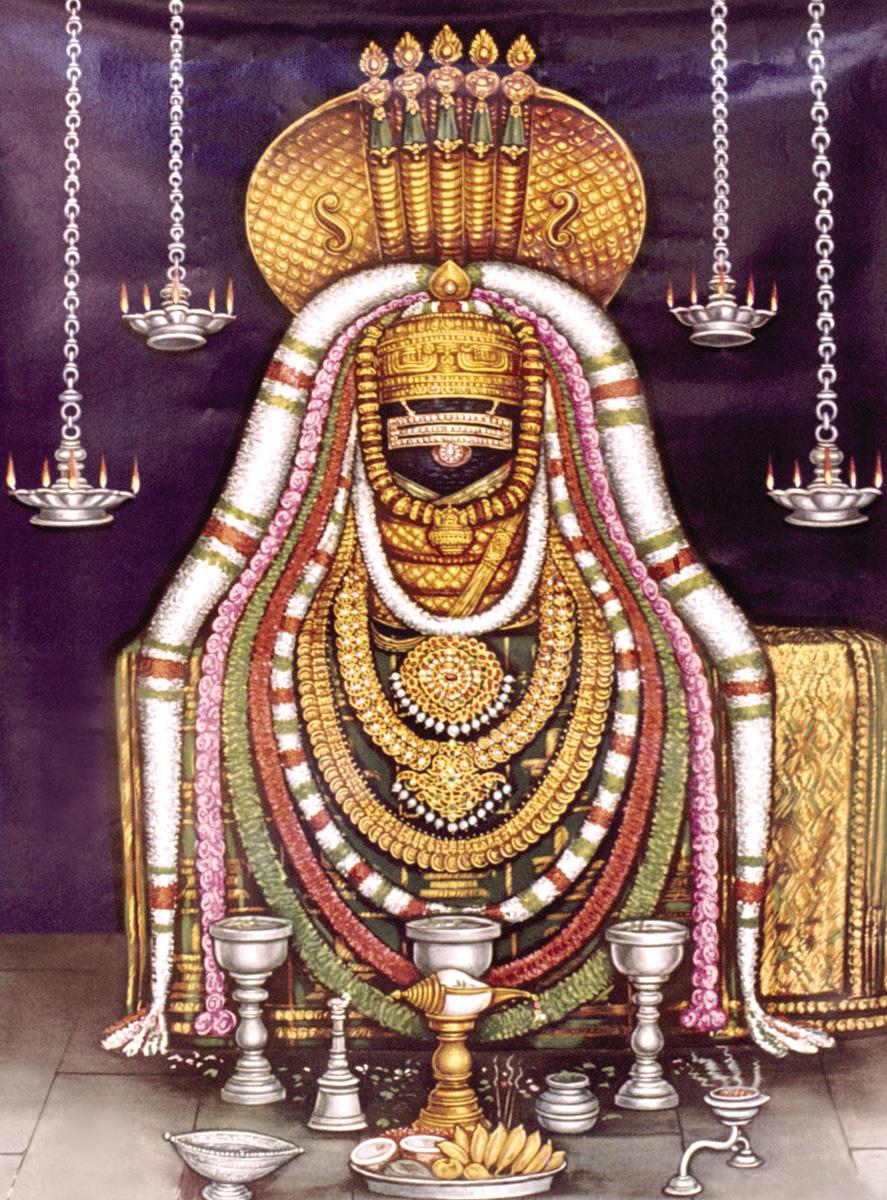
“Un ishtam, yen ishtam.” (“As your will, so is my life.”) From that moment on, till the very end of His sojourn on earth, Sri Bhagavan was the epitome of a life surrendered to Divine Will.
So, when immediately upon leaving the temple, someone called out to ask whether He wanted His head shaved, He took it as the injunction of Arunachala, and consented. He was directed to Ayyankulam Tank where a number of barbers plied their trade. There, He had His thick, long locks completely shaved. Then, standing on the steps of the tank, He threw away the packet of sweets which he was still carrying. He also threw away His remaining money — a little over three rupees. From that day on, Venkataraman never handled money again.
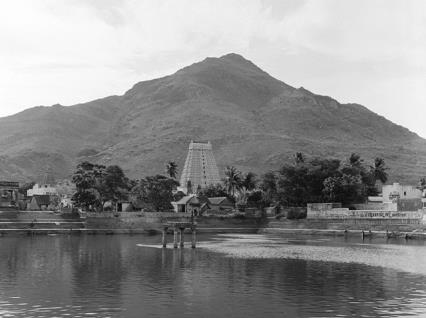
Finally, discarding His sacred thread and wearing only a loin cloth, thus unintentionally completing the acts of renunciation, He returned to the temple. Although there had been no rain for a very long time, the Fiery Father welcomed his Flame-like Son into His house with a downpour of rain, which though it seemed soaked Him from head to foot, revealed His glowing jnana all the more. And thus, the traditional bath enjoined by Hindu scriptures after shaving one’s head, was taken care of by God for the fully surrendered boy-sage.
Speaking about His first night at Arunachala, Sri Bhagavan related: “It seems there had been no rains for a long time. But on that night, there was a heavy downpour. I was staying at the mantapam in front of the Big Temple. Only that morning for the first time I had discarded all my clothes except for a cod-piece (loin-cloth) and, due to the rains beating in and the cold winds blowing about, I found the cold unbearable; so, I ran from there and took shelter on the thinnai (veranda) of a house nearby. About midnight, some inmates of the house came out opening the street door, and I ran into the Big Temple. For some days after that too it rained!”
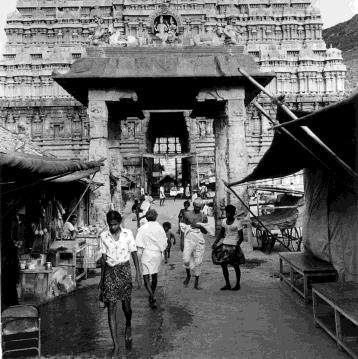
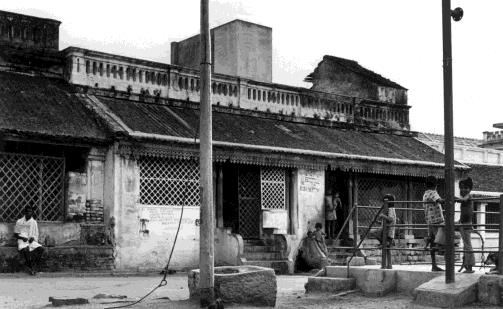
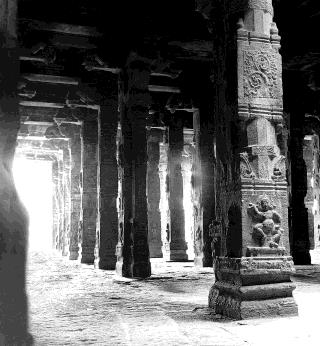
Entering the thousand pillared mantapam, He sat with his eyes closed, fully absorbed in deep samadhi. But, because of the persistent pranks of local urchins, who only saw Him as a boy like themselves, but strange and perhaps mad, He remained there only for a few weeks. Seshadriswami, a revered ascetic who had arrived at Tiruvannamalai a few years earlier, attempted to protect Brahmana Swami, as He was now known, but his efforts were not very successful. In fact, they had the opposite effect. So, Brahmana Swami sought refuge in the pitch dark and cellar-like Pathala Lingam close to the Subramanya shrine. For about two months He stayed in the shrine absorbed in samadhi. Food, which had to be put into His mouth, often remained in His mouth, uneaten, as He remained immersed in the Effulgence of Bliss, barely conscious of His body, barely moving and so still, that to onlookers it appeared to be the most intense tapas. But it was not really tapas at all. He was ignoring the body as He simply had no need for it. Already a jivanmukta in unwavering Consciousness of Identity with the Self, He had no karma left to wipe out and no further Goal to attain.
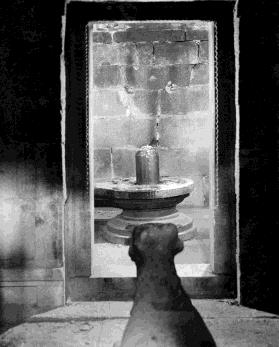
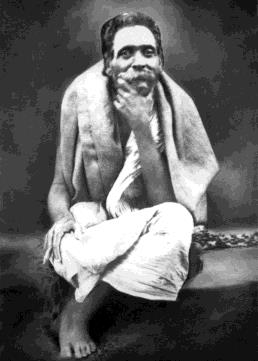
Later, under Seshadriswami’s direction, Brahmana Swami was lifted up and brought out of the dark, dank and insect infested Pathala Lingam shrine by a couple of able-bodied men. They were aghast and awed seeing his state: the young Swami’s body was not just skin and bones. It had bleeding wounds left by the Shrine’s resident insects which had blissfully fed on him while He remained blissfully remained unaware of His body and their feasting! His body was so neglected that it might not have endured long and He might have effortlessly discarded it. And so, the story would have ended.