Sri Ramana MaharshiSacred life
Chapter 6 of 10
Virupaksha Cave

“Just as we identified ourselves with a body, so Lord Siva has chosen to identify Himself with the Hill. Arunachala is Pure Wisdom in the form of a Hill. It is out of compassion for those who seek Him that He has chosen to reveal Himself in the Form of a Hill visible to the eye. The seer will obtain guidance and solace by staying near the Hill.”
~ Sri Bhagavan
Shortly after Mother Alagammal left Pavalakkunru after seeing her son for the first time since He left home, Brahmana Swami started to stay on the Holy Hill itself. The son had now truly moved onto His father’s Lap. The Satguru Swami Cave (now known as Banyan Tree Cave) on the south-eastern slopes of Arunachala was the first one He stayed in. From there He moved a little farther up to the Guhai Namasivayar Cave for another short period.
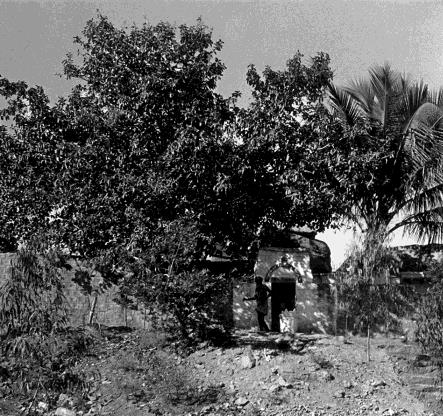
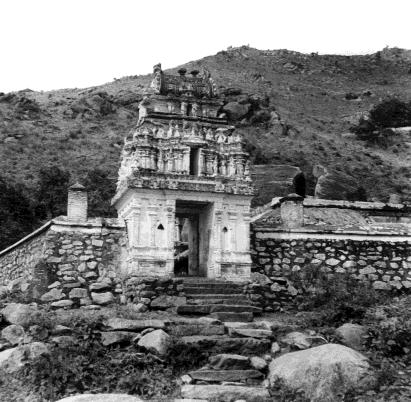
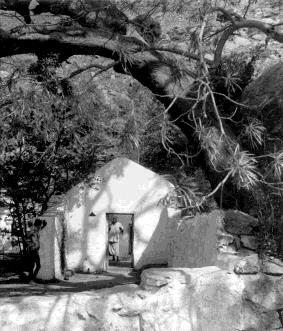
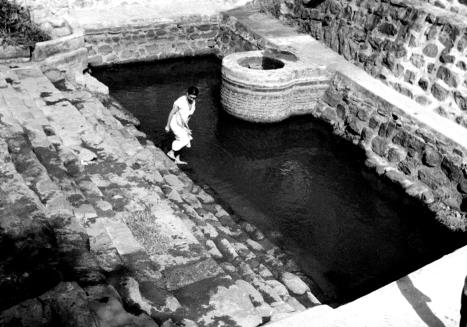
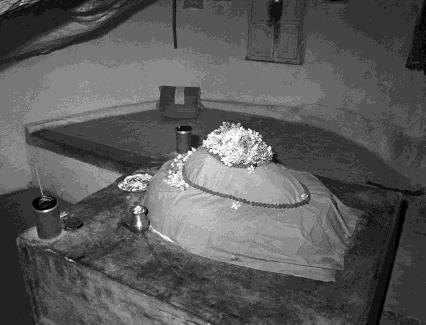
He finally came to Virupaksha Cave where He stayed for an eventful and fruitful seventeen years. Only in the summer months when water became scarce, did He move from Virupaksha Cave to Mango Tree Cave which adjoins the Mulaippal Tirtham, a tank yielding an unfailing supply of pure water. Virupaksha Cave resembles the shape of “OM”, the Sacred Pranava Mantra, and was named after Saint Virupaksha Deva.
Kunju Swami, an old devotee and attendant of Sri Bhagavan, has recorded: “Virupaksha Deva was a Great Jnani. When his death was imminent the disciples were discussing amongst themselves what should be done in regard to burial, as the custom was not to bury anyone on the Hill. Virupaksha Deva himself said: “Let us wait for one more day”. The next day, when the disciples came to the cave, they found a mound of vibhuti (sacred ash) in the shape of Virupaksha Deva in a seated position. The disciples made the vibhuti into a lump and left it there. It was only when Sri Bhagavan came that He Himself constructed a platform and the vibhuti was made into the shape of a Linga and installed on top.”
While his predecessor’s jnana took the form of a heap of vibhuti, Sri Bhagavan’s total absorption in the Self radiated “Light”. During his early years on the hill, Bhagavan remained silent. His radiance drew a group of devotees around Him and an Ashram came into being. Radiating the Bliss of the Self, His mere Presence or Glance was enough to transform lives, fill the devotees’ hearts to the brim with spiritual fervour. It was out of compassion for such souls that the young Swami began writing down answers to questions put by them on small slips of paper.
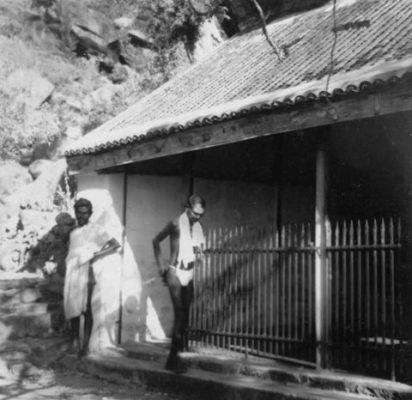
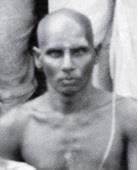
Among the earliest disciples who sought His help and guidance were Gambhiram Seshayya and Sivaprakasam Pillai. The manuscripts preserved by them with devout care, and later, printed as seminal works of Sri Bhagavan are “Self Enquiry” and “Who am I?”
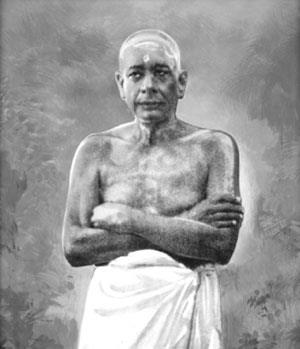
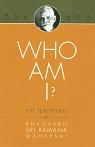
Just as the young Swami’s Realization was spontaneous and perfect, so too were his teachings - simple, direct and profound. So much so, an old devotee, Viswanatha Swami, has even said: “All the teachings Bhagavan gave during His whole life are just a padded version of His original teaching recorded in the small book, Who Am I?”
It was then that a singular event took place which was perhaps instrumental in cajoling the young Swami into breaking His silence: There came to Virupaksha Cave a stranger. On being asked who he was, he answered he was from Sathyamanagalam and his name was Venkataramaiah. Nothing strange about that. But in the three days that he was there, he composed and sang four sublime hymns in praise of the young Swami. He sent a fifth hymn by post – the one that is, perhaps, the favourite of all Sri Bhagavan’s devotees – Ramana SatGuru. It is particularly apt that this hymn came from ‘Sathyamanagalam,’ for no other hymn is more ‘sathyam’ meaning ‘true’, and more ‘mangalam’ meaning ‘auspicious’, to Sri Ramana devotees across the world to this day. After being sung and prophesied as the Jagatguru who has come to lead seekers to the Kingdom of Jnana, what choice did the young Brahmana Swami have other than the banner up by breaking His Silence and guiding the majority who needed both His Silence and His Words?
Outstanding among the early devotees was Kavyakanta (Vasishtha) Ganapati Muni (Sastri), more familiarily known as “Nayana”, famous as a great Sanskrit poet and scholar. For more than a decade he had been ardently carrying on spiritual sadhana, but without any satisfying results. At the end of his rope and in desperation, he came to Virupaksha Cave on hearing of the Swami who lived there. He was guided there by the Universal Mother, Apeethakuchambal Herself !
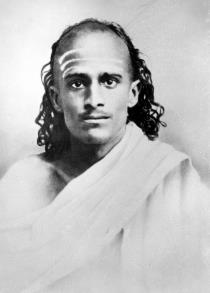
Prostrating before the Swami and clasping His feet with outstretched hands, in a voice quivering with emotion, Kavyakanta said: “All that has to be read I have read; even Vedanta Sastras I have fully understood; I have performed japa to my Heart’s content; yet I have not up to this time understood what tapas is. Therefore, I have sought refuge at Your Feet. Pray enlighten me as to the nature of tapas.
Sri Bhagavan answered: “If one watches from where the notion ‘I’ arises, the ‘mind’ is absorbed into “THAT”; that is tapas. When a mantra is repeated, if one watches the “Source” from which the mantra-sound is produced, the ‘mind’ is absorbed in “THAT”; that is tapas.”
It was not only Brahmana Swami’s exposition on the nature of tapas that filled him with joy, but also the palpable Grace radiating from the Swami. Finding out from the Swami’s attendant, Palaniswami, that His original name was ‘Venkataraman’, Nayana made it brief and beautiful as “Ramana” (the meaning of which is ‘one who sports in the Self’).
Since Brahmana Swami gave such a brilliant, simple and direct definition of the nature of tapas, Nayana called him “Rishi” (‘Seer’). Then, realizing that this ‘Rishi’ was no ordinary ‘Seer’ but one who actually belonged to the realm of Vedic Rishis, like Vyasa, he qualified it by calling him “Maha-rishi” (Great Seer). Also, since the Swami possessed in perfection all the characteristics attributed to “Bhagavan” (Blessed Lord), Nayana declared that from that day onwards He must be known as Bhagavan Sri Ramana Maharshi.
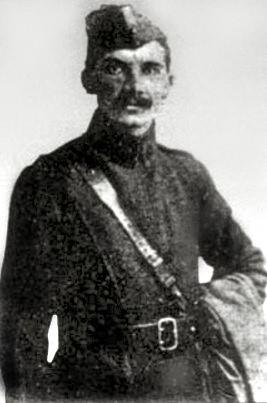
It was through Ganapati Muni that F.H. Humphreys, an English Police Officer, was led to Sri Bhagavan and became his first Western devotee. Climbing the hill he sat before Sri Bhagavan at Virupaksha Cave, with his gaze fixed on the Maharshi’s enchanting eyes, which as usual, did not change their expression of deep contemplation. After this first visit, he returned twice to the Maharshi, whom he now regarded as his ‘Master’. During one of their conversations Sri Bhagavan told him: “I have given you this Teaching in the same words as the Masters gave it to their intimate chelas (disciples). From now onwards, let your whole thought in meditation be not on the ‘act of seeing’, nor on ‘what you see’, but immovable on ‘That Which Sees’.” Humphrey’s life was transformed. On returning to England he became a Christian monk.
It was also around the same period that a devotee named Amritanatha Yatindra composed a stanza in a certain metre, wrote it on a paper and placed it before Sri Bhagavan. The purport of the stanza was, “In my Heart I yearn to know if Sri Bhagavan, Ramana, the unique Guru, is Hari (Lord Vishnu) or Siva or Dakshinamurthi, an ancient Rishi like Vararuchi or some other God.” Sri Bhagavan did not immediately give a reply, but after a while He took up the paper and, in a sportive mood, wrote on the opposite side His reply in the form of another stanza in the same metre and left it where it lay before. The devotee came back and, on seeing the stanza composed by Sri Bhagavan, was delighted.
The reply was: “’Arunachala Ramana’ is the Paramatma who abides in the Heart of every living being, from Hari downward. It will be clear to you if you open the eye of Jnana and see the Truth.”
Though given as a playful answer, this verse of Sri Bhagavan is extremely significant to all of us. For He practically admits that He and Arunachala are not two but the Non-dual Self that shines in our Heart!