Sri Ramana MaharshiSacred life
Chapter 7 of 10
The Five Hymns

While the Flame of Sri Bhagavan’s Presence continued to attract seekers to Him, the sparks of His writings were now reaching those who could not come to Him. It was also during the Virupaksha Cave that He composed Arunachala Stuti Panchakam, five hymns of bone melting devotion in praise of Father Arunachala.
There is an interesting story behind how Aksaharamanamalai, the first and also the most popular of the Five Hymns, came to be written. A party of four would daily go to town to beg for their food. When leaving the Cave, they would blow a long blast on their conches. This was an announcement to the townspeople that Sri Bhagavan’s party had left the Cave on their begging mission. The party would give another blast when they reached the foot of the Hill. A third call would be sounded at the entrance of the street. The residents of the street would be ready with their offerings and the party would march along the street singing Annapoornaashtakam composed by Adi Shankara for use by sadhus when they went begging. The food collected was ample for all who gathered near Sri Bhagavan, including the monkeys and other animals.
The devotees of Sri Bhagavan wanted their own song to sing on this mission. At first, Sri Bhagavan demurred. But His devotees kept pleading. And so it happened one day, as Sri Bhagavan and His devotees were doing giripradakshina, words — like enriching streams of Light — came flowing to Sri Bhagavan. And thus, was born Aksharamanamalai (The Marital Garland of Letters) — which no doubt satiated the hunger of His alms-seeking devotees. Sri Bhagavan used to humorously remark: “Marital Garland fed us for many years ! “
While almost all His works were written on the request of His devotees, there are two notable exceptions: The first was Eleven Verses on Arunachala. Devaraja Mudaliar has described how it happened: “Sri Bhagavan told me that one morning, when he was sitting on the veranda of Virupaksha Cave, the word “Karunaiyaal” (by Thy Grace) came to Him very insistently, but He took no special notice of them. The same thing happened the following morning. Then, Bhagavan composed the first stanza of Eleven Verses on Arunachala:
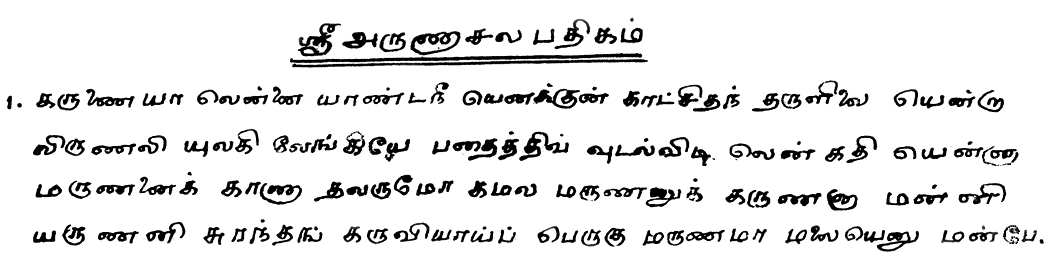
“Now that by Thy Grace Thou hast claimed me, what will become of me unless Thou manifests Thyself to me, and I, yearning wistfully for Thee, and harassed by the darkness of the World, am lost? Oh Love, in the shape of Arunachala! Can the lotus blossom without sight of the Sun? Thou art the Sun of Suns; Thou causest Grace to well up in abundance and pour forth as a stream.”
It is as if Arunachala, through Sri Bhagavan, has once again vouchsafed the Light of His Grace on all those who think of Him – Smaranaat Arunachalam.
The second notable instance where Sri Bhagavan composed verses without anyone asking Him to, was when Mother Alagammal fell seriously ill and it looked like it was the end. In 1914, Sri Bhagavan’s Mother went on a pilgrimage to Tirupati and on her way back she visited Tiruvannamalai. She fell ill and suffered severely for several weeks. Sri Bhagavan tended her with great solicitude, composing a heart-rending prayer to Arunachala and prayed for her good health, thus:
“Hill of my Refuge, who cures the ills of recurring births! Oh Lord! It is for Thee to cure my Mother’s fever. Oh God who smitest Death itself! My sole Refuge! Vouchsafe Thy Grace unto my Mother and shield her from death. What is death if scrutinized? Arunachala! Thou Blazing Fire of Jnana! Deign to wrap my Mother in Thy Light and make her one with Thee. What need then for cremation? Arunachala, that chasest away illusion (maya)! Why delayest Thou to dispel my Mother’s delirium! Besides Thee, is there anyone who with maternal solicitude can protect the suppliant soul and ward off the strokes of destiny?”
This prayer not only cured the Mother of her bodily illness, but soon, as will be seen, also of the dreadful fever of Worldly attachments.
While the Swami took care of His Mother, a ‘Grandmother’ took care of His well-being. Keerai Patti (Greens Grandma) used to cook for Sri Bhagavan and other sadhus on the Hill. Sri Bhagavan Himself occasionally helped her cook her simple meals. Sri Bhagavan said fondly of her: “Keerai Patti lived in the mantapam here (Guhai Namasivaya Temple) and used to worship the images of Namasivaya and others, carved on the walls and pillars of the mantapam. She would get up in the morning, go out for a stroll on the small hill, proceed to where Skandashram is and come down to her place. By that time, she would have collected fuel and cow dung and bundled them up behind her back, and in her lap, she would have gathered a lot of edible green leaves of all sorts for cooking. In the same pot she would cook her rice, make her sauce, prepare any side dish such as the leaves she had brought, each in turn, offer the food to the images on the walls or pillars, bring them to me and then go and have her own meal.”
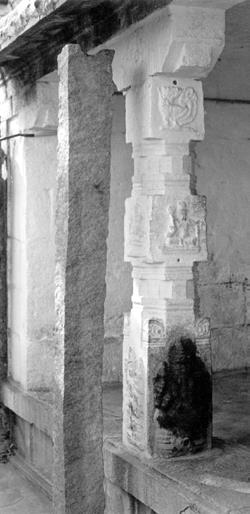
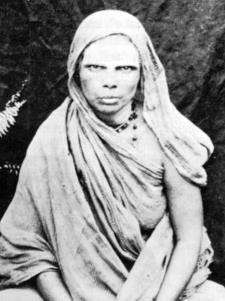
The Grace of the Swami brought peace to grief-stricken hearts too. A good example was the bereaved Echammal who came to the Swami in great sorrow after losing her near and dear ones. Simple people, children and even animals, too, were irresistibly drawn to Him. Young children from the town would climb the Hill to Virupaksha Cave, sit near Sri Bhagavan, play around Him, and go back feeling happy.
And in those days, when the practice of untouchability was prevalent, His compassion transcended all barriers! Sri Bhagavan would recall with great empathy, “When I was in the Virupaksha Cave, we used to change over to Mango Tree Cave during summer as there was no water in the former. At the Mango Tree Cave, at midday, some women of the lowest caste would come there for water with heavy loads of grass on their heads and very tired. I knew they would be coming at that hour and I would be coming at that hour and I would wait there with water ready. What could they do? They were not permitted (by caste rules) to touch the water in the Mulaippal Tirtham and there was no water anywhere else. Poor people; they would start early in the morning after taking a little gruel, go up the Hill and secure a head-load of grass. As soon as they came to the Cave, they would throw down their bundles, bend down and say: ‘Swami, Swami, first pour a vessel full of water down our spines.’ I would stand on the veranda and when I poured water on them as desired, they would recover from their exhaustion, saying: ‘Oh, how good this is!’ Then, cupping their hands, they would drink water until their stomachs were full, wash their faces, take some rest in the shade of the trees and then depart. They alone could experience the happiness of it all. It is only when one experiences the oppressiveness of the heat that one knows the relief of the coolness of water."
Not just humans, but animals too found shelter in the coolness of His Grace. Squirrels and monkeys would come up to Him and eat out of His hands. Monkeys would even sit in samadhi in front of Sri Bhagavan under the large tree in front of Virupaksha Cave. Once, one of the monkeys started moving and was looking restless and Sri Bhagavan told him: “What kingdom do you have to conquer?” The monkey again became still.
Not long after her son’s prayer to Arunachala saved her life, Mother Alagammal came to Him leaving life in the outside World for good. She first stayed down in the town. Being old and unable to climb the Hill daily, she soon wanted to stay in the Cave permanently, but was doubtful of getting permission. When Sri Bhagavan was asked, He remained silent. As for His disciples, they were vociferous in refusing permission. One day Mother got up in great anguish to leave the Cave. Deeply moved on seeing this, Sri Bhagavan also got up, and taking hold of her hand said: “Come. Let us go. If not here, we can stay somewhere else. Come.” At this, His disciples fell at His feet and begged Him to stay: “Please do not go anywhere. Pray, do stay here itself along with Mother.”
`
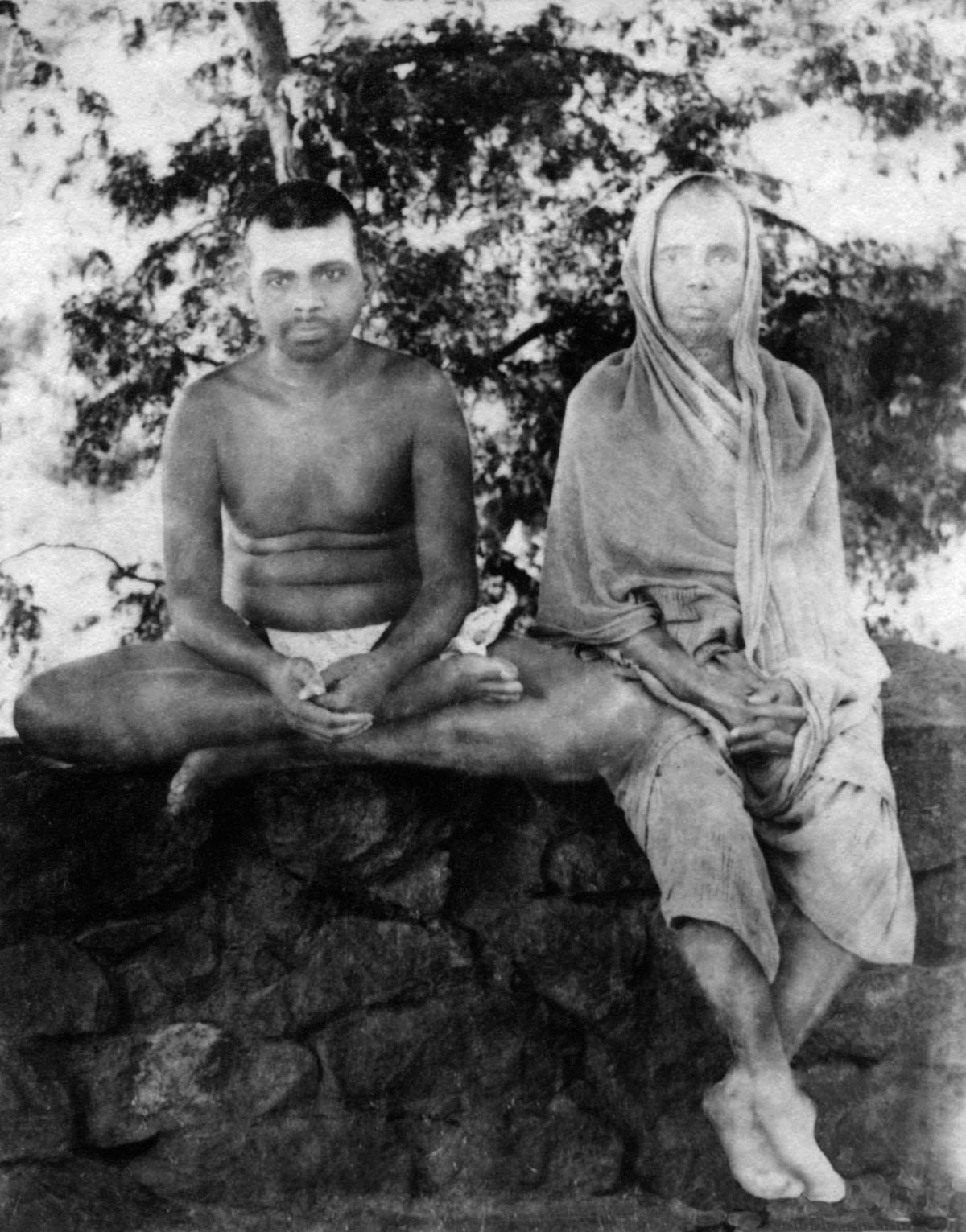
This incident was perhaps a pointer to what happened soon. In a few months, they all vacated Virupaksha Cave and moved up the hill to Skandashram. The son moved with all who depended on Him from Father Arunachala’s lap to His Heart, Sri Sonachala hrdbhuta Skandashrama niketanaya namaha.