Sri Ramana MaharshiSacred life
Chapter 9 of 10
Sri Ramanasramam

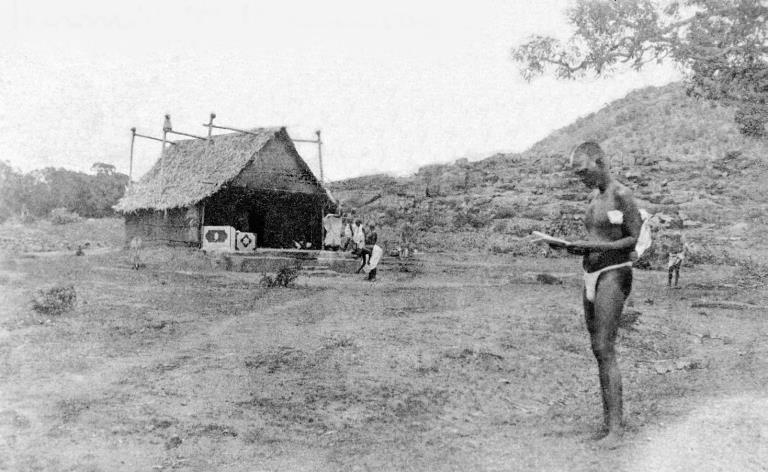
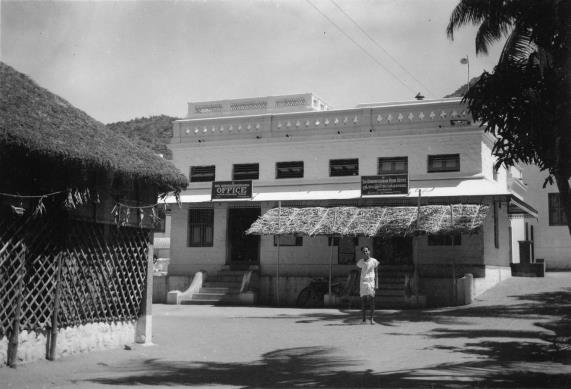
When the devotees followed Sri Bhagavan down to the Mother's Samadhi at the foot of the Hill in December 1922, there was only a thatched shed for their Ashram. Through the ensuing years their numbers grew, donations came in and regular Ashram premises were erected: The Hall where Sri Bhagavan sat, the office and bookshop, the dispensary, the guest-room for male visitors, and a couple of small bungalows for guests who made a longer stay. To the west of the Ashram, sadhus made a colony at “Palakothu”, living in huts among the trees. With the advent of the Cow Lakshmi, a Goshala (cowshed) was built, along with a large Kitchen to cater to visitors. The feeding of people, particularly the poor and beggars, and proper maintenance of cows, were very dear to the Heart of Sri Bhagavan. All this building and planning required an Ashram management, of which Sri Bhagavan’s brother, Niranjanananda Swami, became the Sarvadhikari (Manager).
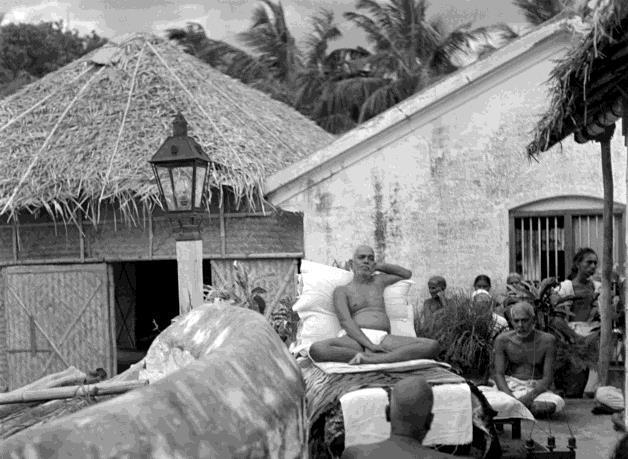
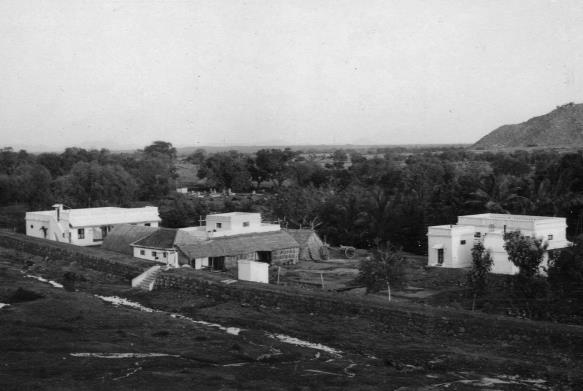
Sri Bhagavan remained an impartial observer of all this activity, accepting this growing family with utter compassion and love.
His Light drew seekers to Him from across the World in many ways: Some came after hearing about Him, some after seeing Him in a vision, a dream or a photograph, and still more after reading about Him and His Teachings. But no matter how His Light drew them, when they came, they were each transformed by the Pure Radiance of His Presence and His daily life.
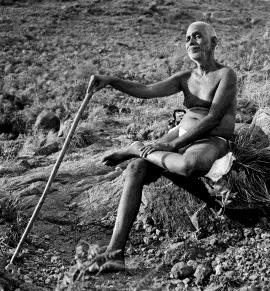
His manner of life was of the most normal. It was no attitude of superiority on Sri Bhagavan’s part that bent people’s knees before him, for no one could have been more simple or natural; it was the spontaneous reaction of people to the Divine. The mere sight of Him walking across the Ashram grounds was enough to grip the Heart.
Always practicing equality, Sri Bhagavan never allowed any preference to be shown to Him. In the Dining Hall He was adamant in this regard. Even when some special medicine or tonic was given to Him, He wanted to share it with everybody. “If it is good for me then it must be good for the rest,” He would say, and have it distributed to all present.
Dogs, cows, cats, squirrels, monkeys and even birds, all were treated on the same footing as human beings. In fact, a new visitor was likely to be misled by His reference to “boys”. None of the animals were treated as less than human - never referred to as “it.” Nor would He allow any of the Ashram inmates to treat the animals rudely. “We do not know what souls may be tenanting those bodies and for finishing what portion of their unfinished Karma, they seek our company”. He often said.
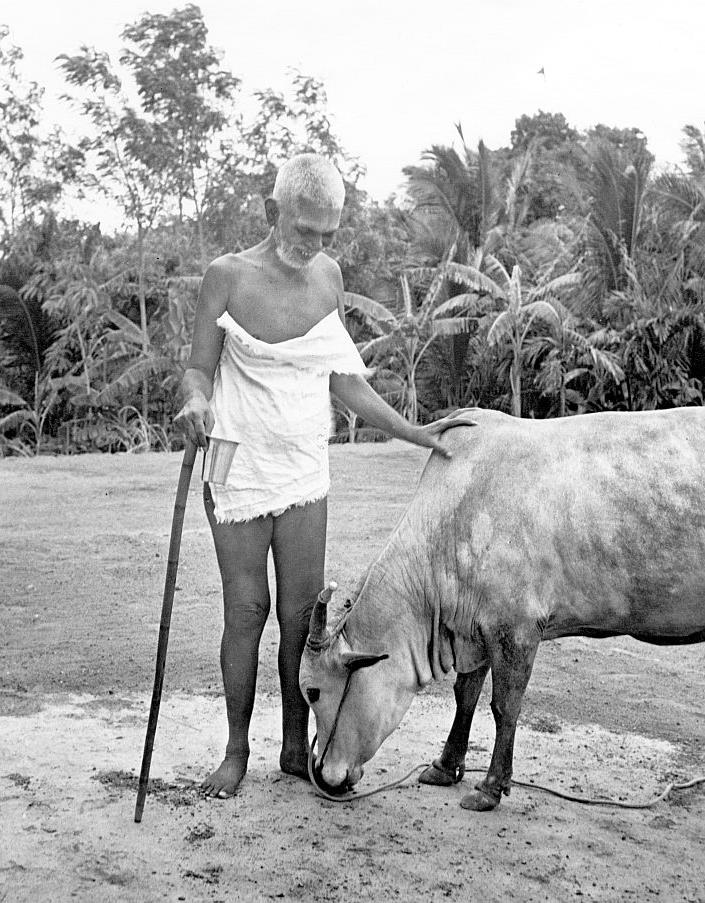
The most prominent of these animal companions was Cow Lakshmi, the cow. (Lakshmi was believed by many old devotees to be the incarnation of Keerai Paati, the ‘Greens Grandma’, who used to feed Sri Bhagavan when He was in Virupaksha Cave.)
“Even as a calf Lakshmi behaved in an extraordinary way; she would daily come to me and place her head at my feet. Years later, on the day the foundation was laid for the Goshala (cowshed), she was so jubilant that she came and took me for the function. Again, on the day of Grihapravesam (house-warming ceremony), she came straight to me at the time appointed and took me to the Goshala. In so many ways and on so many occasions, she behaved in such a sensible and extremely intelligent way that one cannot but regard her as an extraordinary Cow. What are we to say about it?”
~ Sri Bhagavan
Lakshmi’s mother was presented to the Ashram some years earlier; and Lakshmi on her part, gave a number of calves to the Ashram. In fact, during a period of four years she gave birth to a calf punctually on the day of Sri Bhagavan’s Jayanti.
Almost every day she would find some opportunity to meet Sri Bhagavan, and well understood what was spoken to her or in her presence. She moved with unmistakable dignity and self-possession, and would not be trifled with nor have anything to do with a person who ill-treated her.
She passed away quietly on June 18, 1948. Sri Bhagavan was by her side almost till her end. She was given an honourable burial in a place opposite to Sri Bhagavan’s Hall. Sri Bhagavan Himself wrote her epitaph which is engraved on a slab above the life-like statue of “Cow Lakshmi” over her grave.
Suri Nagamma recounts: “After serving Sri Bhagavan for 22 years Cow Lakshmi lay in the Goshala in the throes of death. Sri Bhagavan sat on the hay by her side, lifted her head, and placing His left hand on the head, He began pressing with the right hand her throat right down to the heart. After about a quarter of an hour he said, ‘What do you say, mother? Do you want me to stay here, but what to do? All people could be around you as in the case of my Mother. Even so, why? Shall I go?’ Lakshmi remained calm, devoid of the bonds of this World and of the pains of her body as though she were in Samadhi. Sri Bhagavan sat there, unwilling to move and with a Heart full of Compassion. I was overwhelmed at the sight and exclaimed involuntarily, ‘Oh! Mother Alagamma had the greatest luck, so has Cow Lakshmi now.’
“Sri Bhagavan then left, and returned ten minutes later saying: ‘Is it all over?’ Lifting Cow Lakshmi's face in both hands as though she were a little child, He said: ‘Oh Lakshmi!’, then to us, controlling His tears: ‘Because of her our family (the Ashram) has grown to this extent.’”
Later, Sri Bhagavan wrote an epitaph in Tamil verse on Cow Lakshmi which can now be seen engraved on a stone slab at her Samadhi: “It is here recorded that Lakshmi the Cow was Liberated under the star Visakha, on Friday the twelfth day of the bright half of Jyeshta, in the year Sarvadhari.”
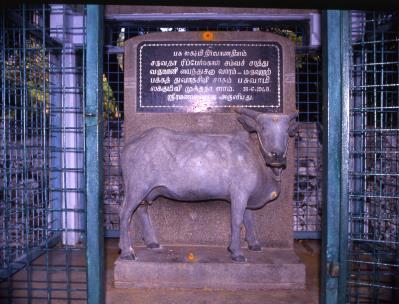
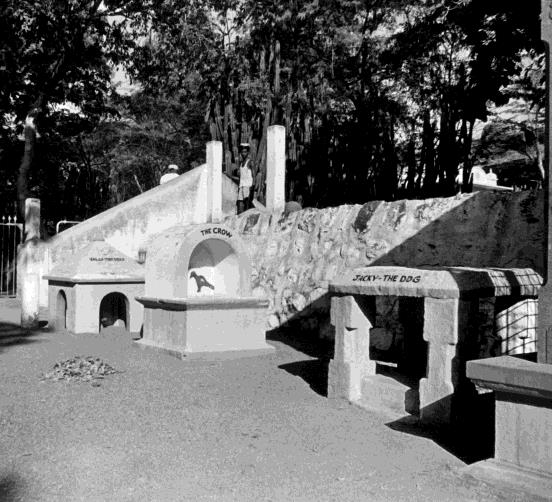
But it was not only for a cow, considered a sacred animal in India, that Sri Bhagavan had a samadhi built. Adjacent to Cow Lakshmi’s Samadhi are the samadhis for a Crow, Valli, the deer, and Jackie, the dog. Standing testimonies to the sublime sense of equality that Sri Bhagavan had towards all living beings. Like the rays of the Sun which fall equally on everything on Earth. Om Samadrshe Namaha...
Year after year the little Hall where He sat remained the centre of attraction for the devotees, and was the focus of all those, the World over, who could not be physically present. The Dynamic Silence vibrant with his Grace, the Divine Love that shone in His eyes and, when necessary, the potent words of Sri Bhagavan enfolded all who were ready and open to receive the Gift of His Presence and Liberating Proximity. His was no ordinary Presence, for one cannot count the lives, which were completely transformed by a moment's Glance, or a solitary Word. Sri Bhagavan was like a Fathomless Ocean of Grace, overflowing with Compassion for the devotees who came in ever-increasing numbers for his darshan.
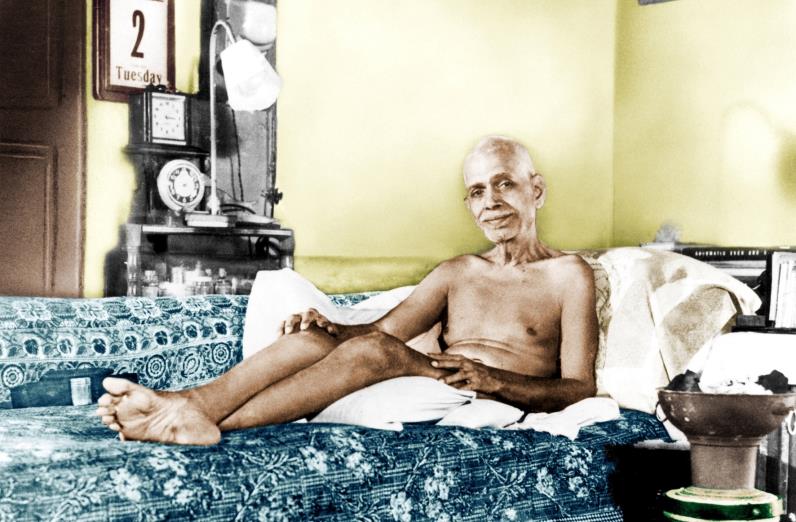
Paradoxically, He was also like the fire in burning the vasanas that impede the progress of seekers and cooking them till they became ‘food’ fit enough to be consumed by God. He was like the ever-risen Sun too, when it came to clearing the veils from their eyes and showing them the Direct Path from the ‘head’ to the “Heart”. And for those in distress, He was like the refreshing Light of the Moon that cooled and calmed their fevered, furrowed brow.
Many were the books that were written during His twenty-eight years in the present Sri Ramanasramam. Paramount among them being Sri Bhagavan’s Upadesa Saram and Ulladhu Narpadhu, two seminal works that along with Naan Yaar, form of what is considered as His Prasthana Thraya, the three Laser Beams of His Teachings.