Editor’s Note
The title of this book has been inspired by the Periya Puranam, an ancient Tamil text that recounts the stories of the Nayanmar, the exalted devotees of Lord Shiva, and their moving and uplifting devotion to the Lord. Ramana Periya Puranam is therefore, a particularly apt title for this book as it is about the old devotees of Bhagavan Sri Ramana Maharshi and their devotion to Bhagavan - Arunachala Shiva in human form.
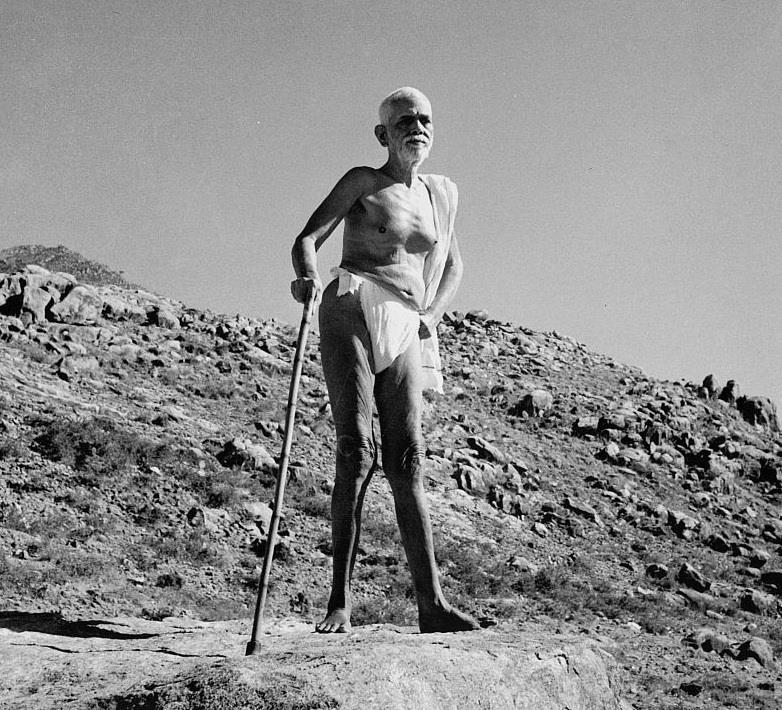
It was while editing Ramana Periya Puranam that I first went around the holy hill by its inner path. We started one early November morning from behind Ramanasramam. Skirting the base of the hill, twisting, turning, climbing, tumbling, the path reveals every now and then, a completely different but fascinating view of the hill and its beautiful, wild green slopes. Seen from this close, the different facets of the peak appear more vivid, grander, yet at the same time, more intimate.
And then, one starts noticing something that is practically invisible when going around the hill by the outer path: individual rocks and boulders. To start with, they are the ones by the trail that have arrows drawn on them to guide those on the inner path. Soon, other rocks and boulders start radiating their silent presence: rocks of every size, shape and shade, some rough and angular, many smooth and rounded. In the silence of the inner path, these rocks and boulders seem to sit in a deeper silence still. Now, the realization that these silent sentinels and Bhagavan’s old devotees are the same becomes blindingly apparent. Bhagavan being Arunachala, his old devotees are its rocks and boulders – not in just a metaphorical sense, but in a physical, tangible way.
The words in this book are verbal symbols of the hill’s rocks and boulders. Reading it is walking the inner path. Indeed, this was confirmed many a time while editing this book – when its words absorbed one into silence.
The unique power of these words is because Sri Ganesan got them from the horse’s mouth - directly from Bhagavan’s old devotees. In addition, his interactions with the old devotees are also very instructive to aspiring, earnest seekers on their march towards Truth. Sri Ganesan himself strived for it and experienced it. This, is the lodestone that gives Ramana Periya Puranam the stamp of authenticity and participation.
Another uniqueness of this book is that it is perhaps the only one where the old devotees have been presented in a chronological order. That is, their introduction is according to the year they arrived at the holy feet of Sri Bhagavan and not based on their spiritual maturity, erudition, scholarship, greatness or any other external factors. With one notable exception: Though it starts with Bhagavan’s mother Azhagamal - the Matrubhuteshwara who bore Bhagavan - it ends, not chronologically, but appropriately, with Nagalakshmi, the author’s mother and upaguru, who first introduced him to Bhagavan, the satguru.
On Bhagavan’s direct path, these devotees are signboards on the inner path that gently, but firmly, guide us to the centre, the Heart. When we read about these rocks and boulders, or sit on the inner path in silent communion with Arunachala’s rocks and boulders, we come in union with them – and with the satguru, Bhagavan Sri Ramana Maharshi.
Suresh Kailaash
Sarvam Sri Arunachala Ramanarpanamastu