Palani Swami
Bhagavan declared to Arunachala on the first day of his arrival at Tiruvannamalai, “Father, I’ve come at thy bidding. Thy will be done.” From that moment on, his whole life was surrendered to the Self. In the six months of his stay in the Arunachaleshwara temple, Bhagavan was always immersed in samadhi (deep, bodiless repose). Astonishingly, until then he had never heard the word samadhi or any other term to describe what he was experiencing. In Pathalalinga, a dark, dank, underground niche in Arunachaleshwara temple, insects and vermin feasted on his body as he sat unmindfully blissful - absorbed in the Self. Could Father Arunachala tolerate this torture to his son’s body? He sent the saint Seshadri Swami, Venkatachala Mudali, Uttandi Nayanar and Annamalai Thambiran to give relief to Bhagavan.
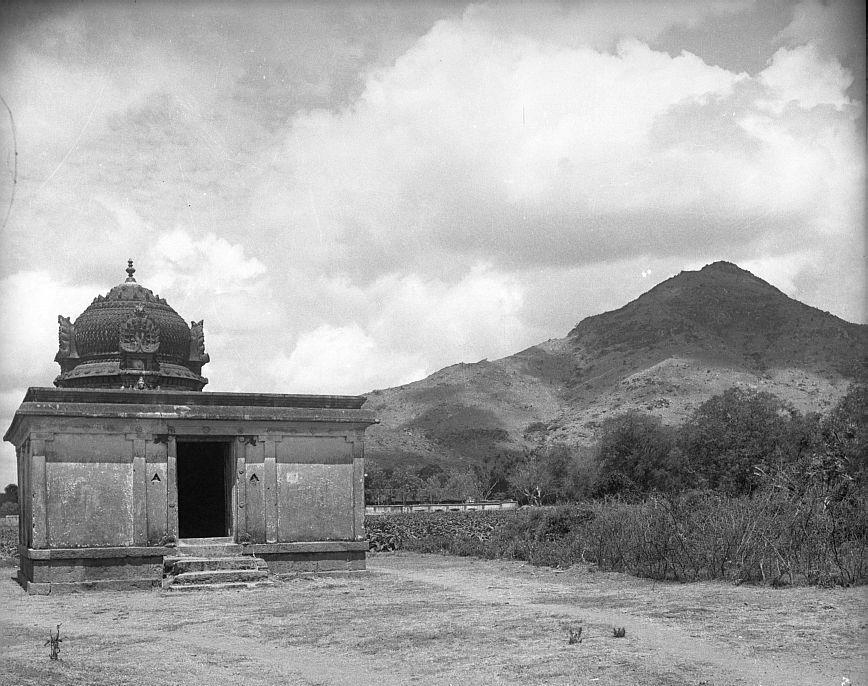
Seshadri Swami had the young Swami’s body lifted from the underground cave, without disturbing his samadhi state. However, crowds of ignorant people continued to disturb Bhagavan in the temple. Consequently, Bhagavan was taken to Gurumurtam, a shrine of a saint on the outskirts of Tiruvannamalai that was owned by Annamalai Thambiran. Strangely, Gurumurtam too was infested with ants and other insects. Bhagavan though, was completely oblivious to the body. His body was unwashed, his hair had grown long, thick and matted, and his fingernails were long and curled over. Since he hardly ate food, his body was emaciated and terribly weak. How could Arunachala bear all this? He therefore sent Palani Swami, his Nandi, to Bhagavan Sri Ramana Maharshi. (On the southwest slope of Arunachala is a rock that looks strikingly like the head of Siva’s bull, Nandi. The old devotees like Viswanatha Swami and Kunju Swami used to point it out and say, “That is Palani Swami – the Nandi of our Bhagavan.”)
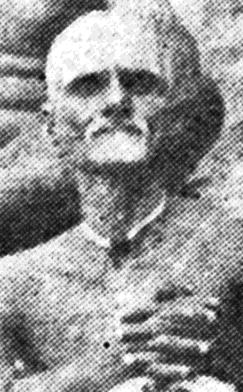
Palani Swami was a reclusive ascetic who religiously worshipped a stone image of Ganesa on the banks of a pool in Tiruvannamalai. Every day, he ate a simple, single meal of boiled rice without salt or side dishes. This simple ascetic had but one aim, and that was to recognize the truth. One day, one of his friends told him, “What is the use of worshipping this stone image? This will not give you anything. At Gurumurtham, God is there in flesh and blood. Like the five year old Dhruva of the Puranas who did penance standing on one leg, there is this young ascetic totally absorbed in samadhi. Go and serve him. Your life’s purpose will be achieved.”
Palani Swami went to Gurumurtam. As usual, young Bhagavan was totally immersed in samadhi. The very first sight of him shook Palani Swami to his roots. He saw not just God but his guru as well. From that moment on, there existed no world other than this supreme ascetic for Palani Swami. Being an ascetic himself, he could perceive the young saint’s depth of spiritual surrender. He vowed to himself, “I will serve this saint until death.”
He began to serve Bhagavan. While Bhagavan was in samadhi, people would come and touch his body, shake him and try to talk to him. Palani Swami’s duty was to protect this physical form and ensure that this highest spiritual state was not disturbed. He saw to it that even insects did not bother the master. He would feed Bhagavan one cupful of whatever food was collected. This way, Bhagavan had at least some food every day. He even raised a fence with a gate around Bhagavan and whenever Palani Swami had to go out, he would lock the door so that nobody could bother Bhagavan. In this manner, he attended on Bhagavan for eighteen months - night and day.
Sometime later, Bhagavan had to move out of these premises. In the next compound was a mango orchard. Its owner requested Bhagavan and Palani Swami to come and stay there in a thatched hut made of coconut leaves. Palani Swami and Bhagavan stayed there undisturbed for six months as curious visitors were strictly prohibited from entering by the orchard’s owner. This was the time when another facet of Bhagavan opened up. Palani Swami was thirty years older than Bhagavan and held a fatherly affection for him. Like a caring father, Palani Swami would go to the town and get books for his ‘Godson’ to read. This was how Bhagavan first read Kaivalya Navaneetam, Vedanta Chudamani, Adhyatma Ramayanam, Yoga Vashistam, Prabhulinga Leelai, and many other works. On reading some of these books on Advaita and Vedanta, he recognized that these books were describing what he had experienced at the age of sixteen. This was where he learned words like samadhi, atma, maya and samsara. It was the will of Arunachala, the still and omniscient Self, that Bhagavan abide in his state of awareness and reveal to humanity that it is the same, nameless Self, existence or Heart, which always is in every being. In order to communicate this, such an education was indispensable. Bhagavan’s fluency in scriptures and Vedantic language had its roots in this phase of his life.
Sometime later, the owner of the orchard wanted them to vacate the premises. They moved to the Arunagirinathar temple. There, Bhagavan told Palani Swami, “You go begging that way and I will go begging this way.” Bhagavan himself has described how he would go stand in front of a house, clap his hands twice and wait. If the house owner gave him some food, he would receive it in his hands and eat it immediately. Then, without feeling the need to wash his hands, he would wipe them on his hair. Later, Bhagavan recalled, “When I was doing that, I felt I was the single, sovereign monarch of the world.” That is why Bhagavan declares that true renunciation is not only rejecting the notion of ownership, but also not feeling dependent on anyone or anything. He would not beg a second time from the same house. Consequently, he ended up begging in almost all the streets and houses in Tiruvannamalai!
In Arunagirinathar temple too, crowds of people began to harass him. They could not understand why Bhagavan was in samadhi all the time. When Palani Swami was not present, they would disturb him. Palani Swami noticed a small hillock called Pavazhakundru and moved Bhagavan there. Throughout Palani Swami’s relationship with Bhagavan, he was always in the background because his duty was to preserve the physical body of Bhagavan and see that his samadhi state was not disturbed. He never interfered with the other activities of Bhagavan. Gradually, the reputation of Bhagavan spread through the town and a few people started gathering at Pavazhakundru as well. Palani Swami went in search of another place and noticed Virupaksha cave on Arunachala’s slopes. Bhagavan later on said, “When we went to Virupaksha cave for the first time, there was nothing there except an earthen pot.” A few years later, some woman devotees started serving food there during daytime. Other attendants like Perumal Swami, Ayya Swami and Kandaswami also joined him in the course of the years, but Palani Swami always remained the primary attendant.
It was here that Bhagavan learnt Malayalam. Palani Swami had taken a vow that he would eat his single meal of the day only after reading a page from the Malayalam version of Adhyatma Ramayanam. He followed this self imposed restriction all his life. Though Palani Swami’s mother tongue was Malayalam, he could not read it fluently. So it took a long time before he finished his daily reading. The other devotees and Bhagavan used to wait for Palani Swami to finish before they all sat down to eat. One day, Bhagavan asked Palani Swami whether his vow to read a page a day had the stringent stipulation that he himself should read it or whether it was enough that he listened to someone reading it aloud for him. Palani Swami consented to the latter and Bhagavan himself undertook this daily task. Bhagavan had no knowledge of Malayalam, as his mother tongue was Tamil. Bhagavan therefore requested Palani Swami to teach him Malayalam. Within no time, Bhagavan picked up the language well enough to read, write and understand. From then on, thanks to Bhagavan, Palaniswami got his daily dose of Adhyatma Ramayanam and everyone got to eat in time! (Kunju Swami told me that Bhagavan was an ekagrahi, which in Sanskrit means ‘one with one pointed observation’. Just as the negative of a photograph gets imprinted with an image when once exposed, Bhagavan had a photographic memory. Once he looked at a passage, there was no need for him to refer to it again.)
One day, someone put a statue of Ganesa in a niche inside Virupaksha cave. Overwhelmed, Palani Swami requested Bhagavan, “Why don’t you make some offering to Lord Ganesa?” Bhagavan’s way of making an offering was not through food, garlands or flowers, but through verse. This was the first verse composed by Bhagavan: “Lord with a big and fat belly residing in the niche, you who allowed your Father to go around begging, at least now shower your glance of grace on me, who too is the son of that Father.”
In the evenings, Bhagavan’s attendants would beg in the streets to collect food. The traditional song they sang to collect alms was by Adi Shankara: “Samba Sadasiva, Samba Sadasiva, Samba Sadasiva, Samba Sivom.” When the people of the town heard this refrain, they would be ready with food knowing that Bhagavan’s attendants were coming. Knowing this, some miscreants began to go ahead of them, sing the same song and collect the food instead. So Bhagavan’s attendants requested him, “Please compose a song we can sing exclusively to collect alms.” Bhagavan, in his usual manner, kept silent. The next day when they were going around the hill, Palani Swami called Ayya Swami, the most literate among them aside, “Bhagavan is murmuring something, perhaps he is composing some verses. Take this paper and pencil.” During that one circumambulation, Bhagavan composed one hundred and eight verses. Ayya Swami faithfully took these down. Titled Aksharamanamalai or The Marital Garland of Letters, it is one of the most spiritually moving, devotional hymns ever written. (Arthur Osborne told me once that he had read three thousand books of poetical verses in English, many of them devotional in nature. He said none excelled these verses in devotion and wisdom.)
After a while, Bhagavan moved up to Skandashram, a higher cave. Palani Swami spent a few days there. However, due to the weakness of old age he could not climb up daily to this cave. With Bhagavan’s permission, he stayed on at Virupaksha cave. Every day, Bhagavan would go down and spend some time with Palani Swami. One day, while in Skandashram, Bhagavan noticed a peacock flying up from Virupaksha cave making abnormal noises. He immediately rushed down saying, “This is the end of Palani Swami.” When he reached Virupaksha cave, Palani Swami was already breathing very hard. Like a son, Bhagavan kept Palani Swami’s head on his lap until he dropped the body. (In Hindu tradition, when the father is dying, the son must keep the father’s head on his lap as his final duty. According to the scriptures, if a father gets such an opportunity he goes to heaven.) For many years, Palani Swami had selflessly served his master. Now it was time for Bhagavan’s ‘Nandi’ to return to Arunachala, the silent Siva.
Gurumurtam