Mother Azhagammal
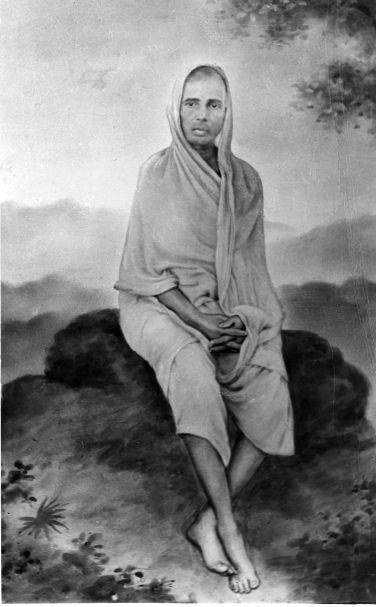
The year is 1879. The place, Tiruchuzhi, a small, obscure village in Tamil Nadu, South India. It is the day of Ardra Darshan. A festival which celebrates that ancient, eternal moment when Lord Arunachala Siva appeared from a primordial, infinite, fiery pillar of light to destroy the egos of warring gods and give them enlightenment.
At midnight on this auspicious day, just as the idol of Siva returned to Tiruchuzhi’s legendary Bhoominatheshwara temple, a wail of an infant was heard in a humble home on its northern street. Mother Azhagammal had just given birth to a baby boy. A baby boy who, in time, would be known the world over as Bhagavan Sri Ramana Maharshi. Named Venkataraman as a child, the history of Bhagavan clearly proves that the aspects of fire and light were very important throughout his life. His mother conceived many times. It was only when she was bearing Bhagavan that she had a burning feeling in her stomach. To soothe it, a traditional paste of neem and bilva leaves had to be applied daily on her stomach. Later, when the child was born, the blind midwife saw a brilliant light.
From his years of innocence, Venkataraman could hear the sound, ‘Arunachala, Arunachala,’ within himself. The sound stayed with him all the time but he did not know what it was. Later, when he became a great master, he was asked about it, “If you could hear the sound all the time, why did you not ask people about it? Why did you not seek an explanation for it?” Bhagavan replied, “Would someone go about checking with people if they breathe? It was built into my system and I thought everyone could hear it too. I did not know it was an aberration.” (Similarly, Swami Vivekananda used to see a blue light between his eyebrows from his childhood. When asked why he did not ask anyone about this strange occurrence, Swami replied, “I thought everyone was seeing the light.”) Other than this, Venkataraman seemed to be an ordinary boy. Nothing spectacular about him suggested that he was to become a great rishi.
After his father died, the family had to split up. Bhagavan’s widowed mother went to stay in her brother-in-law’s house in Manamadurai. Venkataraman was sent to study in Madurai, about thirty miles from Tiruchuzhi. In Madurai, Venkataraman studied in the American Mission School. Strangely enough, he had not read any Hindu scriptures. He had only read Periapuranam, a devotional composition on the lives of the sixty-three saint-devotees of Lord Siva . He himself later said, "I did not know any terms from philosophy or spirituality - Brahman, atman, samadhi, jnana, Self, mind - nothing.”
In Madurai, at the age of sixteen, he had a death experience. Father Arunachala wanted Venkataraman back in his fold and so gave him a death experience in which he felt his body and mind being symbolically burnt. He ‘saw’ his body being carried to the cremation ground and burnt. The burning feeling continued till he ran away from Madurai to Tiruvannamalai, entered the Arunachaleshwara temple, embraced its agni (fire) lingam and said, “Father, I have come at thy bidding. Thy will be done.”
After Bhagavan left home, nobody knew where he was. When his mother heard the news, she was grief stricken and made desperate efforts to find him. Reports trickled in that he had moved far south to Thiruvananthapuram in Kerala. Someone else also sent news that a young Brahmin boy was seen roaming the streets there. She packed her things and left for Thiruvananthapuram. On spotting the boy there, she begged him to come with her or at least look at her. However, he ignored her and fled. She was sure that he was her Venkataraman. She continued to grieve until one day somebody informed her that he had met a person in Tiruvannamalai who wrote his name as ‘Venkataraman of Tiruchuzhi’. Encouraged by this news, she sent her brother-in-law, a soft-hearted man, to look for her son in Tiruvannamalai. On his return, he confirmed the news, “Yes, I saw Venkataraman. He is totally absorbed in meditation. I pleaded with him to come back, but he did not even reply. There was no response; he was just like a rock.”
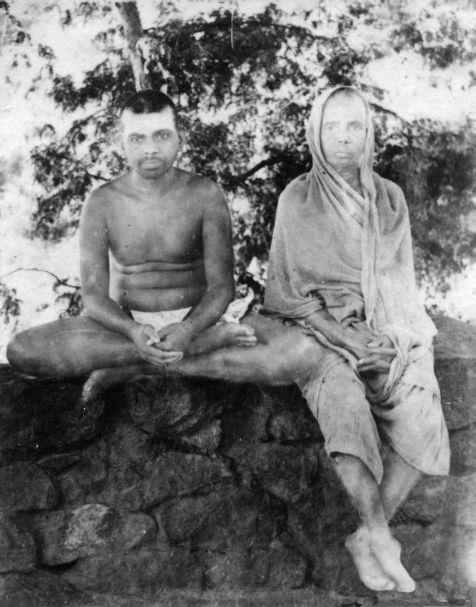
Confident that he would not reject her pleas, Mother Azhagammal decided to go and beg him to return. It was 1898, two years after Bhagavan had left Madurai and come to Tiruvannamalai. Bhagavan was seated on a rock at Pavazhakundru, a small hillock in Tiruvannamalai. On reaching there, his mother pleaded with him, “Come back home. I will not disturb you. I will feed you because you are uncared for here. I will attend to your body. I will not interfere in your life. You can continue your spiritual life there. Please come back.” There was absolutely no response from Bhagavan. Rock like he remained, motionless and still. (Muruganar used to say, “Even a big boulder on Arunachala may move sometimes, but Bhagavan will not move. You cannot move Bhagavan.”)
One day, some residents of Tiruvannamalai who had been seeing this old woman crying all the way up the hill and down, reproached the young ascetic, “Why don’t you give a reply? Either accept or decline! We have been observing this lady cry for the last three days and you do not even reply!” Relenting, Bhagavan wrote a reply on a piece of paper. This reply to his mother is his first written teaching. He wrote, “The Ordainer, prevailing everywhere, makes each one play his role in life according to his karma. That which is not destined, will not happen despite every effort. What is destined to happen is bound to happen. This is certain. Therefore, the best course is to remain silent.”
At face value, this looks like a reply rejecting his mother’s pleas. However, these words bear a deeper meaning. ‘That which is not destined, will not happen despite every effort. What is destined to happen is bound to happen.’ Then, what is the role of an individual? If everything is predestined and everyone is acting according to how he or she is being directed to act, then what is the reality of the individual? This doubt raises the fundamental question, ‘Who am I?’ With the next sentence, ‘This is certain,’ Bhagavan gives a stamp of authority, certainty, for the mind needs the anchor of certainty. The last sentence is, ‘Therefore, the best course is to remain silent’. To remain in silence is a positive step towards surrender. The first step is to surrender. Surrendering in silence is the guiding force that helps one begin the quest for the Self. One cannot do this with a disturbed mind. We all need to contemplate on the hidden wisdom in this first upadesa. When we read about the life of a saint, not like a novel or a historical narrative, but with reverence and devotion, a sentence, even a word, can guide us. This first teaching which Mother Azhagammal brought out from Bhagavan Arunachala Ramana is a most important and powerful one.
Jesus Christ said to his mother, “Woman, what have I got to do with you? I have come to do my Father’s business.” Bhagavan, through his note and his action, seems to be similarly telling his mother, “I have got this work of my Father, to spread his message that his true state is the silence which is hidden in the Heart of everyone and that humanity has forgotten it. I have to remind them that Arunachala is the unconditioned awareness of ‘I AM’ in each one’s Heart. The mind clouds it now. Therefore, it has to be removed so that the Heart shines forth in all its splendour. This is my Father’s business. So, oh mother, you too accept it.”
Bhagavan’s mother went back home disappointed. Though Bhagavan had given the highest teaching to his mother in 1898, for nearly fifteen years after that, she was too entangled in family affairs. Then, in 1913, disaster struck: she lost all her close relatives except her youngest son and daughter - Bhagavan’s younger brother and sister. Mother Azhagammal was immersed in sorrow. It seemed there would be no descendants. Bhagavan’s elder brother had married, but had died at the age of twenty-two, leaving his wife a childless, teenage widow. Bhagavan was not married, and his married sister did not have any. Bhagavan’s younger brother, my grandfather, was married but his wife Mangalam, was childless. In 1913, Mother Azhagammal took her to Bhagavan in Virupaksha cave and begged him to bless his younger brother and wife with a son. The very next year, a child was born. In gratitude to Bhagavan, he was named Venkataraman. He was then the only descendant of Bhagavan’s family.
In 1914, while still in the clutches of family entanglements, Mother Azhagammal came to visit Bhagavan at Virupaksha cave. She came down with a raging fever. It was diagnosed as typhoid. Bhagavan pleaded with Arunachala, “Oh Arunachala, fire of wisdom, enfold my mother in your light and make her one with you!” Needless to say, his mother was saved. This plea of Bhagavan is not for his mother alone but for each one of us. When we take to Self Enquiry, we too will be engulfed in the fire of wisdom of Arunachala.
In 1916, Mangalam passed away, leaving her child Venkataraman, my father, to be looked after by Bhagavan’s sister. Bhagavan’s mother, now fed up with the world, returned to Bhagavan to stay with him for good. It took eight years for Bhagavan to make her spiritually mature; there are interesting stories on how he did this. For instance, being a Brahmin, she was steeped in orthodoxy and Bhagavan had to release her from her prejudices. According to Brahmin orthodoxy, a Brahmin’s clothes, kitchen, food and personal items could only be washed or touched by Brahmins. Else, they were considered impure. If touched by a dog or a person from a ‘lower caste’, an orthodox Brahmin had to have a purifying bath. Dogs touched Mother Azhagammal all the time because there were many at Skandashram and Virupaksha cave. Consequently, she sometimes ended up bathing ten times a day! Taking pity on her, a scholarly devotee Kavyakantha Ganapati Muni told her, “According to the Hindu scriptures, if you touch a jnani, a realized soul, all pollution and sins drop from the body - you need not bathe then.” From then on, whenever Bhagavan saw his mother approaching he would know why she was coming to him. After she touched him and went away, he would give a mischievous smile and say, “Some dog must have touched her.” Brahmins would not even eat onions or garlic. One day, Bhagavan brought a small onion to his mother and gently teased her saying, “Be careful, this will be standing there at the gates of heaven to push you out.” With comments like these, he slowly freed her from the grip of her prejudices.
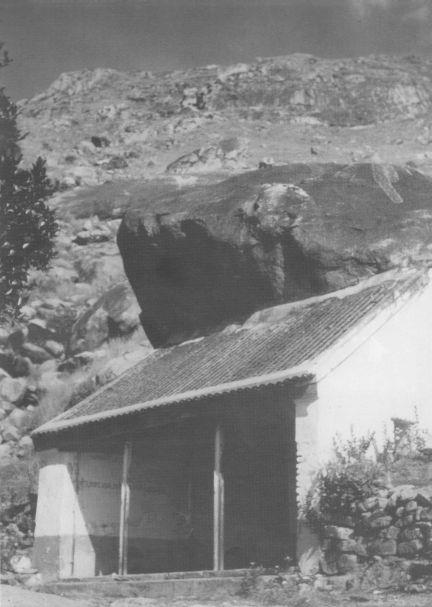
Virupaksha Cave (an early photo)
Her attachment to relatives had gone but her maternal attachment to Bhagavan remained. She knew Bhagavan liked appalam (a thin wafer like crisp, only much bigger) and she would ask people to bring the ingredients to make it. One day, when she was trying to make appalams, she called out to Bhagavan, “Why don’t you come and help me? I am going to make appalams!” Blinded by her attachment to him, she wanted to satisfy his childhood desires. Understanding this, Bhagavan replied, “You make your appalams inside the cave and I will make my appalams outside.” This is how the Appalam Song came about. In it, the process of making appalams is a metaphor for the process of attaining liberation. Bhagavan interpreted the song in the light of every ingredient used, “Let the ego be crushed in the quern of Self Enquiry, seasoned with satsang, good company, softened and flattened, fried in the ghee of Brahman and then eaten by the Self.” The song asks, “How should one’s soul be ripened? How should one’s ego be pounded, like the flour is pounded?” The answer is, with the enquiry, ‘Who am I?’ This song touched the depth of his mother’s soul and transformed her.
She was very possessive about her meagre belongings. Bhagavan transformed this quality in a beautiful way. One day, a pious renunciate and resident of Skandashram called Sabapati was wearing a torn cloth that did not cover much. Mother asked him, “Sabapati, why are you wearing this torn cloth?” He playfully replied, “You are wearing a long sari. It is nine yards long, why don’t you give me some of it?” She immediately tore two yards from her sari and gave it to Sabapati. Her detachment from her few possessions had begun.
Another day, some woodcutters came to Skandashram and cried, “Bhagavan, we are all hungry.” Mother Azhagammal would not share the food with others until she had eaten first; she believed that food became polluted if others ate it first. Bhagavan knew this. Still, he told Kunju Swami, “Ask mother to bring the food she has cooked and give it to them.” She was hesitant. “Tell Bhagavan that I have not yet eaten,” she protested. When Kunju Swami reported this to Bhagavan, he went to her and reproached her, “Oh! That is the reason. You think they are all different from you. Come and look. They are all standing down there. Do you know who they are? Look at them.” She looked at them and Bhagavan said, “They are all Arunachala swaroopam, the forms of Arunachala.” He did not use the word ‘untouchables’. From that moment on, she saw only Arunachala in everyone - there was no difference between her and anyone else.
Bhagavan fulfilled his duties to her as a son. Though already an acclaimed master, he had only a few people to serve him. They would fetch water for him and carry it painstakingly uphill. However, for his mother, Bhagavan himself brought the water. He would carry two big vessels filled to the brim, make her sit and pour water over her to bathe her. He also washed her clothes. While he attended to her physical needs and was affectionate to her, he could also be stern when he had to effect a change. Over eight years, slowly but surely, he weaned her away from the limiting confines of narrow mindedness, orthodoxy, superstition and social customs. However, despite being in the presence of a great master like Bhagavan who with all filial affection had the intention to mature his mother, it took eight years. The beauty of their relationship is that Bhagavan’s mother surrendered to it all and allowed the transformation to take place. (The lesson for us here is that we should not get disappointed if we see no progress after a few years of sadhana.)
One day, Bhagavan’s sister came and said, “Mother, you are not well. Come, I have a comfortable house.” She refused and turning to Bhagavan told him, “I want to die only in your arms. After my death you may even throw away my body into some thorn bushes, it does not matter.” Soon after this, she fell seriously ill. On the day of her passing away, from early in the morning, Bhagavan sat next to her with his left hand on her head and his right hand on the right side of her chest. He remained like that for nearly eight hours. The devotees who had gathered there knew that her end had come. They observed the beauty and sanctity of a son elevating his mother’s soul to the Infinite. Kunju Swami who was present later said that the devotees observing this felt it was a physical demonstration of the soul’s journey to the Absolute; it was like heat and light spreading from a flame. When he was sure that the soul and mind had merged in the Self, Bhagavan took his hands off and then said, “When the soul merges with the Self and is completely annihilated, a soft ring like that of a bell can be felt.”
It was a common practice that after witnessing a death, all those present must bathe. However, Bhagavan said that in this case there was no need as there was no pollution. “She did not die. She is absorbed in Arunachala,” he stated. Later, the devotees who were there enquired, “Bhagavan, what did you do by keeping your hands on her head and her chest? What exactly took place?” Bhagavan explained, “Innate tendencies and subtle memories of past experiences that lead to future possibilities became very active when my hands were placed on her. Scene after scene rolled before her in her subtle consciousness. The outer senses had already gone. The soul was passing through a series of experiences, thus avoiding the need for rebirth and making possible the union of the mind with the Self or the Heart. The soul was at last disrobed of all subtleties before it reached its final destination, the supreme peace of liberation from which there is no return to ignorance.”
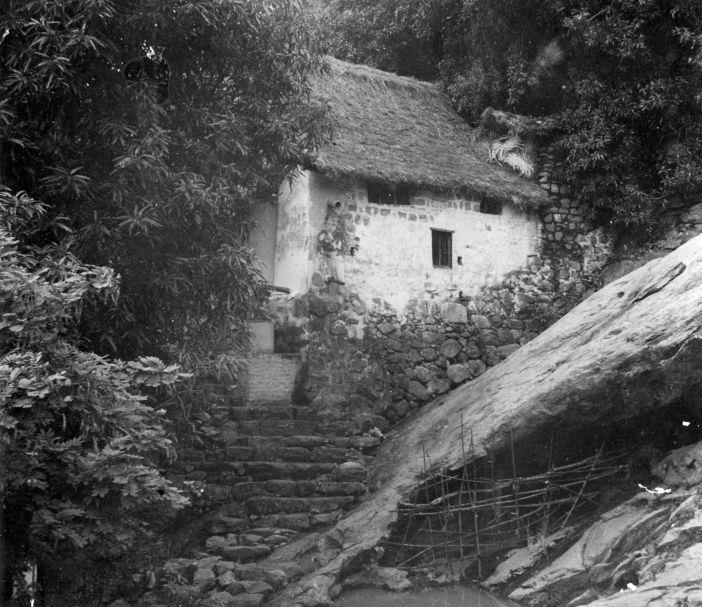
Skandashram in earlier days
What is the precept that Bhagavan laid down before us through Mother’s example? When asked what the essence of his teaching was, Bhagavan would reply, “Either ask ‘Who am I?’ or surrender. They are two sides of the same coin.” Bhagavan clearly demonstrated the nuances of ‘Who am I?’ in the lives of many devotees. However, through the example of his mother, he taught the aspect of surrender - for his mother had surrendered completely. Mother’s example also shows us what happens when one immerses in Self Enquiry and reaches a state of silence: an experience like the one during Mother’s death takes place. “Innate tendencies and subtle memories of past experiences leading to future possibilities become very active.” When one is immersed in Self Enquiry and silence, this begins to happen. At this point one is tempted to give up and say, “I am not able to proceed.” “Scene after scene rolled before her in the subtle consciousness. The outer senses had already gone.” When one enquires deeply, the inner doors open. “The soul was passing through a series of experiences thus avoiding the need for rebirth and making possible the union of the mind with the Self or the Heart.” When one progresses in Self Enquiry, there is a struggle for the mind to merge with the Heart. The guidance and grace of the guru are very essential to push and pull the mind into the Heart. “Once the soul was disrobed of all subtleties, it reached the final destination, the supreme peace of liberation from which there is no return to ignorance.” This teaching is a clear example of the imminent experience that awaits us all. Mother Azhagammal has shown us the way. Have complete faith. Either take up the path of Self Enquiry or surrender to the higher power. In both cases, Bhagavan has said, “Ego has no place.” When there is no ego, neither ‘I’ nor ‘mine’ - that which rules is only Arunachala. As Bhagavan has said, “Arunachala is the Heart, the Self, the ‘I AM’.”
Reaching Arunachala is not in space or in time. It is constantly here and now. It is not going to enter your Heart. It already is the Heart. You only have to turn your attention to it. Mother Azhagammal turned her attention to Bhagavan. Bhagavan once said, “The purpose of the outer guru is to give a push and that of the inner guru is to pull.” Arunachala is the outer guru who gives us the push while Bhagavan remaining in the Heart as our Self, pulls us like a magnet. So what is our role? We just have to submit. Wherever we are, we should live in our Heart. Sacredness means that we should go into silence. Wherever and whenever we are in silence, we are in sacredness - and that sacredness is Arunachala. Arunachala is not a Hindu god. It is reality, space, existence itself. Since we have identified ourselves with our bodies and thus have limited ourselves, Arunachala has come to remind us: “There is no you, there is only ‘I AM’.”
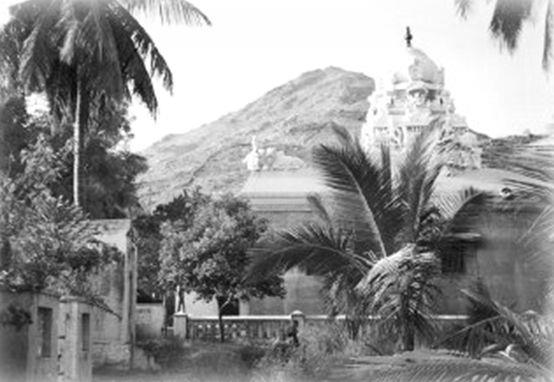
Mother’s Temple with Arunachala in the background