Ramanatha Brahmachari
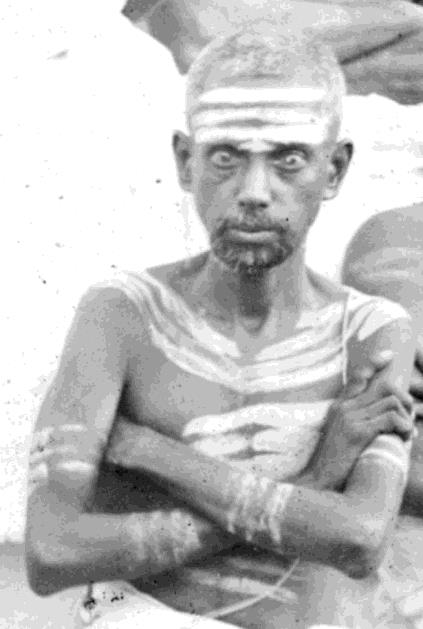
Bhagavan once said, “I am afraid of only two people. One is Ramanatha Brahmachari and the other is Mudaliar Paati.” He said this because these two ascetics served Bhagavan with utter, selfless devotion.
Ramanatha Brahmachari was a student of the Vedapatashala (school for Vedas) in town. When he met Bhagavan, his mind and heart opened up and he felt his whole being immersing in silence. Then and there, he decided to be with Bhagavan for as long as possible. Though the patashala provided free food and lodging to its students, young Ramanatha preferred to stay with Bhagavan. He begged for food on the streets and took that food to Bhagavan in Virupaksha cave. Whatever Bhagavan shared with him, he ate willingly. Such was the beauty and surrender of this ascetic. Bhagavan’s mother allowed him to serve her because he was a Brahmin boy and Bhagavan’s mother was still following her orthodox ways. Ramanatha would help wash her vessels as well as her clothes, and she would call out his name, “Ramanatha, Ramanatha,” for every errand. Hearing her, Bhagavan would humourously remark, “The japa of my mother has started again!”
One day, Bhagavan told Ramanatha that he had realized the Self. Ramanatha could not believe it. He sought confirmation from Bhagavan repeatedly. Bhagavan reassured him many times, “Yes, Ramanatha, you have realized the Self!” Nevertheless, Ramanatha was still incredulous. Bhagavan got up and rapped his head with his knuckles and repeated, “Yes, Ramanatha, you are realized.” This simple devotee went into ecstasy and ran out of the room telling everyone he met, “This is the place where Bhagavan knuckled me!” He was not excited to be told that he had attained Self realization. Bhagavan’s knuckling him was greater than Self realization for him!
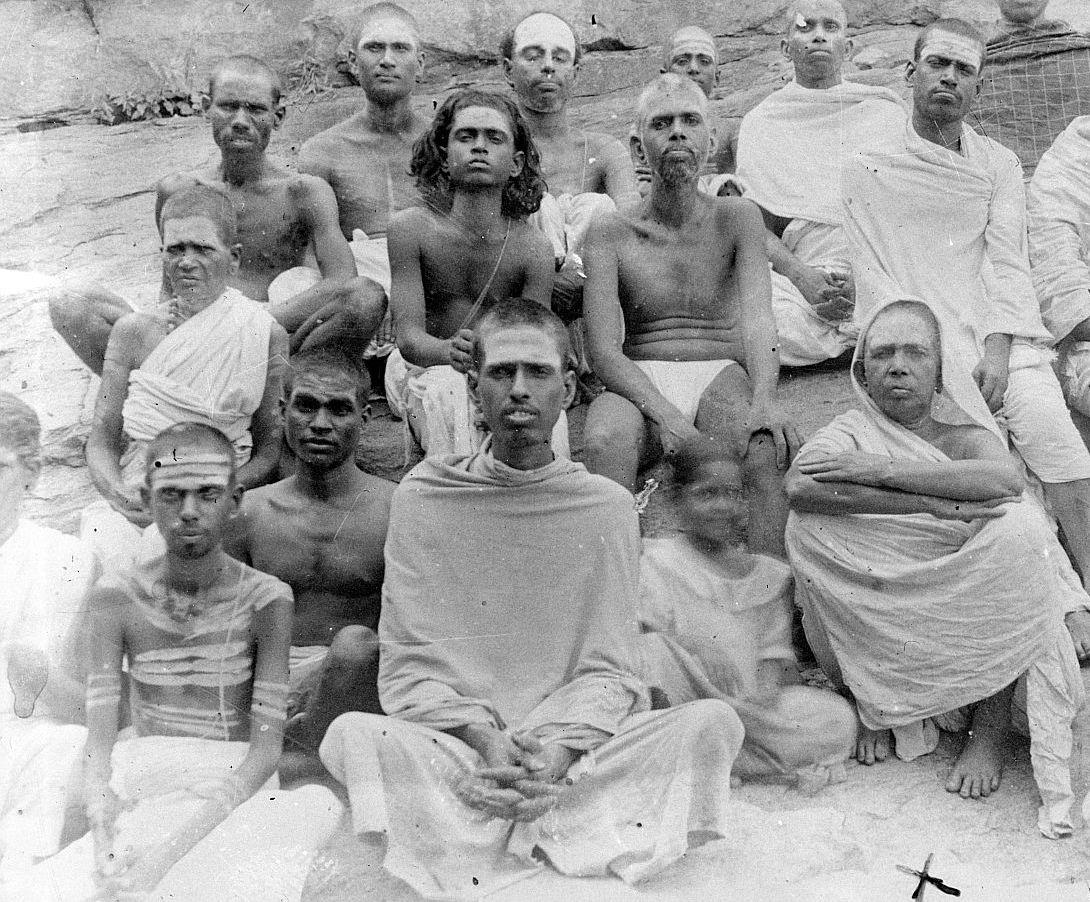
This innocent disciple also served the other devotees of Bhagavan. When he started living at Palaakothu, Kavyakantha, Muruganar, Paul Brunton, Cohen, Viswanatha Swami and Kunju Swami were some of its other residents. Their only purpose was to be with Bhagavan for as much time as possible. This would have been denied to them had they been working in the ashram office. Every evening, of his own accord, Ramanatha Brahmachari would sweep all their huts and clean their oil lamps with dedication and devotion. In the daytime, he would go to the town to obtain their simple requirements from the shops. Despite doing all this, Ramanatha Brahmachari found enough time to come and sit in Bhagavan’s presence. Bhagavan was his all.
The residents of Palaakothu did not report to Bhagavan about what a great help Ramanatha Brahmachari was to them. One day, Viswanatha Swami received a post card in which the post-script read: “Please convey my prostrations to the Palaakothu sarvadhikari.” Bhagavan would sometimes distribute letters received by post to the recipients. He gave a broad smile before handing it over to Viswanatha Swami and exclaimed, “Who is the Palaakothu sarvadhikari?” Ramanatha Brahmachari who was seated in the farthest corner of the hall, got up with folded hands and said, “Bhagavan! They call me Palaakothu sarvadhikari since I do all their daily errands. They permit me to do this service to them and express their approval of it by calling me sarvadhikari!” Bhagavan looked very pleased and said, “A true sarvadhikari (ruler) should be like this.”
On another occasion, Dandapani Swami, a tall and sturdy resident who demanded obedience from others, picked up a quarrel with Ramanatha Brahmachari. Despite his fragile body, Ramanatha Brahmachari was not relenting. Dandapani Swami pushed Ramanatha Brahmachari down and looking down at him shouted, “Do you know who I am?” obviously referring to his physical strength. Ramanatha Brahmachari, lying on the ground replied humbly with folded hands, “Dandapani Swami! Have we all not got together here for the noble purpose of finding out ‘Who am I’?” On hearing the words, ‘who am I’, Dandapani Swami gained his composure and apologized for his misdemeanour. Then, both went to Bhagavan and Dandapani Swami himself narrated what had happened. Bhagavan nodded with a benign smile.
When a man arrived at the ashram with a calf, which Bhagavan named Lakshmi, there was nobody to look after her. Since there was danger from panthers and tigers, Bhagavan remarked, “There is nobody to look after Lakshmi. Else, she could have been kept here.” Then, the diminutive, four and a half feet high Ramanatha said, “Bhagavan, I will look after Lakshmi.” This was the beginning of the Ramanasramam goshala (cow-shed).
As the train came in only at eight thirty in the night, most of the out station devotees would invariably arrive late. In Ramanasramam, almost everyone went to sleep by seven thirty after dinner at seven. Bhagavan wanted the visitors attended to. Nobody offered to look after them. Ramanatha said, “Bhagavan, I will look after them.” Every night, he would stay awake attending to the visitors. The next day, Bhagavan would give him a big smile and affectionately say, “Oh, so you received them and attended to their needs? Good, good, good!”
One day, when Bhagavan was going around the hill with Ramanatha and other devotees, each one was asked to speak on a spiritual topic. Ramanatha, in an ecstatic state, compared Bhagavan with Lord Siva and his devotees with the bhutaganas i.e. Siva’s attendants. Later, at the request of Bhagavan and the others, he wrote it down in Tamil verses. The first verse means, “I saw the Lord of Tiruchuzhi and got fixed without returning again.” This means, “I achieved realization, no more have I the body. My Lord bestowed on me this Self realization.”
My mother, an ardent devotee of Bhagavan, loved Ramanatha Brahmachari. I once asked my mother, “Which song do you like of all the songs by Muruganar, Sadhu Om, Sivaprakasam Pillai and the rest?” My mother replied, “The song I like most is the one composed by Ramanatha Brahmachari.” The song is as follows: “I have seen Tiruchuzhinathan (the lord of Tiruchuzhi) and unable to turn back, I stood there transfixed. He is the lord who dances in Chidambaram, who protects the helpless and is merciful to them. The same Tiruchuzhinathan manifested himself as God, in Virupaksha cave on the hill in sacred Tiruvannamalai. Jiva was ruling unjustly in the town of Kayapuri (the body) with the karanas (the sense organs and the organs of action) as his subjects and ahankara (the ego) as his minister. After some time, jiva took up the sword of God’s grace and cut off the head of his minister, ahankara. Having so cut off the minister’s head, jiva stood with God who was dancing all by himself in the cave called Daharalaya (the Heart’s abode). He is this Tiruchuzhinathan; I saw him and stayed there being unable to get away.”
In 1946, he fell sick. He was taken to Madras (now called Chennai) for treatment but passed away. When the news reached Bhagavan he observed total silence, which in 1946 was very rare. Hundreds of people were around, but he was totally absorbed.
Devotees like Ramanatha Brahmachari show us how to surrender to a jnani, a realized person and get liberation in this life itself.
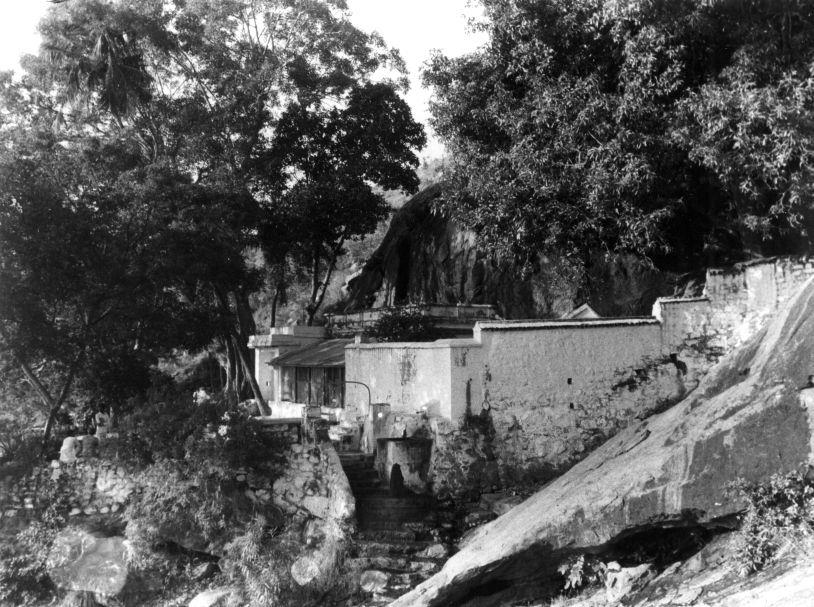
Skandashram