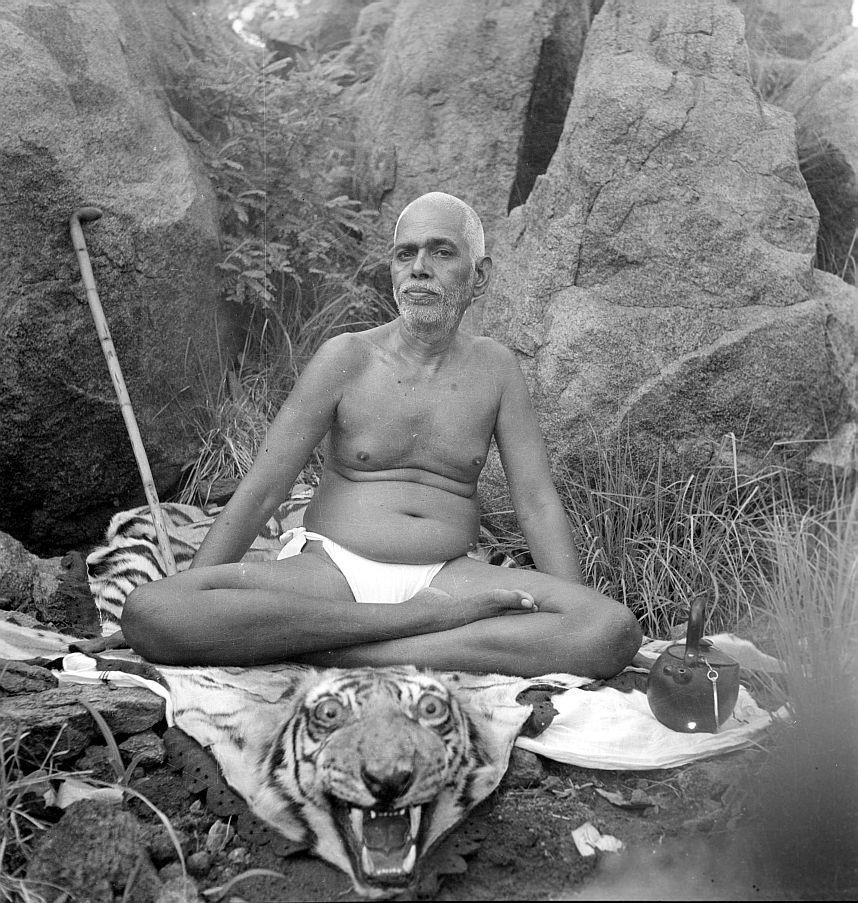
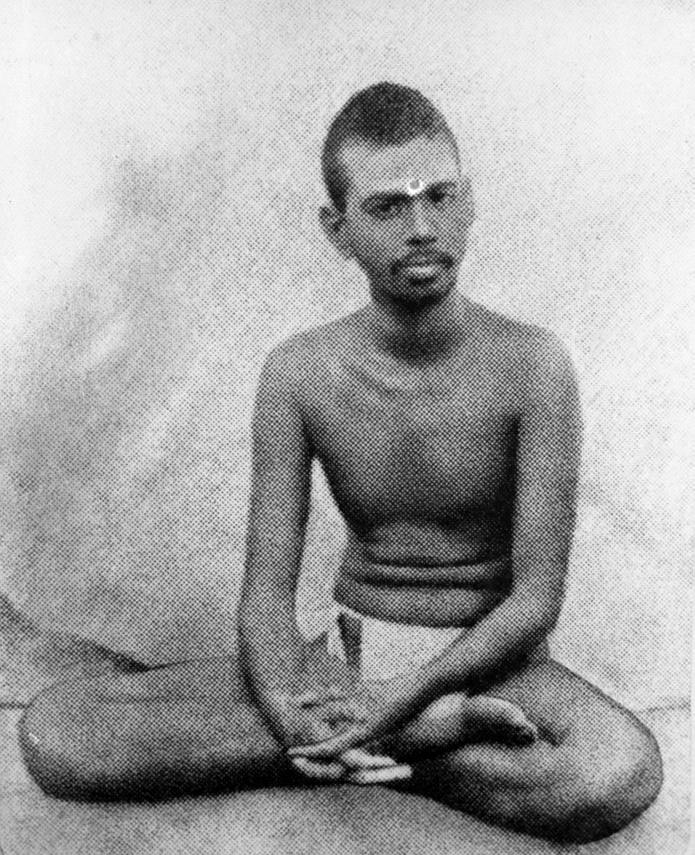
Vilacheri Ranga Iyer
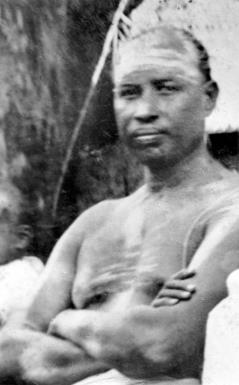
Love has many facets: it is supreme and expressed in many dimensions. A jnani, a person of spiritual wisdom, is an inexhaustible repository of love. All his actions reflect the myriad aspects of his unconditional love. In Bhagavan Sri Ramana Maharshi’s relationships with his devotees, we see many different aspects of this love. With devotees like Vilacheri Ranga Iyer, we see the guru in his aspect of a loving friend.
Even as a toddler, Bhagavan had the traits of nobility - equal sharing, accepting responsibilities and keeping promises. Back home after playing outside, he would bring a few of his playmates to drink milk from his mother. Usually children are jealous, but Bhagavan would go out of his way and bring his friends home, saying, “Come on, let us have milk.” What a strong bond of friendship and sharing this created!
One of these friends, Meenakshi, was just one and a half years old and lived in a neighbouring house. After some years, Meenakshi married but did not have a very happy married life. However, all the while, she kept worshipping Bhagavan in her heart. She never came to see Bhagavan because she could not. In the 1940s, when she was bedridden with age, Bhagavan simply appeared where she was, just as he did for Nayana. Sitting by her bedside, he touched Meenakshi. She was in coma, but regained consciousness at his touch and exclaimed, “My God! My Lord! Ramana, you have come to bless me!” These were her last words. This is the highest example of friendship: though they shared mother’s milk way back in infancy and never met after that, Bhagavan remained a loyal friend and remembered Meenakshi in her last days.
Lakshmi was another fortunate friend of Bhagavan who shared milk with him at the age of two. She was eventually widowed and led a life tattered by pain and suffering. Bhagavan’s name and recognition had spread by then. One day, Bhagavan was seated in the hall surrounded by well known devotees and scholars. Lakshmi, thin, dark and unrecognizable in her sixties, stood in front of him among two hundred people and demurely asked, “I do not know whether Bhagavan recognizes me.” “Why not,” Bhagavan replied, “Are you not Lakshmi? Did we not drink milk together?” The master recalled his childhood friend even after sixty years.
Bhagavan personified wisdom and was like a diamond. We value a diamond because its clarity shines from every angle we examine it. Any page taken out of Bhagavan’s life and teachings sparkles with this clarity. Many people who pay attention to Bhagavan’s teachings, would do well to be aware of Bhagavan’s aspect of friendship. His relationship with his devotee-friends is a revealing one. While they viewed him as an enlightened sage, Bhagavan viewed them as his friends from childhood. Two of Bhagavan’s prominent devotee-friends had two factors in common. They were steeped in family life and deeply attached to their worldly duties. It is inspirational to see how Bhagavan related to these people. He didn’t ask them to give up their family ties and take up a spiritual life - instead he went along with them. But, when they became tired and exhausted with their worldly attachments, he gently drew them to himself. His friends came to him with complaints about their family life. In spite of the mundane nature of their problems, the young Bhagavan listened and solved them as a true friend. He did not just offer them counsel, but actually took upon himself the responsibility of removing every suffering as if they were his own.
Vilacheri Ranga Iyer - also known as Rangan - lived in Tiruchuzhi, Bhagavan’s birth place. He was Bhagavan’s classmate and childhood friend. Bhagavan’s family and Rangan’s family moved to Madurai around the same time and the two boys continued to be close friends until Bhagavan ran away to Arunachala. It was 1903 when Rangan first came to know about Bhagavan’s whereabouts in Arunachala. However, being tied down by family responsibilities, he could not come and see him immediately. After a few years, when Bhagavan was at Virupaksha cave, he finally paid him a visit. Sri Bhagavan greeted Rangan with an affectionate gesture of friendship - a punch to his shoulder! At first, Rangan could only view Bhagavan as his friend Venkataraman. He demanded, “Hey Venkataraman! Even the evening before you left Madurai, we were playing football. I am supposed to be your closest friend. Why did you not tell me that you were going away the next day?”
Bhagavan replied, “Ranga, did I travel like a normal traveller with baggage and all that? It was a supreme force which drew me that day to Arunachala. Where was there room for any formalities to be observed?” Bhagavan looked steadily at him and immediately Rangan could see that he was no more just Venkataraman, his friend, his classmate, the football player, or his mate in the swimming pool. Bhagavan had been an excellent swimmer, football player and wrestler. Those who have seen Bhagavan then, say that Bhagavan was a six footer and had a very strong physique. Bhagavan was very well built for a Brahmin boy. Until the age of sixteen, when Bhagavan had the ego-death experience, he never had a headache, stomach ache, or any ailment - so robust was his body. However, after his Pathalalinga experience in Arunachala temple, his body was worn by neglect. Ranga could see this change in Bhagavan. The master had by now become somewhat legendary and a few devotees had already gathered there. Yet, when Rangan came to Virupaksha cave, Bhagavan treated him with the same love.
Their relationship was beautiful: it was that of a fully awakened man, a sage of wisdom, and an ignorant man steeped in family sufferings, not spiritually inclined, but with a deep love for Bhagavan. The master appreciated the depth of that friendship and would sit next to his friend by his bedside. Seeing him tossing and turning, weighed down by his problems, Bhagavan would pat him and ask gently, “Hey Ranga, what is bothering you?” One day, Rangan told him about his troubles. “Have you given enough to your family to live on, while you have come away here?” Bhagavan enquired. Rangan was silent, too embarrassed to admit his inability to provide for his family. “So you have some financial problems,” Bhagavan surmised. “Is it enough if you get ten thousand rupees?” This was a huge amount in those days and it surprised Rangan to hear Bhagavan talking about money. Bhagavan pressed on, “Will it solve all your problems if you get ten thousand rupees?” Rangan remained quiet and after a few days took leave of Bhagavan and went to Chennai. He managed to get a sales job, selling trucks and buses. When he got his commission, it was exactly ten thousand rupees!
Once, his son was bitten by a snake and people thought he was dead. He remembered that Bhagavan had given him sacred ash. (Probably, Rangan would have asked Bhagavan for some prasad and Bhagavan would have offered him sacred ash - Bhagavan rarely gave anything as prasad of his own accord.) He told his grieving wife and relatives, “Do not worry, my Bhagavan, my friend is there.” He smeared the sacred ash on his son, while chanting, “Ramana, Ramana, Ramana, Ramana.” The boy recovered. Then, there was the incident when his eldest daughter became mentally imbalanced. Her husband could no longer take care of her and left her in Rangan’s care. Rangan had one solution for all his problems - Bhagavan! He wrote a letter to him and soon received a reply from the ashram saying, “Your letter was shown to Bhagavan, and he held it for a long time. He asked us to write back that she will be all right.” On another occasion, his other daughter fell into a well. When they got her out, she was thought to be dead. Everyone began to weep, except Rangan who had faith in his friend. He had the ‘cure all medicine’ - Bhagavan’s sacred ash. He smeared it on her and sure enough, she recovered.
Once, Rangan’s wife Chellammal went to Ramanasramam to have Bhagavan’s darshan. All the devotees proceeded from the ashram to walk around the hill. Chellammal left the hall with the others, but came back only to go around the Old Hall a few times. Bhagavan was surprised. “How come you returned so quickly?” he asked. She replied, “No, Bhagavan. All the others have left for giripradakshina but I could not join them as I have a problem with my back. I thought that I will do pradakshina of you instead.” Bhagavan arranged for an injection to be given by the ashram doctor, Dr. M. R. Krishnamurthy Iyer. The doctor advised Chellammal to rest in the guest house. However, she could not resist being in Bhagavan’s presence for even a few minutes. She managed to slowly reach Bhagavan’s hall, making her husband really worried. Bhagavan just lifted his hand in blessing, and Chellammal was healed of her back pain. It never came back again. This aspect of Bhagavan was unique because he had rarely done these things for anyone else - talk about money, give sacred ash, and raise his hand to heal. He came to these realms for a true friend. What is friendship? It is a deep facet of love. And what is love? Love is wisdom, jnana, and Bhagavan was the king of jnana. Rangan was very special, indeed.
His friendship with Rangan was not limited to the experiences at Virupaksha cave. At times, while Rangan lay in bed, Bhagavan would wake him up at two in the morning and say, “Come on, let’s go for a swim.” (Before the present Ramanasramam was built, there was a small pool behind.) Thus, with Rangan, Bhagavan sometimes became Venkataraman again. In their childhood days in Madurai, Bhagavan would tease Rangan with a sharp underwater kick on the thigh.
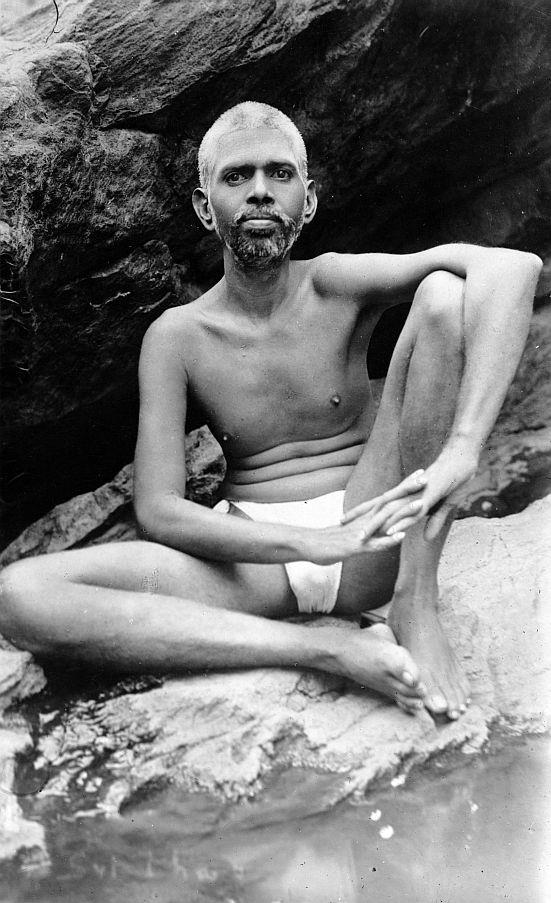
Sri Bhagavan at Skandashram
Being a very strong boy then, Bhagavan’s kick would sting Ranga like he was being hit with an iron rod. When they went swimming now, Bhagavan playfully kicked Rangan again. But this time, Rangan held his foot, put it to his eyes and then on his head and said, “Bhagavan, how is it that your leg has become so soft? When you did this to me in Madurai, it used to be like being hit by an iron rod. Now, your foot feels soft like a rose petal.” Bhagavan replied, “Is it so Ranga? Maybe spiritual perfection changes even the body.”
Once, when Rangan was going around the hill along with Bhagavan, he stepped on a thorn. Bhagavan bent over and removed the thorn himself. Rangan had not noticed Bhagavan’s feet until then but after walking for a little while, he saw Bhagavan stepping on a thorn. He cried, “Bhagavan, Bhagavan! There is a thorn in your foot! Please sit down, let me remove it.” Bhagavan sat down to oblige his friend. However, when Rangan took a look at Bhagavan’s foot, he saw not one, but innumerable thorns. Bhagavan wryly remarked, “Ranga, which thorns are you going to remove - the old ones or the new ones? Let it go.” “Bhagavan, how can you walk?” Rangan protested. Bhagavan calmly gestured, “See? When a thorn goes into the foot, just rub it on the earth and everything will be all right.”
Rangan once had the opportunity to physically embrace Bhagavan. He was again amazed that the master’s skin was silky and soft as a lotus petal. When he had known him in Madurai, his skin had been very rough. So much so, that if he rubbed against somebody else, it would hurt. He asked Bhagavan in wonderment, “Bhagavan, how come the texture of your skin has changed?” Bhagavan responded with the same reply, “Spiritual perfection changes everything.” Another time, as a friend, he took the liberty to ask the guru, “Bhagavan, why does your head shake all the time and why do you need a walking stick?” Bhagavan confided in his friend, “Ranga, this is not because of old age. When I came to Tiruvannamalai after the death experience and took shelter at the foot of Arunachala, this head started shaking.” “Why?” Rangan enquired, looking puzzled. Bhagavan replied, “Can you imagine a violent, wild, mad elephant entering a small thatched shed? What would happen to the hut is what has happened to this body. It will go to pieces.” This is how the immensity of Bhagavan’s spiritual experience had affected his body.
Rangan once consulted an astrologer who said he would have insurmountable problems for one year. He wrote to Bhagavan, telling him of what the astrologer had said. Bhagavan at once asked his devotees to write back to Rangan to come and stay with him. This was the only instance we know of where Bhagavan did something like this. The moment Rangan arrived, Bhagavan said, “Do not remove yourself any time from me. Be with me all the time.” A friend from Chennai came to stay with them for a couple of days. The day he was supposed to leave, Rangan offered to go with him to the railway station. Bhagavan cautioned him with strict instructions: “Ranga, take him to the station, put him on the train and come straight back to me. Do not go anywhere else, do not spend the night in town - just come back and stay with me.” Finally, after a few months had passed, the day came when Bhagavan told Rangan he could go back. When he did so, he found that all his problems had been solved.
Rangan revealed some fascinating stories about Bhagavan’s childhood. Bhagavan’s father was a lawyer and had stored many important legal papers in a loft at home. Once, when they were playing together, Bhagavan pulled out those papers and made paper boats with them and floated them in the temple pool along with his friends. Though his father loved him very much, he was understandably livid when he found this out. He ordered his wife, Azhagammal, “Undress him, shave his head, make him wear just a loin cloth and drive him out of the house.” Many years later, when Rangan met Bhagavan at Virupaksha cave, he recalled, “Venkataraman, do you remember your father predicted your ascetic state many years ago?”
When Bhagavan was at Skandashram, Rangan would visit quite often. One day, he saw Bhagavan was lying inside. So he left the room, closing the door quietly behind him. To his astonishment, he saw Bhagavan talking to somebody outside the room when he had seen him lying down inside the room just a second ago. He ran and opened the room door and saw Bhagavan lying there with closed eyes. He told Bhagavan what he saw. Bhagavan brushed it off humourously, saying, “You should have caught that thief you saw outside and we could have dealt with him!”
Once, Rangan asked, “Bhagavan, you attained enlightenment while you were still in Madurai, isn’t it?” Bhagavan replied, “When I was studying, Arunachala entered me most powerfully, though apparently I was unaware. It is his grace that he revealed himself to me. I felt like my whole body was burning. From that moment on, I was in samadhi. Though I continued to play and talk with you, I was in samadhi all the while.” Bhagavan revealed this only to Rangan.
One day, Rangan noticed that one of Bhagavan’s teeth and his gums were very dark. “Bhagavan, you used to have a very healthy body and good teeth,” Rangan remarked. Bhagavan said rather nonchalantly, “Yes, but once when I was here alone, a person gave me poison and asked me to swallow it. I did so. It did not kill me, but it destroyed my gums and my teeth.” Bhagavan was given poison three times. Strangely, this has happened to many sages. For instance, Yogi Ramsuratkumar too was given poison twice.
It was not just his friendship, but also his teachings that Bhagavan shared with Rangan. Rangan often felt that he could not stand up to the demands of spiritual practice because he was entangled in his worries about his family, money and other worldly problems. Bhagavan would tell him, “Throw your thoughts out. You will enjoy freedom only in a state where there are no thoughts.” Unfortunately, Rangan found it difficult to follow this counsel. Feeling that it was impossible for him to progress spiritually, he asked, “How many times will I be born again before I get jnana?” Bhagavan gave a beautiful answer: “In reality, there are no factors like time and distance. In one hour, we dream that many days and years have passed by. In a movie, don’t you see mere shadows being transformed into vast seas, mountains and buildings? The world is not outside you - all happens within you; like in the movie show. The small world that is in the mind appears as the big world outside.” Rangan complained later, “Bhagavan, your grace is not on me.” Bhagavan smiled graciously and replied, “Ranga, you are speaking like one who is standing neck deep in the flood waters of the Ganges, complaining that he is thirsty and says that he wants water from the tap of his house to be brought to quench his thirst!”
In Kumbakonam, in South India, there is a huge religious festival that is held every twelve years. Millions of people throng to this festival. Rangan wrote to Bhagavan that he and his entire family were going to attend it. Yet, on the day of the festivities, he unexpectedly paid Bhagavan a visit. Surprised, Bhagavan asked him, “What are you doing here? While everyone else is going to Kumbakonam for the festival, why have you come here?” With the deepest devotion Rangan replied, “I came here because I recognize that the God here is greater than the God at Kumbakonam.” After a few days stay, it was time to depart. Rangan was overcome with the pain of separation from Bhagavan and wept bitterly. Bhagavan consoled him: “Ranga, you are imagining that you came from Kumbakonam and are now going to Madurai. In reality, you are where you always were, that is, in the same place - with me. Being with me you are in a state of jubilation, but when you reach the state of the Self by your own effort, you will realize that there is nothing special in me. You will recognize that you too are that Self.” Sometimes, Bhagavan would say, “I am where there are no words.” To this, Rangan asked, “Then, why do you talk?” “Out of compassion,” was the master’s reply. Once, Ramaswami Pillai, another devotee, lost a bunch of keys. He came to Bhagavan and said, “I have lost my keys.” Bhagavan’s replied, “The keys are where they always were. They were never lost; only your memory is lost. Atma is always everywhere, the Self is always everywhere. But, due to ignorance, we spend all our time searching for it.”
After coming to the present Ramanasramam, Rangan saw many imperfections in the residents there. Remarking on this, he said, “How is it Bhagavan, that your devotees have growing egos even though they are living around you?” Bhagavan replied, “How else can the ego be destroyed? It has to come out of the individual. Therefore, this is only a cleansing process, not a growing process.” Another time, Rangan asked Bhagavan, “Why do you always extol this stone filled hill as God?” Bhagavan said, “Do you think Arunachala is merely a heap of boulders? Many holy people and yogis live even now in its caves. Arunachala is God, it is Siva , it is Self, that Self which is your Heart.”
As it happens between friends, humourous banter also took place between Rangan and Bhagavan. Once, Rangan asked Bhagavan, “Have you got anything to be achieved in life?” Bhagavan said, “Everything is achieved. There is nothing which is left out.” “Which means what, Bhagavan?” his friend enquired. “I can be anything I like.” Rangan had come with his grown up daughter. So he said, “Can I bring a girl and get her married to you?” Of course,” Bhagavan retorted. Later, Bhagavan smilingly said, “For twenty years, I was afraid whenever Rangan came, whether he would bring a girl and get me married! I was quite literally afraid of Rangan!”
Rangan was soon steeped in troubles again: his wife was sick, his daughters were not married, he had lost his job and he could not pay the mortgage for his house. Bhagavan said, “Come and stay with me.”
This time, Bhagavan was very stern, because Rangan kept complaining. “Bhagavan, you are answering others’ questions, but you are not even talking to me. How friendly we have been! I am lamenting over my problems, but you do not even show the slightest compassion to me.” This was Rangan’s constant grouse. Bhagavan remained like a rock. For nearly a month or two, day and night, this continued. Rangan’s constant lamentations were met by Bhagavan’s stoic silence. One summer night, Rangan could not bear it anymore. He fell at Bhagavan’s feet and cried, “I am not going to let go. You have to answer me. I am suffering! Help! You do not even look at my face! Please!” Bhagavan helped him to his feet and pointed to the sky. In Tiruvannamalai, on clear, summer nights, the stars shine brightly like diamonds strewn all over the sky. Bhagavan proceeded to give him a deep insight through the following dialogue:
Bhagavan: “Look up, see the smallest star there in our universe. The sun is a large star, and compared to it, our earth is very small. However, compared to that small star there, our sun is very small. Do you understand?” Rangan: “Yes, Bhagavan.” “So, when compared to that star, if even the sun is so small, how small is the earth?” “It is very small, Bhagavan.” “When compared to that star, how big is Asia?” “It is even smaller, Bhagavan.” “When compared to that star, what is India like?” “Bhagavan, it is like a tiny dot.” “When compared to that star, how small is Arunachala?” “It is a very tiny dot, Bhagavan.” “When compared to that star, how about Ramanasramam? “It is an even tinier dot, Bhagavan.” “Compared to that star what are you?” This proved to be an eye opener for Rangan. “All the time you think about you, the tiniest spot.” Bhagavan concluded. This immediately opened the floodgates of Rangan’s Heart; he prostrated before Bhagavan and wept profusely. With Bhagavan’s grace, he had the ecstasy of enlightenment.
Rangan could not sleep the next day. While he was lying next to Bhagavan, the master asked him to go home. When he went back, he discovered that all his problems had been solved. Bhagavan, the true, compassionate and merciful friend that he was, had saved him. Not only were his worldly troubles dissolved, but he was also blessed with spiritual awakening. When a sage attracts a devotee to himself, in many cases, he attracts the devotee’s entire family with his love and wisdom. In Rangan’s case too, his mother, wife and brothers were caught in the net of Bhagavan’s love and became completely devoted to him.
Rangan had a brother, who had also been Bhagavan’s classmate. Though his name was Mani, he was nicknamed ‘Pokkiri’ Mani (‘Pokkiri’ means ‘rogue’ in Tamil). He was a tall, tough man who intimidated people wherever he went. No one dared to pick a fight with him and gave in to his every whim. His mother was deeply devoted to Bhagavan, even though she had seen him only as a child. When she saw Bhagavan later at Virupaksha cave, she was totally transformed. Unfortunately, her son did not share her spiritual aspirations. Once, while travelling to Tirupati, the train passed through Tiruvannamalai. Mani’s mother begged him, “Let us get down here and see our Venkataraman!” “I do not believe in all these fake sadhus. I won’t come,” he rasped. He took her to Tirupati, but on the way back she begged again, “I can’t proceed further. I must see my Venkataraman!” ‘Pokkiri’ Mani finally complied. “I will take you there just out of pity. But, do not expect me to prostrate or talk politely before him. I will be the same ‘Pokkiri’ Mani. I do not respect these ‘spiritual’ people. In fact, if you do not have any objection, I will just screw his ears, pull him back to Madurai and leave him with his mother. Renouncing at this tender age? What utter nonsense!”
At Virupaksha cave, Rangan’s mother prostrated before Bhagavan, while Pokkiri Mani stood there obstinately. Then, Bhagavan just looked at him. The next moment his body was flat in front of Bhagavan! He did not know what hit him. After sometime, he got up and looked at Bhagavan. This time he was a changed man - something had happened! His mother asked, “Bhagavan do you know who he is? Do you recognize him?” “Ah! Why not! He is our Pokkiri Mani,” Bhagavan replied. The transformation was so profound that Mani swung to the other extreme: he became a more ardent devotee than Rangan. He took Bhagavan as the Lord himself and had much reverence for him. He had such reverence that he would sometimes stand outside Bhagavan’s cave, send somebody inside telling them, “Please tell Bhagavan that Brahma has come.” What he meant was, Bhagavan was Siva , the most powerful God, and he was Brahma, a lesser god, but nevertheless a god!
On one occasion, his entire family was initiated into a mantra by the Shankaracharya. However, Mani refused to follow them and said, “I will not receive initiation from human beings. You may say that they are holy people. But I will only get initiated by God and my God is Ramana Maharshi.” He caught the next train to Tiruvannamalai and told Bhagavan, “All our family members have gone to the Shankaracharya to be initiated into a mantra. I told them that I will get direct initiation only from Bhagavan and hence I have come to you.” Bhagavan began to laugh. Looking at Bhagavan’s response, Mani said, “This won’t do, I will not go away from here until you give me a mantra.” Bhagavan remained quiet and smiled. But Mani was adamant. Finally, Bhagavan looked at him and said, “Siva, Siva .”
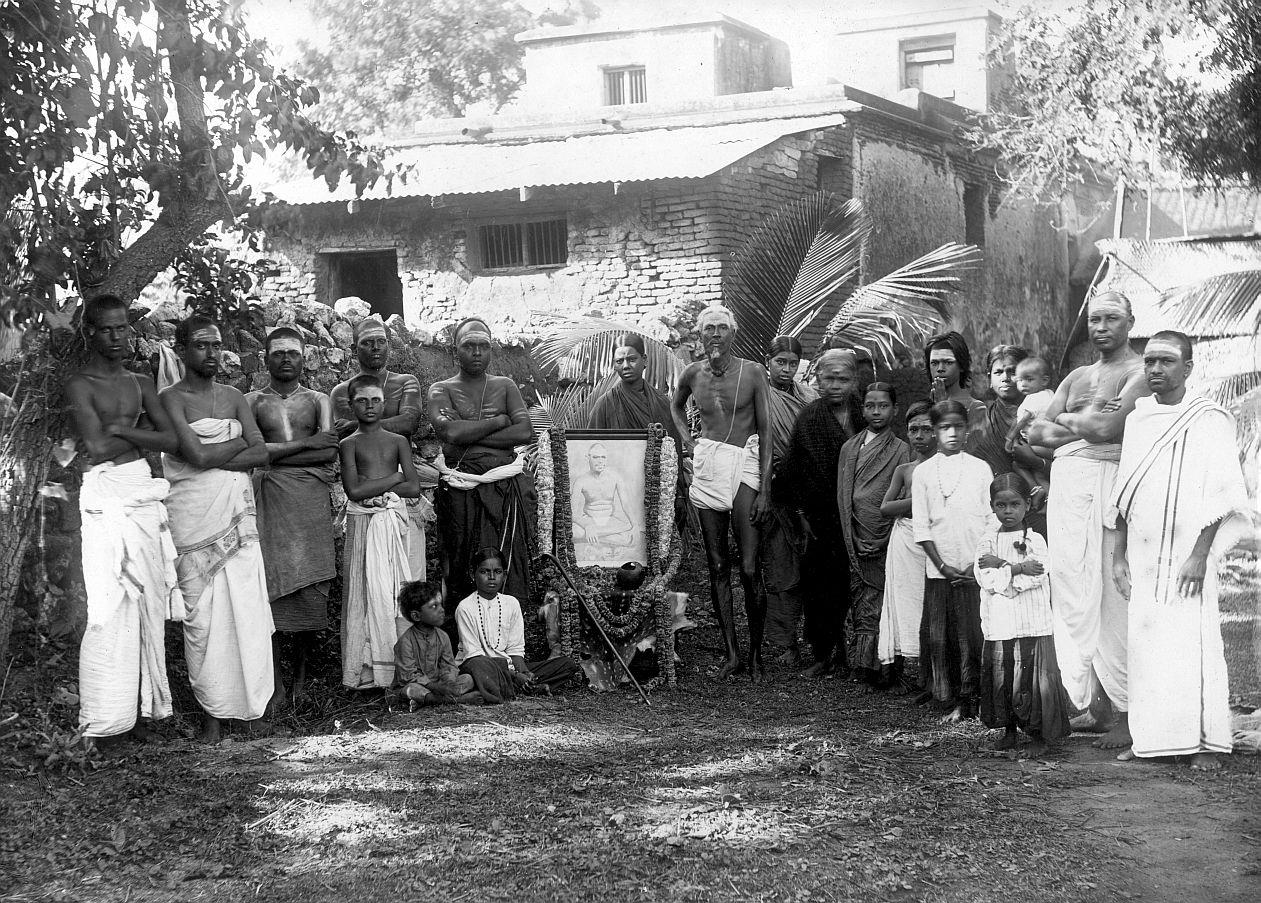
Rangan Iyer and family celebrating Bhagavan’s Jayanthi (‘Pokkiri’ Mani is standing next to Sri Bhagavan’s picture with his hand on his hip)
From that moment on, he constantly chanted the holy name, “Siva, Siva ,” and was completely transformed. Though his physical body suffered from tuberculosis, he chanted his mantra every minute of the day. His family members soon observed that this erstwhile rogue now had a face that shone with lustre. When he was about to die, he told them, “I must have my God’s darshan.” He was brought to the present Ramanasramam, where he told Bhagavan, “Bhagavan, I am going to leave this body. Therefore, let this body have your blessings.” Bhagavan was always amused with Pokkiri Mani - one never knew what he was going to do next. He got down on the floor and rolled around Bhagavan’s seat three times and said, “Now, the journey of this body is over.” He went home chanting, “Siva, Siva, Siva, Siva.” Just before he dropped his body, he told his grieving wife, “Do not worry. I am not leaving you. I will come back and take you with me after forty days.” His wife died after exactly forty days!
The moment the grace of the guru falls on you, you are transformed for sure. Who could have imagined that Rangan and Pokkiri Mani would be so magically changed!