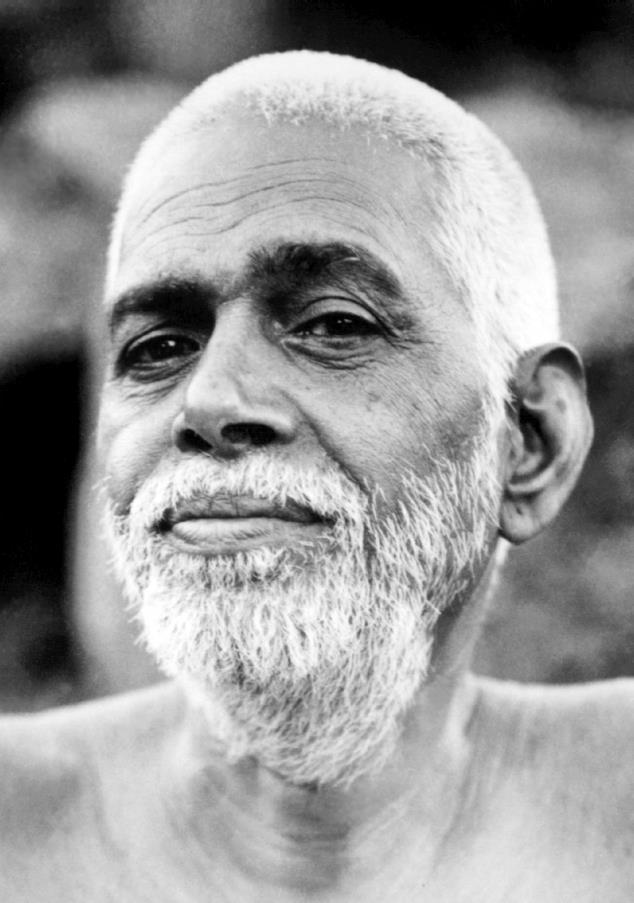
B. V. Narasimha Swami
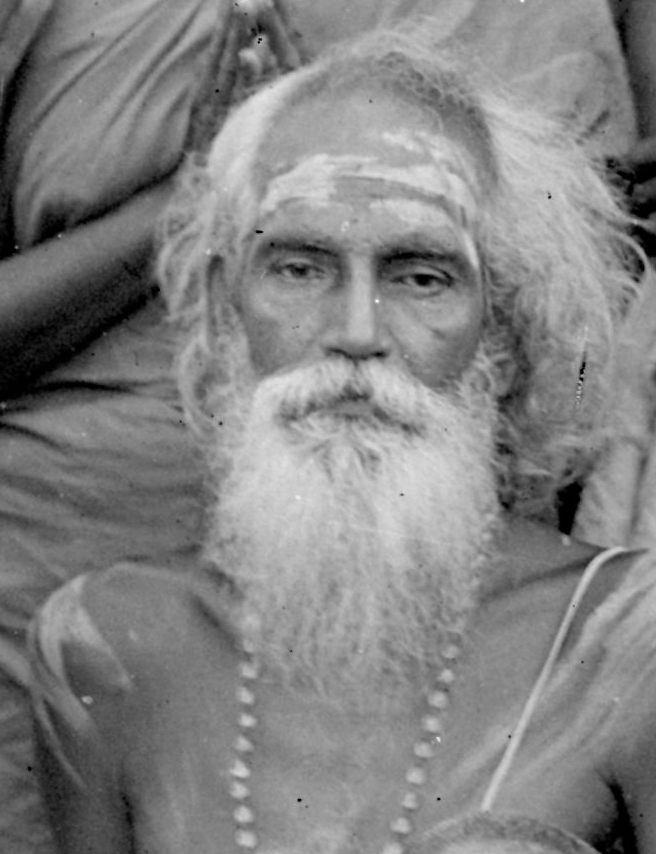
There is a profound beauty in how the sequence of events unfolded in Bhagavan’s life. This was a divine pattern that unraveled itself steadily and by immersing ourselves in it, we will realize that it is not merely external. This pattern begins to take place within us too. This is the beauty of being with a saint or learning about his life.
Our beloved Bhagavan stayed at Skandasramam between 1916 and 1922, during which time serious spiritual seekers started slowly streaming in. It was during this glorious period that Bhagavan with a single glance of grace, established each one in inner solitude. It was also during this time that Narayana Guru, a great saint from Kerala, visited him. So impressed and ecstatic was he about Bhagavan’s exalted state, that he summoned two of his disciples and told them, “Both of you should stay here for six months and make necessary arrangements for food and accommodation for visiting pilgrims, thus letting thousands visit the Maharshi every day and benefit spiritually. Let Maharshi’s greatness be made known in the circles of scholars and earnest seekers by your going to them and speaking to them, thereby spreading Maharshi’s glory.”
Before the act of spreading Bhagavan’s glory and message took place, Father Arunachala saw to it that two preparatory steps were accomplished. The first step of recognizing Bhagavan’s greatness and giving him a name was accomplished by Kavyakantha Ganapati Muni. Arunachala chose the greatest scholar of that time to name the young Brahmin boy as Bhagavan Sri Ramana Maharshi. As the second step, the teachings had to be organized. For this, Bhagavan enunciated the teaching of ‘Who am I?’ through Sivaprakasam Pillai, Self Enquiry through Gambhiram Sheshayya and the Sri Ramana Gita through Kavyakantha Ganapati Muni.
This accomplished, Father Arunachala sent his son, Bhagavan, down from his lap to his feet because the time had come for the message to spread. For the third step of spreading the message, Arunachala sent three boulders: B. V. Narasimha Swami, Suddhananda Bharathi and Krishna Bhikshu. These three scholars were sent to write the biography of Bhagavan containing all his teachings. Today, if we all know about Bhagavan and his teachings it is in a great measure thanks to their dedication and hard work.
B. V. Narasimha Swami, wrote Self Realisation: The Life and Teachings of Bhagavan Sri Ramana Maharshi. This was the first book on Bhagavan’s life. B. V. Narasimha Swami (BVN) was unique because he was the first person to dedicate himself to writing Bhagavan’s biography in English. He gathered information that ran into two thousand pages and skillfully cut it down to a concise and readable form spanning two hundred and fifty pages. It was published in 1930. It was after reading Self Realisation that Paul Brunton, Krishna Bhikshu, Pranavananda, Swami Madhava Tirtha, Suddhananda Bharati, Swami Sivananda, Swami Ramdas and an array of spiritual giants came to Ramana Maharshi. While it is true that it was Paul Brunton’s book which made Bhagavan well known in the West, it is a fact that it was BVN’s book that drew Brunton to Bhagavan.
BVN was a brilliant lawyer in Salem, ninety miles from Arunachala. He was a very famous politician, a great orator and writer with a razor sharp intellect that drove straight into the heart of a subject and extracted its truth. It is thanks to his questioning mind that we now have this brilliant book which attracted an audience of communicators who became the west’s gateway to Advaita Vedanta.
God’s divine play (leela), however, is unpredictable and a mystery. When he was at the zenith of prosperity, name and fame, a massive family tragedy gave BVN a rude shock. Two of his children drowned in the well in his very own yard right before his eyes. All he could do was watch helplessly without being able to save them. Unable to bear his grief, he resigned from the Bar Council and gave up his political career. He disappointed many Indian leaders, because talented, dedicated individuals like him were needed for India’s freedom struggle. He came to know of Ramana Maharshi and headed straight to Ramanasramam. On seeing Bhagavan, he fell at his holy feet. Bhagavan accepted him with a single glance, directed him to a cave and asked him to meditate there.
As a good disciple, he unquestioningly abided by his master’s instruction. He spent three years in seclusion, in complete contemplation and meditation. However, he realized that there was something which was drastically needed: a book on Bhagavan’s life. “I must bring out the biography of Bhagavan, a living sage. Nobody knows about his life, except for a few instances which may even be factually incorrect.” This was a demanding responsibility because even though Bhagavan was not under a vow of silence he did not talk much and then too, rarely about himself.
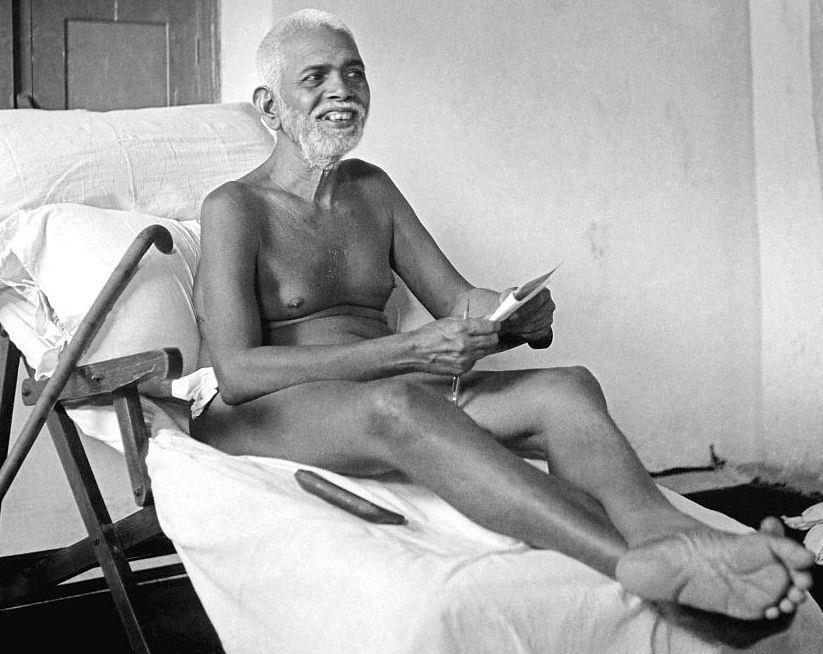
BVN sought Bhagavan’s permission and Bhagavan graciously consented. He started the process of asking Bhagavan questions. Bhagavan did not always respond because sometimes he did not feel like talking. However, BVN was persistent. He doggedly followed Bhagavan wherever he went; even slept next to Bhagavan at night. Whenever he asked a question, his whole attention would be focused on receiving an answer. He has recorded, that sometimes it would take days, a week, or even more, to get one simple answer from Bhagavan. But BVN remained relentless. His persistent determination made him unique, and that is why even the mention of his name draws so much reverence from every old devotee of Bhagavan.
He not only questioned Bhagavan, it was his nature to elicit details straight from the source. Therefore, he travelled to Tiruchuzhi, Madurai and Dindigul to speak to Bhagavan’s associates and kin. Whenever he received any information about Bhagavan’s relative or friend in some village, he would go there immediately. He would ply them with questions; however, perfectionist that he was, he would verify every fact with Bhagavan. Therefore, everything written in the book is accurate and the truth. One of the most important things that old devotees told me was that we owe the vivid account of Bhagavan’s death experience at Madurai to B. V. Narasimha Swami. His incessant questioning drew from Bhagavan every minute detail of the experience he had had when he was a sixteen year old boy. Bhagavan said there was no time and space in his transformation that made him abide steadily in the Self. B. V. Narasimha Swami condensed these details and presented the final draft to Bhagavan, who approved it and titled the book, Self Realisation.
Once this was done, Narasimha Swami put up a hut next to his cave for cooking. He wanted other sadhakas to build similar huts and helped them in this. He also trained them in a simple way of cooking to save them time and money, which allowed each sadhaka to spend the maximum time in Bhagavan’s presence. Through his meticulous sadhana, he set an important example of how the master’s teaching was to be followed. It was he who actually formed the Palaakothu community.
When this was over, he cultivated his natural tendency, a vasana, for singing bhajans and dancing emotionally for God. He kept pleading with Bhagavan, “Bhagavan, this is my nature. Will you please guide me? I would like to sing bhajans and follow the devotional path.” Bhagavan kept postponing his reply, but BVN did not give up. Finally, Bhagavan advised him, “Go to the west of India to pursue your path of devotion.” BVN left Arunachala and went towards Mumbai. During his travels, he met many saints on the devotional path but was disappointed with all of them. Even a great sadhu like Upasani Baba tried to help him, but he was not satisfied. However, it was Upasani Baba who finally told him to go to Shirdi.
He obeyed and went to the tomb of Shirdi Sai Baba who had passed away ten or fifteen years ago. At night, (this is done to this day) devotees gathered to sing bhajans with devotion. When he stood in front of Sai Baba’s samadhi, the saint’s inspiration came to him from within, “Child, I am your guru. Stay here and write my biography.” BVN then started meeting those people who lived with Sai Baba and compiled a six volume biography of the celebrated sage. On its completion, Baba told him, “Spread my name and spread this teaching.” He then came to Chennai and started a Sai Baba center. He also built a temple there and spread Shirdi Sai Baba’s name all over India.
When I came to Ramanasramam in 1960, I was pained to hear that such a remarkable man had left Bhagavan and gone somewhere else. One day, I asked T. P. Ramachandra Iyer, another old devotee, “Why did Narasimha Swami leave Bhagavan and go elsewhere?” T. P. Ramachandra Iyer replied, “I am happy you put this question to me because I was hesitating to share with others a fact I know.” In late 1955 or early 1956, T. P. Ramachandra Iyer boarded a first class compartment on a train in Tiruvannamalai to go to Vellore. He was surprised to find B. V. Narasimha Swami with a fractured leg in a big cast seated in the same compartment. Like every old devotee who held B. V. Narasimha Swami in high esteem, he was thrilled to see him. “I raised the same question before B. V. Narasimha Swami that you put to me, Ganesan. I asked him, ‘Why did you leave Bhagavan and go?’ B. V. Narasimha Swami told me, ‘Bhagavan specifically directed me to do so. When we both were alone, I pestered him about my inclination to sing bhajans. Taking pity on me, he said ‘Go to Shirdi.’ He told me in unmistakable terms that I should bring out the biography of Shirdi Sai Baba. He added that I should make Sai Baba known all over India. It was Bhagavan who said this, so I agreed. It was Bhagavan’s graciousness and compassion that he wanted such aspirations of mine to be channelised through another saint, instead of getting involved in mere display of emotional dancing and singing. I did not go straight to Shirdi, though Bhagavan asked me to go. I admit my folly in not strictly obeying Bhagavan’s commandment. I went to other living saints, as I doubted that Sai Baba, no longer in body, could guide me. This was my mind coming into play. All my efforts to be with the living saints, in due course, deeply disappointed me. Finally, it was at Shirdi that Sai Baba revealed himself as my guru, took me into his fold and blessed me with his grace. For directing me to Sai Baba, I am eternally grateful to Bhagavan. I did not reveal that I was guided by Bhagavan to go to Sai Baba as I felt people would not understand the spiritual content of the entire episode. This is the truth.’” T. P. Ramachandra Iyer recounted that there were tears in BVN’s eyes.
When I was studying in college, I would visit the Sai Baba shrine in Chennai, and also B. V. Narasimha Swami’s samadhi shrine behind it. Pooja is offered there, and even now above it hangs a big picture of Bhagavan. Since it was Bhagavan who directed B. V. Narasimha Swami to go to Sai Baba, I would prostrate before Sai Baba’s shrine, receive his blessings, and then prostrate before B. V. Narasimha Swami’s samadhi, as he was one of the greatest devotees and a superb biographer of Bhagavan.
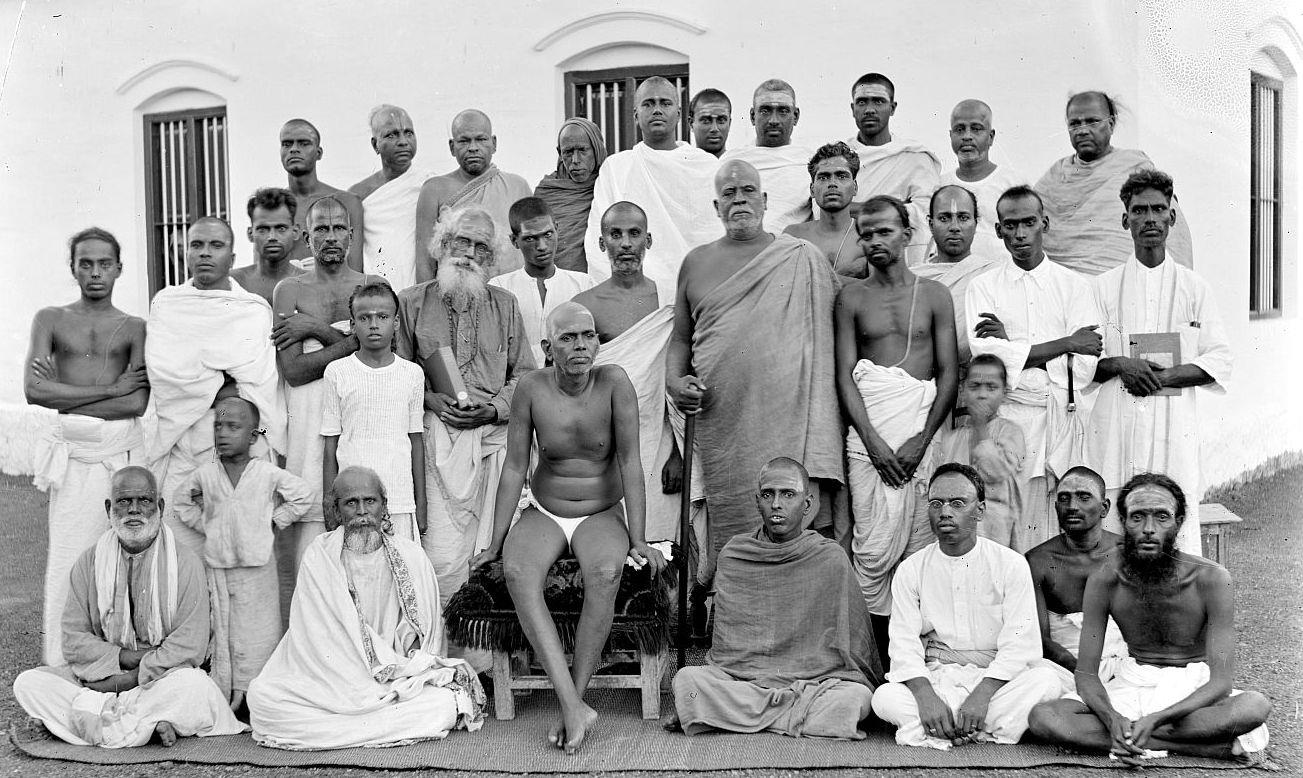
Kavyakantha, B.V.Narasimha Swami, Yogi Ramiah, Chinna Swami and other devotees