Krishna Bhikshu
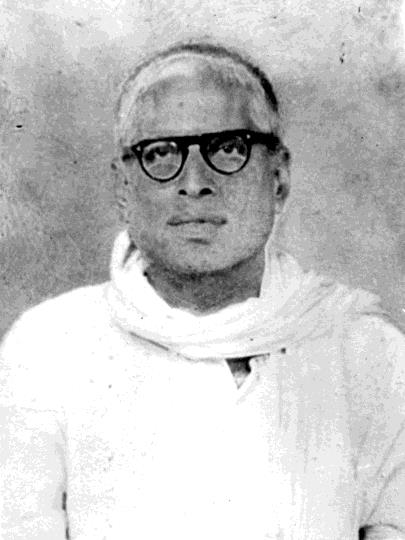
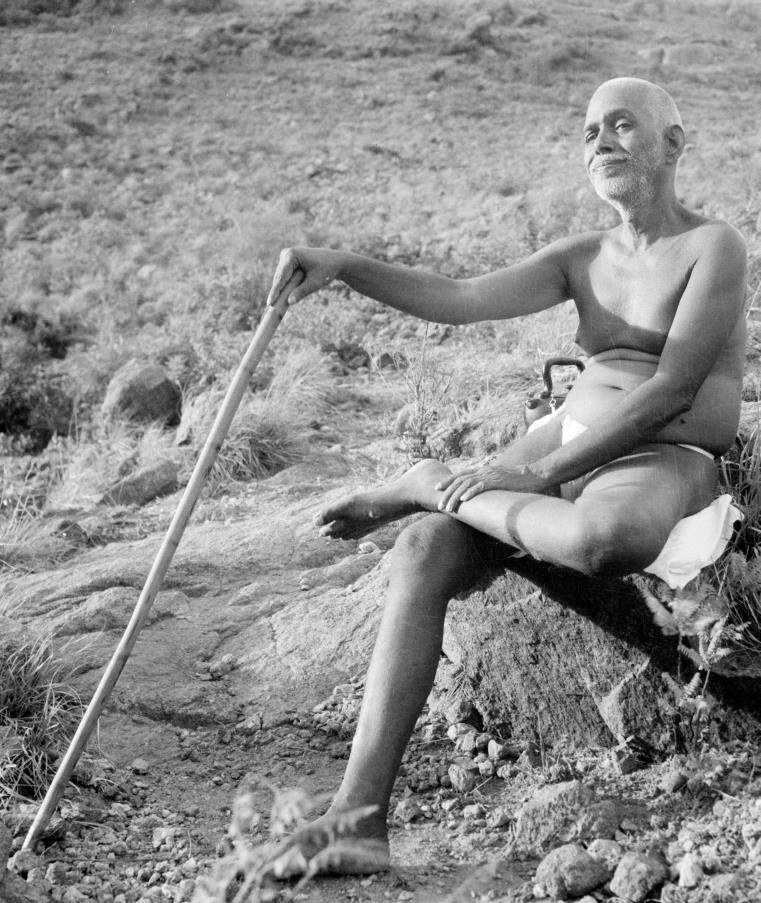
Venkata Krishnayya was a Sanskrit and Telugu scholar. He was popularly known as Krishna Bhikshu, meaning ‘Krishna the mendicant’. As a child, he went to his uncle’s house where he saw a picture of Ramana Maharshi. He was irresistibly drawn to it. His uncle had been with Bhagavan in Virupaksha cave and was one of the first questioners in Sri Ramana Gita. Krishna Bhikshu too had a copy of Sri Ramana Gita which he started reading with keen interest even at that young age.
When he was studying in the Law College in Chennai, he happened to meet Kavyakantha Ganapati Muni at a friend’s house. He observed Kavyakantha’s oratorical skills, poetic genius, humility, erudite scholarship and his powerful presence and was immediately drawn to him. On that day, Kavyakantha was extolling and adoring his guru Ramana Maharshi so beautifully that Krishna Bhikshu wondered that if this man was so great, how much greater his guru should be! This encounter instilled in him a yearning to go to Ramanasramam.
He finally arrived in Ramanasramam with a friend and saw that Bhagavan was simplicity itself. An atmosphere of homeliness always surrounded Bhagavan. He asked the master, “Please give me spiritual guidance. But before that, let me tell you what I currently practice. I do the Gayatri japa and pranayama, but some of the breathing exercises are upsetting my health. Please guide me.” Bhagavan’s words to him were: “Stop everything. Always have advaita drishti, a non-dual outlook.” Krishna Bhikshu did not understand the full meaning of this at that time, but he visited Bhagavan again in 1930. During this period, Bhagavan was available at all times. Devotees would sit around listening to Bhagavan tell stories, answer questions, joke and laugh. Krishna Bhikshu told me that those were the golden days in his life.
There was a time when B. V. Narasimha Swami, having completed the draft of his book, forwarded it to Krishna Bhikshu for his suggestions. Bhagavan smiled when he saw Suddhananda Bharati, Kavyakantha Ganapati Muni and B. V. Narasimha Swami, because all three were together in the political field. Now, giving up politics, they were together in the spiritual field. Bhagavan laughed about how the three were once more coming together, this time, for spiritual reasons. Inspired by B. V. Narasimha Swami’s work, Krishna Bhikshu felt that he too should write a biography in Telugu, his mother tongue. He did so within a month, basing his material on B. V. Narasimha Swami’s Self Realization.
Krishna Bhikshu’s relationship with Bhagavan was unique. “Bhagavan was a very great and fatherly person. I trusted him totally. I meticulously followed his guidance as I was sure that I was in the safe hands of Bhagavan. I had no cares. I just loved him with the whole of my being. I lived my life by his side, eating in the same room, sleeping in the same hall, chatting and joking - but all the time being tied fast by his immense love and attention. Day and night, I felt that he was watching over me, keeping me on the lap of his stupendous awareness and letting me grow in spiritual stature by his sincere interest in me,” he affectionately recalled.
One day, when Bhagavan was chopping vegetables in the ashram kitchen, Krishna Bhikshu asked his permission to help. He took up the knife thrice, but each time Bhagavan insisted that he put it down. When Krishna Bhikshu protested, Bhagavan asked him, “Do you cut vegetables at home?” “No, I do not need to do it at home,” he replied. Bhagavan smiled and shot back, “Well, are you not at home here?” This simply meant that, while doing arduous sadhana, one should give up the idea of doership in every activity and abide as the Self. Then you are always at home, in the Heart, in the state of ‘I AM’.
On another occasion, Krishna Bhikshu appealed to Bhagavan, “Bhagavan, formerly whenever I thought of you, your form would appear before my eyes, but now it does not happen. What am I to do?” “You can remember my name and repeat it,” Bhagavan advised. “Name is superior to form and in due course even the importance of the name will disappear. Continue your spiritual pursuit and then the pure ‘I-I’ alone will throb resplendently in your Heart of its own accord.” While Bhagavan was not rejecting the efficacy of name or form, at the same time he was proclaiming the importance of the eternal Truth of ‘I AM’.
After Bhagavan dropped the body, like all the old devotees, Krishna Bhikshu left the ashram and wandered from one city to the other, staying with some friends who generously offered their hospitality. When I came to the ashram and began calling back all the old devotees, someone suddenly suggested, “How about Krishna Bhikshu?” On hearing the name, I thought he was a Buddhist monk and must have passed away during Bhagavan’s life time. Then, I learned that he was Munagala Venkataramiah’s son-in-law’s brother. I wrote to Munagala’s daughter, Kamakshi, got his address and invited him to Ramanasramam. When he arrived, he admitted, “Ganesan, I do not have any money.” “That is immaterial sir, please stay here,” I replied.
His integrity was truly awe inspiring. He used to receive a money order of twenty seven rupees every month, sent by some kind friend. He insisted on giving twenty rupees to the ashram and kept seven rupees for himself. My regard for him grew in leaps and bounds. This austere man was a jewel in the Ramanasramam crown, but many people took no notice of him because of his simple appearance. Yet, this exalted man had written Bhagavan’s Telugu biography, Sri Ramana Leela, ‘The Play of Ramana,’ and had lived with the master from 1928.
At one time, the trustees’ board of the ashram was about to pass a resolution that the permanent residents of the ashram must pay a minimum of thirty rupees if they were not doing any service in the ashram. Krishna Bhikshu came to me and said sadly, “I am leaving the ashram, Ganesan.” “Sir, why are you leaving,” I asked in surprise. “I cannot afford that amount.” Appalled, I marched straight to the trustees and gave them a piece of my mind. “What is this nonsense? He is a genuine gem in the ashram!” I exclaimed. They condescended to cancel that resolution. Krishna Bhikshu shook my hands and embraced me. I will never forget that sweet embrace.
He fell ill at Ramanasramam and decided to leave, saying, “My friend is a doctor. I will go to him. He will treat me.” As he left, he embraced me and blessed me. I never thought that this was the last time I would see him. Later on, I received the news of his passing. Describing his last days, his doctor friend wrote to me that Krishna Bhikshu had been fully conscious and had continuously chanted, “Ramana, Ramana, Ramana, Ramana.”At the final moment of dropping of the body, his face shone with a gentle light and he uttered, “Yes, I am coming!” Bhagavan seems to have come to take him in his embrace and back to the source - Arunachala - for time and space are no constraints for Bhagavan and Father Arunachala.
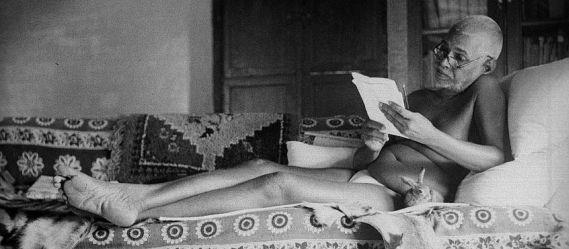
Bhagavan reading the proofs