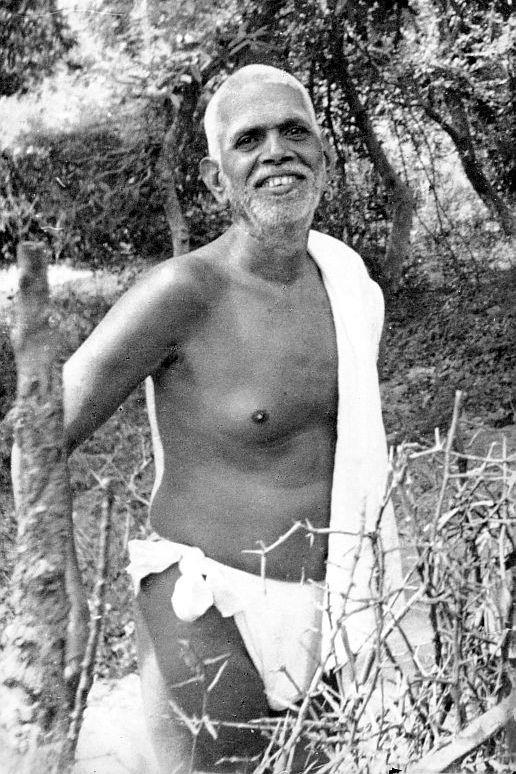
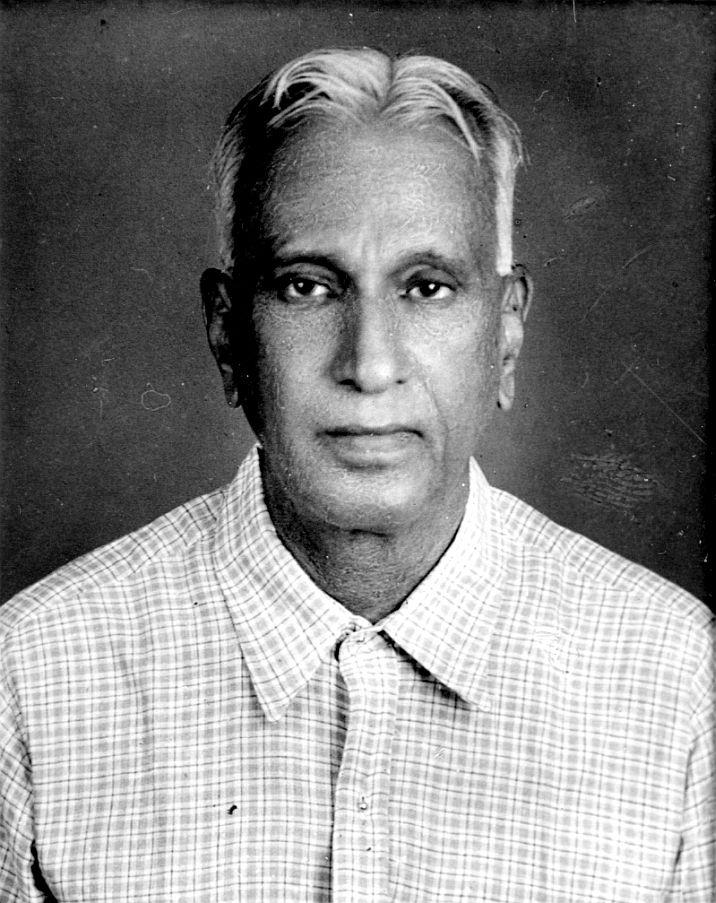
Devaraja Mudaliar
Once, a stranger stood in front of Bhagavan in the Old Hall. Bhagavan instantly recognized him and introduced him to everyone, “He had come twenty years ago when we were staying up on the hill.” When Muruganar told me about this, I immediately asked him, “Does this mean that Bhagavan had a phenomenal memory?” Muruganar countered this with another question, “Does a mirror make an effort to reflect an image? In the presence of a jnani, a realized person, everything is automatically revealed. There is no time delay or any other process in an interaction a jnani has with a person.” He added, “Bhagavan being a jnani could effortlessly cognize whoever stood before him.” Then he hurriedly told me, “Do not mistake this for thought reading or clairvoyance. These belong to the realm of the mind. A realized sage is beyond the mind; he is in the spiritual state. That perfect spiritual state may include the apparitions of body and the mind, not vice-versa.” Bhagavan himself has once said, “A jnani is like a mirror. Whatever is placed before it will be reflected exactly as it is.”
Every devotee engaged with Bhagavan, played a different role by the dictates of their nature and Bhagavan responded similarly. For instance, Muruganar saw Bhagavan as Lord Siva and Bhagavan treated him like saint Manikavachakar, a surrendered poet-devotee of Lord Siva who lived several centuries ago. Major Chadwick looked upon Bhagavan as the mother, Professor G.V. Subbaramayya could treat Bhagavan as the father, and my own grandfather Chinna Swami saw guru and God in Bhagavan. At the same time, there was no difference in Bhagavan’s loving embrace for each devotee.
There was yet another devotee with a unique personality. His approach to Bhagavan was like that of a child, or a baby crawling towards his parents, pure innocence. He was A. Devaraja Mudaliar, the ‘A’ standing for Arcot, the place where he hailed from. In the core of his heart, and also when he addressed Bhagavan or wrote letters to him, he always called Bhagavan ammaiappa - a Tamil word for mother-father. Mudaliar styled himself as Ramana Sei, the child of Ramana. Bhagavan too, treated him like a baby. Some of the senior devotees did not approve of Devaraja Mudaliar because of his childish, though innocent, approach.
Yet, Mudaliar was an embodiment of surrender. Bhagavan has said, “There are two ways to realize the truth. Ask, ‘Who am I?’ and trace the ‘I’, the ego, to its source, the Self, and allow it to dissolve. The second way is to surrender the ‘me’ that is the ego to the Supreme which is the state of ‘I AM’ within you.” Mudaliar’s life also exemplifies another teaching of Bhagavan which says, “The devotee’s effort and the guru’s grace are synonymous and simultaneous. There is no time lag there. When one makes an effort, simultaneously, grace is activated. The seeker’s effort and God’s grace are synonymous.” (In fact, Bhagavan has emphasized that effort itself is only because of grace.)
Devaraja Mudaliar was associated with Bhagavan for almost fifty years. It is an association that is perhaps longer than any that the other devotees enjoyed. In 1900, four years after Bhagavan came to Arunachala, hundreds of people came to Tiruvannamalai for the Karthikai Deepam festival. Devaraja Mudaliar was among those present. Though Bhagavan at that time was completely absorbed in the Self and sat with eyes closed, his grace was upon Mudaliar. Out of the hundreds of people there, it was Mudaliar who was captivated by this young Swami. By 1914, when he visited Arunachala again, he had already become a reputed lawyer in Chittoor. Bhagavan was now living in Virupaksha cave. Travelling in those days was very tedious. Driven by his devotion, Mudaliar came to Tiruvannamalai again in 1917. Bhagavan was then in Skandashram. He experienced Bhagavan’s graciousness and felt that he should surrender and offer his prayers to him. He returned fully convinced that here was a master to whom he should pray. He prayed inwardly and never orally.
Between 1918 and 1922, he could not visit Bhagavan due to professional pressures. In 1922, he travelled again to Tiruvannamalai. Bhagavan was now in Ramanasramam, which at the time consisted of a few humble huts. He prostrated before Bhagavan, while another ardent devotee, Ramaswami Pillai, was singing Tiruppughazh, a Tamil song, in a stentorian voice that drowned out the steady sound of the torrential rain. At lunch time, there were four or five people present. Bhagavan turned to Mudaliar and said, “We follow a particular pattern of eating here. If you are used to something different, you are free to eat it.” Mudaliar had brought with him chapatis made with wheat. Bhagavan’s attention melted him. He joined in and enjoyed a meal with the others forgetting the chapatis.
He started coming to Bhagavan more regularly and posing more and more questions. One of the important things that he shared with me was that he had been an atheist. He never believed in God, disliked going to temples and had a deep disdain for rituals. In contrast, all the other devotees were devoutly religious, visited temples and talked about God. In 1922, he put his views before Bhagavan. The master said, “It is all right. There is nothing wrong with that. God is always within you; turn your mind inward and meditate on awareness. That is sufficient.”
I had the privilege of keeping company with this stately but very simple man. He once told me, “The uniqueness of our Bhagavan is that he accepts everyone as they are. Other gurus expect one to reform or they reform you and only then do they accept you.” He told me about an incident when he sang a song by a poet-devotee of Lord Muruga one day. The song narrates how Lord Muruga finally reformed the singer and saved him. Mudaliar replaced Lord Muruga’s name with Bhagavan’s and began chanting it. Muruganar, who was present, immediately chided him, “You think highly of this poem, but I do not agree with you. It does not represent the real acceptance of our Bhagavan or his munificence. Bhagavan never waits. He instantly accepts whoever comes into his presence. There is no need, no gap, and no form of expectation.”
From 1922, he started visiting Bhagavan more often and mentally offered prayers for relief from the problems he had. He explained to me, “You have every right to pray to your God or guru - but without any condition attached. It may be fulfilled, it may not be fulfilled. Your mind should not agitate either happily when it is fulfilled, or unhappily when it is not fulfilled.” Bhagavan once told him, “Your duty is to surrender, and then just be. Whether I fulfill it or not is not your concern.”
Those days in India, it was difficult to get a daughter married but Mudaliar prayed and his daughter’s marriage was performed without any obstacles. In 1930, his wife, whom he dearly loved, fell seriously ill. He rushed to Bhagavan and prayed for her recovery repeatedly. She passed away in 1933, giving him a great shock. But, he never got angry or disappointed with Bhagavan. He said, “That was also Bhagavan’s blessing to me, Ganesan, because after that shock, my mind and my attention turned completely to the spiritual quest. I saw powerfully, the futility of worldly attachments and relationships.” After his wife’s passing, he came to Ramanasramam and sat before his master. The sorrow at the loss of his wife, which was oppressing him deeply, disappeared. He attributed this cure entirely to the gracious presence of Bhagavan.
At lunch time, he was invited as usual, but demurred saying that he had an allergy. His cousin Dr. Guruswami Mudaliar, a respected doctor in Chennai, had told him that there was no medicine for his allergy; prevention was only possible by avoiding rice altogether. On that day, Bhagavan asked, “Where is Devaraja Mudaliar?” Someone told Mudaliar that Bhagavan had called for him. He went to Bhagavan and the master instructed him with a powerful look, “Sit here.” Mudaliar quietly obeyed. Rice is served in abundance in Ramanasramam and as it was being served to him, he hesitated and looked at Bhagavan. The guru suggested eating and immediately Mudaliar began to eat, finishing all the rice. He later told me, “I obeyed my master’s command. The ‘incurable’ allergy was instantly gone.”
No one at the ashram knew who Mudaliar was because many different people came there every day. Bhagavan asked the residents, “Do you recognize who he is?” All of them shook their heads. “Oh, you do not recognize Devaraja Mudaliar!” Bhagavan exclaimed. “He has often come to visit us. How different he looked in those days! He used to wear a European suit then, but now see how simple he looks.” Devaraja Mudaliar tearfully narrated this to me saying, “Look at the guru’s attention on me. He accepts you as you are, whether you are in a European suit or in ordinary clothes, whether you are a believer in God, or pursuing a particular spiritual practice; these are immaterial to him. The devotee is much more important to the guru than what the devotee believes or does.” From 1933, Mudaliar started going to Bhagavan even more frequently. This is very important; in Mudaliar’s own words, “It is very important for spiritual strengthening to continue to have contact with the truth, whether it is a person, a teaching, an institution, a temple, or a church. This continuum, without a gap is imperative.” (The wonder and beauty of the guru’s love is that he wins the devotee over step by step, not through instructions, but just by going along with the devotee.)
In 1936, the ashram management was in an embarrassing predicament. A lawsuit was filed in the local magistrate court against Bhagavan, Chinna Swami and most of the ashram residents. Chinna Swami rushed to Sundaram Chettiar, a retired high court judge who was also Bhagavan’s devotee, and sought his guidance. Out of all the reputed lawyers in Tiruvannamalai and other areas, the judge suggested the name of Devaraja Mudaliar, who was then in Chittoor, a hundred miles away. When Devaraja Mudaliar narrated this to me, there were tears in his eyes, “Look at the master’s grace.” According to the Indian Penal Code, when one is summoned by the court, one is required to appear before it; it seemed that there was no other way out. But Devaraja Mudaliar managed to get the case dismissed in the initial stages and so no one needed to go to court. The complainant took his appeal to a higher court, but there too Mudaliar managed to get the case dismissed. (There was a higher purpose behind Bhagavan choosing Mudaliar for this. He was to become one of the boulders to disseminate Arunachala’s teaching of ‘I AM’ throughout the world. Therefore, it was not enough that the guru accepted him - the management, including Chinna Swami, had to accept him too. This incident helped Mudaliar win his critics over.)
In 1939, Mudaliar felt the attraction of Bhagavan’s grace to be so powerful, that he wanted to quit his profession and be permanently seated at the holy feet of his master. No one in those days was allowed to build a room for himself in the ashram. The two exceptions were Major Chadwick and Yogi Ramiah. Many others had tried, but the management refused, saying, “We do not want it to be a residential ashram. We want it to be small, with limited residential facilities.” Mudaliar said, “Bhagavan influenced me in my heart to write to Chinna Swami asking for permission to build a hut inside the ashram. The reply came quickly in the affirmative.” (The disciple desires to be with the guru and the guru also responds in the same way. I love the example of Devaraja Mudaliar because he is a practical demonstration of the active relationship between the guru and disciple.) It took two years to construct a hut and wind up his affairs in Chittoor. In 1941, he came to stay permanently in Ramanasramam. Thereafter, he was with the master daily. Yet, Mudaliar had a deep desire to have Bhagavan’s holy feet step into his room. Bhagavan laid out a simple stipulation, “I will come to your room, but no fanfare, do not invite anyone, and do not make it a big deal.” Again, Mudaliar narrated this to me with moistened eyes. Bhagavan stepped inside his room and blessed him. Mudaliar said, “This event signified the fulfillment of my own spiritual emancipation. It was not just a visit.” He added, “Ganesan, do not take this lightly. Every movement between Bhagavan and me was very significant.”
Bhagavan very rarely spoke English and in the 1940s, after the publication of Paul Brunton’s book, many seekers from the west started showing up. Interpreters were required to help them converse with Bhagavan. Devaraja Mudaliar, Munagala Venkataramaiah and many others played the role of translators. Once, Bhagavan made a remark, which not only Mudaliar, but other devotees too have told me about: “All others interpret when I talk, only Devaraja Mudaliar translates exactly what I say.”
I spent hours listening to Devaraja Mudaliar’s narrations about his time with Bhagavan. It was music to my ears and also a part of my sadhana to listen to stories of his relationship with the guru. Mudaliar told me, “Bhagavan never expressed strong views on ethical or worldly matters, save two exceptions. One was his total disapproval of non-vegetarian food and the other was his dislike for external renunciation: donning the ochre robe, shaving the head, taking on another name and taking sannyas.” In 1936, while seated in the hall in the presence of Bhagavan, Mudaliar strongly felt that Bhagavan would like him to be a vegetarian. Though Bhagavan did not actually say this to him, he sensed it. However, he also remembered that he had anemia, for which Dr. Guruswami Mudaliar had advised him to eat plenty of meat, eggs and liver soup. Mudaliar was frank enough to admit, “I was also very fond of non-vegetarian food and here, seated in front of my guru, this strong urge comes that Bhagavan wants me to be a vegetarian.” Faced with this dilemma, he went up the hill with Bhagavan and told him, “Bhagavan, I feel your influence on me to be a vegetarian, but this is my medical condition.” Bhagavan smiled and told him, “Vegetarian food contains all that is necessary for health and strength.” Mudaliar was very happy to hear this and replied, “I have courage now, Bhagavan, to embark on this eating experiment. I know I can live even on thin air if you said it is enough to support me.” By sheer grace, he said his health did not suffer at all from the change in diet nor did he experience any craving later.
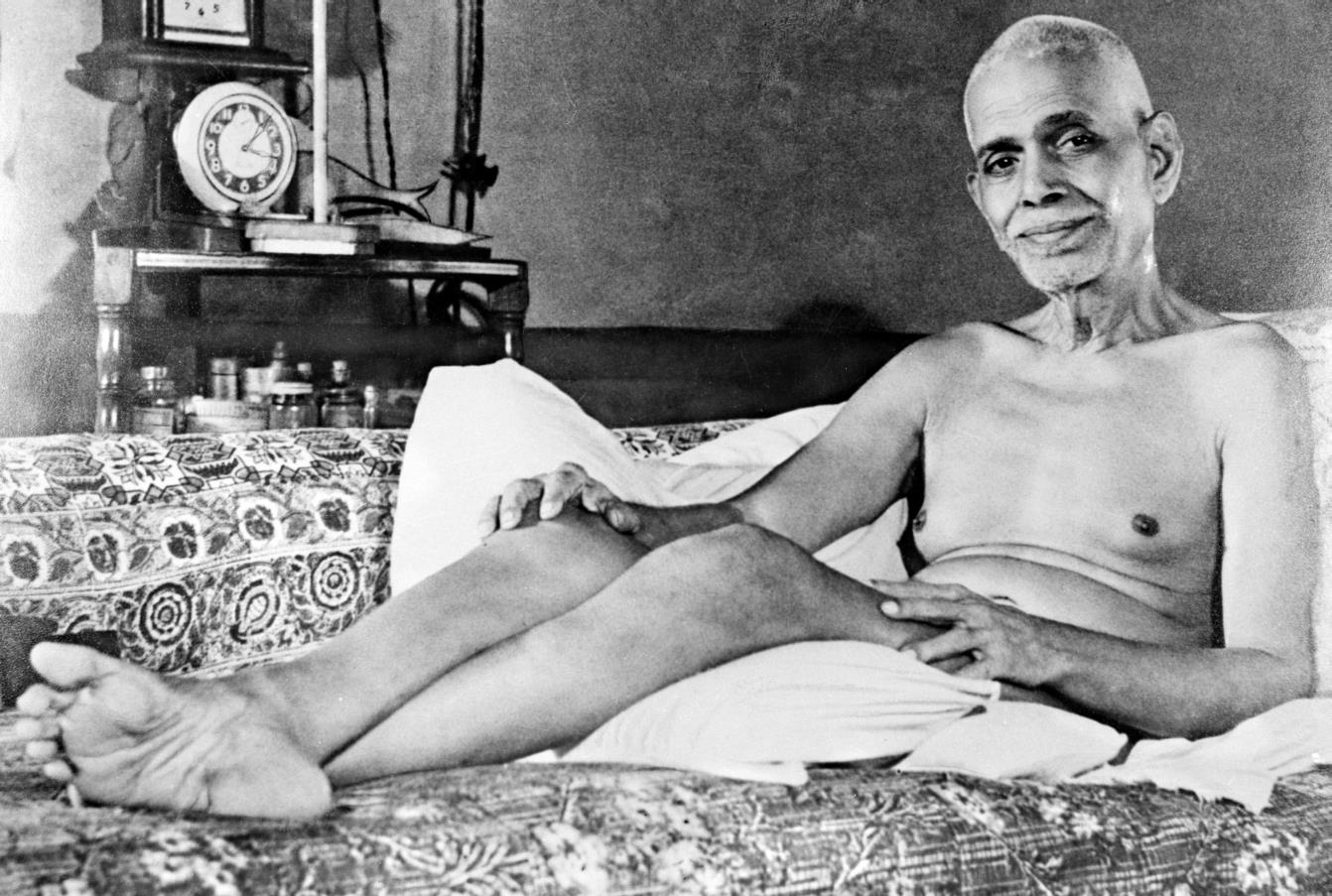
Bhagavan reclining on the couch in the Old Hall
Once, Mudaliar clarified for me the difference between faith and belief. “Belief is a thought - ‘I believe in Christianity, though I am a Hindu.’ Faith is complete; there is no question of accepting or rejecting.” “What do you mean by that?” I asked. He replied, “Ganesan, if Bhagavan had shown me a crow and said, ‘Here is a white crow,’ I swear I would have seen only a white crow. No contrary thought would have crossed my mind. I would never have thought that I have never heard of a white crow, that it is impossible, or question why Bhagavan said so. It is not accepting because belief is thinking ‘Yes, when the guru says so, then it must be a white crow’. But faith is seeing only that white crow.’” The approach of Devaraja Mudaliar was that of one who surrenders. In surrender there is no ‘me’. The ‘me’ has belief and ‘me’ can never know what faith is. With the thought of ‘me’, we would have tried to delve into the ‘white crow’ logic and said, “This is nonsense. Bhagavan would never have said that,” or something to that effect.
The other precious teaching that Mudaliar has given us is the answer to the age old confusion of every spiritual seeker about destiny and free will. Buddhism, Jainism, Hinduism and other eastern religions generally believe in destiny. You are now a woman because you were destined to be a woman, not because you have chosen it. That is destiny. Whether you are wealthy or poor is destiny. But if everything is destined, then why should we do any spiritual sadhana at all? This was a dialogue between Mudaliar and Bhagavan one day: “I can understand, Bhagavan, that the external factors in a man’s life such as his nationality, family, profession, marriage, death etc., are all predestined according to his karma. But, can it be that his entire life down to the minutest detail is already predetermined? Now, for instance, Bhagavan, I have put this fan in my hand down on the floor. Is this also already predestined?” Bhagavan replied very firmly, “Certainly. Whatever this body is to do and whatever experiences it has to pass through is already determined when it comes into existence.”
Mudaliar did not stop. He put forth further questions: “What becomes then of man’s freedom and responsibility for his actions?” Bhagavan, looking graciously at Mudaliar answered, “The only freedom man has, is to strive for and acquire jnana, wisdom, which will enable him not to identify himself with the body. Man is free to free himself from body identification and that is the only freedom he has. Identified with the body, man has no freedom from destiny at all. The body will go through all actions already enjoined to it to be done.” (Just the thought, “I do not identify with the body,” is not enough, because it is merely another thought. This is why we have to do sadhana. To cut off our identification with the body, we must have jnana by being steady in the Heart.)
Devotees and seekers often talked about the importance of the Arunachala hill, going around it, and staying in its vicinity. At various times, Mudaliar asked Bhagavan the significance of going around the hill. Bhagavan once said, “Going around the hill is very good for everybody. It does not even matter whether one has faith in this pradakshina or not. Just as the fire will burn all who touch it, whether they believe it or not, likewise, the hill will do only good to those who go around it.” Once, Mudaliar was pestering Bhagavan on the same issue, and Bhagavan smilingly said, “Why are you so concerned with all these questions about the efficacy of going around the hill? Whatever else you may or may not get, you will at least have the benefit of physical exercise.” Mudaliar scrupulously started doing circumambulation of Arunachala regularly and every time he went, he took Bhagavan’s consent. The master’s way of giving his consent was to ask, “Who else is going with you?” Mudaliar would say the name of his companions, if any. Once, while responding to the same question, he said, “Today, Bhagavan is accompanying me, nobody else.” Bhagavan gave a broad smile and blessed him.
As for staying at Arunachala, Bhagavan had translated from Arunachala Mahatmyam a Sanskrit verse which says: “Lord Siva gave a commandment stating ‘I ordain that residence within three yojanas (thirty miles) of the hill is, by itself, suffice to burn off all defects and even render union with the Supreme in the absence of any form of initiation.’” Bhagavan, while extolling this verse had said, “Anyone or anything that is found in, on and around Arunachala, automatically gets liberated without need for any form of religious or spiritual practices.” Mudaliar as usual, persistently questioned Bhagavan, “How can the criminals, non-believers, animals, birds, trees and stones found here get liberation?” Bhagavan graciously replied, “Who are we to say anything, much less to question it? It is the decision declared by the Privy Council!” During the British regime, which had colonized much of the world, the Privy Council in London was the highest court of appeal. Bhagavan used these legal terms, because Mudaliar was a lawyer. Devaraja Mudaliar said, “I am a lawyer. So that this truth could go deep into my heart, Bhagavan used the term Privy Council for Lord Siva !”
He felt that he was simple and was incapable of progressing spiritually. Therefore, on many occasions, he appealed to Bhagavan, “You should save me. I cannot save myself.” One day, Mudaliar came across a Tamil song in which the poet laments that he is not like a tenacious young monkey that can hold on to its mother tightly, but rather like a purring kitten that must be carried by the neck in its mother’s jaws. The poet prays God should therefore take care of him. Mudaliar showed the song to Bhagavan and told him, “My case is exactly the same. You must take pity on me, Bhagavan, hold me by the neck and see that I don’t fall and get injured.” Bhagavan’s answer was characteristic, “That is impossible. It is necessary both for you to strive and for the guru to help.” Mudaliar then pleaded that even scriptures recognize the two methods of the baby monkey and the kitten - Markata Nyaayam and Maarjara Nyaayam – as being suited to seekers with differing capacities. But despite all his pleading, this was the only answer he got from Bhagavan. (The endeavour of the disciple is the grace of the guru. There is no lag and no difference. The devotee’s effort and guru’s grace are synonymous. We have to hold on tightly to the guru like a baby monkey and the guru will take care of us like a mother cat!)
Mudaliar’s greatest contribution was from the period of 1945 to 1947, when he noted in a diary everything that transpired in Bhagavan’s presence. This was published by the ashram, as Day by Day with Bhagavan. I have seen the diary covered in a few notebooks. They all had Bhagavan’s handwriting in a few places. Only a small number of pages had corrections; and they were all minimal in nature. While one finds in Talks with Ramana Maharshi, Bhagavan referring to traditional Sanskrit treatises, in Day by Day with Bhagavan, we see Bhagavan profusely quoting ancient Tamil devotional texts.
In the late fifties and early sixties, it was my pleasure to prod Mudaliar to write down all stories and incidents that he had narrated to me, in a book form. He was kind enough to consent without hesitation and the result was his book of reminiscences of Bhagavan, titled My Recollections of Bhagavan Sri Ramana. After I graduated from college, I stayed for two years in the ashram. I was trying to get a job because my family was not financially well off. I was the first graduate in my family. People like Major Chadwick and Mrs. Taleyarkhan were helping me find a job. While living in the ashram working in the office, Bhagavan’s grace made me persuade the old devotees to narrate to me incidents that took place in the presence of Sri Bhagavan. Major Chadwick and Mudaliar always obliged. When they narrated these stories, I requested them to write them down. These were the first two books of the reminiscences of Bhagavan. When I came to Ramanasramam for good in 1960, there were not many old devotees still living there other than Major Chadwick, Devaraja Mudaliar, Ramaswami Pillai and Kunju Swami. Mrs. Taleyarkhan and S. S. Cohen stayed outside the ashram. I used to spend a long time with Chadwick, Kunju Swami and Mudaliar, delighting in their stories about Bhagavan and yearning to hear more.
Mudaliar’s social status was not that of an ordinary man; he belonged to the elite class. The British government even honoured him with the title of Rao Bahadur, which recognised him as an important man in society. He was a reputed lawyer with a good intellect. Yet, he surrendered everything to Bhagavan. He said, “Spiritual surrender means we not only surrender by word. The ‘me’ has to surrender to the silent state of ‘I AM’.” He recalled how Bhagavan had accepted the ‘me’, the ‘good-for-nothing me’ and revealed the precious, priceless ‘I AM’.
It may have been some time between 1961 and 1963. The ashram’s funds were very limited. There was only one male cook in its employ. Food was cooked for less than fifteen people and it was ration time. There was only 'cupped-rice', kuzhambu without dhal, watery buttermilk and pickle - no elaborate bhikshas! I was attending to all the ashram work, including the needs of the dining hall. Mudaliar was excited that his granddaughter was coming immediately after her marriage, along with her husband. I had arranged for their stay at the Morvi Guest House, their return bus ticket and a horse cart to bring them from the bus stand. Since I had to go to town in the morning to see the ashram lawyer, I assured Mudaliar that I would return in time to attend to the newlyweds.
There was a little delay and hence on return from town, I rushed to Mudaliar's room to apologise. The young couple was in the Old Hall. As I was leading Mudaliar and the couple to the dining hall, he held my hand tightly and told me with great emotion, "See! I miss Sri Bhagavan's physical presence tremendously! He would have been delighted to see, talk to my grandchildren, feed them as if they were his own and would have given special, personal attention." He became too emotional to continue the conversation. It was 10.30 - earlier than the usual lunchtime – when I took the couple inside the dining hall, accompanied by Mudaliar. I was naturally surprised to see banana leaves spread for the couple. (Mudaliar always ate only at the usual lunchtime.) What was served to them was a veritable feast, with vadai, payasam and appalam! Just then, the ashram cashier rushed in and reported to me in whispers, "You were away in town, from early morning. A telegraphic money order came with instructions that an elaborate bhiksha should be organized for the sender’s granddaughter and her husband. So, without your permission I arranged for all these...please pardon me!" The couple was very happy! After we saw them off, Mudaliar gave me a big hug with tears of joy in his eyes and exclaimed, "Ganesu! What a big fool I am! Though I did not express it openly to you, I was feeling miserable that we would have to feed them our daily dry food and that if Sri Bhagavan were here, he would have ensured a big feast for them. See Ganesu! To remove my misery, Bhagavan has induced someone to send a telegraphic money order! What a great good feast on banana leaf with vadai, payasam and appalam our compassionate Bhagavan has arranged!" Saying this, he sobbed and sobbed joyous tears in great elation and ecstasy!
Mudaliar was always neatly dressed, pleasant and polite and never got angry. Once, I asked him, “How is it that you are always happy and pleasant?” In response, he shared with me three teachings: “Be light. Never feel heavy hearted at any time. Jesus Christ said, ‘Be a light unto yourself.’ That’s it. Do not involve yourself in complications. Look at me, how happy I am. Do not make anything an issue. Remembering the past creates issues. Likewise, worrying about and projecting the future creates issues. Refrain as far as possible from brooding over the past and the future. Remain in the now.” He added, “God is within you. Who looks through your eyes when you look through your eyes? Who hears? Who eats? Who digests? Who makes you go to sleep? This inner power, which Bhagavan called the higher power, is God. This inner power is truly who you really are. Abide in silence, abide in the simple ‘I AM’. Be happy, always.” The third thing he told me was, “Bhagavan is the truth. Do not try to define the truth, for the mind cannot. Nobody has ever done it. If you surrender your ‘me’ to the ‘I AM’, the truth will reveal itself in your Heart. You will recognize it intuitively, spiritually. I bless you.”
In 1964 or 1965, he had to leave the ashram in his last days because his family members wanted him to live with them. I arranged a farewell celebration in which all the devotees participated. He moved to Kancheepuram with his children and chanted Bhagavan’s name continually. I directed a newspaper correspondent - who had come to interview the ashram residents - to Mudaliar, telling him about this gem of a devotee living in Kancheepuram. One of the questions this journalist put to Devaraja Mudaliar was: “It was you who elicited from Bhagavan that even a stone, a bird or a tree residing in Arunachala is liberated. Why are you then staying away from Arunachala in Kancheepuram?” That same correspondent later told me Mudaliar’s reply. Mudaliar told him, “That is what you say. Did I say I am ever away from Arunachala? Now that I am in Kancheepuram, is it any different for me? Bhagavan is always with me and I am always in Arunachala. Wherever the feeling of ‘I AM’ is, there is Arunachala.” The teaching of ‘I AM’ spreads in this way!
I had once asked him why he kept chanting Ramana’s name and he said, “I asked Bhagavan, ‘Bhagavan, I sometimes chant your name without even thinking about you. Is it all right? Do I get marks for this? Personally, I think I ought to get, maybe not many, but at least one or two marks. Is it not so, Bhagavan?’ Bhagavan smiled and replied, ‘Yes, you will get marks for this.’ I continue to say ‘Ramana, Ramana’ and have full faith that as he told me, he will give me marks for doing so in the final examination.”
His relatives told me his last days were most peaceful. Until his last conscious moment he kept chanting, “Ramana, Ramana.” Chanting ‘Ramana Ramana’ is not just a mantra, a repetition or a ritual. Remembrance is being in that divine presence. When you chant ‘Ramana’, you are already established in the ‘I AM’, the powerful and pure presence.
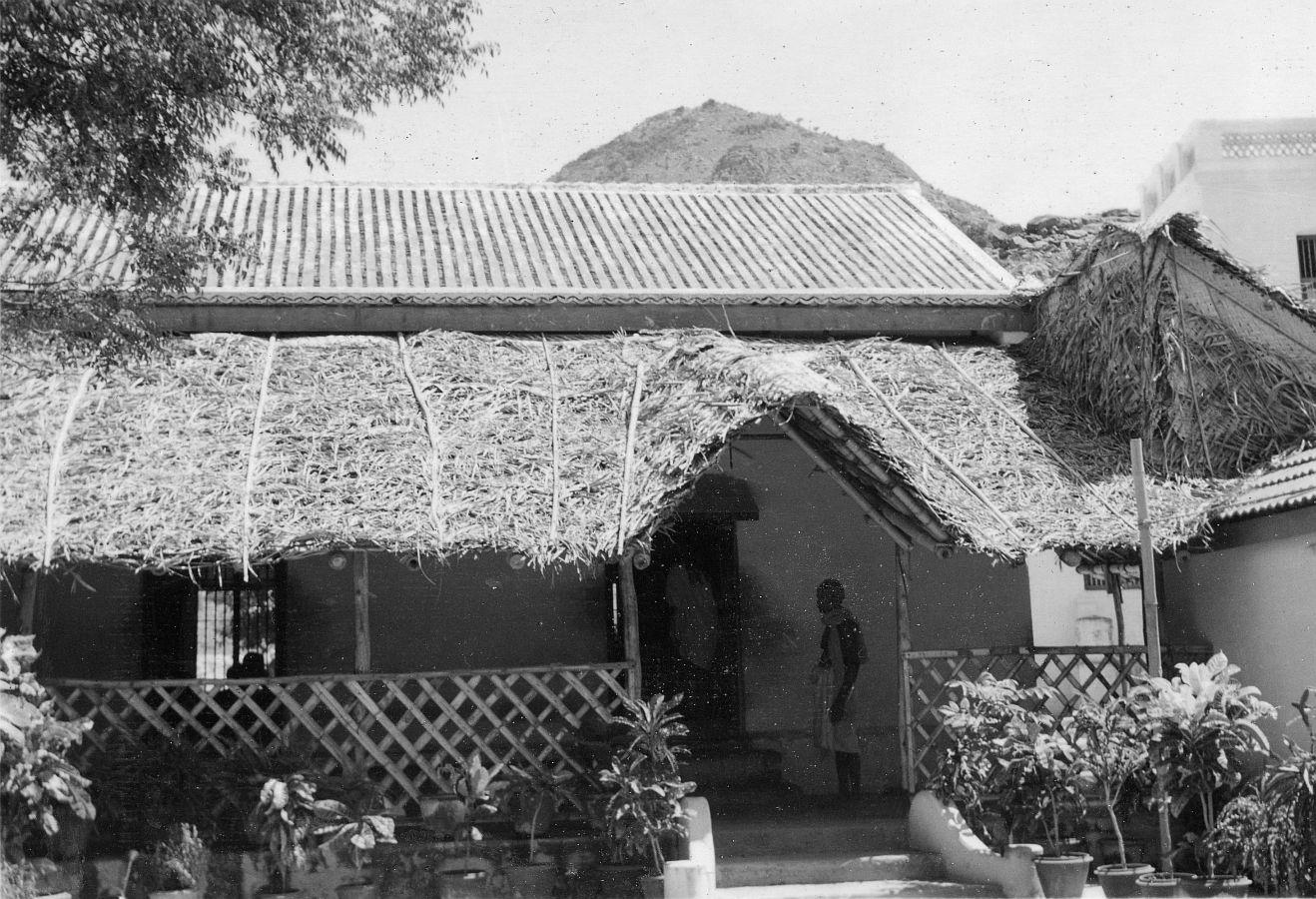
Old Hall in earlier days (South view)