Muruganar
History has recorded the illustrious lives of saints like Jnanasambandar, Meera Bai and Andal, whose time on earth culminated in their being absorbed into a flame and merging with the Lord. However, one of Bhagavan’s devotees, a remarkable poet-saint, began his spiritual life with the darshan of a huge flame on his very first meeting with his guru in 1923 at Ramanasramam. In subsequent days, whenever he looked at Bhagavan, he saw a luminosity surrounding the holy form. This devotee was Muruganar, a Tamil poet who was held in the highest esteem by the Tamil community. As a renowned Tamil teacher and scholar, he actively served in a committee of Tamil scholars who were engaged in the tremendous task of preparing volumes of the first Tamil lexicon.
Muruganar was deeply devoted to Lord Siva . He spent much of his time reading Thiruvachakam, a poetic outpouring of ecstasy experienced by Manikavachakar, a saint and devotee of Siva who lived seven hundred years ago. Whenever he read it, he would yearn for the same ecstasy and fulfillment that Manikavachakar felt in his Siva bhakti. It was around this time that his father-in-law, Dandapani Swami, presented him with two books written by Bhagavan: Who am I? and Arunachala Stuti Panchakam, the former a work on jnana marga and the latter an outpouring of devotional songs drenched in bhakti. He read them many times over and soon learnt from his friends that Bhagavan was in a state of constant non-dual state of Jnana that was unheard of in recent times. Muruganar felt a deep longing to visit and serve this saint, and receive his blessings in the form of divine ecstasy. He left for Tiruvannamalai and as soon as he reached the Arunachaleswara temple, he wrote eleven extempore verses in praise of Bhagavan, addressing him as Siva. He then went to Ramanasramam which in September 1923 was only a few thatched sheds. Just as auspicious events are heralded by signs, before he went in Bhagavan himself came out.
This is how Muruganar describes his first darshan: “When I looked at the entrance I saw a brilliant light, a jyothi, a huge flame, which blinded my eyes. Ecstatically, I tried to read out the verses I had written, but profuse tears prevented this. Then, from the flame emerged a human form - Bhagavan. He asked me to hand him over the paper I was holding. Bhagavan read the poems aloud and remarked, ‘This reads just like Thiruvachakam. Why not continue writing like Manikavachakar?’ Bhagavan then looked deeply at me. After a while, I returned to normal consciousness. With devotion welling up and in all joy and gratitude, I looked up at Bhagavan. Those gracious eyes of Bhagavan pierced through me, opening me instantaneously into a state of bliss that I had never experienced before. That look of Bhagavan unleashed ecstatic poetry in my Heart. From then on, hundreds and hundreds of poems began to gush forth. I would place them before Bhagavan and he would edit them.” Muruganar was choked with emotion when he narrated this to me. (It was a great spiritual experience for me that day.) “Instantly,” he added, “Bhagavan became my God, my master. I was wholly convinced that Bhagavan was a manifestation of Lord Siva himself. And as my new owner, he made my eye and my mind his own. In the same way that wax melts on encountering fire, on seeing Bhagavan, my mind dissolved and lost its separate form. Like a calf that has found its mother, my heart rejoiced at his holy feet. Devotion surged in me like an ocean that has seen the full moon.” It is a truth to be rejoiced over by serious seekers that the divine communion between the illuminating guru and the illustrious disciple was sealed and sanctified that day by the Lord. For Muruganar, this instantaneous communion was the inauguration of his spiritual life, at a very high level.
He worked in Chennai as a teacher to support his mother and wife and had to go back to work. After three months, he returned. When he looked at Bhagavan, he again had the vision of luminosity enveloping his form. By this time, Muruganar was completely enveloped in the ocean of Bhagavan’s grace. But he still had to travel between Arunachala and Chennai because of his responsibilities. He was deeply attached to his mother.
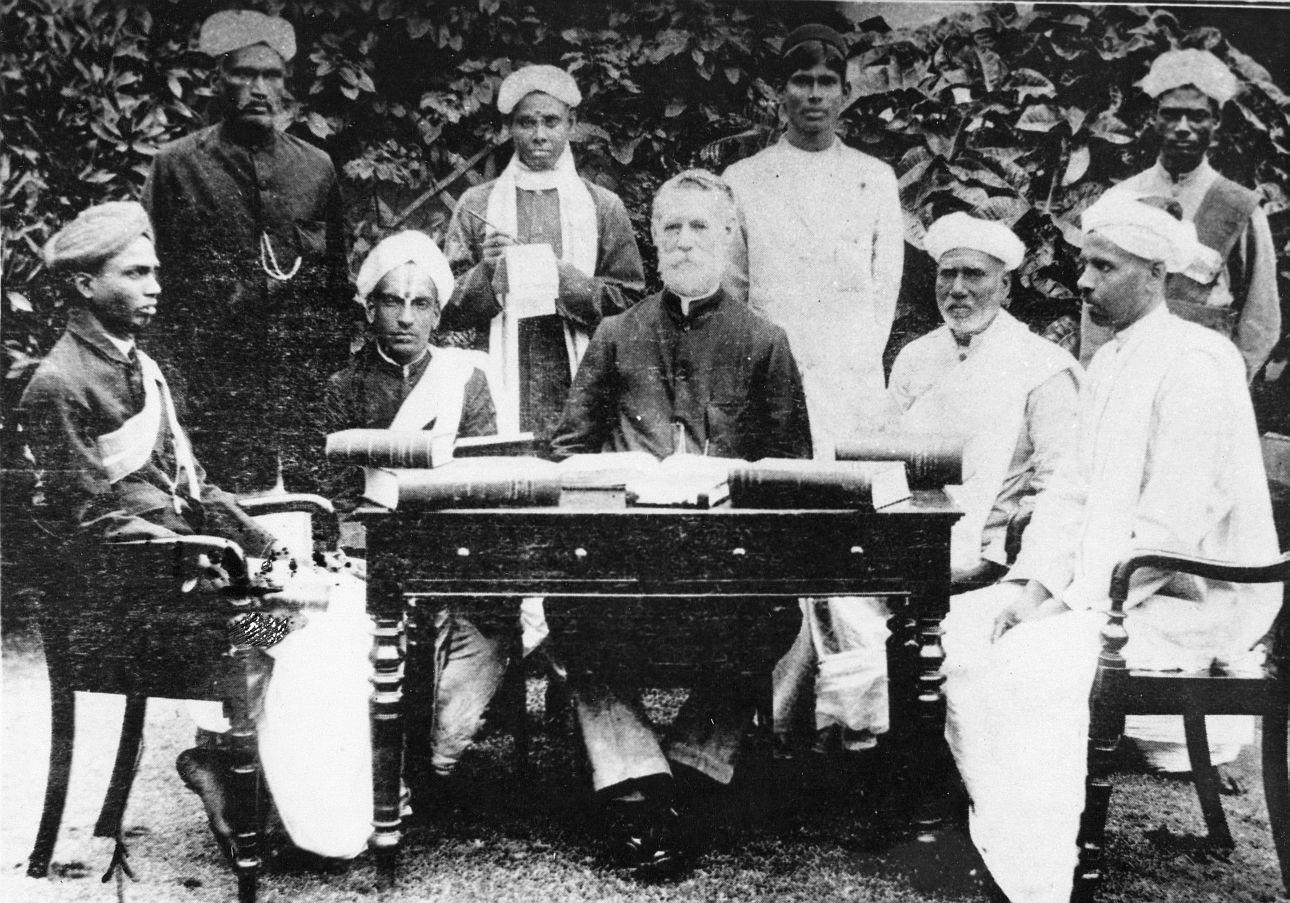
Muruganar (extreme left) along with other members of the Tamil Lexicon Committee
Muruganar once told me that he was torn between his devotion to his master and his affection for his mother.
It was literally quite difficult for him to be on time to catch the train back to Chennai - lost as he was in his state of ecstasy! Sometimes, with tears of bliss streaming down his face, he would literally walk backwards the three miles from the ashram to the railway station and roam about on the platform. The train would arrive and depart, with him being blissfully unaware of it. On being told by a porter or the station master that the train had left, he would come back to Bhagavan, his eyes brimming with tears of ecstasy! When Bhagavan saw this was happening repeatedly, he asked Kunju Swami or Viswanatha Swami to accompany Muruganar with specific instructions, “Put him on the train and return to the ashram only after the train leaves.”
Muruganar’s mother passed away in 1924. He performed the last rites, took some portion of the ashes in an urn and came to Bhagavan. When Bhagavan saw the distressed Muruganar, he enquired, “How were you able to complete the last rites in this state?” Muruganar broke down on hearing this, so touched was he by his master’s solicitude. Someone mentioned that the ashes were kept in an urn outside. Bhagavan then directed Muruganar to immerse the ashes in Agni Thirtam, a pond near Ramanasramam. Muruganar got highly emotional as he told me about Bhagavan’s compassion. He resigned from his job and cut off all worldly ties and came to Bhagavan in 1926, totally surrendering himself. Bhagavan welcomed him wholeheartedly. From then on, a new chapter in Muruganar’s life began.
Muruganar tried to assist the ashram management in its day to day activities. He tried his best to perform his worldly tasks efficiently, but his whole attention was turned inwards, towards practice. He felt he was not fit to do any worldly work and wondered if he should just leave the ashram and live independently. When he expressed this, Bhagavan encouraged him to move to nearby Palaakothu. From then on, Muruganar spent most of his time at Bhagavan’s feet, leading an austere life and freed from worldly duties.
“I think I should beg for food,” he suggested to Bhagavan one day. Bhagavan gave his consent in a beautiful and natural way. In Muruganar’s case, he did not say, “All right, go and beg.” Instead, he gave him the names of the streets where he should and the one street he should not beg! Muruganar felt greatly blessed. He would beg for food and then bring it to Palaakothu. Being very fastidious, he would go to the pool there, wrap the food in a cloth, tie it to a tree and then go about elaborately washing his hands and feet. On many occasions, monkeys stole his food and he went hungry. Yet, he never complained; on the contrary, he was happy to starve.
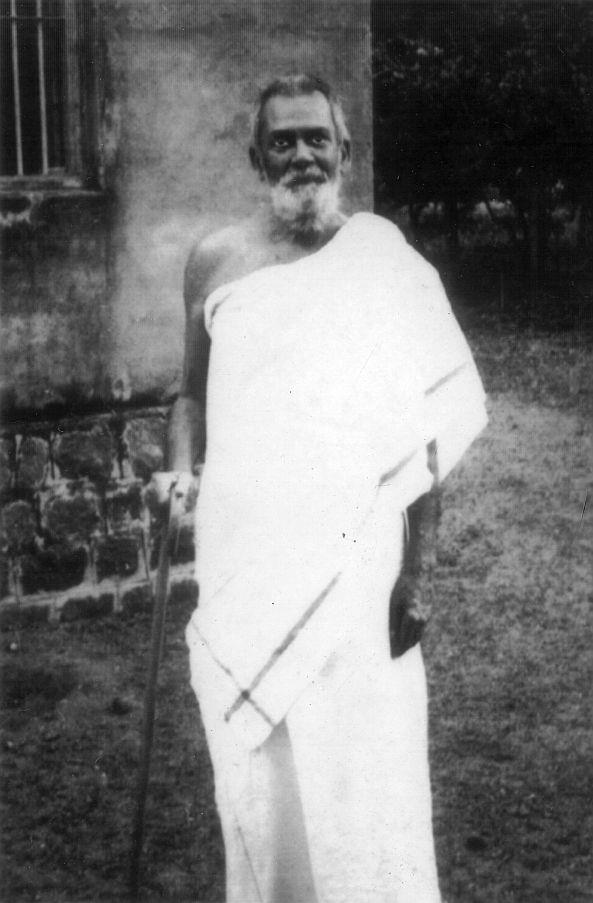
Muruganar during his days of austerity
Bhagavan’s presence inspired the poet in him. He composed hundreds of verses along the lines of Thiruvachakam, as Bhagavan had inspired and instructed him to do. These poems were collected by other devotees and a private publication called Ramana Sannidhi Murai (Prayers and Praises in the Presence of Ramana) was brought out. The beauty of this book is that it has one thousand eight hundred and fifty extempore verses, seen, edited and titled by Bhagavan. What is the importance of this book? Muruganar himself declares, “Know that the function and purport of Ramana Sannidhi Murai is to abide at the feet of the bounteous guru, Ramana, so that the darkness, the delusion of egoism may cease, being dispelled by the illumination of Lord Ramana’s grace.”
When Muruganar came to Bhagavan, he had not read any Vedantic text. So, he was all the more receptive to Bhagavan’s teachings and was able to imbibe them more easily, particularly the direct teachings of Bhagavan’s Self Enquiry. Whenever devotees put questions to Bhagavan and he answered them, Muruganar would return to his hut and write down those answers as poems. Those questions and answers formed the content of well over a thousand verses and were collected and printed as Guru Vachaka Kovai (Garland of Guru’s Sayings). Here too, every verse was edited, titled and approved by Bhagavan. Both of these books have been translated in English. What is the substance of Guru Vachaka Kovai? One of the verses explains it: “Give up the thought that this frail body is you; pursue the Self within which is eternal bliss. This body which you think you are, is not true, is not you. The real you is within you as the truth. Pursue it. Do Self Enquiry and find it. You go from asat (unreality) to Sat (Reality)”
Muruganar went on to write many excellent works like Ramana Deva Malai, Sri Ramana Charana Pallandu, Sri Ramana Anubhuti and Sri Ramana Jnana Bhodam. The spiritual function behind all his books can be categorized under three heads: Prayers and praises, the pure and direct teaching, and the inner ecstasy of spiritual experience. It was to accomplish these that our beloved Bhagavan blessed him with poetry. As Muruganar said, “I had no other thought while writing these books. Bhagavan being the truth, he occupied my Heart so completely that I wrote only on Ramana, my ecstatic devotion to him, and the affirmation of his direct teaching.”
When his first book Ramana Sannidhi Murai was released, it met with much opposition and criticism. So much so, that it was banned from circulation. The reason this book was so vehemently opposed by the ashram management was a verse in the book which said, “Directing his supreme grace with a single intense glance, Bhagavan Ramana rooted out my ego and bestowed on me, in exchange, his own state of supreme bliss.” This was an extempore verse. It created a furore because its opponents thought it was Muruganar’s egoism that made him claim that he was equal to Bhagavan.
One day, when seated in the hall in Bhagavan’s presence, Viswanatha Swami observed Muruganar lost in devotion, gazing at Bhagavan in absolute ecstasy, almost as though he were devouring Bhagavan’s love. This moved Viswanatha Swami deeply and he thought, “He has met with so much disappointment and yet, he is able to transcend it by looking at Bhagavan and getting lost in his devotion.” Without realizing what he was doing, he began to repeat Muruganar’s poetic name, “Mugavapuri Murugan,” under his breath. Bhagavan heard him and turned to him, saying, “Viswanatha! What is the use of repeating his name so many times? Why don’t you compose a verse with those two words?” Viswanatha Swami promptly took a piece of paper and tried to compose a verse with those two words. But however much he tried, he could not write more than those two words. After several unsuccessful attempts, he finally gave up. He placed the sheet of paper with those words before Bhagavan and left the hall.
When he returned, he found that Bhagavan had completed the whole verse and had written ‘Viswanathan’ under it, even though he had contributed almost nothing to it. Bhagavan wrote the verse as though it was Muruganar speaking: “Arunachala Ramanan, the one who resides in the Heart lotus of all, smiled at my ego and destroyed it completely with a single glance of grace. He thus showered his blessings on me, Mugavapuri Murugan, to enable me to enlighten the entire world with my work Ramana Sannidhi Murai which is comparable and equal to Thiruvachakam.” This verse is very important because it was written by Bhagavan himself. Unasked, Sri Bhagavan has declared in this verse and revealed that his real name was, is, and will ever be Arunachala Ramanan. Then, Bhagavan assures us that he ever resides in and as each one of us equally, in the Heart. His glance of grace, even from his picture, has the power to dissolve the ego idea. Bhagavan goes on to reveal that the sole function of his advent in our midst is to re-establish enlightenment throughout humanity and not just on chosen disciples. This verse is proof of this and therefore very important.
Muruganar, in his very first encounter with Bhagavan, received his glance of grace and had an ecstatic spiritual experience. However, as sincere seekers, we must bear in mind that this ecstasy takes time to stabilize. When this verse was written, Bhagavan again looked at him. This established him in a state from which poured forth hundreds of verses spontaneously. Muruganar yearned to be in that ecstatic state all the time. He prayed silently, that in addition to the time he was spending with his master, he would have a personal audience with him, so he could be permanently established in divine bliss. However, he did not reveal his innermost longing to anyone, including Bhagavan. So he thought!
In those days in the ashram, a group of devotees would go into the forest to pluck leaves from certain trees to make leaf plates. One morning, a group was planning to go to the forest. Bhagavan shot Muruganar a significant look. Muruganar understood its purport and hurriedly followed Bhagavan out of the hall. The group started to follow, but Bhagavan took him so quickly into the woody interiors of the forest, that the others were left far behind. Bhagavan sat on a big log and signalled Muruganar to sit beside him. No words were exchanged between them. Bhagavan then looked at him piercingly and established him in a state of inner felicity. When Muruganar opened his eyes, dusk had fallen and he found himself alone. He had been in ecstasy for several hours. From then on, Muruganar remained in that state of inner bliss and quietude.
“Having egotistically identified myself with the filthy body, I had slipped down into a desolate state. Now, having been awakened by him who is pure, divine, gracious wisdom, I have attained the supreme life of silent, natural consciousness and I am ever flourishing as the perfect, pure Self. The science of Self experience, which surged forth when the rising ego was destroyed, has filled my Heart. Having blossomed me as bliss, by the light of the fully blossomed glance of his grace, guru Ramana made me, this fool, flourish and live as the Buddha.” From ancient times, sages and saints in all their devotion and wisdom have written thousands of poems extolling gods and goddesses in varied meters and styles in the Tamil language. Perhaps for the first time, in Muruganar, we have one single poet who put down forty thousand verses in different meters, in chaste Tamil, but on one single master - Bhagavan Sri Ramana Maharshi. This spiritual wonder is unique to Muruganar.
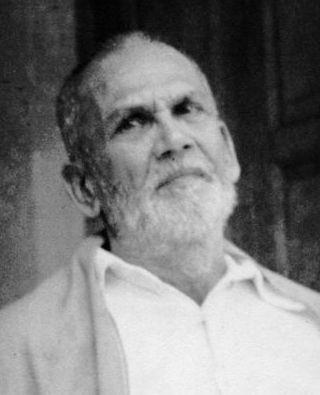
Muruganar expounding his works on Bhagavan’s teachings.
We also respect this poet-saint because he elicited the direct teaching from Bhagavan. But for his efforts, we would not have Bhagavan’s direct teaching in three remarkable treatises which can easily be considered as modern Upanishads on Self Enquiry and Self realization. These three works are Ulladu Narpadu, its supplement, Anubandam, Upadesa Undiyar, and lastly, a poem on wisdom Atma Vidya Keertanam. All three guide us on how to experience the reality of the limitless Self.
The genesis of these three treatises is very interesting. Before Muruganar came to Bhagavan in 1926, Bhagavan had written many stray verses which had not been collected and preserved. With Muruganar’s natural inclination for poetry, he researched Bhagavan’s poems and found twenty one stray verses. He collected them and found that they were not on a particular theme and therefore sat with Bhagavan analyzing those verses. The theme that he chose was reality and the nature and experience of it. He was intent on this, because by living with Bhagavan and leading a life of pure spirituality, he understood the importance of living the truth. He wanted Bhagavan to write about reality and practical ways to actually be one with it. Some verses did not go with the theme, so he omitted them and requested Bhagavan to replace them with fresh verses, based on his own experience. This went on for twenty days. In Tamil literature, one form of poetry restricts a single theme to forty verses. Muruganar proposed to Bhagavan to adhere to this norm. Bhagavan himself titled the collection Ulladu Narpadu (Reality in Forty Verses). While editing this work, Muruganar wanted to preserve some verses that had been omitted and requested Bhagavan to write more and made an anthology of another forty verses called Ulladu Narpadu Anubandham (Supplement to Reality in Forty Verses).
On another occasion, Muruganar was in the middle of a spontaneous flow of writing poems, on the play of gods and goddesses, where each of them was presented as Ramana. On completing seventy verses, he found that he was stuck where Lord Siva gives spiritual instruction to sages performing penance in the forest. Since he adored Bhagavan as Siva himself, he pleaded with Bhagavan, “You are Siva himself. Here I am, stuck and unable to go on. Please give me the next thirty verses as Lord Siva’s teaching to the accomplished sages.” In response, Bhagavan wrote Upadesa Undiyar (Thirty Verses on Spiritual Instructions), a step by step guide on how to be the truth. Someone once complimented Muruganar on Ramana Sannidhi Murai saying, “This is the best work you have done, Muruganar.” Muruganar with tears in his eyes replied, “In India, the Mahabharata is considered as one of the greatest epics because it contains Lord Krishna’s direct teaching in the form of the Bhagavad Gita. Similarly, if you people consider Ramana Sannidhi Murai as my best work it is because Upadesa Undiyar by Bhagavan is embedded in it.”
A reputed poet who lived hundred and fifty years ago had written a few verses saying that the hardest task for man in the world is Self realization. Muruganar was very upset with this. “It should be the easiest. How can Self realization be the most difficult?” he reasoned. He began writing in Bhagavan’s presence, “Self knowledge is the easiest thing there is.” However, he could not go further because he did not know how to put it convincingly. He left the sheet of paper on Bhagavan’s sofa and walked off. When he came back, Bhagavan had written the Atma Vidhya Keertanam, a few verses on Self knowledge, which described Bhagavan’s own state of experience and how it is easy for every one of us to attain: “Lo, very easy is Self knowledge, lo, very easy indeed. Even for the most infirm, so real is the Self that compared with it a gooseberry in one’s hand appears a mere illusion. The thought ‘I am the body’ is the thread on which various thoughts are strung together. Diving within enquiring, ‘Who am I and whence am I?’ all other thoughts vanish, and as ‘I-I’ within the Heart cave, the Self shines of its own accord. Such Self awareness is the only heaven, stillness and abode of bliss.” If we examine Bhagavan’s relationship with Muruganar, it will be found that Self realization is indeed the easiest to attain. For Muruganar, there was no God except Bhagavan, no path except Self Enquiry and no other purpose in life other than abiding in the Self, in the silence. The crowning brilliance in his life was not just his books and his bringing out the truth from Bhagavan - it was the fact that he actually lived every word that he wrote.
Impressed with his poetic skills, he was offered wealth and luxury by kings if he would only grace their courts. But he chose to be a beggar in the streets of Tiruvannamalai and to be in Bhagavan’s shadow - only to live the truth. Muruganar lived the teaching every day, every hour, every minute. Since he was with Bhagavan all the time, he earned the nickname ‘shadow of Bhagavan’. The relationship between Muruganar and Bhagavan is the practical demonstration of the guru-shishya relationship that is extolled in Hindu scriptures. All Hindu texts are written in question and answer format, with the disciple asking the question and the guru giving the answer, even on ethical issues. We will soon see how beautifully the guru-disciple relationship is brought out in the Hindu culture when we examine the rest of Muruganar’s life.
Muruganar communicated with Bhagavan all the time. Bhagavan was not a well read person, whereas Muruganar had read Tamil literature extensively. Sometimes, when Bhagavan was alone with him, he would ask Muruganar to give him the essence of a book. One day, Muruganar was in ecstasy and he started sharing with Bhagavan the essence of some great books. Many books were discussed on that day with Bhagavan, who was a good listener. Then, he turned to Muruganar and said, “Ultimately, the essence of all these books is only one truth. There is just one destination, but the routes and road maps are all very different. There are various paths, scriptures, texts, descriptions, examples and illustrations, but the sole essence is one single truth.” Muruganar was so thrilled that he eagerly responded, “Yes, Bhagavan, it is true! Now, I feel that reading all those books was a waste of time.” Bhagavan hastened to correct him, saying, “You should not look at it that way. It is because we have read all these books that we have understood that their essence is one truth. Had we not read all these books, the mind would have kept tempting us with the thought that there is a new revelation in some other book. Therefore, reading also serves a purpose. It is the same for rituals and poojas,” he added. “There are multifarious rituals and poojas, and the function of doing them all is to recognize that there exists one single, simple truth. The rituals and poojas themselves are not that important for Self realization.”
Another day, when Muruganar entered the hall, he saw in front of Bhagavan an array of garlanded books, with pooja that had been offered to them, on the occasion of Saraswati Pooja. Muruganar prostrated before Bhagavan and gave a mischievous smile. Bhagavan just looked questioningly at Muruganar, as if to ask what he was smiling about. Muruganar said, “Bhagavan, I am very amused that the very truth is seated here,” - he gestured towards Bhagavan - “and these books are merely the chaff. People have worshipped the chaff instead of the essence.” Being a poet, he then gave this example, “Bhagavan, imagine that the best of sugarcane was squeezed to get sugarcane juice and that was crystallized to make sugar. A human figure was then made out of that sugar. You are that sugar and these books are like sugarcane waste. Instead of paying respect to you, the sweet sugar, people are paying respect to the waste.” Muruganar smiled, and so did Bhagavan.
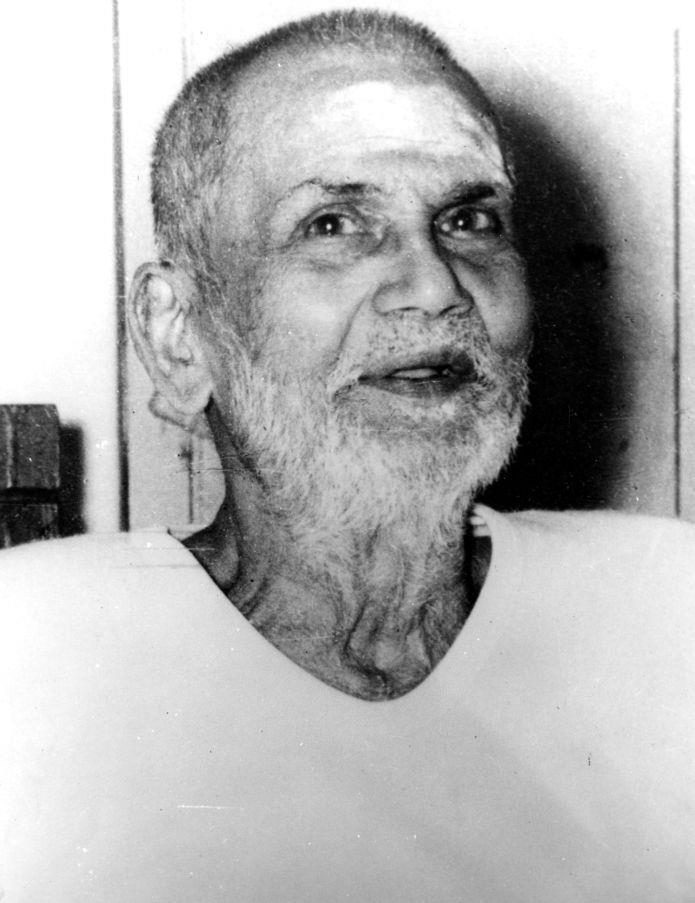
“ Filled with ‘Inner Bliss’ ”
Muruganar and Bhagavan had such a close relationship that Bhagavan would wait for him to arrive. The moment Muruganar walked in, Bhagavan would pose a question to him even before he could prostrate. Muruganar’s senses and attention were always fully attuned to Bhagavan and his words. He would receive the question from Bhagavan and start answering while prostrating, lifting his head up like a chameleon. The devotees of Bhagavan called this ‘lizard-talk’! Muruganar himself told me that sometimes this would go on for a long time and he would not even realize that he was still lying down on the ground. Viswanatha Swami was amused and asked him to stop his ‘lizard-talk’, at least when he came to the Old Hall. Muruganar recounted, “I knew that people were amused, but at the time of prostrating I was so absorbed in giving answers to Bhagavan that I would not be aware that I was lying on the floor. As I was lying down, my voice would not be clear and Bhagavan would have to strain to listen to me. None of this mattered, because for me, nothing existed except the fact that Bhagavan had asked me a question and that I had to answer him!”
Sometimes, when he was seated in front of Bhagavan, poetry would gush forth. Bhagavan would go up the hill or to the cowshed. When he came back, Muruganar would still be seated, engrossed in his writing. Bhagavan would ask him a question and wait for an answer. He would stand next to Muruganar, who would keep writing busily and even answer his questions without realizing he was talking to Bhagavan. The others would be shocked, because according to Hindu tradition it was a sign of disrespect for a disciple to be seated while his guru stood before him. Moreover, Bhagavan could not stand for long after the Pathalalinga days.
Muruganar tried to assist the management in Ramansramam because it insisted that anyone living there or having meals there had to do some service. He tried his best but failed because he was so absorbed in his sadhana. Therefore, he finally had to move next door to Palaakothu, stay in someone else’s verandah and beg for food to sustain his body. Bhagavan poured his grace on Muruganar all the time but at the same time never interfered in the management of the ashram.
On many days, the inspiration for writing poems was so strong that he would forget he had not eaten and that it was time to go to beg. One day, he had gone without food the entire day and hadn’t even realized it. It was the festival of Maha Sivaratri, a day on which Hindus observe a strict fast for twenty four hours. When he went to Bhagavan the next day, Bhagavan gestured to him to accompany him around the hill. Muruganar followed him with enthusiasm, but was quickly fatigued because he was hungry, having been without food for two whole days. After covering some distance, Bhagavan noticed Muruganar’s tired face and enquired compassionately, “Did you not eat yesterday? Were you fasting because it was Sivaratri?” It was then that Muruganar remembered that the previous day had been Sivaratri. “Yes, Bhagavan, I haven’t eaten,” he replied. After their circumambulation of the hill, Bhagavan asked Muruganar to follow him and have a full meal at Ramanasramam. He also appointed one of his attendants to go into the kitchen and supervise the serving of food to ensure that Muruganar would have a good meal there. When Muruganar narrated this to me, he shed tears of emotion on recollecting the solicitude of the master. Tears of joy had become an integral part of this incomparable devotee of Bhagavan.
However, this solicitude was an isolated incident. There are many instances when the opposite also took place. One day, sub-registrar Narayana Iyer told me - it has also been written in an article published by the ashram - that he and another devotee, T. P. Ramachandra Iyer, wanted an explanation from Bhagavan of the sixth verse of Bhagavan’s Eight Verses on Arunachala. When they entered the hall with the book open, they saw Muruganar prostrating before Bhagavan and taking leave to go into the town to beg. One of the attendants reported, “Bhagavan, we just ground a jackfruit to make a dessert for lunch. Muruganar gave us money for the bhiksha because it is his mother’s anniversary. We feel terrible that Muruganar has to still go to the town and beg.” Bhagavan’s expression changed and he replied coolly, “Yes. Whose responsibility is it to invite Muruganar to stay and eat with us? It is the duty of the authorities.” Muruganar went to beg. The intention here is not to point out the harshness of the management but to illustrate how Bhagavan was solely concerned with Muruganar’s spiritual emancipation. Whether he had eaten or not, or whether physical comforts were available or not, was immaterial. Bhagavan’s whole attention was focused on seeing that Muruganar led an austere life established in the truth.
Muruganar is the link between Bhagavan, the truth, and us, ignorance. If it was not for his living example, we would have thought Bhagavan to be an unattainable ideal like Buddha or Jesus Christ. Had Muruganar not lived a whole life of austerity, purity and Self knowledge through Self Enquiry, however much we try to intellectualize and understand Maharshi’s teaching of Self Enquiry as the direct path, we would have missed the point. Muruganar lived the teachings and showed us that though he was just like us, it was possible to lead a pure life totally dedicated to the teaching. And the master poured all his grace on him.
There are a few more incidents to show us the closeness of Muruganar with Bhagavan. There was not only harsh discipline but humour too in their relationship. Muruganar and Bhagavan would cut vegetables in the morning along with the other sadhus. One day, they were chopping spinach. Bhagavan was very careful to cut the root and separate the leaves from the stems. He cooked each part differently and made sure that nothing was thrown away. Bhagavan started talking about his days up on the hill, particularly about an ascetic lady who lived there too. She was called Keerai Paati, meaning ‘Spinach Granny’, because she collected various kinds of spinach for cooking. Bhagavan narrated how knowledgeable she was about every herb on the hill, knowing its name, content and benefit. When Bhagavan had finished, he observed that Muruganar’s chopping of the spinach was shabby. Bhagavan wryly observed, “Your skill in chopping spinach is as striking as your success in running your household.” Muruganar had run away from family life and hence felt a bit hurt by Bhagavan’s words. He then wrote a poem and placed it before Bhagavan who was very amused on reading it. All the onlookers curiously asked Bhagavan what he was smiling at. Bhagavan read out the poem: “Oh Ramana! You are an extraordinarily efficient person. Yes! Why don’t you then marry an equally efficient young maiden and set up home? Why should you be wandering around as a mendicant in a loin cloth begging food, when you could easily have set up an ideal household?” Bhagavan laughed heartily and the others joined him in his mirth.
Once, an herbal oil was being made at the ashram. When it was ready, it had to be filtered by pouring it on a cloth spread across a large vessel. Bhagavan held the cloth and asked Muruganar to pour the oil into it with a ladle. Bhagavan was talking about these herbs, some of which could even make one disappear from one place and appear in another. So rapt was he by Bhagavan’s stories, that Muruganar continued to pour the oil without noticing that it had begun to overflow. Bhagavan was attentive and efficient, so he chided him saying, “Stop! What are you doing? You are spilling the oil. You are so careless!” Then, to pacify him, he added cajolingly, “Come now, take the spilled oil and smear it on your head. Who will give you such good, costly, herbal oil? Go on and put it on your scalp.” Muruganar’s attention was still riveted on Bhagavan, and so, instead of taking the oil, he scraped up mud from the ground. Bhagavan quickly said, “Hey stop! I asked you to put the oil on your scalp, not mud!” This is the guru-disciple relationship: the guru’s grace not only awakens the highest wisdom but also oversees the welfare of the devotees.
By 1926, Muruganar had left his wife Meenakshi in Chennai to join the ashram. Gentle, innocent Meenakshi was an uneducated lady who had no means of supporting herself. Not knowing how to tackle the world, she would stay with her father for some time, and then come to Tiruvannamalai to beg Muruganar to live with her. Whenever this happened, Muruganar would disappear up the hill and it was always a tough task for even Bhagavan to find him. Each time, he had to send four people after him for three whole days to bring him back! Finally, Bhagavan pleaded with Muruganar to comply with Meenakshi. Muruganar was so stubborn that he ran away into the hill once more. So, Bhagavan found another way to soothe Meenakshi. He took special care of Meenakshi. When I met her, she told me of many instances of her direct experiences with Bhagavan. I requested her to put them all in writing, which she did in Tamil, in a notebook that is now in the archives of the ashram.
One incident mentioned in the book particularly touched my heart: One day Bhagavan asked Meenakshi: “Meenakshi what can I do for you?” Meenakshi showed him her torn sari. “Bhagavan, look at my sari! What do I want? I want clothes and food to eat, which have been denied to me because my husband is not taking care of me.” Bhagavan was so moved that he said, “Meenakshi, I assure you that all your life, there will not be a dearth of these two things - clothes and food.” Bhagavan did not stop with just this verbal assurance. He sent Kunju Swami to the head of the Isanya Mutt in town, to ask for a sari. A master in a loin cloth, who seldom asked anything for himself, sent a sannyasi to another sannyasi to beg for a sari for a devotee’s wife! He then offered it to her with the repeated assurance, “Meenakshi, you will be happy. You will be provided with clothes and food all your life.”
When she narrated this in the 1960s, I started taking care of her. I would send her two saris every year. She was not a spiritually inclined person and could not stay in Ramanasramam. She preferred to stay in Chennai. So I arranged for her to be given food in seven houses - one for each day of every week. When I came to know that Meenakshi was on her death bed, I went to Chennai to spend some time with her. She blessed me profusely. I asked her, “Meenakshi Amma, how are you?” Her stomach was swollen. She said, “I am very happy.” I could not believe her. She added, “Bhagavan is with me all the time and has fulfilled his assurance to me through you. I have no dearth of clothes or food. Ganesa, Bhagavan is God himself.” Meenakshi could not have a happy life as Muruganar’s wife. But she was always happy until her last moments as Bhagavan’s pet child. It was a privilege for me to interact with her and be of some service to her.
During Bhagavan’s last days, Muruganar composed a poem every day, ending with, “Bhagavan, you should live a hundred years.” Muruganar then trained a devotee, Padma Venkataraman, to sing these every evening in Bhagavan’s presence. She told me one day, “Muruganar was very particular about correct pronunciation and using his exact words.” One day, the song she sang had the words, “Jnana bhandara nayaka,” which in Tamil means ‘the custodian of the treasury of wisdom’. While singing with emotion, she involuntarily sang ‘bhokkisham’, which also means ‘treasury’ instead of ‘bhandara’. As soon as the singing was over, Bhagavan told an attendant, “Go and ask her if Muruganar used that particular word.” Bhagavan knew Muruganar’s style so well that he knew that Muruganar would not have used the word ‘bhokkisham’ there. Bhagavan was as particular as Muruganar that the exact word was used!
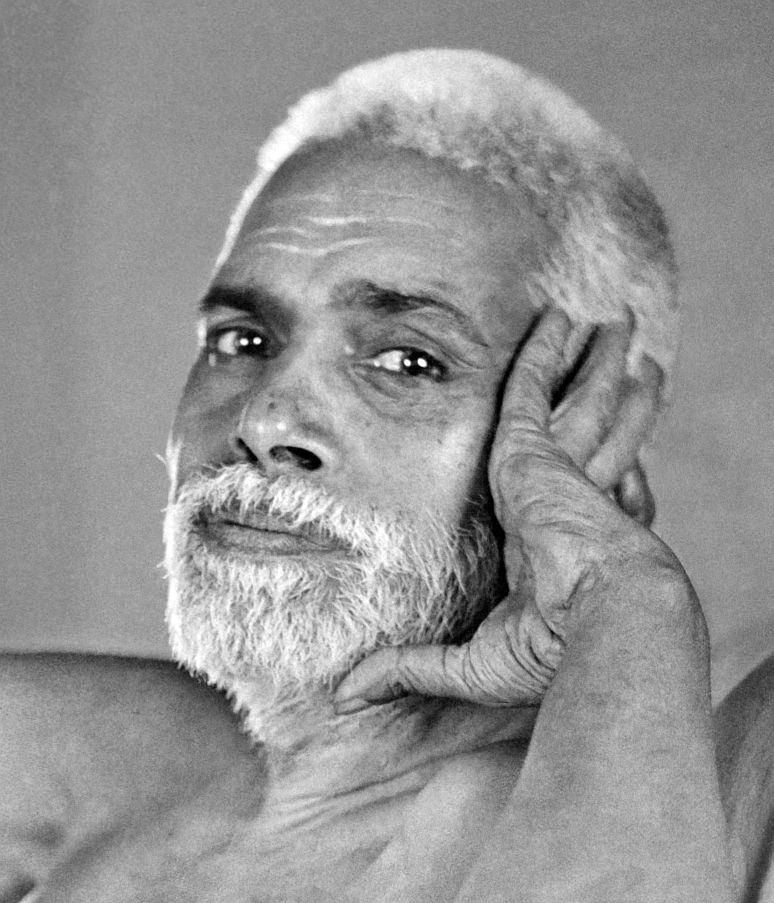
Muruganar’s favourite bust picture of Bhagavan
All the devotees were distraught because Bhagavan was going to drop the body. They wondered what they would do without him physically before them. Under Muruganar’s leadership, they sent a mission to Bhagavan to ask him for a message. Did Bhagavan not know what they were asking for? His last words were, “Put the teachings into practice.” It was Muruganar, who elicited from Bhagavan the direct teaching of wisdom, through the three treatises mentioned earlier, and, more importantly, Bhagavan’s final message of putting the teachings into practice. Muruganar had written many verses on ‘I-am-not-the-body’. Yet, when Bhagavan dropped the body, he could not contain his grief. He was inconsolable.
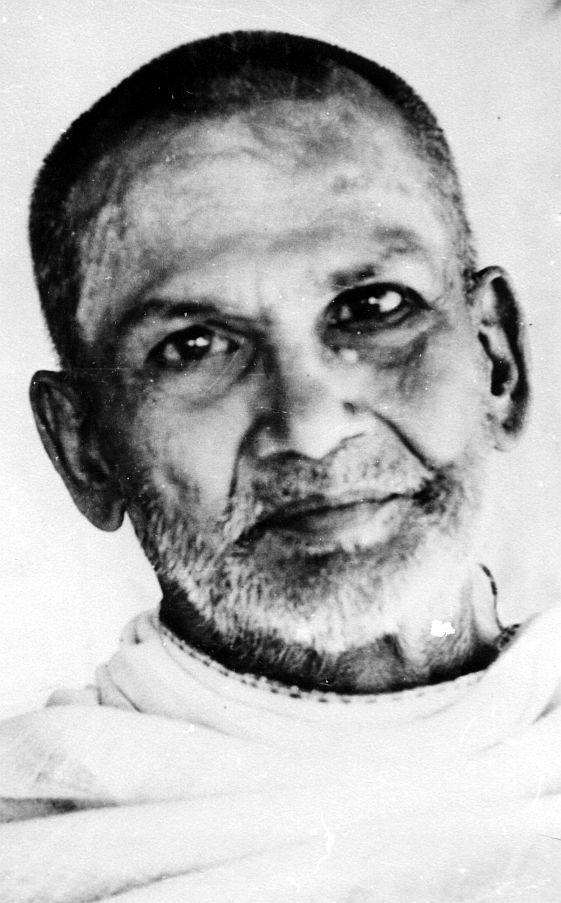
Since 1956, I grew quite close to Muruganar. I had completed my graduation and remained for two years in the ashram. I observed Muruganar, Devaraja Mudaliar, Munagala Venkataramaiah and a few other old devotees like sub-registrar Narayana Iyer. I was taken in by their pure living. When I came back in 1960, this helped me dedicate myself to these old devotees. I could begin to see the depth of their understanding. Muruganar was still begging, though he did not go to the town; he would come just before lunch time to the ashram, stand at the entrance to the kitchen and extend his upper cloth, and the cooks would put some food in it. I observed his movements - so silent and beautiful! On one of those occasions, I had a small camera. “Swami!” I called out. As he turned and looked at me, I snapped a picture (seen at the beginning of this chapter). Muruganar blessed me, even though he reprimanded me later saying, “Don’t do it again.” Viswanatha Swami told me, “A scolding from great sages is much more powerful than their blessings.”
When Muruganar visited Bhagavan’s samadhi, it was an elevating sight. It would seem, there was walking but no walker – the worshipper lost in worship! I once asked him, “Muruganar Swami! What is your attitude when you come and prostrate here?” “There is only Bhagavan, there is nothing else,” he replied. For him, there was only Bhagavan, no Muruganar, no Ramanasramam, not even prostration. Bhagavan was everything, everything else was not!
Muruganar was sometime resident at Madras (now Chennai). Once an admirer asked him how come such an outstanding devotee of Bhagavan was not resident at the Ashram. He said : “Look here, where I am, that is ‘Ramanasramam’.”
I didn’t know about Muruganar’s two stupendous works then - Ramana Sannidhi Murai and Guru Vachaka Kovai - both edited and approved by Bhagavan. I had brought Muruganar into the ashram and was looking after him with some other friends. My sister would sing some of his songs and he would often ask her to sing those from Ramana Sannidhi Murai, hearing which he would be reduced to tears. On enquiring about the reason for his tears, he replied, “I was in the presence of Bhagavan one day and he was looking at a girl child intently. I asked him, “Who is this baby who has received so much of your grace and blessings?” Bhagavan replied, ‘Do you not know? Idhu namma Lakshmi - This is our Lakshmi.’” Muruganar then again shed tears and said that when Bhagavan uses the word ‘our’, it implied a shared spiritual experience.
I asked him to tell me more about Ramana Sannidhi Murai. “When it was privately published, the management refused to sell it in the ashram. Many incidents of protest took place - it is good that you are not aware of them,” he recalled. “But I want to tell you this. One day, I was very upset about this when I prostrated before Bhagavan. When I stood up, Bhagavan said, ‘Have no worry, we will publish it ourselves.’” I ran back to the office and tried to get a copy of Ramana Sannidhi Murai, but couldn’t find it. It wasn’t available in the library either. I spoke to some devotees in Chennai and got a copy of Ramana Sannidhi Murai and had it printed. When I presented it to Muruganar, his eyes moistened as he gratefully said, “Look, Bhagavan has fulfilled his prophecy.” This happened a few weeks before he passed away. Then he told me about Guru Vachaka Kovai, a book which had the guru’s sayings and which was edited and titled by Bhagavan himself. With great enthusiasm, Guru Vachaka Kovai was also brought out by the ashram as its prestigious publication. My heart beamed with joy that Bhagavan’s assurance, “We will publish it ourselves,” was thus successfully fulfilled!
When Muruganar was dying, the doctors said he was in a coma. Dr. Hugo Maier sent word, “His breathing will stop any moment. Come here quickly.” It was three in the morning. I stood close to Muruganar. Hugo and the other doctors told me, “He is in coma. He is not going to respond to you.” “No, I will sing Arunachala Aksharamanamalai,” I said firmly. Despite their repeated objections, I leaned close to Muruganar and whispered into his ear, “Swami, I want to sing Aksharamanamalai.” The body was still, but his eyebrows went up. This was witnessed by Hugo and the other doctors. Maybe they were right too. The body was in coma; but the Heart - in its state of spiritual ecstasy - responded out of compassion, by making the eyebrows move. We all sang Aksharamanamalai continuously. In a state of spiritual ecstasy, Muruganar merged with Arunachala. We carried Muruganar’s body out and laid it in samadhi worthy of a Sage or a Saint. His samadhi shrine is situated in between Arunachala and Bhagavan’s Old Hall. On his Samadhi day, puja is offered; and devotees chant Aksharamanamalai and sing selected verses from his Ramana Sannidhi Murai.
The story of Muruganar is a never ending one because he is eternal like his Master, his only God, whom he did not forget even for a moment and whose glory and message he sang all his life.
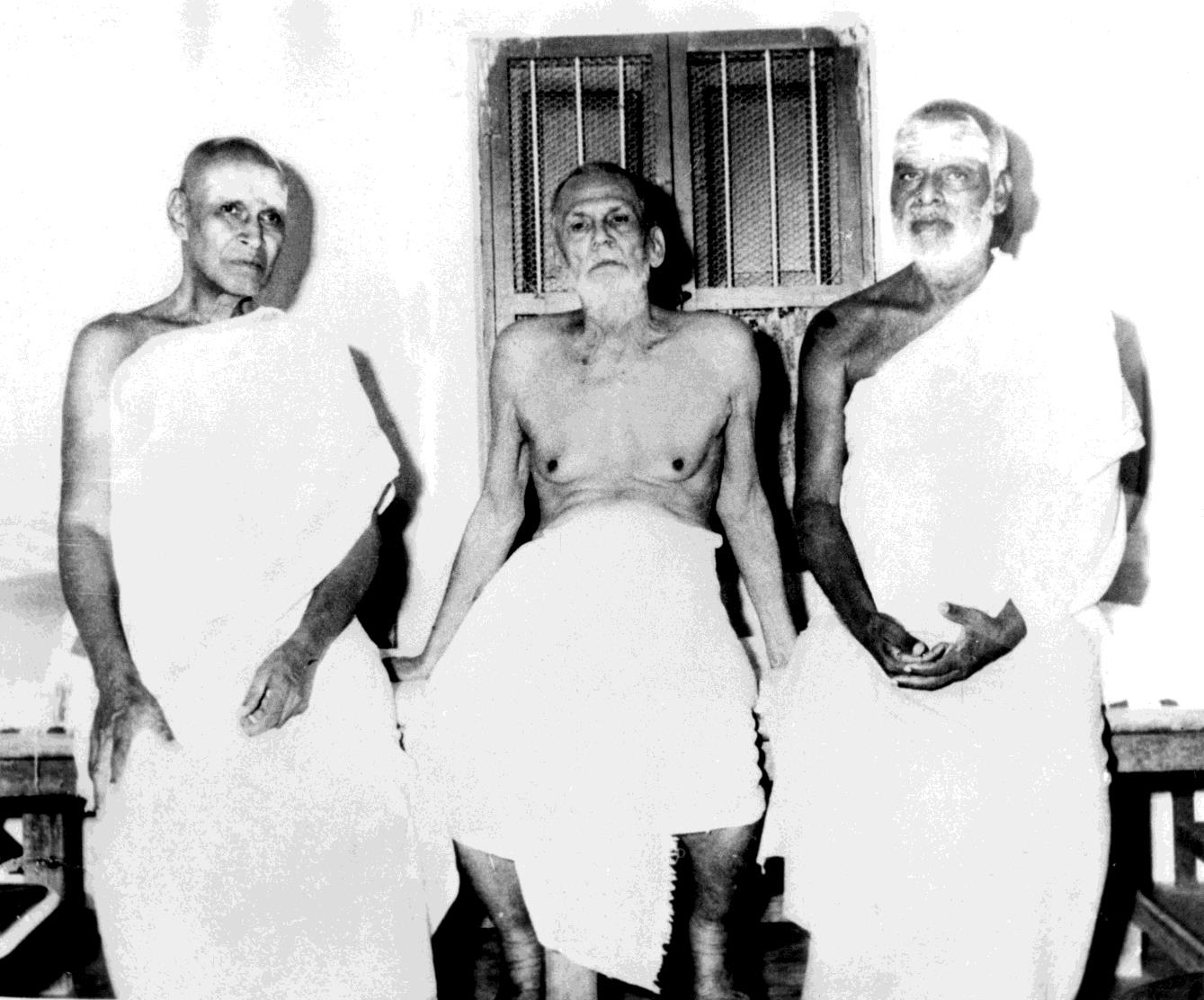
‘The Golden Trinity’ : Viswanatha Swami, Muruganar, Kunju Swami
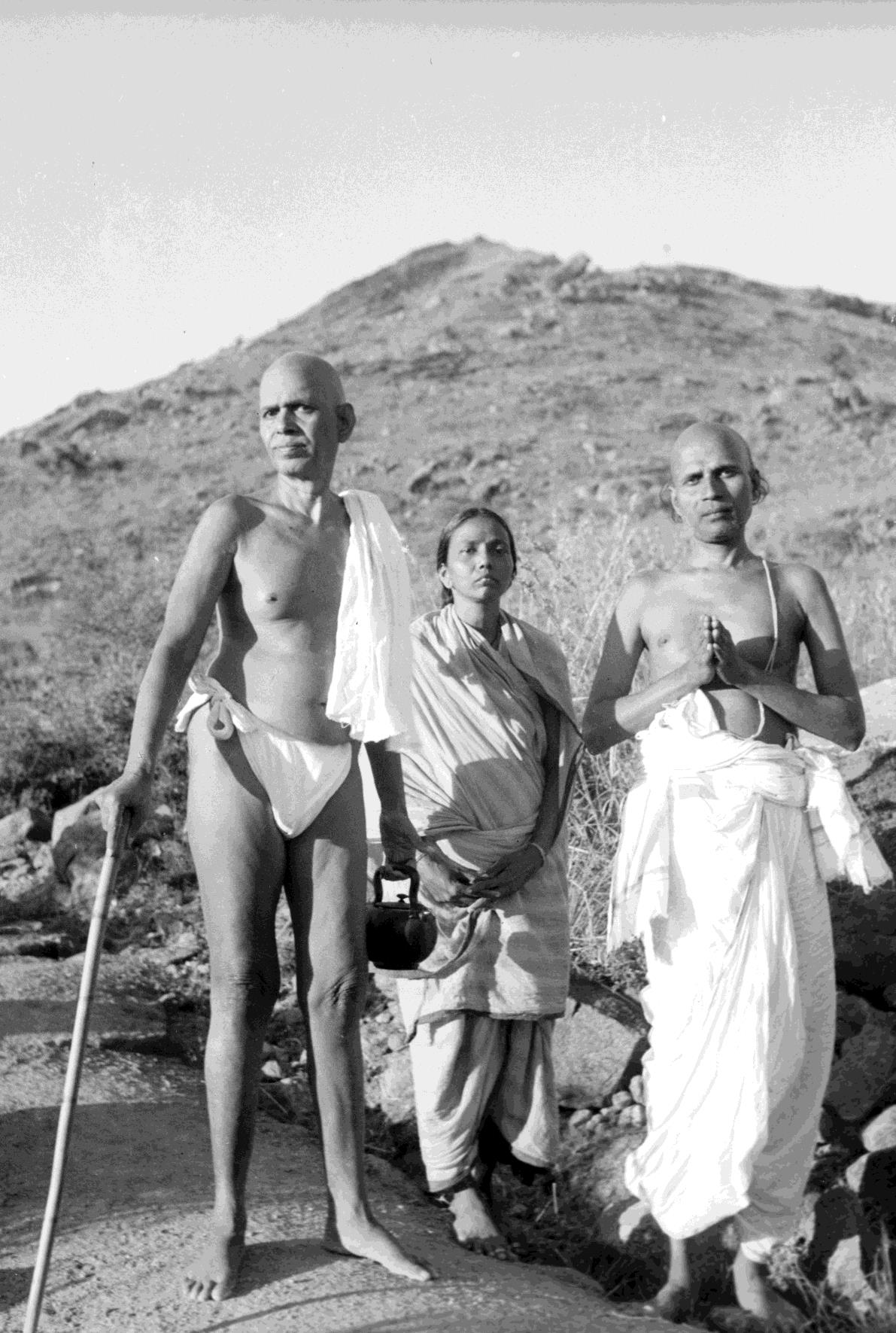
Sri Bhagavan, Jagadisa Shastri and wife