Jagadisa Shastri
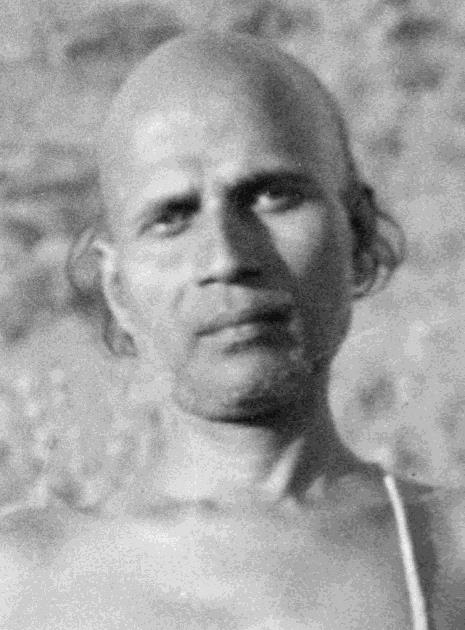
Bhagavan always addressed all living things with reverence, even animals and plants. He rarely addressed the devotees in a familiar way or by their first name. However, there were a few exceptions. One of them was Jagadisa Shastri, whom he used to address as Jagadisa. He came at a very young age to Bhagavan when he was in Virupaksha cave. Bhagavan was very fond of him.
There are two very remarkable and instructive incidents involving Bhagavan and Jagadisa Shastri. He and his wife had put up a hut in front of Ramanasramam and were living there very happily when doctors diagnosed him with having terminal cancer of the stomach. The family members reconciled themselves to the inevitable end. The local doctor, also a devotee of Bhagavan, even predicted that the end would come in a matter of hours. At the eleventh hour, Jagadisa Shastri offered prayers to Bhagavan. Since he was a Sanskrit poet, he composed eight verses - Prapatti Ashtakam (Eight Verses of Surrender) - extolling Bhagavan’s glory and power as the satguru and appealing for his grace. Bhagavan was so moved that he saved his life. This happened in 1945. Jagadisa Shastri went on to live to the ripe old age of eighty nine and died only in 1983.
The second incident came a few years later. Jagadisa Shastri’s hut was on a piece of land belonging to a westerner. Unfortunately, that westerner underwent some financial strain and had to sell the land. He offered to compensate Jagadisa Shastri for whatever amount he had spent on the hut, but asked them to vacate it. Jagadesa Shastri was devastated as he had no other place in Arunachala. Vacating the hut would mean that he had to leave Arunachala. Taking the money offered by the westerner, Shastri ran to Bhagavan and dropped the money into his lap. Like Sri Ramakrishna Paramahansa, Bhagavan never touched money after he donned the loin cloth as according to him he could not eat money! But now, Bhagavan’s compassion for his devotee made him keep the money till Jagadesa Shastri was composed enough to take it back from him.
Being a Sanskrit scholar, and having moved very closely with Bhagavan, Jagadisa Shastri was able to write lucid commentaries in Sanskrit on Bhagavan’s Upadesa Saram and Arunachala Stuti Panchakam. The former is Bhagavan’s seminal work giving step by step instructions on how to abide in the Self while the latter is a collection of five spontaneous poems praising Arunachala. Jagadisa Shastri also wrote Ramana Sahasranama Stuti, verses praising Bhagavan in thousand names. He was also instrumental in getting Bhagavan to write what is perhaps the most important Sanskrit verse on his teachings. This was an accidental occurrence. Shastri was once murmuring a phrase ‘Hridya kuhara madhye’, and trying to compose a verse beginning with these words. Not succeeding, he wrote these words, left it on Bhagavan’s sofa when Bhagavan was not in the hall and went out. When he came back, Bhagavan had completed the verse signing off as ‘Jagadisa’. When Sastri returned, he was delighted to read the verse, but was intrigued that his name had been mentioned as the author. However, he told Bhagavan, “ Are you not ‘Jagadisa’ (Lord of the Universe)!” This is the verse which is inscribed in the new hall behind Bhagavan’s statue.
Although Jagadisa Shastri had to shift his residence to Chennai due to compelling family constraints, he dedicated the rest of his life to teaching Vedanta in its original Sanskrit commentaries. For his service in teaching the knowledge of the Self - Atmavidya - he was conferred the title Atmavidyabhushanam by the great Shankaracharya of Kanchi, Paramacharya Chandrashekarendra Saraswati. I had the good fortune of meeting Jagadisa Shastri in 1956 while doing my post graduation in philosophy. My professor in the university was Dr. T. M. P. Mahadevan, a great devotee of Bhagavan. Once, he was celebrating Bhagavan’s birthday at his residence in Chennai. The celebrations went on for three days. Many eminent people came and gave talks. One of the talks was given by Jagadisa Shastri. His talk, in which he expounded the uniqueness and greatness of Bhagavan, was spell binding. It not only conformed to the scriptures, it also revealed how Bhagavan was more concerned about you and me, and how we could also have a link with the Self. That day he quoted a verse that expounded the truth about the three karmas - sanchita, the karma accumulated from our past lives, agami, the new karma we create in our present life, and prarabdha, the karma to be worked out in this life. According to the scriptures, for a jnani, sanchita karma and agami karma get nullified but he still has to experience prarabdha karma. Bhagavan has rejected this by a humourous analogy. He says, “When one is beyond the control of the mind and the body, it is not possible to say that two karmas are nullified and that one karma alone will stick to him. Imagine that a man is married to three wives. If he dies, all the three will become widowed, not just two of them. Just as none of a man’s wives can avoid becoming a widow on his death, so also when the doer is gone, none of the three forms of karmas survive after that.”
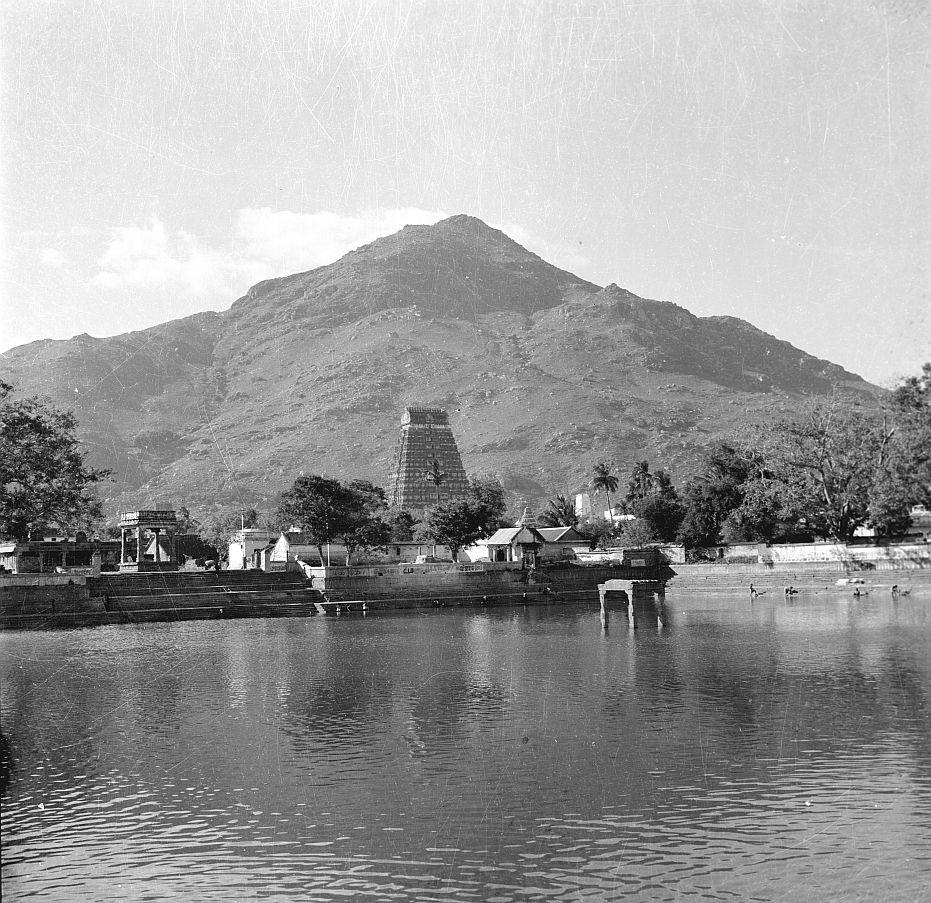
Jagadisa Sastri adored ARUNACHALESWARA : Holy Hill, Sacred Temple and Blessed Ayyankulam Tank
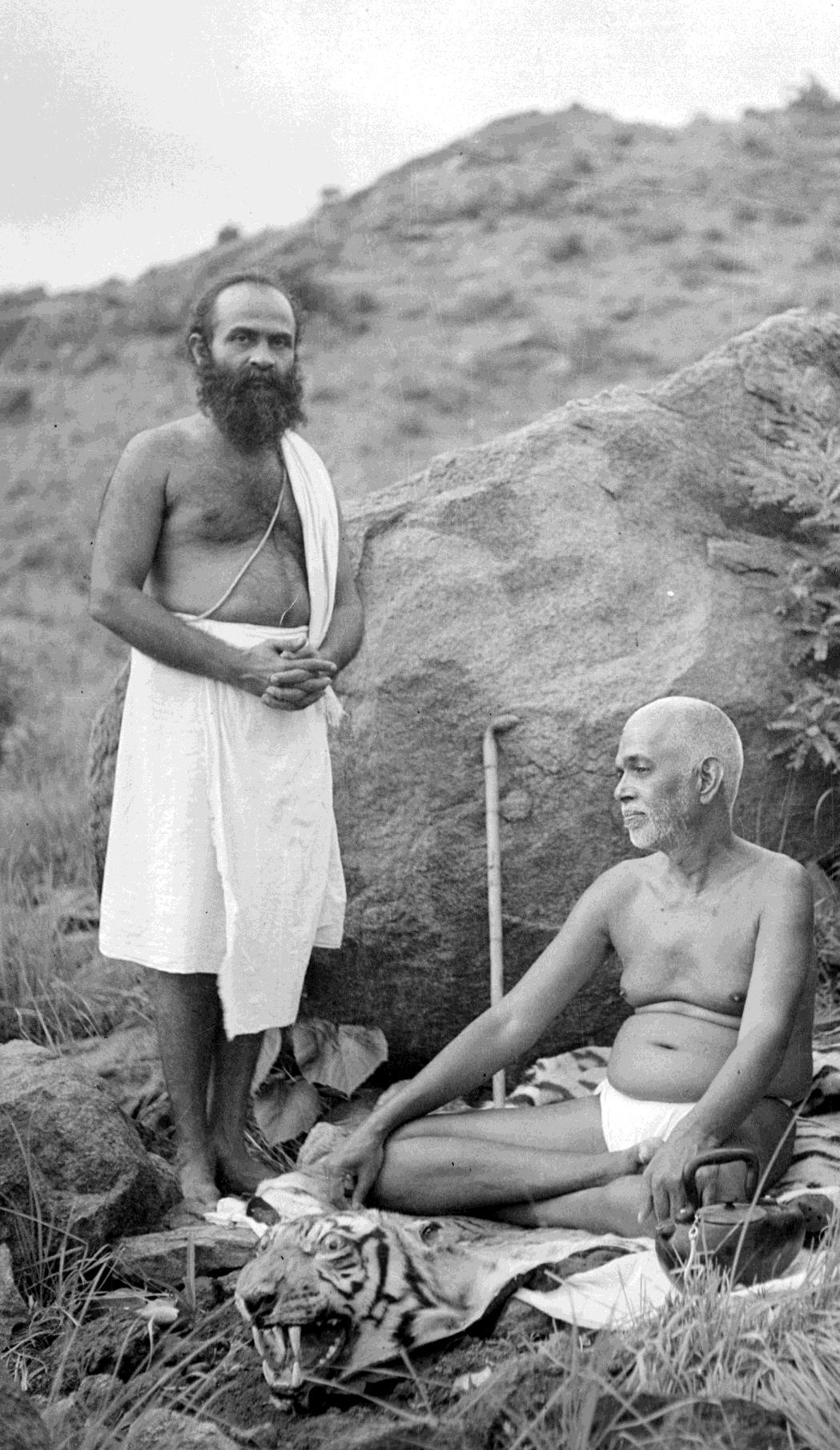
Sri Bhagavan – Daivarata