Santhammal
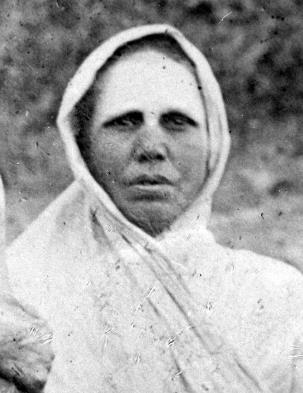
We now come to Santhammal, with whom I have had the privilege of moving very closely. Though I cannot claim that at that time I understood her greatness, I now realize how blessed I was to have her satsang. It was only after reading Maurice Frydman’s manuscripts that I could comprehend her spiritual grandeur. Bhagavan came down from Skandashram to Ramanasramam in 1922. At that time there were only four or five residents, including Bhagavan’s brother Chinna Swami, who was the head cook from 1922 to 1928. Others would come and help for a few days at a time and then return home. Santhammal came in 1928 to Ramanasramam to assist Chinna Swami and never left.
Santhammal was a widow who had lost her husband as well as her three sons. She was left with only one daughter, who she gave in marriage with great difficulty. Tragically, during childbirth, she also died. Santhammal was left with no one and nothing to hold on to. Being utterly poor, she went to various relatives’ houses to assist in the kitchen. One day, in her brother-in-law’s house, in the midst of boiling rice, she felt an inner prompting: “What are you doing with yourself? Your children are dead. Why have you forced on yourself these responsibilities? Whom are you serving? Who are you?” These were not thoughts but her future guru’s commandment that she was feeling so intensely. She left her brother-in-law’s house and went to Ramanathapuram where her friend Muruganar was staying. Upon entering his house, she went into his room and saw Bhagavan’s picture for the first time. It captivated and beckoned her. “Here is my God,” she thought. “How is it that I did not know about him until now?” She yearned to go to Arunachala, but alas, she did not have enough money for the journey. Fortunately, in 1927, a group of people from Ramanathapuram were going to Arunachala for the Karthikai festival. They gave her money for her ticket and took her along.
She arrived in Arunachala and stayed for forty days along with the group. Every day, she went to Ramanasramam and basked in the presence of Bhagavan. She prayed, “The dream of my life has come true. Today I am blessed, for here is my God. In your presence, I am in heaven. But when I am away, grant me that my mind troubles me no more.” Bhagavan, being shy by nature, turned to Muruganar who was standing next to him and said, “Ask her to find out whether there is such a thing as mind. If so, what is its form? Does it have a moustache and a beard?” Hearing this Santhammal stood still. Muruganar had to intervene and say, “Do you not recognize that Bhagavan has initiated you into the search of the Self?” She could not immediately grasp the deep spiritual content of the statement but she was overwhelmed by a feeling of immense devotion and started singing a verse from Ramana Stuti Panchakam. The meaning of the verse is, “O Bhagavan, your spiritual splendour fills the universe with its fragrant perfume. Attracted by the aroma, numerous beings turn their heart to you. I too grew restless and sought you eagerly. ‘Where is he?’ I enquired and now I have come to you.” This verse written by Satyamangalam Venkatarama Iyer at Virupaksha cave in the 1910s very aptly fitted her situation and applies to each one of us as well. In the now, we have this opportunity to be in contact with Bhagavan. He is nothing other than the inner silence, the direct experience of the Self. When Santhammal went to take leave of Bhagavan, he said, “Upadesa Saram, a book containing thirty verses of the essential teaching, is coming tomorrow. If you stay one more day, I will give you this book.” She stayed one more day and got her copy of Upadesa Saram from Bhagavan. At the time of her departure, Santhammal started crying profusely. Bhagavan consoled her saying, “Do not cry. You are not leaving Arunachala. Go and come soon.”
Unfortunately, Santhammal could not return to Arunachala for one year. Meanwhile, in Santhammal’s absence, preparations were underway for the celebration of Bhagavan’s Jayanthi - birthday. Calling the sarvadhikari, Bhagavan asked him to send an invitation to Santhammal. At that time, Santhammal was a ‘nobody’, a poor, uncared for widow. Santhammal was deeply moved by the master’s concern in bridging the gap between the guru and disciple. She begged for money and finally came to the ashram in 1928 for good. When she entered, Bhagavan was explaining Ulladu Narpadu, Forty Verses on Reality. He stopped, looked at her and asked, “Have you received a copy of this book? I had asked them to send it to you.”
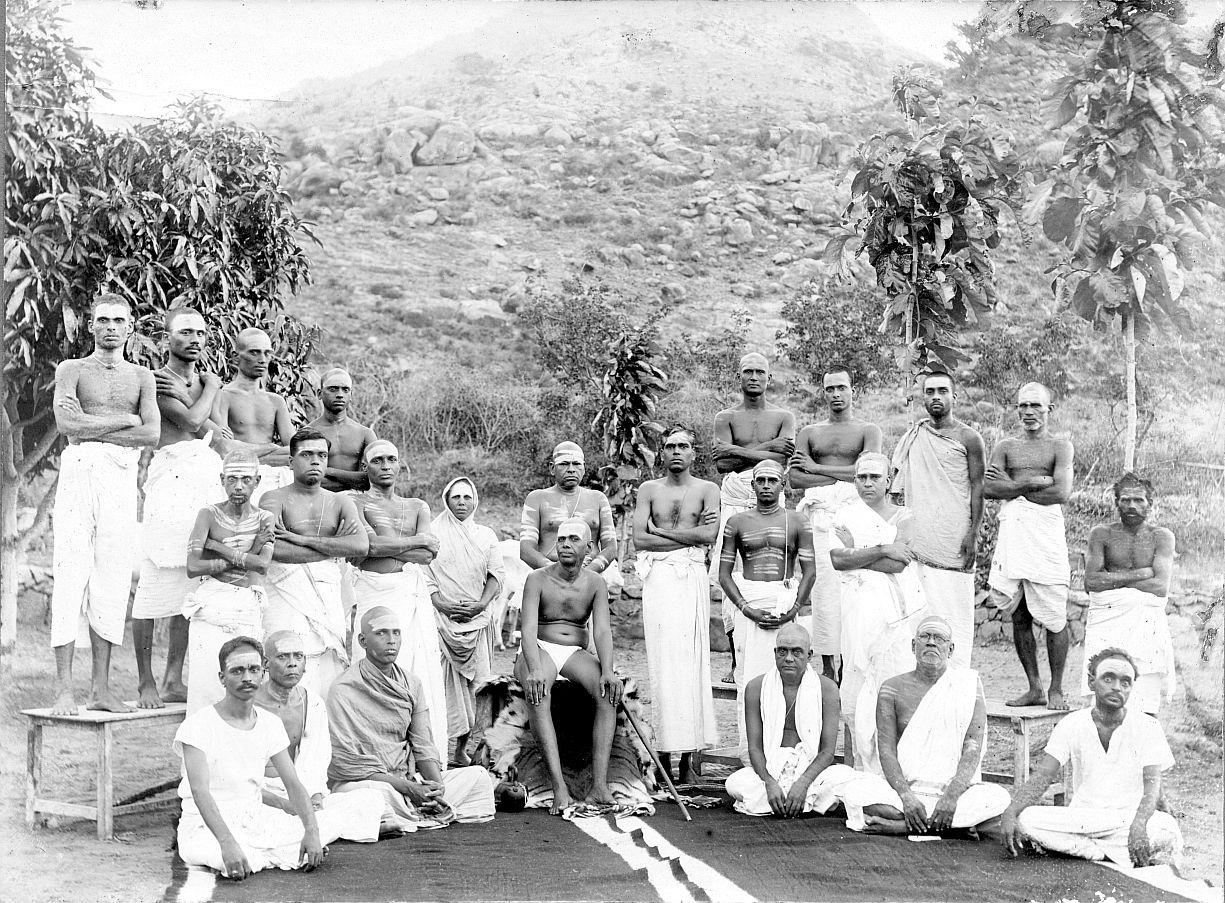
Santhammal standing behind Sri Bhagavan
Santhammal was greatly touched by the compassion and personal attention that Bhagavan was showering on her. She vowed, “I will stay with this master, without going anywhere and I will cook for him.”
The next day, she appealed to Bhagavan, “As long as I am with you, Bhagavan, my mind is at peace. Away from you, I am restless. What am I to do?” Bhagavan said, “Stay here until your mind becomes restful.” The following morning, Chinna Swami had to go away for some days to Chennai for medical treatment. In Chinna Swami’s absence, the ashram would be left without a cook. Santhammal was requested to take up the cooking. She replied that it was her dream to stay with Bhagavan and cook for him. This turned out to be a golden opportunity. When Shantammal entered the kitchen, not wanting her to be left alone for the first time, Bhagavan joined her and started helping her. Apart from being a master cook, Bhagavan was like a cordon bleu spiritual chef, an expert in cooking his devotees egos and feeding them to Arunachala! In fact, Kavyakantha Ganapati Muni has sung, “O Bhagavan, you are the perfect cook. But, you are a non-vegetarian cook. You cook all of our egos and then feed them to your father Arunachala!”
Once, Santhammal encountered some difficulty because she could not find a replacement for an oil vessel that was leaking. She reported this to Bhagavan saying that things would be much easier if she could get another vessel. Bhagavan did not answer. Within ten days, six huge jars were delivered from the railway station to Ramanasramam without the sender’s address! Even now it is not known who sent the jars. Bhagavan called Santhammal and said, “Santhammal, you wanted a jar. Here are six.” Another time Santhammal needed some money. Within three days, she got a money order for the exact amount that she needed. It was sent by someone named Srinivasa Rao who had read an article in the newspaper about Ramana Maharshi. When he read that a lady cook named Santhammal had come to the ashram to serve Bhagavan, he had an urge to send her some money. Santhammal later told me that these two incidents proved that complete faith in the guru was enough.
One day, Bhagavan and Santhammal were cooking in the kitchen. Bhagavan was stirring the vegetable stew continuously when he suddenly stopped and looked at her. Santhammal immediately became still. Everything disappeared, leaving behind only complete silence and pure joy. She was experiencing the highest beatitude. After sometime, Bhagavan started moving and Santhammal came back to her senses. He looked at the stew and said, “This has boiled fully and become noiseless. Now, you can add the spices.” Santhammal understood this to mean that she should make the mind noiseless and in that state add the spice of wisdom to it. This is how Bhagavan incorporated the teaching into daily activities. On another occasion, Bhagavan entered the kitchen just as Santhammal finished cooking a dish. She requested Bhagavan to taste it. Bhagavan jovially answered, “You know, the kings have food tasters whom they pay enormously for doing this job. Santhammal, this is what you are asking me to do. What is the payment that you will give me?” Santhammal replied, “Bhagavan, I am a beggar. I can only give you myself.” This surrender was whole heartedly accepted by the master. Santhammal’s cooking was loved by all, not only because it was extremely tasty, but because it was done by a fully surrendered soul.
Santhammal narrated an interesting incident that took place in the hall, “There was once a stranger, a European, who came to the ashram in a horse cart and went straight into the hall. There, he gave Bhagavan a piece of paper he had written something on. Bhagavan read it and looked at him. Immediately, the man closed his eyes and became quiet. After sometime, Bhagavan too closed his eyes and they remained together in silence. A few people around them were also submerged in that peace. The lunch bell rang as usual at eleven, but Bhagavan and the European were unmoved. At twelve, both opened their eyes. The European left, ecstatic.” Bhagavan once said, “With whichever vessel you go to the ocean you can get only that much water. If it is merely a cup, you will get a cup of water. If it is a bucket, you will get a bucket. Go and loot the whole ocean.” This European came to loot the whole ocean! Santhammal told me what a fortunate person the European was to have received that grace.
Another interesting incident that Santhammal has recorded involves a Hindu monk. Once, an aged North Indian monk came to Ramanasramam and stayed there for a few weeks. On the last day, he came to Bhagavan and stood in front of him and said, “Bhagavan, everything in Ramanasramam has given me great satisfaction. Now, I am ready to leave. Fulfill my heart’s desire.” Bhagavan did what he has perhaps never done before or after: He stood up, walked up to the monk and touched him. Both stood like this for some time until the monk fell at Bhagavan’s feet with tears flowing from his eyes. Getting up with an exquisite smile on his face and filled with ecstasy, he left Bhagavan’s presence.
One more happening shared by Santhammal and not found in any other book on Bhagavan involves the Mysore maharaja. During the British regime there were over three hundred kingdoms within India, each one having a king, queen, palace and army. Among these, two of the biggest were Hyderabad and Mysore. The Mysore maharaja was a scholar and patron of the arts and culture. One day, wishing to be unnoticed, he came to Bhagavan in the dead of night and stayed until early the next morning. He wanted a private audience with Bhagavan, but Bhagavan had never obliged anyone before. There were always devotees with him in the hall or when he went walking up the hill. So, Bhagavan permitted the maharaja to meet him in the eight by eight foot bathroom where he bathed. Santhammal told me that Bhagavan revealed to her that the maharaja fell at his feet, and wept so profusely that his tears drenched Bhagavan’s feet. . The maharaja then got up and said, “Bhagavan, they have made me king and forced me to sit on the throne. For this reason I am not able to come and stay with you and be in your presence. These few moments are the only precious few in my whole life. After this, I will not be able to come. Please bless me.” When Santhammal asked Bhagavan about the maharaja, Bhagavan said just one sentence: “He is a ripe fruit.”
Every year in Tiruvannamalai, the Karthikai festival is celebrated in a grand manner for ten days. Lord Arunachala’s idol is taken on a procession around the town and thousands of devotees flock to watch this grand sight. Among these devotees, many were beggars, sadhus or sannyasins and they would come to Ramanasramam to have their food. Though they would all be served, the ashram workers felt that the crowd was unmanageable one particular year. The decision was made to stop serving food to them. The night this decision was made, Santhammal had a dream. She was sitting in Bhagavan’s hall when suddenly she saw something like an insect flying next to him. Slowly it became bigger and bigger and transformed into a huge red horse with wings. It went first around Bhagavan, then around the entire ashram, finally came back to Bhagavan and then disappeared. The next day, curious as to the significance of this dream, Santhammal approached Bhagavan. Bhagavan explained, “During the Karthikai festival the gods and celestials come to Tiruvannamalai in the guise of beggars and sadhus, so it should be a privilege to feed them.” The following morning Santhammal reported this to Chinna Swami who immediately arranged to give food to all the beggars and sadhus on those ten crowded days.
Santhammal used to have visions of bright lights. She shares, “When I first came to Bhagavan, I saw a bright light like the sun with Bhagavan in the midst of it. Later on, I used to see a light between my eyebrows. On another occasion, I saw a big light come out of Bhagavan’s head and fill the whole hall. In that light, everything disappeared including Bhagavan, and the feeling of ‘I’ remained floating like a luminous void. When I related this to Bhagavan, he affirmed that such visions do occur. He said, “To know how one looks, one must look into a mirror. However, the person should not take the reflection to be oneself. What is perceived by the senses and the mind is never the truth. All visions are mere mental creations and if one believes in them spiritual progress ceases. Enquire to whom the visions occur. Find out who is the witness. Stay in the pure awareness, free from all thoughts, and do not move out of that state.”
Amother incident related by Santhammal is as follows : Once, a person from the northern corner of India came to the ashram and stayed for weeks. On the day of his departure, he stood before Bhagavan and said, “Bhagavan, I am going far away and I do not know when I shall be coming back. I am much less fortunate than those who have the benefit of your constant presence. How can you help me, a sinner in a distant place, unless you think of me? I implore you to give me a place in your mind.” Bhagavan answered, “A jnani has no mind. How can one without a mind remember and even think? So, how can I remember all of these prayers? I shall transmit your prayer to the Lord of the universe. He will look after you. It is his realm.” Later on, after the devotee had left, Bhagavan turned towards us and said, “People imagine that the devotees crowding around a jnani get special attention. If a guru shows partiality, how can he be a jnani? Is he so foolish as to be flattered by people’s attention on him and the service they do? Does distance matter? The guru is pleased with one who gives himself up entirely and abandons his ego forever. Such a man is taken care of wherever he may be. He need not pray. God looks after him unasked.” Then, Bhagavan gave the example of the frog that lives constantly at the base of the lotus stem in the water. Though the frog is constantly in the proximity of the flower, it is the bees that get the honey. They fly down from long distances, get the honey and then fly back. They are indeed blessed.
Another time two ladies from the far south came to Bhagavan. One pretended to be the guru and the other the disciple. When they came to the hall the disciple spread a huge seat for her guru and made her sit on it. After going to Bhagavan to get his blessings, she came back to sit in front of her guru. Again, she went back to Bhagavan and asked him to teach her the path of salvation in order to achieve liberation. Bhagavan kept silent. The disciple felt hurt as it was nearing evening and they had to leave on the night train. “Swami, please instruct us,” she begged. “It is getting late.” A few minutes later, she again reminded Bhagavan. Finally, exasperated, she asked, “Swami, at least tell us something. All people speak of ignorance. What is ignorance? Please explain that to us.” Bhagavan turned to Muruganar who was seated next to him and compassionately said, “Ask her to enquire within who is ignorant.” Muruganar turned to the ladies and replied, “Now you can go, for your initiation is over.” Both ladies left, disappointed. Later, Bhagavan remarked about this incident: “Everything has to be done in a hurry. Everybody has some train to catch. They visit this swami in a rush and want to carry away a parcel of liberation and salvation. They read something here and there and they think they are learned and ready for liberation. Who wants salvation? To whom is the liberation? Instead of simply turning within and being the silence which is saturated within the Heart, they roam about outside and remain agitated without peace. Everything is already within. The one who searches is the very thing one is searching for! Stillness is the truth.” Without Santhammal’s diligent recordings, incidents such as these would not have been available to seekers!
In addition to being a wonderful cook, Santhammal was a very strong woman. One day, as a big pot of sambar (lentil stew) was boiling, Bhagavan suddenly entered the kitchen. The pot was so big, that it usually took three men to handle it. As the sambar was boiling vigorously, Bhagavan recommended the pot be lifted off of the fire and went away. Santhammal, seeing no one else around, effortlessly lifted it and put it aside. After doing so she exclaimed, “This is a miracle performed by Bhagavan. Ordinarily, no single lady would even be able to touch it, but because Bhagavan uttered it, I was able to lift the pot and put it away.” Such was her faith !
Santhammal was very kind and helpful to the sadhus living in Palaakothu. They had to cook their own food, so she used to supply them with the things that they could not get, such as pickles and even some of the sweets and other delicacies that were made in the ashram. She did all of this with Bhagavan’s knowledge. Once, aviyal, a South Indian delicacy with a lot of vegetables, was being served in the ashram. Muruganar was living in Palaakothu. Bhagavan called Santhammal aside and told her, “Muruganar loves aviyal. Who will give aviyal to Muruganar?” Santhammal immediately ran to the kitchen to make a parcel of aviyal for Muruganar. With this, she ran to Palaakothu, but Muruganar was not there as he had left for town to beg for his food. She caught up with him on the road and told him that Bhagavan had sent aviyal for him. Muruganar wept profusely thinking of this great act of compassion of his master.
As she became older, Santhammal felt that she could no longer do physical work for the ashram. Not wanting to be a burden, she wanted to leave. That night, Bhagavan appeared to her in her dream and said, “Where will you go, Santhammal? Who will look after you?” Indirectly, Bhagavan was saying that he would look after her. Santhammal remained peacefully in the ashram till she was Absorbed in Arunachala.
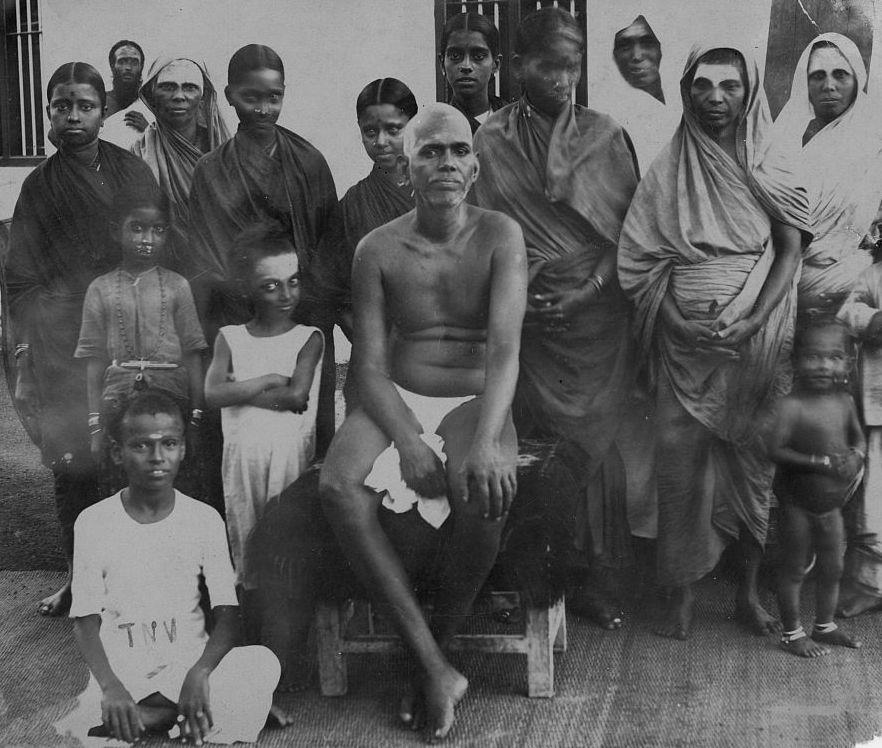
Sri Bhagavan with lady devotees (Santhammal seen on extreme right)