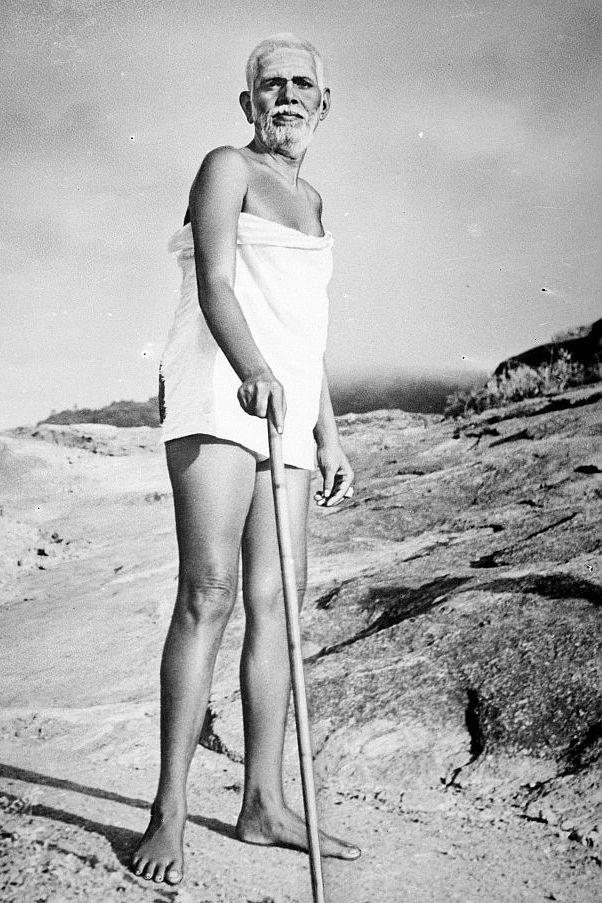
Sivananda Swami
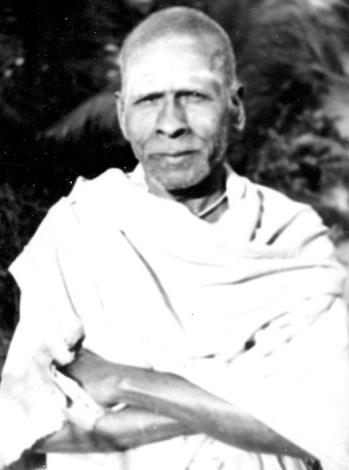
Doraiswamy Iyer was a very well to do and educated man who was blessed by Bhagavan. In contrast, the next attendant was ignorant, innocent and humble. Sivananda Swami was known for his childlike innocence. It was perhaps because of this innocence and inner purity that Bhagavan blessed him, not just once, but on two occasions.
The original Tamil version of the Collected Works of Ramana Maharshi had just been published. It was published under the title Nool Thirattu. The book was available in the ashram bookstore. Some of Bhagavan’s attendants could afford to buy the book. But Sivananda Swami, a complete renunciate, had no money in his possession. My grandfather, the sarvadhikari, being the strict disciplinarian that he was, would not give the book free of cost to anyone. Could Bhagavan leave his humble devotee without this precious book? Bhagavan had an unused notebook. In this notebook, he copied the entire collected works in Tamil. He never revealed what he was doing - he only kept writing for long periods of time. When the task was completed, he called out, “Sivanandam, come here. Where will you go for the money to buy the book? I have myself copied the whole work. Keep it.”
Sivananda Swami felt so ecstatic that he wanted to plunge into sadhana that very instant. However, understanding that he needed Bhagavan’s help to achieve this, he approached Bhagavan, and with childlike innocence asked, “Bhagavan, will you give me a mantra or a special upadesa by which I can emancipate myself?” Bhagavan smiled and replied, “Unakku nee unmaiyaaga iru”. Though, it literally means, ‘Be true to yourself’, its true spiritual content is ‘Abide always [in you] as Awareness’.
Bhagavan called him again after a few days. During this time, Sivanandam, having turned inwards, sensed that Bhagavan was Arunachala. He wondered to himself, “Is it true? Is Bhagavan Arunachala?” The very next day, Bhagavan called out to Sivanandam and said, “Bring me your notebook.” Sivanandam brought the notebook that Bhagavan had given him. Bhagavan kept the notebook for a couple of hours, and then opening the notebook to a particular page asked, “Where is the doubt? Are you satisfied?” Bhagavan was pointing to a sketch of Arunachala that he himself had drawn because Sivanandam had the doubt whether Bhagavan was Arunachala or not. Sivanandam was delighted to receive this clarification.
Sivananda Swami had another wonderful experience on the very night that Bhagavan dropped his body. When Sivananda Swami was in the Nirvana Room in the early hours of the morning, Bhagavan called out to him. Sivananda Swami went up to him and Bhagavan said, “Santhosham,” meaning ‘I am happy’. Everyone else in the room was already tense and anxious because it was obvious that Bhagavan would shed his body at any moment. They all wondered why Bhagavan had said ‘santhosham’ because this definitely was not a happy situation; in fact, many people were in tears. Bhagavan looked at Sivananda Swami and explained, “The English people say ‘thank you’ to express their gratitude; we have no such substitute except ‘santhosham’.” The marvel of it was that at that very moment, Sivananda Swami experienced happiness and bliss.

Sri Bhagavan drew Arunachala as the frontispiece for Sivananda Swami's notebook
I developed a very close rapport with Sivananda Swami during the 1960’s and 1970’s. He once told me,“Ganesan, a few days before Bhagavan’s Mahanirvana, I was alone with him. Gathering courage, I asked him, ‘Bhagavan! The Saints say that God exists and many have even seen God. Is there God? If so, can I see Him, experience Him? ’ Bhagavan looked at me smiling and pouring his municficent Grace on me, said, ‘Sivanandam! You say you breathe. Who breathes? ’ Instantaneously, I was consumed in the ‘Presence of God’!
This same, humble and innocent attendant blessed me saying, “Ganesan, the core of Bhagavan’s teaching is that happiness is one’s true nature. Outwardly, Bhagavan is Arunachala, and inwardly Arunachala is happiness. Remain in that state of happiness. I bless you.”
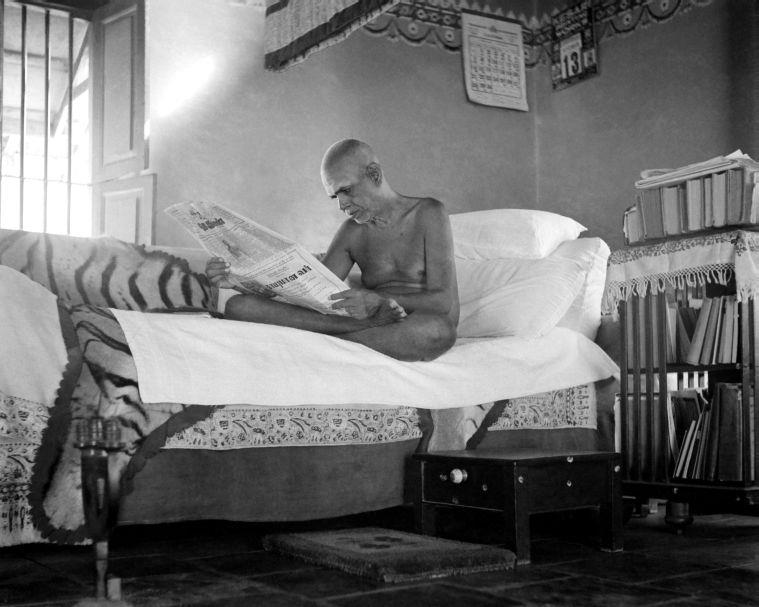
Sri Bhagavan in the ‘Old Hall’. Notice His reference library on wheels, next to Him.