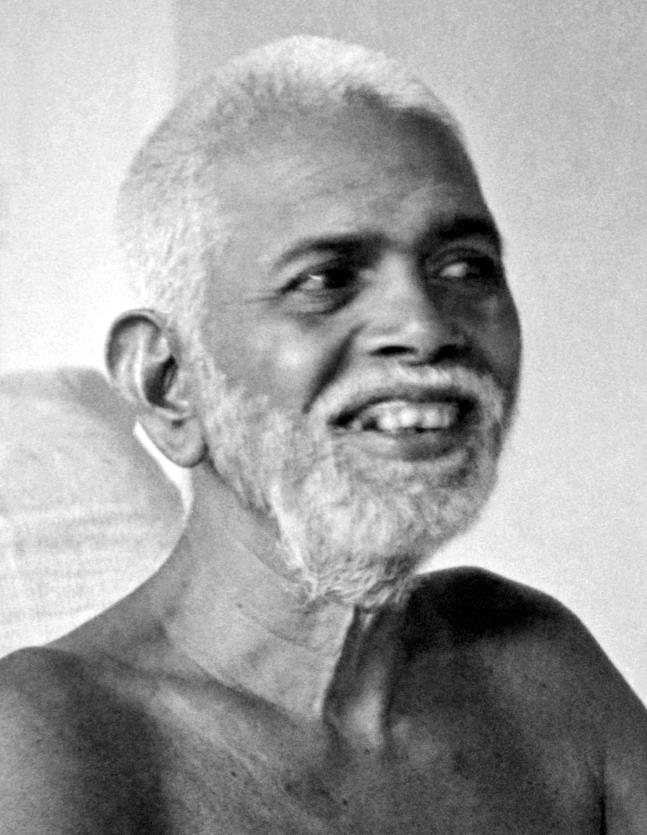
Suri Nagamma
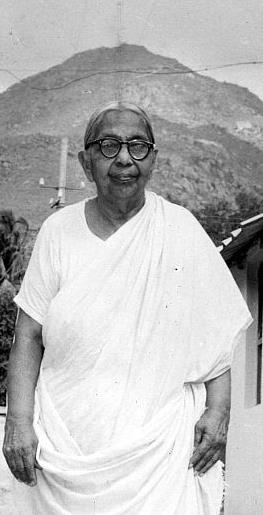
There is a day that falls in the middle of January, when people across India offer their worship and thanksgiving to bulls and cows by resting them, washing them, and adorning them with beads and bells. On that day, every year, I visit the shrine of cow Lakshmi situated between the hill and the Old Hall of Bhagavan. Invariably, my mind goes to Lakshmi’s last day. The year was 1948 and I was witness to the event. Bhagavan sat next to Lakshmi with his hands on her, calming her and blessing her with peace. When Bhagavan left the place, Lakshmi remained motionless with her eyes closed. She remained in this position for more than half an hour. Suri Nagamma then lovingly took Lakshmi’s head in her hands and placed it on her lap. After Lakshmi breathed her last, Suri Nagamma reported it to Bhagavan.
Some days before the first anniversary of Lakshmi’s samadhi in 1949, Suri Nagamma had to go back to her village. On the day prior to Lakshmi’s anniversary, Bhagavan repeatedly asked his attendants, “Has Nagamma come? Has she been informed that tomorrow is Lakshmi’s samadhi day?” The next day too, he persisted with his enquiries. Nagamma did arrive, but a little late. She headed straight to Lakshmi’s shrine and only then did she come to see Bhagavan. As soon as Bhagavan saw Suri Nagamma, he asked, “Did you go to Lakshmi’s shrine?” The triangle of Bhagavan, Lakshmi and Suri Nagamma is inscribed forever in my heart.
About a hundred years ago, child marriages were prevalent in India. If a married girl died, the boy got married again. However, if the boy died the girl was doomed to lead the austere life of a widow for the rest of her life. The girl’s head was often shaved and her attire from then on very plain. She was almost boycotted by society as she could neither go out of the house nor participate in any of the social functions even within the household. So, it became easier for widows who had spiritual aspirations to pursue the spiritual path without succumbing to the temptations of the world. That is why Sri Ramakrishna Paramahamsa said, “I would like to be born in my next birth as a child widow.” When you were a child widow, you were saved from all forms of temptations. There were no attractions and distractions to take one’s time and mind away from spiritual sadhana.
Such was the life of Suri Nagamma. Born into an affluent family, she lost her parents at a tender age. She was married when she was very young and lost her husband within twelve years of age. Nagamma had always envisioned herself along the lines of Sita, the dutiful wife of Lord Rama. This tragedy therefore proved to be too heartbreaking to be reconciled to. She often locked herself up in her room, refusing to see anyone or eat anything. Consequently, she became weak and malnourished. Yet, in the midst of this misfortune, she found immense relief in listening to people sing or talk about saints and sages. This encouraged her to read about saints; it also increased her longing to be associated with them. This spiritual seed that was sown soon blossomed into not just a tree but a garden of beautiful flowers.
Unable to attend school, Nagamma learned her mother tongue, Telugu, on her own. She studied Indian epics like the Ramayana, Mahabharata and Srimad Bhagavatam. She was especially drawn to a particular chapter in the Bhagavatam where the Lord appears as the child Kapila and gives instructions to his mother, Devahuti, on how to attain Self realization. This was the turning point in Nagamma’s life. She began to thirst for all kinds of spiritual texts and nursed the desire of meeting and serving a great sage. One night, Nagamma had a beautiful dream in which a siddha purusha resembling Dakshinamurthy appeared. Brilliant light surrounded the siddha purusha. Nagamma wanted to rise and prostrate before him but she woke up abruptly from her dream. She was terribly disappointed and her yearning to meet and serve a holy sage became more intense.
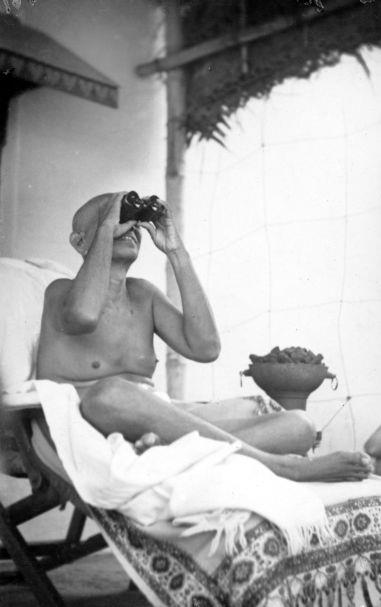
A rare photo of Sri Bhagavan looking at the Hill through binoculars
Nagamma had three brothers. One was a lawyer, another worked in a bank and the youngest brother was an invalid. It fell on Nagamma’s shoulders to take care of this brother. She did this until this brother’s death in 1923, when she was 21 years. During these years, she longed to grow spiritually but her responsibilities tied her down. With the death of her brother, she had to move out of her village into the city of Vijayawada with her lawyer brother because the family did not want her to live alone. This move was a blessing in disguise because she not only came into contact with sadhakas but also had more access to spiritual books in Telugu. In 1939, Nagamma’s other brother, D. S. Shastri, wrote a letter to her describing his visit to Arunachala during one of his business travels. He described the experience of meeting the great sage Ramana Maharshi and how his entire life seemed to have been transformed since then. He urged her to visit Ramana Maharshi and spend some time in Arunachala. He offered her his moral and financial support in this. (It was this brother who later translated Nagamma’s Telugu books into English.)
Nagamma viewed this ‘strange sadhu’ rather skeptically. However, since she did not want to displease her brother, she went to Ramanasramam in July, 1941. One look at Bhagavan and she was both wonderstruck and spellbound. As Bhagavan looked at her intently, she experienced an inexplicable feeling of peace and wonder of wonders, she realized that the siddha purusha she saw in her dream nearly thirty years ago was Ramana Maharshi! Sensing her wonder, Bhagavan smiled at her. Nagamma was certain that she was face to face with God and decided to stay in Tiruvannamalai for good. Since Nagamma had not come prepared to be a permanent resident of Tiruvannamalai, she had to return home to bring back what she needed. She cried when she took leave of Bhagavan since she did not want to be away from him. Bhagavan replied, “I am always with you. Wherever you go, whatever you do, I am always with you.” Nagamma became ecstatic and from then onwards saw Bhagavan in everything. She was filled with joy! Even her relatives realized that the sorrow stricken Nagamma of all these years had finally found her happiness and bliss.
Nagamma returned to Arunachala within three months as she could not bear to be separated from Bhagavan any longer. She had to stay in town since there were no residential places near the ashram and ladies weren’t allowed to stay in the ashram after sunset. Fortunately, she was able to rent a house next to Echammal who used to eat only after serving Bhagavan first. Living next to this saintly woman proved to be a great satsang for Nagamma who was encouraged by Echammal to speak without restraint with Bhagavan. In fact, Echammal specifically told her that when she spoke to Bhagavan she should ask for nothing less than Self realization. One day after she prostrated before Bhagavan she prayed with a trembling voice, “Bhagavan, please help me attain mukti.” Bhagavan, the embodiment of compassion, turned to her and nodded his head in agreement. This reaction of Bhagavan’s was very strange as his usual response to this question would be a counter question like, “Who wants mukti? Who is asking this question?” or else mere silence. When Nagamma told Echammal about this, Echammal commented, “What a fortunate lady you are! Bhagavan has already given you abhayam, protection!” Nagamma asked her what she meant by that and Echammal explained that from then on there would be no more births or deaths for Nagamma. “Bhagavan has taken over you. You have nothing to fear and that is liberation.”
Bhagavan focused all of his attention on Nagamma and like a good student she plunged into Bhagavan’s teaching of Self Enquiry. She was occasionally able to go deep into meditation but she was also distracted by thoughts. She said, “Particularly when seated in front of Bhagavan with closed eyes and meditating, these thoughts would cloud me and when I opened my eyes Bhagavan would be focusing his attention on me.” She said, “Bhagavan scared all my thoughts away from me.” Nagamma was a gifted poet and a talented writer. In those days, women did not approach Bhagavan and converse freely with him though Bhagavan himself did not impose any such restrictions. Things became more difficult on crowded days. On such days, Nagamma would send a note to Bhagavan seeking clarification about her occasional doubts regarding meditation. Bhagavan would admonish her, “Why do you take notice of these doubts? By noticing them, you strengthen them. Plunge within!” In her poetic language Nagamma would say, “Every time Bhagavan looked at me and enriched my inner striving, he steadied it without any frills. It was like water flowing into dry land, making it flower and blossom. My spiritual life was like that.”
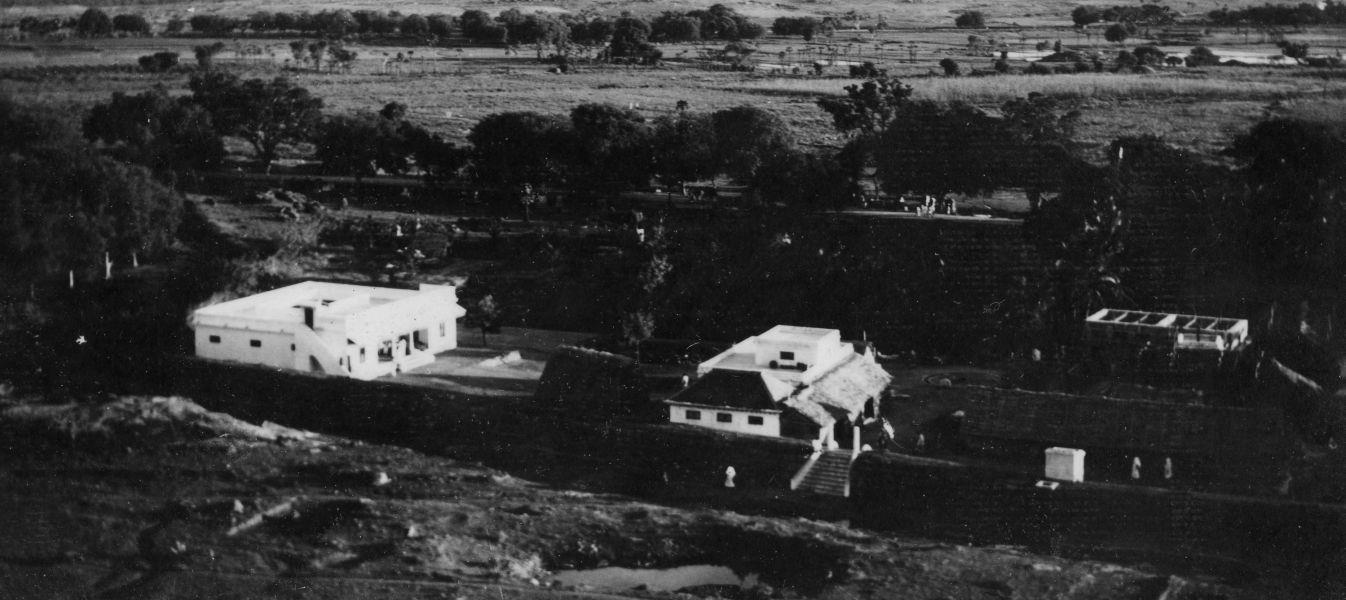
Sri Ramanasramam (in the 1940s)
Suri Nagamma herself narrated the following incident relating to the amrita nadi or the immortal nerve - the nerve that has been extolled by yogic texts and the Hindu scriptures as being similar to the kundalini. In 1942, a Tamil scholar had a lengthy and detailed discussion with Bhagavan on the amrita nadi, believed to be the nerve associated with Self realization. Bhagavan showed interest in the discussion and answered all the pundit’s questions, giving a detailed description of the functions of the amrita nadi. Nagamma felt out of place as she did not know anything of the subject matter. After the pundit left, she approached Bhagavan and began to ask him about what was discussed. Before she could complete her sentence, Bhagavan asked, “Why do you worry about all this?” Nagamma replied, “Bhagavan, you have been discussing this for four days; so I thought I should also learn something about it from you.” Bhagavan answered, “The pundit was asking me what is written in the scriptures and I was giving him suitable replies. Why do you bother about all that? It is enough if you look into yourself as to who you are.” Saying this, Bhagavan smiled compassionately at her. After another two days or so, there was once again another dialogue on the same subject. This time Bhagavan said that it was only a notion, a mere concept. Nagamma intervened to ask whether all matters relating to the amrita nadi were also only concepts. Bhagavan replied emphatically, “Yes, what else is it? Is it not a mere notion? If the body itself is a notion, will that not be a notion as well?” Bhagavan then looked at Nagamma with great kindness. All her doubts were laid to rest. In narrating this incident, Nagamma wanted to make known how important it is to go back to the source when spiritual doubts arise.
Bhagavan understood that each devotee had his or her own inborn gift and took this into consideration when nurturing a seeker. The inborn nature of the individual is not an obstacle to spiritual sadhana - only the countless thoughts are. Suri Nagamma’s gift was that of a poet and a writer. So, Bhagavan offered her spiritual guidance based on this fact. When Suri Nagamma realized that Bhagavan was her guru, verses and songs and poems flowed spontaneously. Initially, she felt rather shy to present her writings before Bhagavan. However, when another Telugu lady began singing these verses to Bhagavan, he appreciated them immensely. Hearing from an attendant that Bhagavan had received the verses positively, Nagamma felt free to place a few more verses before Bhagavan. Bhagavan gave a welcoming smile and said, “There are four verses written in the form of a prayer to me. The second verse is amusing. After I left Skandashram and settled down here, I had no monkeys to serve me. Nagamma pleads with me saying, ‘Why don’t you accept my mind that is like a monkey to serve you? Tie it down or chasten it, but see to it that it does service to you.’ That is the idea behind the verse. In Sivananda Lahari, Adi Shankara says something similar. He says, ‘Oh Siva ! You are a bhikshu, a beggar. Why not tie down my monkey mind to a stick and go about begging? You will get alms in abundance.’” Bhagavan then talked about a great Telugu scholar who had visited the ashram and told Bhagavan that he had read several spiritual articles by Nagamma in various Telugu journals. Bhagavan told the scholar that Nagamma was imparting spiritual knowledge to the public in the form of articles to magazines, journals and newspapers. What wonderful support he gave Nagamma! One day, when Bhagavan was in the hall, he heard someone observe that there was no one to take care of the Telugu manuscripts. Bhagavan at once suggested that Nagamma who was proficient in the language would be able to write down the material. A large bound notebook arrived and Bhagavan himself gave it to Nagamma. From that day on, she became the official writer, copier and custodian of all the writings in Telugu.
With the passing of time, Nagamma’s relatives,- especially her elder brother, D.S.Sastri - and friends, suggested that she record her conversations with Bhagavan since she had the good fortune of being in Bhagavan’s close proximity. To begin with she was rather reluctant, but she ultimately yielded. When Nagamma’s brother, D. S. Shastri, came to the ashram, he presented her with a big notebook, requesting her to write him detailed letters about the happenings around Bhagavan. Nagamma fell for this ‘trap’ and so the letters started. When she had completed writing four letters, she felt tempted to read them out to Bhagavan. Bhagavan appreciated them a great deal. She went on to write a steady stream of ‘ Letters’ and carefully preserved them in that notebook. These letters were later brought out in the form of a book titled Letters from Sri Ramanasramam. The book is a must read for devotees since it portrays Bhagavan as a human being and dwells on his greatness as a master. When Nagamma finished the first volume of Letters from Sri Ramanasramam (in Telugu) and began to write for a second volume, some members of the office staff told her to discontinue writing. In addition to this, they also handed over to the management what she had already written. Nagamma was crestfallen, but was compelled to obey. Before handing over the manuscripts, she placed them before Bhagavan. Eyes welling with tears she told Bhagavan to do whatever he pleased with them. Bhagavan called out to Rajagopal Iyer and asked him to hand it over to the office. Devotees like Muruganar, Kunju Swami and Viswanatha Swami were distressed that Nagamma would not be continuing her work. They exhorted her to continue but she refused to comply. One day, Kunju Swami explained to Nagamma the reason behind what appeared to be the management’s harsh stance. He said, “You must understand, Nagamma, that there are sufficient reasons for the ashram authorities to ask you to stop writing. Some time ago, when Paul Brunton, Munagala Venkataramiah and others wrote, some people copied their work, published them as their own writing and made money. But you have no mercenary intentions, do you? In that case, why do you hesitate? Even if it is being temporarily banned, these letters will eventually be of immense value to future generations. It is not an uncommon experience for obstacles to be encountered when doing any good work, isn’t it? You should not stop writing just because of these obstacles.”
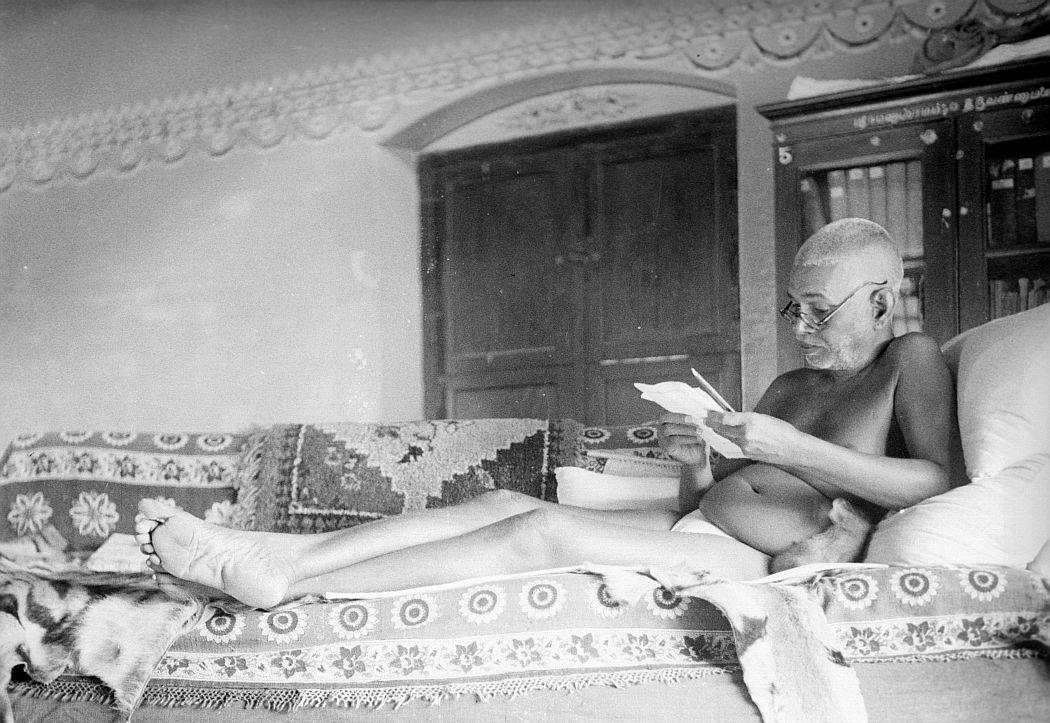
Sri Bhagavan reading Suri Nagamma’s Telugu article
Nagamma remained unconvinced. She consulted two reputed Telugu scholars, Chinta Dikshatulu and Sitarama Shastri. Like Kunju Swami, they too were very encouraging. As a matter of fact, Sitarama Shastri pointed out to Nagamma that she had a natural and innate ability to understand the inner meaning behind Bhagavan’s words - something that not all devotees were capable of - and hence it was her duty to share this knowledge with the rest of the spiritual world. Nagamma felt reassured and encouraged by these words and resumed her writing. Every now and then, when the management enquired whether she was still writing, she would deny it. However, this weighed heavily on her and one day her pangs of guilt compelled her to go to Bhagavan to confess everything. As Nagamma entered the hall, she found Bhagavan in the midst of some devotees. He was narrating a childhood episode to them that had occurred in Madurai. He was referring to the incident when he lied to his aunt as he was leaving home. At this point, Bhagavan spotted Nagamma and focusing his attention on her said, “It is not that we speak the lie; some force makes us to do so. Even Adi Shankara was able to take sannyas only after lying to his mother.” Nagamma’s reluctance to continue her work vanished and the outcome is the subsequent volumes of Letters from Sri Ramanasramam (in Telugu). [These volumes in Telugu were translated into English by her elder brother, D.S.Sastri, and brought out as a single volume.]
During the last years of Bhagavan, Nagamma had the custom to offer to Bhagavan a new loin cloth the evening before Ugadi, Telugu New Year’s day. In March1950, which was to be the last Ugadi for Bhagavan, when Nagamma went to offer the customary loin cloth, she was unsure whether Bhagavan would accept her offering since his body was already very weak and suffering tremendously. Bhagavan accepted the offering and requested his attendant to keep it aside so that he could wear it the following morning. The next morning when Nagamma went to see Bhagavan, he asked her whether it was Ugadi and also if it was Vikriti (the name of the year). This happened to be the last conversation that Nagamma had with Bhagavan. On the day Bhagavan departed, April 14, 1950, Nagamma stood in line like all the other devotees to have her last darshan of him. When her turn finally came, she found that he had his eyes closed. She wept uncontrollably for she wanted him to bless her. Bhagavan opened his eyes, which seemed to be pleading, “Please allow me to go. This body is suffering.” Weeping inconsolably, and with a heavy heart, Nagamma consented. Bhagavan smiled at her benevolently. After Bhagavan attained samadhi, Nagamma returned to her village.
I was fortunate enough to bring her back to the ashram in 1980 so that she could stay on and write her reminiscences. It was originally written in Telugu by her and later on translated by her brother into English under the title My Life at Ramanasramam. When Nagamma fell ill, her relatives took her back and then moved her to a hospital in Bangalore. I could not physically go to Bangalore to take care of this gem of a devotee. I requested my good friend A. R. Natarajan to attend on her. Needless to say, he did his job to perfection. When Nagamma passed away in Bangalore, I requested A. R. Natarajan to attend the last rites as a representative of Ramanasramam which he did. He was also one of those who carried the body of the wonderful devotee to the cremation ground.
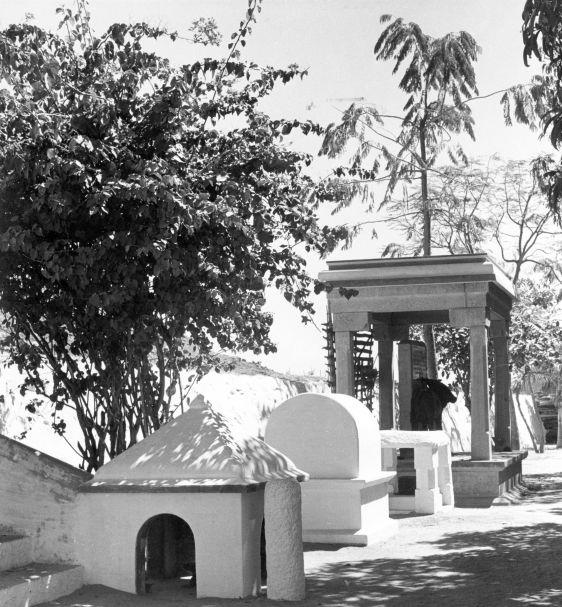
Cow Lakshmi’s samadhi
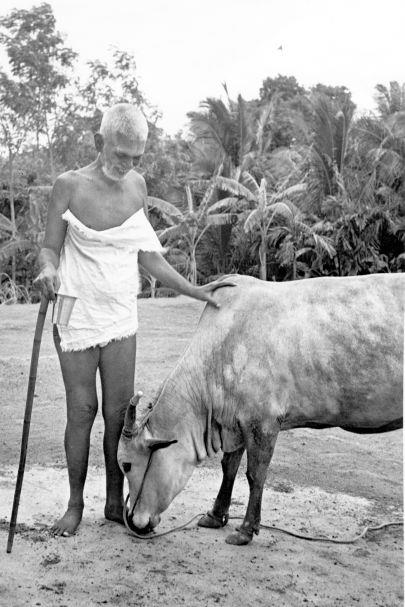
Seekers all over the world will forever be indebted to Nagamma for her writings. Personally, I am eternally grateful to Nagamma for taking care of cow Lakshmi during her final moments. Lakshmi was the pet animal of Bhagavan, as perhaps Nagamma was his pet human. So, I cannot but say a few words about Lakshmi while talking about Nagamma. Bhagavan treated all forms of animal bodies with the same love, gentleness and grace. Yet, it would be no exaggeration if I said that Lakshmi, a non-human, received his grace in the fullest sense and got liberated, attaining a state of perfect inner equilibrium. There is no doubt that cow Lakshmi was the most fortunate saintly being, because Bhagavan felt one with her and gave her liberation by constantly touching her during her final moments. The last time he had done this was a few decades ago at Skandashram - for his mother, Azhagammal.
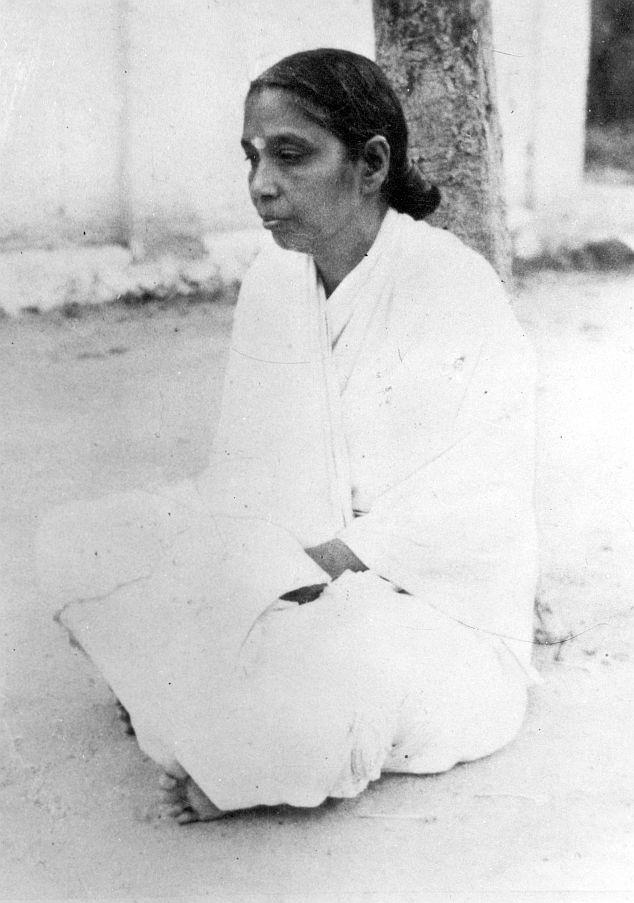
An early photo when Suri Nagamma surrendered to Sri Bhagavan
Suri Nagamma gives an account of the incident with Lakshmi: “When Bhagavan came to the cowshed of Lakshmi on the final day, he went straight to her and sat by her side on the hay. He then tenderly lifted her head with both hands and placed it on his thighs. He gently and lovingly passed one hand over her face and then her throat. Next, he placed his left hand on the head and with the fingers of his right hand began pressing from her throat down to her heart. Lakshmi remained calm, free from the ties of the world and free from pain, as though she were in a state of samadhi.” When Nagamma informed Bhagavan that Lakshmi was no more, Bhagavan came to the cowshed, lifted her head with both his hands and said, “Lakshmi, Lakshmi!” He turned to the devotees gathered there and said, “It is because of her that our family has grown to this extent.” Bhagavan said this because Lakshmi came to Bhagavan in 1926 as a calf. Bhagavan named her Lakshmi. She became very attached to Bhagavan. After her arrival, the cowshed was built; the ashram too, flourished after this. On the last day, looking at Lakshmi, Bhagavan, choked with emotion, enquired, “Do you notice that the right ear is raised?” He pointed this out because it is said that when people die in Kashi, Lord Siva whispers into their right ear and liberates them. What Bhagavan meant was that Lakshmi was indeed liberated. The tomb that was constructed for Lakshmi was raised under Bhagavan’s personal supervision and guidance in accordance with the injunctions laid down in the ancient text, Thirumandiram. The text gives details on how the body of a realized being should be interred. Bhagavan personally wrote a verse in Tamil confirming that Lakshmi had attained mukti. When Devaraja Mudaliar queried whether Bhagavan had used the word to signify her death, he stated firmly that it signified her final spiritual emancipation.
Cow Lakshmi and Suri Nagamma are now absorbed in Bhagavan Ramana. Once, someone asked, “Bhagavan! I want your grace.” Bhagavan replied, “What is, is only grace.”