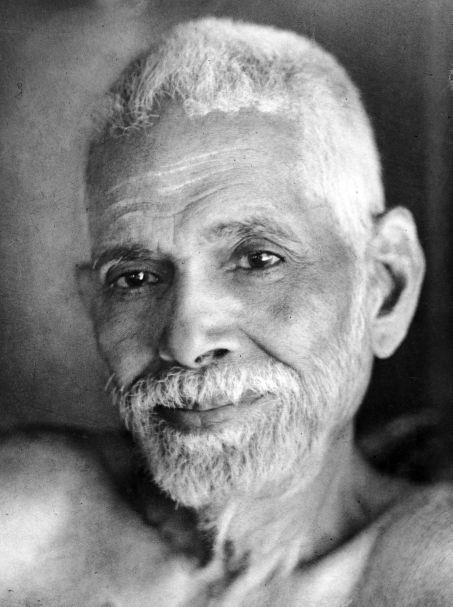
Arthur Osborne
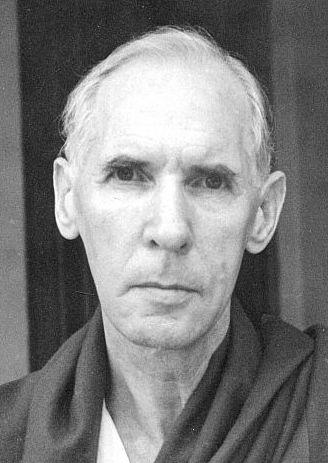
My father used to say about me, “Whoever Ganesan meets he will immediately call him a saint, a sage or a Siddha Purusha.” This was an exaggeration. If we are Jnanis like Bhagavan, we will see everyone as Jnani or rather as Jnana. As we are not, we should see good in everyone. Many of us are not even able to do that. But, ought we not to recognize saintliness when it is unmistakably present in someone? I saw saintliness in devotees like Arthur Osborne, Muruganar, Munagala Venkataramiah, Chadwick, Suri Nagamma and a host of others; and, I realized that they brought me closer to Bhagavan. Having said this, I should add that my father was courteous to all and feared none in his life. He said that he sensed Bhagavan being always with him and around him – protecting him.
Arthur Osborne came to Ramana Maharshi only in 1945. He stayed with the master for only five years, with brief gaps.. But they were years packed with his devotion and the Master’s grace. I feel that Osborne was to Bhagavan what Swami Vivekananda was to Sri Ramakrishna Paramahamsa. Though Bhagavan’s spiritual message was meant for the whole world, Arthur Osborne was the English voice, the western voice - you may even call him the modern voice - to carry and spread Bhagavan’s direct teaching of Atma Vichara (Self-Enquiry) all over the world. Arthur Osborne played a most important role in this. We are going to share how Bhagavan chose him and pointedly matured him in the direct teaching of Self-Enquiry.
While in the body, Bhagavan ripened Osborne spiritually through his look, presence and various other ways. After Bhagavan dropped the body, he made Osborne carry on this mission through appearance in dreams. From the beginning, Bhagavan, in his own mysterious, mystical, but simple and natural way, drew Arthur Osborne to himself, for the sole purpose of spreading his direct teaching. It was my good fortune to work closely with Osborne for six years. What a lot did I learn from him !
Arthur Osborne ably shouldered the responsibility of upholding the direct teaching of Bhagavan through his life and his brilliant writing. He had the rare combination of intellectual clarity, intuition and poetical ability to articulate his experiences. Those who read Osborne’s books, especially Ramana Maharshi and the Path of Self-Knowledge, will know what a lucid writer he was and how he could find effortless expression where others would fumble or be at a loss for words. Many have written wonderfully about Bhagavan’s teachings but among those who wrote in English, Osborne stands out, surpassing even Paul Brunton. Arthur Osborne’s devotion to Bhagavan was complete and he gave to Bhagavan his whole life together with his many and varied talents. All these he gave without any reserve and without any thought of himself.
It was in 1960 that I came to Arunachala to stay permanently. After an illness of three months I completely recovered and decided to dedicate myself totally to Ramanasramam. In the 1960s, there were only ten people or so living in the ashram. When I arrived, Osborne was standing with open arms under the illupai tree at the entrance of the ashram. I felt as if Bhagavan himself was receiving me with a smile of appreciation and acceptance of my decision. That one look, that one smile of Arthur Osborne, made my life flower into total dedication to spiritual life. He said “Welcome, Ganesan! We all knew that you will return here to your home. Arunachala is our home and Bhagavan is our mother. Ask Arunachala, ask Bhagavan, only one boon, ‘Give me Self-realization.’ Do not ask for mundane things because he will certainly give whatever you ask for. He is a great giver. If you ask for a wife, house, property, power and position he will most assuredly give it to you, in greater measure as well. But then, he will send you away from Arunachala.
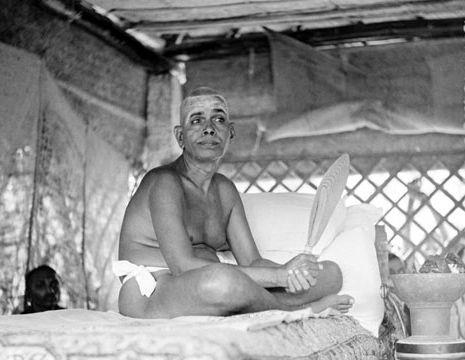
If you ask for Self-realization and nothing else, he will retain you here and give himself to you. Arunachala is Self-realization, the pinnacle of jnana. Welcome home, Ganesan! Be happy.” Who uttered these words? Not just an ordinary person, a westerner and an intellectual, but one who had stayed unmoved from Arunachala, keeping Arunachala in his Heart. Of course, all these are true! These are glorious words and we must preserve them in our Heart. Great men’s words are true all the time, to all, under all conditions.
Who was Arthur Osborne? He was born in London in 1906. His father was a school head master and his mother was a simple, pious lady interested in poetry and gardening. Osborne inherited these two traits from his mother. He wanted to be a gardener, a farmer, all his life. But his father put him in Oxford and he came out brilliantly with ten gold medals. He fulfilled his parent’s desires. But all his life he remained a lover of poetry and gardening. All his spiritual experiences, apart from those that happened in the presence of Bhagavan, took place in his garden. From his childhood, he sought the deeper and higher purpose, the meaning of life. He told me that even as a small child playing in the grounds, he felt worldly living was meaningless. He could not share this feeling with anybody. The words of Jesus Christ were his only support: “He who seeks shall find.” He told me this made him a seeker after truth all his life. At a particular stage, he came across the writings of the French philosopher Rene Guenon and he was thrilled because Rene Guenon’s teaching was, “Being is one.” He immediately felt that this teaching was the truth. His restlessness and discontent over the futility of worldly living dropped off with the realization that life has, after all, a meaning. This is what he shared, “If being is one and there is no other, then I cannot be any other than that one being. Therefore, to realize one’s true being is to realize the identity with that absolute one being. It was the beginning of my quest, a quest from which I never swerved or turned aside.” This was even before he knew anything about Bhagavan.
Then he met Lucia, fell in love with her and married her. Both of them had similar aspirations in life as she was also searching for the truth. They were guided by Rene Guenon to another guru who gave them a very rigorous sadhana of chanting incantations which they followed meticulously. During that time, being a keen intellectual in addition to being a seeker, Osborne studied and even practiced simultaneously, the tenets of Sufism, Buddhism, Christianity and Vedanta, gaining mystical erudition in all of them. And look at the beauty - all this prepared him for the finale. He then got a job in the University of Bangkok in Thailand and took his wife and three children there. Wherever he went, he was always in contact with members of Rene Guenon’s group. One of the members, David McIver, sent them a photograph of Ramana Maharshi and two of Bhagavan’s books. He also cautioned them that Ramana Maharshi was not a guru as he did not give initiations or accept anyone as a disciple. But Arthur and Lucia Osborne were captivated by the picture of Bhagavan and desired to go to India and meet Ramana Maharshi.
Being a very hot summer, they first went to Kashmir where they were met by David McIver who also owned a cottage opposite to Ramanasramam. After spending a few weeks, Osborne had to go back to Bangkok. Fortunately, David invited Mrs. Osborne and the three children and took them to Tiruvannamalai. When Osborne went to Bangkok, the Second World War broke out and the Japanese arrested him and put him in jail. For three and a half years he was in jail. Arthur Osborne’s only solace was Bhagavan’s picture and the two books. When the Japanese came to arrest him from the university campus, some urge prompted him to take these three things. While in the prison camp, he created and tended to a very nice garden. His personality, and his talks there, drew many people to him. One among them was Louis Hurst, who came to Bhagavan after the Second World War.
Far away in Tiruvannamalai, Mrs. Osborne had by then already got Bhagavan’s darshan. The moment she saw Bhagavan’s eyes - Bhagavan gave her a pointed look - she felt absolutely transformed. Bhagavan took special care of Mrs. Osborne and the children. To her husband in prison, Mrs. Osborne wrote about how Bhagavan’s eyes had the innocence of a small child together with the unfathomable wisdom and immense love of a sage. Meanwhile, the children prayed to Bhagavan, “Bhagavan, we are writing letters to our father but we do not know whether he is alive or not. Please keep him alive and bring him back soon.”
Osborne told me that when he was in the prison, prominent British prisoners were sometimes taken away and executed. When the special force came to take Osborne, everyone was sure that he was going to be shot. Osborne told me, “The last thing I looked at was Bhagavan’s picture and the two books. When I was taken in front of the firing squad, I closed my eyes. I did not pray to Bhagavan but Bhagavan’s picture came to my mind and for some unknown reason they released me and put me in a concentration camp.”
While he was suffering, his children back in Tiruvannamalai went on praying to Bhagavan for their father’s safe return. Bhagavan never gave an answer until the war ended. The day when Osborne was released along with the first batch of forty prisoners, his son Adam’s prayers were answered by Bhagavan: “Yes, Adam’s father is coming back.” When he came to Arunachala, Osborne was in a debilitated mental state because of the torture in the concentration camp. Intellectuals were tortured to brainwash them. When Bhagavan was told about Osborne’s imminent return by train, his attendant, T. P. Ramachandra Iyer, on seeing Bhagavan’s concern, asked, “May I also go?” Bhagavan replied, “Yes, you also go.” So, Bhagavan’s representative was also there when Osborne was brought back. The only person he could recognize in his poor mental condition was his wife. She came crying to Bhagavan. Bhagavan told her, “Please bring Osborne here morning and evening and make him sit where I can see him.” This happened till he became completely alright and continued even afterwards. Osborne told me, “Bhagavan saw to it that I sat where he could see me. One day, when two or three people came and sat between me and Bhagavan, he even asked those people to sit elsewhere so that he could see me, which was very, very unusual for him.”
However, Bhagavan did not reveal himself to Osborne on the very first day. Some days later, on a festive occasion, Bhagavan concentrated his attention on Osborne and the change came with all its immensity. This is how Osborne describes it: “Bhagavan sat up facing me and his luminous eyes pierced into me, penetrating intimately with an intensity which I cannot describe. Then arose from within, a quietness, a depth of peace and an indescribable lightness and happiness.” This is what is written in the book. What Arthur Osborne himself told me was, “Two search lights came into my body and then divinized every cell in it and that was the first initiation and the first realization”.
After this, Osborne began to understand what the grace and blessings of a guru could be. It was this initiation by look that vitalized him and made him follow Sri Bhagavan’s teaching of Self Enquiry, a quest for which his intellectual bent of mind was perfectly suited. Bhagavan poured his love and attention continuously on him. Osborne was very meticulous and regular, coming every morning and evening as he went deeper and deeper within. He fully understood what Bhagavan meant by saying that the only purpose of the outer guru was to invoke the inner guru. When he came to Bhagavan, he was again told by McIver that Bhagavan was not a guru and he never gave initiation or accepted disciples. Osborne now felt that if Bhagavan was not a guru, then the word ‘guru’ had no meaning. Bhagavan had given him initiation by look which transformed him and made him a disciple. So, there was no question about Bhagavan not having disciples.
The constant practice of Self Enquiry began to awaken an awareness of the Self as Bhagavan guided outwardly and also as the Self within. Osborne understood, and said, that the specious theory that Bhagavan was not a guru simply evaporated in the full radiance of his grace. This initiation and its consequences changed the course of his spiritual life. He could no more practice his earlier methods of sadhana. He was a little disturbed about this and sought Bhagavan’s permission to drop them. Bhagavan gave it immediately saying, “Yes, all other methods only lead to Self Enquiry.”
The moment for the final decision came. He was staying with Bhagavan when the British government announced that all the released British prisoners of war in India would be accommodated in Britain with all comforts. The British High Commission sent letter after letter to the Osbornes about this. They did not even show these letters to Bhagavan to ask him his opinion. They were certain that they did not want to leave Bhagavan and go anywhere else. When the last ship was to leave India for Britain, the British High Commissioner sent a telegram to alert them. Mrs. Osborne told me that she did not even feel like taking this telegram to Bhagavan because it was already confirmed for them that Bhagavan was their sole refuge and that there was no other worldly life than staying with Bhagavan.
But, Osborne was a family man and had to earn a little money. So he got a job in Chennai as an editor in a reputed daily newspaper. Though he did not want to go, he had to. Before he left for Chennai, one of his friends gave him an oil portrait of Bhagavan. He took it to Bhagavan who holding it in his hands said, “Osborne is taking swami with him.” That portrait, Osborne told me, looked at him with the love and compassion of a guru and spoke more profoundly than all the other pictures of Bhagavan. This adorned his room and whenever he wanted to make any decision, he would first look at that portrait and only then decide.
Every holiday and free day, he would rush back to Tiruvannamalai - to Bhagavan and his family. When he came, Bhagavan used to pay special attention to him. Once, after Bhagavan’s second operation on his arm, Osborne came unexpectedly in some friend’s car. Bhagavan was taking rest in the dispensary verandah. Usually, Bhagavan was discreet in showing outward signs of his grace. But this time, surprised by Osborne’s unannounced visit, Bhagavan gave himself away. His face lit up with pleasure and love on seeing Osborne. He looked at him for quite a while with indescribable tenderness and grace. Mrs. Osborne and Arvind Bose, standing immediately behind Osborne, felt that they had never seen Bhagavan look at anyone in such a way. Osborne himself felt transformed. The graciousness of Bhagavan’s reception melted Osborne’s heart and awoke a feeling of guilt and gratitude as to how great was the reward for such little effort made. It strengthened even further, the bond between this wonderful disciple and his divine Master.
Bhagavan continued to bless Osborne to be deeply and steadily rooted within the Heart. The purpose of the outer guru is to awaken the inner guru. The fateful day when Bhagavan left his body, Osborne was there. It did not fill him with sorrow. Instead, it only made him plunge within. He felt Bhagavan’s grace more abundantly and his support more powerfully. Some days after Bhagavan’s Mahanirvana, Bhagavan appeared to him in his dream. In the dream, Osborne was in the Old Hall and Bhagavan asked him to come near the couch. Osborne went and knelt before Bhagavan and Bhagavan put his hands on Osborne’s head in blessing. When Bhagavan put his hand on his head, he had a feeling that Bhagavan was asking him to write about his direct teaching. He then wrote seven articles. They were brought out later as a book titled Ramana Arunachala. Every one of us, every seeker should read this book. That was the beginning. Soon, a cascade of books started coming from Osborne: Ramana Maharshi and the Path of Self Knowledge, The Collected Works of Ramana Maharshi, The Teachings of the Maharshi in His Own Words, The Incredible Sai Baba, Rhythm of History, Buddhism and Christianity in the Light of Hinduism, Gautama the Buddha, The Question of Progress and a few more.
After working in Chennai for some time, Osborne had to take a job in Calcutta in 1952. During the holidays, he would come rushing from Calcutta to stay in Arunachala and be at Bhagavan’s shrine. Osborne had his second awakening in Calcutta. This is how he described it: “I was alone in my Calcutta room when I woke up and sat up in bed and I just was my Self, the beginningless immutable Self, and I thought that nothing has changed. There was no excitement, no joy or ecstasy. In the wholeness of simple being, there was the thought that it was impossible ever to be bored. The mind seemed like a dark screen that had shut over consciousness and was now rolled up and pushed away. It is the mind that craves activity and feels bored when it does not get it. The Self is untouched by activity and abides in its pristine state of simple happiness. I do not know how long the experience lasted, and in any case, while it lasted it was timeless and therefore eternal. Imperceptibly, the mind closed over again but less opaque, for a radiant happiness continued. The afterglow continued for several weeks only gradually fading out.”
When he was in Calcutta, his friends were all talking about the Sai Baba of Shirdi. He had read one or two articles about him. Some of his friends wanted him to write an article on Sai Baba, but he was reluctant to do so. That night, Bhagavan appeared to him in a dream and commanded him to write on Shirdi Sai Baba. When in the dream Osborne confessed that he did not know much about him, Bhagavan instructed him to go to the shrine and that Sai Baba would himself tell him what to write. Bhagavan specifically said, “Sai Baba should be known to the western world so you have to write.” This was the inspiration for him to go to Shirdi and write the book, The Incredible Sai Baba.
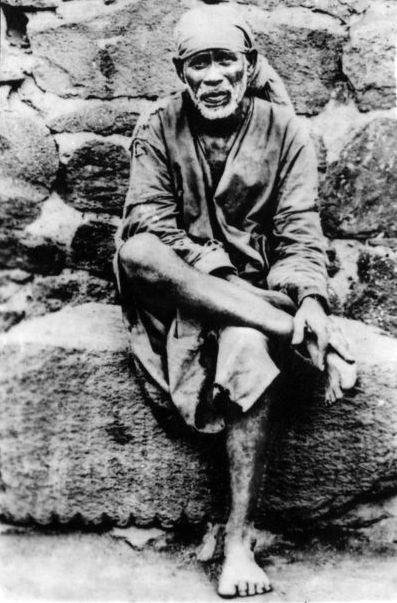
“The Incredible Shirdi Sai Baba”
In 1958, he came back to Tiruvannamalai and never left again. From 1960, I had the unique privilege to be with Osborne almost constantly. It was purely Bhagavan’s doing that we both came together. Osborne was always very affectionate towards me. In 1950, when he wrote Ramana Maharshi and the Path of Self Knowledge, there was a committee of seventeen members in the ashram at that time who said that they would publish it. At the last moment, they had to back out and he was therefore very disappointed. T. K. Sunderesa Iyer and I were there when he came out after a meeting with the committee. We told Osborne that maybe Bhagavan wanted him to publish it outside of India so that it could reach a wider circle. Subsequently, he sent the manuscript to Rider and Co. in London and they published it.
In 1963, there was crisis in the ashram as there were not enough funds. The ashram was struggling. I was handling the ashram correspondence along with T. K. Sunderesa Iyer and many letters used to come enquiring if the ashram was still running and if Bhagavan’s teaching was maintained there. When I was working earlier in Mumbai, I came to know that by bringing out a journal one could raise funds by collecting advertisements from companies. I felt that if we started a yearly bulletin from the ashram, it would serve the manifold purpose of giving information about the ashram, spreading the teachings and raising funds through collecting advertisements. Since Osborne was a brilliant writer and a friend, I could ask him to correct the language and help produce the journal. With that thought, I went to Osborne’s house and explained to him about this idea of a yearly bulletin and how it could bring the ashram financial benefit while it kept devotees informed about the present working of the ashram. I sought his blessings and active cooperation. He listened with keen attention and at the end, held my hands and shed tears of joy. It was very surprising as I had never seen him so deeply moved. He said, “Ganesan, you do not know what a blessing you have brought me today. A few weeks back, I had a dream in which Bhagavan appeared. When I knelt before him, he handed a few copies of a magazine to me and asked me to take it. I understood that he wanted me to be an editor and I had to obey my master’s commandment. But, which Indian magazine would I fit in? My elder brother was a reputed editor of the British magazine, The Economist. Was I to seek employment under him? I was pained at the thought of leaving Arunachala. But if that was how Bhagavan would have it, I was prepared to even leave Arunachala. Now I know what Bhagavan meant. What a joy!”
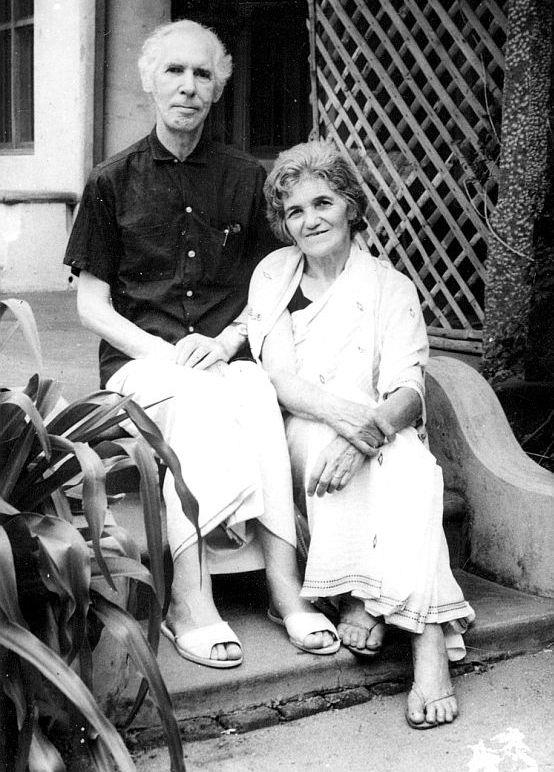
Arthur Osborne, Lucia Osborne
He continued with great enthusiasm, “You know, Ganesan, during the lifetime of Bhagavan and afterwards, I was asked by many to run a journal for the ashram. I repeatedly refused and said that Bhagavan’s teaching was only meant for practice. It is also so precise and concise, one cannot write about it continuously in a journal month on month. I knew I disappointed many devotees, but I stood firm. Now, Bhagavan has commanded me to spread his teaching of atma vichara through this magazine. So Ganesan, we are going to start it.” I was thrilled by his enthusiasm. Osborne himself decided the name of the journal: The Mountain Path. ‘The Mountain’ he said represented Arunachala and the ‘Path’ represented Bhagavan’s direct path of Self Enquiry. Then came the task of fixing the subscription fee - we were completely at sea about it. Incredibly, the next day we received a money order of five rupees from a stranger, H. R. Chadda of Calcutta. There it was written, “The annual subscription for the ashram journal. More details follow in my letter.” Yes, Bhagavan had decided what the annual subscription should be and we were happy that though the format of the magazine had not been yet decided, the subscription had already been fixed! A few days later, Chadda’s letter arrived: “I had lost touch with the ashram. Bhagavan, whom I met in the late thirties, is my guru and he still is my all. The other day he appeared to me in a dream and showed me a journal and I saw very clearly ‘Rs.5’ written on the cover. I take it that there is an ashram journal. Please enroll me as a subscriber.” Next, another devotee, T. N. Krishnaswami, handed over a cheque for one hundred rupees for the first life subscription. This is how The Mountain Path started. Osborne and I became very close while collaborating on it. He worked very hard to collect articles and he himself wrote many of them. And my efforts to raise funds for the ashram, by collecting advertisements, were crowned with success.
The satsang I had with Arthur Osborne is filled with fond memories. He guided me more through his silent presence than through words. One day, I went to him with a personal problem. I was harassed by a dream in which a black apparition descended and sat on my chest and throttled my throat. I was alone, I could not breathe and I did not know what to do. I was neither afraid nor curious to know what it was. Its strangulating grip was tightening, tightening. I felt I could not breathe and that I was going to die when suddenly, the mantra ‘Om Namo Bhagavate Sri Ramanaya’ started sounding repeatedly by itself from within my Heart. To be honest, I never believed in japa or mantras in those days. This came of its own accord, ‘Om Namo Bhagavate Sri Ramanaya’ - obeisance to Bhagavan Sri Ramana Maharshi. The black apparition disappeared and I woke up. I could not make out whether it was a dream, my imagination or reality. I ran to Osborne and described the whole experience to him with the minutest detail. After listening carefully, he patted me on my back with a smile and said, “Ganesan, this is a genuine spiritual experience. You are fortunate. You have been given the mantra, ‘Om Namo Bhagavate Sri Ramanaya’. This is what they call ajapa japa. I shall tell you about my own experience.”
“When Bhagavan was in the body, we who belonged to the circle of Rene Guenon were drawn to Sri Bhagavan like iron filings to a strong magnet. From among this group, David McIver was fortunate to stay with Bhagavan under his guidance and translate into English the works of Sri Bhagavan and also works like Tripura Rahasya, Advaita Bodha Deepika and other books recommended by Sri Bhagavan. Then, attracted by a yogi in Kerala, he took him as a guru and settled down there. David, who was very fond of me and my wife, felt very strongly that we should also become disciples of his guru. His contention was that for spiritual fulfillment a spiritual guru was absolutely essential. Since Bhagavan never claimed himself to be a guru, we should leave him and accept a guru who was prepared to accept us as disciples. There was a spate of correspondence between us in this regard and all these letters from and to David were shown to Bhagavan without fail. My replies claiming Bhagavan as my only guru, and that if Bhagavan is not a guru then the term guru has no meaning at all, were all approved by Bhagavan with a nod of his head.”
“One day, I received a nasty letter warning me of dire consequences if I did not immediately leave Ramana and go over to his guru. I did not show this letter to Bhagavan, but I was terribly upset over it. I thought I might show it to him that evening. That afternoon, I was doing some weeding work in my garden when I suddenly heard a thudding sound behind me. Some animal like presence jumped down from a tree and approached me from behind. In no time, it got on my back and sat down. It felt like a bear as it had a lot of hair. It was holding onto me with its hind legs and gripping me around my chest with its hands from behind. For me then Ganesan, there was neither any curiosity to know what it was, nor any fear. There was just a calm detachment. Undisturbed, I continued with the weeding. Noticing my indifference, the animal started increasing its size and weight. Soon, I had to bend forward owing to the burden on my back. The weight became unbearable. Still I was undisturbed and felt no fear. Suddenly, it gripped my throat with its hairy hands and started throttling me. I was becoming breathless as its grip tightened more and more. Even this did not produce in me a tinge of fear. I remained fully alert and undisturbed. I felt I could breathe no more, the grip continued to tighten and without any trace of fear I felt I was going to die. Then the miracle took place. At the thought of death, I heard within me the sound ‘Arunachala Siva, Arunachala Siva, Arunachala Siva, Arunachala Siva’. Although I was not making the sound, something else within me was doing it. The intensity, volume and speed of the japa increased and it was a delightful experience to hear within you a japa pronouncing itself, while at the same time you were being aware of the grip of death. As the ajapa japa continued, the grip on my neck started loosening and the size and weight of the animal grew less and less. Suddenly, it jumped off from my back and started running back towards the tree. I could hear its steps rushing back and it climbed the tree and disappeared. Immediately, I got back to my normal senses while the ajapa japa continued uninterruptedly.”
“The next day, when Bhagavan was returning from his stroll up on the hill, I met him and showed him the letter and narrated to him what had happened the previous evening, not omitting a single detail. Bhagavan listened to me and when I stopped, said with his benign smile, ‘That is all they can do. Everything is alright.’ By ‘they’ he must have meant the guru who was a past master in black magic and who made David write me that threatening letter. Bhagavan is a purna jnani, a complete and perfect sage. When you come under the protection of a perfect satguru, even a bad experience caused by black magic is a blessing in disguise. I had thus the good fortune of being initiated into the ajapa japa of ‘Arunachala Siva ’ and you got the fortune of being initiated into the ajapa japa of ‘Om Namo Bhagavate Sri Ramanaya’.”
The closeness between Osborne and me was remarkable and we continued with collaborating on The Mountain Path successfully. It was fast becoming a reputed spiritual journal and it brought erudite seekers like Douglas Harding, Robert Linssen, Joel Goldsmith, Wei Wu Wei, Thomas Merton and many reputed writers from all over the world to be in touch with Ramanasramam and in contact with Bhagavan’s teaching. Osborne’s remarkable ability in presenting Bhagavan’s teaching of Self Enquiry is clearly seen in his brilliant editorials and the numerous articles he wrote under his various pseudonyms - Sagittarius, Abdullah Kutbuddin, Sebastian Qubbins, Boddhicitta, Saidas and A. Rao. He contributed articles on Christianity, Buddhism and Islam in each issue of the journal. When accused of using The Mountain Path for preaching Christianity and Islam, he explained calmly, “Ganesan, I am a staunch Christian and I still remain so. For some time, I was in love with Islam and went to the mosque along with other Muslims after getting converted to Islam. I have studied Buddhism and stayed in Buddhaviharas and known Buddhism thoroughly. I therefore know the difficulties that Christians, Buddhists and Muslims have in practicing the teachings of Bhagavan’s atma vichara. By such articles, I am only building a bridge through which all can reach our beloved master and gain his guidance on his direct path of Self Enquiry.” The Mountain Path was now well established and commanded respect and plaudits from all over the world. The main aim of starting an ashram journal was more than fulfilled and a steady flow of new visitors, mostly young seekers, came to the ashram. Many projects like the completion of Sri Bhagavan’s samadhi shrine, the meditation hall, the centenary celebrations and a number of guest houses became a reality, thanks in no small measure to the good news spread through the pages of The Mountain Path.
In 1968, I was introduced to a new dimension of Osborne’s spirituality. I was going to Osborne’s house at all times of the day. However, for one week I had to be away. After I returned, when I went to his house, I found him stretched on his bed, reduced to skin and bones - all in just one week’s time. Then, I noticed the change and the transformation in his face and I was wonderstruck. It glowed with a bright and beautiful aura. My inner voice told me, “Osborne has realized.” This was his final realization. He opened his eyes and gave me a warm welcome with a lustrous look. He said, “Ganesan, I am saved. The Mountain Path will go on, do not worry.” I sat next to him overwhelmed with joy. I held his hand and sat gazing at his radiant face. I spent half an hour with him, then went home and announced to my mother, “Amma, Osborne is realized. Please go and see him. His face shines with light.” She went to Osborne’s house in the evening and confirmed what I had told her. Although after a few days, Osborne’s physical condition improved, he spoke to no one. His attention was totally drawn inwards and he showed signs of interest only when Bhagavan or Arunachala was mentioned. Even The Mountain Path, his pet child, did not seem to interest him. It was like what St. John of the Cross has said, “There comes a time in the life of a spiritual seeker when activity is taken away from him so that he can wholly go inwards.” I started telling all my friends about Osborne’s change and urged them to go and see him. Some were skeptical and some were delighted. I took T. P. Ramachandra Iyer and a few others and they confirmed, “Ganesan, thank you! You have proved to me beyond doubt that Arthur Osborne is realized. It only shows that if one is sincere, Sri Bhagavan’s grace will transform one here and now.” When I went and told Mrs. Osborne about it, she said, “Oh! He has only had a heat stroke.” She did not know that what he had was deep and complete Self realization. Before it happened, Osborne had called me and handed over articles for nine full issues of The Mountain Path to last up to July, 1970. Perhaps, knowing that he was to drop his body in May, 1970, he edited all the nine journals before he had his Self realization. He was a jnani who fully accepted his karma. He had completed his karma and now was established in jnana.
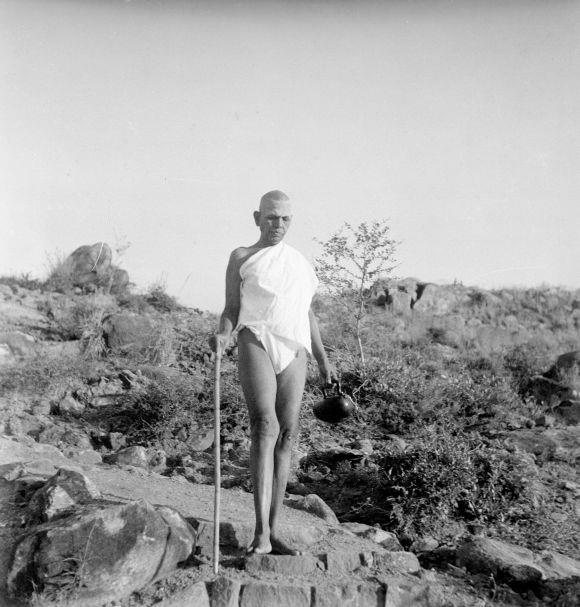
I used to be like a delighted child in the proximity of Osborne. My friends used to pull my leg, “Do not carry it too far, this hero worship of Osborne.” This did not matter to me because they did not know how I enjoyed his brahmic state. I remembered what Osborne used to say, “At last, life has a meaning and a purpose. It is tremendously exhilarating to realize the truth of the one Self.” His words had come true in his life and it was given to me to see that every word uttered by Bhagavan, and by every one of these old devotees, is absolutely true.
Just before he dropped his body, Bhagavan told his attendants, “Santosham”, which means ‘thank you’. When Osborne was in Bangalore and his end was near, he could not speak at all. As a ritual farewell, Mrs. Osborne went around the prostrate body of her husband. Suddenly, she heard Osborne’s voice saying clearly, “Thank you.” Osborne’s body was brought to Tiruvannamalai and interred in his house. I was there all the time and I was heartbroken. The July 1970 issue was the first issue that I brought out without Osborne. He would place every issue that was brought out in Bhagavan’s shrine and only then would he himself go through it, or give it to me and others. When I placed the July 1970 issue in front of Bhagavan’s shrine I was weeping. That day, Osborne appeared to me in my dream. He said, “Ganesan, give me my journal.” He then took the issue, went through every page and patted me in appreciation. That was the closeness with which Osborne and I worked together. Osborne lived the master’s teaching and attained the ultimate truth of atma sakshatkar. His very first words to me when I returned to the ashram in 1960 were, “Ask, but ask only for Self realization and that will retain you in the Arunachala. Arunachala is not only physical but also in the Heart.”
He wrote: “It is tremendously exhilarating to learn for the first time, the truth of the one Self and the possibility of Self realization. At last, life has a meaning and a purpose. It is not a question of whether there is a God apart from you but whether there is a ‘you’ apart from God. We ask, ‘Who am I?’ But is there one? First, we presume that there is an ‘I’ and then we ask who or what it is. There just IS. Not I, he, it or anything, but just IS. We try to divide up this simple IS by pronouns I, he, you, and by this and that, but is it really divisible? I feel being, and use the word ‘I’ for it, but that does not mean that there is any separateness about it, because you also feel being and you also use the same word ‘I’ for it, because it is the same being. Why should the quest be necessary? Why should a man not grow into his true, natural state like a horse or an oak tree? Why should man alone of all creatures, be tempted to misuse his faculties and have to curb his desires in order to grow to his true breadth and stature? This involves the question, what differentiates man from other creatures? Many creatures have many abilities greater than man, in one direction or another. What distinguishes man is his Self consciousness that he is not only a man but knows that he is a man. He is conscious to being a man. It sometimes happens that a person has an experience of a pure being. He just IS and feels the fact of being. Also he appreciates later that this is pure consciousness. Thoughts can be suspended, but even when they occur they do not interrupt the flow of consciousness. But, he feels sometimes no bliss about it. This occurs to him as a sort of grievance. He feels that something must be wrong either with the teaching or himself. The explanation is that it is the case of the mind eavesdropping. Who feels no bliss? I. But, that ‘I’ has no business to be there at all. He is a mortal spying on God. Being not only feels bliss but is bliss. Only, the absence of the reporter ‘I’ is a necessary condition for it. Even a life of disinterested activity is not enough to dissolve the ego sense. It usually needs to be reinforced by a stronger and more forceful campaign. This can be either surrender or enquiry. Lord Krishna in the Bhagavad Gita enjoins surrender. Sage Vashista in Yoga Vashista enjoins Self Enquiry. Sri Bhagavan said when he was asked, ‘There are two ways. Ask yourself, ‘Who am I?’ Or submit.’ The mind acts as though it is the ruler or owner of all the faculties. It has to abdicate and surrender them and itself to the pure being or Self - or has to look inward to see what is true Self or being.”
In following Bhagavan’s path of enquiry, Osborne combined with it true devotion and selfless service - jnana went hand in hand with bhakti and nishkamya karma. He was very regular in attending the chanting of the Vedas in front of Sri Bhagavan’s shrine both in the mornings and in the evenings. He affirmed that listening to it helped in meditation. He was a towering example of an ascetic living a family life. In all those years, I never saw him getting angry at any time, under any circumstance. It was unbelievable. He never demanded anything or any extra privileges for himself as editor. When I handed him a new, printed edition of the journal, he would always have the manuscripts of the next issue ready and hand it over to me forthwith. He took out three subscriptions for his family even before the journal was published and insisted on paying for them, rejecting my plea that he was the editor and hence there was no need to pay.
He faced a lot of opposition. It was not as if it was a bed of roses for him. He was a westerner. He did not know Sanskrit and the Hindu traditions. And in the ashram, the whole atmosphere was filled with that. Many did not accept him editing the journal. It was Bhagavan who guided me and made my father agree to that. My father was harassed to ensure that Osborne did not become the editor. At every stage, Osborne and I had a lot of problems. Once, I wrote to him that I wanted to resign and this was his reply: “Dear Sri Ganesan, I am glad to hear that the printing work is going on well in Chennai. We must not be too upset with people’s criticism but at the same time we must examine it to see if anything is justified in it and if so, try to correct ourselves. So long as the work is done as a service to our Bhagavan, it can go on whether people are helpful or not. Perhaps, people who criticize do not realize how much work has to be done. After all, you know that in the ashram there are people who criticize my work on the journal. In fact, you hold the three posts of office manager, advertisement editor and chief sub-editor in page making. I cannot think of anybody else who could combine them with such enthusiasm and ability. So, you will have to continue doing Bhagavan’s work whether people criticize or not. For us, what is necessary is a constant examination of motive. Do I want to dominate or do I want to serve Bhagavan? Do I want to impress X, Y, Z or do I want to serve Bhagavan? Do I want to win praise or to serve Bhagavan? Best wishes for the work you are doing.” In a reply to another letter, he wrote, “As for some people being jealous, I expected that. Human nature is such that nothing can succeed without provoking jealousy. They may even try to create animosity between us. Our best policy is not to take notice and just concentrate on doing Bhagavan’s work to the best of our ability and maintain a high standard in every way, so that people have nothing to criticize. With all best wishes, may the grace of Bhagavan support you in your effort.”
I have never come across anyone else in Ramanasramam who had such physical, mental, psychical and spiritual experiences, all of which were blessed by Bhagavan. Whenever I praised him he would reply, “Long live Bhagavan. It is all due to Bhagavan.” He would show an article he had written and then say it is all due to Bhagavan: “I did not write. I only held the pen and it was Bhagavan who wrote it.” He was an outstanding spiritual personality, who not only strove wholeheartedly to get Self-realization, but also got it by the Grace of the Master. By his life and action, he demonstrated to me and other devotees that he was totally established in that state - which is a great encouragement for us that it is possible. When I told another old devotee in the ashram that Osborne’s life confirms that it is possible, he rebutted my statement saying, “Your usage, ‘It is possible’ is a very weak term. Self realization is a certainty.” Yes, Self realization is a certainty!
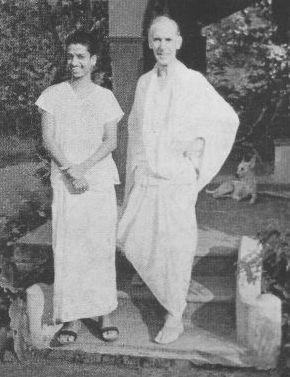
V. Ganesan with Arthur Osborne