Lakshmana Swami
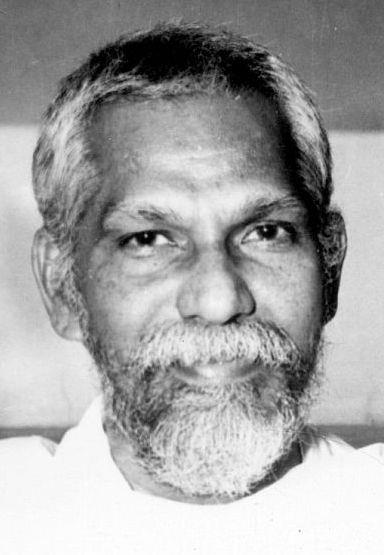
Lakshmana Swami is another saintly person who attained realization directly from Bhagavan. Of the devotees that we have talked about, Lakshmana Swami is the only person who is still in the body (2013) and living in Arunachala. Even as a teenager, Lakshmana Swami strongly felt he must attain Self realization. He studied spiritual and religious books; he also did intense pranayama. One day when he was still in college, he had a beautiful spiritual experience similar to that of Robert Adams. He was alone in a field when all of a sudden: “There was light everywhere, and suddenly the mind became one pointed and still. There was a sudden flash of light within and the divine light showed its full magnificence. The light encircled and engulfed me. I lost all consciousness of the body. Apart from the strange quietness, there was total inner stillness. The effulgence drove home the veritable fact that the Self is God himself in the temple of the physical body. My joy knew no bounds as I realized that the Self had become my guru.”
However, the spiritual experience started fading. Lakshmana Swami recognized the need to have a guru in the human form in order to steadily abide in that state. While still in college, his lecturer mentioned Ramana Maharshi’s name one day. The very name delighted him. On another occasion, when he was passing through the main college lecture hall, he saw his English professor Prof. G. V. Subaramayya giving a talk on Ramana Maharshi. He also saw a huge picture of Ramana Maharshi in the hall. He could not follow the lecture because it was not audible from where he was and the hall was jam packed. However, every time the professor uttered the name Ramana Maharshi, he was able to hear it. The name and form of Bhagavan gave him the certainty: “Here is someone I can go to for clarification and get further established in the state of the immaculate Self.”
Lakshmana Swami came to Tiruvannamalai in 1949. The consecration, of the Mother’s temple was taking place. The place was teeming with people and he could catch only a fleeting glimpse of Ramana Maharshi. He never got an audience with him. He stayed for a few days during which time he bought the book Who am I? in Telugu, his mother tongue. As he read the book, he found his mind going deeper and deeper inside until he reached a state of no thought. However, he still was not very keen about Self Enquiry. Out of the blue, even though Bhagavan was physically very far away, the mantra ‘Hare Ramana’ came to him as a japa. The sound or name came from within, and so he kept repeating it. After a few days, he went back to his village. He felt that seclusion, silence and meditation along with pranayama would establish him in the Self.
From his village, he went towards the seaside. He stayed in a hut and practiced his sadhana intensely and continuously for five months. However, he fell ill and had to be brought back to his village. Even with all the special medical attention that was given to him, he never recovered fully. During this time, he had a picture of Bhagavan that seemed to be smiling at him all the time. While looking at the picture one day, he received a message from Bhagavan, “This body can be saved with the help of medicines. But what about the ego which is like the tiger’s jaws, eating you up?” Lakshmana Swami felt that it was imperative to go back to his guru - Bhagavan Sri Ramana Maharshi.
He returned to Ramanasramam in September, 1949. The ashram was again very crowded as the Navaratri festival was being celebrated. Bhagavan was already very ill by this time. He would be brought from the Nirvana Room to the New Hall in front of the Mother’s temple and was available for only two or three hours from three in the afternoon. It was the last day of Navaratri. The chanting of the mantras was going on and the bells were ringing. Bhagavan came from the Nirvana Room to the new hall. At that time, Lakshmana Swami was standing outside. Bhagavan, who was walking with extreme difficulty, lifted his head and looked at Lakshmana Swami who went into a state of ecstasy. He sat down and closed his eyes. As he did so, the beautiful, final, spiritual realization came to him. This is how he describes it: “Unexpectedly I found that all my thoughts had disappeared except for the primal ‘I’ thought. Then, ‘Who am I?’ spontaneously appeared within me, as did the gracious, smiling face of Bhagavan. There was a flash of light on the right side of the chest, and a flood of divine light shone both within and without. Bhagavan’s face was smiling more radiantly than innumerable flashes of lightning fused together. In that state of continued bliss, tears of joy welled up in unending succession, and they could not be resisted.” Lakshmana Swami could not move from outside the hall for nearly six hours. The deity from Mother’s temple was being taken in a procession and there was hustle and bustle everywhere. However, he was unmoved and rooted in that state of quietude. That night, he remained immersed in silence. The next day, he went to the new hall and wrote a note in Telugu to Bhagavan. The note read, “In your presence and by my quest of ‘Who am I?’ I have realized my Self. I need your blessings.” Bhagavan took the note, looked at him, smiled and nodded his head. He spoke only two sentences. “Where are you coming from?” he asked. “From Gudur,” said Lakshmana Swami. “Is it not in Nellore district?” questioned Bhagavan. Lakshmana Swami nodded in agreement. He was already in the state of the Self; the master had spoken to him and established him further in that state. After this conversation with Bhagavan, he did not speak for the next thirteen years. He stayed in a hut in Palaakothu. Bhagavan gave that note to his attendant Venkataratnam and bade him keep it safe.
On the day Bhagavan gave up his body, Lakshmana Swami was cleaning his room, not far from the Ashram. The picture of Bhagavan fell down. He picked it up, cleaned it and put it back in its place with great reverence. Again it fell. He instantly understood that something had happened to Bhagavan’s body. He went into a state of samadhi. He lost total body consciousness and remained in the state of the Self for nearly three hours. When he got up from his state of samadhi, he went to Ramanasramam. By this time, Bhagavan had already given up his body in the Nirvana Room. The body was then kept in the hall for people to pay homage. There was sadness in his heart that Bhagavan was not physically present, but there was no pain. He did not shed tears because he was filled with the presence of the Self. Just as Robert Adams felt that Bhagavan was the Self and not the body, even when Bhagavan was in the body, it did not matter to Lakshmana Swami that the body had been dropped. He went back to his village. He immersed himself in silence, seclusion, meditation and pranayama. He was plunged in the Self and did not talk to anyone.
In 1970, he felt that the Master’s teaching had to spread. He established his own ashram at Gudur and taught Self Enquiry, benefiting many sincere seekers like Sarada. Since 1990, he has been staying in his ashram in Arunachala where he abides in seclusion and silence - not meeting people. Lakshmana Swami’s life and teachings have been brought out well by David Godman in his book entitled No Mind, I Am the Self.
Ramana Maharshi said, “The only purpose of life is to realize the Self, and all other activities are a waste of time.” Let us become one pointed, dive within and re-cognise the Self. As Lakshmana Swami says, “Just keep quiet, and Bhagavan will take care of everything.”
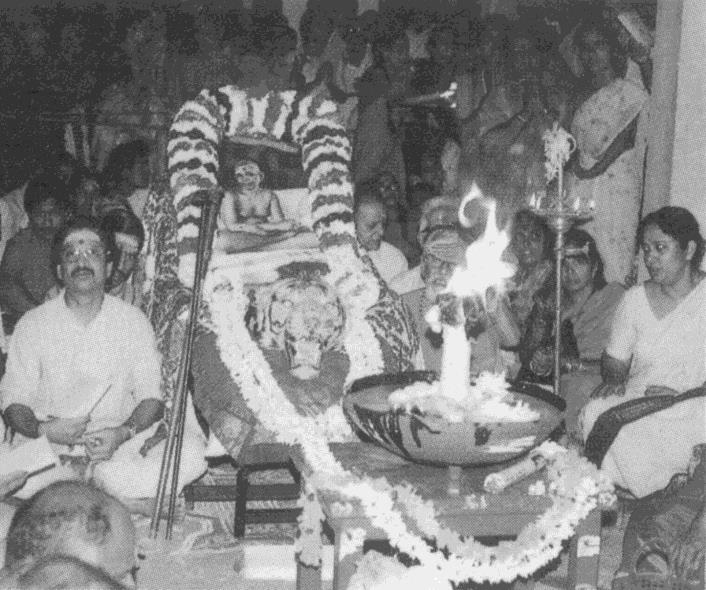
‘Karthikai Deepam day’
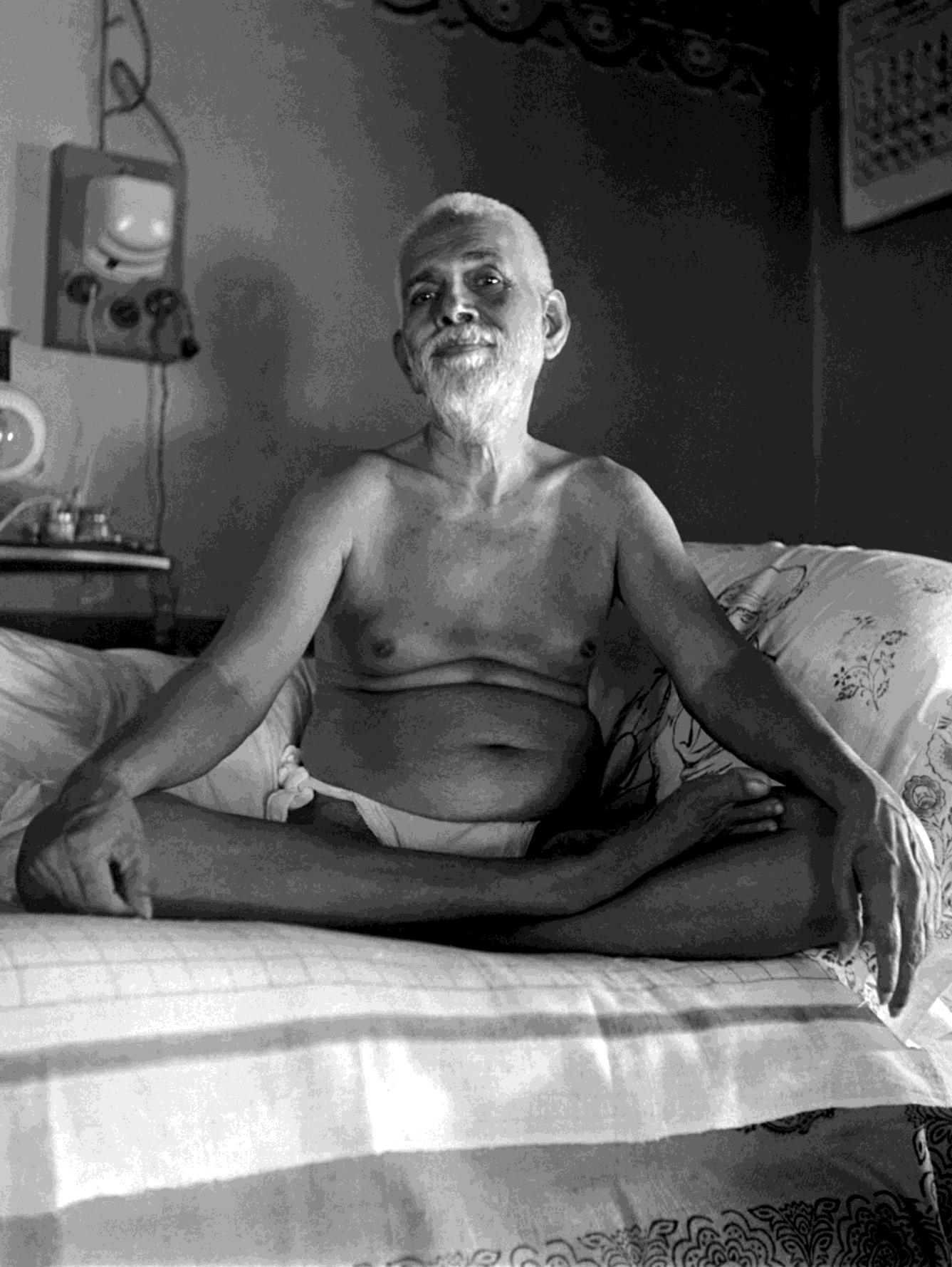
“…look from Bhagavan plunged me into deep meditation.”