Nagalakshmi
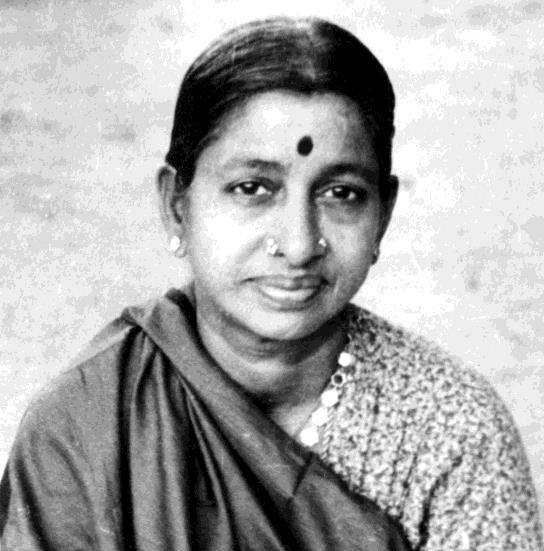
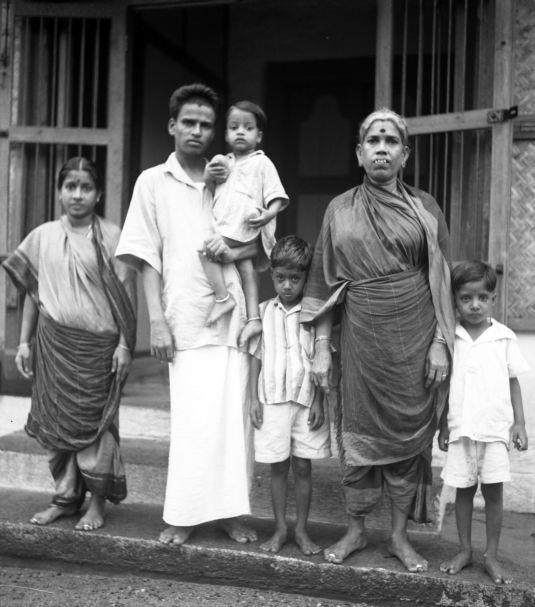
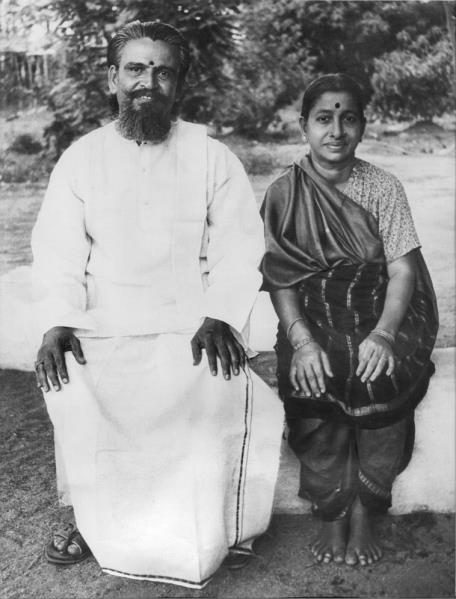
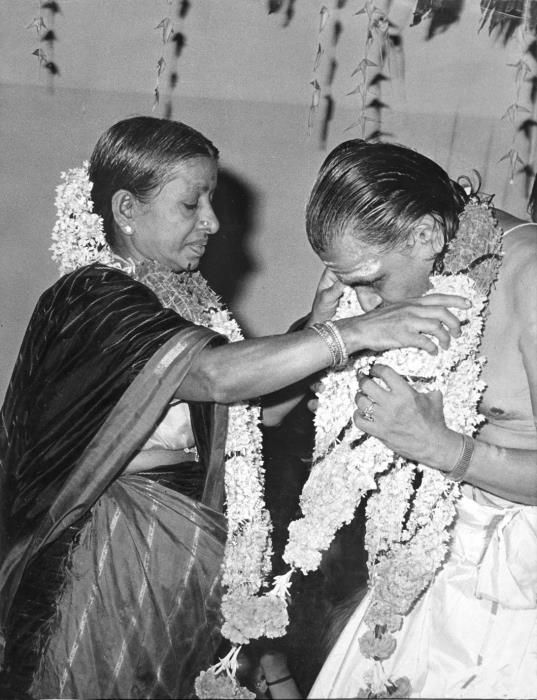
My mother Nagalakshmi was a simple village girl who lived far away from Arunachala. She was a playful child who probably studied only till the third or fourth grade. She was married to my father T. N. Venkataraman at the age of thirteen. My father was Bhagavan’s nephew. My mother too was related to Bhagavan. However, she was unaware of it at that point of time. (My maternal grandfather was Bhagavan’s maternal uncle.) It was Alamelu Ammal, Bhagavan’s sister and also my father’s foster mother, who revealed the greatness of Bhagavan to her. During her wedding, Nagalakshmi told Alamelu Ammal that she wanted to see Bhagavan. Alamelu Ammal gave her the Collected Works of Ramana Maharshi in Tamil, which at that time was an abridged version, and said, “When you memorize all the verses in this book, I will take you to Arunachala to see Bhagavan.”
Taking this to heart, my mother completed the task of memorizing the verses within a few weeks. Although she did not comprehend its philosophical content, it struck a spiritual chord. In 1930, one year after her marriage, at the age of fourteen, she got the opportunity of having Bhagavan’s darshan. Bhagavan gave her a long look. Later on, she told me that the look conveyed the message, “Did it take you so long to come to me?” Other chosen devotees of Bhagavan have also had the same experience when they first stood in front of Bhagavan - a sure indication that they belonged to his orbit. Yet, he treated all alike - everyone was his kith and kin. The uniqueness of Bhagavan lay not only in his spiritual status, but also in the warmth of his interpersonal relationships. He had the deepest fraternal affection for his sister and great reverence for his mother. As far as us grandchildren were concerned, he was not like Bhagavan or a teacher, but like a natural grandfather gently commanding us and telling us what to do. He would frequently call out to us, “Come here. Sit down!” In those days though, it was customary for the daughter-in-law to be rather reserved with the father-in-law and vice versa. That was the reserve that Bhagavan also maintained with my mother. However, just by his look and presence he bestowed spiritual bliss on my mother. She was firmly in the net of his Grace.
My father got a job that took him further south and naturally my mother also accompanied him. My mother prayed to Bhagavan for his continued spiritual presence. Bhagavan’s blessings are of course a token of his spiritual presence. When a son, the first of her seven children, was born in 1934, he was taken to Bhagavan, who named him Sundaram. Sundaram is the present president of Ramanasramam. The next child was me. I was born in 1936. When I was taken before Bhagavan, he said, “He has not given me the problem of naming him because he has been born with a name.” This was indeed true because I was born on Ganesh Chaturthi, Lord Ganesa’s birthday! I was thus named Ganesan. Similarly, Bhagavan also named all my other siblings. My younger brother was named Subramanian (which is the name of Lord Ganesa’s younger brother), and my four sisters were named Lakshmi, Azhagammal, Mangalam and Saraswati.
In 1938, when I was two years old, our entire family shifted to Arunachala. We lived in the town. Though my mother was caught in the whirlwind of household work and looking after our family, she still somehow made time for spiritual sadhana. She taught us to look at Bhagavan as God and also taught us to imbibe whatever we could of his powerful spiritual presence. Of course, at that time we were unable to understand the full implication of what she meant. When seated in the hall, Bhagavan would be rather reserved and stern with my mother.
The women who cooked in the kitchen were eager to have Bhagavan’s blessings. They would come to the ashram from town by five in the morning. By the time they finished the day’s work, it would be six in the evening. This would leave them no time to seek out Bhagavan in the hall and listen to his words of wisdom. So, Bhagavan would come to the kitchen some time between twelve and two in the afternoon, in the guise of giving them advice on what to cook for the night, but in reality to share spiritual teachings with them. Since these women wanted my mother also to receive these, they would ask my mother to stay on. As soon as Bhagavan entered the kitchen, the women would immediately ask her to prostrate before Bhagavan. Many years later, my mother shared with me three pieces of pragmatic advice that were given by Bhagavan to her.
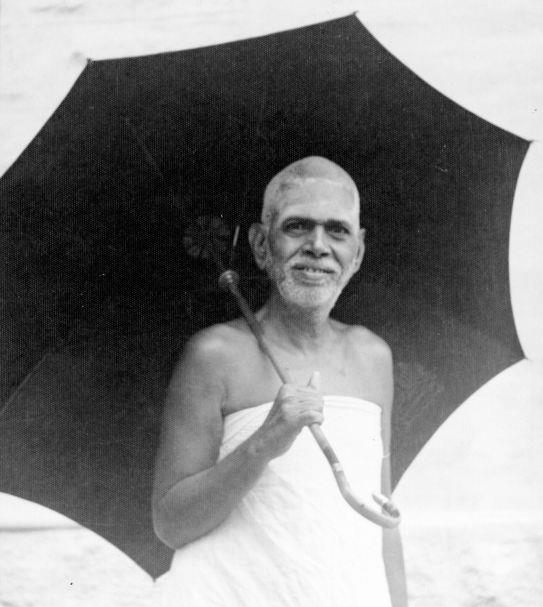
When families came to Ramanasramam, the ladies and children would spend the night at our house since they were not allowed to stay on in the ashram after nightfall. My mother would look after them. (Some women devotees stayed at Echammal’s house too.) On one occasion, when my mother herself was very young, a young woman and her parents came to our house. This woman was nineteen - around the same age as my mother. She had tragically lost her husband at that tender age. My mother and she became good friends. One day, both of them went to the ashram pool for a bath. After bathing, the young woman wore what my mother thought was a beautiful sari. My mother said appreciatively, “Your sari is very beautiful.” It was just a spontaneous and genuine compliment.
However, when the young woman went back, she sent a parcel addressed to my mother. The parcel had two such saris. In those days, everything that came by post, even if addressed to individual devotees, was handed over to Bhagavan. Bhagavan in turn would distribute them to the devotees who would accept them gratefully as prasad. That afternoon, when Bhagavan walked into the kitchen he looked very stern. When my mother prostrated before him, he said, “We have come to live in the ashram. We should be content with what we have. Many wealthy people will visit the ashram wearing expensive clothes and jewellery. We should not be taken in by such glamour. When we see them wearing these things, we should get the feeling that we ourselves are wearing them. Leading a state of no desire is the best way to live here. Then, one can live without being disturbed by external additions, subtractions, attractions and distractions. Be content! Never aspire for that which is not yours!” Heartbroken, my mother started crying. The women cooks sided with her and pleaded with Bhagavan, “Nagu is not at fault; she did not ask for the saris. They sent them of their own accord. Bhagavan, she is crying!” Bhagavan then turned to my mother and said, “It is all right. It has been said for your own good.” All her life my mother remembered this teaching and imparted it to us too. Such were the directives given in the kitchen by Bhagavan. My mother was attending to her husband, bringing up her children and also looking after people who came home. Yet, she was attuned to Bhagavan’s teachings. Although her body and mind were attending to her worldly duties, her heart was always tuned to Bhagavan. This was the attitude of my mother; and, senior devotees like Kanakammal and Kunju Swami vouchsafed this.
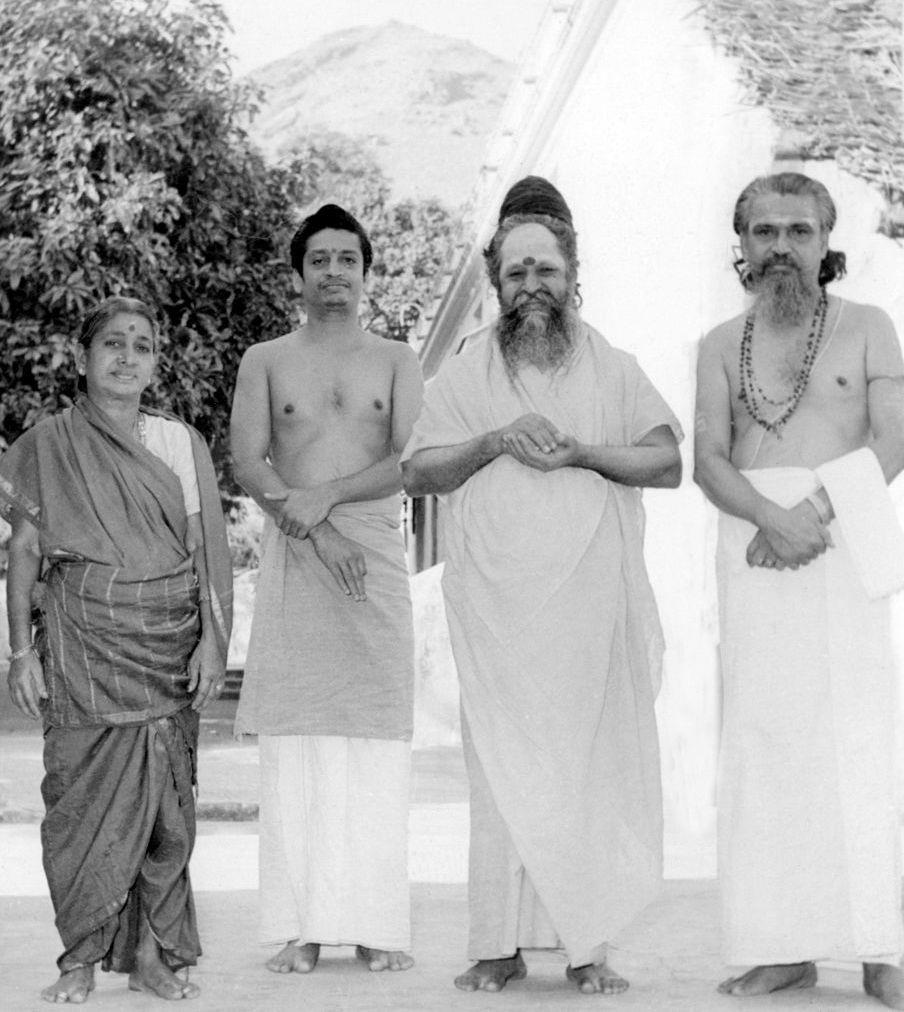
(l to r) Nagalakshmi, Ganesan, Swami Santananda, T N Venkataraman
One day, Bhagavan told my mother, “Great ascetics, saints and sages often visit Arunachala to go round the hill. Their spiritual lustre always attracts people towards them. In order to avoid this and go round the hill undisturbed, they take on the form of madmen or beggars. So, whenever someone stands in front of the house and claps his hands for food, give whatever you have without hesitation or delay. Do not judge them.” My mother followed this teaching of Bhagavan most ardently. Beggars and sadhus were never turned away from our house.
The third upadesa was even more significant because it was directed exclusively at my mother. One day, Bhagavan entered the kitchen in a rather pensive mood. Old devotees have said that it was very difficult to go anywhere near him when he was in such a contemplative mood. The cooks hesitated to go before him. Just as the child Prahlada was pushed in front to stand before Lord Vishnu when he appeared in the fierce form of Narasimha - half lion, half man - the cooks pushed my mother before Bhagavan. She prostrated as usual. Bhagavan began saying, “If one dies unconsciously, then it is a sure sign of the soul entering another body. If one dies consciously, then there is a possibility that there is no birth for that soul. This does not mean that all those who die consciously will not be reborn. While actively alive, one should remember to die consciously. In order for that to happen, one should relentlessly pursue a life of surrender. The guru will never forsake one who has fully surrendered.”
Of the three upadesas that my mother got from Bhagavan, the first one was on how to live. The second was on how to apply oneself to life; and the third was how to depart from the world. All these three are precious and invaluable for all seekers in general. The cooks were delighted with the knowledge they had gained and told my mother, “Because of you, we have also got this special teaching. Bhagavan has never spoken about this to anyone else before. It has been done exclusively for you. Preserve it in your heart.” My mother adhered to these teachings of Bhagavan till the last moments of her earthly life. My mother understood Bhagavan’s teachings on two dimensions. One was on the level of learning by heart all the verses of the Collected Works of Ramana Maharshi. She was aware of the power of the holy words of the master and so she encouraged us to study the Collected Works. On the second level, she understood the importance of giri pradakshina or going round the hill. Until the day she became seriously ill and bedridden, she practiced this diligently.
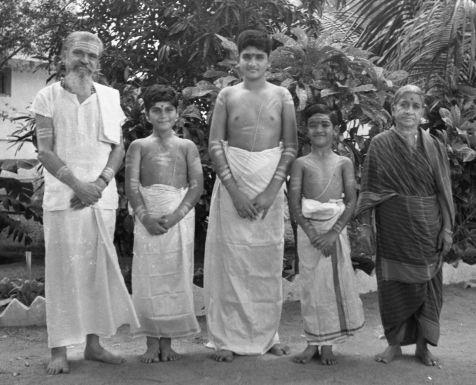
With grandchildren
After I came away to the ashram in 1960, I would work there till eight at night, go home to have dinner served by my mother and then go round the hill. For several years I did it alone. My mother is my upaguru for she showed me Bhagavan even while I was in the crib by singing the following Ramana lullaby (the third song in Ramana Stuti Panchakam) to me:
“Of bright gold form, full blown lotus faced one! Personification of rare realization, spreading fragrance all over the earth! Having heard of your fame, poor as I am, I looked for you throughout the world and reached you here, my gracious Lord! Wise Ramana, hill of light. (1)
“Oh Brahmin who dwells in Virupaksha Cave on the sacred hill of light called Sonagiri! Oh primordial, eternal treasure, oh Ramana, the pure! Make me your own without testing me. You are indeed the Supreme Being!” (2)
“Let me place your soft, holy feet on my head, at this very moment, to gain the life free from pain and be cured of the disease of recurring births! Ramana, reborn in Self, living silent in Arunachala, unknown even to the Gods, tell me when I shall attain you, oh pupil of my eyes!” (4)
“Lord Ramana! I sought your holy feet. You are knowledge untiring, silence and the supreme thing beyond thought. Your heart is the centre that unifies the individual and the supreme. You are the ultimate reality that endures beyond birth and death.” (9)
With Sri Bhagavan’s sister Alamelu
At that time I did not understand Bhagavan, the guru or the Self. But it was this lovely lullaby extolling Bhagavan that sowed the seed of awareness of him in me, and finally guided me to remain at the lotus feet of my master.
When I was around one and a half years old, my mother often had me in her lap when we were in Bhagavan’s hall. Then, she would slowly push me in the direction of Bhagavan’s sofa so that I could crawl towards him. I would try and climb up the sofa but the attendant would pick me up and place me back on my mother’s lap. This was a daily occurrence. One day, I moved towards the sofa and just climbed up. Bhagavan, who had been watching all this, supported me with his left leg lest I tumble down. He pressed his right foot on my head, remarking, “He has been making an effort every day to achieve this. Today, there have been no hurdles. He has succeeded.” I was able to get this prasad of Bhagavan’s holy feet on my head because of my mother. My mother, who showed me the real Bhagavan, would always declare, “I only gave birth to your body. Bhagavan is your true mother.” In this manner she trained me to have true Bhagavan consciousness.
My father had a light stroke in 1965, leaving his right side slightly paralyzed. Dr.T.N. Krishnaswami who came down from Madras and attended on him called me aside and said, “Ganesan, this is his second attack. I did not inform anyone of the first attack he had. A third attack may prove fatal. Please take good care of him.” Feeling as if a bolt of lightning had struck me, I ran to my mother and informed her. Totally unperturbed, she very calmly said, “Go to Bhagavan’s shrine and pray there.” I did as she advised and also told Bhagavan what had happened. In those days, the shrine of Bhagavan was just a thatched shed in the midst of a lot of open space. I would sleep outside the shrine on a plain mat with neither pillows nor sheets. I used to enjoy the experience. Bhagavan appeared in my dreams three or four times and each time it was crystal clear - almost like I was in the waking state. This time too, it was a lucid dream. Bhagavan enquired, “Ganesa! Why are you crying?” I told Bhagavan that perhaps my father would die and to me that would be unbearable. Bhagavan answered, “There is nothing to worry.” Then, Bhagavan put out his hand in which there were three wood apples (Feronia Limonia) - a fruit found in India. Handing over a wood apple to me, he said, “Give it to Venkatoo (my father’s pet name). Ask him to eat it.” He then gave the second one to me and said, “Give this to Nagu (my mother’s pet name) and ask her to eat it.” Handing over the third wood apple, he said, “You eat this yourself. Everything will be all right.” I woke up from my dream. It was two in the morning, but I ran home to my mother and told her about the dream. We tried to get wood apples the next morning but we were not successful. When we were able to buy them after a few days, we followed Bhagavan’s instructions precisely. Needless to say, my father fully recovered and never had a third attack. In fact, he lived in good health up to the ripe old age of ninety three and passed away in 2007 . When I told Dr. T. N. Krishnaswami about the dream, he started prescribing wood apples to his patients with similar ailments, along with their other medicines. My mother’s unshakeable faith in Bhagavan and her advice to me were without doubt instrumental in my having this life saving dream.
My mother got cardiac asthma in 1980. She was suffering severe pain and was admitted to the local government general hospital. However, there was no suitable treatment for her condition. Even oxygen cylinders were not available in the hospital. During that time, instead of going around the hill at night as I usually did, I used to sleep in the hospital at night and return around four in the morning to the ashram. On one such night, the chief doctor called me aside and warned me, “Your mother’s condition is critical. She will die. Take her to a bigger hospital in Chennai.” Although he spoke in a low voice, my mother had an idea of what the doctor told me. She called me and asked, “What did the doctor say?” I had no choice but to tell her. She said, “Give me your word on two things.” I nodded. She continued, “First promise me that under no circumstances will you take me away from Arunachala. My guru, Bhagavan, came to Arunachala and never left this place until he dropped his body. Likewise, do not allow anybody to take me away from here, no matter what the circumstances are. Secondly, I must die when I am in a state of full consciousness. Please allow that to happen because if I die in that state, then I may not have any rebirth. Even if I scream in sheer agony, do not allow the doctors to give me morphine or any other sedative. Let my body suffer outwardly. Inwardly, I will have merged in silence.” I kept my promises even though the doctors chided me, “You are an educated fool. You claim to love your mother, but you are a rakshasa, a demon. Just look at her plight!” I bore it all without uttering a word.
Before she left us, I prostrated before her and entreated, “Mother, are you going to leave me? What will I do?” I wept uncontrollably. She tried to soothe me, saying, “Do not cry. Be happy! The body has to die one day. Do not give such significance to this body. Shift your focus from my body to my state of being. Inwardly, I am immersed in peace. The being transcends both the body and the mind. Cling to the ever free being and allow the body and the mind to fade away as they should. By not pampering them, they remain your servant. You become the master when you start paying sole attention to your inner being. My blessings are with you.” My mother further blessed me by adding, “Bhagavan will bless you. I gave you only your body. Bhagavan is your true mother.” With her third blessing she said, “Serve Bhagavan faithfully by practicing his teaching. His grace is his teaching.” When I sobbed uncontrollably, she comforted me by saying, “I constantly feel Bhagavan’s holy presence, Ganesa - that is enough for me.” She passed away fully conscious in the midst of all her kith and kin at the foot of Arunachala. I helped carry my mother’s body and we performed the final rites. My mother was a devotee who was a truly realized soul.
Kunju Swami, an ardent old devotee of Bhagavan told me about her, “All the residents at the ashram, irrespective of age looked on her as their mother. As a matter of fact, the material prosperity of the ashram increased with the coming of Nagalakshmi to the ashram in 1938. Therefore, she is our Mahalakshmi (the goddess of prosperity and wealth).” A mystic French lady, Mrs. Theresa Regos, who at the time was living up on the hill, later told me, “On the day your mother departed, I was on the hill. I saw a ray of light passing over the temple in broad daylight ! I suddenly thought of your mother Nagalakshmi. I felt that she must have realized oneness with Arunachala. Nagalakshmi has merged with Arunachala, the eternal Self.”
A special occasion of the fortunate couple