Treasure Trove of Sri Bhagavan’s Grace
In this chapter
The Story of the Mountain Path
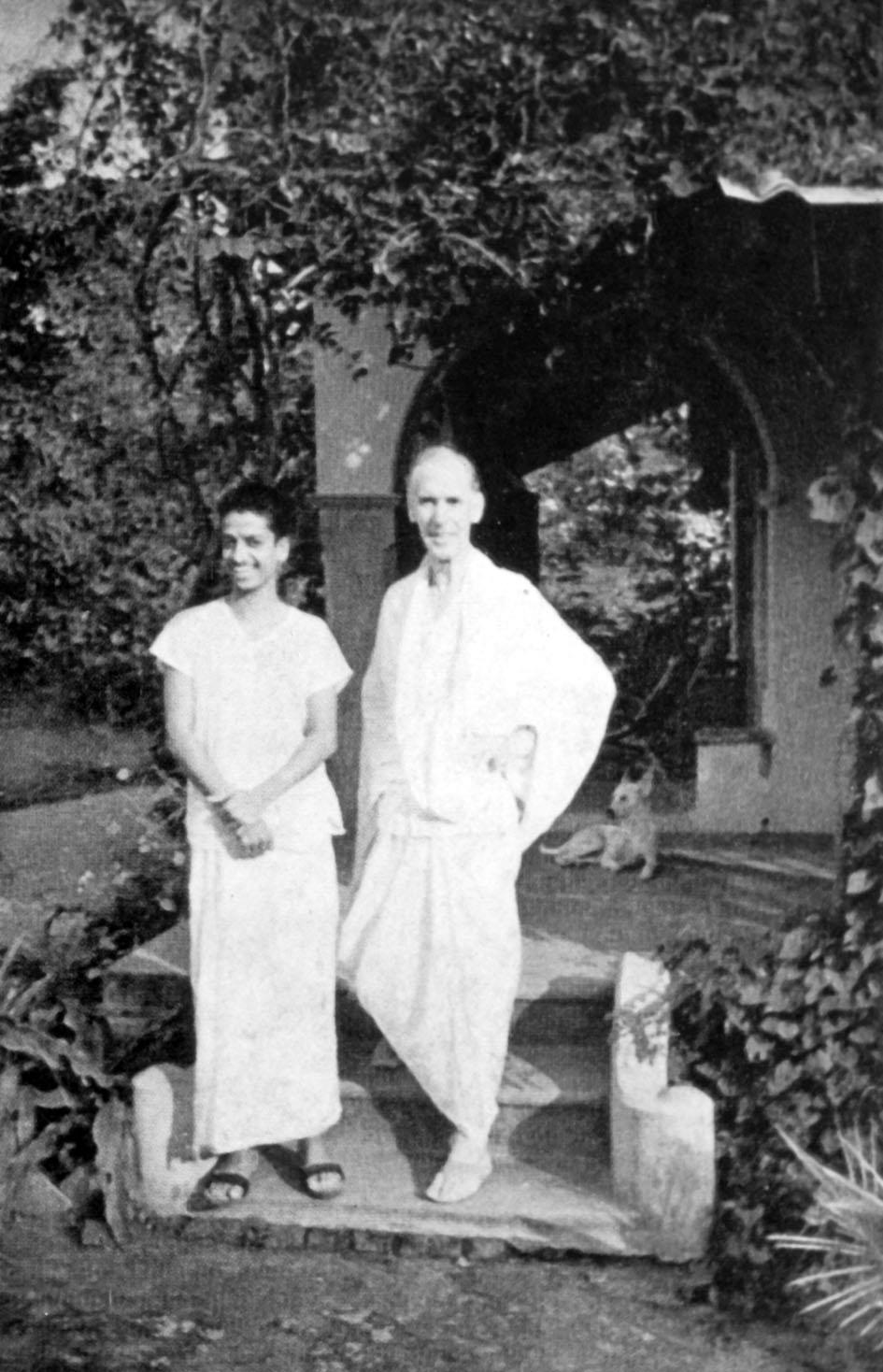
V.Ganesan and Arthur Osborne
THE STORY OF The Mountain Path
(i) PLANNING
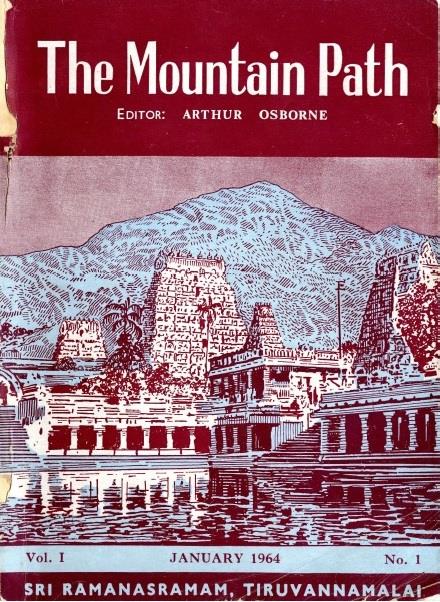
The Cover of the first issue
IN 1956-58, after taking my B.A. degree, I was in the Ashram for two years. Though my father wanted me to pursue higher studies, I stoutly refused as we could ill afford the expense. All my brothers and sisters were in the colleges and schools and my father was struggling to make both ends meet. I decided to seek some employment and thus support my family rather than be another burden on it. The two years I spent in the Ashram are memorable, indeed!
I was not spiritually inclined and had no thought of settling down to a seeker's life, though both Major A.W. Chadwick and Mr. Arthur Osborne, independently and at different times, assured me (as indicated in my horoscope) that I would be living only in the Ashram and be a serious seeker, dedicated to matters spiritual. During this period I saw how the Ashram was suffering from paucity of funds.
However, thanks to Dr. T.M.P. Mahadevan, I joined M.A. Philosophy class. A new vista opened in my life by the study of eastern and western philosophies. Postgraduation completed, I was thrust into a bank job, where I felt literally combined and confined. Then, through Professor K. Swaminathan I got a post as sub-editor in a newspaper in Bombay. I liked the work. On a visit to my Muslim colleague's apartment in Colaba, he explained to me how a magazine could fetch money through advertisements; I was not interested in the project.
I soon found that life in Bombay was far from soul-satisfying. I was unhappy. Due to various causes and circumstances, I returned for good to the Ashram, with the full consent of my parents, to serve Sri Bhagavan's devotees, particularly the older ones. My father was happy with my hard work at the Ashram. I plunged myself whole-heartedly in Sri Bhagavan's seva. I took to a seeker's life in right earnest. I enjoyed the blissful and serene company of Muruganar, Major Chadwick, A. Devaraja Mudaliar, Arthur Osborne, S.S. Cohen, Munagala Venkataramaiah, T.K. Sundaresa Iyer, Sadhu Om, Viswanatha Swami, Kunju Swami, N. Balarama Reddiar and others.
There was a crisis in 1963 in the Ashram finances. It dawned on me one day that I could do something tangible to save the dire situation. I recollected the long-forgotten conversation I had had with my Muslim friend in Bombay, at Colaba. Yes! That was it! I could help the Ashram by bringing out a yearly magazine! At that time I was helping the correspondence section also. Devotees from far and near were making enquiries whether the Ashram was being run as of old and if so, what were its activities. T.K. Sundaresa Iyer and L.P. Koppikar were in charge of the correspondence section, and I was being trained by them. I used to seek Arthur Osborne's draft-replies for important foreign letters demanding spiritual clarifications. I used to be spellbound by his brief replies, so aptly worded. Yes! Here was the solution! I would prepare the 'Yearly Bulletin' — report happenings at the Ashram, print excerpts from letters and replies thereto and have the material touched up by Arthur Osborne, and have as many advertisements as possible, and thus help both the Ashram and the far-flung devotees.
I went to Arthur Osborne's house and explained to him this idea of a 'Yearly Bulletin' and how it could bring Ashram financial benefits and could keep devotees informed about the present working of the Ashram. I sought his blessings and active cooperation. He listened with keen attention and at the end held my hands and shed tears of joy! How surprising! I had never seen him so deeply moved.
"Ganesan! You do not know what a blessing you have brought me today. A few weeks back I had a dream in which Sri Bhagavan appeared. I knelt before Him. He had a few copies of a magazine which He handed over to me, and said, 'Take it'. I understood the message to mean that He wanted me to be an Editor! I had to obey my Master's wish. But, where would I fit in India? My elder brother is the reputed editor of the U.K. magazine, ‘The Economist', Was I to seek employment under him, I wondered. I was pained at the thought of leaving Arunachala. Yet, if He would have it so, I should even leave Arunachala, I decided. Now, I know what Sri Bhagavan meant. What a joy!"
The torrential talk ended for a while only to be renewed with greater vigour: "You know, Ganesan! During the lifetime of Sri Bhagavan and even after, I was asked by many to run a journal for the Ashram. I repeatedly refused. Sri Bhagavan's teaching is meant only for practise; what is there to write about, that too continuously in a journal? I knew I disappointed my close friends, like Dr. T.N. Krishnaswami and D.S. Sastri. But I stood firm. Now, Sri Bhagavan has commanded me to spread His teaching of Atma Vichara, through the medium of this journal which we are going to start!"
I was thrilled by his enthusiasm and exchanged views on the plans for the journal.
It was agreed then that the annual Bulletin should have: (i) an Editorial, (ii) important articles based only on the practical side of sadhana, (iii) Book-Reviews, (iv) Letters to the Editor and (v) Ashram Bulletin, covering the happenings at the Ashram. He agreed to be its sole Editor. He advised me to consult Dr. T.N. Krishnaswami. When I met him at Madras, Dr. T.N.K. was overjoyed, but pleaded that it should not be a yearly but a monthly journal. Mr. Osborne felt that a monthly would involve too much work and might not have enough material of high quality. He added that it would interfere with our regular sadhana. I went back to Madras, again, and with Dr. T.N.K.'s consent it was decided that the journal should be a 'Quarterly'. He gave a cheque for Rs.100, to begin with. This was our first Life Subscription! It was the beginning of September 1963.
Then, I sought the counsel of D.S. Sastri, who happened to come to the Ashram at that time. Mr. Sastri was firm that I should be the publisher and owner of the journal, but I was equally firm that it should be an "Ashram Journal" and that its President, Sri. T.N. Venkataraman, should be its Publisher. After prolonged persuasion by Mr. Sastri, I however, agreed to be its Managing Editor.
Mr. Arthur Osborne was not only a steady, strenuous worker, but very quick and precise. He collected the articles in a remarkably short time. There was another big question mark. How should we name the journal? Again, it was Mr. Osborne, who came out with the brilliant title THE MOUNTAIN PATH — the 'Mountain' standing for Arunachala and 'Path' for the right-royal path of Sri Bhagavan, Vichara Marga! Next was, how much the subscription should be.
The next day, a money order of Rs. 5/- arrived from one Mr.H.R. Chadha of Calcutta, whom we hardly knew. In the M.O. coupon, it was written: "The annual subscription for the Ashram journal. More details follow in my letter". Yes! Bhagavan again had decided what the annual subscription should be. We were happy. The letter arrived and it read : "I had lost touch with the Ashram. Sri Bhagavan is my Guru, whom I met in the later thirties. He still is my all! The other day, He appeared to me in the dream, showed me a journal and I saw clearly Rs. 5/- written on the cover. I take it that there is an Ashram journal. Please enrol me as a subscriber". The first annual subscriber for this 'unborn' journal was Mr. Chadha!
* * *
I did not know how to collect advertisements. Before printing the rate-cards, I had sent letters of request for a few. Sri M.A. Chidambaram, the reputed industrialist and philanthropist, was the first to respond with Rs. 250/-!
I started my advertisement hunt in Madras. I used to meet many gentlemen and beg them for advertisements. For days I would walk the streets of Madras. Some received me with happiness, but many hurt and humiliated me. But I never gave up. I worked hard and managed to collect 23 pages of advertisements for the first issue. I thought that that was the end of it ! But, lo ! At the Jupiter Press I was told that one more advertisement was needed for completing the last forme. Sri Framji Dorabji, old devotee and proprietor of Wellington Talkies, who had already given his Talkies' advertisement, suddenly came to the Press with AVM Studio advertisement block, just in time to complete that forme!
The printing of the journal at the Press was itself a great excitement for me. The pressmen were surprised to see me standing next to them, nearly a fortnight from 7 a.m. to 7 p.m.!
The cover page was designed by Sri Gopi, who had served in the forties at the Ashram during Sri Bhagavan's Jayanthi. He was working as a member of the Sunday Times staff under the leadership of M.S. Kamath. The very first design drawn by him and approved by Mr. Osborne featured Arunachala Hill and the temple. It was liked by all.
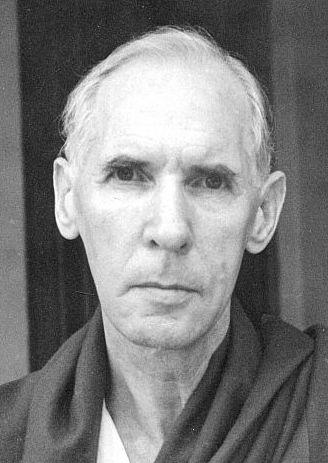
Arthur Osborne
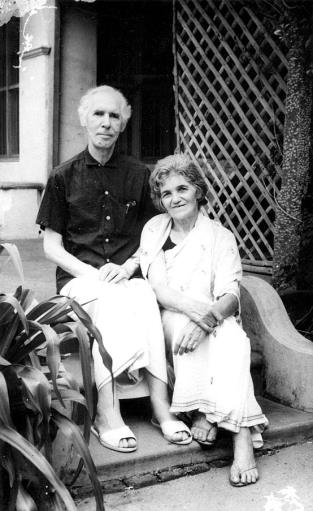
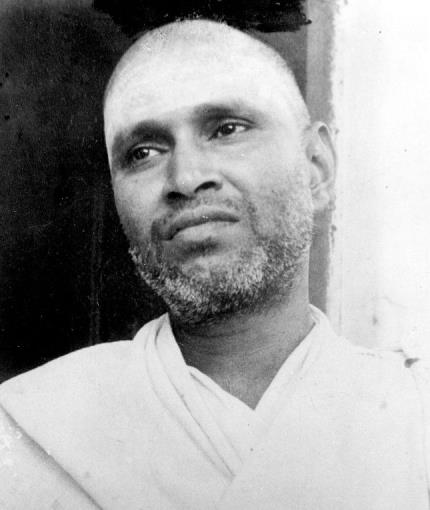
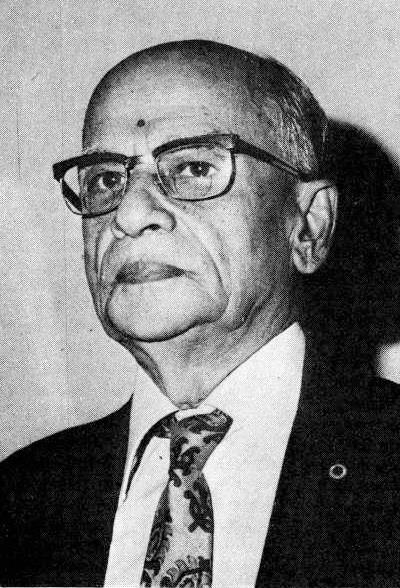
Arthur & Lucia Osborne
Sri Viswanatha Swami
K.K. Nambiar
Prof. K. Swaminathan
With a few copies of January, 1964 issue, the first issue, I rushed to the Ashram. Arthur Osborne refused even to look at them before they were placed on the Samadhi of the Master! At a simple function, Dr. T.M.P. Mahadevan released the first copy. When I wanted Arthur Osborne to preside, he said, "There is no need for any one to preside, since Sri Bhagavan is ever here as the Presiding Presence!"
(ii) PARTICIPATION
FROM the very first issue, Arthur Osborne knew what exactly the journal should contain and he followed the plan till his last day and he left specific, written instructions on how the journal should be run after him. He wanted every issue to carry an article on a saint's life or teachings, to introduce old devotees and to express grateful thanks to those who had done even the smallest service to the Master. How I came to Sri Bhagavan became another welcome feature. He bestowed special attention on Book Reviews. The Ashram Bulletin was left entirely to me; he used to touch up only its English. His answers to questions in Letters to the Editor were not only popular but very useful for sadhaks.
Running The Mountain Path was not always a pleasant pastime. When articles were found unsuitable, even if written by old devotees, they were promptly returned to them. Some insulted Arthur Osborne for these rejections. He reacted calmly like the Buddha; if an insult is not accepted it returns to the giver like any other gift. He would console me, thus: "Service to Guru is not always easy. It is not like pleasing a superior in an office." I would like to reproduce a letter that I received in reply to mine written in utter dejection and fatigue, when I was overworked and lacked proper support and co-operation from my colleagues, on the one hand, and on the other, was criticised for no valid reasons whatsoever:
23rd June 1966.
Dear Sri Ganesan,
Glad to hear that the work in Madras is going on well. We must not be too upset by people's criticism. But at the same time we must examine it to see if anything is justified in it and if so try to correct what is wrong. So long as the work is done as a service to Bhagavan it can go on whether people are helpful or not. Perhaps people who criticised do not realise how much work has to be done. After all, you know that at the Ashram there are people who criticise my work on the journal too. In fact you hold three posts — office manager, advertising editor and chief sub-editor in charge of page-making, and I can't think of anyone else who would combine them with the same enthusiasm and ability. So, you will have to continue doing Sri Bhagavan's work whether people criticise or not.
For us, what is necessary is a constant examination of motive: Do I want to dominate or to serve Bhagavan? Do I want to impress X, Y or Z or to serve Sri Bhagavan? Do I want to win praise or to serve Sri Bhagavan?
Best wishes for the work you are doing,
Yours in Bhagavan,
Sd. Arthur Osborne.
One more citation from his letter to me to prove how well he guided me:
"As for some people being jealous, I expected that. Human nature is such that nothing can succeed without provoking jealousy. They may even try to create animosity between us. Our best policy is just to take no notice and concentrate on doing Sri Bhagavan's work to the best of our ability and maintaining a high standard in every way so that people have nothing to criticise. With all best wishes. May the Grace of Sri Bhagavan support you in your work!"
On two different occasions, he gave me glimpses of his greatness, his humility and gurubhakti. In his January 1969 Editorial he had written: "It is not a question of whether there is a God apart from you but whether there is a you apart from God" (italics: mine). I was so much impressed by the depth and clarity of it I rushed to his house and expressed my happiness over it. He reacted pleasantly: "Do you like it? Yes, it is a great saying and contains the essence of the entire panorama of philosophies and sayings of all Saints." I was prompted to ask how he could write such magnificent truths in such clear and simple language. He replied that it was all the Grace of Sri Bhagavan.
Previously too, on reading his Editorial for October 1967, I was thrilled to the core, particularly by the sentences: "It is tremendously exhilarating to learn for the first time the truth of the One Self and the possibility of Self-Realisation. At last life has a meaning and a purpose!" When I rushed to him and congratulated him, his calm reply was: "It is all Sri Bhagavan's Grace! If you can feel so thrilled it is a proof that I have communicated the intuitive message correctly. I am grateful to you!"
A few further points of interest that I observed in him:
(i) In following Sri Bhagavan's path of Self-enquiry, he combined with it true devotion and selfless service. It was jnana, bhakti and nishkama karma — all in one! (ii) He was very regular in attending the chanting of the Vedas (Vedaparayana) in front of Sri Bhagavan's Shrine, both morning and evening. He affirmed that listening to it helped in meditation. (iii) He was a towering example of an ascetic living a family life! (iv) In all the years that I knew him, I never saw him getting angry at any time under any circumstances. (v) He never demanded any privileges for himself as Editor!
I received from him strong support and friendly guidance. I owe much to his sympathetic and patient understanding which saved me from various pitfalls that beset the spiritual path.
Mr. Osborne's remarkable ability in presenting Sri Bhagavan's teaching of Self-enquiry is clearly seen in his brilliant Editorials and the numerous articles he wrote under various pseudonymns, like Sagittarius, Abdullah Qutbuddin, Bodhichitta, and A.Rao. He contributed articles on Christianity, Islam and Buddhism in each issue of the journal. When accused of using for preaching Christianity and Islam, he, explained calmly: "Ganesan! I am a staunch Christian: I still remain so. And, for some time, I was in love with Islam and lived in mosques along with Muslims. I have studied Buddhism and known Buddhists. I know, thus, the difficulty Christians, Muslims and Buddhists find in practising Maharshi's teaching of Atma Vichara. By such articles I am only building a bridge through which all can reach the Maharshi and gain His Guidance."
* * *
At first we printed only 1500 copies. Mr. Osborne had warned me that the copies would not be enough. He was proved correct; I had to reprint 500 copies more of the first two issues. As devotees started reading it, The Mountain Path became very popular and the circulation increased to 3000, then to 4000, then to 4500 and now it stands at 5000 copies. The distinguished writers of articles include the Dalai Lama, Joel Goldsmith, Father Thomas Merton, Mysore Maharaja, Douglas E. Harding, Wei Wu Wei, Paul Reps, Lucien Stryk, George Trevelyan, Dr. T.M.P. Mahadevan and others. The entire credit for enlisting their help goes to Mr. Osborne. Also, a row of ennobling serials enriched the hearts of the readers — 'Bhagavad Gita’ 'Veda Parayana' , 'Arunachala Mahatmyam', 'Stories from Yoga Vasishta', ' Garland of Guru's Sayings', etc.
The Mountain Path, now well-established, commanded respect and applause from all over the world. The main aim of starting an Ashram journal was more than fulfilled. A steady flow of visitors, fresh pilgrims — mostly young seekers — came to the Ashram. Many projects — the completion of Sri Bhagavan's Samadhi shrine, the Meditation Hall , the Centenary Celebrations, a number of Guest Houses — all these became a reality, thanks largely to the good news spread through the pages of this quarterly.
* * *
In 1968 I was introduced to a new dimension in my relationship with my Editor, Arthur Osborne. We had always had the most cordial relationship, despite occasional differences which he nipped in the bud through his intuitive understanding and magnanimity. We freely consulted each other and decisions were taken only after we reached a consensus. Mr. and Mrs. Osborne had given me full freedom to knock at their door at any time, even at odd hours! Entering the house after a week's interval I found him stretched on his bed, suddenly reduced to skin and bones. This physical debility struck me first. Then, I noticed the change, the transformation in his face and I was wonderstruck. It shone with an aura bright and peaceful. My inner voice announced; "He is realised!" He opened his eyes and gave me a warm welcome with his lustrous look. He said: "Ganesan! I am saved. The Mountain Path will go on. Don't worry!" I sat next to him. I was overwhelmed with joy. I held his hand and sat gazing at his radiant face. I spent half an hour with him and went to my house and announced to my mother: "Mother! Mr. Osborne is realised. Please go and see him; his face shines with light!" She went to Mr. Osborne's house in the evening and confirmed my view.
Though after a few days Mr. Osborne physically improved, he spoke to no one. He was totally drawn within and showed signs of interest only when 'Bhagavan' or 'Arunachala' was mentioned. Even The Mountain Path — his pet child — did not seem to interest him. I started telling all my friends about the change and urging them to go and see him. Some were sceptical, some delighted. I took Sri T.P. Ramachandra Iyer to Mr. Osborne after I had tutored him how to test the change in Mr. Osborne by mentioning the journal, then some anecdote about Sri Bhagavan, and then Mr. Osborne's children (whom he knew very well) and so on.
Mr. Osborne looking at us, smiled and said nothing. TPR started praising The Mountain Path, particularly the Editorials. Mr. Osborne sat like a statue. TPR then said: " One day, in the hall of Sri Bhagavan..." but before he could proceed any further, Mr. Osborne sat up and said: "Yes, TPR! Tell me what happened." TPR narrated an incident. Mr. Osborne became very happy and pleaded, "TPR! Record all these incidents. You owe this to posterity." TPR, as planned already, switched the topic to his children and Mr. Osborne turned into a statue again. Next TPR spoke about Sri Bhagavan's love for Arunachala. Mr. Osborne joined enthusiastically. When again TPR went on to other subjects Mr. Osborne lapsed back into indrawn silence. When we came out TPR was extremely happy and said: "Ganesan ! Thank you! You have proved to me beyond doubt that Arthur is realised! It only proves that if one is sincere Sri Bhagavan's Grace will transform one here and now!"
The wonder was that our beloved Editor, perhaps anticipating the great change, had already prepared and finalized nine full issues: those of July & October, 1968, all the four of 1969 and January, April and July, of 1970 (except, of course, Ashram Bulletin, which in any case was my province). It was incredible, but he had done it! Later, when the burden of carrying on the journal fell on my shoulders, I realised how taxing it was even to put together a single issue in the given three months! Mr. Osborne had kept them all in different envelopes marking the date on each. A practical demonstration of how a Jnani is the master of Karma.
Mr. Arthur Osborne went to England and returned, now steadily established in inward poise. As he entered his house, he said: "Thrice I was about to die and every time Sri Bhagavan saved me! "Like a child I used to be delighted in his proximity. Friends pulled my leg: "Don't carry too far your hero-worship of Mr. Osborne." They didn't know how I enjoyed his Brahmic state.
He used to say: "At last Life has a meaning and a purpose! It is tremendously exhilarating to realize the truth of the One Self!" His words had come true in his life!
* * *
On May 8, 1970 I was woken up from sleep by Mrs. Osborne, giving me the news that the body of her beloved husband, had been brought by taxi from Bangalore, I went and saw the body. He looked as if asleep. Before breathing his last, though physically unable to utter a word, he had spoken in a loud, clear voice, to Mrs. Osborne- "Thank you!" I missed him very much but at the same time somehow felt his guiding presence for months thereafter.
The July 1970 issue was ready and I brought copies from Madras and placed them at Sri Bhagavan's Samadhi, symbolising its release. That night, while sleeping near the Samadhi of Sri Bhagavan I had a vivid dream. Mr. Osborne appeared and demanded from me the July copy and carefully went through every page. After the great change in early 1968, he had not shown much interest in the issues as they came out. Now in the first issue that I had brought out in his physical absence, he evinced keen interest to assure, as it were, his continued guidance in the journal's smooth running.
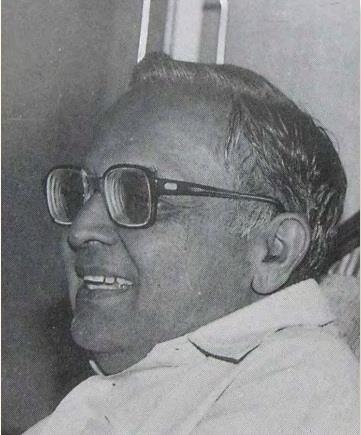
Dr. K. Subrahmanian
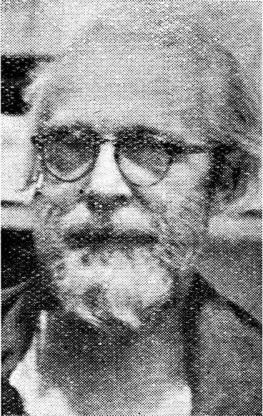
Ronald Rose
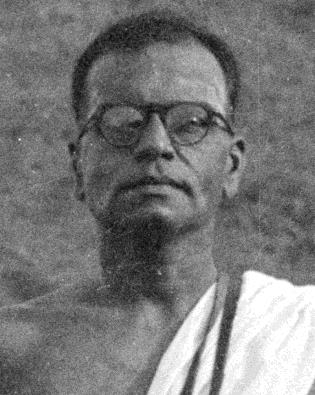
T.P. Ramachandra Iyer
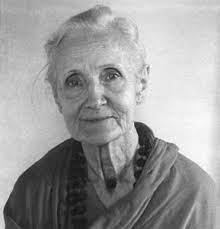
Lucy Cornelssen
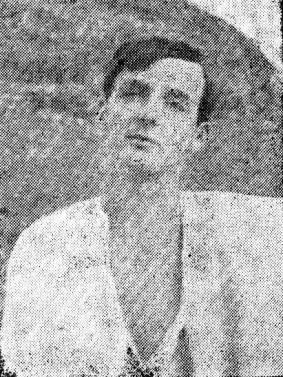
Philip Pegler
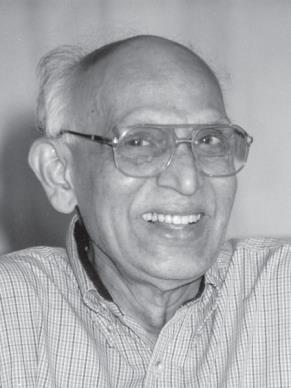
A.R. Natarajan
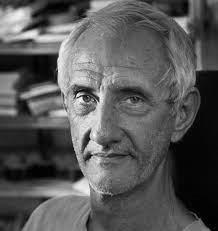
David Godman
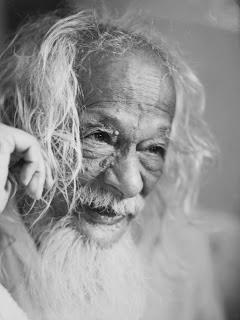
K.V.Subramanyan
Dev Gogoi
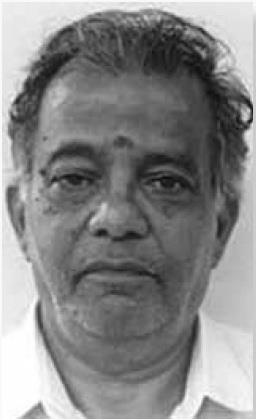
Ramamani
(iii) PINNACLE
The passing away of the Founder-Editor was so severe a blow that for some time I could not even think of who would follow him as Editor: so stunned and benumbed was I. It was then Sri Bhagavan's Grace that gave Mrs. Lucia Osborne the courage and willingness to volunteer to shoulder the entire responsibility herself. We could count on the help of M.C. Subramaniam and Ramamani who were often consulted even by Mr. Osborne. Editorship was something quite new for her, since she had never before in her life written anything, except personal letters, and she had done no "vetting" of others' articles at all. She, however, had learnt much by observing her husband during Mountain Path work. Her courage, the memory of her husband and her devotion to Sri Bhagavan enabled her to prove a worthy successor to one who was an adept in this line.
I need not say that she not only edited the journal well but, as time passed on, became a seasoned writer herself. One noted a mother's tenderness in her writings. Some not too intellectual readers even found her editorials better than Mr. Osborne's, saying "she is one among us and as such we are able to follow what she says!" While all the reputed writers came forward to cooperate with her, as they wholeheartedly did with her husband, she shifted the emphasis from topics of academic interest to those of practical value, from scholarliness to simplicity. However her difficulties were genuine. The strain was too much. From October 1970 to January 1974 she had borne the brunt. She pleaded with me: "Ganesh! It is really too much: I can't do it any further. You will have to find someone else to shoulder it," Seeing my predicament, she herself came out with the suggestion: "Why not our Viswanathan?"
The name sounded splendid to me! But, who is to bell the cat—who dare rope in this wild elephant? I could only pray to Sri Bhagavan. And lo and behold! Sri Viswanatha Swami himself came forward, one day, and volunteered to take up the editorship. But he laid down a condition. He should be helped by Professor K. Swaminathan. The latter was in Delhi, already burdened with the colossal task of bringing out The Collected Works of Mahatma Gandhi. The Professor who was all along a staunch supporter and good friend of the journal, readily agreed to work with the Swami but suggested the formation of an Editorial Board. The Editorial Board was formed in July 1974, with the additional members: Ronald Rose, T.P. Ramachandra Aiyer, M.C. Subramaniam, Philip Pegler and Ramamani. The final work rested with Swami only. There was now a beautiful blend of Sanskrit, Tamil and English scholarship which the readers enjoyed. The articles, selected initially by me, would be forwarded by Swami to Delhi. Professor would do all the detailed editing in pencil and add a remark: "To be revised and approved by Viswanatha Swami". The Swami, after going through a few of the edited articles, mastered the art of editing!
Our readers who had welcomed the simplicity in the writings of Mrs. Osborne, rejoiced now in the blend of Jnana and Bhakti in the writings of Swami. His profound knowledge of Sanskrit, particularly Vedas and Upanishads, enabled him to quote from the ancient texts, ample authority in support of Sri Bhagavan's teachings. The emphasis now shifted from articles on other religions and other teachers to articles on Sri Bhagavan and His teachings. This shift was very smoothly effected by the Swami since he had lived with the Master for so many years: the readers openly welcomed it. There was a stamp of authenticity when he wrote about Bhagavan and His teachings. Sri Bhagavan used to consult Viswanathan in dealing with spiritual writings while correcting, confirming or commenting on them. So, the work of Viswanatha Swami as the new Chief Editor brought about a welcome change reminding one of the old days in Sri Bhagavan's Presence.
Many topics of interest and importance would have never seen the light of day but lain buried in the bosom of Swami had he not brought them out as Editorials and special articles from his pen, like Dasamaha Vidyas. For full five years the Swami joyously kept the journal on a bright, ascending path. It was recognised in India and abroad as an authoritative spiritual journal, answering the questions of modern minds. The Swami's spiritual stature encouraged readers to scale new peaks of spiritual fulfilment.
As time passed by Dr. K. Subrahmanian, Lucy Cornelssen, Jim Grant and David Godman joined the Editorial Board and contributed fresh substance and style. When the devotees were building up momentum to celebrate Sri Bhagavan's Birth Centenary in 1980 and the journal was making efforts to reflect the great event in its pages, suddenly and peacefully Viswanatha Swami dropped his body. This was a very great set-back, for his friendly love and cooperative approach which dissolved so many problems, were no longer there. Again, I was thrown into despair!
I blame myself for such diffidence. For, is not Sri Bhagavan everywhere extending His Helping Hand? David Godman, who was doing the Book Reviews column, came forward to shoulder the responsibility. He had merged the two separate libraries within the Ashram compound (the Ashram Library and The Mountain Path Library) into one "Sri Ramana Centenary Library" in a new building in the Morvi Complex. Jim Grant gave him sustained assistance. Now, on top of this Library work, Godman undertook the Editorship; this is proof of his enthusiasm and efficiency. He took the journal along a different route. He wrote searching Editorials having delved deep in the Archives of the Ashram, and penned several authentic documents on Sri Bhagavan and His teachings. Some provoked controversy; but his articles made one sit up and take note of other viewpoints, and of contradictory reports found in old records.
I have to record here my immense debt to David Godman and Jim Grant, but for whose responsible handling of the journal and other literary works, I could not have devoted my time and energy to the Birth Centenary Celebrations.
In July 1981, we switched from letter-press printing to offset printing. The next year David Godman had to go home to England. I consulted, as usual, Professor K. Swaminathan. He promptly named K.K. Nambiar, one of the old and staunchest devotees of the Master! "Yes, he is the person", I agreed. Here again, I saw the Guiding Presence of Sri Bhagavan! With the new Editor at the helm, a different orientation was given to the journal. Articles on Sri Bhagavan and His teachings dominated its pages. With offset printing coming handy, I gave more importance to the display of Ashram Bulletin: this column suddenly became the favourite of the readers since I ventured to put in as many photos of visiting-pilgrims and of functions connected with Sri Ramana-celebrations. I defended my move (as a few opposed such a "propaganda touch") by citing Sri Bhagavan who always expressed gratitude for help rendered. These pilgrims and function-organising bhaktas deserved grateful mention in the columns of Sri Bhagavan's journal.
Sri A.R. Natarajan contributed brilliant Editorials which helped readers follow the Master's teaching with clarity and certitude. After the passing away of K.K. Nambiar, the whole brunt fell on Professor's broad shoulders. Dr. K. Subrahmanian provided lucid Editorials which were very well received because of their directness and simplicity.
Thus, twenty-four years rolled by!
For various reasons, I suddenly felt tired and wanted to quit or close down the journal. I thought that the journal had more than fulfilled the purpose of its creation — all the aspects of Sri Maharshi's Teachings and the practical aspects of other religions had been brought out and all Old Devotees of the Master had been given due recognition. There was a dearth of fresh articles on Sri Bhagavan and His Teachings. I was also tired of begging for advertisements. I felt I should quit.
However, I also felt strongly that I should do my utmost to make the issues of the Silver Jubilee year a grand success. I sought Professor Swaminathan's counsel. He fully realised my predicament, but yet said: "Sri Bhagavad Gita has been commented upon all these centuries by various scholars, yet still new commentaries are coming up, every day! The teachings of Masters like Sri Bhagavan never become stale, the more you write about them the fresher they are." After some time, he continued: "All right! Don't worry. I shall take the entire responsibility of the journal. I will help you, first, to complete the four issues of the Silver Jubilee: and then let us leave it to Sri Bhagavan"! This 91 year 'youngster' came to the relief of a 51 year 'old man'!
The purpose of the journal has never been to propagate a cult. In January 1964, in the very first para of his Editorial, Arthur Osborne has explained the purpose of the journal:
“It is related that after attaining Enlightenment the Buddha's first impulse was to abide in the Efflugence of Bliss without turning back to convey the Incommunicable to mankind. Then he reflected: 'Some there are who are clear-sighted and do not need any teaching, and some whose eyes are clouded with dust who will not need it though given, but between these two there are also some with but little dust in their eyes, who can be helped to see; and for the sake of these I will go back among mankind and teach.' It is for those with little dust in their eyes that this journal is intended."
"The purpose of the journal is to show that there is a more satisfactory state than that of ignorant, confused, unguided, frustrated modern man, and a higher, more satisfying and more durable alternative for him than any provided by wealth or luxury, art or music, or the love between man and woman; that such a state can be attained in this lifetime and that the purpose of all religions has been to lead men towards it, although in many different ways. I say 'towards' rather than 'to' because even though the Supreme State may not be attained in this lifetime, the mere approach to it can bring a peace of ‘mind’ and sense of well being not otherwise attainable."
The Mountain Path is Sri Bhagavan's journal !
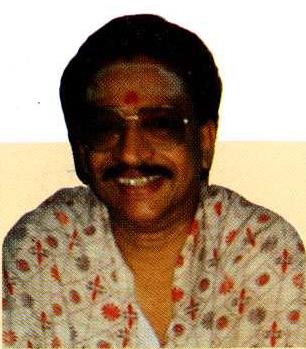
Thank You!
After many decades of dedicated service to the Ashram — especially in the Publications section — V. Ganesan retires from all the official positions that he has been holding hitherto at Sri Ramanasramam. He will however, continue to be available between 8 and 11 in the morning for seekers to meet him and have spiritual discussions with him. He will also continue to give talks on Sri Maharshi and His Teachings whenever invited by devotees.
* * *
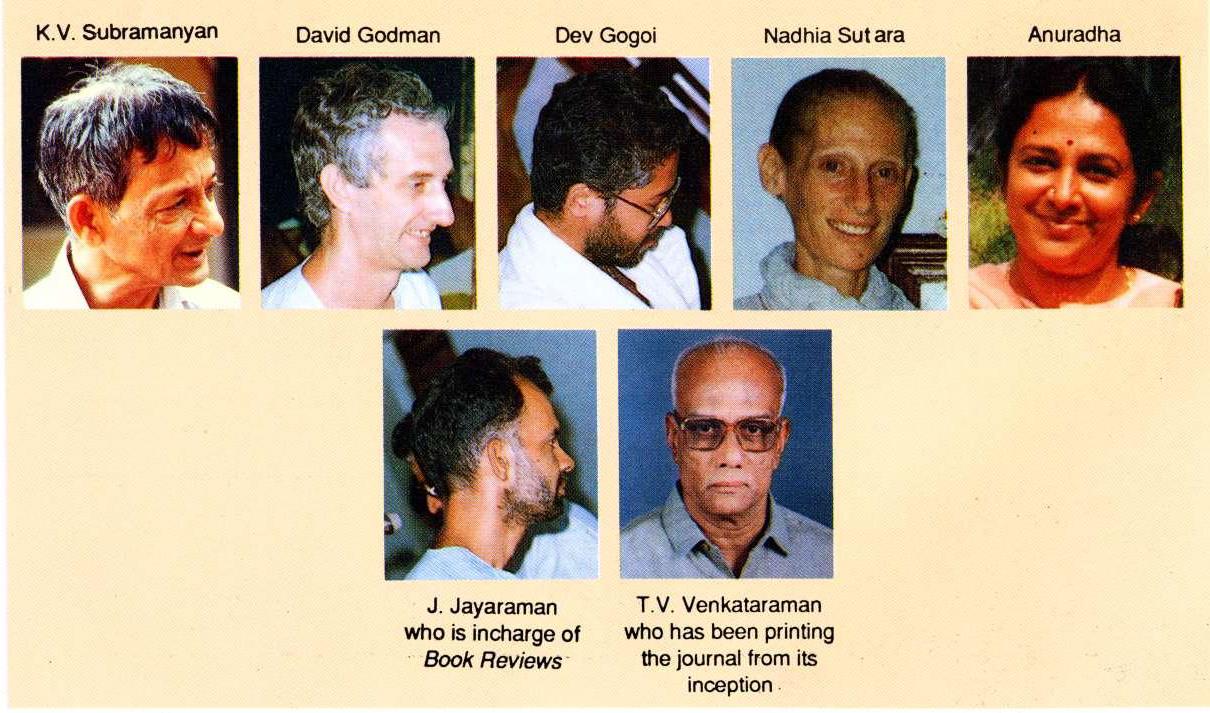
V. Ganesan expresses his limitless gratitude and thanks to the following who helped him edit The Mountain Path, for the past eight years. "It is their willing and unconditional assistance which enthused me to carry on this sacred but very heavy burden, all these years."
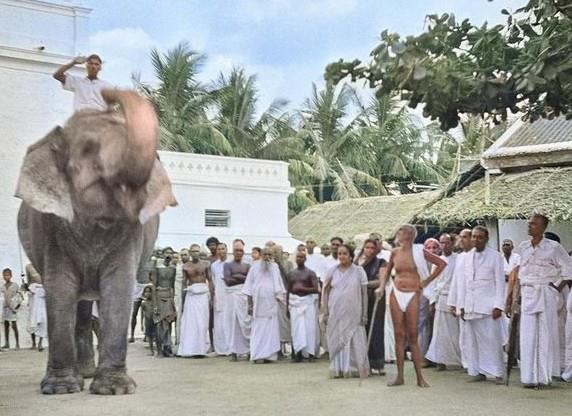
“My only resident-friend in 1000-pillared Mantap coming and offering salute as a great gesture of friendship and joy !”