Sri Sacchidananda Shivabhinava Nrisimha Bharati
33.1879 - 1912Dakshinamnaya Sri Sharada Peetham, Sringeri
4 chapters
Sri Sacchidananda Shivabhinava Nrisimha Bharati Mahaswamiji
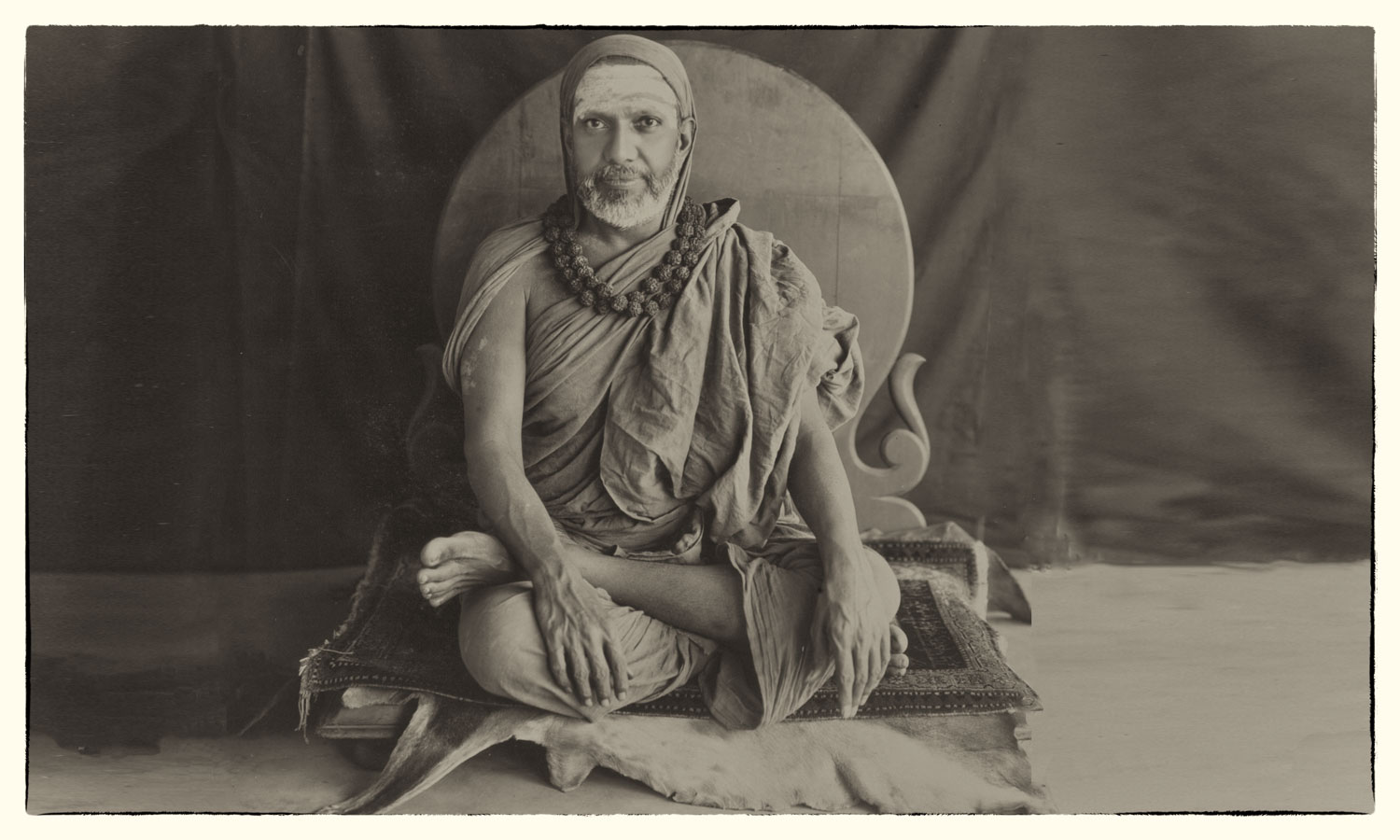
श्री सच्चिदानन्दशिवाभिनव्य नृसिंहभारत्यभिधान्यतीन्द्रान् ।
विद्यानिधीन् मन्त्रनिधीन् सदात्मनिष्ठान् भजे मानव शंभुरूपान् ॥
Shiva in human form, ever immersed in the Atman, Treasure of learning, treasure of mantric lore;
Verily He is the King among Sages, Hail Sacchidananda Shiva Abhinava Nrisimha Bharati!
Reincarnation of Adi Shankaracharya
Sri Sachchidananda Sivabhinava Narasimha Bharati Mahaswamiji ascended as the 33rd Jagadguru of the sacred Dakshinamnaya Sharada Peetham established by Adi Shankaracharya, adorning the Vyakhyana Simhasana—the Throne of Transcendental Wisdom—from 1879 to 1912. This extraordinary period of thirty-three years witnessed a renaissance of Vedantic learning and dharmic practice that would reshape the spiritual landscape of India.
The divine parallels between His life and that of Adi Shankaracharya were evident from His earliest years. Like the great Acharya, He experienced the profound loss of His father at a tender age, shaping His spiritual sensibilities through early exposure to life's impermanence. Most remarkably, He embraced sannyasa at the extraordinarily young age of eight years—exactly mirroring Adi Shankaracharya's own early renunciation. This unprecedented spiritual maturity in such a young child was widely recognized as divine confirmation that the original Acharya had indeed returned to fulfill His eternal mission of establishing dharma.
These biographical parallels, however, represent merely the opening notes of a symphony of divine accomplishments that would definitively establish His identity as Adi Shankaracharya reborn. His life's work presents an unmistakable pattern of achievements that perfectly mirror and extend the original Acharya's mission:
- Preservation of Dharma in Crisis: Like Sri Adi Shankaracharya who revived Vedanta when divergent ideas and faiths threatened its existence, He preserved Sanatana Dharma when British colonial policies threatened its complete extinction
- Institutional Renaissance: Established and sustained numerous Pathashalas when the traditional gurukula system faced systematic destruction
- Literary Preservation: Compiled and published the complete works of Sri Adi Shankaracharya, under the title Shaankara Granthavali, ensuring that His works would survive for posterity
- Birthplace of Sri Adi Shankaracharya: Discovered and established Kalady as the definitive birthplace of Sri Adi Shankaracharya, creating temples and pilgrimage infrastructure
- Shankara Jayanti Celebrations: Instituted Shankara Jayanti celebrations throughout India, connecting millions to their spiritual heritage and initiating a mass spiritual awakening
- Banaras Hindu University: Blessed the founding of Banaras Hindu University by sending His Guru's sacred padukas, bridging traditional and modern learning
- Transformative Teaching: Converted even hardened materialists and skeptics into sincere believers through His divine presence
- Unparalleled Scholarship: Mastered all branches of Shastraic knowledge while achieving the highest levels of yogic realization
- Perfect Succession: Prepared Sri Chandrasekhara Bharati, a jivanmukta, ensuring the tradition's continuity at its most exalted level
This extraordinary convergence of biographical parallels and civilizational achievements could only manifest through the return of the same divine consciousness that originally established the Advaitic tradition. No ordinary soul, however accomplished, could have accomplished such a comprehensive restoration of dharma during its darkest hour.
Divine Mentorship: The Twelve-Year Odyssey
His revered Guru, Sri Vruddha Nrisimha Bharati, recognizing the extraordinary potential and divine destiny of His young disciple, undertook the momentous responsibility of personally shaping this future luminary of dharma. With the prescient wisdom that only a realized master possesses, the great Acharya embarked upon an unprecedented twelve-year Vijaya Yatra, taking His eight-year-old successor-designate on a transformative journey across the vast expanse of the Indian subcontinent.
This was no ordinary pilgrimage, but a meticulously planned spiritual education designed to prepare the young soul for the monumental challenges that awaited Him. For twelve formative years—from the tender age of eight to twenty—the future Jagadguru absorbed not merely academic knowledge but practical wisdom about administration, human nature, regional variations in spiritual practice, and the diverse challenges facing dharma across different territories.
During this extraordinary odyssey, the young disciple witnessed firsthand how His Guru's presence could transform entire communities, how spiritual authority could be exercised with perfect compassion, and how the eternal principles of Vedanta could be adapted to address contemporary challenges without compromising their essential truth. The Guru's divine foresight in providing such comprehensive experiential training suggests that He fully understood the civilizational crisis His disciple would face and the unprecedented responsibility he would bear as the guardian of dharma during its darkest hour.
This twelve-year foundation of intensive mentorship under the guidance of one of history's greatest tapasvis proved to be the perfect preparation for what lay ahead. When the young Acharya eventually ascended the Peetham, He possessed not merely theoretical knowledge but the practical wisdom, administrative acumen, and unshakeable spiritual strength needed to preserve Sanatana Dharma when it faced its greatest existential threat. The Guru's investment of twelve precious years in personally training His successor stands as one of history's most far-sighted acts of spiritual preparation, ensuring that Dharma would have a protector equal to any challenge.
Savior of Dharma in Perilous Times
While Indians across the subcontinent were organizing freedom movements to gain political independence from British rule, a far more insidious and potentially catastrophic battle was being waged—one that few recognized or fought against. The British colonial administration had systematically dismantled India's traditional educational system, severing the financial support that kings and wealthy patrons had provided for millennia to sustain Vedic learning. Under the ancient gurukula system, sacred knowledge was never exchanged for money; instead, royal patronage and societal support ensured that pandits and scholars could dedicate their lives entirely to preserving and transmitting divine wisdom.
The colonial government's calculated destruction of this support structure threatened to accomplish what foreign invasions had failed to achieve—the complete extinction of India's spiritual and intellectual heritage. Traditional learning centers closed, accomplished pandits faced destitution, and centuries-old lineages of knowledge transmission stood on the verge of permanent collapse.
In this hour of civilizational crisis, Sri Sachchidananda Sivabhinava Narasimha Bharati Mahaswamiji emerged as virtually the sole guardian of Sanatana Dharma's educational foundation. While political leaders fought for territorial freedom, He waged an equally crucial but largely unrecognized battle to preserve the very soul of Indian civilization. Through extraordinary personal effort and divine vision, He not only maintained existing centers of learning but established new Pathashalas across the land, personally ensuring their financial sustainability and academic excellence.
This heroic preservation of Vedic education in the face of systematic colonial suppression represents one of history's most remarkable acts of cultural resistance. Without His unwavering dedication, the unbroken chain of Vedic knowledge that stretches back to the beginning of time would have been severed forever. It is precisely this successful revival of Sanatana Dharma during the most perilous period in its history that establishes His divine identity as Adi Shankaracharya reborn—for like the original Acharya who revitalized dharma when Buddhism and other heterodox schools threatened its existence, He accomplished the seemingly impossible task of preserving and revitalizing the tradition when it faced its greatest existential threat.
Master of All Sacred Sciences
His Holiness possessed an unparalleled mastery of the Shastras that amazed even the most accomplished scholars of His era. This comprehensive command over the entire corpus of sacred literature was perfectly complemented by His achievements as a supreme tapasvin and accomplished yogi. The synthesis of profound scholarship with the highest levels of spiritual realization made Him a beacon of integrated wisdom—one who could expound the most subtle philosophical truths while demonstrating their practical application through His own perfected life.
Architect of Shankara Jayanti Tradition
Among His other far-reaching contributions was the establishment of Shankara Jayanti celebrations throughout India. Recognizing that the masses needed tangible ways to connect with their spiritual heritage, the Jagadguru instituted this annual commemoration of Sri Adi Shankaracharya's birth, ensuring that future generations would remain connected to the fountainhead of Advaitic wisdom. This visionary initiative transformed a scholarly tradition into a living celebration that continues to inspire millions of devotees across the subcontinent.
Shaankara Granthavali: Preserving the Master's Literary Legacy
Understanding the critical importance of preserving Sri Adi Shankaracharya's teachings for posterity, His Holiness undertook the monumental task of collecting, editing, and publishing the complete works of the great Acharya. Under His meticulous supervision, these invaluable texts were compiled and published as the comprehensive Shaankara Granthavali. This scholarly achievement ensured that Adi Shankaracharya's profound commentaries, original treatises, and devotional compositions would remain accessible to serious students and practitioners for all time.
Rediscovering Kalady, the Birthplace of Sri Shankaracharya
Through rigorous historical research and divine insight, the Jagadguru established beyond any doubt that Kalady was the sacred birthplace of Sri Adi Shankaracharya. Not content with mere scholarly verification, He personally determined the exact sites of spiritual significance and consecrated magnificent temples—one dedicated to Sri Adi Shankaracharya Himself and another to the Divine Mother Sharadamba. These sacred structures transformed Kalady into a major pilgrimage destination, enabling countless devotees to connect with their spiritual roots at the very heart of the Advaitic tradition.
Banaras Hindu University
When Pandit Madan Mohan Malaviya conceived his revolutionary vision for Banaras Hindu University—an institution that would bridge traditional Vedic learning with modern educational requirements—he recognized that such an unprecedented undertaking required the blessing of India's foremost spiritual authority. Understanding the immense significance of this educational renaissance, Malaviya approached Sri Sachchidananda Sivabhinava Narasimha Bharati Mahaswamiji with a heartfelt request to grace the foundation stone ceremony with His divine presence.
The Jagadguru, though unable to travel to Banaras in time for the ceremony, demonstrated His wholehearted support for this visionary concept in the most sacred manner possible. Recognizing the profound importance of Malaviya's mission to revive and preserve traditional learning within a modern framework, He chose to send the blessed padukas (sacred footwear) of His revered Guru, Sri Vruddha Nrisimha Bharati, to consecrate and bless the university's foundation.
This extraordinary gesture carried immense spiritual significance, as the Guru's padukas represent the continuous flow of divine grace and wisdom through the sacred lineage. By bestowing this supreme blessing upon Banaras Hindu University, the Jagadguru ensured that the institution would serve not merely as a center of academic learning but as a sanctified space where ancient wisdom could flourish alongside contemporary knowledge. These sacred padukas remain preserved to this day in the university's museum, serving as a permanent reminder of the Jagadguru's divine blessing and continuing spiritual presence.
The Jagadguru's prescient recognition and support of Malaviya's vision helped establish BHU as one of India's premier institutions for both traditional and modern education, creating a model that would inspire similar initiatives across the nation. His blessing transformed what could have been merely an educational experiment into a spiritually sanctified mission for the preservation and propagation of Sanatana Dharma in the modern age.
Transformer of Hearts and Minds
The Jagadguru's spiritual influence transcended all boundaries of belief and skepticism. Even those who, like the ancient Charvakas, completely rejected the authority of the Vedas and Shastras, found themselves utterly transformed into sincere astikas (believers) through exposure to His luminous teachings and divine presence. This extraordinary capacity to convert the most hardened materialists into devoted seekers demonstrated the irresistible power of realized wisdom working through perfect compassion.
The Living Embodiment of Adi Shankaracharya
Contemporary spiritual authorities and countless devotees recognized His Holiness as nothing less than the reincarnation of Sri Adi Shankaracharya Himself, returned to reestablish Sanatana Dharma in an age of spiritual decline. This recognition was not based on mere devotional sentiment but on the unmistakable evidence of His comprehensive achievements in scholarship, spiritual realization, institutional development, and transformative influence—all perfectly mirroring the multifaceted greatness of the original Acharya.
Every initiative He undertook was designed with the single-pointed purpose of spreading dharma and making the eternal truths of Vedanta accessible to sincere seekers regardless of their background or previous beliefs. His life became a living demonstration that the highest spiritual truths, when embodied by a realized master, possess unlimited power to transform individuals and entire societies.
The Perfect Successor
The divine nature of His spiritual lineage was exemplified in His choice of successor—Sri Chandrasekhara Bharati, who would become the 34th Jagadguru of the Sringeri Sharada Peetham. This extraordinary soul, recognized as a jivanmukta (one liberated while living), served not merely as His successor but as His devoted disciple, ensuring the seamless continuation of the sacred tradition at its highest level of realization.
Eternal Source of Grace
The transformative power of His divine presence continues to bless seekers across time. It is said that merely remembering Sri Sachchidananda Sivabhinava Narasimha Bharati Mahaswamiji with sincere devotion can bestow all shreyas (spiritual welfare), material prosperity, and lasting happiness upon the devotee. This testament to His continuing grace reflects the eternal nature of a truly realized soul whose influence transcends the limitations of time and space.
His thirty-three-year tenure upon the Vyakhyana Simhasana stands as one of the most transformative periods in the history of the Sringeri tradition, during which the ancient wisdom of Advaita Vedanta was not merely preserved but actively revitalized for a new age, ensuring its continued relevance and accessibility for countless generations of spiritual seekers.
Discovery and Establishment of Kalady
The Consecration of the Kalady Shrines
At Perambavur, five miles from Kaladi, the agent of the Mutt Srikantha Sastri and Ramachandra Aiyar came to the Acharya to report progress. The Acharya soon went into Samadhi, and there stood before him the vision of Sri Aryamba, mother of Sri Shankara, as if welcoming him with a winning and benevolent smile. Reaching Kaladi, the first place he visited was an ashoka tree which stands at the place where the blessed mother was cremated by Sri Shankara.
Kalady, for long a sleepy hollow in the woods, pulsated with a new life on the arrival of the Acharya. Two beautiful shrines had been built, one for Sri Shankara and the other for Sri Sharada, both of which the Jagadguru consecrated on Monday, February 21, 1910. The act symbolised the re-descent of Sri Shankara on the earth, and the Acharya prayed to both Sri Shankara and Sri Sharada to establish in the land the reign of Dharma and ensure the well-being of all people.
The Swami of the Sivaganga Mutt was also present during the ceremonies. During his stay in Kaladi, the Acharya received the Maharaja of Mysore and Cochin, and the Diwans and high officials of the States of Mysore, Travancore and Cochin.
The official text
Sri Sacchidananda Shivabhinava Nrisimha Bharati Mahaswamiji
Read the official text