Kunju Swami
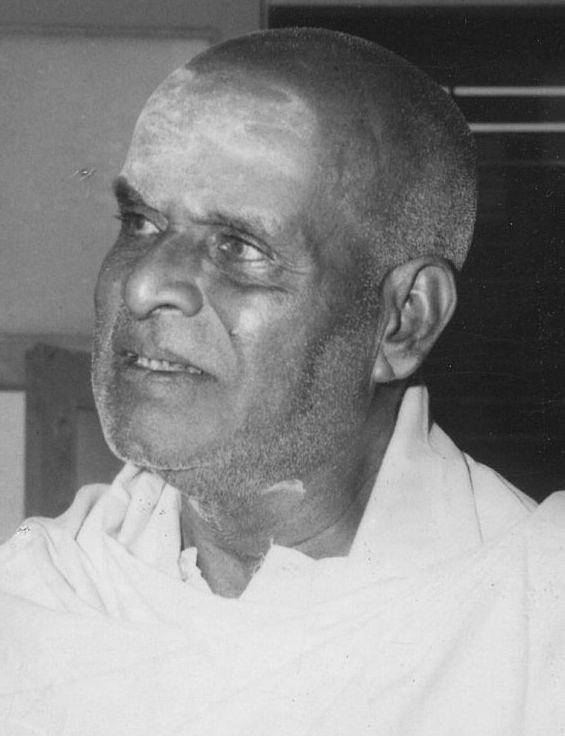
The Mundaka Upanishad says, “The Atman (Self) reveals itself to those the Atman chooses.” Whenever I meet a devotee, either in Ramanasramam or outside, I always ask, “How did you come to spiritual life? What made you turn to this?” The sole purpose behind the question is to make them aware that they have been called. Even if this became a physical reality through the chance reading of a book or suggestions from a friend, the truth is these things happen because we have been called. One important purpose of studying the lives of sages and saints and the early devotees of Bhagavan is to examine how each one of them had a turning point.
Kunju Swami was one such remarkable saint. Kunju means ‘baby’ in Malayalam, and he was so precious to his parents that they named him Kunju. He was chosen by the Self just as the Self has chosen each one of us. Do not exclude yourself because if this was not true you would not be reading this. Kunju Swami resided in joy, cheerfulness, friendliness, happiness; in fact, no one has seen him in any other state. Any devotee who met Kunju Swami could never forget him. Much of the knowledge I have about old devotees - particularly those I could not meet - was given to me by Kunju Swami. Often, I had the honour of receiving his kind hospitality. “Swami, whenever I go abroad to give talks, you are the one who feeds me,” I would say gratefully. He used to enjoy saying. “Yes, all this information I give you is vishaya daana.” In Sanskrit, vishaya daana means giving information and also giving food. He was utterly devoted to Bhagavan right from when he came to him at the age of nineteen until his last days in Ramanasramam where he passed away at the ripe ‘young’ age of ninety six.
He was born in a lower caste family. According to the then existing caste system in India, people from lower castes were ostracized from society. At birth, when Kunju Swami’s horoscope was cast, the astrologer predicted that this child was divine and advised that special care be given to him. The parents paid heed to this counsel and out of their five or six children, gave him the most attention. Kunju Swami was very fond of his father and accompanied him wherever he went. He would often go with him to bathe in a small pool. By the time he was three years old and was able to understand things, he observed Brahmins and sannyasins, standing waist deep in water and doing japa of mantras.
“Father, may we also chant a mantra like them? Why don’t you teach me one?” he asked eagerly. His father shook his head, “No, we are outcastes. Mantras are meant for Brahmins - the highest caste - and sannyasins. We cannot repeat them.” The little boy was utterly dejected and secretly shed tears. That night, Lord Siva appeared to him in a dream and said, “My child, I am initiating you into a mantra. Chant Om Namah Sivaya.” The boy started chanting this as soon as he woke up. After a few days, when he was again taken to the pool, he saw people taking sacred ash from a small cloth bag and smearing it on themselves. He told his father excitedly, “Father, I would also like to have a sacred ash bag like that!” “No, my child, we are all outcastes. We are not supposed to wear sacred ash or carry those sacred ash bags,” his father replied. Once more, Kunju Swami was really upset on hearing this. Lord Siva appeared to him in a dream again and showed him a tree and said, “My child, go to that tree and underneath you will find some coins. Take them and buy a bag of sacred ash.” The next day, he rushed to the spot and found three quarter annas (the Indian currency then). He showed them to his father and told him what happened. “Then it is Siva’s commandment,” his father said, “Go to the shop and buy that bag.” Kunju Swami obeyed happily.
After a year, five year old Kunju Swami felt he must have a rosary. Hindus, particularly sannyasins, use a rosary made of rudraksha beads (seeds of a tree found mostly in Nepal) and consider it very sacred.
He was afraid to tell his father for fear of being told he could not have it because they were outcastes. He fervently prayed to Siva , “Please give one to me.” One day, while returning with a friend after a bath in the pool, his friend suddenly remembered that he had some work and had to go back. Kunju Swami continued walking alone and suddenly noticed a strange sight - a lotus in full bloom on the street. He bent to pick it up, and in the lotus flower there was a rudraksha bead necklace held together with a golden thread! He ran back home excitedly and showed it to his father. His father now fully convinced that this child was special, happily put it around Kunju Swami’s neck with his own hands.
By the age of ten, this boy was totally absorbed in his devotion to Siva . His father took him to the next village to listen to the stories of Siva , called Thiruvilayadal Puranam. Thiruvilayadal means ‘holy play’ in Tamil and these stories related everything the Lord did, including how he played with devotees and blessed them. Kunju listened to them intently, soaking in every word. On returning home, his father would ask him to tell his mother what he had heard and the boy could repeat the stories verbatim. His family was flabbergasted at his extraordinary memory. His father gathered the villagers the next day and the boy stunned them with his recital. Soon, the other villagers would take him along to attend spiritual discourses and he began to perform the role of a human tape recorder! Even more astounding was that he could recall speeches not only in his mother tongue, Malayalam, but in any language including Tamil and Sanskrit.
His father became increasingly concerned with the miraculous occurrences that surrounded Kunju’s life. Feeling that he must be properly trained, he took him to one Kuppandi Swami who had come to their village. Kuppandi Swami ridiculed these siddhis and told Kunju, “Do not indulge in these. They are not going to help you. This is not the purpose for which the Lord came to you in your dream and gave you all this.” The boy fell at his feet and begged, “Please guide me.” Kuppandi Swami, a master of several arts like magic, astrology, medicine and Vedanta, acceded. He told the child, “Choose any one art and I will teach it to you.” “Swami, you choose for me,” the child humbly replied. The teacher said, “I won’t choose for you. You must be involved.” They finally wrote the subjects down on chits of paper and drew lots. The child drew Vedanta and that became his subject of study. (To me, this is firm proof that the Lord guides you - only, you must have faith.)
The Swami started teaching him Kaivalya Navaneetam, which means ‘the churned butter of emancipation’. (Bhagavan was very fond of this book.) Knowledge is like yoghurt. When we churn it enough, we get butter. Therefore, when anything we read including the scriptures is understood and faithfully put into practice, it gives us the real ‘butter’ or the truth through direct experience. Kunju Swami studied meticulously and because of his phenomenal memory, could learn twenty verses on the very first day. Within five days, he had memorized the entire book. But his father said, “This is not enough. You must know its meaning.” Kunju went back to Kuppandi Swami and was taught its meaning. When Kuppandi Swami had to leave, he entrusted Kunju to another swami who was well versed in Yoga Vasishta. His new teacher taught him this and advised, “It is not enough if you memorize and understand it. You have to practice it too.”
He began putting these teachings into practice; yet, he did not feel fulfilled. After a few years, Kuppandi Swami returned from his pilgrimage and found Kunju in a depressed state. “Why are you like this?” he questioned Kunju. “Swami, what I practice is not giving me satisfaction. I have read in the scriptures and in our puranas that in the ancient Vedic period there were many maharshis who with just one look gave an experience of the Self. Are there not any such maharshis now?” Kunju inquired. Kuppandi Swami said, “Yes, there is one such sage, now. His name is Ramana Maharshi.” The moment Kunju heard the name Ramana Maharshi, he went into a state of ecstasy. After a few minutes he collected himself and asked, “Swami, have you seen this Ramana Maharshi?” “Yes, I went to Arunachala and saw him,” the teacher replied. “I would like to go there,” Kunju stated.
Kuppandi Swami was a highly advanced teacher and had hundreds of devotees. He had a premonition that after two years he would go into jiva samadhi, entombment while still alive, and that Kunju should close his tomb. So he told Kunju, “Please wait until then. I have chosen you to do this because you have got the blessings of Lord Siva . Until then, I will be teaching you.” During that period, Ramakrishnan, one of his friends from the next village, came to see him. Kunju told his friend, “At least you go to Ramana Maharshi and see him first. I will give you directions to get there.” Finally the day for Kuppandi Swami to enter into jiva samadhi arrived. Hundreds thronged the site in anticipation of the miracle that awaited them. The pit was dug and the teacher told Kunju to place the slab over the tomb. “How will I know when to put it?” Kunju asked. “After I enter into samadhi you will see my head will suddenly start to shake. That will be your clue to put the slab on the tomb,” Kuppandi Swami instructed. “When will I see that?” Kunju asked. “It will happen half an hour after I enter into samadhi,” his teacher replied. Half an hour passed; then one hour, one and a half hours, two hours, and still nothing happened. Suddenly Kuppandi Swami arose from the pit and ran out with Kunju in tow. After running for almost a mile, Kuppandi Swami stopped under a tree. Kunju fell at his feet, “Swami, what happened?” “I don’t know! I am not trying to cheat anyone. I had this premonition and the time was fixed - it was not by me. It was ordained. Something has gone wrong, which means I will do some more sadhana. I will go on a pilgrimage and I will not come back. Go to Ramana Maharshi. I bless you my child.” Then the teacher parted from his disciple.
The Swami’s failure to enter jiva samadhi became sensational news. Soon, the excitement died down. Kunju was heartbroken that his upaguru had failed and had gone away. His father took pity on him and said, “Son, you have been with Kuppandi Swami. Do you owe any money to anyone?” “Yes father, I owe someone five rupees,” he replied. “Here, take this money and return it.” His father pressed five rupees into his palm. Kunju felt that it was Lord Siva himself giving him the money to go to Tiruvannamalai.
By this time, around January, 1920, Kunju was very popular in his village, as well as in the surrounding ones. Wanting to avoid the idle curiosity of people, he waited until night to slip away. He ran to the railway station and waited there, but missed the train. He hid himself and caught the next train to Katpadi. On reaching Katpadi, he learned that he had again missed the train to Tiruvannamalai. The next train was at six in the evening and he had to wait the entire day. At five, when he went to buy a ticket, he was told that a bubonic plague had broken out in Tiruvannamalai and therefore nobody was allowed to get off there. Dejected, he asked a man standing next to him, “What do I do? I want to go to Tiruvannamalai.” “Tirukoilur is the next station after Tiruvannamalai. Get a ticket to Tirukoilur and when the train reaches Tiruvannamalai, jump off the train. That is the way,” the stranger advised.
But when he went to buy the ticket, Kunju realized that he had just enough money to get to Tiruvannamalai. He needed four annas more to buy a ticket to Tirukoilur. Frustrated and not knowing what else to do, he began to pray to Bhagavan. He looked down and his eye fell on the rails in front of him. Between the two rails lay a four anna coin. Overjoyed he picked it up, bought his ticket and finally got on the train to Tirukoilur. They were to arrive at Tiruvannamalai station at nine thirty in the night. Being a law abiding and truthful young man, Kunju Swami was apprehensive about breaking the rule of getting off at the forbidden station. Suddenly the man seated next to him held his hand and said, “I am getting down at Tiruvannamalai. You must also get off,” and pulled him along. The two men slipped away into the night. Later on, when Kunju Swami recounted how the whole thing worked out, he said, “Had I not missed the morning train, I would not have been able to slip into Tiruvannamalai. Everything was perfect: I did not want to break the rules, but somebody held my hand and compelled me to get down. I followed him into town, to an open temple porch where we both fell asleep. When I woke up early the next morning, the man who helped me was gone. Who else could it have been except my Bhagavan?”
Kunju Swami was directed by passers-by to climb up the hill to reach Bhagavan. There were three paths and he did not know which to take. (This is symbolic for all seekers: when we want to reach the truth, we encounter doubts, problems and obstacles. However, if we are steadfast in our faith, this too will be resolved by the truth itself. What we need is perseverance, one-pointedness and faith.) He chose one of the paths and met a swami, a hefty man with long, matted hair and beard. Kunju Swami felt a little frightened because he had read in mythological stories about rishis who only gave curses. He ran back and encountered a stranger who asked him where he wanted to go. “I want to go to Ramana Maharshi,” he said. “Take this path,” the stranger pointed. As Kunju Swami walked up, at a spot a little above Virupaksha cave, he saw a small hut. Mudaliar Paati, who used to feed Bhagavan every day, lived there. On seeing this youth, she asked, “Where are you going?” “I want to have darshan of Ramana Maharshi,” replied Kunju Swami. “Go this way, take a dip in this stream and then go to Maharshi. We shall be bringing food for Ramana Maharshi and we will bring some for you also.” On the way, before reaching Skandashram, he wondered, “How can I pay my homage to my master? I am going to see him for the first time!”
On reaching there, he saw Bhagavan sitting and three people prostrating before him. One of them was his friend Ramakrishnan. The other two were Perumal Swami and one Swami Akhandananda. “This is the way I too will pay my homage,” he told himself. He too prostrated to Bhagavan and waited, because he had read in the Kaivalya Navaneetam and Jnana Vasishta that the guru will speak first and give an upadesa; until then one must not speak to him. At that time, Bhagavan turned to a lady who was weeping profusely and asked her, “Why are you weeping? You are weeping because you lost one son, but another son has come now.” The lady was none other than Bhagavan’s mother, Azhagammal. Much later, Kunju Swami learned that a man called Annamalai Swami had died that morning due to the plague and Bhagavan’s mother had been very fond of him as he had been of much service to her and to the others in Skandashram.
After some time, Bhagavan brought a charcoal stove, a small vessel and some ingredients. Kunju Swami had read that sages make magic potions and just by drinking them one could attain moksha. He thought, “What a fortunate boy I am! My master Ramana Maharshi is going to make a magic potion and give it to me on my very first day here.” Bhagavan made the potion, waited for it to cool and lifted a basket that was nearby. Four puppies lay huddled under it. The potion Bhagavan had made was just gruel for their feed! As the puppies ran helter skelter, Bhagavan turned to Kunju Swami and said, “Catch hold of all four of them.” Kunju obeyed, while Bhagavan readied to give them gruel on a small plate. Later, Kunju Swami said, “This was my first upadesa - by which I understood that I had to hold on to the four mahavaakyas.” (There are four scriptural statements which all Hindus revere as the highest wisdom. They are called mahavaakyas. They are Prajnanam Brahma, Aham Brahmasmi, Tat Tvam Asi and Ayam Atma Brahma. Prajnanam Brahma means ‘Consciousness is Brahman’. Aham Brahmasmi means ‘I am the awareness’. Tat Tvam Asi means ‘That thou art’ and Ayam Atma Brahma means ‘I am the awareness that is both individual and cosmic’.) “Now, let them go one by one,” the master instructed. Kunju let the puppies go one by one. Kunju Swami understood this second upadesa to mean that having absorbed the four mahavaakyas, he should let each statement drop off until only the true state of the Self remained. He was ecstatic that his master had given him the highest teaching. Each puppy lapped up its gruel. When its stomach was full, one puppy urinated and Bhagavan brought a gunny bag and cleaned the floor. Another puppy wandered around and did the same. Then, Kunju Swami thought, “Bhagavan should not be doing that. I would like to do this service.” Bhagavan turned to him and said, “Do you want to clean it? Go ahead.” So the third upadesa he got was to ‘clean it’.
Kunju Swami understood it to mean, ‘Always keep your mind clean.’ He diligently followed these rules all his life and found much joy.
He had stayed with Bhagavan for eighteen days when one day the master asked him, “What are you doing as sadhana?” “I am doing the panchakshari mantra, Om Namah Sivaya,” Kunju Swami replied. “Continue doing that,” Bhagavan said approvingly. Kunju Swami followed this for eighteen days and felt that in Bhagavan’s presence he had experienced the Self. He felt he should not be a burden to the ashram and so decided along with his friend Ramakrishnan to go back home and live there in this state of bliss. However, when they went home the bliss slowly started fading and they were back in their previous state. They realized that they must go back to the physical presence of Bhagavan. When Kunju Swami left for his first journey to Tiruvannamalai, he had done so without telling his parents, but this time he took their blessings.
In India, we have deep faith in serving the guru, being in close proximity to him and awaiting his instructions. When Kunju Swami and Ramakrishnan went to Skandashram, they too longed to serve their master. Fortunately, Perumal Swami, Bhagavan’s personal attendant, told them to take over his duty as he was going on a pilgrimage. Perumal Swami’s duty was to massage Bhagavan’s feet and bathe him. Kunju Swami was delighted that his prayers were being answered and resolved that come what may, to never leave his master and do whatever service his master entrusted him with.
He asked Bhagavan, “Why was it that I lost the state of bliss and became unhappy again when I went back to my village? What should I do to get over my confusion and thereby gain clarity?” Bhagavan listened to his questions with a smile and replied, “You have studied Kaivalya Navaneetam; one of the verses says that if one enquires into and comes to see the individual self and thus transcends it to its substratum, the eternal Self, he becomes the substratum, the Self itself. Remaining always as the Self, there will be no more births and deaths.” “How can I know my Self?” Kunju Swami asked. “First recognize who you are,” the guru answered. Kunju Swami inquired, “How can I recognize who I am?” “See from where thoughts arise,” Bhagavan said. “But how is this to be done?” Kunju Swami pressed. Bhagavan replied, “Turn your mind inward and be the Heart.” Then with his gracious look fixed on Kunju Swami, he reverted to his natural state of silence. At that very moment, Kunju Swami’s agitation and confusion ceased. He experienced a peace and bliss he had never experienced before.
Kunju Swami asked again, “But how and why did I lose the experience of bliss when I went back to my village?” Bhagavan quoted again from the Kaivalya Navaneetam, “The experience of the Self as a glimpse can occur in the presence of the guru but it may not last. Doubts will rise again and again. In order to clear them the disciple should continue to study, contemplate and practice. Studying or listening is sravana, contemplation is manana, and then practicing it is nididhyaasana. Sravana, manana and nididhyaasana should be done until the distinction between the known, the knower and the knowing no longer rises. There should be no difference, no other at all.” After Bhagavan had explained this to him, Kunju Swami decided to stay in his presence and to carry out the practices he prescribed. He found that if any doubt arose in his mind, it was cleared by merely listening to Bhagavan’s answers to others’ questions. He rarely had to ask a question himself.
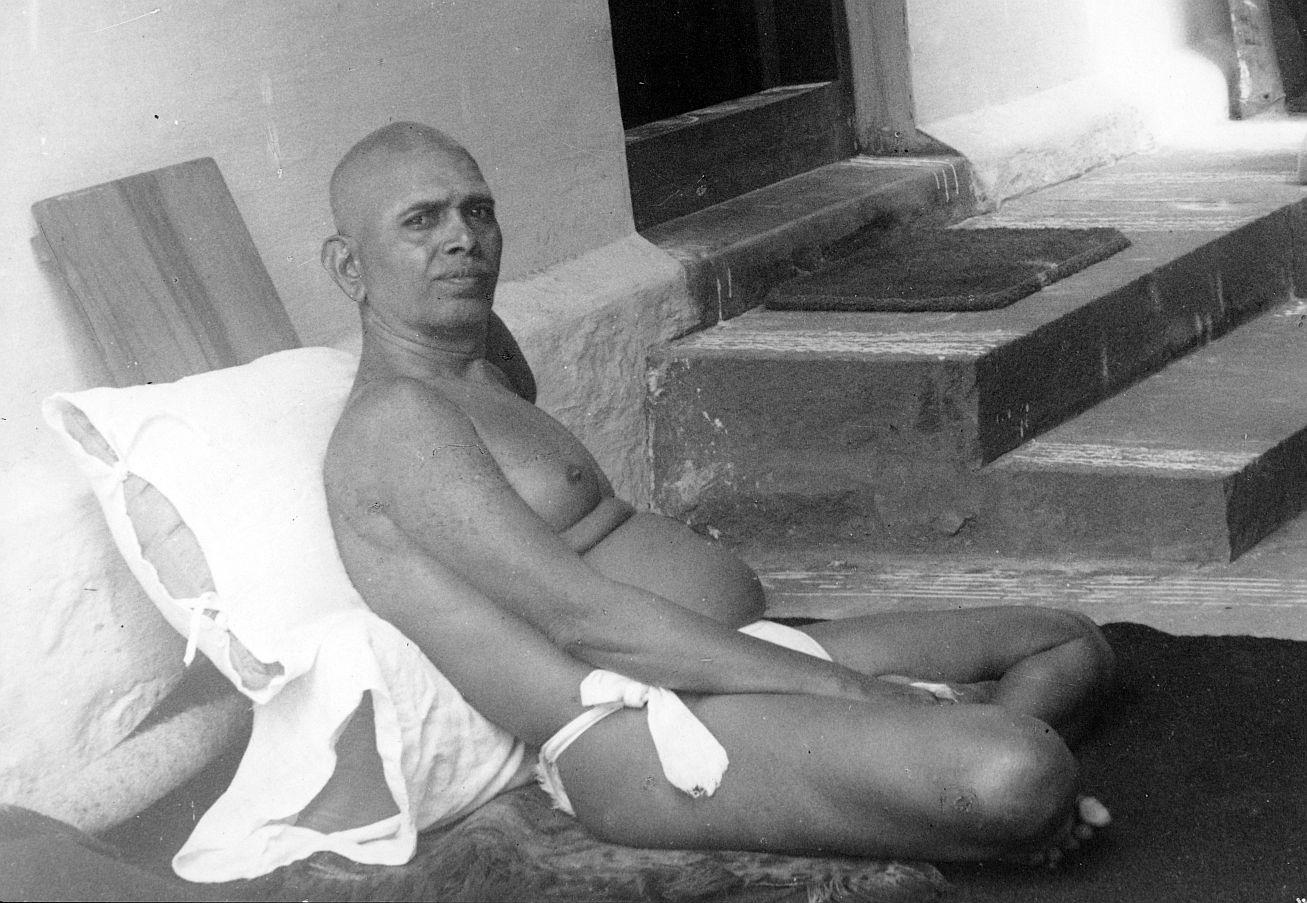
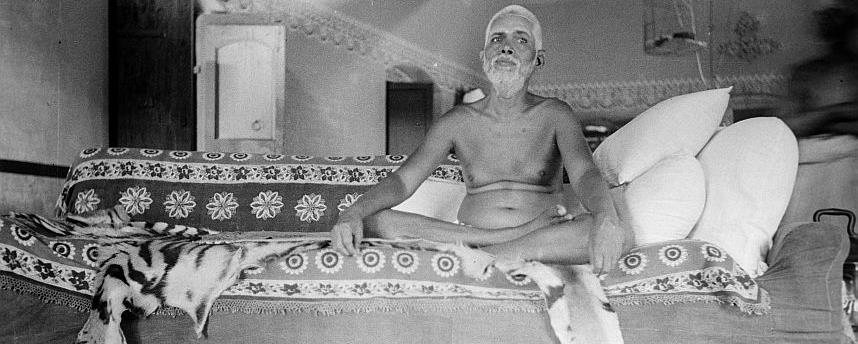
The day in Skandashram used to begin at four in the morning. Bhagavan’s mother would get up and sing devotional songs. At five, Bhagavan would come out and all devotees would sing Aksharamanamalai. Either Sama Thatha would cook or Echammal would bring food. At eight, everybody would eat. The rest of the time was spent meditating, reading Ribhu Gita or the Kaivalya Navaneetam. Bhagavan would remain mostly in silence. Kunju Swami has told me some interesting facts about Bhagavan. According to him, Bhagavan never lay flat or on his side. He always reclined. Bhagavan was also very frugal. Tooth powder was made every day and put into a packet for Bhagavan and given to him in the morning. If Bhagavan found that there was a little more than he needed, he would put it back in the same packet and expect it to be given to him the next day. Kunju Swami said that Bhagavan’s frugality continued even while bathing. Bhagavan used to take a little oil, put it in his palm, add hot water to make a paste of it, and then rub it all over his body. Since he could not reach his back, Kunju Swami would oil it for him.
At Skandashram there is a little platform facing Tiruvannamalai town - there was only a stone at that time. Bhagavan would sit on it and brush his teeth. It used to be very cold and Bhagavan wore only a loin cloth. Kunju Swami felt that he should not sit there in the early morning cold, yet Bhagavan continued to do so. He found the reason for this only later: There was a lady called Sowbhagyamma who used to come to Skandashram every day. She had become old but had taken a vow that she would not cook, eat or even bathe, without having Bhagavan’s darshan first. She did not come one day and Bhagavan asked her, “Why did you not come yesterday?” She replied, “Bhagavan, I had the great fortune of having your darshan from my house. When you were seated outside on the stone slab, I could see you.” From that day onwards, whether it was raining or cold, Bhagavan sat on that rock so that Sowbhagyamma could have his daily darshan.
Every single day was a holy day at Skandashram. Bhagavan introduced Kunju Swami to Kavyakantha Ganapati Muni. Kunju Swami actually witnessed Kavyakantha’s kapala bheda. A hot vapour emanated from Kavyakantha’s head and he placed Kunju Swami’s hand there. He found it very hot. Kavyakantha, in order to alleviate the discomfiture caused by this intense heat, took Bhagavan’s hand and placed it on his head. This made him feel the coolness, thus relieving him of the pain and discomfort. Later in reference to this incident, Bhagavan told Kunju Swami, “He has told us about this experience. But who could I have told?” Then someone asked, “Bhagavan, did you also have this experience?” Bhagavan just grunted, neither accepting nor denying the fact.
Nayana described Bhagavan’s spiritual status to Kunju Swami as being that of a sahaja nishta. He explained that according to the scriptures, all spiritual seekers eventually grew from either power or peace. Many sages like Meera, Adi Shankara and Swami Vivekananda developed power, and not able to contain themselves, ecstatically expressed it through their songs and speeches. Bhagavan, on the other hand, was one who was rooted in peace and refused to move even a little from Arunachala. And that is the mark of sahaja nishta: to remain as one is. That is why K.K. Nambiar, an old devotee, called Bhagavan ‘Malayai Muzhungi’ – one who swallowed a mountain!
During this time, there lived a sage in Kerala called Narayana Guru, who was so renowned that even Mahatma Gandhi thought it a privilege to spend a few moments with him. This sage rarely went anywhere. In fact, other saints came to him to pay their respects. Yet, he visited Bhagavan at Skandashram along with his disciples. Bhagavan spoke in Malayalam, cordially received him and invited him to share lunch. Narayana Guru replied gladly, in Tamil, “Oh yes! We will share the Maharshi’s prasad.” Bhagavan then bestowed his glance of grace and for a long time they both sat sharing an ecstatic silence. When it was time for him to leave, Narayana Guru, looking at Bhagavan’s state of sahaja samadhi, said in Malayalam “Let it be so.” This statement was interpreted as a prayer for sahaja nishta. But according to Narayana Guru’s devotees and his works he was already in that state. Right there, Narayana Guru wrote five verses in Sanskrit called Nirvritti Panchakam extolling the state of the sahaja nishta.
When descending the hill along with his disciples, Narayana Guru was in ecstasy. He turned to his disciples and declared joyfully, “The Maharshi is a raja sarpam, a king cobra.” In the Hindu religious and spiritual parlance, saints are often referred to as sarpams or cobras. Narayana Guru, a saint himself, did not categorize Bhagavan as yet another cobra; instead he gave Bhagavan the exalted status of a king cobra. This truth emanated from his Heart. He summoned two of his disciples, one a wealthy man, the other an erudite scholar and said these beautiful words: “Maharshi’s spiritual state is such that even a single glance from him is enough to liberate anyone. Now he remains unknown to the world, like a lamp hidden in a pot. He should be recognized so that this spiritual treasure is plundered by many seekers. Both of you should stay here for six months and make necessary arrangements for food and accommodation for visiting pilgrims, thus letting many visit the Maharshi every day and benefit spiritually. Allow Maharshi’s awakening to be known in the circles of scholars and earnest seekers by going to them and speaking about the awakening.” So captivated with Bhagavan was he, that when he went back to Kerala he wrote another five verses called Municharya Panchakam.
On his return, Narayana Guru fell ill. Coming to know of it Bhagavan sent Kunju Swami with a lemon, saying, “Go and give this to him.” Narayana Guru received it and reverentially put it on his eyes, head and chest. He was in tears that Bhagavan had sent this prasad for him. Whenever he had a visitor from Tamil Nadu he would ask, “Have you had Bhagavan Ramana Maharshi’s darshan?” If the answer was no, he would raise his voice and say, “Why did you come here? You must go back and have darshan there.” Knowing that Narayana Guru was to attain mahasamadhi, Bhagavan also instructed Kunju Swami about how Narayana Guru’s body should be preserved. Narayana Guru was a jnani, a realized saint, and Bhagavan wanted his tomb to be built accordingly. Kunju Swami was to give Bhagavan a report on whether the tomb was built satisfactorily. Later, when the news of Narayana Guru’s passing away reached Bhagavan, he said, “Narayana Guru is purna purusha, a fully blossomed one.”
Kunju Swami said that Bhagavan was very natural and spontaneous with him. Many a time, Bhagavan would go into samadhi from which it was very difficult to bring him out. When this happened, three or four people would blow conches in Bhagavan’s ears, until after a long time, Bhagavan emerged from his samadhi. This practice continued until sometime after Bhagavan moved to Ramanasramam. The scriptures state that there are two means of influencing the mind: by blowing a conch and by ringing a bell. The conch brings out the subdued mind. This can even be tried on people with insanity - to bring their minds back to a state of normalcy. The ringing of a bell turns the mind inwards. This is why temples and churches have bells; it is not merely a ritual but a method to calm and turn the mind inwards.
When Bhagavan’s mother passed away, Kunju Swami along with the others brought the body down to the present Ramanasramam. Where Mother’s body was buried, a thatched shed was erected and Bhagavan’s brother Niranjanananda Swami and Dandapani Swami stayed there. Sometimes they would get together ingredients for dosas and send word to Kunju Swami to stay over and eat dosas with them the next morning. Such fresh preparations were considered a luxury in Skandashram. They would send some for Bhagavan as well. Kunju Swami would wake up early, join them and begin to wash the vessels. One day, a person wrapped in a cloth stood behind him and asked, “Is there any food for a guest?” Kunju Swami turned around and saw that it was none other than Bhagavan joking with him. Kunju Swami replied respectfully, “Bhagavan, you have come at the right time. We are making dosas, please stay here.”
There was another lady who began her daily routine only after Bhagavan’s darshan. When she came to know that Bhagavan had come to the present Ramanasramam, which was only a thatched shed at that time, she insisted, “Stay here. I want to cook for you and feed you.” Bhagavan complied. The next day somebody else said, “We want to give you bhiksha.” (In Sanskrit, bhiksha means giving of alms but its literal meaning is giving a feast.) It was customary for the persons who gave the bhiksha to request Bhagavan to go around the hill with them. Bhagavan used to walk slowly and therefore it took the entire night to go around the hill. Soon people started asking him to stay at the present Ramanasramam. Once when people had offered bhiksha on five consecutive days, Kunju Swami tried to stop the next person because Bhagavan had already gone for giripradakshina for five consecutive nights. Bhagavan looked at him sternly to indicate that he must not tell anyone that he had been without sleep for five nights. Finally, when seven days had passed, Kunju Swami could bear it no longer. He went to Bhagavan and protested, “Bhagavan, you have not slept at all. Don’t you need rest? Why do you prevent me from stopping these people?” Bhagavan looked at him graciously and said, “What is sleep? Sleep is only to give rest to the mind. Only if the mind exists do you need to give it rest. Where is the mind? Of course, I understand that if the eyelids are open for twenty four hours at a stretch they get strained and the eyes will ache. If one remains with eyes closed for some time this too is taken care of. Therefore, where is the problem?”
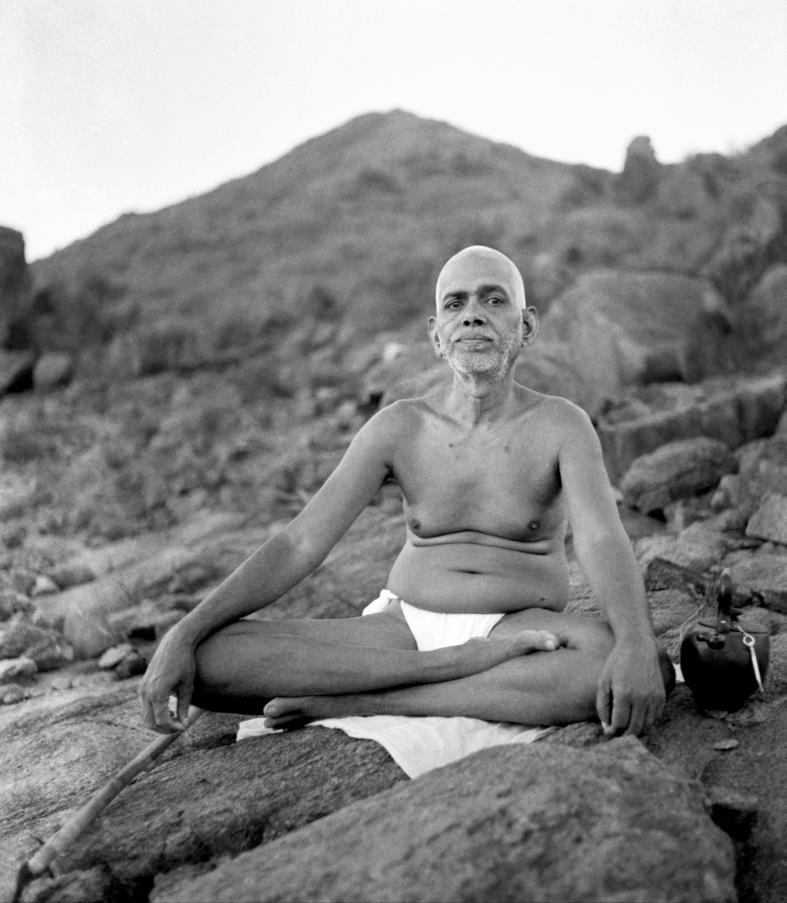
After Bhagavan came down to the Mother’s samadhi, the devotees from town continued to give him bhiksha. Kunju Swami and Ramakrishna Swami who were assigned to guard Skandashram, began to wail Bhagavan’s long absence. “We came here for Bhagavan, not just to guard a building up on the hill,” they thought sullenly. They would therefore sneak down the hill to be with Bhagavan. Noticing this Bhagavan said one day, “Let us all go around the hill.” After going around the hill with Bhagavan, Kunju Swami and Ramakrishna Swami returned to Skandashram, while Bhagavan and a few others came back to Ramanasramam. After an hour or so Kunju Swami and Ramakrishna Swami came running to Ramanasramam crying, “Bhagavan, thieves have entered Skandashram and robbed everything! Whatever was left there is all gone!” Unruffled, Bhagavan replied, “That’s good. Now nobody need guard that building; you can also come and stay here.” This is how Ramanasramam began to develop. It began as a mere thatched shed with a low platform on which Bhagavan would lie. Six or seven devotees would lie down near him on mats made of coconut leaves. Kunju Swami used to say that those were the most magnificent days because they could be close to their guru while he shared with them pearls of wisdom all through the night.
On the flip side, there were many days when they did not have food to eat. Bhagavan’s brilliance had just begun to spread and many did not know of his existence or bring any offering of food. Bhagavan was in his early forties, while Kunju Swami and Ramakrishna Swami were young men in their early twenties. They were all energetic workers but often went hungry. According to Hindu custom, one has to observe a complete fast on ekadashi, the eleventh day of every fortnight. It is compensated by a feast on dwadashi, the twelfth day. Whenever they did not have any food Bhagavan would amuse them by saying, “Today we will celebrate ekadashi.” When after a day or two some devotees brought them ample food Bhagavan would then say, “Today we will celebrate dwadashi.” On some days there would not be enough rice but ten people to feed. Bhagavan would encourage them by taking them to the forest. He knew about all the varieties of greens and would ask the disciples to gather them while he told them about their medicinal properties and how to cook them. In South India, rice is eaten as the main preparation and vegetables are eaten as the side dish. Bhagavan would say, “Why should rice always be the main dish? Today we will have these greens as the main dish and eat rice as the side dish!”
Kunju Swami said that they never felt tired even if they didn’t have their creature comforts. Bhagavan inculcated in them his own equanimity. Like most highly advanced beings, Bhagavan was never mindful of whether there was enough to eat or not. But the beauty about Bhagavan was that he bestowed on his disciples that state of titiksha (tolerance) too. Kunju Swami said, “Bhagavan came away from Madurai as a sixteen year old boy straight out of school. He could not have had a chance to acquire too many skills, yet he was specially gifted. He knew how to make beautiful garlands with flowers and stitch plates out of dry leaves. He also had excellent culinary skills and could cook a vast variety of dishes.” Kunju Swami often wondered where Bhagavan had learnt all these.
When people began to give bhiksha, they would give five rupees in those days and some rice, dal and vegetables. Their only condition was that Bhagavan had to walk around the hill with the person who had given him bhiksha that day. Every one thoroughly enjoyed this, including the seven or eight residents of the ashram. To them, accompanying Bhagavan on giripradakshina meant walking along with God. Kunju Swami once said to me, “We did not feel that we were walking with one of our friends or a saint, but with the supreme God himself walking on two legs with two hands and a head.”
The Old Hall which is now used for meditation in Ramanasramam was built in 1926. Kunju Swami was very happy because Bhagavan could be given a couch, though Bhagavan himself did not like it. Bhagavan said, “I prefer to sleep on the rock.” When the disciples placed a new velvet cushion on it, Bhagavan said, “This velvet cushion is pleasurable and enjoyable only to you. It is a bed of thorns to me. I prefer to sit on the rock.” Even so, Kunju Swami said he was very happy that Bhagavan could have the comfort of the couch. Here too, the devotees slept in the same hall as Bhagavan.
There were a few dogs at Ramanasramam and Kunju Swami admitted that none of them were fond of the animals because they were a nuisance. The hall where they slept was also the kitchen, the dining room and the audience hall. These dogs too lived there. Bhagavan knew of some of the disciples’ discomfort with the canines. So, Bhagavan made them sleep below his couch. At night, he would take them for a walk and then bring them back and tell them, “Get under the couch! The others will get angry if you stay outside. Go in!” Bhagavan also worked along with his devotees. All the ashram chores, including gardening, chopping vegetables, cooking, cleaning, and even masonry work, were done by Bhagavan too. He would bring rocks and mix water and mud for mortar to build walls. When the master accompanied his disciples in their work, they felt rejuvenated and happy.
One day, when Bhagavan was seated in the midst of his devotees, he suddenly got up and strode quickly towards the hill. Kunju Swami said, “I was very curious. Bhagavan usually never did anything unpredictable. On the rare occasions that he did, there was always some significance behind it.” Kunju Swami was waiting for Bhagavan to instruct him to come, but the guru went alone. From a distance, he could see Bhagavan surrounded by monkeys. After half an hour or so Bhagavan came back with his eyes swollen from shedding tears. “We were alarmed and asked what happened.” Bhagavan replied, “These monkeys have been searching for me at Skandashram. When I left, they searched all over the hill putting their lives in peril. Monkeys live in kingdoms and if they wander into another territory they could be killed by rival monkeys. These monkeys have come with their children risking their lives and are begging me to come back to Skandashram because they miss me there. It took me a long time to persuade them. I explained my situation and asked them to go back. I gave them my assurance that they will get back safely.” Whenever Kunju Swami narrated this anecdote he would weep copiously because it would bring before him and us, Bhagavan’s poignant unity with the animal kingdom. Bhagavan would often point out, “What is the difference between animals, birds and us? Birds wear the bird body, animals wear the animal body and we wear the human body. We all wear different bodies like different shirts, but in reality we are all the same being.” Kunju Swami loved animals and noticed Bhagavan’s relationship with them. He was therefore the source of all stories of the master’s relationship with animals and birds.
If you go to Ramanasramam, you will see four tombs for four animals. Bhagavan treated animals just like he treated human beings, there was absolutely no difference. Just as he bestowed liberation for his mother, so he conferred mukti to a deer, a dog, a crow and Cow Lakshmi - and these are only the known instances. Moreover, when Bhagavan was at Skandashram, (Kunju Swami told me that he himself had seen this), as soon as a baby monkey was born, the entire group of monkeys would come to Bhagavan and place the newborn with blood and all on his lap. Bhagavan would wash it and return it to the mother. This is indeed a remarkable phenomenon because usually if a human being were to so much as touch a newborn monkey, the whole herd would reject the newborn. He also cared for the delivery of the ashram pups. Squirrels used to complain to Bhagavan who would often mediate between them if they quarreled. He even would attend to cats whenever they were ill. There was one cat that had a diseased eye. Bhagavan kept a towel with which he would wipe its eye clean to the chagrin of his attendant. Bhagavan respected his attendant’s feelings too, so he would wash this towel himself.
Bhagavan rarely asked anyone for anything. Once, a stranger sat in his presence in the hall. Bhagavan looked at him and asked, “Next time, will you please bring me some cashew nuts?” Everybody was surprised. Bhagavan was a shy person and not one known to come forward to talk to new visitors. Here, most extraordinarily, he was not only volunteering to talk to a stranger but almost begging him to bring something for him. Soon everyone knew the reason. It was for the squirrels. They would not eat peanuts and were partial to cashew nuts. The ashram management felt differently: “They are only squirrels. If they are hungry, they will eat anything. We can feed them peanuts.” But they never touched the peanuts. Six or seven squirrels stood complaining in front of Bhagavan. That is what Bhagavan said, “They are cajoling me and asking me where their food is.” World War-II was going on at the time and cashew nut production had been nationalized, making them unavailable in the market. There was no cashew in the ashram kitchen and the store had only a few which the cooks wanted to save for their cooking. Bhagavan sent for cashew four times, but they said, “These few cashew nuts are for making sweets.” Finally, Bhagavan’s boundless compassion won over his natural restraint and taciturnity to get cashew nuts for the squirrels through the visitor. Bhagavan could often be seen breaking the cashew nuts into small pieces and keeping them in a small box. The only thing he asked for was cashew for the squirrels!
Snakes and peacocks also frequently found their way to Ramanasramam. The great master gave us an example of his compassion even in his last moments. Just before Bhagavan dropped the body, he asked to be helped up into padmasana. A white peacock was making sounds outside. After five minutes, Bhagavan opened his eyes and said, “He is hungry, feed him.” (In India, animals and birds are usually referred to in the neutral gender as ‘it’. But Bhagavan always attributed referred to them as ‘he’ or ‘she’.) These are one of the last few sentences he spoke. Bhagavan’s compassion to animals and birds cannot even be called extraordinary, because he treated every being alike. It is only because we perceive the difference between the animal kingdom and mankind that we glorify Bhagavan’s love for animals. Bhagavan was not paying any special attention to them - he was paying equal attention to all.
Dandapani Swami was the cook and Bhagavan assisted him. Every morning, Dandapani Swami would bring a type of cactus, which had to be ground or else it could not be eaten. Bhagavan would grind it and this eventually caused blisters on the fingers of his right hand. Bhagavan of course did not mind. But it irked Kunju Swami. He told Dandapani Swami, “Do not bring that cactus from now on.” “I am the cook. Do not interfere in my job,” Dandapani Swami shot back. Kunju Swami went to Bhagavan and complained, “Bhagavan, I have told Dandapani Swami not to bring this cactus but he insists on bringing it and this has caused you blisters. I will not eat if you grind it!” Nothing changed the next day, so Kunju Swami refused to eat. Bhagavan noticed this and said, “What freedom do I have when I have to obey whatever anyone says? If I do not obey them they say that they will not eat. Where is my freedom?” Kunju Swami was deeply hurt. Bhagavan continued taunting him, “Kunju, may I get up? I have eaten now.” Or, “May I enter?” “May I read this book? If I read this without your permission you will not eat.” “May I go out? I want to take a walk on the hill. May I, or you will not eat.”
This plunged Kunju Swami into depression. After experiencing this for three days, he told Bhagavan, “Bhagavan, I am going to Tirupati. My train leaves at six thirty.” Tirupati is a pilgrimage centre in Andhra Pradesh, nearly a hundred miles from Tiruvannamalai. After lunch, Bhagavan suddenly said, “I am going around the hill, let us all go.” Ramakrishna Swami told Kunju Swami, “Your train is at six thirty. We will all go around Arunachala with Bhagavan. When we approach the town you can catch your train.” Kunju Swami agreed and decided to take the opportunity to walk around the hill. But on that day, Bhagavan deliberately walked very slowly - so slowly that by the time they reached the outskirts of the city, the train had already left. Bhagavan said, “See Kunju, your train is moving, go and get on!” Then he consoled Kunju Swami, “You cannot even eat the ashram food. You find the sambar and rasam so spicy that you dilute them. In Andhra, everything is made with chillies, how can you eat there?” Kunju Swami prostrated at Bhagavan’s feet. He recounted later, “I served Bhagavan day and night and became a little proud of my proximity to him. I had begun to think that I was superior to all because I had been close to Bhagavan and that I was his best devotee and servant. Bhagavan just played a leela and snubbed me in his most natural and beautiful way.”
Ramakrishna Swami had a younger brother called Vasu who was studying in a college four hundred miles away from Tiruvannamalai. One day, he got a letter from his family that Vasu was following a hatha yogi who had taught him the practice of concentrating between the eyebrows. Vasu was so obsessed with doing this that he had almost turned mad. He was not able to eat or sleep and was in a pitiable condition. But he would not listen to his family’s advice to desist. Ramakrishna Swami told Bhagavan who knew all the family members, “Bhagavan, if I go he will not listen to me.” Then Bhagavan said, “Kunju, you go and tell him about the teaching.” Ramakrishna Swami had only five rupees to give Kunju Swami. It was enough to buy a train ticket but not for food on the way. They didn’t know how to tell Bhagavan this. Finally Kunju Swami said, “It doesn’t matter. Bhagavan has asked me to go, so I will go. It is all right even if I remain hungry.” His train was at half past six in the evening.
At three that afternoon, a visitor brought pooris, an Indian fried bread. Bhagavan used to eat two if they were small, or one if they were bigger. Bhagavan practiced equal sharing: if there was only one poori and many people to share it with, he would make it into smaller pieces and distribute them equally to everyone. But on this day, when poori was served to him in the hall, he did not stop with one. The visitors gave Bhagavan two pooris and waited; then three and waited expectantly; then four, then five, then six; only then did Bhagavan say, “Enough.” Everybody was surprised that Bhagavan had accepted six pooris when he would normally eat only one. He then slowly and neatly packed five pooris and called Kunju Swami who had not yet told him of his problem. The master told him, “You have got money only for the ticket, but what will you eat? Take this to eat on the way.” Kunju would narrate this incident with great emotion. Bhagavan’s tender, loving and caring ways are so beautiful!
Kunju Swami too, was very caring. Over the next two days, he ate only four pooris. He kept one as prasad because Bhagavan himself had packed it. He took this prasad to Ramakrishna’s family and fed it to Vasu first. Then he took a little time to divert Vasu from his path of hatha yoga to Bhagavan’s Self Enquiry. After staying for a few days and ensuring that there was improvement, he returned to the ashram and reported this to Bhagavan. Before he could return a letter had already reached the ashram saying that Vasu had relinquished all hatha yoga practices and was now practising meditation as prescribed by Bhagavan. Vasu later joined the army and became an officer of high rank. I met Vasu after he retired from the army. He was a hefty six footer with a very simple heart. That little prasad of poori and of course, Self Enquiry had transformed him.
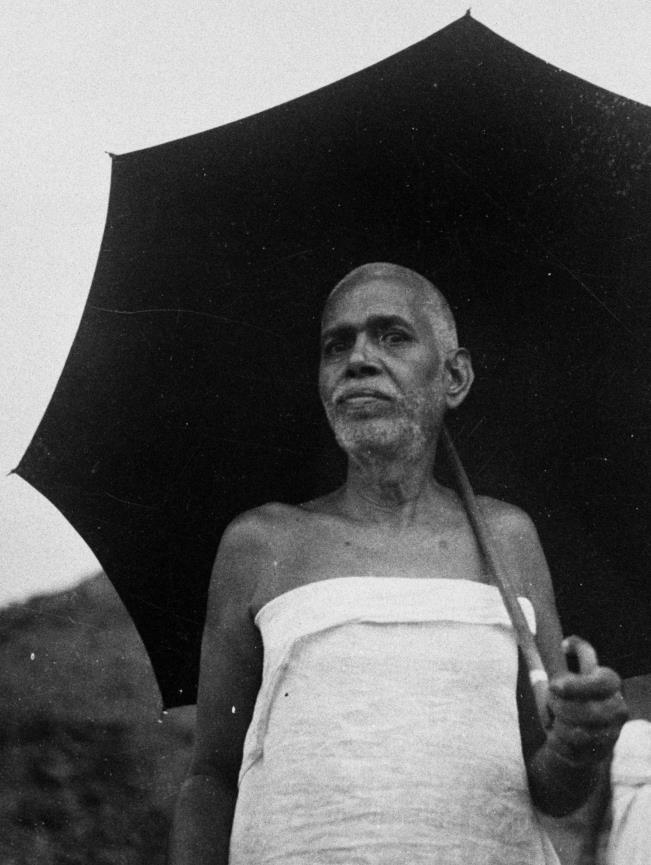
Kunju Swami used to narrate many stories. There was a man called Kandaswami in Tiruvannamalai who was a murderer and abhorred by all. One day, he fell gravely ill and people drove him out from the town. His only shelter was a mantap in front of Ramanasramam. He stayed there and sent word to Bhagavan that he was hungry. Bhagavan made gruel and sent it across every day. Before we proceed with the story, it must be known that Bhagavan never ever commented disparagingly about any person. Whenever Bhagavan received news that a devotee had passed away, he commented on what a good man or woman that person was. Even if the said person had hundreds of faults and only a few good qualities, Bhagavan dwelt only on the positive traits. When his devotees heard that Kandaswami had died, they were sure that even Bhagavan wouldn’t be able to find a single good quality to talk about this abysmally wicked man. Expectantly, they went and informed Bhagavan of his death. “Bhagavan! Kandaswami has passed away,” Bhagavan said : “Is it so? He used to keep his body and clothes very clean even though he did not use soap or soap nut powder. He used to bathe and clean his dhoti for hours together and keep it spotlessly clean.” “Bhagavan, we are all defeated,” they said in unison. “What is the matter?”, Bhagavan asked. They replied, “We thought that even you would not be able to find a single good quality about this man but we have failed. Bhagavan, you have defeated us.”
Kunju Swami also gave us many instances of Bhagavan’s humour. When letters arrived, they would be taken to Bhagavan in the hall and the devotees would observe Bhagavan’s face as he read them. From his expression, they would know if there was something interesting in the letter. Once, Bhagavan held a post card in his hand and then kept it aside, with a smile. Kunju Swami ventured to ask, “Bhagavan, I know that you have read something interesting in that post card. Will you please share it with us?” There were six or seven people present. Bhagavan said with a smile, “Worldly people have attachment to the body only as long as they live. But some of these sannyasins, these monks, who are supposed to have renounced the world are attached to their bodies even after they die.” The listeners did not understand. Bhagavan continued, “This post card is from a sannyasin who is eighty years old. He has appealed for funds saying, ‘I may die any day. Since my body has to be placed in a samadhi which has to be built well, please send me donations.’”
In the 1930s, when Bhagavan was in his early fifties, an old man in his nineties came to Bhagavan. He looked very pious and prostrated several times before Bhagavan, crying all the while. He said, “Bhagavan, I have only one prayer.” Bhagavan as usual looked at the speaker without asking him to continue. The old man said, “Bhagavan, you should live for a hundred years. I should see that you live for a hundred years.” Everybody was moved with his prayer which was almost like a blessing that Bhagavan should live for a hundred years. Bhagavan hid his smile. Kunju Swami being a humourous person himself, knew that Bhagavan was amused by the humour of it all. After an hour, when this old man had gone away, he went near Bhagavan and asked, “Bhagavan, I noticed that you smiled. What was the reason?” Bhagavan, amused, said, “You are all moved, isn’t it, that he asked that I should live for a hundred years? Do you know what that means? That he has to live a hundred and forty years, because he said, ‘I want to see you live for a hundred years.’”
When people from different branches of philosophy asked Kunju Swami questions, he found he had no answers. Many people from Tamil Nadu, especially those who followed the path of Saiva Siddhanta plied him with questions. There was a mutt where they held classes on Saiva Siddhanta, so he decided to go there and learn it. He went to Bhagavan and informed him, “Bhagavan, I am going to this place to learn Saiva Siddhanta.” “Oh! Why?” Bhagavan asked. Kunju Swami replied, “When people come here they have so many questions. If I learn, then I can answer their queries.” “Oh! That is very good, so you are going to learn Saiva Siddhanta so that others’ questions can be answered. Suppose someone comes with questions on Advaita Vedanta, what will you do? You will go and learn Advaita Vedanta and if someone comes and talks to you in Sanskrit, what will you do? You will go and learn Sanskrit. If westerners come to you, speaking in English, how will you answer them? Then will you go and learn English too?” By now Kunju Swami realised what Bhagavan was meaning to impress on him. He said, “Bhagavan, please pardon me. I am not going anywhere. Please teach me. It is only because of love that I want to help the others.” Bhagavan then gave him a gracious look and said, “If you learn to remain in the Heart as ‘I AM’, the answers to any questions that are put to you will emerge like an echo from within and they will be the correct answers. Learn to remain within your Heart as ‘I AM’.”
In another incident, there was a group of people trying to disturb the ashram management. Kunju Swami happened to enter the Old Hall and since everyone stood there, Kunju Swami too stood there. Bhagavan looked at him, “What business have you got here? Why have you joined these people?” Kunju Swami did not know what to say; he had not come to join them. Bhagavan asked again, “With what aim did you come here?” “Bhagavan, I came for getting your grace,” Kunju Swami replied. The master rebuked him, “Then attend to that. Why are you standing here?” That day, Bhagavan taught him the lesson that we must attend only to the purpose for which we all have come. It is to recognize the truth. It is not just for Kunju Swami that Bhagavan said this, but for everyone. This is Bhagavan’s direct teaching and as Kunju Swami confirmed to me a sound and practical one that we should not interfere in others’ affairs.
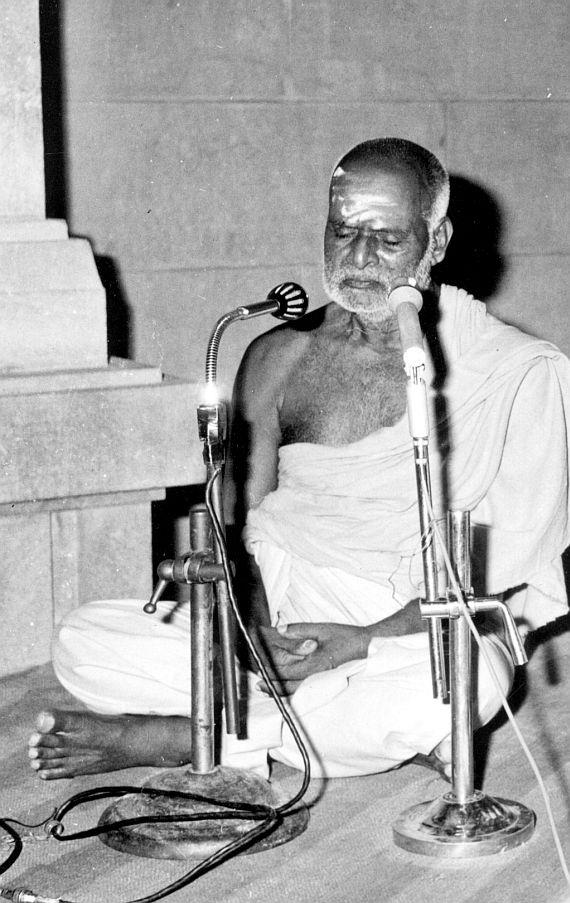
In 1932, after serving Bhagavan personally day and night for twelve years, Kunju Swami wanted to intensify his practice of Self Enquiry by keeping himself aloof from the ashram. He trained a young man called Madhava Swami to attend on Bhagavan. Kunju Swami waited for the day to tell Bhagavan that he was retiring from service and that he would be staying in Palaakothu in the next compound. He was hesitant as he did not know how to break the news to his master. While still in this dilemma, one day as he entered the hall he heard Bhagavan explaining to others that real service to him did not mean attending to his physical needs but practicing his teachings. Once before he had said, “It is no use in saying, ‘I have been doing personal service to the guru.’ One should abide by the teaching of the guru every day.” A few days later on another occasion, he heard Bhagavan say, “The best service to the guru is engaging in Self Enquiry, meditation and other spiritual practices with purity of body, speech and mind.” He kept chancing upon Bhagavan saying this morning and evening for several days. He had been hesitating to tell Bhagavan of his plans, but Bhagavan himself had taken the cue and given him an answer. Another day when he entered Bhagavan’s hall, Bhagavan was quoting from the Kaivalya Navaneetam wherein the disciple asks the guru how he can repay him for the grace he has received from him. The guru replies, “The highest return the disciple can render to the guru is to remain fixed in the Self without being disturbed by obstacles and outward distractions.”
This finally emboldened Kunju Swami. He prostrated before Bhagavan and said, “Bhagavan, I want to go and live in Palaakothu and pursue Self Enquiry.” Bhagavan was delighted and exclaimed, “Oh good! It is enough if the mind is kept one pointed in vichara, dhyana, japa and parayana.” (Vichara is enquiry, dhyana is meditation, japa is chanting a mantra and parayana is repeatedly singing the works of the master without aspiring for anything else.) Kunju Swami again prostrated before Bhagavan and pleaded, “Bhagavan, please bless me. I am going to be alone, away from you. Guide me.” Bhagavan looked at him graciously and then said the most beautiful thing: “Make Self Enquiry your final aim, but also practice meditation, japa and parayana. Practice them relentlessly. If you tire of meditation, take to japa, if you tire of japa, take to Self Enquiry, if you tire of that, do the chanting of verses. Do not have a gap between them. Do not allow the mind to sway from your task. Practice this faithfully, and in the end you will be established in Self Enquiry and find culmination in Self realization.” This is an assurance, not just to Kunju Swami but to every listener of this profound statement by the master. Be assured, Self Enquiry will establish you in the truth that you already are.
Kunju Swami lived in a small hut in Palaakothu and did not earn money or beg for it. Whatever provisions he had was exhausted - there was no food to eat. Bhagavan would visit Palaakothu after lunch where he would take a walk around the small pool there. He would invariably meet Kunju Swami and ask, “How are you? What are you doing? Are you doing your meditation? Are you doing your Self Enquiry?” Kunju Swami never told him of his plight, feeling that it was quite petty to tell his master about his physical problems. Did he not already know? On the third day after Kunju Swami had shifted to Palaakothu, one Gounder, a wealthy devotee of Bhagavan, came and prostrated before him in the hall. He was Kunju Swami’s friend, so Bhagavan commented, “Oh, you have come to see your friend.” He replied, “Yes, Bhagavan. I was exhausted yesterday after a whole day’s work and was fast asleep. You visited me in my dream and said, ‘You are sleeping peacefully while your friend is hungry for the last three days. Is it proper on your part to sleep like this?’ So I immediately got up and caught a train to come here.” “Go and see your friend,” Bhagavan told him. When he met Kunju Swami, he realized that his friend had in fact not eaten for three days and there was nothing in his humble abode. He gave Kunju Swami some money for provisions and fed him. He then had to go back, but vowed in Bhagavan’s presence, “Bhagavan, I will not allow him to go without food. I will send him five rupees every month.” In those days, five rupees was more than enough to meet one’s monthly needs. Kunju Swami said, “I had nothing - no utensils, nothing. Another friend saw this and he immediately bought me a stove and provisions.” Years later, Gounder even built a house for Kunju Swami opposite the ashram. Kunju Swami used to say, with a lump in his throat, “When you have surrendered to the master, that is to the truth, do not try to exert yourself by even making a prayer. He knows everything. It will happen in its own time.”
During his stay in Palaakothu, Ramanasramam grew rapidly and many visitors started coming to the ashram. Kunju Swami needed Bhagavan to talk to him every day, even if it was only one sentence. However, with Bhagavan becoming very busy this was becoming increasingly difficult. Kunju Swami recalled gleefully, “I am a very clever man. Every evening, we had parayana of the Tamil verses composed by Bhagavan from the Collected Works of Ramana Maharshi. I used to deliberately miss one line while singing and Bhagavan would say, ‘Hey, Kunju you have missed that line,’ or I would mispronounce a word and he would say, ‘No, no, Kunju, it is not like that. Pronounce it properly.’ I would be so happy that he spoke to me. Every day, whenever I wanted Bhagavan to talk to me, I knew the trick!”
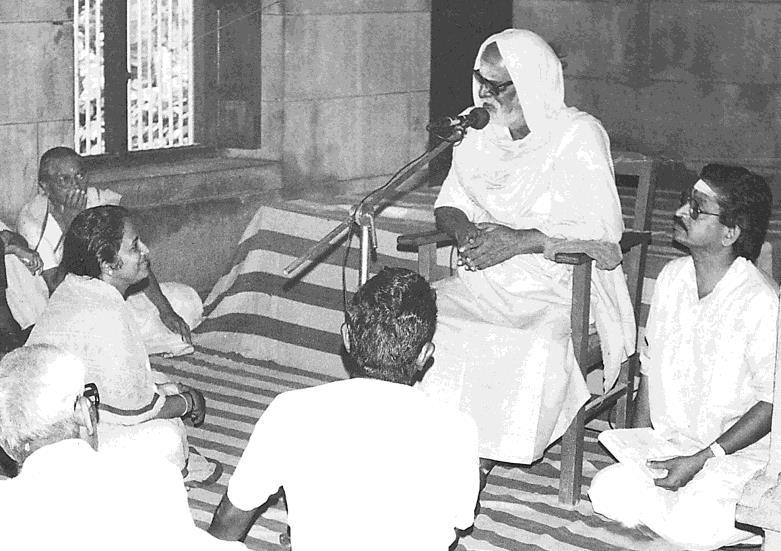
Kunju Swami expounding Bhagavan’s teaching (Kanakamma, Anuradha and Ganesan seated among the audience)
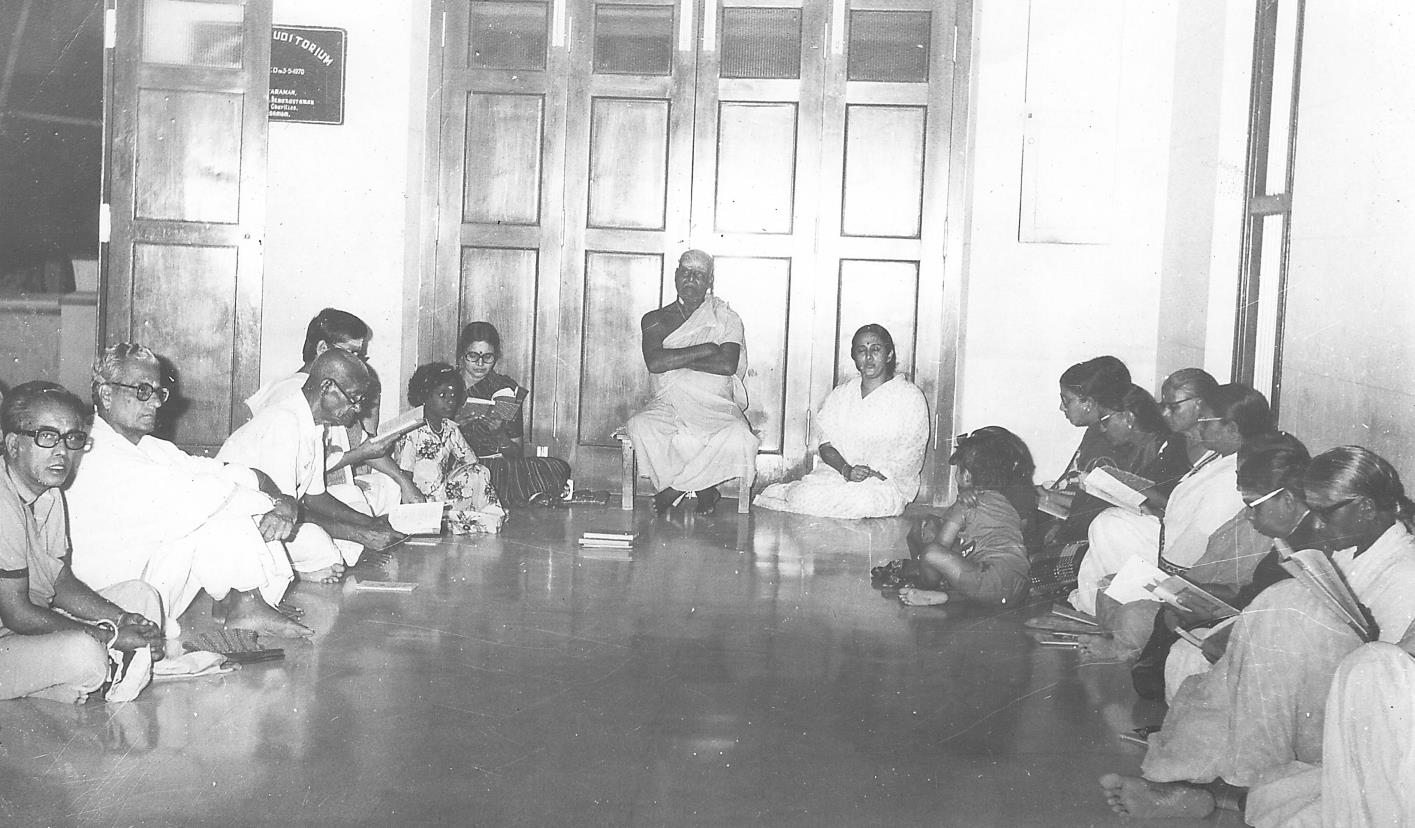
Tamil Parayana with Kunju Swami (seated in the centre)
The Collected Works of Ramana Maharshi in Tamil was released in the form of a book. Unfortunately, many sadhus could not afford to buy them from the ashram. So Bhagavan arranged with a devotee to write it all down in a notebook and hand it over to Kunju Swami. A small printed picture of Bhagavan was pasted there in it. Now, Kunju Swami wanted his copy of the Collected Works of Ramana Maharshi to also have a picture of Arunachala but he could not get hold of one. While he was still thinking about it, Bhagavan called out to him, “Kunju, bring your note book.” He then drew a picture of Arunachala in it. Kunju Swami left this notebook with Anuradha, another devotee, as a legacy. It contains a lot of Bhagavan’s handwriting and the picture drawn by Bhagavan. She has now handed over this precious treasure to the ashram archives.
Bhagavan used to correct all the proofs of his books himself. He would ask for two sets of proofs. One he would correct and send to the press, and the other he would keep with himself. There were often so many errors that the same proof would be sent to the press four or five times. Bhagavan carefully kept a copy of every proof and would finally bind four or five copies and distribute them. He kept the proof with the maximum errors for himself while he would give the better ones to Kunju Swami and those disciples who could not afford to buy these books. This is how kind and compassionate Bhagavan was.
Once, Kunju Swami felt he could not continuously meditate or pursue Self Enquiry and stay in the Self. He confessed to Bhagavan, “Bhagavan, I am not able to do this. The flow gets interrupted.” Bhagavan said, “Why? It is very easy. Before you go to sleep, meditate and go into the Self. Then when you fall asleep, your whole sleep will be a meditation of staying in the Self. The moment you wake up in the morning, again go into meditation for a few minutes and remain as the Self. Throughout the waking state, the undercurrent of remaining in the Self will be there even though you are working, arguing or quarreling. This substratum will always keep you in the Self.” Kunju Swami said, “This is the most beautiful and practical teaching I have received from Bhagavan.”
During Bhagavan’s last days, the management of the ashram had to face many problems. The devotees did not know how to continue with their activities. So along with Kunju Swami they approached Bhagavan. He told them, “How is the management being carried out now? Do you think it is you or somebody else that is managing it? There is a higher power which is managing all this. The same higher power will continue to manage.” When Bhagavan was to drop his body, the devotees again wanted guidance. “What should we devotees do?” they wondered anxiously. Kunju Swami and twenty other devotees went to Bhagavan and prayed, “Bhagavan, please guide us.” Then he gave his last message, which is not only to those twenty devotees but also to all of us: “Put the teaching into practice.”
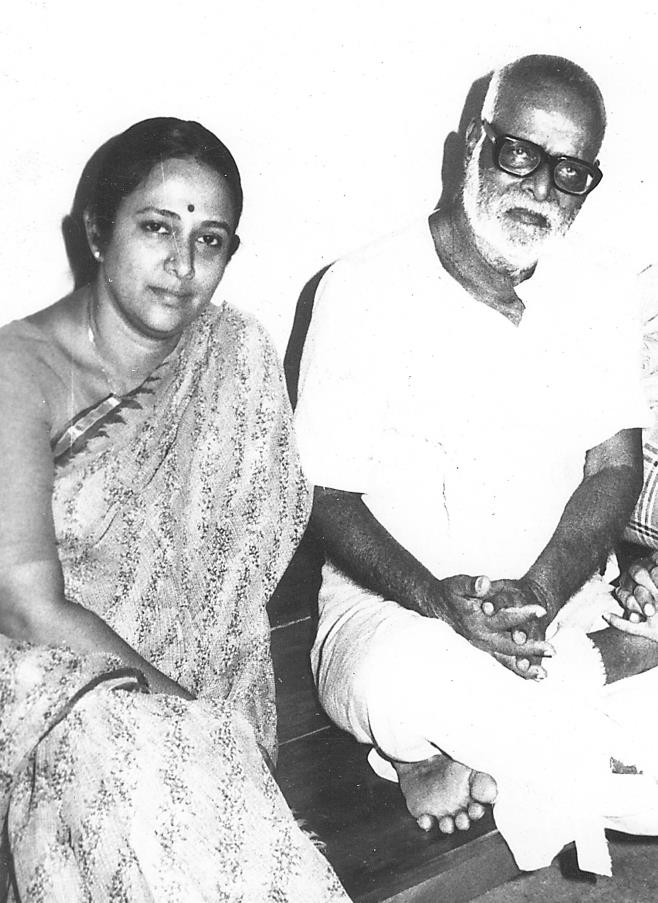
Kunju Swami with Anuradha
He would enthrall us with stories of the master and whatever I am sharing with you is prasad from Kunju Swami. It is Kunju Swami who has given us a wealth of information, all the reminiscences about other devotees, about Bhagavan’s relationship with them, his beautiful relationship with monkeys, animals, men, trees, plants, with the hill, with its rocks, even with its sands! We are all deeply grateful to Kunju Swami. I can never forget his solicitude to me. I had given Kunju Swami Chadwick’s old room. He said, “Ganesan, come and stay with me in the next room.” Even though I was an adult and held a responsible position in the ashram, he looked after me as if I was a child. He was so kind!
I had appointed two attendants to look after him as he experienced a lot of physical pain. These attendants did their duty very well, but sometimes they made blunders. Kunju Swami never complained. One day I asked him, “Swami, are they all looking after you properly?” “They are looking after me very well. In fact, today I wanted to call and tell you that I would like to break some good news to humanity.” Puzzled by his words, I asked, “Swami, what are you talking about?” “Do you know these muscular pains can be cured with a massage using honey?” replied Kunju Swami. “I still don’t understand, Swami.” I learned later that there was a jar of honey kept next to the jar of brown oil which was to be massaged onto Kunju Swami’s body to relieve his muscular pain. His attendants, mistaking the honey for the oil, had been massaging Kunju Swami’s body with it. It obviously did not prove useful but all Kunju Swami said was, “I wanted to announce a medical breakthrough, but it did not work.” He used to get his point across indirectly without complaining, despite being in so much pain.
Towards his end, he was almost bed ridden. He could not even sit up. Anuradha, a few others and I would visit him and try to amuse him. We used to ask him to tell us something about Bhagavan’s verses and he would come alive. Anuradha’s son, Shankar had finished school and was soon to leave for America to study medicine. He was very fond of Kunju Swami because he had been almost brought up by him. He knew that when he returned from America the next time, Kunju Swami would no longer be among us. This saddened him deeply. Kunju Swami wanted to cheer him up, while we tried to amuse him. I put a question to Kunju Swami, “In Bhagavan’s Tamil translations of Sankara’s works, which song do you like?” Kunju Swami steadied himself and looked at me. I continued, “Swami, I like the song where it is said ‘I am the Self, I am awareness’ and Anuradha likes the song where it says ‘You are the Self, you are That’. Whose side are you going to be on?” Kunju Swami said, “Let her sing first.” The first song she sang was Hastamalaka Stotram, which says ‘I am That (avvaanmaa naan)’. Then she sang Guru Stuti, which says ‘You are That (avvasthu andro needhaan)’. I asked Kunju Swami, “Swami, to which party do you belong? Do you belong to ‘I am That’ or ‘You are That’?” Kunju Swami smiled at us, “What is the difference between ‘You’ and ‘I’? In ‘You are That’, the important word is ‘are’, not ‘You’ or ‘That’. Both get merged in the ‘are’. In ‘I am That’, the important word is ‘am’, not ‘I’ or ‘That.’ Be the ‘I AM’.”
He passed away a few days after listening to those beautiful songs. On his last night, he asked his attendants to remove the cushions from his wooden bed and help him sit in padmasana. “I am going to meditate,” he declared. He remained in deep meditation while his attendants slept. After two hours, when they awoke and touched him, his body was cold. He had passed away in that silence. His Heart will always be in Arunachala, at the feet of satguru Ramana.
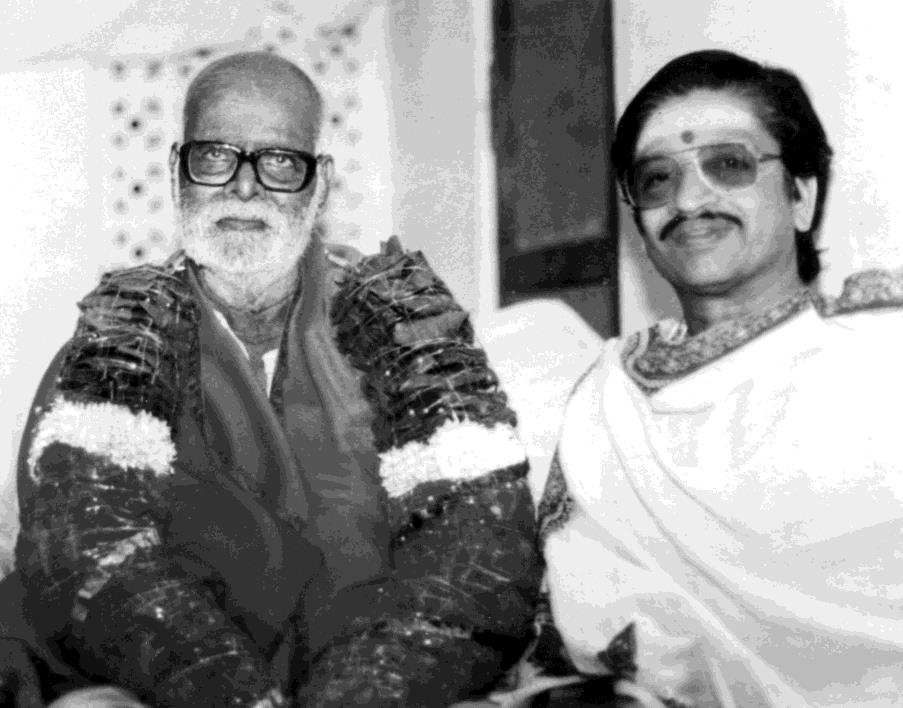
Ganesan felicitating Kunju Swami on his 90th birthday
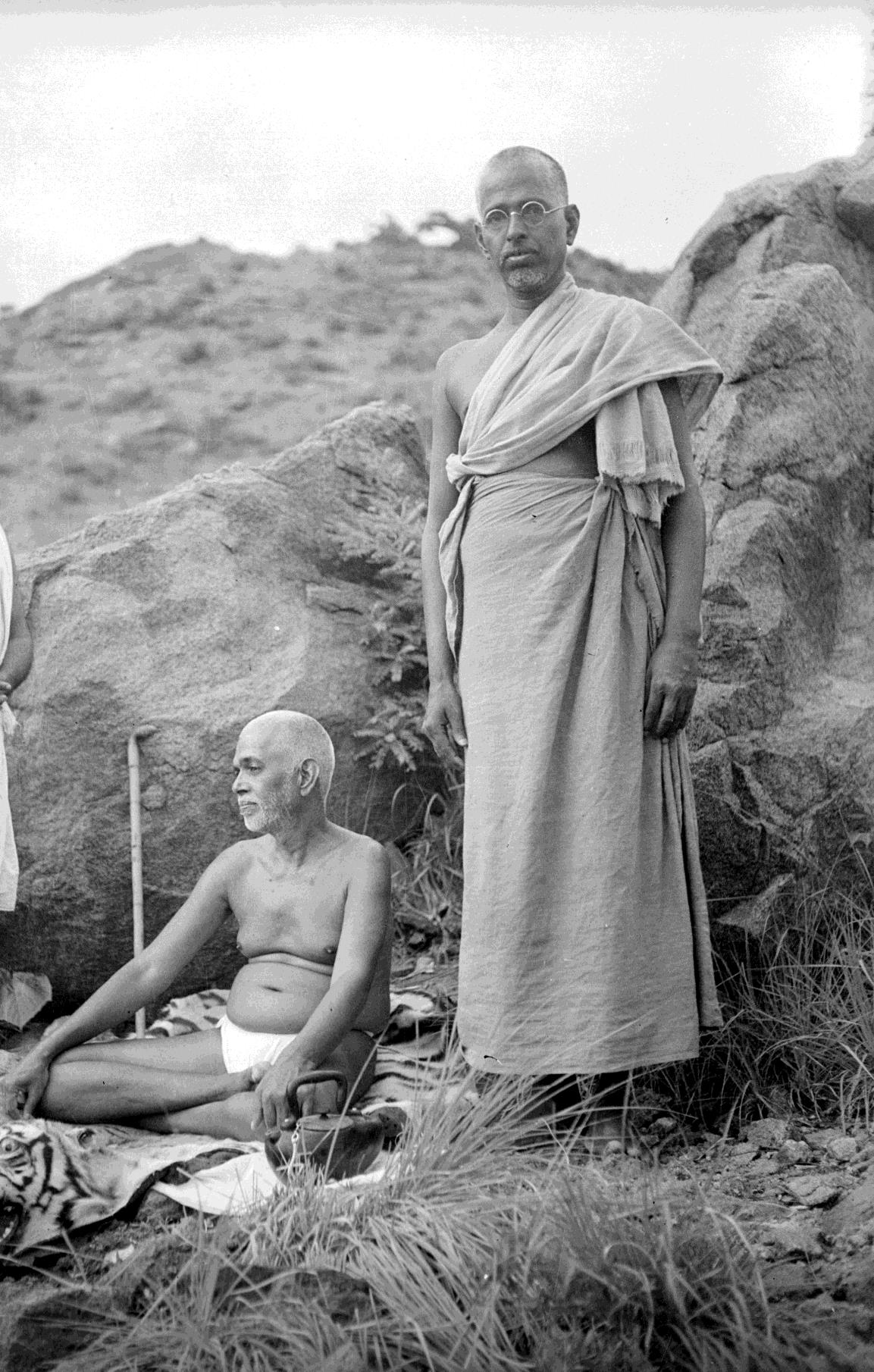
Sri Bhagavan with Chinna Swami