Paul Brunton
Spiritual wisdom couched in words has always been available through the Vedas, the Upanishads, Dhammapada, Tao Te Ching, the Bible, the Torah, the Koran, the Zend Avesta, the Bhagavad Gita and scriptures of other spiritual traditions. But the word is not the thing. The word ‘water’ is not water. It will not quench our thirst. On the other hand, if you have a sip of water the miracle takes place. Apply the same analogy to spirituality. You can pride yourself on book knowledge but this is like holding on to the word ‘water’. How then can we experience the truth and what is the purpose of all the scriptures? Sages and saints would not have left behind those holy words without a purpose. A sage lives the truth every moment of his life. And people from all over the world, attracted to him by his teachings and life in truth, live in the proximity of that truth, imbibe that truth and finally experience that truth. Because, in that particular human frame, they see the truth of what the scriptures describe.
When we read about the lives of Bhagavan’s old devotees, we see that Bhagavan Sri Ramana Maharshi, like Jesus Christ and the Buddha, lived the truth every moment. He was available all the twenty four hours and there were no rules and regulations. His doors were always open. And his old devotees lived in his proximity, witnessed the truth walking on two legs, talking with its mouth and looking through its eyes. I am indeed fortunate that I could live with them and see how they too were steeped in the truth. When reading about them the truth seeps into our heart, perhaps imperceptibly. That is the only way you can have a link with the ultimate truth which otherwise looks unattainable.
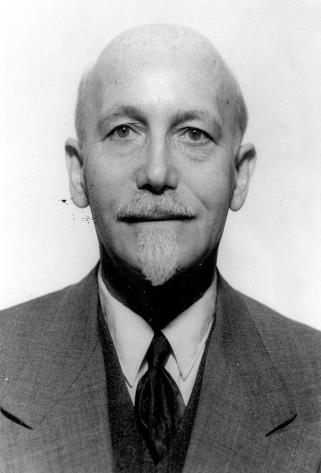
The next devotee is a luminary who came to make the whole world know that the darkness is not true. He was Raphael Hurst, the first western devotee of Bhagavan who openly declared that by the grace of Ramana Maharshi he was blessed with the inner vision of illumination. Popularly known as Paul Brunton, he was a great writer who went through many ups and downs in his spiritual life. You will be surprised how much it is like our own life. Sometimes, we feel we are on a spiritual peak and at other times as if we are in an abyss. But when we depend on and surrender to the higher power, there is never a failure.
Paul Brunton wrote, “My own final illumination happened in 1963. There was this bomb like explosion of consciousness. It came of itself and I realized that the divine had always been with me and in me. The word ‘I’ was pronounced in me. I saw that it was the only reality. ‘I AM’ is the foundation of truth and reality of the whole existence. Although I had descended deep into my being and experienced timelessness, I was still able to live in my surface being and experience time. The two experiences went on side by side and I saw my body as a mere shell and all the other people’s bodies as shells. I felt like a bird free from all desires and really detached from everything. I was not the body and felt so free of it that I knew I could not die. And that in the real ‘I’, I would always be able to live for ‘I AM’ is God. Deep down within my heart, I lived in an everlasting now.” What a consummate, inspiring summing up of one’s inner realization! That Self realization can be attained by you and me through Self Enquiry is amply proved by Paul Brunton’s life.
The way Paul Brunton was guided by the higher power throughout his apparent struggles, how whenever he was falling down, the higher power was helping him up - all of it is a great fillip for us and a pointer to every seeker that if you surrender to the higher power which is the ‘I AM’ within each one of us, within each one’s Heart, that higher power will lead us through. He adhered to that and followed the instructions so arduously that he was led to a state of perfection. That is why when I first read about his attainment in 1963, I was convinced, “It is possible!” It is a very strong force which we have to imbibe in our own spiritual life.
When Brunton was in school, his geography master’s voice uttering the word ‘India’ sent quivers of joy through his body. Later, when he located it on the world map, he again experienced quivers of joy. This sound ‘India’ and his locating it in the map was the beginning of his quest for the true Self, for the truth. This strong urge to go to India, at that tender age was not just a fleeting thought - it was the higher power guiding him.
In his adolescence, Brunton felt a widening chasm between himself and his surroundings. He even wanted to end his life. But the very thought of ending his life aroused in him a curiosity to know what is death and what is after death. From where could he have got this urge to know, except from the higher power? He then went to the British Museum’s library and studied all the theories on death. He pored through texts and treatises on occultism, mysticism, Rosicrucianism, Buddhism, Christian mysticism and yoga. He was so interested in knowing more that he joined the Theosophical Society. Within two years, he got disappointed with their claims. However, Theosophy induced in him a great urge to know more about occidental and oriental mysticism.
Strangely enough, he soon dropped his interest in mysticism and occultism and put all of his attention into learning journalism. This was again the higher power guiding him, this time to be a great writer. He started writing powerful passages that attracted the attention of commoners and scholars alike. For instance he wrote, “What did Jesus Christ mean when he rebuked those who sought to enter the kingdom of heaven like thieves breaking in over a wall? Jesus meant that they were trying to enter without giving up their ego, without denuding their consciousness of ego’s rule. Who are these robbers? They are the seekers of occult powers.”
But, even while he was becoming well known for his incisive writing, there was this conflict lurking in his mind: “Should I continue with journalism and become famous or pursue spiritual practices?” This was the struggle within him. He met two teachers, Allan Bennett and Thurston. They tried to point him in the right direction. But, it was a turbaned Indian who influenced him and encouraged him to go and do research in Indian yoga.
There was another change in his life. He got married and also had a son, Kenneth Hurst. (I had the good fortune to meet Kenneth and get from him some of Brunton’s unpublished manuscripts which were later published under the title, Conscious Immortality. After Brunton passed on, Kenneth brought out sixteen volumes of his father’s writings.)
A significant turning point in Brunton’s life came in 1930 when he was thirty two years old. There was a strong urge in him to know and investigate what Indian yoga was. He soon sailed to Mumbai, determined to find out about the greatness of India’s seers, sages and saints and their centuries old wisdom. He travelled throughout India, meeting, questioning and observing sages, saints, messiahs, mystics and astrologers, all of which resulted in the famous, awe inspiring book, A Search in Secret India.
During these travels, he came to Chennai. There, in the hermitage of a silent sage, a man named Subramanya accosted him and insisted that Brunton come with him to meet his master on ‘the hill of the holy beacon’. Brunton refused. Not put off, Subramanya told Brunton that he would come and see him the next evening. After he returned to his hotel, Brunton went to see an author called Venkataramani to whom he had a letter of introduction. The next morning, Venkataramani took him to his guru, the Shankaracharya of Kamakoti Mutt, the pontiff of many Hindus in South India. On being asked about any genuine spiritual master that he could meet, the Shankaracharya extracted a promise from Brunton that no matter what, he would go to the hill of the holy beacon and meet Ramana Maharshi. When he returned to his room that evening whom would he see there but Subramanya, waiting to take him to his master Bhagavan Sri Ramana Maharshi!
It is absorbing to read about how his first encounter with Sri Bhagavan took place. There is no logical support for it. It is as if it was mystically planned. In the divine’s scheme of things, Paul Brunton’s coming to India was to reveal to the world the great spiritual splendour that Bhagavan Sri Ramana Maharshi was, is and always will be. It was left to Paul Brunton to open the dark passages hiding the truth through his powerful writing. He threw open the doors for seekers all over the world to know that there is light.
Paul Brunton came to the Maharshi in 1930. Being an intellectual and a journalist he had prepared thirty two pages of questions to put to the Maharshi. These were well thought out questions because he had also studied mysticism thoroughly. But when he looked at the Maharshi and the Maharshi looked at him, he was drawn into a silence unfathomable to the mind. Not a word could surface either from his mouth or from his mind. He was filled with a silence and peace which he had never experienced before. He felt: “There is something in this man which holds my attention as steel filings are held by a magnet. I could not turn away my gaze from him.” Later, when writing about the great significance of this first encounter with the silent, pure presence of the Maharshi, Paul Brunton wrote: "I became aware of a silent, resistless change taking place within my mind. One by one, the questions which I had prepared in the train with such meticulous accuracy dropped away. For, it does not now seem to matter whether I solve the problems which have hitherto troubled me. I know only that a steady river of quietness seems to be flowing near me; that a great peace is penetrating the inner reaches of my being and that my thought tortured brain is beginning to arrive at some rest."
Soon, he returned to North India in his quest for spiritual masters. One of those he met was a traveling yogi called Chandi Das. The moment he saw Paul Brunton, he gave three predictions. All the three predictions came true. The third one was particularly significant; Chandi Das told him “You will return two more times to India and you will fulfill karmic ties with a sage who is waiting for you.” This sage waiting for Paul Brunton was Bhagavan Sri Ramana Maharshi.
The strain of all his travels took a heavy toll on him. He fell ill and was terribly affected by that. His ill health troubled him so much that he wanted to go back immediately to England. Fortunately, there was a tug of war within his mind. Even during that illness, the images of all the sages, saints and mystics he had met kept flashing inside him like in a slide show. On evaluating all of them, it was Ramana Maharshi’s image that shone out.
Now, look at this strange phenomenon. Here is a person who is determined to go back to England. By some freak chance, this slide show takes place within his heart and he decides to go back to the Maharshi. Immediately after, a letter arrives from B. V. Narasimha Swami, a biographer of Ramana Maharshi, asking him to return to Arunachala and the master! Then, when he arrives in Chennai from Mumbai on his way to Bhagavan, the author Venkatramani meets him and tells him about what the Shankaracharya had told him: “Your friend will travel all over India. He will visit many yogis and listen to many masters. At the end, he will have to return to the Maharshi only.” How prophetic this was! Because of this, after Ramana Maharshi dropped his body, Brunton would send his friends to India, telling them, “Go and see reality living in human form. Go and see the Shankaracharya of Kamakoti Mutt. But, most importantly, go to Tiruvannamalai and experience the unseeable force of the great sage Ramana Maharshi, though he is not physically available.”
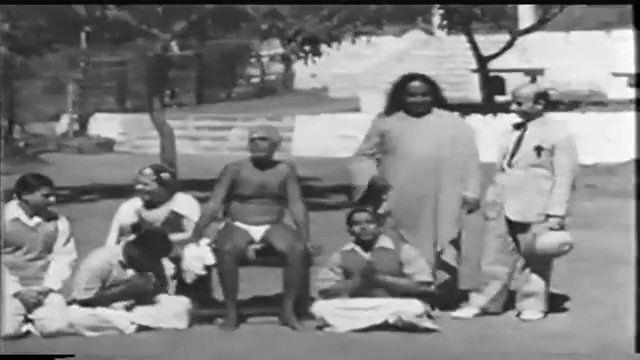
Paul Brunton (rightmost) with Sri Bhagavan and Paramahamsa Yogananda
For the second time, Paul Brunton came to the Maharshi, which is to our benefit. Otherwise the look of grace that Paul Brunton received would have submerged with him. But the whole world had to know about the Maharshi. The whole world had to receive the message of ‘I AM’. So, the higher power guided him back to the Maharshi. He came back determined to experience the truth. He had interviewed many sages and saints, all of whom were talking about the truth. Now, he wanted to experience it. A determined Paul Brunton arrived in Arunachala. Seeing his determination, B. V. Narasimha Swami and the other devotees helped him to build a hut in Palaakothu, a compound next to Ramanasramam. He decided to give his all to experience the truth at the holy feet of Ramana Maharshi. Paul Brunton’s perseverance, determination and total faith are qualities which we all have to imbibe.
He had many interviews with Ramana Maharshi, short and long. He was always seen following the Maharshi with a notebook and a pencil. He put searching questions to the Maharshi and till he understood the direct teaching of Self Enquiry thoroughly, he did not leave the Maharshi. The Maharshi was also determined to give his everything to Paul Brunton because this teaching had to spread all over the world. After understanding it in depth, he included it in his book A Search in Secret India. It was the first time in the world, that the guidance to turn one’s attention to the inner light, the truth that ‘I AM’ is God, flowed from a western pen. The same truth that the Bible expresses: “I AM THAT I AM,” and “The kingdom of God is within you.” Through his powerful words, he was able to communicate that when each one of us turns within, the inner light is available to us, not in the future but right now.
His lucid words brought not only many westerners, but also a host of Indian scholars to the Maharshi. Major Chadwick, S. S. Cohen, Maurice Frydman, Dr. Hafiz Syed, Dilip Kumar Roy and many others came to Ramana Maharshi only after reading Paul Brunton’s book. Even the heads of many Indian religious institutions, came to know about the Maharshi only after reading A Search in Secret India. In the Maharshi’s poem, Navamanimalai, Necklet of Nine Gems, he reveals that Arunachala gave him the task of spreading the truth of ‘I AM’ all over the world. How could this happen when he himself would not even move an inch from Arunachala? So, a Paul Brunton had to come to make it known all over the world. Brunton became instantaneously popular. True seekers, who were suffering in many parts of the world, saw the glimmer of light through this book. The emphasis on individually turning one’s attention within to experience the truth: That is the secret which influenced both scholars and laymen.
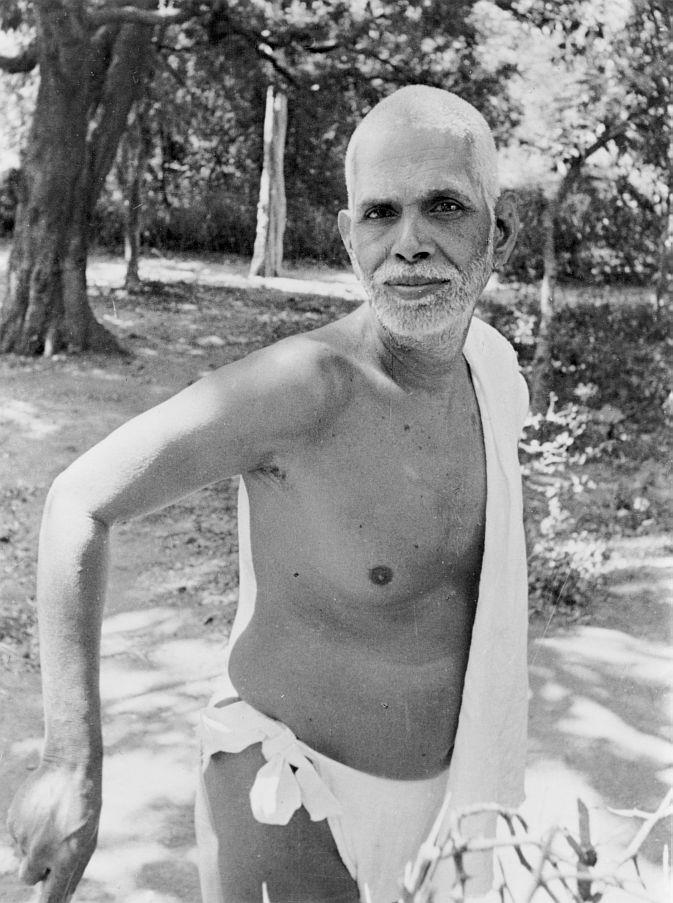
To quote Brunton, “The words of this sage of Arunachala still flame out from my memory like beacon lights. Roy Emerson wrote ‘I pluck golden fruits from rare meetings with men.’ It is certain that I plucked whole baskets full with my talks with the Maharshi. Our best philosophers in Europe could not hold a candle to him. One cannot forget that wonderful pregnant smile of his with his hint of wisdom and peace. He was the most understanding man I have ever known. You could be sure that some words from him would always smooth your way a little and that word always verified what your deepest feeling already told you.”
In memory of Paul Brunton, I would like to quote more from his book.
Brunton: “What exactly is this Self of which you speak? If what you say is true there must be another Self in man.” Bhagavan: “Can a man be possessed of two identities, two selfs? To understand this matter it is first necessary for a man to analyze himself. Because it has long been his habit to think what others think, he has never faced his ‘I’ himself. He has for too long identified with the body and the brain. Therefore, I tell you to pursue the enquiry, ‘Who am I?’ You asked me to describe the true Self to you. What can be said? It is that out of which the sense of the personal ‘I’ arises and into which it will have to disappear.”
Brunton: “Disappear? How can one lose the feeling of one’s personality?” Bhagavan: “The first and foremost of all thoughts, the primeval thought of every man is the thought ‘I’. It is only after the birth of this thought that any other thoughts can arise at all. It is only after the first personal pronoun has arisen in the mind that the second personal pronoun ‘you’ can make its appearance. If you can mentally follow the ‘I’ thread until it leads you back to its source you will discover that just as it is the first thought to appear so it is the last to disappear. This is a matter which can be experienced.”
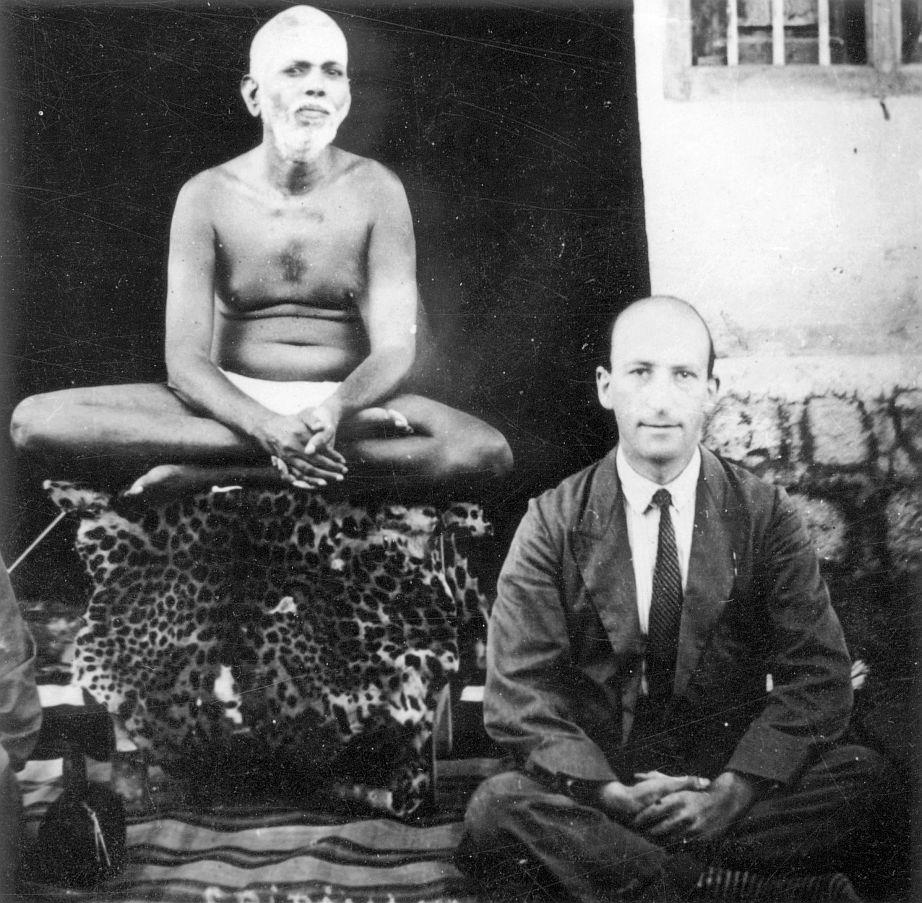
Brunton: “You mean that it is possible to conduct such a mental investigation into one’s self?” Bhagavan: “Certainly it is possible to go inwards until the last thought ‘I’ gradually vanishes.”
Another time, Brunton asks, “What path do you advise? We need your grace.” Bhagavan: “Be still, do not think, and know that ‘I AM’.”
Brunton: “Should I meditate with eyes open or closed? Bhagavan: “You can meditate with eyes open or shut whichever suits you best. It differs with different people. Seeing is when the mind looks through the eyes, but if it is not looking because it is focused within, it does not see even if the eyes are open. It is the same with sounds. If you pay attention to them you will hear them, but if you persistently focus only on the Self within you will not hear them. So too with the postures. Postures are immaterial for this path of wisdom. Posture really means steadfast location in the Self. It is internal. The best posture is to be in the Self.”
Brunton: “Should we make effort?” Bhagavan: “No one succeeds without effort. Mind control is not one’s birthright. The successful few owe their success to perseverance. When attention is directed towards objects and intellect, the mind is aware only of these things. That is our present state of suffering. But, when we attend to the Self within, we become conscious of it alone. It is therefore all a matter of attention.”
Brunton: “How should we meditate?” Bhagavan: “All you need to learn is to close your eyes and turn inwards. That which you seek is inside yourself.”
Brunton: “Is the thought ‘I am God’ helpful?” Bhagavan: “‘I AM’ is God and not thinking. Realize ‘I AM’ and do not think ‘I AM’. Know it and do not think it. ‘I AM THAT I AM’ means that one must abide as ‘I’. One is always the ‘I’ alone and nothing else.” At that time a pet squirrel was awaiting an opportunity to run out from Bhagavan’s sofa. Bhagavan caught it and said “All wish to run out and rush out. There is no limit to going out. Happiness lies within and not without.”
When Brunton was in a quiet village near London, Bhagavan appeared to him in a vision and asked him to write his second book The Secret Path. Then, by the grace of Bhagavan, a cascade of writing followed, resulting in nine books. Of these, The Quest for the Overself is of paramount interest because he has shared all that he experienced in the presence of Bhagavan as guidance to seekers and how it can be put into practice.
In the year 1938 or 1939, there was some misunderstanding between Paul Brunton and the Ramanasramam management because of which he couldn’t take down notes in Bhagavan’s hall. He was so angered by this that he could not even live anywhere near the ashram. He left. Supported by the king of Mysore, he stayed up to 1947 in India. But he never stopped being in contact with Bhagavan. His devotion and surrender to Bhagavan was complete and he was in constant connection with Bhagavan through ecstatic letters.
In one of his letters he wrote, “Bhagavan is ‘I AM’ - all the time meeting in the inner space of my Heart, where Ramana Maharshi always resides.” Bhagavan was also very affectionate towards Paul Brunton. One day, in his hall, Bhagavan openly said, “Paul Brunton’s thought comes to my mind. I am sure Paul Brunton is also thinking of Bhagavan.” At that very moment, half way across the world, Paul Brunton was paying his obeisance to Bhagavan before giving a talk!
Another time in the hall, Bhagavan received a pamphlet by post in which there was a quotation from Paul Brunton. He read it out, saying, “Paul Brunton writes: ‘I remain perfectly calm and fully aware of who I am and what is occurring. The Self still exists but it is a changed radiant Self. Something that is far superior to my unimportant personality rises into consciousness and becomes me. I am in the midst of an ocean of blazing light. I sit in the lap of holy bliss. Divine grace descends and acts only when it is invoked by total surrender. It acts from within because God resides in the heart of all beings. Its whispers can be heard only in a mind purified by self surrender and prayer. Rationalists laugh at it and atheists scorn it but it exists. It is a descent of God into the soul’s zone of awareness. It is visitation of a force unexpected and unpredictable. It is voice spoken out of cosmic silence. It is cosmic will which can perform authentic miracles under its own law.’” This incident has been mentioned in Day by Day with Bhagavan.
In 1952, after the Maharshi dropped the body, Paul Brunton came to Ramanasramam. And it was beautiful because he did not feel any difference. When he was there earlier, in the physical presence of the Maharshi, it was the master’s spiritual presence that he was soaked in. He writes: “The death of the master’s body had not ended our relationship or barred our communication. He still existed in my heart as a veritable force, an entity bereft of flesh, but clearly present.” He adored the Maharshi as a pure channel for the higher power.
When he was requested to give a message for young seekers he said, “Pursue the enquiry ‘Who am I?’ relentlessly. Analyze the entire personality. Strive to find out from where the ‘I’-thought arises. Continue your constant meditation. Keep turning your attention within. One day, the wheel of thoughts will slow down and intuition will mysteriously arise. Follow the intuition and let your thinking stop and it will eventually lead you to the goal of unwavering and perpetual Self awareness.”
After his illumination in 1963, Paul Brunton became a gentle, irresistible power house of peace. The radiant beauty of his inner light attracted many seekers. His never say die spirit can be seen through his years of search for a genuine spiritual experience. Though he got this for the first time in the presence of the Maharshi on their very first meeting, it remained latent within him for many years. He had to go through the rough and tumble of the spiritual path before he could make it his own. In all his encounters with fresh seekers, he used to emphasise that one has to pursue the quest within by implicitly putting into practice the sacred words of the master. He wrote: “I had all the human failings. I had fallen by the wayside several times. But it is also true that I picked up myself each time, and at last achieved the goal.”
In the 1970s, Apa Pant was the Indian ambassador to England. Thanks to the influence of Maurice Frydman, he was already a great devotee of Bhagavan. He wanted to express his gratitude to Bhagavan by unveiling his portrait at the Bharatiya Vidhya Bhavan in London. A big gathering was expected. As part of the celebrations, a souvenir was brought out. From its conception, I was consulted. I advised them to invite Paul Brunton to participate in it and give the principal talk. Brunton instead sent an article for the souvenir. It was a glorious adoration of his guru Ramana. Later, I had it printed in the ashram journal, The Mountain Path: “Forty years have passed since I have walked in his abode and saw the Maharshi half reclining, half sitting on a couch. After such a long period, most memories of the past become somewhat faded. If not, they lose their existence altogether. But I can truthfully declare that in this case nothing of that kind happened. On the contrary, his face, his figure, his surroundings are as vivid now to me as they were then. What is more important to me is that, at least during the period of meditation, the feeling of his radiant presence is as actual, as vivid today, as it was on the first day !” A remarkable devotee extolling a remarkable master!
In 1960, I was in charge of visitors to Ramanasramam and I used to take them around like a guide. Westerners used to come very rarely and I loved them because I was so eager to be in the midst of seekers. Just as I was very eager to serve the old devotees I was very excited to be with young seekers who were coming in search of the Maharshi and his message. Quite a few of them revealed to me that they had been directed by Paul Brunton to come there. His advice to them invariably was, “Go to the Kanchi Shankaracharya, he is the reality in the flesh. But more importantly, go to Ramanasramam. The reality without flesh is there and that is what you have to experience.”
I used to communicate with Paul Brunton because I wanted guidance from a devotee who made Bhagavan known all over the world. Though I wrote many letters inviting him to come and stay in the ashram, no reply came. But I persisted in sending him letters through his friends who were visiting. In one of them, I raised this question: “Brunton, you had asked Bhagavan about work and wisdom. When you told Bhagavan, ‘You are in a jungle ashram, but I have to go back into the world and work to earn my livelihood. So, how can I live?’ Bhagavan replied, ‘There is no difference between work and wisdom.’ Since Bhagavan told you directly that there is no contradiction between work and wisdom, you will have clarity on this matter. Please share that with me.” He replied with a short, beautiful letter which he sent through a friend: “Things happen to you, don’t they? Now you think that things are being done by you. It is wrong. Things are done through you. Alter the attitude ‘done by me’ to ‘done through me’. Ramana Maharshi was the pure channel for the higher power to pass through. All these sages, saints and messiahs were channels for the higher power to pass through. You and I are also the same. There will be no difference between work and wisdom, if like the sages we too allow ourselves to be the channel for the higher power to pass through.” The moment you have the attitude that things are happening ‘through you’, you will see everything becomes light. Jesus Christ said, “Be a light unto yourself.” What is the heaviness in you? It is the sense of doership, thoughts and memories of the past and the future. Give up that and accept and surrender to the higher power. You will be surprised how light you feel!
Though he never accepted my many invitations to come and stay in the ashram, a month after he dropped the body I received a letter from his secretary. She wrote, “Sorry Ganesan. I had to attend to so many things that I couldn’t write to you earlier. A few hours before Mr. Brunton left his body, he called me and said, ‘Please write a letter of thanks to Ganesan.’”
Later, I had the great fortune of visiting Brunton’s institution, Wisdom’s Golden Rock, near New York. They wanted to name it after him but he didn’t agree. An Indian named Damiani, having arranged for Brunton to give a talk there, had a large photograph of Brunton hung in a place of prominence. Now, Brunton had this habit of visiting the place where he had to give a talk the previous evening to look into the arrangements. When he saw his photograph, he said, “Remove that and put my master’s picture.” Spiritual seekers all over the world owe a deep debt of gratitude to Paul Brunton. Even though it has been said from the time of the Vedas, “Turn within, you are That,” none of us knew what to do. Even when Jesus Christ said, “The kingdom of God is within you,” few could understand what it meant. Now, through Paul Brunton we get Bhagavan’s message, “Turn within. Be still and know that ‘I AM’ is God.”
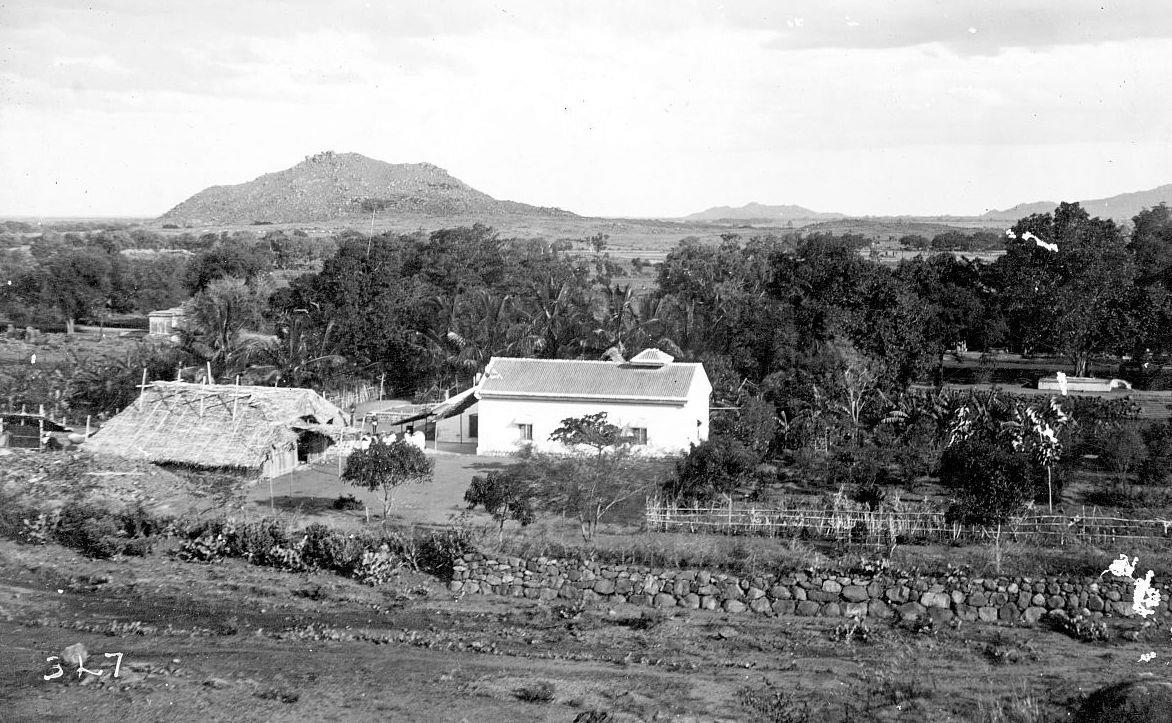
Sri Ramanasramam in the 1930s
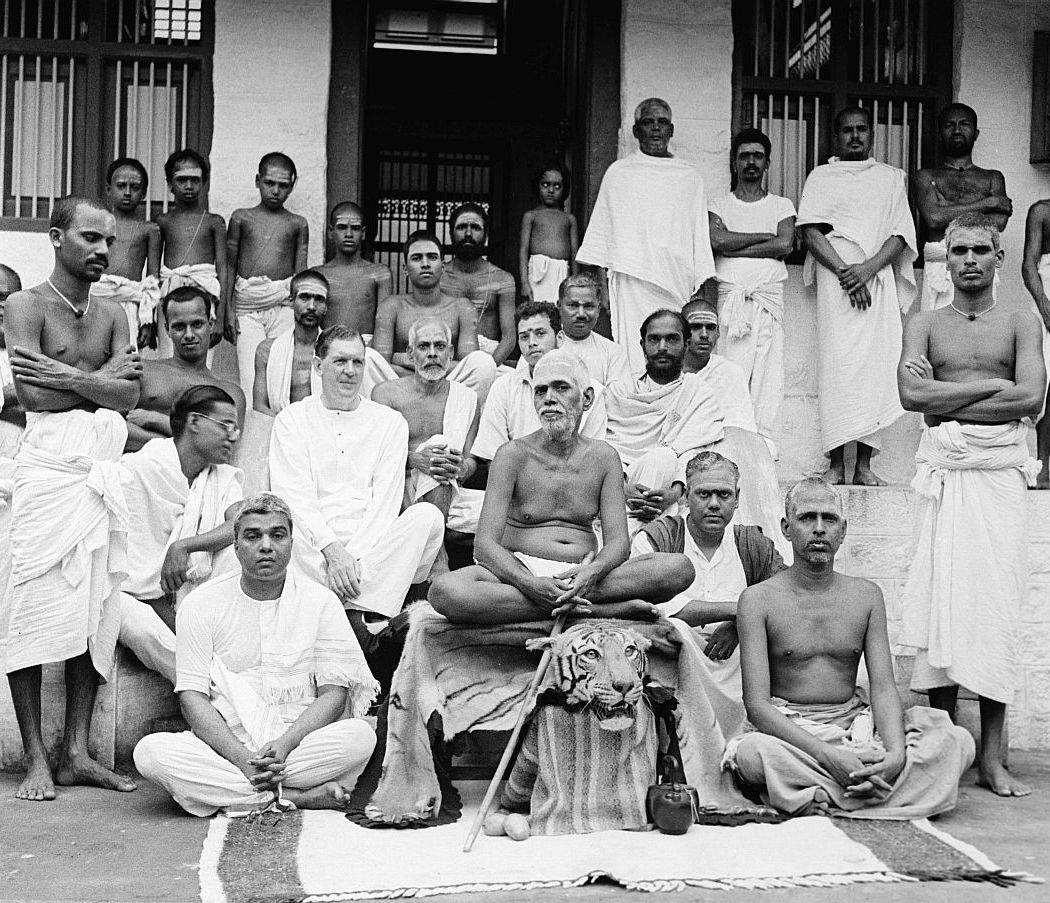
Major Chadwick with Bhagavan in front of Ashram Office