Dr. M. R. Krishnamurti Iyer
Delving into the depths of spirituality requires much more than intellectual conviction. A great deal of effort is necessary in this journey, because until you go within, you have to travel almost endlessly in order to reach your destination. But once you turn within you do not travel, for the truth is there within you as your own Self. It has been there all the time and it is there now. There, no movement is necessary in time, space or causation. We are all humans who belong to different religions. This is the seed of causation. If it was possible for you to remove yourself from the clutches of all forms of identification as you do in deep sleep, then peace, silence and quietude will flower. To be in this state, where there is no room for time, space or causation, diving within is essential.
Volumes have been written about the ascetic devotees of Bhagavan like B. V. Narasimha Swami, Muruganar, Sadhu Natanananda, Kunju Swami, Viswanatha Swami and also about great scholars like Kavyakantha Ganapati Muni, Dr. Mees, Grant Duff, Duncan Greenlees, Banning Richardson, Munagala S. Venkataramiah, Arthur Osborne, Maurice Frydman, S. S. Cohen, and others. But, it is only rarely that one hears about the normal grihastha (family man), totally soaked in the life of a householder, yet an ardent devotee of Bhagavan. Bhagavan showered his grace on all equally.
It is strange but true, that devotees who have been immersed in the family have not really been brought into the limelight. Perhaps, the fault lies with the traditional Hindu perspective that identifies spirituality with austerities, renunciation and knowledge. I personally feel that this kind of segregation will not result in a correct understanding of true spirituality. Hence, even before coming to Ramanasramam in 1960 for good, I paid a great deal of attention not only to those who had renounced everything, but also to those who still attached a great deal of importance to their families. In the process, I got ‘attached’, and I use this word intentionally, to a few such devotees who seem to have been ignored. The more I became associated with them, the greater was my regard, respect and adoration for the intensity of their relationship and their total surrender to the master. I was thrilled at the extraordinary attention and grace that Bhagavan showered on these devotees. True, these devotees were still attached to the family, but I had no doubt in my mind that they were jnanis. Can there be any doubt when you are constantly in the company of Ramana? As Immanuel Kant has said, “When you wear green coloured glasses, you will see only green everywhere.” Similarly, if you are ignorant, then all you will see is ignorance in all places. You will also be under the illusion that only Bhagavan, the Buddha and Jesus Christ are jnanis, though they themselves looked upon everyone as enlightened or divine .
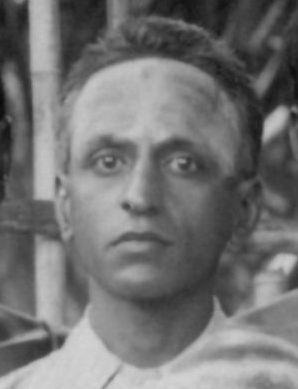
Dr. M. R. Krishnamurthy Iyer was popularly known to the early devotees as the ‘ashram doctor’. He sowed the seeds for the future Ramanasramam Dispensary by keeping his medicines in a small wooden box which he kept locked in a cupboard. (This cupboard can be seen even today beside the ashram’s old dining hall entrance.) Hailing from a reputed family in Mondi, Thanjavur district, M. R. Krishnamurthy Iyer was an excellent gynecologist. He had a good professional reputation and was ranked among the elite. In spite of his intense spiritual search, he could not control his volatile temper. The emotional turbulence in him subsided only after he met Bhagavan in 1927. For the first time, he found peace and solace in his spiritual pursuits. (The fact that mature seekers came to Bhagavan exhilarates me. They just needed the right switch to be turned on. As the Buddha said, “I have taken you to the threshold of truth; now, you have to walk in.” Bhagavan gave that push for them to pursue true spirituality. That is the reason why most of the old devotees were spiritual slaves to Bhagavan Ramana, who himself was totally independent. Being a liberated person, Bhagavan liberated everyone, while each of them adopted an attitude of a spiritual slave.)
Relieved of his turbulent outbursts, Krishnamurthy Iyer began visiting Bhagavan regularly. His association with Bhagavan led him to look upon Bhagavan as his satguru - in other words, truth in human form. In 1933, he finally came to Tiruvannamalai to settle down there. Being a family man, he took a house in town. “In those days, every day was a unique spiritual day for me. It was not just the experience of spending twenty four hours in a religious place like Tiruvannamalai. Every moment was a spiritual experience to me, thus making it very precious and sacred. Bhagavan, the silent sun, was like the pole star, directing my every moment of existence,” said Dr. Krishnamurthy. He added, “I could never feel any monotony. I took each moment as an invaluable gift of God, who is none other than Bhagavan Ramana.” Apart from this spiritual side, he was a well known doctor both in town and in the surrounding villages. He was a busy man, working all the time. But every Sunday at two in the afternoon he would come to meditate at the feet of his master. So much so, people at the ashram started calling him ‘Sunday Doctor’. Bhagavan himself would be happy when he saw Krishnamurthy. He would say, “Oh, today is Sunday!”
Like Jesus Christ, Bhagavan was also a Good Shepherd who tenderly tended all his devotees. He gave comfort and solace not only to Krishnamurthy Iyer, but to his wife Subbulakshmiammal and to every one of his family members. Consequently, Subbulakshmiammal and her children became totally dedicated to Bhagavan. Before meeting Bhagavan, the family lived in a tiny village. Being already dedicated to Bhagavan, Krishnamurthy would often escape to Arunachala, leaving his wife and his family alone in the village. During this time, Subbulakshmiammal was constantly in a state of panic because she was afraid that her husband would renounce the world and take sannyas. One night, this fear gripped her heart so much that she cried as she went to bed. Bhagavan appeared in her dream and said, “Subbulaskhmi, have no fear; I am taking care of Krishnamurthy. Allow him to pursue his mode of sadhana. I am protecting you. Give up all your worries.” After saying this, Bhagavan put out his hand and blessed her. The couple visited Bhagavan the next day and narrated the dream. Bhagavan gave a gracious smile of approval. From that night onwards, Subbulakshmiammal dedicated herself wholly to Bhagavan and led a happily married life, totally freed from doubt and fear.
After moving to Tiruvannamalai, the family stayed in town. Subbulakshmiammal was busy educating her children. She hardly had time for spiritual sadhana. The entire family worshipped Bhagavan as God, yet she found no time for sadhana. Bhagavan was most undemanding. For those like Subbulakshmiammal who could not come to him, Bhagavan himself moved towards them in different ways. One day, there was a huge procession in town. A large picture of Seshadri Swami was being taken through the town to the accompaniment of drums and other musical instruments. Subbulakshmiammal had a look at the picture and thought, “If only I had at home a similar large picture of Bhagavan - who I cannot visit every day - I could have offered pooja and garlands to him.” With such thoughts, she went inside the house and bolted the door. At once, there was a knock on the door. Someone with an equally large picture of Bhagavan was standing at the doorstep. The man said, “I come from the village of Polur. I have been instructed to leave this photograph at your house. I am on my way to the ashram. I will return after having the darshan of Bhagavan.” Needless to say, Subbulakshmiammal’s joy knew no bounds when she saw the picture. She reverentially took the picture inside, garlanded it and performed pooja. When the children returned from school, they were equally thrilled. They rejoiced, “Oh, Bhagavan has come to our house!” When the children saw their father returning home, they rushed to the street and declared, “Father! Bhagavan has come to our house!” Krishnamurthy was equally excited and wondered how it arrived. Subbulakshmiammal said, “I thought you had sent the man!” Before Krishnamurthy could reply, the man who had given the picture arrived. He said, “I am an electrician. One day, I was called by Major Chadwick to do some electrical repairs in his room. I saw this photograph there. When the work was done, he gave me money. I told Chadwick to give me this photograph instead of money. I was delighted when he did so and took the photograph to Polur. Every day, I performed pooja to the photograph with great reverence. However one day, something possessed me and I said, ‘I have to go to Tiruvannamalai to Avarangattu Street to give this picture to Dr. M. R. Krishnamurthy Iyer.’ That is why I am now leaving it behind.” The entire family narrated the incident to Bhagavan who listened to it with great interest and wonder - as if he had nothing to do with it!
Dr.Krishnamurthy’s surrender to Bhagavan was total and unconditional. He focused more and more on sadhana. Consequently, he could not devote much time to his medical profession and earn money. Dr.T.S. S. Rajan, the Health Minister at that time, was his classmate and a good friend. Dr. Rajan came to meet Krishnamurthy - he had heard of his financial state and wished to offer help. He suggested, “I can get you a job in a government hospital. It will get you a regular income.” Krishnamurthy replied, “The spiritual force which brought me to Arunachala will take care of my future welfare.” Such was his unshakeable belief in Bhagavan! As if to match his faith, Bhagavan brought upon himself two health conditions, which Krishnamurthy could treat.
Bhagavan had hiccups that just would not subside. Krishnamurthy treated him with the best of medicines but it was to no avail. Bhagavan’s deteriorating health became a cause of grave concern. Krishnamurthy felt that Bhagavan would not survive. With tears in his eyes, Krishnamurthy prayed within his heart, “Bhagavan, help me save you.” That night, Bhagavan appeared in Subbulakshmi’s dream and said, “Why is Krishnamurthy crying? Ask him to give me this ayurvedic medicine which is prepared with a particular herbal leaf.” Even in her dream, Subbulakshmi was puzzled. Bhagavan continued, “It is there in your courtyard. Pluck it, fry it in ghee, add some jaggery, pound it and bring it at four in the morning.” In those days, women were not allowed to come into the ashram before five in the morning. Bhagavan wanted Subbulakshmiammal to come to the ashram at four. When his wife hesitated, Krishnamurthy said, “Bhagavan has asked us to go to him. We must.” Krishnamurthy and his wife went together. Bhagavan was waiting for them. He extended his hand and took the medicine they had made. The hiccups stopped!
The second incident is even more significant. When Krishnamurthy was studying medicine, he had a professor named Srinivasa Rao. In later years, Dr. Srinivasa Rao stayed at the ashram as a personal attendant of Bhagavan. He was rather dominating. Once, when Bhagavan had a serious pain in the stomach, perhaps hernia or appendicitis, he pronounced that it needed surgery. He approached Niranjanananda Swami and convinced him that a surgery was necessary. Both of them wrote to Dr. Pandalay, a famous surgeon in Chennai and asked his opinion. Krishnamurthy, who was a traditionalist, was unhappy. He thought to himself, “A jnani’s body should not be mutilated. No surgical instruments should be used on the physical body of a realized person because it rejuvenates itself. Every cell is divine.” He pleaded with the other doctors to desist. But his pleas fell on deaf ears. He resorted to prayer. He prayed in his heart, “Bhagavan, help me save you from this difficult predicament.” That very night, Bhagavan appeared in his dream. He said, “Why are you worried, Krishnamurthy? Mix these three ayurvedic oils together, bring it in the morning and that will be the cure.” Krishnamurthy and Subbulakshmi prepared it in the night. They took it to Bhagavan early the next morning and he drank it. When Dr. Pandalay and Dr. Srinivasa Rao examined Bhagavan the next morning prior to performing the surgery, they found that there was no symptom of the ailment! They were puzzled and wondered how it could have happened. Bhagavan let out the secret by saying, “This morning, Krishnamurthy gave me an ayurvedic oil. Everything has become all right.” He spoke about it as if he had nothing whatsoever to do with the outcome. Krishnamurthy said of the incident, “This earned me more dislike from my teacher Dr. Srinivasa Rao because he thought I had vetoed his plan.”
Bhagavan respected Dr. Krishnamurthy as a professional. He would always consult Krishnamurthy before taking a medicine, even if another doctor had prescribed it. Such was his implicit faith in his devotee. But Krishnamurthy was no longer consulted because he had opposed the surgery move of the senior doctors. This however, proved a blessing in disguise to Krishnamurthy Iyer, who from then on applied himself more and more to inner sadhana. In later years, when Bhagavan was diagnosed as having cancerous sarcoma on the left arm, Krishnamurthy Iyer was not even invited for consultation about the mode of treatment.
Three surgeries had already been performed on Bhagavan’s arm. Krishnamurthy was in anguish because the Bhagavan’s body was being mutilated and he could not prevent it. For the fourth and final surgery, a major one, Dr. Raghavachari and other famous surgeons came from Chennai. They stood before Bhagavan and announced, “Bhagavan, this surgery has to be done. The equipment is coming from Chennai.” Bhagavan looked at them and asked, “Have you informed Krishnamurthy Iyer?” All the surgeons, including Dr. Srinivasa Rao, went to Krishnamurthy’s house. Dr. Rao sternly told him, “Do not prevent the surgery. There is no other option. They have all come for that. I know what Bhagavan’s intention is when he asked us, ‘Have you informed Krishnamurthy?’ It means that we have to have your permission for the surgery. So, come along with us, but do not say ‘no’ to the surgery. Tell Bhagavan that it has to be done.” Krishnamurthy cried, “How can I do that?” The doctors had to almost physically drag him to the ashram. Krishnamurthy himself narrated what happened then. Bhagavan gave him a look that seemed to communicate that he should not say no. Krishnamurthy acceded to it, but he was in great turmoil. He requested the doctors to go ahead with the surgery. When the doctors left, he was alone with Bhagavan. Bhagavan communicated with Krishnamurthy not through words, but through the silence of the Heart. Bhagavan seemed to be saying, “What can be done, Krishnamurthy? Things have to happen, as they should. It is the will of Arunachala. His will be done.” However, Bhagavan openly and audibly told Krishnamurthy Iyer, “Stay with me until everything is completed.”
The fourth surgery took place on December 19, 1949. From that day, till the day Bhagavan dropped his body on April 14, 1950, Krishnamurthy was with Bhagavan every night. He may not have been in the immediate presence of Bhagavan, but he was always in the vicinity of the hall, always alert, always available. When everyone else had gone to sleep, he would be with Bhagavan throughout the night. He said, “Every night, I would go through heaven and hell. To be with Bhagavan, my guru, was heaven; to see his body suffer, was hell.”
Dr. Krishnamurthy’s medical skill was deepened by his innate spirituality. I want here to narrate an incident involving me. When I was in Benares, the problem in my back became septic. My father came to Benares and took me to Chennai. The doctors recommended surgery in order to prevent paralysis. Dr. T. N. Krishnaswami told me, “You have to undergo surgery immediately.” However, I stated, “I will be treated only by Dr. M. R. Krishnamurthy Iyer.” I do not know what urged me to say this. My father said, “We are not on talking terms with Krishnamurthy Iyer. We haven’t been in touch with him for over a decade now. How can I go and ask him to attend on you?” I replied, “I don’t know.” My father took me home and my mother said, “Go to Krishnamurthy Iyer.” My father was reluctant. He said, “How can I possibly face him?” However, my father went, and Krishnamurthy said, “Yes, I will come, but under two conditions. When I am treating him, no one should enter the room. And you should not give me a time limit. You should also not question me on the treatment and the nature of the medicines I am giving him.” Krishnamurthy Iyer treated me for two months. While I was lying all the time on my stomach, he applied medicines on the deep sores on my back. More importantly, during those moments, he shared with me his mystical relationship with Bhagavan and Arunachala. It was very elevating and healing. I felt that more than the potency and curing power of his medicines, this spiritual sharing effected speedy healing and cured me fully. In one of those sharings he said, “Arunachala and Ramana are the same. Bhagavan has left the key of Self Enquiry in Arunachala. The Bible says, ‘Ask, and it shall be given; knock, and it shall be opened.’ That is literally true. If you ask Arunachala, he will give you the key to Self Enquiry. Self Enquiry is to dive within.”
Krishnamurthy Iyer started going round the hill daily. He was also seen walking around the Arunachaleswara temple and sometimes wandering in the streets in an ecstatic state. People in the town openly said that he had gone mad. Daily, he would visit the ashram while doing the giripradakshina, stand ecstatically in front of Bhagavan’s samadhi shrine and sing songs on Bhagavan and on Arunachala at the top of his voice. I would prostrate to him and he would give me a smile of recognition, but would also point out to Bhagavan’s shrine, indicating that Bhagavan alone deserved the prostrations. I could feel that he was having waves and waves of mystical experiences all the time.
During his last days, he had an extraordinary experience. He said that Arunachaleshwara had informed him that the wheels of the big chariot on which the deity is taken during festival days would break and that he should ask the temple’s committee to repair it. The committee members did not pay attention to the doctor’s words because they thought he was insane. However, when the chariot came near his house, it did break down. For three days, Krishnamurthy was on the terrace of his house looking at the chariot intently, unmindful of the scorching heat of the sun. He locked the terrace door and did not come down. On the third day, for some strange reason, I had the inclination of visiting him when I was going round the hill. His wife said, “What can we do? We have not seen him for three days. He is upstairs and we dare not even knock on the door.” As his wife was talking to me, Krishnamurthy entered and queried, “Has Ganesan come?” He asked his wife to leave us alone. I prostrated before him. He was tanned dark. He said, “Ganesan, Arunachala has called me. I am leaving. I bless you. Do not swerve from this path. Arunachala will save you. Stay here.” He passed away after a few days. Arunachala had absorbed him in his Heart!
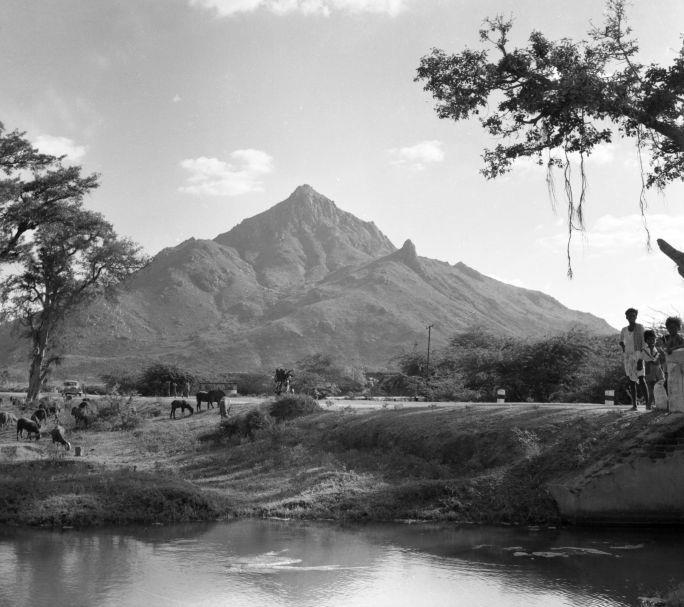
“ Arunachala holds the ‘key’! ”