Dr. Hafiz Syed
A few mysterious appearances in Bhagavan’s life, like the moulvi in the train in August 1896, the man who brought a bundle of books which included Arunchala Mahatmyam, while Bhagavan was in Virupaksha Cave, one of the tamarind thieves around the Gurumurtham days who stopped his colleagues from blinding Bhagavan’s eyes. At last, but by no means the least, was the hitherto unknown author of the marvellous Ramana Stuti Panchakam, Sathyamangalam Venkatarama Iyer, who wrote the Five Hymns in Praise of Ramana - four on the spot and the fifth (and last) mailed later.
One of the Five Hymns extols Bhagavan thus: “Oh, satguru Ramana! Though you are now in a Brahmin’s body, you are the reality that transcends both caste and creed. People all over the world are going to flock to your feet, irrespective of differences in caste, religion and faith. They will flock to you because they will see you as reality.” The verses were composed and sung in 1910 when there were hardly any people around Bhagavan. But in 1922, when Bhagavan came to Ramanasramam and people from all over the world belonging to different races and religious sects started coming to the ashram, the verse’s prophecy proved true.
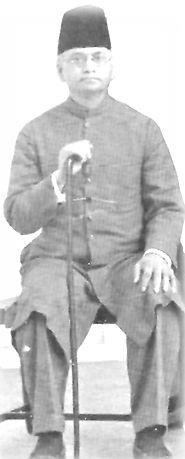
Dr. Hafiz Syed was one of the staunch Muslims who came to Bhagavan. He was a professor and the Head of Islamic Studies at Allahabad University. Although he bore no hatred towards other religions, he was convinced that Islam was the greatest religion in the world. One day a friend gave him Paul Brunton’s book, A Search in Secret India. He was so delighted when he read the book that he felt a strong desire to meet this great Hindu master. He wondered how the sage would receive a Muslim. He happened to meet Maurice Frydman who encouraged him saying, “Yes, my satguru is Bhagavan Ramana. He is the ultimate truth. Go and meet him.” He not only made the suggestion, but also made arrangements for Dr. Syed’s stay in the ashram. And who received him at the jungle ashram? None other than Paul Brunton himself! It was Paul Brunton who took him inside to Bhagavan.
Being a mature religious person, one look at Bhagavan confirmed to him that Brunton and Frydman were right. It was a very short visit. He had to leave after that. As he was leaving, he felt that if at all he was ever able to attain any kind of spiritual perfection or fulfillment, it would take place only in the proximity of Ramana Maharshi. This first meeting took place in 1935. He came again in 1936. In 1937, when he visited the ashram, Dr. Syed became sick and was bedridden for a month. Bhagavan showered his love on Syed like a mother would on her child. Once, he went into the kitchen and prepared upma with his own hands for Dr. Syed. This gesture of love was enough to melt Dr. Syed’s heart and soul. However, his professional commitments prevented him from staying on in the ashram for a prolonged period. In 1943, he built a house near the ashram so that he and his wife could be in the presence of Bhagavan at least during vacations. Bhagavan’s presence meant everything to him.
One day in January 1936, Dr. Syed was filled with happiness and he addressed Sri Bhagavan, “I hesitated at first on arrival. I wondered if I would be permitted to approach you and converse with you. My doubts were soon set at rest. I find that all are equal here. You have established an equality among all. I dined with you and others. If I should say so to my people in Uttar Pradesh, they would not believe it. The Brahmin would not drink water with me, nor chew paan with me. But here, you have taken me and others like me in your fold. Though Gandhi is striving hard he cannot bring about such a state of affairs in the country. I am very happy in your presence.” [“TALKS ” – No. 125, p.112]
It is not possible to talk about Dr. Syed without mentioning his wife. She was a devout Muslim lady in purdah. She meticulously followed all the dictates laid down by Islam. Like her husband, she too was drawn towards this Hindu sage. She longed to see him, but she felt that her religion’s dictates did not allow her to see any other man.
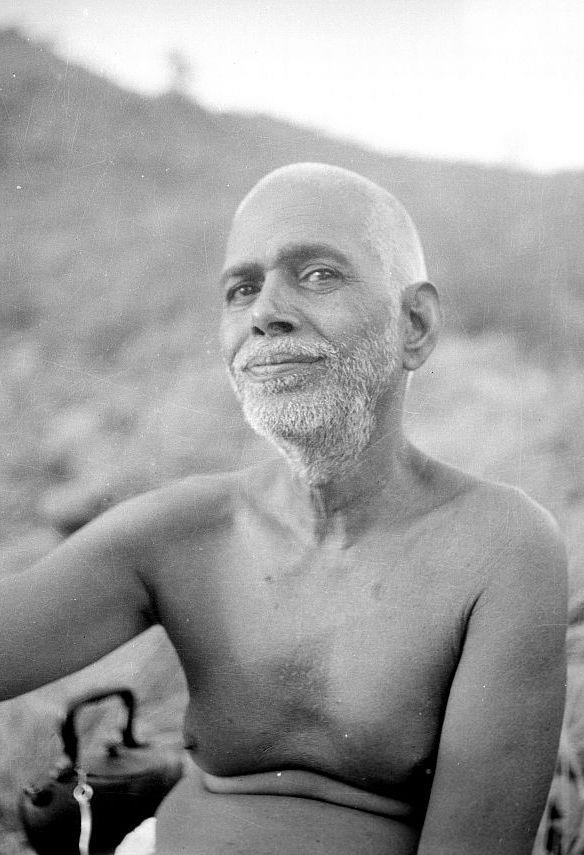
So, she came to the ashram and quietly sent word through her husband to Bhagavan. She would say, “Master, please come and see me.” Bhagavan too obliged by going to where she was waiting and standing before her. She communicated with Bhagavan through her husband since her religion would not allow her to have direct communication with the opposite sex. Bhagavan blessed her. He did not attempt to change her, but the change took place of its own accord. Slowly, this staunch Muslim woman in purdah willed herself to come to the hall where Bhagavan was.
Dr. Syed’s wife was overwhelmed by a strong desire to invite Bhagavan home and feed him to her heart’s content. At that time, the couple was staying in a rented accommodation next to the ashram. When she told her husband about her longing, Dr. Syed, who was well aware of the ashram rules and Bhagavan’s way of life, said, “No, he cannot come out of the ashram and visit us. He has never had food outside the ashram.” However, his wife remained adamant. Finally, Dr. Syed conveyed the message to Bhagavan when he was going up the hill. Bhagavan heard him out, smiled and continued walking. But look at what happens when devotees persevere! When it is the brain that perseveres, it is arrogance. When it is the heart that perseveres, then it is something totally different - it is devotion. Bhagavan would go up the hill every day. One day, she stood on the way with her husband, and communicated through him, “Bhagavan, you must come to our house and have food.” Bhagavan smiled once again and kept walking.
That night, Bhagavan appeared in her dream and told her, “Why are you so obstinate? You know I cannot come. I can dine only in the dining hall with all the others. People come from long distances - I cannot disappoint them. Are you going to keep asking me to come?” But then, see how compassionate Bhagavan is! The next thing he said was, “If you feed three sadhus, it is like feeding me.” Bhagavan was not vague about who these sadhus were either. In her dream, she also saw three people who were living in the ashram at the time. They were Dr. Melkote, Sadhu Prabuddhananda and Krishna Bhikshu. Dr. Melkote was a married man, Prabuddhananda was a sannyasin, and Krishna Bhikshu was a brahmachari. Mrs. Syed fed them to her heart’s and their stomach’s content. The fact that she looked on them as Bhagavan was proved by the fact that she offered them betel leaves after the feast. A Muslim lady is allowed to offer betel leaves only to the husband and not to any other man, not even to her father or her brothers. However, Islam allows a woman to offer it to a fakir or a saint. She handed each one of them betel leaves, and they understood to what status she had elevated them. The three of them went back to Bhagavan and narrated the incident in detail. Bhagavan listened with appreciation. He never expressed his appreciation in words; his devotees understood it through his gestures and look.
I once asked Dr. Syed what it was that attracted him so strongly towards Bhagavan. He replied, “Bhagavan’s sense of humanity was as great as his sense of pure spirituality.” Dr. Syed was convinced that the more spiritual a person was, the more humane he became. He also said, “The main teaching of Bhagavan, on which he laid much emphasis, was surrender to God or the guru because Bhagavan himself had surrendered to the divine and reaped its benefits. However, the dominant feature of Bhagavan’s philosophy was the unity of life and the oneness of the divine essence. I have repeatedly heard Bhagavan say that there is the one who governs the world and that it is his task to look after the world. It is he who bears the burden of the world and not us. According to Bhagavan, devotion means turning the mind inwards to the Self.”
Dr. Syed had long and learned conversations with the Maharshi, which you will find in Talks with Maharshi, Day by Day and Letters from Ramanasramam. I asked him why he questioned Bhagavan all the time. To this he replied, “When a sage is available, humanity has to make full use of him by eliciting from him the ways and means of attaining God. Hence, I was never hesitant in putting forth questions to Bhagavan.”
The following dialogue is taken from Talks with the Maharshi.
Dr. Mohammed Hafiz Syed, Professor of Islam, University of Allahabad asked, “What is the purpose of this external manifestation, Bhagavan?” Bhagavan answered, “This manifestation induced in you the question.”
Dr. Hafiz Syed: “True, I am covered by maya. How to be freed from it?” Bhagavan: “Who is covered by maya? Who wants to be free?”
Dr. Hafiz Syed: “Master, being asked who, I know it is the ignorant me, composed of the senses, mind and body. I have tried this enquiry after reading Paul Brunton’s book three or four times and I have felt elated, but the elation lasted for some time and then faded away. How can I be established in the ‘I’ or the ‘I AM’? Please give me a clue and help me.” Bhagavan: “That which appears anew must also disappear in due course.”
Dr. Hafiz Syed: “Please tell me the method of reaching the eternal Truth.” Bhagavan: “You are already that. Can we remain other than the Self? To remain as your Self requires no effort since you are always that.”
On another occasion Dr. Syed asked, “I have been reading the five hymns Arunachala which you wrote in praise of Arunachala, and I find that the hymns are addressed to Arunachala by you. You are an Advaitin. How do you then address God as a separate being?” Bhagavan: “The devotee, God, and the hymns are all the Self.”
Dr. Hafiz Syed: “But you are addressing God; you are specifying this Arunachala hill as God.” Bhagavan: “You can identify the Self with your body. Should not the devotee identify the Self with Arunachala?”
Dr. Hafiz Syed: “If Arunachala be the Self, then why should it be picked out from so many other hills? God is everywhere. Why do you specify him as Arunachala? Why do you specify God as Arunachala?” Bhagavan: “What has attracted you from Allahabad to this place? What has attracted all these people who are seated here?”
Dr. Hafiz Syed: “You, Bhagavan.” Bhagavan: “How was I attracted here? By Arunachala! The power of Arunachala cannot be denied. Again, Arunachala is within and not without. The Self is Arunachala.”
Dr. Syed stayed at the ashram with his wife till Bhagavan dropped the body. He once told me that Arunachala and Bhagavan were the same; they were not different entities. Once Bhagavan left the body, he could not stay on because of health and other reasons. He returned home to practise Self Enquiry and meditation. He knew that Arunachala was in the Heart. As Bhagavan says, “Oh Arunachala, Heart is thy name!” Dr. Syed’s last days were very peaceful. Bhagavan absorbed him in Arunachala. The message of Arunachala is to stay in the Self. The Self is silence.
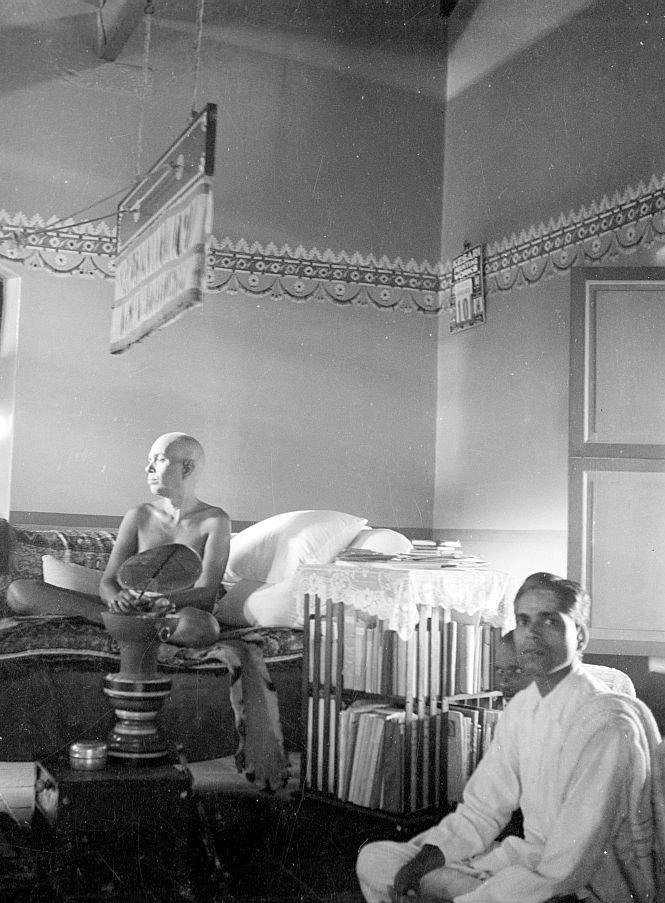
“To see God is to be God” (Sri Bhagavan – Sub-registrar Narayana Iyer)