Sub-registrar Narayana Iyer
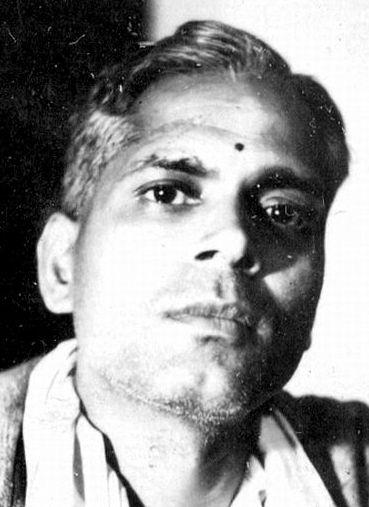
Sub-registrar Narayana Iyer was a fortunately blessed devotee of Bhagavan who received unimaginable and inexplicable attention, care, love and blessings from him. In my opinion, he was one of the favourite devotees of Bhagavan. In 1928, Narayana Iyer was employed as a sub-registrar in Chetpet, about thirty miles from Tiruvannamalai. He was a free thinker, a confirmed skeptic who scoffed at sadhus and sannyasins, referring to them as ‘the parasites of a healthy society’. It was however his good fortune that he had a trustworthy and religious friend, Dr. V. Ramakrishna Iyer. Ramakrishna Iyer was the son of Tiruchuzhi Lakshmi Ammal. Lakshmi Ammal was a playmate of Bhagavan during his childhood at Tiruchuzhi. So it was only natural that when her son Ramakrishna Iyer grew up, he became an ardent devotee of Bhagavan. Ramakrishna Iyer was an upright government doctor. He was also an entertaining conversationalist, known for his humour and light hearted nature. No matter where he was posted, he would visit Bhagavan as often as time and work permitted.
One day in 1928, Ramakrishna Iyer asked Narayana Iyer, “Why don’t you come to Arunachala with me for the Karthikai festival?” (In those days, Tiruvannamalai was called Arunachala; in fact, even the railway station was named Arunachala.) Narayana Iyer answered, “You know, Ramakrishna, I really do not like this paraphernalia of carrying of images of bejewelled gods and goddesses and parading them on the streets. I do not like such foolish things. But, since you are my bosom friend, I will oblige you and come along.” When they arrived in Tiruvannamalai, Narayana Iyer found that there was not an inch of space to either sit or stand, on account of the huge festival crowd. Narayana Iyer said, “Ramakrishna, you said that you were going to Ramanasramam. An ashram means lots of open space with lots of trees. I will come with you on condition that if your so called swami happens to come in front of us, I will not prostrate before him.” Ramakrishna Iyer, whom I knew very well, later recounted, “I knew that all the while Bhagavan was putting a big noose around Narayana Iyer’s neck!” So, without hesitation, Ramakrishna Iyer took him along.
In 1928, the ashram consisted of only three thatched sheds. Was it just sheer coincidence that just as the two friends arrived, Bhagavan was coming out of one of them? When he saw Ramakrishna Iyer, he paused and enquired, “Ramakrishna, how is your mother? How is your family?” During the conversation, Narayana Iyer, in accordance with the British custom, did not even turn towards Bhagavan as they had not been formally introduced to each other. Ramakrishna Iyer then introduced Narayana Iyer to Bhagavan. Narayana Iyer was at once captivated by the calm, serene and compassionate countenance of Bhagavan. The very next moment, he fell flat before Bhagavan’s holy feet, unmindful of the uneven ground strewn with stones. However, he was in a state of dilemma because he had all along ridiculed sadhus and sannyasins, and here he was prostrating before one! He steadied himself thinking, “I have met two great people in my life - Mahatma Gandhi and Rabindranath Tagore. Neither of them can compare to this strange man whose compassionate look is so arresting and bewitching that I can hardly take my eyes off him. I must keep myself in check because I do not want to get trapped by this man’s looks. However, let me give a chance to this swami. I will read some of his books.”
He went to the book store, which at that time was only a small, open shelf. Bhagavan’s Ulladu Narpadu (Reality in Forty Verses) in Tamil had just been published. He bought the book and thought he would read it and evaluate the swami he had just met. He wanted to find out whether this swami was worthy of his admiration! When he read the first verse, he couldn’t understand a single word. He wondered what was happening. He thought to himself, “When I look at him, something is kindled within me; it is beyond my control. I don’t know what is causing it. When I want to evaluate him, I cannot understand even a single word of what has been written by him in Tamil.” He asked someone who was passing by, “Do you know Ulladu Narpadu? Do you know the meaning?” The person said, “I also do not know the meaning. But, Bhagavan is going to read out the verses and explain them tonight. Why don’t you stay?” Narayana Iyer told himself, “I will stay and give the swami another chance.” The noose was tightening !
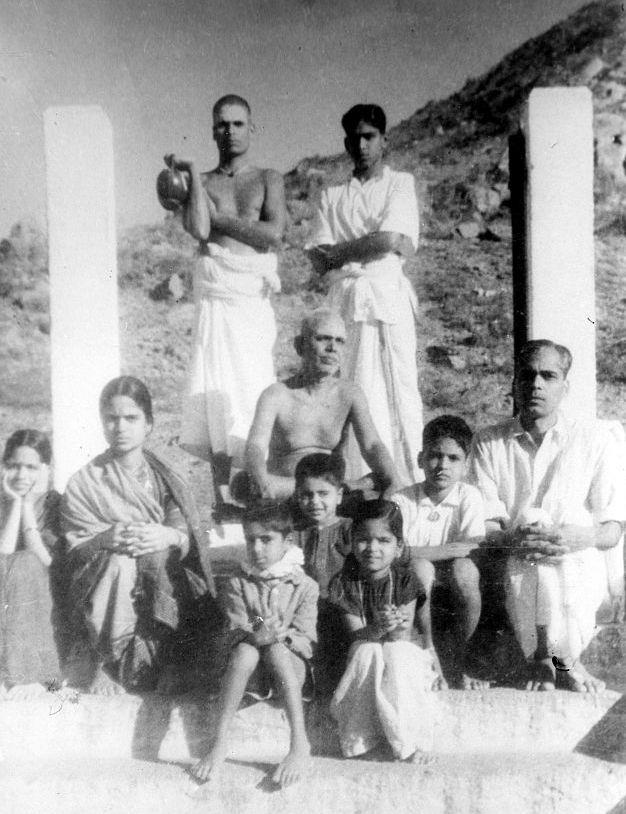
Sri Bhagavan with Subregistrar Narayana Iyer and his family
That night, Bhagavan read out the verses in the most musical tone, making every word so simple and easy to understand, that Narayana Iyer was left wondering if he was being hypnotized. “Whatever he is reading now, I can understand; previously, I couldn’t understand a single word,” was his thought. While his mind was in this state, Bhagavan focused his attention solely on him in the midst of his reading. In the earlier days, there was only a small intimate group around Bhagavan. People started thronging to the ashram only in the 1940’s. Before that, Bhagavan would often look directly at the person he had chosen. Narayana Iyer was mesmerized, both by Bhagavan and the verse that he was reading. Narayana Iyer recalled, “While explaining verse twenty one Bhagavan said, ‘God can neither be seen with our eyes nor with our senses. To see God is to be God. This is what the verse is saying.’ From the audience, a person called Dandapani Swami asked rather boldly, ‘Is Bhagavan saying this out of his own experience?’ This blunt question was answered calmly and with candour by Bhagavan, ‘Otherwise, would I dare say so?’”
On hearing this declaration, a strange sensation overtook Narayana Iyer. His entire frame quivered and when he looked at Bhagavan in that state, he saw a glorious and luminous aura around him. Narayana Iyer had the experience, ‘to see God is to be God’. The thought that Narayana Iyer had was, “If he, who all religions acclaim to be God, were to appear before me in flesh and blood, here he is!” Narayana Iyer had an inner experience that affirmed that Bhagavan was God himself. Narayana Iyer said, “From that moment onwards, it was not my decision; I had become a slave of Bhagavan.” Narayana Iyer explained to me, “Ganesan, I had refused to succumb to any form of intellectual conviction about God. Hence, Bhagavan had to give me the experience that he is God.” I teased him, saying, “In Bhagavan’s words, Narayana Iyer became God to experience God!” He embraced me and said, “Yes, that is the truth! To know God, one has to become God. There is no other way.”
I think it was purely due to the blessings of Bhagavan on me that Narayana Iyer narrated to me some of his experiences with Bhagavan. Perhaps, Bhagavan wanted it all to be shared. On many occasions, Narayana Iyer would come to the ashram office, drag me outside and lead me to the cow shed or to the foot of the hill. He would then share his experiences with me; his refrain always was, “I did not deserve such pointed tenderness from Bhagavan. Perhaps, I did some good deeds in my past lives; in this life, I have neither done pooja nor sadhana to deserve such special attention and love from him.”
Once, I asked him to clarify what he meant and how he felt when he declared that for him Bhagavan was God. It was not that I doubted Narayana Iyer’s experience; I just wanted to hear it in his own words. He said, “Bhagavan is God himself and in saying this, I do not refer to any God of any religion, but to the universal principle of pure consciousness. I would not like to compare him to any of the past personages as there is no meaning in comparing the incarnation of that one principle which has no second. However, for our understanding, if we need to, then the comparison can be done only with the Buddha or Jesus Christ.” Narayana Iyer said, “Whenever I was talking to Bhagavan or sitting in his presence, there was the feeling that here is God sitting and talking. It is our greatest fortune that the supreme consciousness, appearing in the garb of a human body, graciously undertook to come down to our level of understanding and interpret to us the truth of atma vidya - the wisdom of the Self. Such thoughts always made me understand Bhagavan and his teachings more clearly.”
I told Narayana Iyer that when I came to the ashram for good I really did not have a full grasp of Vedanta. I was twenty four years of age at the time. Though I was equipped with an M.A. in philosophy and acquainted with both eastern and western philosophy, I could not grasp Vedanta, the crux of Hindu religion. I struggled because it was complex and vast. Some inmates of the ashram had told me, “Learn Sanskrit and study the works of Adi Shankara, then you will be able to grasp the teachings of Bhagavan.” Narayana Iyer asked, “And, what was your response?” I replied, “Narayana Iyer, I felt that doing sadhana, whatever kind of sadhana, was more important than gathering knowledge about different kinds of religions and philosophies.”
Narayana Iyer said, “I was exactly in this state when I put forth questions to Bhagavan. Listen to how Bhagavan solved my problem in a trice. Once, some very learned scholars were sitting in the Old Hall, discussing portions of the Vedas, the Upanishads and other scriptural texts in Sanskrit. Bhagavan gave an illuminating explanation and it was indeed a sight to behold, remember and adore! While watching, I was also aware that these knowledgeable people were fortunate enough to be sharing this kind of learning with Bhagavan; they had a zest for learning and at the same time a keen understanding of the subject.
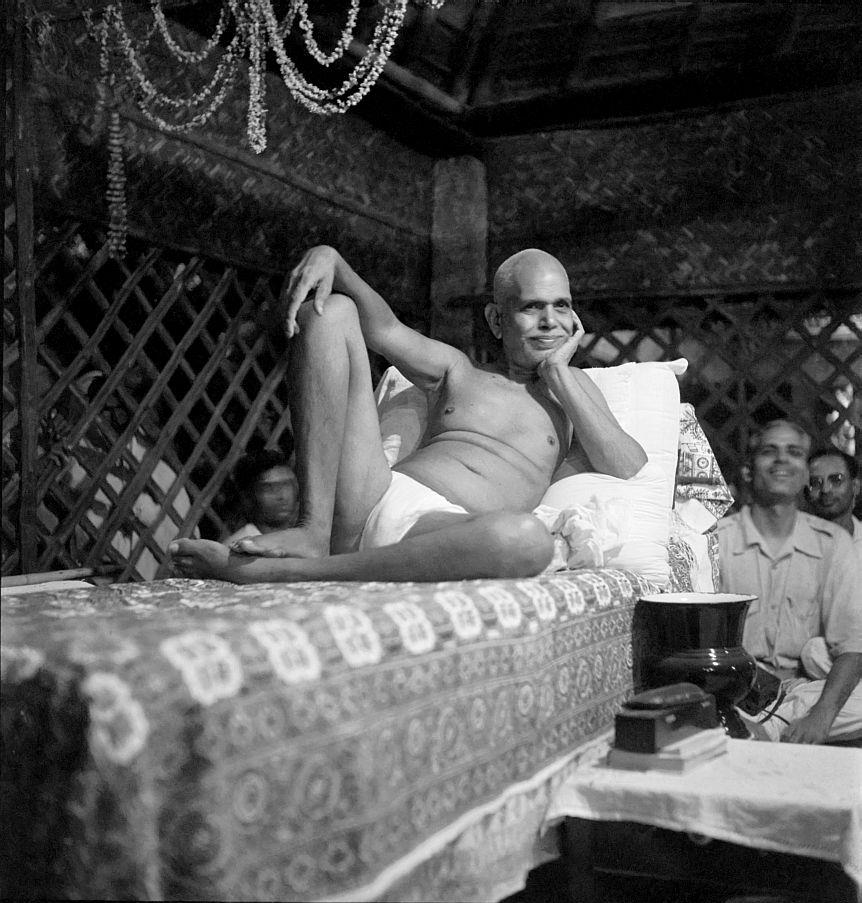
What was I compared to them? I was a zero as far as scriptural knowledge was concerned and that made me feel miserable. These were the thoughts in my head. After the scholars left, Bhagavan turned to me and said, ‘What?’ As he said this, he looked deep into my eyes, as if reading my thoughts. Without giving me an opportunity to respond, Bhagavan continued, ‘This is only the husk. Book learning and the capacity to repeat the scriptures by rote are of absolutely no use. To know the truth, you need not undergo this torture of learning.’ Then, he uttered the most beautiful sentence: ‘Not by reading do you arrive at the truth. Be quiet - that is the truth. Be still - that is God.’ Then, very graciously, Bhagavan turned to me again. This time there was an immediate change in his tone and attitude, ‘Narayana Iyer, do you shave yourself?’ I was surprised by this sudden change to a question of a personal nature. I answered in the affirmative. Bhagavan then continued, ‘You use the mirror for shaving, don’t you? You look into the mirror and then shave your face. You do not shave the image in the mirror, do you? Similarly, all the scriptures are meant only to show you the path to realization. They are meant for practice and attainment. Mere book knowledge and discussions can be compared to a man shaving the image in the mirror.’ This was tremendous relief for me. After Bhagavan said these words, my inferiority complex left me once and for all. The other positive thing about Bhagavan’s statement was that, since then I was able to be still and quiet. It almost became my property.” While I was listening to Narayana Iyer, I was also transported to that state of quiet stillness. I too gave up the craze for accumulating knowledge and instead took to plunging inwards. “Be quiet - that is the truth. Be still - that is God.”
As far as Narayana Iyer was concerned, I was an insatiable questioner. I wanted to know if he received any upadesa (a special teaching) from Bhagavan; I wanted to also know whether he had lived up to that teaching. Narayana Iyer said, “Ganesa, Bhagavan did give me an exclusive upadesa. The personal instruction of Bhagavan has always been of absolute value to me; it has become my second nature, as it were.” What he then said is very significant. “I cried to Bhagavan that I knew nothing of Vedanta. I also could not practice certain austerities since I was a householder. I prayed to Bhagavan to help me by showing the way to reality, or reality itself. I also frankly told Bhagavan that his own method of Self Enquiry was too difficult for me. Bhagavan graciously turned to me and said, ‘Narayana Iyer, do you know Ulladu Narpadu? It imparts pure truth. It deals with pure truth and explains pure truth. Continue reading it verse by verse. The words of the verses will in due course vanish and pure truth - sat or ulladu - alone will shine like the snake shedding its skin to emerge shining.’ This is my sadhana, Ganesan, and I have been doing it repeatedly. I chant Ulladu Narpadu whenever I have any free time.” I listened spellbound.
I once asked Kanakammal (an old devotee of Bhagavan who dropped the body on Bhagavan’s jayanthi, January 1, 2010, in Bhagavan’s samadhi hall) about Narayana Iyer and she had the following to say about him: “Narayana Iyer was born in a rich family, but he was perfectly humble. Narayana Iyer’s wife shared his views and lived her life as her husband wanted her to. When he was at home, he would often be reciting Ulladu Narpadu at the top of his voice. He tended to the cows and did gardening since these were matters that interested him deeply. The moment a cow gave birth to a calf, he paid total attention to both cow and calf. As the cow was giving birth, he would recite Ulladu Narpadu. In a lighter vein, Narayana Iyer’s wife once told me that the exclusive privilege of receiving Narayana Iyer’s attention during delivery time was given to the cows but never ever extended to her, the mother of eight children!”
Narayana Iyer’s dedication to and practise of Bhagavan’s teaching and instructions was meticulous and total. I once asked him, “Did you ever have any doubt that Bhagavan erased completely?” He was compassionate enough to narrate the following incident: “I was sitting near Bhagavan’s couch. I felt puzzled by the ancient teaching that everything you see is maya, an illusion. I wondered how Bhagavan sitting on the couch, and the wooden barrier between him and me could be false. I asked Bhagavan whether all of us could be unreal and non-existent. Bhagavan laughed and asked me whether I had had a dream the previous night. I told him that I had had one in which I had seen several people asleep. Bhagavan then said, ‘Suppose I ask you to go and wake all those people up in the dream and tell them they are not real. Will that not be absurd? That is how it is to me now. Be assured that there is nothing but the dreamer. So, where is the question of the people in the dream being real or unreal? Still more, of waking them up and telling them that they are not real! We are all unreal. Why do you doubt it? THAT alone is real.’ After this explanation, I had absolutely no doubts about the unreality of the world. I could constantly feel its unreal nature.” Another day, Bhagavan told Narayana Iyer, “Everything is unreal, like dream objects. However, at a certain stage, there exists truth, or reality, and the world of unreality. There, the realized man’s jnanam awakens ‘others’ to the fact that what they see and feel is unreal, and reality is one’s own being. This can be compared to an elephant dreaming of a lion and suddenly waking up to find that the lion is unreal and the elephant alone is real. The elephant is the individual (jiva), the dream is the unreal world, and the lion is the guru or the jnani. The guru is the link between the real and the unreal.” On another occasion, Narayana Iyer told me that Bhagavan said, “There is no jnani, no realized person. Wisdom alone is. There is only jnanam.”
Narayana Iyer was posted as sub-registrar in a place away from Tiruvannamalai. That meant that he could not go to Bhagavan whenever he wanted; he was like a suckling baby, longing to be back with the mother. As there were hardly any taxis or buses in those days, Narayana Iyer sometimes hitchhiked on lorries as a mode of transport to reach Bhagavan and even to go back home. Once, he came to the ashram at eight thirty in the night. He had a house opposite the ashram. He hurried into the ashram without even taking his bath or his food. He stopped at the ashram office to pay his respects to Niranjanananda Swami, the sarvadhikari, who was having a discussion with some people. Narayana Iyer was surprised because normally the people in the ashram went to bed by eight. The sarvadhikari called out to him and said, “Narayana Iyer, come here! Bhagavan has had an accident. He has broken his collar bone. So we have shifted his bed outside the Old Hall, in between the Old Hall and the small well. Prostrate to him from a distance and then go away. Do not disturb him.” Narayana Iyer recalled, “Had they not mentioned that Bhagavan had a fracture, I would not even have gone there. But knowing that Bhagavan had a fracture, how could I not go there?” Obeying Niranjanananda Swami’s instructions, he went in stealthily like a cat and prostrated to Bhagavan from a distance. But Bhagavan called out to him, “Narayana Iyer, come here!” He was surprised because he thought no one could hear him. Bhagavan then added, “Narayana Iyer, I can see that you are trying not to make any noise!” Then, lying on the couch, he said the strangest thing, “Narayana Iyer, come and sit next to me.” Perhaps, he was the only other person to have ever sat next to Bhagavan on his couch. (The other person was me, but I was only an infant - perhaps I was one and a half years old when I did so). Bhagavan said, “The native doctor has said that the bandage should not be moved; I want to talk to you. Sit by my side.” Narayana Iyer was afraid that the sarvadhikari would flare up if he saw him sitting on Bhagavan’s couch, but in a fraction of a second he overcame that fear and went to Bhagavan. As he sat down, Bhagavan continued, “This morning, I was going up the hill. A dog was chasing a squirrel and so I put my walking staff between the two of them. I then slipped and broke my collar bone. A devotee, who is also a native bone setter, made a paste of leaves and black gram and applied it with the plea that I do not move my arm.” Narayana Iyer was very moved about how Bhagavan paid as much heed to the plight of the squirrel as he did to the plea of his devotee, the bone setter.
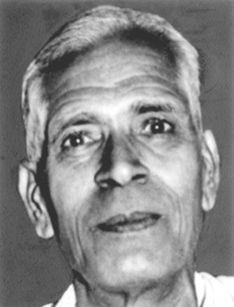
Narayana Iyer rarely missed coming to the ashram on Bhagavan’s birthday. Once, he was sixty miles away. He travelled by one lorry after another and at last reached the ashram at one in the morning. He had to leave the ashram at five that same morning because he had to report for work at nine. While taking leave, he prostrated before Bhagavan, who held out his hand and said, “Come, Narayana Iyer, you should have something to eat.” Bhagavan took him to the kitchen. They both looked into the vessels but there was nothing there because everything, including the floor, had been cleaned with water the previous night. Bhagavan went into the small room inside the kitchen and looked into all the pots and pans. Fortunately, he found a handful of almonds. As he came out, he noticed that the kitchen fire was almost out, so he put more firewood into the fire and then set a frying pan on it. He poured some ghee into the pan, then added the almonds and roasted them. He also added some salt and chili powder. He put the almonds on a leaf and gave it to Narayana Iyer, saying, “How can you go without eating anything?” It seemed heavenly to Narayana Iyer though he could not believe what was happening. He obeyed Bhagavan automatically. Then, Bhagavan got up, looked for a newspaper and another leaf and wrapped up the rest of the almonds in them. He packed it beautifully, just like they do in restaurants. He gave it to Narayana Iyer, saying, “When you go home, Lalitha (Narayana Iyer’s wife) and your children will ask, ‘What have you brought us from Bhagavan?’ Take this and give it to them.” As Narayana Iyer narrated this, he wept copiously and said, “How can I not remember these special acts of love? Who will believe it when I talk about it?”
When Narayana Iyer’s eldest daughter was to be married, Narayana Iyer had no money for the betrothal. According to Hindu tradition, there is a ceremony and a pooja for which a few things are necessary. Narayana Iyer’s wife said, “Why don’t you go and appeal to Bhagavan?” He replied, “I will never go and appeal to Bhagavan for material things.” She prayed to Bhagavan silently, telling him of the importance of the betrothal. The couple then went to see Bhagavan and prostrated before him. They did not breathe a word of the matter. The next morning, the postman arrived with a money order of fifty one rupees. (I myself have seen the counterfoil of this money order - Narayana Iyer has shown it to me.) It had come from Ahmedabad, which is a good thousand miles away from Tiruvannamalai. There was a message saying, “Letter follows.” The couple bought whatever they needed with the money. The prospective groom came and was received well and the wedding date was fixed. The couple waited anxiously for the letter that was to follow. The letter arrived later from a Gujarati gentleman in Ahmedabad. The couple did not know him at all. He wrote, “Dear Narayana Iyer, Bhagavan Sri Ramana Maharshi appeared in my dream and told me that I have to immediately telegraph a money order of rupees fifty one. He also gave me your address. I do not know you and I do not know what the money is for. Please accept it.” (I have seen that letter too.) Narayana Iyer, his wife and their daughter went before Bhagavan. They wept and prostrated before him and said, “Bhagavan, what grace are you showering on us!” Bhagavan read the letter as though someone else had showered the grace! He then focused his attention on both of them and said, “Why doubt? Why should you not ask me?” This is what I want to share with you. It is not just for spiritual fulfillment that we have come to the master. When the supreme master is capable of granting you the highest thing, which is Self realization, will he not fulfill your prayers for mundane things?
In a similar context, Devaraja Mudaliar once asked Bhagavan, “Bhagavan, you have praised Arunachala, your father, as being gracious, compassionate and powerful enough to give atma sakshatkar. Does this mean that I can even make pleas for my daughter’s marriage or my own employment?” Bhagavan smiled and answered, “If a person can grant Self realization, is it difficult for him to grant your simple prayer like getting a job or getting a son? If you have a lakh of rupees, is it difficult for you to give ten?”
One evening in the Old Hall, Sri Bhagavan very forcefully stated that whatever that is seen is untrue and that the seer alone is true. The next noon, when Sri Bhagavan was alone, Narayana Iyer sat in front of him and asked him, "Bhagavan! Is everything untrue? Are you, who is the Lord Himself, untrue? Is the sofa on which you are seated, untrue ? Is this hall untrue? Is this wooden barricade untrue? Am I who sees these untrue, Bhagavan?" Sri Bhagavan gave a beautiful smile of assurance and said, "Where is the room for any doubt? Everything is untrue. Assuredly, all that is seen is wholly untrue, a lie! But, the inner vastu within you that sees all these, that is the only TRUTH ! Everything else is untrue!"(In the original Tamil, this dialogue is both more poignant and emphatic. Narayana Iyer asks, “Bhagavaney! Yellaam poiyya? Neenga saakshaat Ishwaran – neenga poiyya? Neenga okkandhirukkara sofa poiyya? Indha hall poiyya? Indha thaduppu poiyya? Paarkara naan poiyya? Bhagavan replied forcefully, “Idhiley yenna, oi, sandhegam? Yellaam poi! Paarkaradhu yellam poi thaan, oi! Yellaathaiyum ulle irundhu paarkaradhey oru vastu, adhu onnu thaan mei! Meedhi yellaam poi!”)
Narayana Iyer once told Bhagavan, “Bhagavan, I have been here many years. People meditate and then go into samadhi. I close my eyes for a minute, and my mind travels round the world ten times. And so many forgotten thoughts leap up. I suffer, Bhagavan.” Upon hearing this, Bhagavan said, “Why do you concern yourself about others? They may meditate or sleep or snore. Look at your Self. Whenever the mind goes astray, bring it back to the quest. There is a verse in the Bhagavad Gita which says one should check and bring back the mind to the Self no matter to what side a restless and unsteady mind wanders.” However, Narayana Iyer was not convinced about Bhagavan’s reasoning. Then, Bhagavan, the mother, further elaborated, “The child who was woken up and given milk after it has gone to sleep, says the next morning, ‘Mother, you never gave me milk last night.’ Similarly, you too have had your fill.” Bhagavan’s assurance to Narayana Iyer is also an assurance to each one of us.
During the celebration of Bhagavan’s first aradhana, the first anniversary of his nirvana, I was in the company of many of these old devotees who were crying. They were crying because the calm form of Bhagavan had left them. Narayana Iyer sobbed and wept profusely. I embraced him and said, “Narayana Iyer, what is it that you are feeling?” He replied, “I cannot speak now.” I told him to write down his feelings. He sat at the foot of the hill and wrote. These thoughts were published in The Mountain Path and also in the book, Moments Remembered. The following is the moving account of what Narayana Iyer wrote on the occasion of the first anniversary of Bhagavan’s nirvana: “Bhagavan! Bhagavan! Oh dear Bhagavan! Is this the day that you left us? I vividly remember the day when Sri Muruganar and I were last in the queue to see you on the evening of 14th April, 1950. Can I, like Saint Manikkavachakar or Saint Thayumanavar, exclaim that my hair stood on its end? Kadharinen - I cried unashamedly. Vidirvithirthen - I wept in spasms of uncontrollable breath. My friend Muruganar and I were the only ones when we saw you. When I saw your prostrate body with closed eyes and upturned face, I didn’t know what to do. But you turned and cast your look on the grief stricken people who were weeping before you. Then you turned and closed your eyes. We were still weeping there. Lo, you turned towards us and looked at us again. Was it a look of farewell, oh Lord? Was it the last, the very last one? The recollection of your consoling words, ‘Where can I go? I am here,’ are the words of eternal wisdom that have sustained us. How can I ever forget the thousand instances of your love? The almonds that you specially fried for me by lighting the fire yourself and the groundnut kootu that you asked Venkataratnam to keep for me are still sweet on my tongue. When my friend Professor G. V. Subbaramayya pleaded with you to help me out of my official trouble, he said, ‘Poor Narayana Iyer. Can Bhagavan not do anything for him?’ did you not say, ‘What want is there for him?’ During one of your last days, G. V. Subbaramayya implored, ‘Give me protection, Bhagavan.’ In one word, you said, ‘I have given.’ At that time you saw me linking my arm with his, implying that I too was joining in the request. Countless are the instances of your grace to me. Lord, how can they go in vain? How many pages I have written that are smudged with tears! My obeisance to you, Bhagavan - I am ever at your holy feet with loving thoughts. My heart throbs along with the heart beats of those who have assembled here to offer eternal love.”
Bhagavan’s advent to Arunachala was to save us all from the ignorance to which we are bound and because of which we are suffering. As long as we attach ourselves to the body, the suffering will continue. But, if you raise the question, ‘Who am I?’, and listen to the silence, that silence is Arunachala, that silence is Ramana and that silence is our true nature.
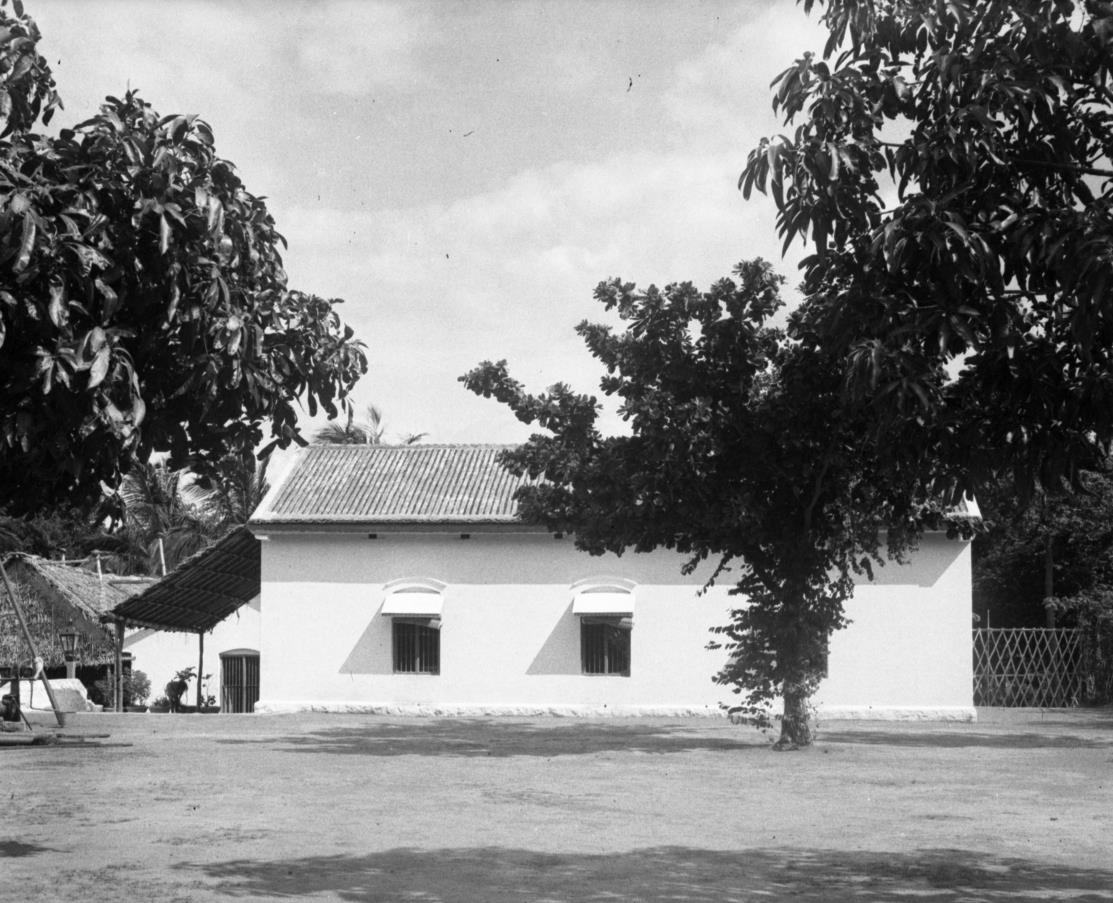
‘Old Hall’, in early days
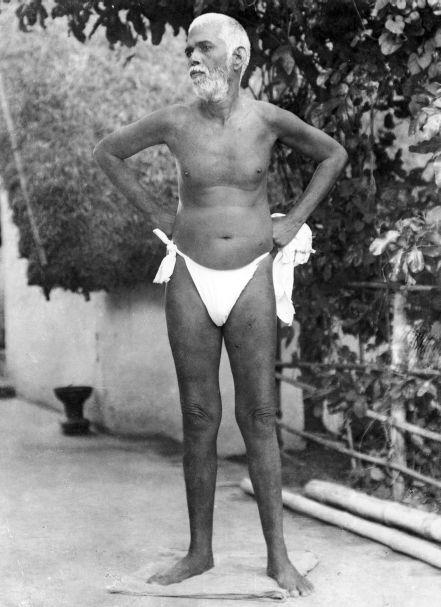
“ The first photo”