Dr. T. N. Krishnaswami
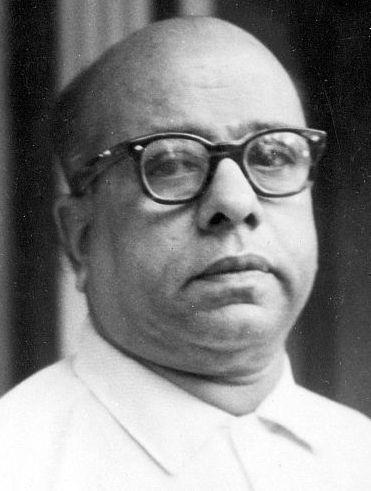
Dr. T. N. Krishnaswami, or Dr. TNK, was perhaps the only devotee for whom Bhagavan’s physical body meant everything. He was also the person to whom Bhagavan revealed that the whole of Arunachala hill was sacred and was the Lord himself. Dr. TNK describes how this happened: “One day, I was walking up on Arunachala behind Bhagavan. He stopped and picked up a small stone from the path and held it out to me saying, ‘Someone from abroad has written asking for a stone from the most sacred spot on the hill. He does not know that the whole hill is sacred. Just as we identify ourselves with the body, Lord Siva has chosen to identify himself with this hill. The stillness of Arunachala is pure wisdom when approached with faith. It is out of compassion to those who seek the Father that he has chosen to reveal himself in the form of a sacred space visible to the eyes. The seeker will obtain guidance and solace by staying near the hill.’”
A very successful physician in Madras (now Chennai), Dr. TNK was not only instrumental in getting this revelation about Arunachala for us. He was also the photographer who captured most of the photos we now have of the master. How he was drawn to Bhagavan is a fascinating story. In the 1930s, Krishnaswami was preparing for his final year medical exams. To take a break from the long and intense study hours, he and some of his classmates went to Vellore to take photographs of the ancient fort there. When he reached Vellore, he was very disappointed as he did not find the fort such a fascinating subject for his camera. Seeing this, a local there told him, “Why are you disappointed? Go to Tiruvannamalai. There is an ancient and majestic temple there. It will be a feast for your eyes and your camera.” So he proceeded to Tiruvannamalai along with his friends. While photographing the temple, someone told him about a saint living at the nearby Ramanasramam and suggested, “Why don’t you go and take photographs of him?”
Krishnaswami wasn’t convinced that a sadhu could be a fascinating subject for his camera. Nevertheless, he came to the ashram with his friends. A photographer was very rare those days in Ramanasramam. Seeing him, a resident of the ashram, Seshu Iyer, requested him to wait awhile and take some photographs of Bhagavan. Meanwhile Bhagavan, who had gone up the hill, was just returning. Seshu Iyer went up to him and said, “This group has come from Madras. They are waiting to take a photograph of you.” Bhagavan looked at them and in particular at Krishnaswami and replied, “Is that so? Then let him.” Bhagavan even posed for him. That was Krishnaswami’s first photograph of Bhagavan. In the later years, innumerable photographs followed. But this very first photograph he took of Bhagavan was Krishnaswami’s favourite one.
As the group started leaving, an ochre robed sannyasin came running after them and told Krishnaswami, “We do not have proper photographs of Bhagavan in the ashram. Since you have taken one, why don’t you send us some prints so that we can make them available to devotees?” Krishnaswami returned to Chennai, developed the photos himself and sent the copies to the sannyasin. Krishnaswami was so fascinated by the sannyasin that he acceded to all his requests and commands throughout his life. This sannyasin was none other than Niranjanananda Swami, the younger brother of Ramana Maharshi and the sarvadhikari of the ashram. This first photograph must have been the sarvadhikari’s favourite too, for he had this particular photo hung on the wall in his office.
Dr. TNK, whom I interviewed in the 1960s, described the very first look of Bhagavan: “I thought I had successfully captured Bhagavan inside a metal camera. Very soon I realized it was Bhagavan who had captured me in his Heart from where I could never escape.” I continued, “How did you feel when you first saw Maharshi?” He answered, “The Maharshi did not seem to take notice of anything around him. He wore a calm and distant look. His eyes were shining and there was something divine about his countenance.”
A few days after Krishnaswami had sent his first photo of Bhagavan to the ashram, they wrote back to him requesting him to come and take a group photograph of Bhagavan with some devotees. Dr. TNK later recollected, “I had already forgotten about the first photo, because as a student I had many attractions and distractions. So, when this letter came, I felt it was becoming a nuisance.” Strangely, he soon found himself seated in the train to Tiruvannamalai with his camera. When he entered the ashram, Bhagavan looked at him with a most beautiful, welcoming smile and said, “They want a group photo and they want you to take it for them.” Feeling flattered, he happily took the group photograph. Then, something prompted him to ask, “Bhagavan, will you please pose for a portrait?” Bhagavan agreed and sat in padmasana. In the 1930s and 40s, this photograph adorned the homes of many of Bhagavan’s devotees. Soon after this, Krishnaswami completed his medical course and became a reputed and successful doctor in Chennai.
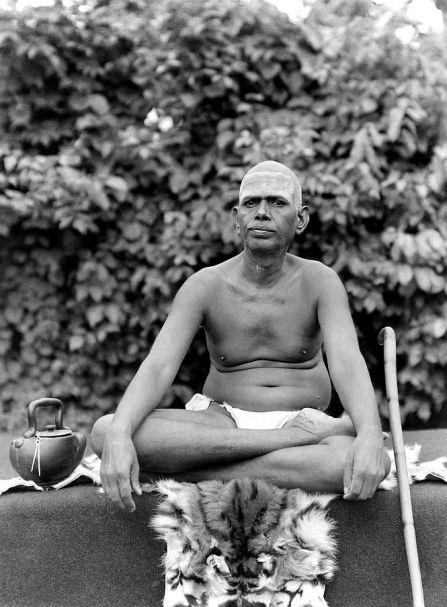
“Bhagavan agreed and sat in padmasana”
From then on, visiting the ashram became a regular routine. On one such visit, when he entered the hall, Bhagavan said, “Just now we were talking about you. They have written you a letter they may have not even posted yet - perhaps you can receive it personally.” Dr. TNK told me, “There were many coincidences like that. Week after week, month after month, year after year, I would take my camera, go there and take photographs of Bhagavan from morning to evening.” (Today, almost eighty percent of the photographs that we see of Bhagavan were taken by him. In the later years too, other photographers - for instance, G. G. Wellings from Bangalore - were only rarely permitted to photograph Bhagavan.) Bhagavan drew Dr. TNK to him again and again like a spiritual magnet. I asked him, “What made you keep returning to Bhagavan?” He countered it with another question, “What makes a baby go to its mother? Bhagavan was like a mother for me. That is how I felt and so I kept going back again and again.”
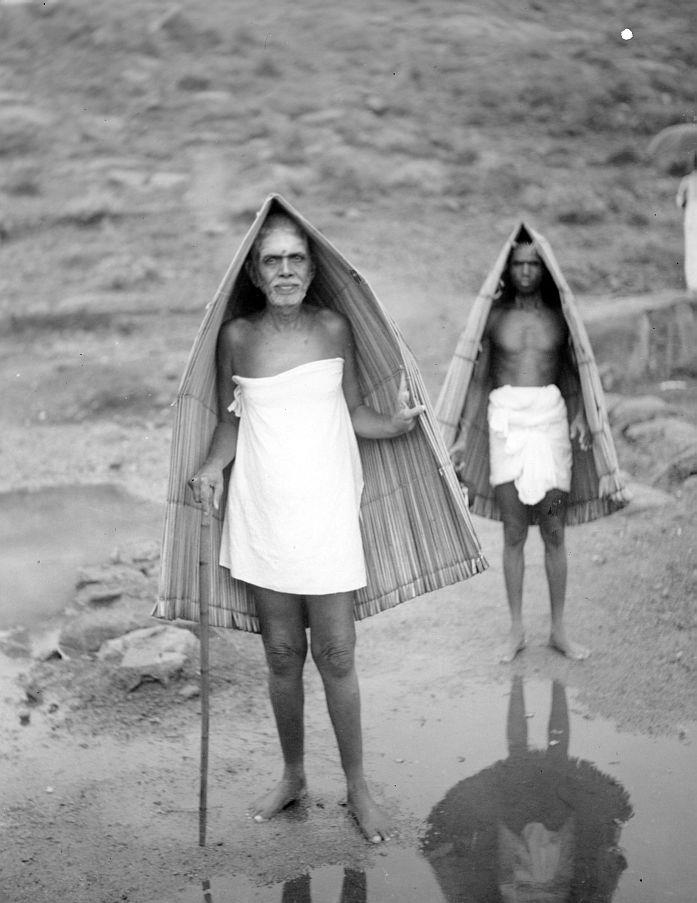
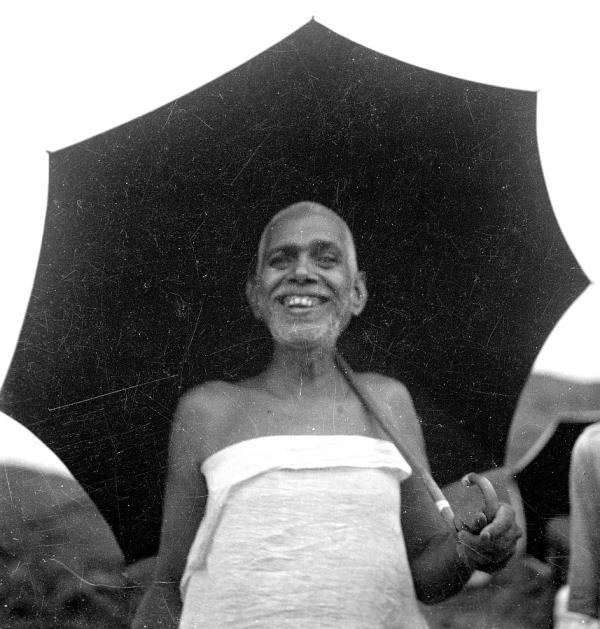
Dr. TNK was known as the ‘ashram photographer’. When asked to narrate of how he took photographs, he said, “Whenever I went to the ashram, though I usually stayed there briefly, I made it a point to accompany the Maharshi from morning to evening and take as many pictures of him as possible. I used to wonder if such doggedness on my part would vex the Maharshi. I have snapped him walking, sitting, eating and even cleaning his feet. I have also snapped him smiling, bursting into laughter, smiling at a child, in a meditative mood and in samadhi. Once, he was going up the hill when there was a light drizzle and he was offered a typical farmer’s umbrella made from palmyra leaves. I took a picture of him wearing this on his head. I also took another picture of him using an ordinary umbrella. As I began to take that picture, the Maharshi looked at me with a very broad smile.” Every photograph had a story behind it, and not many of them had been recorded. So, every time I met Dr. TNK, I pestered him for more such stories.
Once, the ashram was bringing out a book titled The Maharshi, with a hundred and seventeen illustrations. By then, the ashram had plenty of Bhagavan’s pictures taken by Dr. TNK. But they did not have a single proper photo of the hill. So Niranjanananda Swami requested him to take a good picture of the hill for that book. For Dr. TNK, Bhagavan was father, mother, guru, God - everything. He approached Bhagavan and appealed, “They have asked me to take a photograph of the hill. What should I do?” Bhagavan replied, “Before the railway tracks from the south, reach Tiruvannamalai, there is a railway bridge. From there, if you look at Arunachala, the top of Arunachala and the temple’s main tower fall in a straight line. That view is especially striking. Take that!” Recounting the incident, Dr. TNK posed me a question which he himself answered, “Ganesan, how do you think Bhagavan knew that? Put yourself in Bhagavan’s position: Only once had he travelled that way by train - as a sixteen year old boy running away from home in ecstatic search of his Father. And yet, just a glimpse of the hill and the temple’s main tower from that bridge got so deeply imprinted in his Heart that he could bring it out vividly and immediately years later! A sage’s every movement, word and gesture has great significance because for a sage everything is in the now.” Dr. TNK is an important link in the history of Ramana Maharshi. Whenever I went to Chennai, I used to go to his house, prostrate to him and pester him, “Tell me more about Bhagavan!” In addition, I would collect the innumerable negatives of the photos he had taken of Bhagavan. On one such visit, I gathered literally hundreds of these negatives, bundled them in a big cloth and brought them to the ashram.
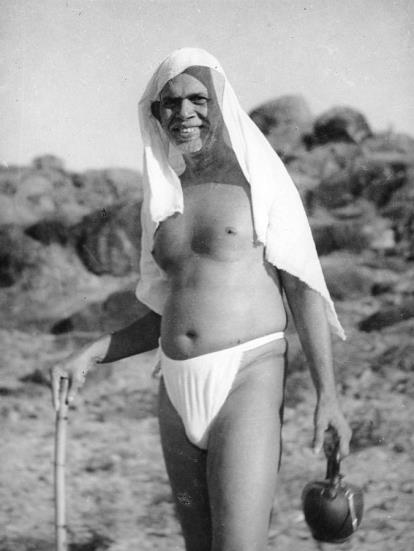
One day, Dr. TNK seemed to be in a blissful mood. He turned away all his patients who were waiting for him and asked me to come upstairs to his room. There, with eyes brimming with tears of joy, he talked about the glory of Bhagavan, the grandeur of Bhagavan, the majesty of Bhagavan. He recounted, “Not once did Bhagavan tell me, directly or indirectly, through Niranjanananda Swami or any attendant, to stop taking photos. On the other hand, he unhesitatingly stood or sat in whatever pose I asked him for. No one will believe if I tell now that I used to ask him, ‘Turn your face this side, look up, look sideways, keep the arms down or keep the arms like this,’ and that he acceded to my requests instantly. Up on the hill when I was taking photographs of Bhagavan, no one was allowed except the attendants. If anyone had been there and seen Bhagavan obeying me, they would have mistaken Bhagavan to be obsessed with being photographed. The real truth is that he, as my guru, was fulfilling my desires, my insatiable longing to photograph him and that was all. Has he not fulfilled every prayer of every devotee all his life?”
He continued, “Niranjanananda Swami once asked me to take a photo of Bhagavan sitting with one leg over the other in the traditional Dakshinamurti posture. Bhagavan agreed. For his seat, we adjusted a rock so that the top of the hill formed the backdrop. Before Bhagavan sat on the rock, he asked the attendant and me which leg should be up and which leg down. We were puzzled as we weren’t sure. “Does not matter,” Bhagavan said, “Take two photographs - one with the right leg up and the other with the left leg up.” A relieved Dr.TNK took the photos as suggested!
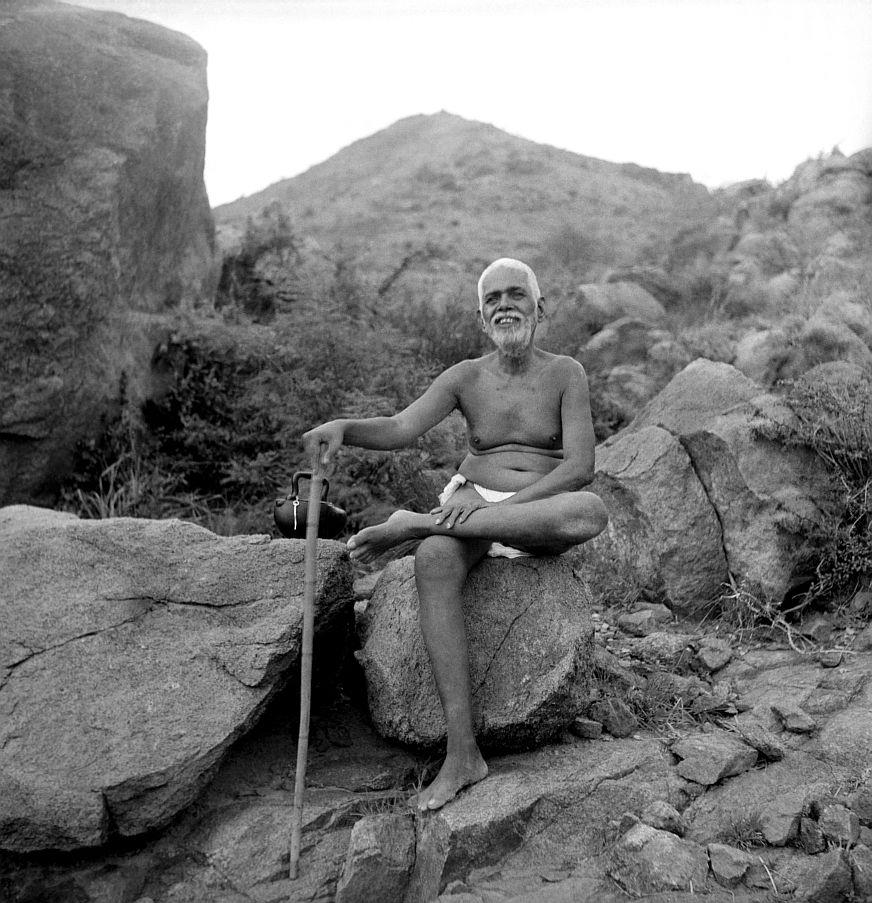
“… traditional Dakshinamurti posture ”
Once, I asked him, “Have you ever taken any picture of Bhagavan stealthily, without taking his permission, without his knowledge?” He said, “I always sought his permission before taking his photo, except this once. I wanted to take a photo of his holy feet as the feet of the satguru are highly extolled in our scriptures. I requested the attendant to sprinkle a few flowers in front of Bhagavan’s feet as he reclined on his couch. Hiding my camera from Bhagavan’s vision, I pretended to bend down and prostrate. Suddenly, I raised myself and took the photo.” He added, “Bhagavan’s figure was out of focus, only the feet were clearly focused. When I tried to slip out, Bhagavan beckoned me to his side. As he looked at me, he had a knowing smile dancing in his eyes which seemed to say, ‘Do I not know the mischief you are up to?’ This is for the first time I am sharing this incident. I have all along been hiding that photograph. I have been exclusively venerating it. Now, I feel like giving it to you. I will give you the negative. Maybe, Bhagavan wants his holy feet to adorn the homes and hearts of his devotees.” This was in 1967. I was thrilled because the ashram was about to bring out the Ramana Pictorial Souvenir. Needless to say, because of this wondrous turn of events, I was able to give this one and only photograph of its kind, the pride of place on the very first page of the souvenir.
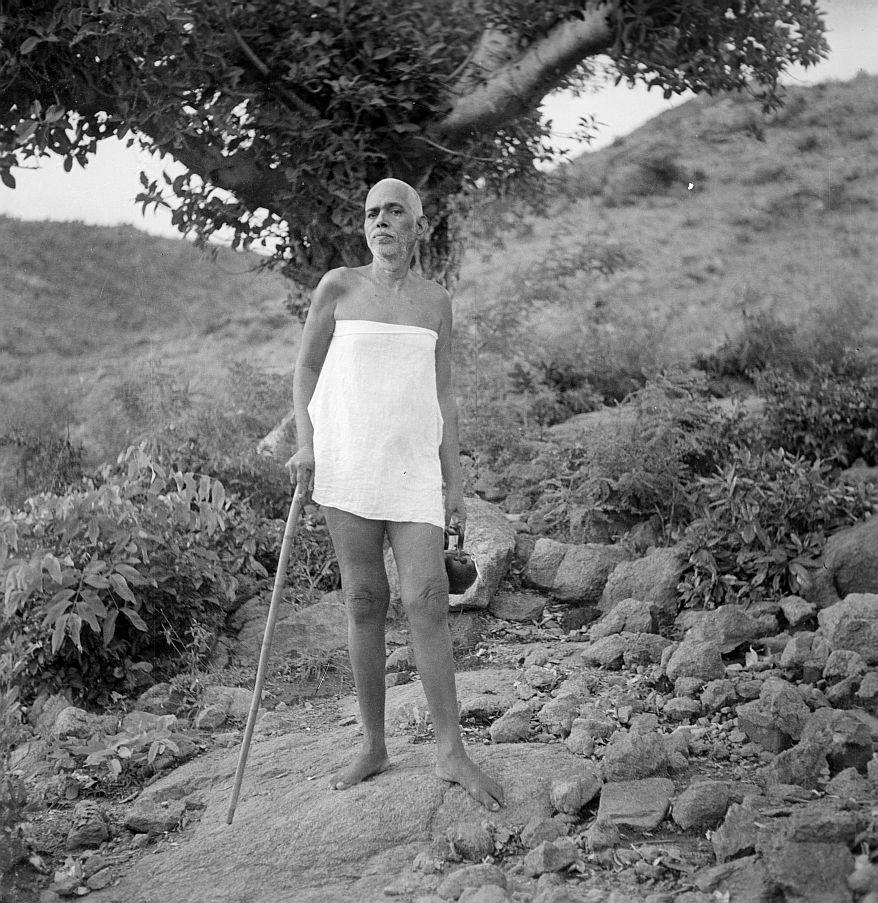
I once asked him, “Haven’t you ever felt that just taking photographs was not enough?” Dr. TNK confessed, “Sometimes, I used to wonder if it was not ridiculous of me to pay so much attention to photographing his form when Bhagavan’s teaching was ‘I am not the body’. Was I not chasing the shadow and trying to perpetuate it? Somehow, so long as I was seeing him with my eyes, the teaching did not assume any importance to me. His person was seen by me and I felt drawn and attracted to him. It gave me immense pleasure to take photographs of him. He was more important to me than his teaching. Every little movement, every one of his acts and gestures, was highly valued by me and they always carried some divine fragrance. Simply to watch him, no matter what he was doing, was highly gratifying.”
As mentioned earlier, Dr. TNK was not only a good photographer but also a very successful doctor. He was the doctor to many of Chennai’s elite, particularly reputed movie actors, famous classical singers and other popular citizens. But, having come to Bhagavan, and having served him, would Bhagavan leave him spiritually unrewarded? Would he leave him to be merely a good photographer and a successful doctor with a roaring practice ? So, in the last days of Bhagavan’s illness, he made Dr. TNK stay with him and serve him.
Years later, I asked him to describe the last moments of Bhagavan’s earthly life. Tears flowed down his cheeks and he was choked with emotion. He could not utter a single word. So, I asked him to write it down and give it to me. This is what he wrote: “I had the rare privilege of being allowed to stay with the Maharshi during his last days. Knowing fully well that his end was near I was inquisitive to watch and see if he would leave any message for us. Would he not speak words of solace? Would he not leave behind some directions for us? It was sad indeed to look at the suffering of the body but the mystery was his attitude to it. He described all the pain and suffering as though the body belonged to somebody else. The question arose whether he was suffering or not. How could he describe the pain and suffering so accurately and locate it in the body and yet remain unaffected by it? ‘There is a severe, intolerable headache,’ he said as his kidneys started failing. The Maharshi never described the symptoms in a subjective manner. On the evening of the last day, the Maharshi asked to be propped up in a sitting posture and he assumed something like a padmasana posture. His breathing was getting strenuous and heavy. The attending doctor put the oxygen mask to his face. The Maharshi brushed it aside. There was a heavenly chorus of ‘Arunachala Siva , Arunachala Siva ’ being sung outside the room. The gathering stood speechless. Would physical death dare touch him? No! It is impossible. A miracle will happen. That is what everyone thought. The atmosphere was tense with emotion, fear and expectation. There was some weeping. Very gently, the Maharshi seemed to gasp a little and the body became still. Synchronizing with the Maharshi’s last breath, a meteor was seen to trail across the sky. We could scarcely realize what had happened. The physical form had left us once for all. No more the beatific smile to greet us. No more the graceful form to adorn the ashram.”
Whenever I met Dr. TNK in his residence, he would take me upstairs and talk about Bhagavan. “What did you do after Bhagavan dropped the body?” I asked him. He replied, “Bhagavan’s body, which I had worshipped, was no more to be seen. This gave me a severe jolt. I was shocked. Had I missed the opportunity of a lifetime to imbibe the direct teaching from the enlightened one? I had done nothing in the direction of spiritual practice. Had I wasted all my time taking photographs while I should have engaged myself in trying to understand and practice his teachings in his very presence? No, I said to myself, this cannot be true. I was sure I had obtained some grace from the Maharshi. He is somehow still here - only we have to learn to feel his presence as the substratum without form. We will never be forsaken, for he has himself assured us that he was not going away. He is omniscient. Then, I turned to study his teachings. I began to see the truth in them. Some of the sentences touched me and made me feel that I was in his presence, listening to him. I took heart. The more I read the more intimate the Maharshi became to me. His teaching pulsated with life. I began to understand it and it mixed with my being and became my own.” When he said this, I immediately prostrated to him, held his feet and said, “Doctor, bless me!” I knew that he was in that immaculate state of inward repose, peace and perfection, though he was dressed in a western suit and had a stethoscope around his neck.
Once, a couple came to the ashram from New York. They wanted to know if there were any realized beings after Bhagavan. I replied, “I can show you one, but will you recognize him as the Self realised one?” They answered that they would try their best. I told them that he was not here in Ramanasramam but in Chennai and that he does not wear ochre robes or have a clean shaven head. I also forewarned them that he would be dressed in western attire. Not deterred, the couple asked me to take them to see him. I took them to Dr. TNK’s residence in Chennai. The moment I saw the doctor, I prostrated to him. His whole house was filled with Bhagavan’s pictures. He showed the couple around and offered to give them any picture they wanted. They chose a picture that has never been seen in Ramanasramam before. Dr. TNK immediately removed it from the wall and gave it to them. Then, he told us, “There is a story behind it. For the naming ceremony of my second son, a celebration and pooja was arranged. I wanted to name him Ramana. My wife objected to that. She said, ‘By tradition, you should give him my father’s name, just as you have named our first son after your father. As I could not object to that, I reluctantly agreed. The function was going on and as per tradition I covered my second son under a cloth and was about to whisper my wife’s father’s name in his ear. Suddenly, this framed picture fell off from the wall on to my back. For me, it was as if Bhagavan himself was telling me, ‘Give him my name.’ So, I named him Ramana!”
When Dr. TNK was on his death bed, I went to see him. Seeing him, I wept. He chided me, “Is this your understanding of Bhagavan’s teaching? Look at me. I am looking at Bhagavan beckoning to me. I am going to him. Why should you cry? Come on, wake up.” I said, “I have one doubt, doctor. You are a millionaire. You have acquired many properties. People say that you are a cheat pretending to be a devotee, but that actually you are only after money. You own sixty houses in the city and have millions of rupees in many bank accounts.” Dr. TNK smiled at me and said, “Yes, I own all these but they do not own me.” He continued, “I am advising you. Do not pay any attention to anything outside of your Self. Property or no property, they are all untrue. The silence within you is the only truth. Focus your attention on truth. Bhagavan is calling me. Bhagavan blesses you, Ganesan.” He then lay with his eyes closed for some time. A few minutes later, he turned to me with great affection and said, “Opposite to the ashram, I have a building in which I requested Muruganar to stay. I am bequeathing that building to you. I know you do not have any money or property to lean on. You are rendering surrendered service to Bhagavan. You should not suffer in the future for want of anything. Please accept it.” Reverentially accepting his offer, I touched the feet of Dr. TNK and took his leave. (Very recently, I surrendered this building to Ramanasramam.) After a few days, Dr. TNK, ‘Bhagavan-photographer’, merged fully conscious with Ramana Arunachala.
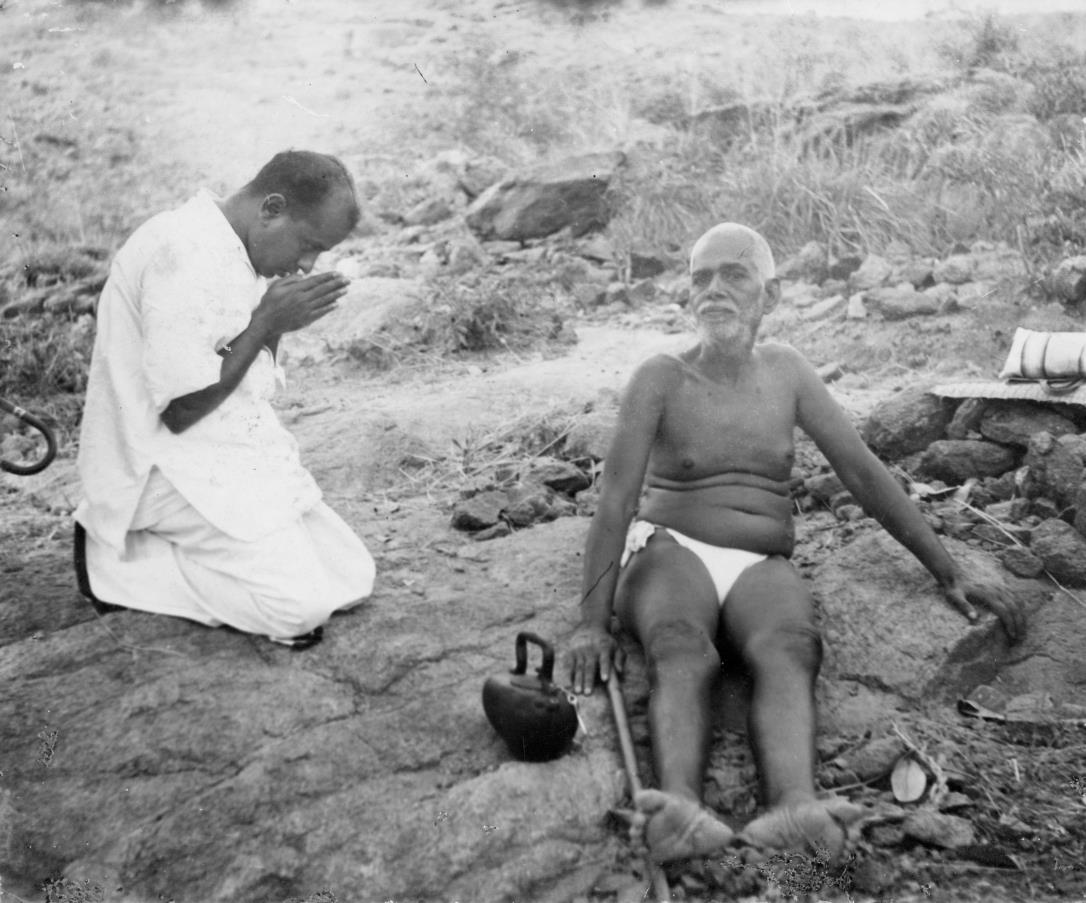
Sri Bhagavan on the hill, Dr T N Krishnaswami is offering his obeisance
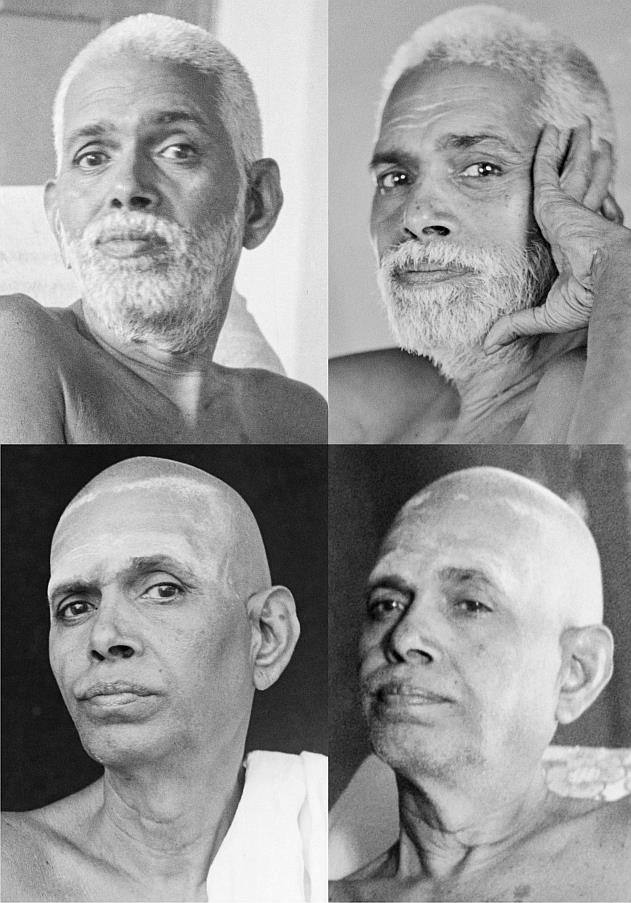
Tribute to Dr. T.N.K’s ‘photo service’ to Sri Bhagavan ( Mountain Path, July 1975 issue) - 1
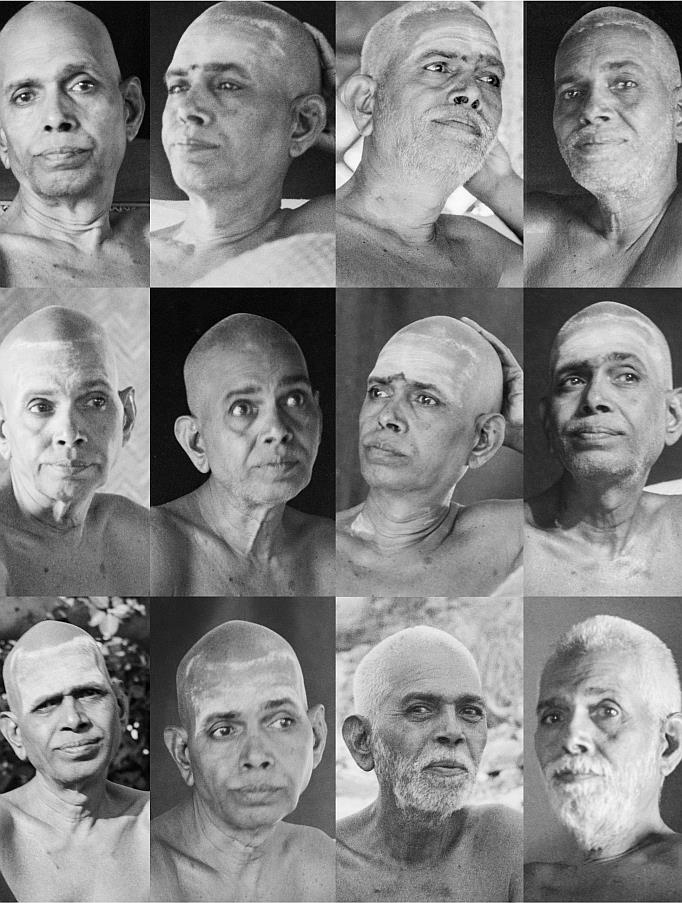
Tribute to Dr. T.N.K’s ‘photo service’ to Sri Bhagavan ( Mountain Path, July 1975 issue) - 2
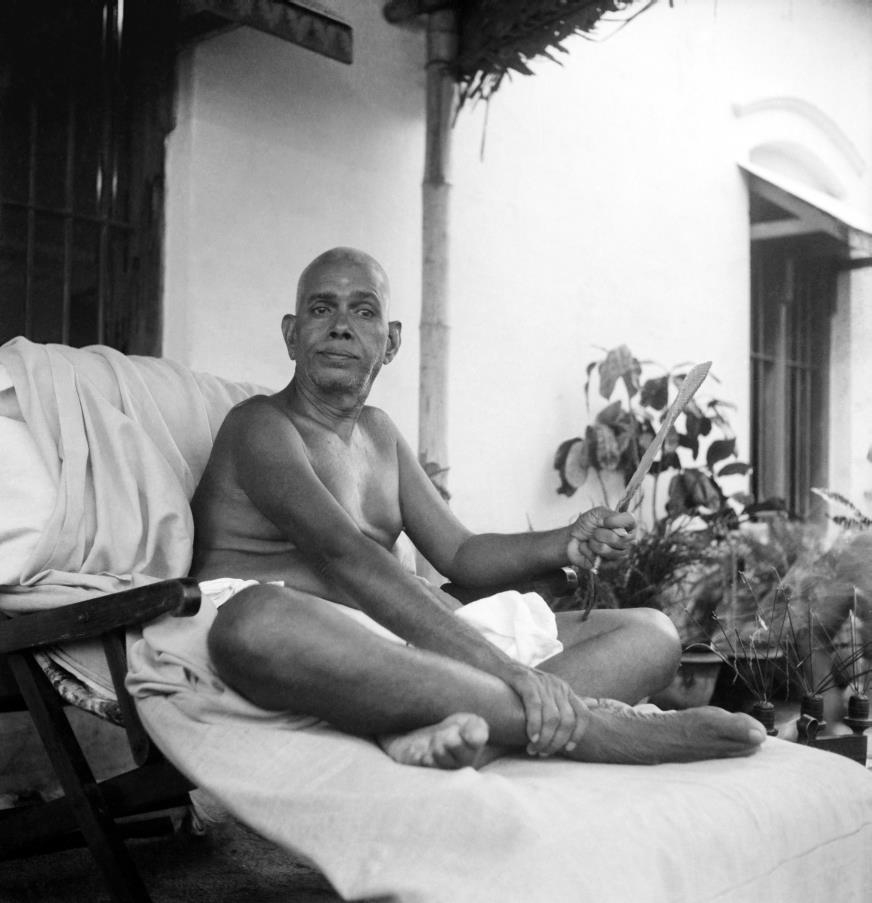
Sri Bhagavan seated outside ‘Old Hall’