Framji Dorabji
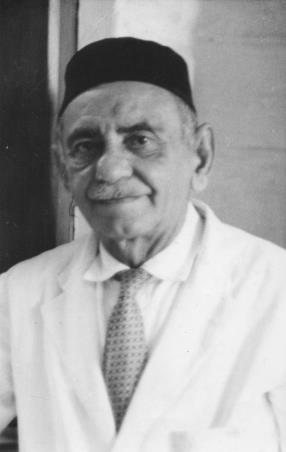
Framji Dorabji was a Zoroastrian, or Parsee, who owned a movie theatre in Chennai. From childhood, Framji was so devoted to sages and saints that wherever there were sadhus and sannyasins, he would go fall at their feet. Knowing of his ‘madness’, his family friends often played pranks on him saying, “Framji, there is a great sage at such and such a place on the outskirts of Bombay.” He would go there immediately with offerings of fruits, only to find no one like that there. Though he knew that they had played a prank on him, he never resented it. As he later recounted, “I was never hurt or angry - those moments were very precious to me as I was thinking of meeting a saint.”
Once, he was actually cheated by a sadhu who he thought was genuine. The sadhu was a psychic and an expert in thought reading. The first time he went to meet this sadhu, Framji was still in the car while his friends went on ahead. To their utter amazement, the sadhu asked them, “Why have you left your friend Framji Dorabji in the car? Bring him here.” When Framji met him, the sadhu did some psychic reading of his thoughts. Framji was very impressed and thinking that he was a great saint, started going to him regularly. Soon, the sadhu started extracting money from him. Once, he asked for a huge amount that Framji could never even hope to get. On being told that, the sadhu threatened him, “If you do not come with that money, I will curse you. Your whole family will be destroyed.” When he returned home, he found his elder daughter had fallen ill. As the days went by, seeing her condition getting worse, he rushed back to the sadhu and pleaded, “Please reverse your curse. My daughter is dying.” The sadhu was unmoved, “Unless you give me the money I will not reverse the curse.” When he went home, he found his daughter dead and his wife very ill. He was overtaken by grief and fear. Taking pity on him, his elder brother Dadiba who had just read a review of A Search in Secret India said, “Brother! I have just read about a great sage in South India. Why don’t you go to him for protection?”
Thus, in 1937, Framji Dorabji came to Bhagavan. No private interviews with Bhagavan were allowed, but one could go up the hill alone with Bhagavan. Framji followed Bhagavan up the hill and poured out all his woes, “Bhagavan, this is my plight. In fact, I do not even know whether my wife is now alive or not.” Bhagavan stopped, turned and looked at Framji for some time and then said, “Only that far can they go. There is nothing to fear. There is protection always. Go back peacefully.” Framji felt his fear dropping off like a cloak off the body. A word surged from his heart, “Master!” He was the first person to call Ramana Maharshi ‘master’. From then on, he started repeating, “My master, my master,” often. When Framji returned to his family, they were surprised because what had happened to him was undoubtedly a real miracle. His wife became all right and Framji started coming to his master from far off Mumbai.
In 1942, his business fortunately shifted to Chennai. He became the owner of a movie theatre. This gave him the freedom to go to Bhagavan any time he chose. In Bhagavan’s presence, he had no doubts or questions. He felt in his presence, divinity in the here and now. The moment he went to Bhagavan, whatever doubt he had was cleared by one look from Bhagavan. At other times, somebody else would raise the same doubt he had and Bhagavan would answer it. So, there was never a need for him to put any intellectual question to Bhagavan. He understood that his path was the path of surrender.
He used to go to Bhagavan wearing a black cap which was part of his traditional Zoroastrian attire and prostrate before him. In India, perhaps due to the influence of the British, one would remove one’s hat while in the presence of an elder or person of higher standing. The other devotees therefore told Framji that it was not proper for him to prostrate and sit before Bhagavan with his cap on. When Bhagavan heard this, he said, “The Parsee custom is that when one wants to show respect to a holy personage, he must wear his cap. Framji is only doing the right thing.” Framji was surprised, “How did Bhagavan know that? Though a few Zoroastrian devotees were already coming to Bhagavan, none of them had ever discussed their habits and customs with him.”
When Framji started to settle down in Chennai, a friend offered to sell a large piece of land with buildings on it for a throw away price. It belonged to a widow and was a distress sale. Framji wanted to buy it as it would make him extremely wealthy. However, he wanted Bhagavan’s approval. He went to the ashram and sat in Bhagavan’s presence, mentally appealing for guidance. After some time, a devotee asked Bhagavan a question. In the course of his long answer, Bhagavan gave a look at Framji and smilingly added, “One is already burdened with past acquisitions. Why add more? It will only increase one’s bondage.” Framji dropped the idea of buying the property. Years later, he came to know that the person who bought it had to face endless litigations.
While K. K. Nambiar brought a movie camera with which he filmed Bhagavan, it was Framji who brought popular spiritual movies on saints like Tukaram, Mira, and Nandanar for Bhagavan’s viewing. With the help of another devotee who had a movie projector and screen, Framji succeeded in showing Bhagavan such movies in the ashram dining hall at night. I was fortunate to sit next to Bhagavan when he was seeing these movies. I remember, as if it happened just yesterday, Bhagavan laughing and thoroughly enjoying the humorous scenes and shedding ecstatic tears during those scenes where the saints were moved by spiritual bliss. But afterwards, when the movie was over, there was not a ripple of reaction in him. It was ample proof that Bhagavan was the perfect mirror. He reflected whatever happened in front of him fully. When at this distance of time I reflect over it, I feel this helped me grasp the true state of a jnani. And how in that perfect inner state, the jnani is untouched by events happening around him!
During the last days of Bhagavan, Framji like everyone else was standing in the queue to have the darshan of Bhagavan. When he stood in front of Bhagavan, he was chanting verses from Zend Avesta, the Zoroastrian scripture. Bhagavan turned to him, smiled and said, “Framji, it is not the rising sun, it is the setting sun!” Framji was surprised as the holy verses he was chanting, in Avestan language, were addressed to the rising sun!
I once asked him, “Didn’t you feel any contradiction in following Bhagavan since you come from a very different tradition?” He said, “There is absolutely no contradiction. In fact, the essential teachings of my religion are the same as Bhagavan’s. An incident from Day by Day with Bhagavan illustrates this: ‘This evening, after the parayana, Munagala Venkataramiah came and told Bhagavan, “It seems that Mrs. Taleyarkhan and a friend of Sir Mirza Ismail of Mysore were sitting on the hill talking about Bhagavan and about the hill. Mrs. Taleyarkhan told him, ‘Bhagavan is a walking God and all our prayers are answered. That is my experience. Bhagavan says that this hill is God himself. I cannot understand it but since Bhagavan says so I believe it.’ Thereupon her Parsee friend replied, ‘I would take it as a sign if in accordance with our Parsee beliefs it rains.’ For them, a light rain is a good omen. Almost immediately, there was a shower and they came down from the hill fully drenched and told me about it.’”
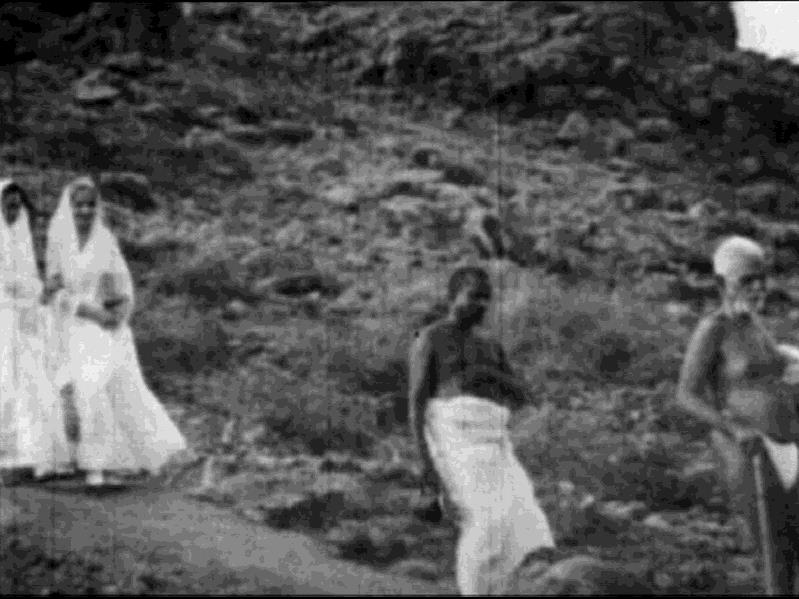
Soona with Mrs. Taleyarkhan walking behind Bhagavan
Framji Dorabji always used to tell me about the greatness of sages and saints. His heart was filled with devotion to saints like Meerabai, Tukaram, Tulsidas and Surdas. Mention any one of them and he would chant their verses and then translate them for me. He often advised me, “Follow the footsteps of saints and sages. Worship them.” Perhaps, this was why I became a more than a little ‘mad’ about going after sages and saints!
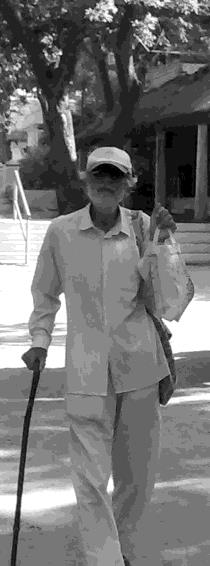
One day, in 1965, Framji’s son Dorab Framji (see, recent photo on the left ) came to the ashram and asked me to get into his car. He took me along with him to Chennai. After a wash and some tea, he again asked me to get into his car. On the way, he queried me, “At the ashram, when I asked you to get into the car, you did not ask where I was taking you. Here too, you got into the car without asking me where I was taking you.” I replied, “Dorab, I know you will only take me to a place that will elevate me!” He was happy with my reply and revealed, “Yes, I am taking you to Vasant Vihar in Adyar for a talk by a great sage called J. Krishnamurti.” On hearing this, I laughed to myself. I thought that sages and saints were always addressed as Bhagavan, Swami, Maharaj or Baba. I had never heard of a saint having an initial before his name! But when I saw Krishnaji seated on a platform under a huge tree to give his talk, I felt deep within my heart, “Here is a man of truth!” This feeling caused an explosion of ecstasy in me. Later, the very first sentence that Krishnaji spoke caused a second explosion: “If there is no truth within you sir, take it for certain that there is no truth outside of you!” Contemplating over this single sentence, I felt, in its essence, depth and intensity, it completely conformed with Bhagavan’s own teaching that ‘I AM’ is the truth.
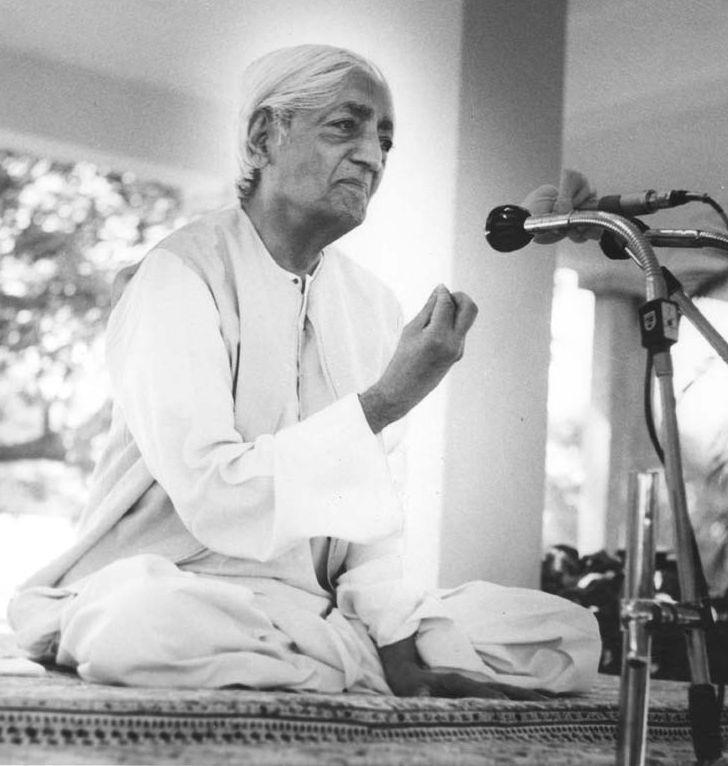
J. Krishnamurti
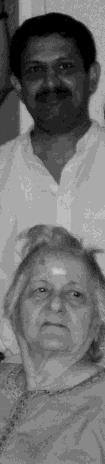
Just as Dorab took me to J. Krishnamurti, Framji’s daughter, Soona Nicholson ( see, recent photo on the right,with Sadashiv Shenoy ), w ho still lives in Mumbai, took me to Nisargadatta Maharaj for the first time. On one of my usual visits to pay my respects to Soona, also an old devotee of Sri Bhagavan, she commanded me to get into her car - just as her brother did ten years back in Chennai. While driving, she announced that she was taking me to meet a saint named Nisargadatta Maharaj. I was delighted. I was very eager to see him as I had heard glowing tributes showered on his inimitable book, I am That. Now, an opportunity had come up by itself. I felt that the saint himself was calling me. We climbed the stairs to the first floor of his residence. He was seated alone. I prostrated to him. The immense silence of the saint’s spiritual presence was unmistakably palpable. He raised his right hand up in blessing. I noticed that there was a large portrait of Sri Bhagavan on the wall behind his head. Maharaj himself broke the silence with his stentorian voice: “Just as an orthodox Brahmin looks down upon a non-vegetarian dish, a seeker should look down upon dehatma buddhi (the ‘I-am-the-body’ idea).” He repeated it three times. Soona and I were enveloped in ecstasy! After that, for many years, I had the good fortune of regular personal contact with Maharaj.
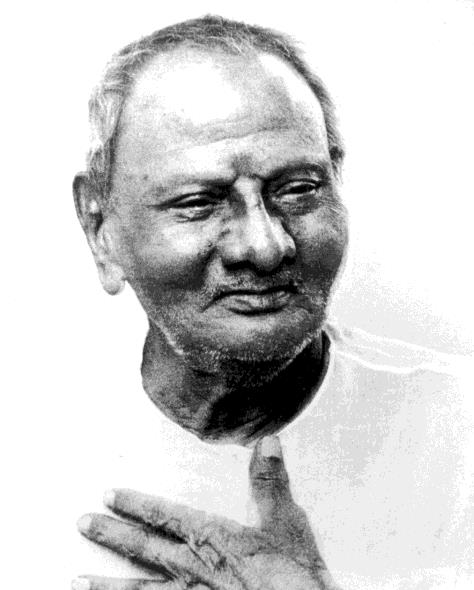
Nisargadatta Maharaj
As if following a family tradition of introducing me to sages, Framji’s son Dorab introduced me to the teachings of Huang Po, Hui Neng and other Zen masters, by giving me books on their teachings.There are a couple of interesting incidents about Dorab’s early contacts with Bhagavan. Dorab was a teenager when Framji brought him first to Bhagavan. While having breakfast in the ashram dining hall, Dorab discovered the idlis that he was eating for the first time in his life was not to his taste at all. The next day, Dorab quite naturally refused to go in for breakfast. But his father insisted. With great reluctance, he sat next to his father. Surprisingly, when the dish was served, Dorab ate it with relish. The secret was that Bhagavan had observed Dorab’s intense dislike of idlis the previous morning. So, he instructed the cooks to specially coat the idlis with ghee and a thick layer of sugar. With this ‘special treatment’ the once despised idlis, now looked and tasted like a famous Parsee delicacy! How Bhagavan knew about such a Parsee delicacy was a wonder to both Framji and Dorab.
On another occasion, young Dorab was sleeping outside the hall one night. Bhagavan was passing by. With the intention of waking him, so that he could have the darshan and the blessings of Bhagavan, Framji rushed towards the sleeping Dorab. Bhagavan the great Awakener, stopped him by gesture and said in a soft voice, “Do not wake him up. Let him wake up himself.” Is this not a great revelation for each of us too? No one can awaken another to the truth. Each one of us has to awaken to the truth by diving within oneself.
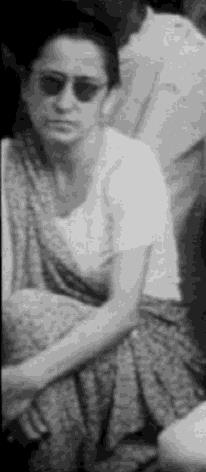
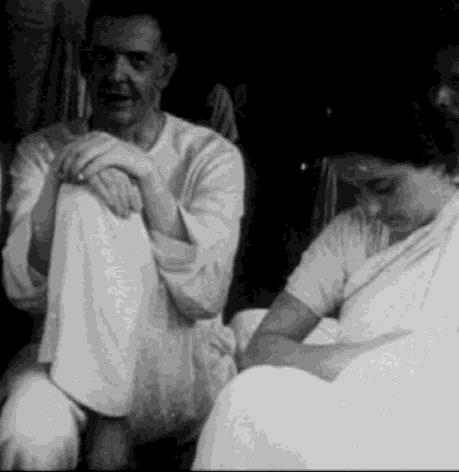
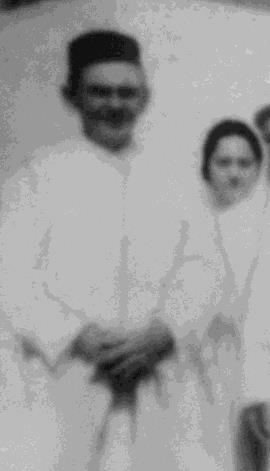
Photos (l to r) : (1) Mrs. Framji (2) Major Chadwick with Soona (3) Framji with Soona
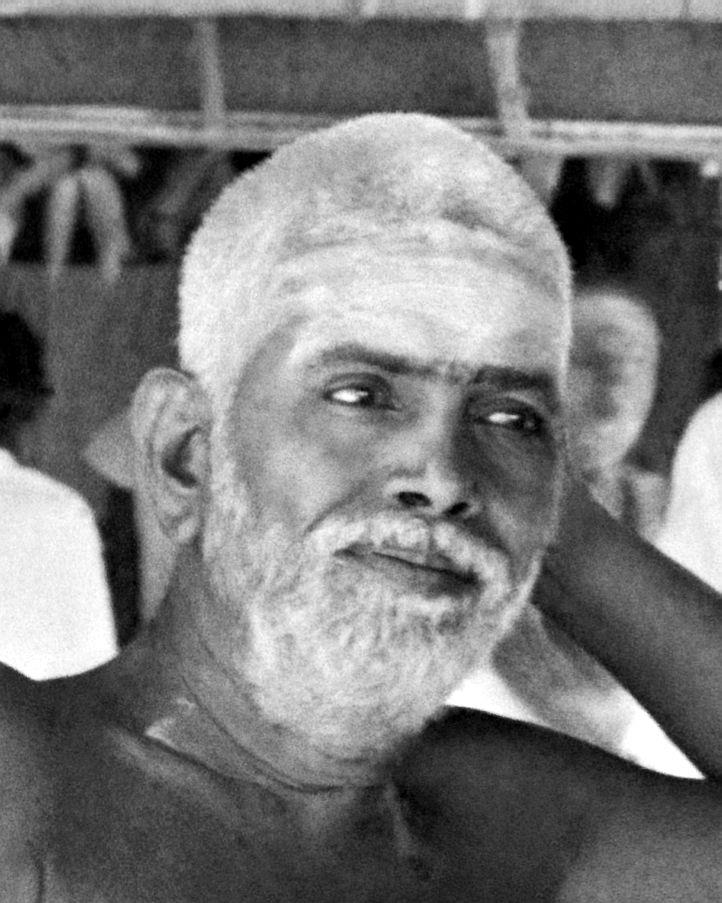
“ The outer Guru is saying that the Guru is within ! ”