Sivananda: Biography of a Modern SageHis life, by Swami Venkatesananda
SWARG ASHRAM
A Glimpse of Real Sadhana
The first few years of Swamiji’s austerity were spent in a totally homeless state. ‘Here today, there tomorrow, and the day after will look after itself’ was his attitude. He stayed in the Nilakant Hills and wrote his commentary on the Kathopanishad during this period. Later, with a view to devoting more time to prayer and meditation, he moved to Swarg Ashram. There he lived in a small kutir, eight feet by ten feet, with a small verandah in front, and depended on the Kalikamliwala Kshetra for food.
Very soon after arriving at Kutir III Swamiji became so famous that the authorities of Swarg Ashram used to direct pilgrims and other visitors to him for darshan. “He is the only great mahatma and yogi in Swarg Ashram,” they would say.
Swamiji had no time for curiosity-mongers; he would go to any extent to avoid wasting time. It is said that sometimes he would run away to the jungle or hide himself underneath huge boulders on the bank of the Ganges, in order to enjoy an undisturbed period of meditation.
In his autobiography, Swamiji gives the following description of his life in Swarg Ashram:
I did not spend much time in cleaning the teeth, washing clothes and bathing. I quickly finished these and then I was a bit free for my sadhana, study and service. I never depended on disciples or anyone who was awaiting opportunities to serve me. I had fixed times for all items of work such as study, writing notes and letters to spiritual aspirants, exercises, going out for food, etc. Gradually people came to me in large numbers. That seriously affected my systematic work. With the permission of the authorities of the ashram I fixed up a barbed-wire fence around my kutir and locked the gate.
Before the visitors I did not show my erudition by discussing high philosophy at length. I gave short hints on practical sadhana and disposed of them in five minutes. I kept a signboard at the entrance of my compound: ‘Interview — between 4 and 5 p.m. — for five minutes at a time only.’
During winter the devotees were not many. I utilised this time for a brisk walk in the compound, singing bhajans and songs. For some days I would not come out of my room, eating only the remnants of dry bread I had kept from my daily alms. Thus intense sadhana was my goal. My joy was indescribable when I spent hours in the evenings on the sand-banks of the Ganges, or sitting on a fine rock gazing at wonderful Mother Nature. I became one with nature.
Of the Swarg Ashram days Sri Raj Giri, one of his early associates, says:
Swamiji was characterised by such extreme dispassion that he used to deny himself even the barest necessities of life. He did not spare himself even with regard to diet and covering. Rather than daily tolerate an interruption of his spiritual practices which the visit to the kshetra entailed, he preferred to keep the body on stale bread. He would keep bread with him for several days on end, and after drying it he would dip it in the Ganges water and eat it. It meant that sometimes he would subsist for one week on a ration of one day. Thus, day after day, using every moment of his precious time for meditation, japa and worship, he made unsalted, tasteless hard bread his main meal.
He had only two pieces of cloth that he wore on his person. His room was severely bare of any article, except for a solitary water pot and a blanket. There was a time when he gave away his only blanket to a poor pilgrim, and shivered in his thin cotton cloth until providence, in the shape of a kind visitor, supplied him with a new blanket.
To do japa he used to be up very early in the closing watches of the night, and plunging into the waters of the Ganges he would stand waist deep in water and commence his rosary, continuing until the sun rose up in the heavens. Only after invoking the deity through the sun and worshipping it, would he clamber out of the cold waters. This, coupled with the spartan fare, resulted in a severe type of chronic diarrhoea. Lumbago was another result, as well as a state of diabetes brought on by the intense strain of prolonged periods of mental concentration. (Yet in later years Swamiji would point to a seeker who did not wear a shirt even in winter, as one who far excelled him in austerity, and would not reveal that during his Swarg Ashram days he had put himself through far greater austerities.)
When one of his first diciples, Swami Paramananda, first entered Swamiji’s kutir, this is what he saw: “Inside the room, in a corner, there was a heap of dry bread, many bundles of papers, dealwood boxes with a number of bottles, and a few trunks with locks. On a plate he offered me some biscuits and some almonds.” The biscuits were Huntley and Palmer biscuits! Swami Paramananda himself could not make out the relation between the swami, the dry breads and the biscuits. The problem was solved for him, however, the next day. Swamiji took him to the kshetra for alms. Whereas the other monks carried a small piece of cloth and a small vessel — one for bread and the other for the dhal — Swamiji had three or four vessels. In these vessels he used to take milk and curd. After leaving his bread and dhal in his kutir, he would walk up to Lakshmanjhula with the vessels containing the milk and curd, and distribute them to ailing monks. The dry bread was for himself; biscuits and almonds for others. Thus did Swami Paramananda discover: “As his heart is filled with mercy he keeps several things in his kutir to serve the sick and poor. People who have not moved closely with him mistake him for a babu (luxury loving) sannyasin. In reality, he is a man of the greatest dispassion. If one watched Swamiji’s evening meal one would understand his internal dispassionate nature. The morning dry bread is his evening meal, and the water of the Ganges his sauce.”
Swamiji used to keep a small pocket notebook — The Whip — in which he would record what he wanted to remind himself of. He used to maintain it regularly. It gives a glimpse of the intense and integral austerities that he practised during the Swarg Ashram days:
More time (eight hours) should be spent in meditation and meditation alone, even 12, 16 hours daily.
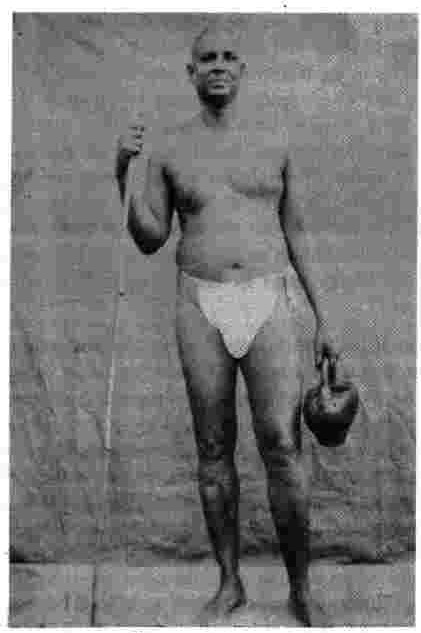
Sivananda the ascetic
Even study and medical treatment should be given up for some time — pure meditation alone.
Winter must be well utilised. That is the best time for meditation.
For a month or fifteen days leave Swarg Ashram without informing anybody. Take two clothes and one blanket. Roam about along the banks of the Ganges canal from Hardwar to Meerut. Live on begging from house to house. Do not talk with the villagers.
Observe vow of silence on these days.
1. Serve bhangis (scavengers) 2. Serve rogues 3. Serve inferiors 4. Eat from Mohammedan’s hands 5. Remove faecal matter 6. Clean clothes of sadhus. Take delight 7. Carry water
There is nothing to be hated in this world. Hatred is ignorance. All contempt for anything or any being must be removed by love and vichar (enquiry).
1. Forget like a child an injury done by somebody immediately.
2. Never keep it in the heart. It kindles hatred.
Cultivate 1. Maitri (friendliness) 2. Karuna (compassion) 3. Daya (mercy) 4. Prem (divine love) 5. Kshama (forgiveness)
1. Do not revenge 2. Resist not evil 3. Return good for evil 4. Bear insult and injury
1. Akrodha (angerless) state 2. Nirvaira (hateless) state
Develop good manners, extreme politeness, courtesy, etiquette, good demeanour, nobility, gentleness, mildness.
Never be rude, harsh or cruel.
Namaskara Sadhana
Give salutation and prostration first to everybody.
1. Give up salt 2. Give up sugar 3. Give up spices 4. Give up vegetables 5. Give up chillies 6. Give up tamarind
Unless you practise all these things, you cannot become a real sadhu.
Of ‘The Whip’ a senior disciple, Swami Chidananda, later wrote:
That he sought to build up the genuine article — the stern spirit of true sadhuism — can be glimpsed in The Whip. One portion reveals how, when he detected that attachment might creep in by his visiting the same alms-house daily for his bhiksha, he forthwith made it a rule of going to two or three places in turn, getting a couple of rotis at each place. It further shows that he avoided taking his meals within the premises of the kshetras, but used to go out into the open.
One significant paragraph reads: “Sadhuism is a new birth. If big kshetras abuse you, bear it. Do not think of the past life and birth.” Then another, “Walk without shoes as far as possible. Hardy life till death is necessary for a sadhu.”
It is seen as a rule that when one leaves home and relatives by a formal renunciation he imagines that he has given up all attachment, but it is nothing of the sort. He has merely given up the object he was attached to, whereas the tendency to get attached has come with him and it is inside him all the while. So, after renunciation, during sadhana, it comes to the surface and shows its face in various ways. Swamiji hunted it out tirelessly in all the corners of his mind, analysing all his actions, searching his thoughts, and managed to root out the very trace of it from inside by these various means.
True expansion of the heart is very rare, and the quick and ready impulse to give does not come easily to anyone. The astonishing generosity and large-hearted magnanimity that Swamiji now manifests, he assiduously perfected while at Swarg Ashram. For a long time, whenever visiting pilgrims made him offerings of cash, fruits, eatables or other articles, he deliberately denied himself, took everything and gave it to the other mahatmas in the neighbourhood. So much did he stick to this practice, that we hear of how neighbouring sadhus took to directing all new pilgrims to Swamiji, knowing that all offerings to him would later indirectly flow into their hands without fail!
The advanced practice of intense meditation seems to be the real power that blossomed into the unruffled equanimity and the strange dignity and self-confidence that he radiates. His quiet strength, coupled with the force of his utterance and glance that make themselves felt immediately, are doubtless the direct outcome of his inner sadhana and tapas.
Swamiji had the habit of physical exercise ingrained in him since childhood, and during his sadhana days he religiously maintained his routine of exercise — chief of which was running a mile or two in the open — and the practice of yoga asanas, pranayama, etc. Some orthodox sannyasins view exercise with keen disfavour and intolerance, but Swami never favoured fanaticism. He went to a less frequented part of Swarg Ashram away from the main settlement past the bend of the river, and sprinted vigorously a good mile.
It was at this stage (in the early thirties) that Swamiji remembered that a certain amount of his past savings could be recovered. He therefore petitioned the departments concerned, and with the help of Sri Ganga Saranji, a retired judge, a sum of about five thousand rupees was salvaged. The austere and disciplined mind of Swamiji at once prompted him to decide that even a single cent of this amount was not to be used for his personal needs. It was deposited in the Postal Savings Bank, and the monthly interest accruing therefrom was utilised for the purchase of medicines, besides printing a few bulletins on sadhana for free distribution.
The treatment of body and soul were equally important to him. With the first instalment of the interest money (about twenty rupees a month), Swamiji placed an order for some essential medicines from Calcutta. The dealwood boxes in which the drugs arrived became the first ‘almirah’ of the Sivananda Charitable Hospital, carefully partitioned with pasteboard sheets, inside which were juxtaposed the bottles of diaphoretic, carminative, bromide and other mixtures. Thus the problem of getting medicines was solved to a large extent. But mere medicines are not enough to cure diseases, and the almshouses did not provide anything other than a few coarse chapatis and lentil soup (dhal), whether a monk was sick or healthy. So Swamiji had to divide his monthly interest money for purchasing medicines as well as some milk, curd, sago and barley. This was the equipment for his daily pilgrimage to the huts of sick mahatmas. He was now confident with strength-giving barley drink for the fever patient, hot steaming milk for the convalescent and demulcent curd for those whose intestines were ravaged by dysentry and diarrhoea. Though the amount was hardly sufficient to make both ends meet, a considerable headway had been made in the domain of Swamiji’s modest mission. His joy knew no bounds.
The wife of a rich landlord used to refer to Swamiji as “That swami who used to walk about in Swarg Ashram, visiting kutir after kutir with a number of cups in his hands and a dirty piece of cloth over his head.” In the hot sun he would thus wander about, and would only then return to his own kutir and take his meal. Dry bread and dhal which had become as cold as Ganges water was his feast. If by chance he came across a stray beggar or any hungry man on the way, most of his own meagre ration would be quickly transferred to him. The kshetra authorities learnt about this later and started increasing Swamiji’s ration, to accommodate his charity.
Mere food and medicine are not enough, again, hence they would always be offered with a word of cheer, of encouragement and a splash of delightful humour. Without a word Swamiji would take aside the sick man’s soiled clothes, and they would be back in their place in a few hours, washed and neatly folded. He would not leave the water pot unfilled, nor the floor unswept.
When an opportunity for service presented itself, Swamiji grasped it; he allowed no consideration to make him hesitate or procrastinate.
In about 1926, a young anchorite who belonged to a highly-placed family of the Southern Provinces, almost a prince in a small way, was practising austerities at Swarg Ashram. So complete was his renunciation, so severe the standard of self-denial and so extremely sensitive his disposition, that he not only never accepted any sort of gift from anyone, but also scrupulously avoided even borrowing anything. He persistently declined Swamiji’s offers of little things of simple everyday necessity and would not even allow any of his attempts at small services.
Gradually Swamiji’s absolute selflessness and the genuine desire to help so overcame him that he ended by accepting whatever Swamiji brought to him. The onslaught of this disinterested love made Bhaskarananda (for that was the name of the young ascetic) relax the stern austerity for which his name had become a byword amongst the hermit community of the place.
During the early days of his life at Swarg Ashram Swamiji had earned a reputation for daring to venture into regions which those who had any love of life would not even have glimpsed. Once Swami Anantanandaji suffered from a virulent type of cholera. People feared to approach anywhere near his kutir, but not Swamiji: he was in constant attendance at Anantanandaji’s bedside. With his own hands he would clean the bed-pan and wash the excreta from the patient’s body. When Sri Veeraraghavachari’s disciple suffered similarly, it was Swamiji who volunteered to attend to him.
A severe attack of smallpox was reported at Kailash Ashram and Swamiji was sent for. Immediately he went to the bedside of the patient. He stayed there the whole day and throughout the period of his illness, rendering him every service. Instead of getting infected with the disease Swamiji felt that he got new strength and power from the very source of power and strength. His heart melted at the suffering, and remembrance of God became more continuous than otherwise would have been experienced.
Sri Swami Kalyananandaji was wonderstruck at this service and, as a mark of admiration, built a shed near Swamiji’s kutir at Swarg Ashram. Whenever Kalyananandaji fell sick he would send for Swamiji and no one else. “Whatever you give with your miraculous healing hand will cure me,” he would say.
Swamiji had absolutely no aversion to handling the offensive discharges of patients. When his own disciple, Sri Swami Atmanandaji, was ailing, without the least hesitation he inserted his own finger into the rectum of the patient and removed the faecal matter.
In Swamiji, fear of public criticism was conspicuous by its absence. “What is my duty?” was the question he constantly asked himself; never did he ask, “What will people think?” During the 1930’s the aged Maharani of Singhai would frequently visit Rishikesh and Swamiji, clad in the fiery robes of a sannyasi, would hold an umbrella above her head when she walked along the road in the hot sun. His fellow-sannyasins, in their pride of sannyasa, would laugh at this monk serving the mother, instead of treating her as a mere householder and asking her to rub his feet. To him, however, it was an opportunity to serve, to worship the living Lord; he felt that not only was he justifying the ochre robe, but enhancing its dignity, by rendering such service! Time has revealed that he was right. He rose to be a mighty sage of Self-realisation; and those who succumbed to sannyas vanity have passed away, hugging the external form, the illusory appearance (maya) they mistook for Brahman, the Absolute Reality.
Swamiji would visit Lucknow during his tours and stay in the palace of the Maharani. The old woman was fond of smoking ‘hukkah’ (hubble bubble) and often her servants were lax in their duties. Without the knowledge of the Maharani, early in the morning Swamiji would place the hukkah ready at hand. She also had a liking for soda which she invariably took in the early morning. On occasions her servants may have neglected to give her the soda at the appointed time; but Swamiji, the honoured guest whom the Maharani had adopted as her guru, would anticipate his disciple’s needs and would keep the soda ready and hand it to her at the appropriate moment.
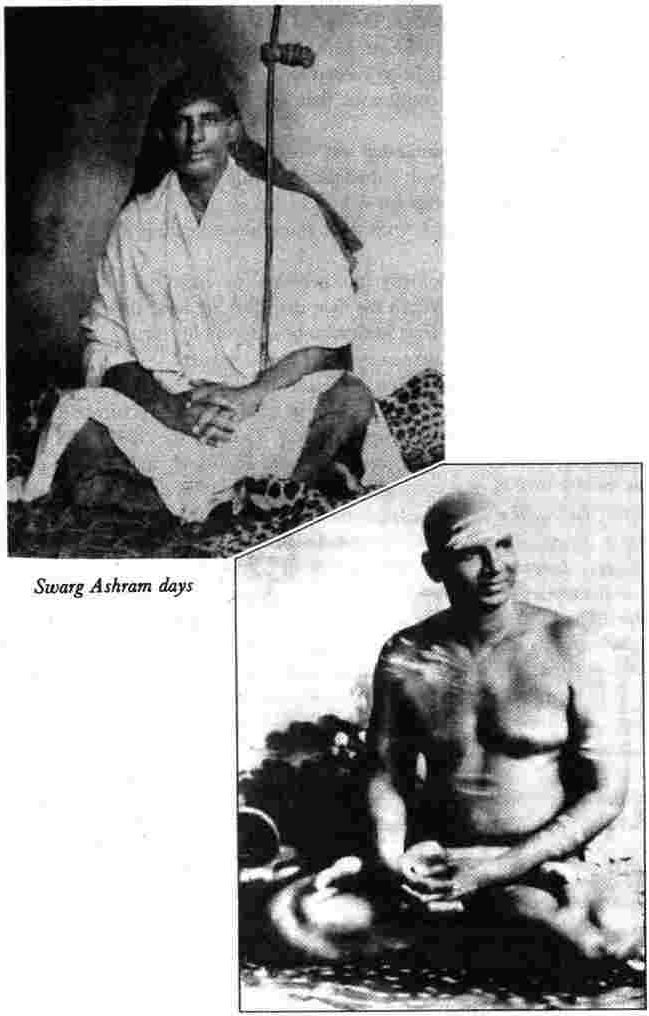
Swarg Ashram days
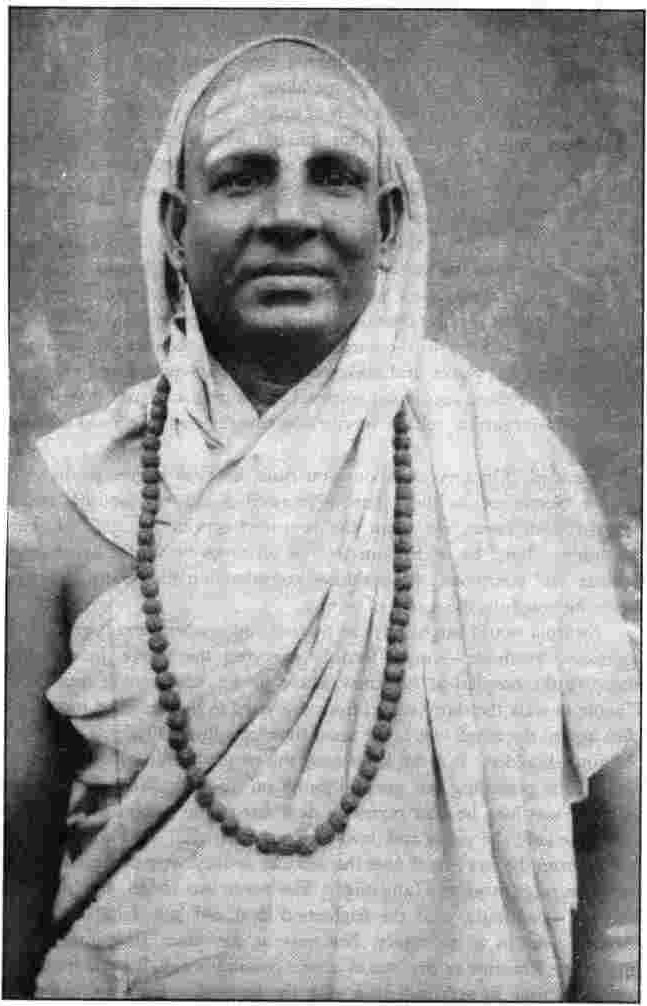
Siva the Saivite
Swamiji was never tired of warning the sannyasins that they should beware of moving too closely with members of the opposite sex. He sternly warned them that they should not even spend the night in a room adjacent to that in which a lady slept alone. This is the code of morals. But to him there was a superior code of morals — service. Once, while at Lucknow, Swamiji discovered that the old Maharani was ailing with acute rhinitis. Even her own kith and kin would not have served her with such solicitude as Swamiji did. He used to sleep in a corner of her room, to be ready at hand in case of need.
Even while walking along the roads Swamiji would carry a medicine chest and distribute the medicine to the sick. H.H. Sri Swami Tapovanji Maharaj of Uttarkashi used to describe how Swamiji carried three bags wherever he went — one containing leaflets, pamphlets and notebooks, another fruits, and the third common drugs. Along the roadside he would stop at a hundred places and make enquiries about monks and villagers. He would give them medicine, spiritual literature and fruits as well. His catchword in regard to selfless service was that the service should seek the patient.
He said “On rare occasions you must be even aggressive in your service. Sometimes helpless persons in need of aid will foolishly refuse aid. In such cases, do them the required service in spite of their hesitation, “but,” he added quietly, “‘at all times be uniformly decent, delicate and courteous. Always have consideration for others’ feelings. Never be rough in the name of service.”
Swamiji would laughingly cite two occasions when he employed such aggressive methods — once forcibly carrying the monk Jnanananda about in the hospital at Lucknow where he was undergoing treatment. Unable to walk the daily round from the ward to the dressing room and back again, the monk was at the same time unwilling to ride on Swamiji’s obliging shoulders. But the latter took the matter in his own hands and carried the protesting but grateful monk on his back daily. The second instance was how he had turned a deaf ear to the remonstrations of a venerable lady, the pious and devoted Rani of Singhai, and himself lifted her up from the ferry-boat onto the steamer as they were proceeding in a party on pilgrimage to Gangasagar. The water was rough, the boat was heaving alarmingly, and the frightened dear old lady (she was about seventy) was in a quandary. She was at the same time full of the instinctive feminine reluctance to accept Swamiji’s aid. But the latter did not waste time in arguing. In a trice the protesting Rani found herself gently and reverently lifted up and safely deposited on board the steamer, good-naturedly riled by her own daughters laughing merrily at Swamiji’s effective tactics.
Not infrequently the situation was of a different nature. Hearing of his efficiency as a man of medicine and his loving nature, numerous people would invade his cell for help and treatment at all odd hours of the day. So much so that at times he felt forced to flee from the locality and hide himself either among the huge rocks by the water’s edge or in some dilapidated kutir further inside the jungle. Thus he would snatch a quiet hour or two for deep meditation.
At times urgent summons would come from some distressed person; then leaving aside everything he would run (at times even at midnight), to relieve him. Once an amusing incident occurred which proved a trial to his patience. At midnight a sadhu invaded his kutir, even climbing the protective fencing surrounding it to hammer on the door insistently. He wanted Swamiji to remove some grit that had entered his eye! Though very tired, Swamiji maintained his equanimity, carefully attended to this night-raider and sent him back satisfied. Calls to treat scorpion-bites would come at all unexpected moments because these creatures abound in that region. Not once did he allow his temper to be ruffled even under the most annoying circumstances.
During the later period of his penance Swamiji brought into the service of the sick — in addition to his body, mind and heart — his soul force, too. He utilised his psychic powers to bring about a rapid healing. He was an adept in the transmission of pranashakti to the diseased parts of the patient, thus effecting almost a miracle-cure.
He would always insist that after administering the medicine he should be allowed to massage the legs of the patient. He had lost all distinctions of caste, creed, colour, social status or even of sex. A strange but significant incident took place during this period. Once a pilgrim (a lady from South India), was taken ill at the Kalikamliwala dharamsala. She went to Swamiji as she had been directed to do, explained her condition and got the medicine from him. Almost involuntarily, Swamiji made himself ready for the psychic massage. This young lady, modest, devout and shy, did not like the idea of a worshipful sannyasin touching her feet, so Swamiji gave up the idea. When he returned to his kutir this incident set his mind thinking; he called Sri Swami Atmanandaji, one of his senior disciples, to his side and said, ’”Why was it that I did not insist on my rendering her the usual service? She might have had a different idea altogether, but as a vedantin I should have convinced her of my viewpoint. The one Self dwells in all bodies. No, I should not have neglected my duty.”
This went on working in his mind, and early next morning, when he would otherwise have been sitting in deep meditation, he, with his disciple, started in search of the patient. They soon found her and Swamiji explained to her the purpose of his visit and rendered to her the devout service. What the medicine could not do for her, this psychic massage did, and she at once felt relieved.
At the invitation of devotees of the Lord, Swamiji frequently undertook lightning tours of India. In 1925 he visited Sherkot Estate, Dampur. The Rani of Sherkot, Srimati Phulkumari Devi, gave him a cordial reception. He conducted bhajans there on several days and gave medical aid to the villagers. The Maharani of Mandi, Sri Lalitha Kumari Devi, also attended the bhajans. She used to say: “I cannot forget Swamiji’s melodious and inspiring songs. They are ever in my memory. I can feel their influence. They lulled me and elevated my soul.”
The sweet and melodious songs which constantly flowed from Swamiji’s lips and his inspired lectures and august personality prompted the devout and spiritually inclined Rani and the authorities of the estate to persuade him to stay on. However, the idea of staying there permanently did not appeal at all; he decided to quit and did so immediately. It was a delicate situation, so he slipped away unnoticed and without informing anyone.
With nothing except one cloth around his waist and another thrown on his shoulders, he began to march back to Rishikesh. It was mid-winter. He had to starve for days together, drinking the pure energising water of the Ganges only. The cold was biting, but he kept himself warm by uttering the name of the Lord with every breath.
Mother earth provided him with a grassy bed at night and he slept, unconscious of the cold blast that blew over him.
Whenever he found a village he would at once get a small gathering together and start singing the Lord’s names. He would never mind his own inconveniences. Thus he reached Rishikesh weaker in body but stronger in mind.
Even during the periods of strict and absolute seclusion, Swamiji at once ran to the spot where his inspiration was in greatest need, but when he found out that this was exceeding its limits and he was kept away from his ideal too long, he quit the place, in spite of the fact that a further stay might have earned for him quick fame and comfortable living. His renunciation was so intense that he would not care even to take a few clothes or a blanket with him. He had such an adamantine will that in the face of great temptation he could hold his own, and even food and personal comforts had a secondary place when compared to spiritual gain. In spite of the pangs of hunger and fatigue, Swamiji would still go on roaring the Lord’s names whenever the least opportunity presented itself to him.
Swamiji thus followed the middle path. He loved seclusion, but he was not an isolationist. He said: “Occasional tours helped me to develop all divine qualities and to serve mankind on a larger scale.”
Even while travelling in trains he taught yoga exercises to the passengers and gave them simple lessons on japa and meditation. He carried a small medicine chest with him always and gave medical aid to the sick.
He later told his disciples: “During my travels I carried a bundle containing my ink-pot, pens, pencils, pins and study books like Viveka Chudamani, Upanishads, the Gita and the Brahma Sutras. I kept some postage stamps too, to attend to urgent correspondence work. I used to go to the railway station two hours before the scheduled train timings. Instead of looking here and there, I would sit under a tree and attend to my writing work. I never kept any address book with me for meeting devotees or friends at important centres of my travel with a view to getting nice food or financial help. I quickly finished the work for which I was travelling and returned to Rishikesh at the first opportunity available.”
During this period, Swamiji also undertook pilgrimages to the holy places in the Himalayas.
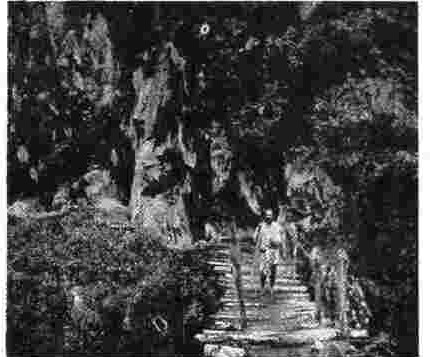
Walking to Badrinath
With Swami Adwaitanandaji, Swami Balanandaji, and Swami Vidyasagar, Swamiji went to Kedarnath and Badrinath in 1926. They left Rishikesh in the middle of May. Swamiji was in a highly ecstatic mood throughout the pilgrimage. When he met sick pilgrims on the way he rendered medical aid, singing kirtans and songs as he went. He had a bath in the warm waters of the Tapta Kunda, and in the ice cold waters of the Alakananda at Badrinath. Not one moment was wasted in idle talk; he always conversed with Swami Adwaitanandaji on vedanta.
On their return journey, from Devaprayag they went to Mussoorie and Tehri and then returned to Rishikesh.
The next yatra in 1930 was to the junction of the Ganges and the sea near Calcutta. This time Maharani Surat Kumari Devi and her secretary were with him. They took the steam boat from Calcutta and reached the Gangasagar early next morning. They had a bath in the sea and then they visited the temple there which is dedicated to the famous Kapila Muni.
On the 12th June Swamiji started on a pilgrimage to Kailash in Western Tibet with His Holiness Sri Swami Adwaitanandaji, Sri Swami Swayam Jyoti Maharaj, Sri Brahmachari Yogananda, Maharani Surat Kumari Devi, O.B.E., of Singhai State, and Sri Kedarnath, her secretary. They all had a dip in the clear blue waters of Lake Manasarovar. From here they walked to Mount Kailas, and then began to walk round the holy mountain. At the first day’s halting place they stayed on the bank of the Indus, opposite a Tibetan monastery. That evening, accompanied by Brahmachari Yogananda, Swamiji went up the mountainside to trace the origin of the Indus River. After a tiring climb for a mile over ice and steep rocks, they reached the source — a small stream gushing through blocks of ice. Here Swamiji performed puja to a small block of ice shaped like a lingam, before making the return trip to their camp. Early next morning the party set off to Gauri Kund, a lake situated 18,600 above sea level. Here the air was so rarified that breathing was difficult and they all felt exhausted. Yet, Swamiji broke the ice on the surface of the lake and bathed in the freezing waters. After the circumambulation of Mount Kailas, they returned to the Tibetan border, and thence to Almora. Swamiji’s face had become blackened by the fierce cold wind and burning sun, and he had lost fifteen pounds in weight; nevertheless to him the whole journey had been one of immense delight. He said: “Reluctantly you return... and then, by the same route which took you to the region of immortal joy, the holy Kailas, you re-enter the land of endless suffering, disharmony and misery.”
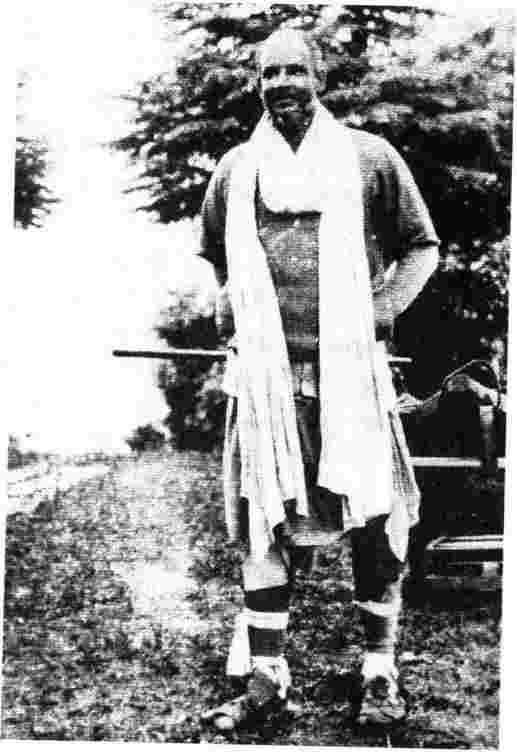
On the way to Mount Kailas
Mount Kailas is called Mount Meru — the axis of the earth. There is no place on this earth which can be compared with Kailas for the marvellous beauty of the everlasting snow. Of all yatras (pilgrimages), the Kailas trip is the most difficult. Swamiji walked the whole distance to and fro — 460 miles in all.
Even during this trip Swamiji was serving patients on the way. When people took rest when they were tired of walking, he was busy with his medical service. He gave emetine injections and saved the life of a Bengali sadhu.
Samadhi
As Swamiji advanced further in the practice of meditation he would deny himself all food, company and talk. He plunged deeper and deeper into samadhi and kept himself within closed doors for many days at a stretch. His fellow-sadhus were wonderstruck — they wondered what he was made of. Not a day’s relaxation would he permit himself.
Thus it went on from day to day, week after week and month after month for five long years, when on a blessed day in 1929 or 1930 Swamiji reached the goal of all sadhana. About this Swamiji says in his autobiography:
I paid special attention to simple living, high thinking, light food, deep study, silent meditation and regular prayers. I loved seclusion and observed the vow of silence. I did not like company and idle talk. From the Ram Ashram library in Muni-ki-Reti I used to get some books, and devoted some time to study every day. Rest and relaxation gave me enough strength to carry on intense sadhana. I moved closely with some holy men but I never indulged in discussion and debates. Self-analysis and introspection were my guide. I spent much time in meditation and practised various kinds of yogas in my sadhana, and my experiences have all come out in many of my books as advice to aspirants. It was usual for even great mystics to keep their rare knowledge as a secret and teach only a chosen few, but I quickly sent out my thoughts and experiences to help the world and struggling seekers after Truth.
The actual date and the nature of his realisation Swamiji kept to himself, though we gathered from chance remarks that fell from his lips that during periods of deep meditation he had the darshan of the Upanishadic sages (maharishis of yore) and also of Lord Krishna. He wrote:
It would be easy to dismiss the question by saying, “Yes, after a prolonged period of intense austerities and meditation while I was living ir Swarg Ashram, during which I had the darshan of a number of maharishis and their blessings, the Lord appeared before me in the form of Sri Krishna,” but that would not be the whole truth, nor a sufficient answer to a question relating to God Who is unlimited, infinite and beyond the reach of the mind and speech. Even in worldly experience you cannot express taste. You cannot express the taste of an apple to one who has not tasted it, nor can you explain the nature of colour to a blind man. The state of samadhi is all joy, bliss and peace; this much only can be said. One has to feel this for oneself.”
About this experience he wrote the following:
I celebrated this auspicious day With great eclat and pomp, With illumination and joyful songs. My wish has been fulfilled I have met my Beloved. How shall I find words For the beauty of my Beloved? He is brilliant like millions of suns, He has enthroned himself in my heart. The lamp of love burns lustrously.
I bathed Him with the water of love I adorned Him with the flowers of love, I gave him butter and sugar-candy. I have drunk the cup of love, Which is filled to the brim. It is the cup of perfect joy. My rapture wells forth. The mercy of my Lord has come upon me. How blessed am I who has seen my Beloved.
He had reached the summit of sadhana, he had realised the very end and aim of all spiritual practices; there was no more need to practise austerities. Samadhi had become natural with him; he was ever in communion with the Self without any conscious effort.
Swamiji declared to a biographer that he never had any set-backs in his sadhana; nor had he ever to struggle with his mind. No hurdles presented themselves before him during the period. It was quite smooth sailing throughout.
It does not mean, however, that he had always a bed of roses during his sadhana period. He had undergone many sufferings during his period of austerity and after; but inwardly he was always full of joy and bliss which made him immune to the apparent trials and tribulations.
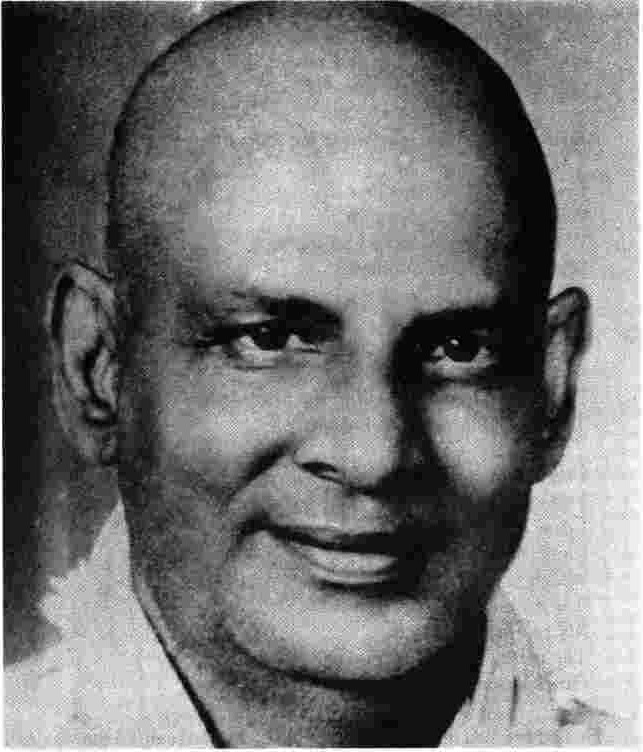
Radiant Sivananda
Sri Swami Narayanandaji, one of the earliest disciples, revealed that Swamiji did not have any obstacles in sadhana because he was ever vigilant. He never allowed the little ripples of temptation and slackness in sadhana to assume the mighty proportions of serious obstacles. His mind and senses were his slaves and he made no mistake about it.
When he found the wisdom that would put an end to human misery he was afire with zeal and earnestness to share it with all. It was then that he had the inner urge to launch forth on an extensive campaign for the propagation of spiritual knowledge. The fire of divine knowledge that emanated from his heart consumed all ignorance from the hearts of all who approached him; and his utterances and writings after this period shone with a special light and had the air of unmistakable authority. People flocked to him and listened to him spell-bound. The majority of the audience did not understand English, and he always spoke in English; yet they listened to him, for there was a ‘special something’ in his very presence,