Sivananda: Biography of a Modern SageHis life, by Swami Venkatesananda
BIRTH OF THE MISSION
The First Book
In spite of the lack of proper facilities and food, Swamiji was able to do a tremendous amount of work. He would attend to patients, dictate some notes to students, write articles to newspapers and answer questions of pilgrims during the ‘interview hour’.
Working thus he was able to contribute to several journals and newspapers: e.g. Kalyan, Bhakti, Parloki, Sankirtan, Vision, Lokopakari, Peace, Meher Gazette, Santi, The Student, etc.
What is more wonderful, he was able to write a book and get it published in 1929. The book was Practice of Yoga — Volume 1. This was his first book. He had no typewriter, nor did he have paper or even sufficient money to procure it; and even if he had some money there was no shop nearby to supply him with notebook or paper. Headed by Swamiji, many sadhus ‘invaded’ Rishikesh and went into the various places in the locality to ransack the wastepaper heaps in search of small sheets of paper or envelopes. The blank sheets and inner sides of the envelopes were then stitched as notebooks. He had no lantern, but used an empty inkbottle, filled it with kerosene oil, and made a wick from a few threads of material. With this light he worked far into the night. He had no assistant to make out a copy for him. Yet, a thrilling volume emerged.
At first Swamiji did not know any publishers, but he had a novel way of getting his early articles published. When he had written an inspiring article in his home-made ‘notebook’ he would send it to ‘The Postmaster, Madras’ (or Lucknow or Calcutta etc.) with a covering note saying “These are the thoughts that occurred to me yesterday. I think that they are inspiring. So please have a small leaflet printed. You can distribute them. Print as many as you like but please send me 100 copies.” One postmaster sent the 100 copies with a note: “I admire your confidence”! As he became more widely known publishers sought him.
The First Disciples
It was at this time that Swamiji initiated his first disciples into sannyas. The first disciple was Swami Satchidananda. There is not much information available now about this noble swami, though we know that he was living with Swamiji when Swami Paramanandaji joined him in 1932.
Paramanandaji wrote to Swamiji when he was at Madras in railway service and Swamiji was in Swarg Ashram. He was highly inspired by Swamiji’s first book, Practice of Yoga — Volume 1, and he wanted to have Swamiji’s darshan and, if possible, stay with him and serve him as a direct disciple. A few letters which he wrote to Paramanandaji in reply are highly revealing. The first one is dated 29th August, 1930. Here is an extract:
You are a man of spiritual samskaras (tendencies). Nurture them. Perfect them. Increase them. Do not come here. Manage to get entry in Sri Aurobindo Ghosh’s Ashram at Pondicherry, or the Ramakrishna Mission. You will improve there decidedly. Stick to any of them like a leech. Mere juvenile enthusiasm will not do; mere emotions will not do in the spiritual path. It is not a rosy path, it is full of thorns, scorpions and snakes. The path is rugged, precipitous and extremely difficult, but easy for a man with the strong determination: “I must realise or I will give up my life”. A strong thirst for knowledge is needed. Keep a diary of spiritual progress. Record everything. In future send me stamps for my reply.
This is in Swamiji’s characteristic style. The second letter, dated 3rd October, 1930, reveals that the future disciple was steadfast in his noble wish, and therefore it is filled with wholesome advice:
Save as much money as possible. Put it in postal cash certificates for five years. It will bring good interest. In these days money is needed, even for sannyasins, as there is lack of sympathy from house-holders. Attend the Ramakrishna Mission at Mylapore. Have two important pleasure-centres: study and meditation. Cut off all external pleasure-centres.
The third letter, dated the 12th December 1930, shows that the disciple had decided to meet the master. Hence, clear directions are given to guide him at Rishikesh on arrival; and yet, Swamiji persisted in his ‘evaluation tactics’:
Kindly stay in Swarg Ashram for some days. You will enjoy the solitude and spiritual vibration undoubtedly. Stay with Swami Satchidanandaji. Tell my name. He will accommodate you. He will serve you. There is another Swami Balananda in Kutir 31. He will help you till I come there. Please ascertain my address from the Postmaster at Rishikesh and communicate to me of your arrival. That will be nice. Kindly have the darshan of Swami Adwaitanandaji and Tapovan Swamiji also. They are both good sannyasins. Go to Brahmapuri forest and see Swami Purushottamanandaji. They are all my intimate friends.
Another point... Kindly listen... Do not be hasty in leaving the world. World is an arena for developing various sattvic (pure) qualities. World is the best teacher for those who want to be benefited. Remain there for some time longer. Earn and enjoy virtuous life and save. Vairagya (dispassion) comes out of bhoga (enjoyment). Then it will be strong, steady and intense. Do not marry. That is a different point. World is not a hell. It is all ananda (bliss) when ego and raga-dvesha (likes and dislikes) die away. Change the mental attitude. Come and see all these holy places and persons. That will inspire you. But do not leave the world so soon. The spiritual path is not at all rosy. It is full of thorns.
Paramanandaji had obviously decided to follow the programme chalked out by Swamiji. The next letter from Swamiji dated 17th January 1931, gives us a glimpse of the intense divine love the master had for the future glorious disciple, and the eagerness on his part that the disciple should be well equipped for the tasks ahead:
Your devotion towards God and religion will doubtless elevate you from the worldly mire. May God bestow on you spiritual strength and power to attain the goal of life — God-realisation. Kindly join the Ramakrishna Mission. There you will improve a lot. I promise you, I assure you. Stick to the Mission for some years. You may come here for visiting and not for permanent stay. Look before you leap. Think. Consider. Never resign the job. You will repent later on. Save as much as possible. This is important. Work for some more years. World is the best teacher. You have to learn a lot. Do, not be hasty. Youthful buoyancy and juvenile enthusiasm may not help much. This line is an arduous, hazardous path.
The disciple, after deep deliberation, accepted the guru’s instruction — mentally he had already assumed the discipleship — and he therefore joined the Ramakrishna Mission. Here is the letter Swamiji wrote in 1931, congratulating Paramanandaji and wishing him godspeed in the spiritual venture:
I have returned from a long Kailash trip. I am in due receipt of your kind letter. I congratulate you on your bold spiritual adventure. It bespeaks very highly of you. You have done a very good thing in joining the Ramakrishna Mission. May God give you spiritual strength and redoubled force in your efforts to realise Brahman. You have cut asunder all the earthly ties. Now you can proceed unhampered on your way. Stick to the Mission and serve all your elders with respect and sincerity and disinterestedness.
And then, as though foreseeing that Paramanandaji would soon be joining him, Swamiji gave him golden advice for moulding himself into a good monk:
Speak the truth at any cost. Speaking the truth cannot harm anybody. It gives spiritual power. Truth can be achieved only by speaking the truth. Control anger by developing patience, cosmic love, service and compassion. You must cultivate humility, magnanimity and courage. Six hours of study and six hours of meditation, etc., must go on uninterruptedly. Forget the past. Live in the solid present. Give up all sorts of fancied expectations. Even if people persecute you, hate you and mock at you, keep quiet. Don’t revenge. Study the ‘Sermon on the Mount’ (St. Matthew) daily, before you proceed to work. I shall quote one passage. If you remember this once daily, it will give you moksha (liberation). Practice it unceasingly at all costs. ‘Love your enemies. Bless them that curse you. Do good to them that hate you and pray for those who despise you and persecute you.’ The practice is difficult but can be done and must be done.
Swami Paramanandaji came to Rishikesh. He related his experience of his first days in the ashram:
One day I entered Swami Sivananda’s kutir. He welcomed me with great joy. In an indifferent mood I asked him for spiritual instructions. He asked me: “Do you know how to do namaskar to elders and sadhus?” I felt shy. Then falling flat on the ground, he gave a practical demonstration. I felt as if the mighty Himalayas fell on the ground! Then there was a heavy downpour of fiery words: “Young aspirants are egoistic, arrogant and reckless. They do not know how to bend. They do not have control over the senses. They foolishly aspire for nirvana and siddhis without proper preparation. Service, service, service to mahatmas and the sick alone can efficiently purify the heart and bring rapid spiritual progress. Carry water from kutir to kutir and attend on sick persons with faith and the correct inner attitude. Massage the legs of the sick. Wash their clothes. Do you get up at 4 a.m.? How many malas of japa do you do daily? How many hours of mauna do you observe daily? Why do you laugh aloud and waste your energy and time in gossip? Where is the time for joking? Show me your daily routine and the way you spend the twenty-four hours.” I was dumbfounded. I stood like a statue, unable to breathe. At the end, after doing namaskar (prostration), I left the place and seriously thought over the questions. I wrote them on a piece of paper. This first thunderstorm from a mahatma opened my eyes. I carefully awaited opportunities to watch him and learn more.
Since Swamiji had given him a stern warning against hasty renunciation of the world, Paramanandaji, even after he met Swamiji in Swarg Ashram, remained as a brahmachari (a novitiate). As was the rule, the kshetras would give food only to sannyasins. But Swamiji, who had great influence, recommended that as a special case the white-clothed young man be given food. After some time, however, the food would be stopped, and once again Swamiji would have to go to the kshetra and recommend that the food be continued. Six months passed by like this and, as Paramananda himself says in his book Sivananda: Apostle of Peace and Love, “Swamiji had to go to the kshetra twenty times.”
At that time there were three young men undergoing training under Swamiji — Prakash Chaitanya, Vivek Chaitanya and Paramanandaji — as well as a very learned man who lived nearby with his family. Paramanandaji tried to make this learned man join the small band of disciples. “If you take sannyas,” said the man, “I will take sannyas.” Paramanandaji agreed.
Swami Paramananda related:
I was a very talkative man even in early age. I therefore naturally used to attract many young men for talking. While going for bhiksha to the kshetra and also in the queue I used to engage myself fully in talking with them. Swamiji used to notice this. One day Swamiji called me and took me to task. He said: “You are a sannyasin. When you go to the kshetra I find you invariably engaged in unnecessary talking. As a sannyasin you should go out covering your head, be aloof from the crowd, take your bhiksha quickly without anyone’s notice, and absorb yourself in work always. That is sadhana.” Swamiji warned me about this habit of talking even here in the present ashram. I used to sit in the room behind Swamiji’s and give instructions to the other man with me about ashram work. Even this talk Swamiji did not like; he told me several times not to talk much and to engage myself in mental japa while working.
Swami Paramananda gave further insight into Swamiji’s methods:
A couple of years after I first met Swami Sivananda I wrote a book under the pseudonym ‘Ananda’. The book was published only two years later at Madras. (Now you will not be able to find any copy of the book, except two copies in the Sri Ramashram Library, Muni-ki-Reti. I myself do not know what happened to the rest of the copies.)
In that book I wrote all about the relationship between the guru and the disciple; how the disciple should conduct himself in the presence of the guru and many other items of practical importance to an aspirant just stepping onto the spiritual path. In the very same book I had also mentioned about the various ashrams where I had stayed before, as well as about their different managers and presidents, while describing the unique nature of Swami Sivanandaji and his institution that kept me spellbound.
A copy of the book was duly sent to Swami Sivanandaji who wrote me back “Wonderful; excellent!” Within a short time I made ready manuscripts of the second volume of the book (the first book ended with the note that it is being continued in the second volume that awaits publication). All things were ready — press, paper, etc. All of a sudden I received a letter from Sri Swamiji saying, in effect, “Your book is very bad. Do not sell it to anybody. Do not even give it freely. Do not bring out the next volume.” I was thunderstruck. “What? Only the other day Swamiji had written appreciating the book and now he condemns it,” I thought. From Madras I wrote to Swamiji requesting him to enlighten me as to what he meant. Here is the reply he favoured me with: “Such-and-such a mahatma has written that your book is a frightful attack directly aimed at him and his institution. Your book has offended my friend. It has injured him. Therefore stop sales and drop the second volume as well.”
Mark, how large is his heart! What an amount of gracious kindness! Swamiji liked the book very much, but because someone felt offended, the book should not be brought out. “Do not offend anyone. Do not hurt anybody’s feelings”: this is what Sri Swamiji preaches to everyone today. This is what I learned from him on that day.
Amongst the early disciples Swamiji had a few who were older than himself. The following two anecdotes narrated by Swami Paramanandaji in his book Life and Sayings of Siva written in 1934, are illuminating:
Swami Jnananandaji, aged 70, a disciple and a jnani who hails from Andhra, is a very pure man. Whenever he wants to know something he will be asked by all to go to Swamiji. Immediately he will say, “I tremble to stand before Swamiji. How can I go and ask him?” People with corrupted hearts, selfish desires and arrogant natures cannot grasp his glory. The spiritual glory in Swamiji can only be grasped by advanced people like Jnananandaji.
Swami Vidyanandaji, aged 60, a Bengali, was very weak and sick, and could not even walk a few steps. Once he approached Swamiji for blessings. Swamiji simply said to him: ‘You will be alright’. In a week’s time he was completely cured and was soon able to walk. Whenever I met him, he said: “If I utter the name, Sivananda, nothing is impossible for me”. Swamiji’s mere name fills all with new vigour and hope and removes all troubles.
For the purpose of carrying on the mission Swamiji chose his disciples with great care. He wanted erudite scholars, hard workers, devotees and also aged, venerable men. Everyone was chosen for his particular talents. For instance, no work was expected from anyone except the workers. There were yet others who belonged to none of the above categories. They served a highly mysterious purpose and were there only to test the good qualities of Swamiji himself and the other disciples. Of course, they were given opportunities by Swamiji to learn and evolve. One such was an old man who came to Swamiji in Swarg Ashram. He made a dramatic entrance and said to Swamiji: “I had a dream last night in which I saw my guru; he asked me to initiate you into sannyas. You can fix a date and I will give you the proper initiation.” Swamiji informed him that he had already received initiation from Sri Swami Viswanandaji Maharaj. A few days later the same old man came and requested Swamiji to initiate him into sannyasa. As he was not a bona fide sannyasin, the kshetra had refused to give him food! The wonder of it was that Swamiji did not refuse or laugh at him, but gave him the initiation asked for. Obviously his compassionate heart was moved to pity — the man needed the garb to get his food.
This new disciple came to Swamiji one day and said: “I know everything in vedanta; therefore, give me the title of Vedanta Kesari (Lion of Vedanta).”
Swamiji, in his childlike simplicity, immediately declared: “Yes, yes: you are a Vedanta Kesari.” This wonderful Swami went about proclaiming that Swamiji had recognised him as such. Then, surprisingly enough, a few days later he said to Swami Paramanandaji: “Swami Sivananda does not know anything about vedanta. I know everything. Give him up and become my disciple.”
Paramanandaji said that although Swamiji knew Brahmananda was talking ill of him, he insisted that they serve the old man and confirm the title of Vedanta Kesari he had conferred upon him.
Even from the beginning of Swamiji’s apostolic mission he was not particular whether his co-workers or even disciples owed total allegiance to him or not. He would initiate aspirants into sannyasa who were the disciples of other mahatmas, and would let his own sannyasin disciples serve other saints and mahatmas. For instance, very soon after Swami Paramanandaji joined Swamiji, H.H. Sri Omkarji of Shanti Ashram paid a visit to Swarg Ashram and requested Swamiji to lend Paramanandaji’s services to him for some time. Swamiji immediately agreed, although Paramanandaji was his only assistant at that time. In one of the letters received by Paramanandaji at Shanti Ashram, Swamiji instructed him: “Prostrate at the feet of Sister Sushila, Swami Omkarji and inmates of the ashram, including scavengers, the first thing every morning.”
Sri Swami Atmanandaji Maharaj was the disciple of Mataji Omkareshwariji. Mataji directed Atmanandaji to have the sannyas diksha from Swamiji, who readily initiated him into the holy order. It was never his habit to extract a promise, from those whom he accepted as his disciples, that they should serve him and him alone. He gave them initiation when he noticed the eagerness in them for entering the holy order. They were at liberty to live with him and serve him or go away. However, Sri Swami Atmanandaji was an asset to Swamiji’s mission especially in its formative years. He accompanied Swamiji during his tours and helped him in his work to a very great extent.
Later Swami Paramananda was sent to Madras to work on Swamiji’s books. Swamiji wanted his disciples to shine as he himself shone. This aspect is beautifully brought out in his letters to Swami Paramananda where he gave detailed instructions about the way the disciple should conduct himself in order to spread the message. Thoroughness in everything was one of his greatest characteristics.
A letter dated 4th March, 1933, reads as follows:
I wish you to approach the headmasters of all the high schools in Madras and suburbs and arrange for a lecture on brahmacharya (celibacy), asana and pranayama demonstrations. Give bhastrika, sitali and measured purak-kumbhak-rechak pranayama. You will be doing wonderful service. You can read the brahmacharya paper. Read slowly with emphasis, force and fire with gestures, looking at the audience. If you think the paper is a lengthy one, omit the middle one or two pages. Don’t fail to do this work. This same work I did in nine schools during my travels. You must conduct bhajans or kirtans at night at various places. What you have in stock is quite sufficient. In the evening or morning read my papers and explain. Have a small selected gathering. In the end, give your message in a few words, with OM-chanting. Do these three sorts of activities and send me a short report of your activities, now and then. Never make false excuses. Don’t be diffident. Distribute medicines. Menthol oil can be applied to the head in head-aches. One drop, well shaken with one ounce of water, will make peppermint water, like chlorodyne water, useful in digestion, wind, etc. You can use 20 m. of Tr. Cardamom Co. also. Rub oil of Menthol to parts where there is nervous pain — neuralgia.
In the course of his letter dated 6th March, Swamiji gave further instructions:
I want you to do these things energetically. You must become a powerful organiser. I want you to start amongst your friends who have faith, a ‘Yoga Society’, ‘Vedantic Society’ and ‘Sankirtan Association’. Sow the seed now, it will sprout, blossom and bear fruit. At present it can be founded in a room. Even if five members meet regularly it will suffice. Also a ‘Philosophical Library’. Print some letterheads, forms and leaflets for the Association and Society. Make a signboard. The Aims and Objects of the Society are:
(1) To attain Self-realisation. (2) To promote universal love and brotherhood. (3) To disseminate spiritual knowledge.
I will send my leaflets, pamphlets, books, etc.
To conclude, here is one of the most inspiring of Swamiji’s letters written on 8th March, 1933:
You should have regular, systematic meditation, japa and study, daily. Don’t think: “I will study when I am alone in Uttarkashi.” That is wrong. That is foolishness. You must have the daily habit. That tomorrow will never come. Make hay while the sun shines. Winnow the corn when the wind blows. Concentrate. Meditate. Live alone for some hours. Be polite. Never be arrogant. Have tolerance and patience. Manifest these virtues while at work and while talking. Watch every thought. There is no play. You have taken a responsible gown. Do you feel this? Don’t beg. Don’t ask with the begging spirit. Command. Everything will come. The whole world is your own home. Feel this. Show me and send me your organised work. Send me occasional reports. Method and discipline is necessary. Have implicit faith in your inner Self and God. Scrutinise your motives. Destroy selfish motives. Destroy all sorts of meanness. Become noble, noble in every inch of your actions. Don’t fight for petty trifles. Regeneration of the diabolical nature is imperative. SIVA.
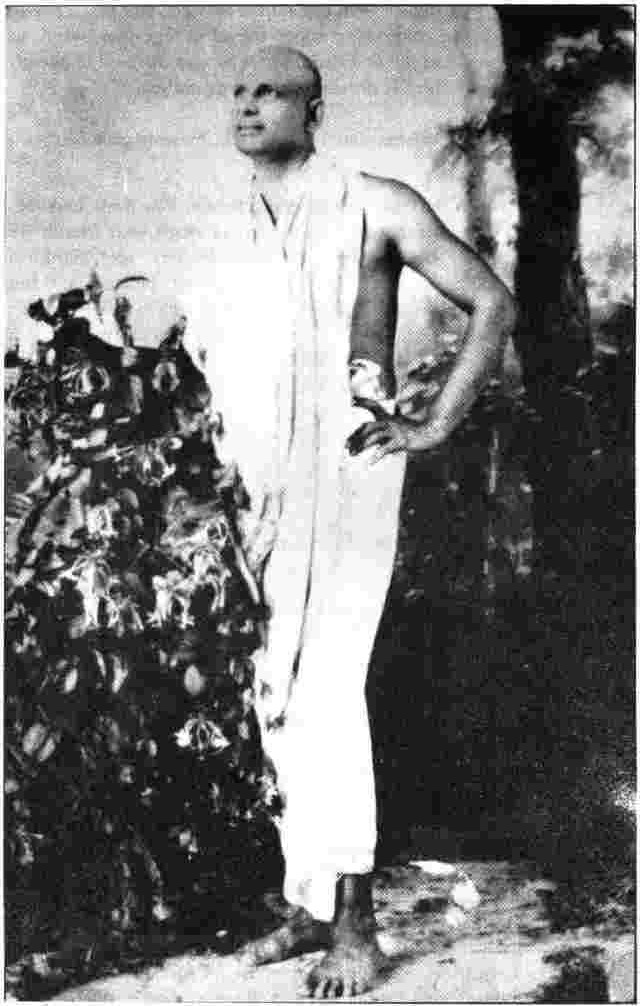
The First Evangelical Mission
“You cannot live without religion. You cannot live without the name of the Lord. Take refuge in His sweet name. Live in God. Live in Brahman. This world is only a halting place. Persevere in your sadhana (spiritual practice). Lead a life of selfless service, renunciation, dispassion and meditation. Resort to men of God and their writings. Meditate. Enquire ‘Who am I?’ Ignorance will vanish. Knowledge of Truth will dawn. Climb steadily and reach the peak of wisdom by intensifying your dispassion and practising intense sadhana.”
This was the gist of the first sermon that Swamiji delivered at Sitapur, where he went on the 20th November, 1932 for his first major dynamic spiritual awakening campaign. He was accompanied by Sri Swami Atmananda who sang kirtans, etc., and Swami Swaroopananda who translated his lectures into Hindi.
Swamiji’s one burning passion at that time was to let the Lord’s name resound in every nook and corner of India. He had tasted the nectar of the divine name and experienced its miraculous life-transforming power. He wanted to share the joy and the glory with all. He had seen God and wanted to show others the way. He was ready to plunge into intense dynamic spiritual service.
In a week the entire atmosphere of Sitapur was filled with the vibrations of the Lord’s names. People listened to him in thousands, because they knew that here was a man who had nothing in the world to call his own and yet was happier and more peaceful, more full of energy and enthusiasm than even the richest amongst them. They wanted to get the secret from him; and he, too, was ready and eager to give it to them.
He sang, he danced, his kirtans stirred the listeners, his celestial dance transported them to another realm. They had never seen anything like that before.
In the intervals between two sessions of sankirtan he would deliver short lectures in which he laid the greatest emphasis on selfless service, charity and purity, etc. At times he also dealt with vedanta because of its soul-elevating value. The words that he uttered came from the very depth of his heart. They had tremendous power. A young boy illustrated this. He had heard Swamiji’s lecture in his school. The next morning his father found a letter in the bed instead of his son! The letter read: “Father. This is my last salutation to you. I am going in quest of my real father, the Lord, the Indweller of my heart. I am moved by the lecture of Swami Sivananda. My eyes are open now, this is my real duty. God-realisation is my highest duty.”
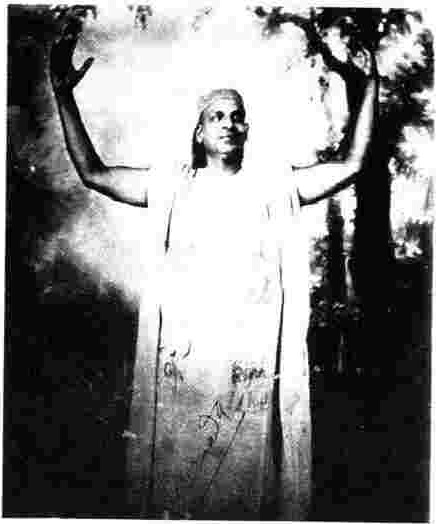
This man of mysterious power over men was mysterious in his ways, too. Once when he was at Sitapur he felt an intense urge to seclude himself and meditate. He left the place without informing anyone and walked a long distance from the city till he came to a dilapidated hut. Here he sat and meditated for the whole day.
Sitapur was only the beginning. From there he was invited to Lakshmipur, Meerut, Lucknow, Monghyr and Shanti Ashram, Totapalli Hills. In all these places there were similar programmes. There would be kirtan in the early morning — 4 a.m. to 6 a.m. Then the whole party would move around the different parts of the town singing the Lord’s names for two hours. In Monghyr the party went round in a lorry for several hours, covering almost the whole town and neighbourhood, from lane to lane and from street to street. After a week of this kirtan-singing the whole town would be charged with spiritual vibrations.
The people of the town would get to know of the conference that was to be held and would take part in the various functions. Swamiji also conducted continuous chanting for seven days in some places with trained groups of kirtanists taking part. On the closing day many poor people were fed.
The programmes were held in various venues — in pilgrim hostels, temples and schools etc. There were huge gatherings at each town, sometimes as many as 10,000 people would gather. When he sang a certain kirtan — Agada-bhum — thousands would get up and dance. He sang philosophical songs in English, attracting Europeans as well as educated Indians.
Another unique feature was the group kirtan. Here Swamiji would select government officers from the audience to lead kirtan from the platform. Then he invited college professors, doctors, students, ladies and girls. This was a novel feature and created great enthusiasm. At first they all hesitated and felt shy, but they soon felt the benefit. After some months they became staunch kirtanists and established groups in various towns.
Swamiji utilised all opportunities to the best advantage. He did kirtan while riding on an elephant, in trains and on station platforms and in streets and roads when he met a big party of people.
Along with the kirtan Swamiji would deliver short lectures with demonstrations of yoga exercises and pranayama, and he would distribute the pamphlets Twenty Important Spiritual Instructions and Importance of Brahmacharya. He asked people to keep up the writing of mantras. Many devotees sat motionless in public meetings, writing mantras and observing silence during the period. He distributed prizes to those who wrote the largest number of mantras legibly. As encouragement he gave spiritual books not only to the winners in the competitions, but also to others. Devotees used to bring a lot of fruits, and these were distributed to the audience then and there.
Every year for a week or two he travelled in the Punjab and Bihar. Invariably the organisers would chalk out a tight programme. During such tours he asked his students in Swarg Ashram and the postmaster at Rishikesh not to redirect any letters. He did not attend to correspondence work during the tour but concentrated on dynamic dissemination of knowledge.
During his tours he never allowed anyone to introduce him to the audience, and there was no chairman to preside over the functions. He broke all formalities; even though he was the president of the conference he would sit amongst the audience. He welcomed all guests and at the end thanked all persons on behalf of the conference, never allowing anyone to thank him.
Though Swamiji lived a simple life, eating ordinary dry bread (roties) at Rishikesh, while he was on tour and doing such intense work day and night he felt the need for energy-giving food and fruits, so he asked the organisers to keep a supply of biscuits and fruit available for himself and his disciples. He used to keep a few pieces of bread or biscuits in his pocket, because the work in various places did not allow him any time for meals or rest. His students who accompanied him on the tours invariably said: “It is all joy to travel with Swamiji for the wonderful treatment he gives.” He shared with them all that he had and took great care of their health and made them very popular and well-known.
Before starting for such conferences he kept enough money with him for his return fare. He never demanded money from the organisers of the functions for expenses, but asked them to print a large number of copies of leaflets and pamphlets in different languages for wide circulation during the conference. Many pamphlets and leaflets were printed for free distribution.
There were more invitations and then people began pouring into Swarg Ashram, pressing him to preside over sankirtan conferences and vedantic conferences. Swamiji was almost constantly on tour. Punjab and Kashmir were two fields in which his influence was especially noticeable: the people there had great regard for him.
The first Punjab Provincial Sankirtan Conference was held at Lahore in 1935. It was there that the members of the conference took ‘resolves’ or pledges in sadhana, thus giving a solid shape of sadhana to their activities. The Qilla Guzzar Sankirtan Mandal at Lahore became the pivot of all these sankirtan activities, with Sri Ganga Saran Varma as the leader. It was through the efforts of Sri Varma, in particular, that The Divine Life magazine was started from Lahore. During those days it was an extraordinary sight for all to see the ‘Ganga Nivas’ ever humming with sankirtan and Divine Life Society’s activities. It was, in fact, a spiritual factory organised by Swamiji.
The next conference was even more wonderful and eventful. In this session of the Lahore Sankirtan conference the Punjabi devotees were fortunate enough to experience the divine bliss of sankirtan-samadhi (state of super-consciousness) in Swamiji. Standing firmly erect in samadhi, gazing at the immense gathering before him with sambhavi mudra (where the yogi appears to be looking at external objects but is not actually perceiving them as his mind is indrawn), sending out divine rays of revelation, Swamiji transformed the entire gathering; bringing on ecstacy, singing and weeping in some, and actual unconsciousness in others. One seven year old child every now and then went into some extraordinary ecstasy, and one girl called Savitri Devi of Ludhiana while singing and dancing lost all body-consciousness and came back to body-consciousness only when Swamiji concluded the meeting with the loud repetition of ‘Jaya Jaya Sita Ram’.
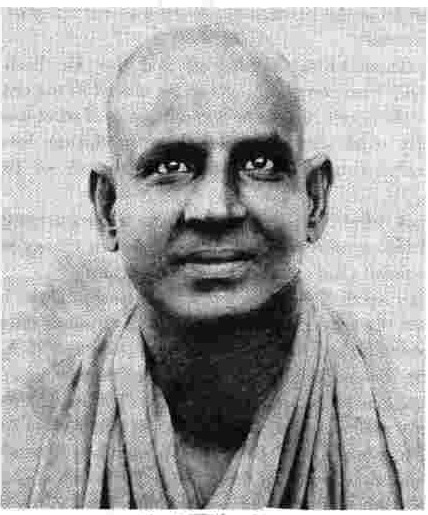
Sambhavi mudra
During his early tours, Swamiji used to carry a bag of medicines and a bag of free tracts in his hand. The bag was a miniature shop. It contained a knife, scissors, tape, matchbox, candle, some sweets for children, tablets, powders, stationery, red pencil and other things necessary for service on the spot. His nature was such that he would note a man’s need even before it was expressed; and once a request was made he could not rest till it was fulfilled, so it was done then and there. His urge to oblige did not brook delay.
On occasions he was invited by devotees to do sankirtan when he was not well and running a temperature that would keep any other man in bed. Swamiji would ignore the fever and immediately get up. Even when he had an attack of diarrhoea due to over-strain from a train journey and irregular food, he could not say ‘no’ to a request for kirtan. To the dismay of his disciples he asked for a sanitary pan to be kept ready in an ante-chamber and, wearing rubber underpants, he mounted the platform in the hall and poured forth his stirring kirtan. The burning desire to see others profited and pleased animated all his actions. One may call this recklessness, but as a rule Swamiji was very careful about his health. He maintained, however, that sacrifice was essential when the occasion required it. All his actions proved his firm belief in the doctrine of ‘living for others’.
Nothing daunted him; nothing affected him. He dwelt in the Lord and He was with him constantly. When he moved in the crowded streets of Lucknow, Lahore or Calcutta he was not aware of what was going on in the streets. His mind was on the work, but he did not lose his state of sahaja nirvikalpa samadhi (natural non-dual state of Brahmic consciousness).
He did not mind even if some people were discourteous. If they did not attend to his comforts, he would use his own money without complaining. To spread God’s name was all-important.
On the 5th April, 1949, a professor from Kashmir who had migrated to India visited the ashram with his family. Swamiji at once recognised him as one whom he had known during his kirtan-tour in Kashmir. The professor said: “Swamiji! How well we all remember your famous Agada Bhum song and dance! In spite of all that has happened since those days of peace, plenty and prosperity, the memory is still fresh in us of the eager throngs of men, women and children who would sit through whole days listening to your sweet soul-stirring kirtan. I was only a small boy then; but I have the most vivid memory of this one thing in my life.”
The professor’s father added: “And what gatherings, Swamiji! In all my life in Kashmir I have never again seen such masses of humanity assembled together. Not less than ten thousand every day — and it looked like a sea of heads that swung to and fro like waves, to the tune of Swamiji’s kirtans. It was a sight for the gods!” They narrated their experience with tears of love and ecstasy in their eyes. It was as though Swamiji sang and danced even then before their mental eyes.
Sri Desraj Sachdev, a great devotee of Swamiji, gave this thrilling account of Swamiji’s tours when he visited the ashram on the 17th January, 1950:
In 1933 we were trying to conduct a sankirtan conference at Rawalpindi... It was difficult to collect any funds for the purpose of convening the conference. However, two or three of us decided to contribute our month’s salary to conduct it. We invited Sri Swamiji Maharaj and a few others. Swamiji came, and in a day endeared himself to the hearts of all people in Rawalpindi.
On the day of the conference several local youngsters came out of mere curiosity: “What can sankirtan do?” Swamiji began to deliver a most thrilling and inspiring lecture in English, and this was translated into Hindi by Sri Swami Swaroopanandaji. Everyone was greatly impressed by his lecture on bhakti and sankirtan. Immediately he began, “Sunaja sunaja sunaja Krishna; tu gitawala jnana sunaja Krishna.” The entire audience was transported into the realms of bliss. In a few moments Swamiji began to dance. It was a sight to see! Everyone danced with him; even those who a few minutes before did not even believe in sankirtan, danced in public on the same platform with Swamiji. It was indeed a miracle.
However, he also cautioned common-sense. Once when certain disciples of his were shouting loudly, “Sivananda Maharaj ki jai,” he stopped them and said, “Don’t be emotional in anything, not even in your prayers and praises of the Lord. Have full control over your feelings and emotions. The bliss of the Absolute cannot be fully manifested in dancing and howling out.” His teaching was complete. His training was perfect.
Swamiji was a real mahatma as very few are. He had a divine magnetic personality that could influence people. No one else could do that. When rationalists saw that such an educated and cultured mahatma like Swamiji — who could deliver thundering lectures in English before huge audiences — sang sweet kirtans and danced ecstatically, even their scepticism in regard to kirtan flew and they too joined in.
Rich people surrounded Swamiji in Rawalpindi, but Swamiji loved to move amongst the poorest of the poor. He would mix very freely with scavengers and labourers and make them sing kirtan. This, too, is very rare. Mahatmas nowadays only want to make money and therefore only heed the invitations of zamindars! The most important of all the qualifications that made him unique, was that he had an absolutely spotless character.
At a conference in Lahore in 1933 it was revealed that Swamiji was a sannyasin of the Kevala Advaita Order who knew English, and that he had a novel way of sankirtan propaganda. From the very first sitting, the conference attracted about ten thousand devotees every night.
The whole of Lahore was saturated with the sacred sweet vibration of God’s name. The following day there were Punjabi youths, who knew English, eager to see the erudite vedantic orator singing and dancing on a sankirtan platform which had, till then, been meant for the Vaishnava bhaktas (devotees) of the pure Vaishnava bhakti cult. It was an extraordinary sight for the whole of the Punjab to see a sannyasin of a high order, well-versed in advaita (monism) philosophy, singing and dancing on a sankirtan platform, with quite a novel way of his own. Swamiji’s philosophical discourses on bhakti, jnana and yoga, along with his sweet, soul-stirring, elevating sankirtan and English and Manipravala (an amalgam of languages) songs in tunes of different varieties on various subjects, attracted the intelligentsia and the aristocracy who would never have attended a religious gathering. There was also a cross section of the community and representatives of various sects. The very first night an old Arya Samajist joined Swamiji in his sankirtan and Swamiji made the old man dance on the platform with him. He was followed the next day by one modern young man dressed in a business suit who openly confessed that he was there to make fun of a singing and dancing sannyasi who knew English. But, to the surprise of all, he was then and there converted into a veteran sankirtanist.
It was the first time in Lahore that there was such a big gathering of all classes of people. The old and the young, ladies and children, the married and the unmarried groups, sang and danced on the sankirtan platform in turns. All collected together on a common platform and kept awake until past midnight, sleeping till morning in the tent so that they might not miss the golden opportunity of hearing Swamiji again the next morning in brahma-muhurta (4 a.m. to 6 a.m.).
The Punjabi bhaktas would surround Swamiji for darshan like bees. It was a himalayan task for Swamiji to snatch a few minutes to take a little rest. Those who were requested to allow Swamiji some time for a little rest would complain to Swamiji himself that his disciples were more like thorns around a rose and would not allow them to have his darshan. In reply, Swamiji would smilingly remark that it was for the sake of the rose only that the all-merciful Lord had created the thorns around it!
Swamiji had novel methods of taking the maximum advantage of these conferences. Unlike others who presided over them and then forgot all about them, Swamiji utilised them to build up a mission. He would not allow the people who attended the conferences to forget what they had learnt. He had the foresight to plan well ahead what steps should be taken to achieve the goal. The letters reproduced below contain interesting details in regard to Swamiji’s faultless methods and the thoroughness with which he prepared the field for his future mission. The letters were all written to Sri Swami Paramanandaji, who had been especially appointed by Swamiji to go to Lahore to organise the conferences on a grand scale.
A letter dated 3rd December 1935, reads thus:
Kindly proceed direct to Lahore immediately and organise the function splendidly, beautifully, philosophically, with Swami Virakthanandaji Maharaj.
You will have to lecture at least for five minutes in English and Hindi. Do kirtan also, with dance, whether the body is willing or stiff and refuses to move in these cold days. If there is difficulty in lecturing, kindly cram a few points. If cramming is also difficult, read a piece of paper. If you show or exhibit your foolish obstinacy like Gopal Bhai sometimes, there is no other course for me than to carry you and put you on the platform. Don’t give room to this extreme manoeuvre.
The letter dated 13th December contains detailed instructions to the organisers about the items on the programme:
Tell Chetu Ramji that I am slightly pleased with him now. Continuous kirtan for 3 days on a separate platform is very, very necessary. This is the only effective part of the work — solid and substantial. Sankirtan in different centres to thrill and electrify the whole atmosphere is another task that lies before us. These two items are important. The riot trouble and Section 144 are nothing before Ram nam. Nothing to be afraid of, even a bit. Swaroopanandaji’s words should be carried out. He is the senior advisor of the Sankirtan Board.
We will take toast and butter, both in the morning and at night. We do not want sweets. On 21st morning I expect these items in the morning menu. I think your goodself will also become one of my friends in the circle. One easy chair for me and three chairs with arms are needed for the rooms. Lady volunteers and a large number of trained volunteers are necessary. Pledge forms should be printed as proposed by Sri Swaroopanandaji. Some Shanti Path (Peace Chant) forms are also needed.
How Swamiji honoured his disciples and treated them as his equals is evident from his letters. Most of these letters were signed by him ‘Thy humble sevak — Sivananda’. Never was the disciple made to feel that he was inferior to the guru. He wanted them to deliver lectures, sing kirtans and dance as he did. They were co-workers sent to him by the Lord to assist him in the work, to share the work with him, and for that reason he used to have food with them, as one of the above letters shows. He would share with them whatever fruits, etc. were offered to him by the devotees. In fact, the first share was always theirs. And, over and above this, he was ever eager to let them shine as much as himself.
Swarg Ashram Sadhu Sangha
While Swamiji lived in Swarg Ashram, he voluntarily subjected himself to every kind of physical discomfort, for the sake of Self-realisation. All sadhus (monks) are not made that way. There were those who, like Swamiji, were unaccustomed to an austere life, but who, unlike him, were unwilling to face the hardships.
Close contact with the community of renunciates had convinced Swamiji that there itself was a field of service for him. The sadhus themselves needed guidance. Many of them had no proper spiritual guidance. They had left their homes in a fit of dispassion, but had not sought a proper guru to guide them along the spiritual path. The authorities of the kshetra, too, needed advice on which of the demands of the monks ought to be accepted and which not. In short, there was scope and need for an organisation.
Swamiji came forward to undertake the service. He strove to achieve two results by doing so. The monks themselves would be pleased that their individuality was recognised and, secondly, when the sympathy of the monks had thus been secured, it would be easy in course of time to stir them into doing something more useful than spending their time within closed doors. These thoughts prompted him to found the Swarg Ashram Sadhu Sangha. He assured the monks of the sympathetic co-operation of the management in supplying their needs. Having won their confidence by his service, he enlisted the sympathy of the management. The grateful monks elected him as their president and leader. This choice was equally welcome to the management as they were sure that his recommendations would be fair and acceptable.
The Swarg Ashram Sadhu Sangha was formed on the 24th August, 1933. It was duly registered in Lucknow under the Societies Registration Act on the 25th October, 1933.
Its Aims and Objects were:
1. To redress the grievances of the sadhus.
2. To render medical aid to the sick and the pilgrims and to nurse them.
3. To hold religious meetings periodically to discuss philosophical problems, to exchange religious thoughts and experiences amongst the members.
4. To conduct evening kathas and kirtans in Swarg Ashram locally and outside also, if circumstances permit.
5. To hold classes on yoga amongst their own members and outsiders also.
6. To train sadhus in spiritual practices and to send them abroad when their course is over, to disseminate spiritual knowledge to the people at large.
7. To preach Hindu philosophy through lectures, books, leaflets, pamphlets and magazines.
8. To do all such acts as may be necessary, incidental or conducive to the spiritual good of sadhus and the dissemination of spiritual knowledge at large.
9. To carry on one or more objects as far as it is practicable.
10. To open any other branch or branches of this Sangha in other places accessible to sadhus as far as it is practicable.
The Sangha contained the seeds of the great world-wide institution — The Divine Life Society — that Swamiji was going to establish very soon.
Under the auspices of the Sangha, Swamiji conducted intensive physical and spiritual regeneration of school and college youths, by delivering lectures in ten educational institutions in the United Provinces (now Uttar Pradesh).