Sivananda: Biography of a Modern SageHis life, by Swami Venkatesananda
SIVANANDA MEDICAL ORGANISATION
Even while he was in Swarg Ashram, Swamiji had acquired a great reputation as ‘Dr. Swami’ or ‘Dr. Sivananda’; and sadhus and poor villagers flocked to him for medical aid.
When he went over to the present site after leaving Swarg Ashram his portable dispensary travelled with him. A couple of hours of his busy morning were always set apart for service of the sick. One or other of the earliest disciples assisted him, and thus received technical and spiritual training in the art of healing.
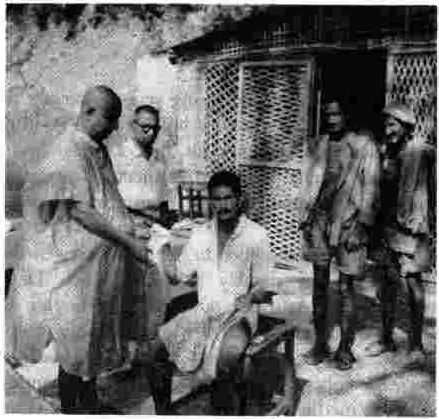
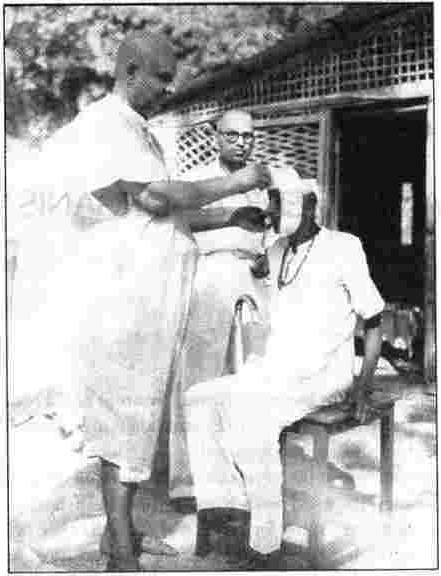
The Annual Report of the Society for the year 1942 mentions the following facts about the work done by the Sivananda Charitable Dispensary:
The Dispensary has been rendering yeoman service to the public of the locality, so much so that it has earned a good name in the district. Medicines are given to all, free of charge and at all times of the day and night. Special treatment is given to deserving persons, with occasional monetary assistance for recouping their health.
Medicines are mostly supplied to the dispensary by two principal doctors and donors, namely Sri Rai Saheb Dr. Het Ram Aggarwala, M.D., Amritsar, and Sri Dr. Parsram C. Punjabi, M.B.B.S., Hyderabad (Sind), while monthly and occasional donations are also received from Capt. T.N. Srivastava of Meerut and other well-wishers. During the year, 1,932 patients attended the dispensary for medicine and medical aid.
Another noteworthy way in which Swamiji trained his immediate disciples and those who sought his guidance, was to infuse into them his own spirit of service. According to him, service should go out to the needy and not wait for them to come. From time to time, at the instance of Swamiji, small parties of selfless workers went with medicines, milk and other foodstuffs to the neighbouring ashrams and locality to serve the mahatmas suffering from malaria and cholera.
Sivananda Hospital
Dr. K.C. Roy, M.B.B.S., was one of the active organisers of Swamiji’s programme at Chidambaram (South India) during Swamiji’s All-India Tour in 1950. He joined the ashram dispensary soon after the completion of the Tour. During the period of over six years that he spent at the ashram as the medical officer in charge of the dispensary, it grew into a hospital. In the meantime, Major-General A.N. Sharma, I.M.S. retired from the Army and joined the Sivananda Medical Organisation.
Thanks to the inspiring leadership of Swamiji and the enthusiasm with which these wonderful disciples responded to him, the hospital grew into an organisation with all the latest equipment calculated to bring the greatest possible relief to the poor people of the neighbourhood, and the mahatmas of Rishikesh. An X-ray plant, a microscope, diathermy and ultra-violet ray apparatus and surgical appliances were added to the hospital, one after the other. Beds were provided for indoor patients, and ultimately the whole building had to be remodelled, bringing happiness, relief and comfort to the patients. The treatment, the diet and the expert attention they may have got elsewhere too, but not the holy healing vibrations of Swamiji’s goodwill and prayers.
The Ratan Devi X-ray Clinic was formally opened by Swamiji on the 4th November, 1953, when the X-ray unit was installed in a separate room on the premises of the Sivananda General Hospital.
The installation of the diathermy apparatus had a very interesting background. In 1952 when Swamiji had an acute attack of lumbago, some of the disciples went to a military hospital to find out if their diathermy apparatus could be used by Swamiji. They kindly agreed, at the rate of Rs. 10 per sitting. Later it was declared unnecessary, and so the idea was dropped. When the pain returned during the next season, Swamiji had a diathermy apparatus acquired for the use of the Sivananda General Hospital. “It will be of great use to the poor villagers and the sannyasins of the neighbourhood. They can’t afford to pay. Let us bring the treatment to them, free of any charge,” said Swamiji. So the costly apparatus was available free to the poor. The instrument was formally installed in the hospital on the 26th February 1954.
The Clinical Laboratory was formally opened on the 21st March, 1954, with a microscope presented to the hospital by Dr. Sivananda-Ramjas, eye surgeon of Rewari.
Sivananda Eye Hospital
Swamiji’s mission had been very dear to Capt. Srivastava —particularly the medical aid part of it. He bequeathed Rs.20,000 for the construction of an eye hospital at Sivananda Nagar. The story of its establishment is told in the following poem written by Swamiji:
Mystery of Mysteries
Capt. Srivastava Who has never met me even Willed Rs.20,000 for the Eye Hospital. This is a great mystery. Dr. Chellamma, the eye surgeon Who came for a brief stay Renounced family, wealth and lucrative practice And became the Hospital’s Eye Surgeon. This is indeed a great mystery. Instruments arrived from Switzerland and Bombay. This is another mystery. Another great soul obtained cement To help us construct the hospital. This is yet another mystery. What is the mystery of these mysteries? It is faith in God. If you have faith in God, Help comes in time, The impossible becomes possible. This is the mystery of mysteries.
The newly constructed Eye Hospital building was formally opened on the 24th December, 1957, and had its own surgical ward, operation theatre and up-to-date equipment.
All this specialised knowledge and treatment and all these rare facilities were placed at the disposal of the poor people and the mahatmas, absolutely free, and no one — whatever be his social status, however casual be his acquaintance with Swamiji and however brief his visit to the ashram — could escape the opportunity of serving some poor patient or sadhu. The infectious zeal with which Swamiji ‘compelled’ him or her to ‘do a little bit of selfless service’ would make them work with a cheerfulness of heart which he or she had perhaps not experienced before. That was the genesis of the various Medical Relief Camps.
Eye Camps
Early in 1950 a young and enthusiastic eye surgeon stayed for a few days in the Ashram and Swamiji found in him an excellent person for receiving his spirit of service. The first Eye Relief Camp was the result. Swamiji found that there was a great scope for selfless service here; and it became a regular annual feature afterwards, till the Eye Hospital was established and the camps were considered superfluous. Dr. Sivananda-Rewari and Capt. C.S.K. Iyer conducted another Camp. Afterwards Dr. Sivananda-Adhvaryoo of Virnagar took up the eye camp work at the ashram. The unique feature in his case was that he brought with him all the medicines and surgical equipment necessary, all the attendants and nurses, and even the money needed to conduct the camp. He conducted it in the way Swamiji recommended. Morning and evening prayers prepared the surgeon and the nurses, and generated the proper spirit in them. A prayerful mood during the operation enabled the Lord’s healing grace and power to flow through the dexterous hands of the surgeon. Words of cheer and encouragement, the frequent utterance of the Lord’s name, and assurances given to the patient — By the grace of God, the operation is successful and you will be all right in a day — all brought about miraculous healing.
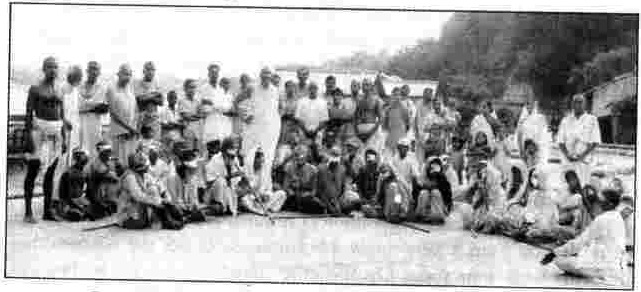
Swamiji with patients and staff at the end of the Eye Camp
A report in The Divine Life says:
The Eighth Eye Camp (the second one in the current year) was held under the auspices of the Sivananda Charitable Hospital, at Sivananda Nagar, during the third and fourth weeks of November. Whilst the eye department of the hospital is already looking after the cases it is especially intended to treat — including by means of surgery — a special camp was opened by Sri Swami Sivananda Maharaj on the 20th November, on the arrival of Dr. B.G.Adhvaryoo, M.B., B.S., D.O., of Virnagar, Bombay, who has established for himself a remarkable reputation both as a highly efficient eye surgeon and also for his great humanitarian services in holding eye camps at various places to bring relief to poor patients. During the four days stay of Dr Adhvaryoo at the ashram about 210 patients availed themselves of his services, 31 of whom were treated surgically. This included removal of cataract, iridectomy, pterigium, etc. Though the camp was mainly intended to treat eye cases, patients suffering from general diseases were also given special medical advice and treatment. Five of these underwent surgery.
Dr. S.N. Sharma of Delhi conducted a Dental Camp also.
Whenever a lady doctor came to spend a holiday at the ashram Swamiji would announce a ‘Women’s Medical Relief Camp’, to such an extent that the women of Rishikesh had the habit of enquiring about the probable date a lady doctor would visit the ashram. Dr. Devaki Kutty of Lucknow, Dr. Vasanta of Bombay, Dr. Lakshmi Mirchandani of Delhi, Dr. Amar Kaur of Dehra Dun, Dr. Saroj of Bombay and Dr. Padma Mudholkar of Nagpur took part in this wonderful service.
How Swamiji utilised the talents and services of a highly qualified doctor in order to achieve a double purpose is revealed in the following report of a ‘Women’s Relief Camp’ published in The Divine Life of August, 1956. Though the doctor had come to Swamiji for the recharging of the inner spiritual battery after a strenuous period of work in her own hospital, Swamiji instructed her in the glory of selfless service, in the art of living entirely for others and in the divine life of self-sacrificing service of others without the least expectation of reward. He made her look at her own profession from a new angle. He imparted to her the wisdom that transforms work into yoga. On the other hand, of course, he brought expert knowledge, beyond the reach of most of the people in and around Rishikesh, to relieve the suffering of the poor and the mahatmas. The report says:
The sixth relief camp for women’s and children’s diseases was held under the auspices of the Sivananda General Hospital, from 18th June to 20th July. Dr. Devaki Kutty, M.B., B.S., D.G.O., M.R.C.O.G., Reader at the Queen Mary’s Women’s Hospital, Lucknow, who is also visiting doctor to the ashram’s hospital, was in charge of the Camp and was assisted by Dr. Saroj Shroff, M.B., B.S., and others, including the hospital staff. It may be recalled that every year a similar relief camp is held during the visit of Dr. Kutty — or any specialist in gynaecology and obstetrics —whereby a valuable opportunity is afforded to the women patients of Rishikesh and the neighbouring areas to avail themselves of the specialised treatment and medical guidance. The doctor in charge of the Camp treated about 400 patients, 65 per cent of which were gynaecological and 2 per cent obstetric cases, including seven surgical ones.
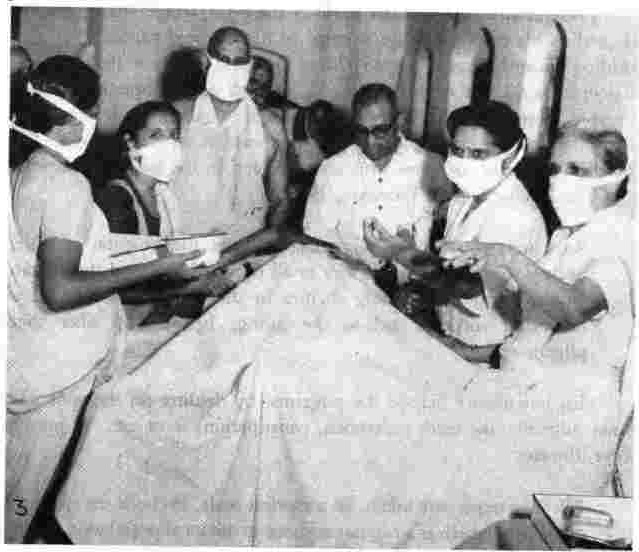
An operation in progress
A brief summary of the work turned out at the two hospitals (the Sivananda General Hospital and the Sivananda Eye Hospital) during the year September 1957 to August 1958 is a glowing tribute to the spirit of selfless service that Swamiji had been able to infuse into the noble band of disciples living at his lotus feet:
A total number of 16,768 patients (of which 11,086 were males and 5,682 were females) received treatment here in the year. Two medical relief camps for women and children and one each for eye and dental cases were also held. The General Hospital, together with the Eye Hospital, provides ten beds for in-patients, which are nearly always full.
Recognising the great service rendered by the hospitals, the State as well as the Central Government gave financial aid to them; and the Indian Red Cross Society also supplied some medicines, etc.
Health Education
‘Prevention is better than cure’ is the wise adage which Swamiji adopted as his own motto quite early in his medical career. Even as a budding doctor he would devote a lot of time and energy to the education of people in the art of healthy living, as well as in attending to their ailments. Throughout his life he always taught people how not to go to the doctor: i.e., how to enjoy good health. Two ways in which the Divine Life Society has sought to follow him are indicated in the following excerpts from The Divine Life of February, 1954:
As usual, during the pilgrimage season the hospital provided packets of essential medicines to all those who visited the ashram on their way to the holy shrines in the Himalayas, as well as rendering medical aid to the ailing, before and after their pilgrimage.
This has always helped the pilgrims, by dealing on the spot with minor ailments like cold, diarrhoea, constipation, fever, etc., to prevent worse illnesses.
Effective steps were taken, on a modest scale, to check the epidemic of malaria which is a regular menace to the local population during the four months of the monsoon. Prophylaxia to a considerable extent was ensured by the systematic administration of Paludrine to the residents of the locality and the neighbourhood. They were also provided with anti-mosquito oil. Prompt treatment was employed in the effective cure of the disease. Consequently there has been some reduction in malaria cases treated at the hospital during the last year.
In 1954 the Society also organised mobile medical units to bring immediate relief to the pilgrims travelling to the holy shrines in the Himalayas. An announcement in the same journal outlines the idea in the following words:
The Sivananda Medical Organisation proposes this year to organise mobile medical aid units, each of which will be adequately equipped with essential medicines and comprising three or four selfless devotees. The first batch of volunteers will leave Rishikesh on the 1st of May. Thereafter the Organisation will endeavour to send a constant stream of volunteers similarly equipped... Every moving unit will halt for a day or two at each of the halting centres and will also attend to the medical needs of the local villagers. They will conduct satsang and sankirtan before and after their daily work.
First aid classes
While certainly the sick should be served and suffering relieved, even that is a secondary service when compared to the prevention of illness and promotion of good health. Towards the achievement of this object Swamiji published his valuable books on health. The first journal that he edited, Ambrosia, carried valuable lessons in the prevention of illness, and these articles have all been gathered and published by the Sivananda Publication League in the book Home Physician.
The place of thought-culture in the building up and maintenance of good health was recognised by Swamiji, and therefore he always insisted that the sick man should be encouraged to feel that there is nothing wrong with him. He set an example in this regard by his own conduct. Even when he was very ill, the first thing he would say when one enquired “How are you, Swamiji?” was a cheerful “Wonderful!” and then later on give a slight hint of his physical condition as though it mattered little. In 1954 when he was seriously ailing, an important inmate of the ashram went to Swamiji to enquire about his condition. As soon as he entered the room, Swamiji began: “Oh Swamiji, you must look after your health. Which do you like, sweet or salt biscuits? ... Shall I give you a tin of Chyavanaprash? ... Would you like to go to Mussoorie for a change?” etc., so that the great swami forgot the purpose for which he went there!
When great psychologists of the West visited the ashram, Swamiji enthusiastically arranged for them to lecture. The foremost among them were Dr. Maryse Choisy of Paris and Dr. Graham Howe of Harley Street, London, who visited the ashram and delivered a series of lectures in 1952 and 1953, respectively.
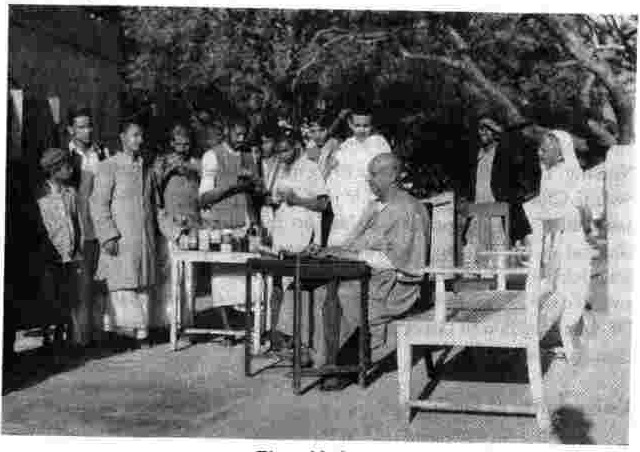
Swamiji wanted to equip every aspirant with a good knowledge of the essential principles of medical aid and service of the sick. This zeal took a concrete shape in 1949 when he organised a ‘First Aid and Home Nursing’ class, and had a series of lectures-cum-demonstrations given by Swami Chidanandaji. When Dr. K.C. Roy joined the hospital Swamiji asked him also to conduct a class on the same subject. Later, Major-General A.N. Sharma, during his annual pilgrimage to the ashram, conducted two training courses in First Aid and Home Nursing and awarded the St. John Ambulance Certificates to the successful candidates. Dr. Lila Vlachou of Greece, during her stay in the ashram, conducted a class in massage.
Universality of Outlook
Swamiji always took every opportunity of educating his students and the public at large in the art of right living, with a view to ensuring perfect health. In 1954 and 1955, respectively, he had two naturopaths, Sri L. Kameswara Sarma and Sri Kailasnath Gupta, conduct classes in naturopathy and diet.
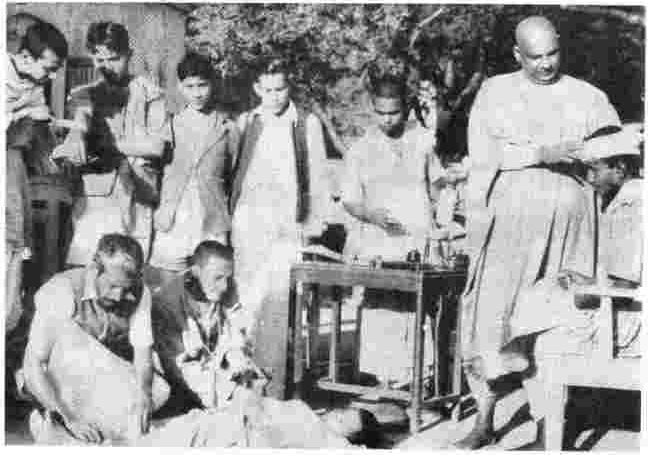
Swamiji was very enthusiastic in his appreciation of the noble ideas of the naturopaths, and even sanctioned the running of a Naturopathic Clinic in the ashram when Dr. Kailasnath put forward such a proposal. Dr. Kailasnath received tremendous encouragement from Swamiji and he equipped the clinic with all the necessary apparatus.
Though Swamiji was himself an allopathic doctor, he was so catholic in his views that he encouraged all other systems of treatment. A good homeopath, Dr. Brij Nanan Prasad, came within the sphere of his influence and was immediately prompted to open a Homeopathic Clinic at the ashram.
While declaring the clinic open, Swami Sivananda said that all systems of medicine were necessary to suit different types of constitution and temperament; that homoeopathy, too, was as necessary as allopathy, and that service of the sick was the chief ideal, whichever the means. Another homeopathic clinic, the Sivananda Charitable Dispensary, is also functioning, originally under the very able guidance of Sri Swami Achintyananda, assisted by Swami Venkatesananda, A.M.I.H., the then attending physician of the dispensary.
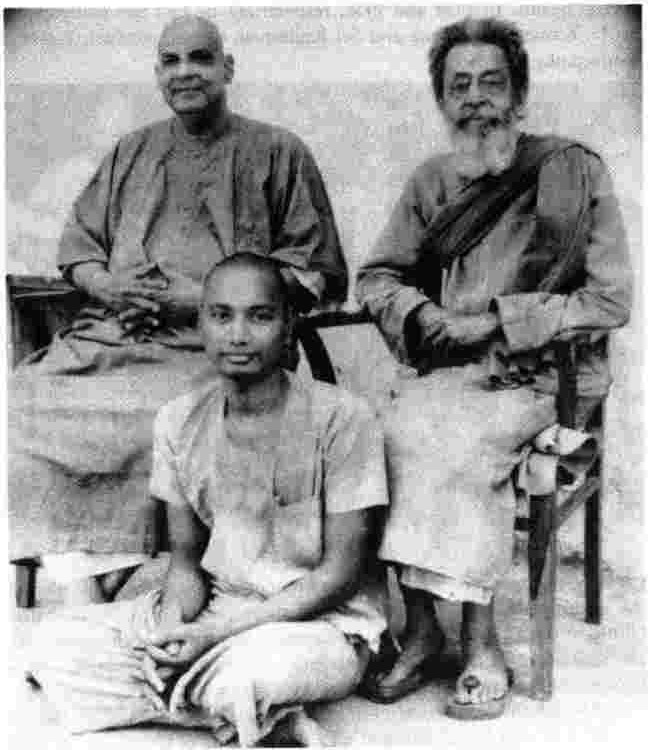
With Swamis Venkatesananda and Achintyananda at the Homeopathic Clinic
Swamiji also recognised the value of yoga asanas in the treatment of diseases and used to persuade Sri Swami Vishnudevananda to study this branch of the ancient art of health, and to apply it in cases where the doctors had given up hope.
Another important field of medical service that was very dear to Swamiji’s heart was the service of unfortunate victims of leprosy. Here is what he said, when (on the 3rd May, 1949) Rev. Taylor of the American Leprosy Mission met him along with a U.P. Government official and requested Swamiji’s assistance in the matter of leprosy relief in Rishikesh:
The government officials and also the State Health Minister, Dr. Gairola, have always sought the assistance of sannyasins for this work. Why? Because these helpless victims of their own prarabdha (fate) are neglected by all other sections of the community. A practising doctor would refuse to treat lepers, for his practice would cease, and with that his earning. People are afraid to go near lepers. Only a sannyasin who has renounced worldly life and who has no fear even of death, can boldly undertake such humanitarian services.
The ashram’s hospital always had a good stock of medicines that would be specially required for the treatment of lepers. Every year Swamiji distributed blankets, clothing, etc., to them. To a few of them who had lost either their eyes or the use of limbs, Swamiji gave pocket money also.
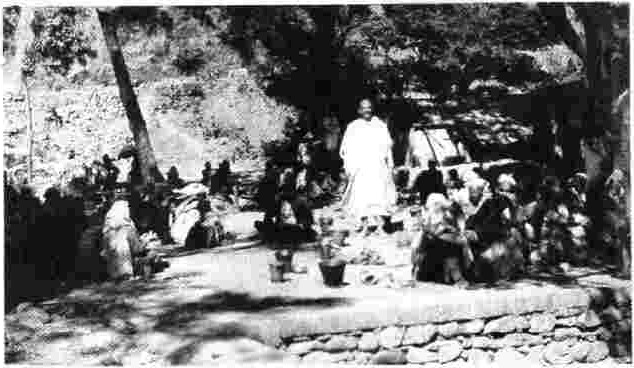
At a leper colony near the ashram
Swamiji’s inspiration moved one of his disciples — Sri Rani Sivananda-Kumudini Devi of Hyderabad — to organise the Sivananda Leprosy Rehabilitation Centre in Hyderabad which shelters, protects and educates several thousand lepers. It is really a satsang centre for the lepers, for they are taught to sing the Lord’s names, and to listen to discourses of learned mahatmas. This is the threshold of liberation both for the doctors and other selfless workers who serve the lepers, as well as for the lepers themselves.
Sivananda Ayurvedic Pharmacy
The birth and growth of the Ayurvedic Pharmacy has an interesting story behind it. In 1945 Swamiji had obtained from a sadhu a recipe for an effective toothpowder. He had brought his knowledge and experience to bear on this, and requested an ayurvedacharya (an expert in India’s indigenous system of medicine), who was till then serving as a teacher in the Sivananda Primary School, to prepare the tooth-powder. When this was done he had the tooth-powder distributed to the ashramites. The visitors, too, were naturally introduced to it: and when they expressed their appreciation of it Swamiji wanted them to have a regular supply from the ashram. How could this be done? Naturally by preparing this in good quantities. The ayurvedacharya, Sri Satchidananda Maithani, agreed. The Sivananda Ayurvedic Pharmacy was born on the 6th May, 1945.
The next two items that were added to the preparations of the pharmacy had also a similar origin — the Brahmi-amla Oil and the Chyavanaprash. Besides the proficiency and spirit of dedication of Sri Maithani, several other factors were now discovered. The ayurvedic medicines and tonics prepared by the immediate disciples of Swamiji with pure Himalayan herbs and the holy waters of the Ganges, in the pure atmosphere of the ashram, had certainly a better effect than others’ preparations. Hence Swamiji relieved the ayurvedacharya of his duties at the school and appointed him to devote himself solely to the preparation of the three tonics most useful to all spiritual aspirants for the maintenance of good health. To these were added, by and by, other equally efficacious and useful medicines and tonics. As early as 1952 the pharmaceutical products gained the whole-hearted appreciation of the government, as is evident from the following note given by the Deputy Director of Medical and Health Services, U.P. Government:
I have great pleasure in certifying that I have visited the Sivananda Ayurvedic Pharmaceutical Works, in the month of June, 1951, and previously also on one or two occasions. The medicines manufactured at this pharmaceutical works were found to be of very high purity and had been prepared according to the ancient ayurvedic system of medicine prevalent in India. Sri Swamiji has been doing a great service to humanity by making available very valuable drugs growing in this region of the Himalayas, at a remarkably low cost, to the people not only residing in India but also outside. Every one of the preparations is being manufactured with the best of care and precautions regarding its efficiency, and there is hardly any possibility of any harm being done to anybody by the use of these medicines.
The Ayurvedic Section of the Health Directorate of the Government of U.P. also adopted Swamiji’s book Gharelu Davayiam (Hindi translation of Bazaar Drugs) for use in all rural ayurvedic dispensaries that are conducted by the State Government.
The special merit of the Ayurvedic Pharmacy’s preparations is described in the following note published in The Divine Life of April, 1946:
The products of the Ayurvedic Pharmacy Department are taken by the public with great eagerness. This department works with the pure intention of helping people of poor health and physique. More than the genuine materials used — which by themselves guarantee the benefits — every particle of the product is saturated with spiritual vibrations. The pharmaceutical experts sing kirtans and pray to the Lord at every stage of the process. Raw materials are selected with great care and processed in their correct proportion.
Ideals of a Selfless Worker
In the following anecdotes Swamiji reveals the supreme ideal that a selfless worker should always hold before himself:
“Did you take the temperature of Balammal in the evening?” questioned Swamiji as he was coming out of the Bhajan Hall after the night satsang. “I did not go there in the evening, Swamiji,” replied the aspirant. At once Swamiji went to the patient’s room, and he would not leave the place until every minute detail in connection with the patient’s requirements had been attended to. Swamiji then said: “Put yourself in the patient’s place. That is the best way to ensure attention to the minutest details. If you consider that you are the doctor, you would neglect some things. Even if you consider yourself a nurse, you would miss or forget some things. Think for a moment that you yourself are the patient. What would be the things you need? See that all those things are available to the patient. You must enter into the patient’s spirit. That is real service. There must be a bed-pan. This is most important, especially in the case of aged patients, like this lady. There should be light, matches, water in a bucket and a glass. All these things should be neatly arranged in the room so that the patient can reach out to them without much difficulty. You should pay particular attention to the arrangement of the bed. Even the slightest carelessness in this regard would deprive the patient of nature’s most powerful remedy — sleep. Haphazard making of the bed won’t do. What would be a mild discomfort to a healthy man would be an unbearable horror to a sick man — bear this in mind. You should not lose one opportunity of service. Then and then alone will the selfless service become part of you. Lord Dattatreya says in the very first sloka of the Avadhuta Gita that advaitic realisation is impossible for one unless there is God’s grace. God’s grace can be obtained through sincere untiring selfless service and devotion only. Service of the sick is the greatest form of selfless service which will at once cleanse the heart and invoke God’s grace into it.”
When a devotee from Bangalore was laid up by a sudden attack of shivering and fever due to a cold dip in the Ganges, Swamiji was at his door late at night to see if the proper medicine had been given, whether he had taken it and how he felt. Another visitor, confined indoors one day due to some indisposition, got a surprise when after the evening worship at the ashram temple the sacred flame of the arati was brought to him, where he sat inside his room. Swamiji missed nothing and had thoughtfully deputed a student to go with the arati lamp (and an extra piece of camphor) to the ailing guest.
Over and above all this, Swamiji regarded divine grace as the most important factor in the maintenance of good health, and emphasised the power of prayer at every turn. Even a sick animal lying on the roadside presented him with an opportunity to pray. He would stop then and there and repeat the maha mritunjaya mantra, and only then move on. At every Centre during the All-India Tour he spoke of the glory of the mantra and gave mass initiation into it. When he received information that someone was sick, he conducted maha mrityunjaya mantra japa during satsang.
Colonel Rikhye, the great and noble doctor who was supremely devoted to Swamiji and who attended on him when he was convalescing at Roorkee after typhoid in 1954, had a severe heart attack in 1959. He lay dying and asked for someone to be sent to Rishikesh to get Swamiji’s blessings. While the messenger was on the way to Rishikesh the nurse attending the Colonel declared that he was dead. The wife went to the bedside, weeping. Telegrams had gone out to the children and the doctors had been informed, too. Imagine the lady’s surprise when just at 9.15 p.m. the Colonel ‘woke up’ and asked for a drink of water. The dead had come back to life! That was the exact period when, in response to the messenger’s request, Swamiji was conducting prayers at the ashram. The Colonel was alright the whole of that night and the next day, till he got prasad and books from Swamiji. He applied the prasad on his forehead and placed the books reverently on his head. He passed away peacefully that night.
The Viswanath Mandir renders the following inestimable service every day: puja, archana and abhishekam are offered to the Lord enshrined in the temple, for the health and long life of devotees; and the sacred prasad is sent to them.
During the All-India Tour, Swamiji addressed the International Fellowship on Inter-Religious Co-operation. The following is an extract from his speech:
You want everything for yourself and then you wish to build up an International Fellowship. That you cannot do. You must see God in the man lying on the roadside. There are actions that can be offered as flowers to the Lord, that would be pleasing to Him. For instance, a European took a cholera patient on his own shoulders and got him admitted in the hospital.
Then, referring to such service rendered by Swami Chidananda (then General Secretary of the Divine Life Society), he said:
There was a dog near the ashram which was suffering from a terrible disease. It gave such a bad smell that you could not go near it. But Swami Chidanandaji dressed its sores carefully for weeks and months with his own hands. His heart is very soft. His writing and his lectures come from his very heart; they are powerful. You must bring out Gita and Upanishads from the heart, from a pure heart that melts at the suffering of others.
After describing how Chidanandaji served a leper similarly, Swamiji said:
Such actions you will have to do. They will purify your heart and give you inner strength. Every member of the Fellowship will become a spiritual dynamo.
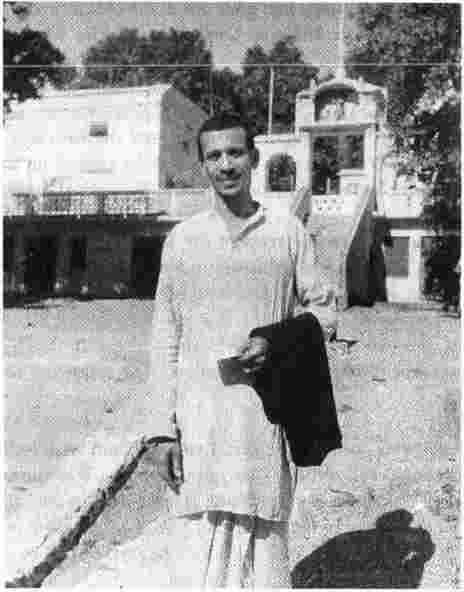
Swami Chidananda
The Sivananda Medical Organisation functions wherever Swamiji’s doctor-disciples live and serve. Major General A.N. Sharma, Director General of the Organisation, set an example. He organised a dispensary at Dadh in the Kangra Valley where he spent the summer months; Dr. Ramjas of Rewari treated his patients free on the 8th (Swamiji’s birthday) of every month; Dr. Saroj Shroff of Bombay adopted Swamiji’s motto of selfless service to the poor in running her clinic; to mention a few. Their number is legion: they silently worked a revolution in the field of medical service.