undefined Kāṇḍa Pārāyaṇa
Before the chant begins
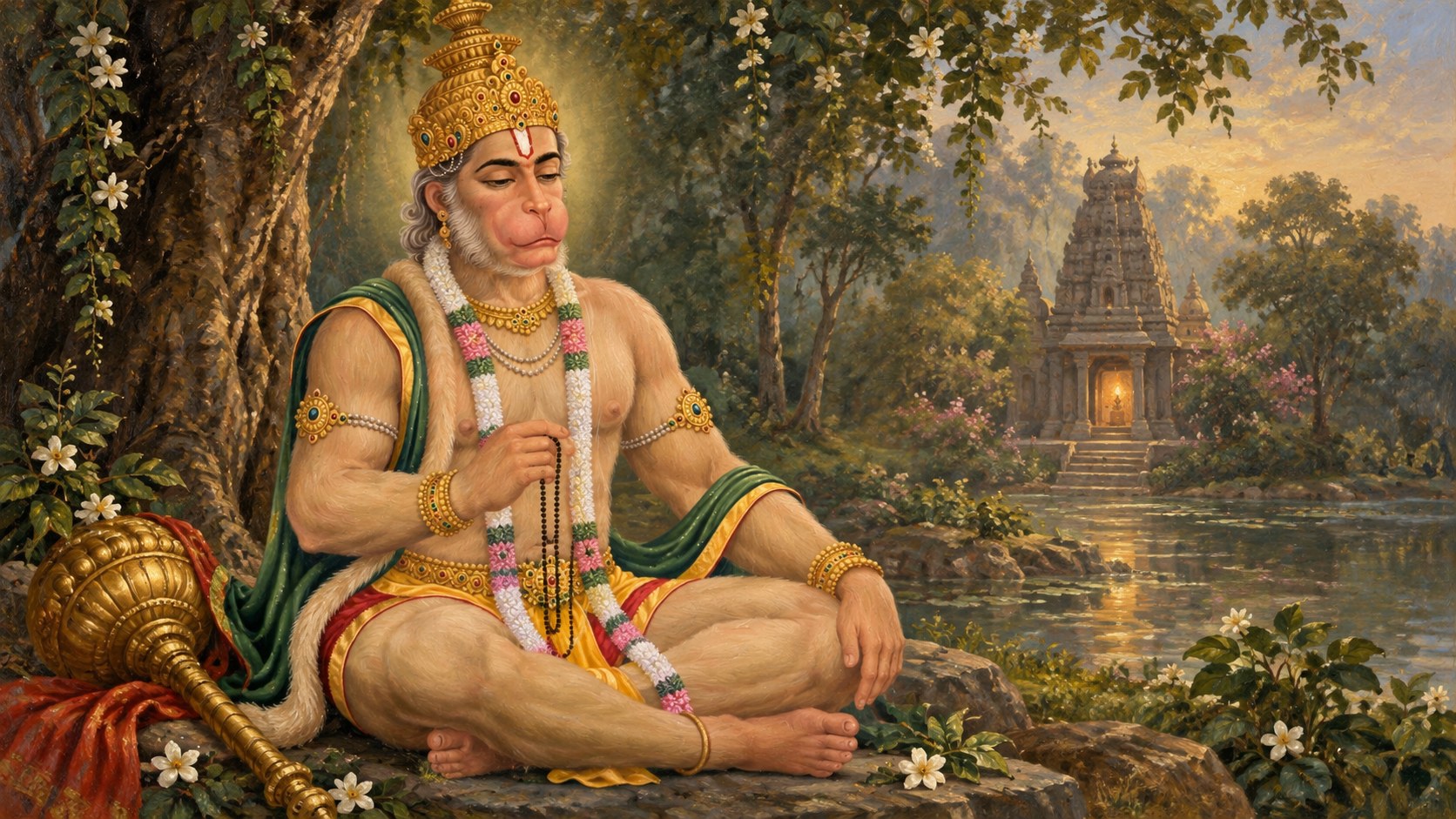
Twenty-two verses, said in order: to Gaṇapati, that nothing obstruct what follows; to Sarasvatī; in praise of Vālmīki; in praise of Hanumān — the ocean-crossing that opens the Sundara Kāṇḍa itself among them; in praise of the Rāmāyaṇa; a dhyāna of Rāma; and a closing dhyāna of Hanumān.
Gaṇapati
śuklāmbaradharam viṣṇum śaśivarṇam caturbhujam | prasanna vadanam dhyāyet sarva vighnopa śāntaye |
One should meditate on Viṣṇu, clad in white, of the hue of the moon, four-armed and of gracious countenance, for the quelling of all obstacles.
Gaṇapati
vāgīśādyāḥ sumanasaḥ sarvārthānā mupakrame | yam natvā krutakrutyāḥ syuḥ tam namāmi gajānanam ||
Having bowed to whom at the outset of every undertaking the gods, headed by the Lord of Speech, gain their every end — to him, the elephant-faced one, I bow.
Sarasvatī
dorbhir yuktā caturbhiḥ sphaṭikamaṇimayī makṣamālām dadhānā hastenaikena padmam sitamapi ca śukam pustakam cāpareṇa | bhāsā kundendu śaṅkha sphaṭika maṇinibhā bhāsamānāsamānā sā me vāgdevateyam nivasatu vadane sarvadā suprasannā ||
She who, with her four arms, holds a rosary made of crystal gems; who holds in one hand a white lotus and a parrot too, and in another a book; who shines with a lustre like the jasmine, the moon, the conch and the crystal gem, radiant and without equal — may she, this goddess of speech, dwell ever in my mouth, ever gracious.
Vālmīki
kūjantam rāma rāmeti madhuram madhurākṣaram | āruhya kavitā śākhām vande vālmīki kokilam ||
I salute the cuckoo Vālmīki, who, perched upon the bough of poetry, sings sweetly the sweet syllables “Rāma, Rāma.”
Vālmīki
vālmīker munisimhasya kavitā vanacāriṇaḥ | śruṇvan rāmakathā nādam ko na yāti pāram gatim ||
Who, hearing the roar of the tale of Rāma from Vālmīki, the lion among sages who roams the forest of poetry, does not go to the goal beyond?
Vālmīki
yaḥ piban satatam rāmacaritāmruta sāgaram | atruptas tam munim vande prācetasa makalmaṣam ||
I salute the stainless sage Prācetasa, who, ever drinking of the ocean of nectar that is the story of Rāma, remains unsated.
Hanumān
goṣpadīkruta vārāśim maśakīkruta rākṣasam | rāmāyaṇa mahāmālā ratnam vande nilātmajam ||
I salute the son of the Wind, jewel of the great garland of the Rāmāyaṇa, who made the ocean like a cow’s hoofprint and the rākṣasas like gnats.
Hanumān
añjanānandanam vīram jānakīśokanāśanam | kapīśa makṣahantāram vande laṅkā bhayaṅkaram ||
I salute the hero, the joy of Añjanā, the destroyer of Jānakī’s sorrow, the lord of monkeys, the slayer of Akṣa, the terror of Laṅkā.
Hanumān
ullaṅghya sindhoḥ salilam salīlam yaḥ śokavahnim janakātmajāyāḥ | ādāya tenaiva dadāha laṅkām namāmi tam prāñjali rāñjaneyam ||
I bow with folded palms to Āñjaneya, who, crossing the waters of the ocean as if in play, took up the fire of grief of Janaka’s daughter and with that very fire burned Laṅkā.
Hanumān
āñjaneya matipāṭalānanam kāñcanādri kamanīya vigraham | pārijāta tarumūla vāsinam bhāvayāmi pavamāna nandanam ||
I contemplate the son of the Wind, Āñjaneya, whose face is deep rose like the pāṭala flower, whose form is lovely as a golden mountain, who dwells at the root of the pārijāta tree.
Hanumān
yatra yatra raghunāthakīrtanam tatra tatra kruta mastakāñjalim | bāṣpavāri paripūrṇa locanam mārutim namata rākṣasāntakam ||
Wherever the praise of Raghunātha is sung, there, with palms joined above his head and eyes brimming with tears, stands Māruti, the ender of rākṣasas — bow to him.
Hanumān
manojavam māruta tulyavegam jitendriyam buddhimatām variṣṭham | vātātmajam vānarayūtha mukhyam śrīrāmadūtam śirasā namāmi ||
Swift as the mind, equal in speed to the wind, master of the senses, foremost among the wise, son of the Wind, chief of the vānara hosts, messenger of Śrī Rāma — to him I bow my head.
Hanumān
buddhir balam yaśo dhairyam nirbhayatva marogatā | ajāḍyam vākpaṭutvam ca hanumat smaraṇāt bhavet ||
Understanding, strength, fame, fortitude, fearlessness, freedom from sickness, alertness and eloquence come from remembering Hanumān.
The Rāmāyaṇa
yaḥ karṇāñjali sampuṭairaharahaḥ samyak pibatyādarāt vālmīker vadanāravindagalitam rāmāyaṇākhyam madhu | janmavyādhi jarāvipatti maraṇaiḥ atyanta sopadravam samsāram sa vihāya gacchati pumān viṣṇoḥ padam śāśvatam ||
He who day after day, with reverence, drinks with the cupped hands of his ears the honey called the Rāmāyaṇa that flowed from the lotus mouth of Vālmīki, leaves behind this worldly round, so full of affliction through birth, disease, old age, calamity and death, and goes to the eternal abode of Viṣṇu.
The Rāmāyaṇa
tadupagata samāsa sandhiyogam samamadhuropanatārtha vākyabaddham | raghuvara caritam munipraṇītam daśaśirasaśca vadham niśāmayadhvam ||
Hear the story of the best of the Raghus, composed by the sage, bound in sentences whose compounds and junctions are fitly placed, even and sweet, and apt in meaning — and hear the slaying of the ten-headed one.
The Rāmāyaṇa
vālmīki giri sambhūtā rāmasāgara gāminī | punātu bhuvanam puṇyā rāmāyaṇa mahānadī ||
May the holy great river, the Rāmāyaṇa, which springs from the mountain Vālmīki and flows to the ocean Rāma, purify the world.
The Rāmāyaṇa
śloka sāra samākīrṇam sargakallola saṅkulam | kāṇḍagrāha mahāmīnam vande rāmāyaṇārṇavam ||
I salute the ocean of the Rāmāyaṇa, filled with the waters of its ślokas, crowded with the billows of its sargas, with its Kāṇḍas for crocodiles and great fish.
The Rāmāyaṇa
vedavetye pare pumsi jāte daśarathātmaje | vedaḥ prācetasā dāsīt sākṣād rāmāyaṇātmanā ||
When the Supreme Person, knowable through the Vedas, was born as the son of Daśaratha, the Veda itself came forth from Prācetasa in the very form of the Rāmāyaṇa.
Rāma
vaidehī sahitam sura drumatale haime mahāmaṇḍape madhye puṣpakamāsane maṇimaye vīrāsane susthitam | agre vācayati prabhañjanasute tatvam munibhyaḥ param vyākhyāntam bharatādibhiḥ parivrutam rāmam bhaje śyāmaḷam ||
I worship the dark-hued Rāma, seated with Vaidehī beneath the celestial tree in a great golden pavilion, in its midst upon the jewelled Puṣpaka seat, firm in the hero’s posture, while before him the son of the Wind reads, and he expounds the supreme truth to the sages, surrounded by Bharata and the others.
Rāma
vāme bhūmisutā puraśca hanumān paścāt sumitrāsutaḥ śatrughno bharataśca pārśva daḷayoḥ vāyvādikoṇeṣu ca | sugrīvaśca vibhīṣaṇaśca yuvarāṭ tārāsuto jāmbavān madhye nīlasaroja komaḷarucim rāmam bhaje śyāmaḷam ||
On his left the daughter of the Earth, before him Hanumān, behind him the son of Sumitrā, Śatrughna and Bharata at his two sides, and in the corners beginning with Vāyu’s, Sugrīva, Vibhīṣaṇa, the crown prince, son of Tārā, and Jāmbavān — in their midst I worship the dark Rāma, tender in lustre as the blue lotus.
Rāma
namostu rāmāya salakṣmaṇāya devyai ca tasyai janakātmajāyai | namostu rudrendra yamānilebhyo namostu candrārka marudgaṇebhyaḥ ||
Salutation to Rāma with Lakṣmaṇa, and to the goddess, the daughter of Janaka; salutation to Rudra, Indra, Yama and the Wind; salutation to the Moon, the Sun and the hosts of the Maruts.
Hanumān
sarvāriṣṭa nivārakam śubhakaram piṅgākṣa makṣāpaham sītānveṣaṇa tatparam kapivaram koṭīndu sūryaprabham | laṅkādvīpa bhayaṅkaram sakaladam sugrīva sammānitam devendrādi samasta devavinutam kākutstha dūtam bhaje ||
I worship the messenger of Kākutstha, remover of every evil, bringer of good, tawny-eyed, slayer of Akṣa, intent on the search for Sītā, best of monkeys, bright as millions of moons and suns, terror of the isle of Laṅkā, giver of all, honoured by Sugrīva, praised by all the gods headed by Indra.
Sit a moment with the image and the verses above. Begin the chant when you are ready.
Begin chanting